MDF vs plywood for pooja unit: what to pick (India)
MDF vs plywood for pooja unit: what to pick (India) with a clear decision table on grade, thickness, moisture performance, warranty and price factors. Made
Quick Decision Summary
For typical Indian pooja units, pick BWR-grade plywood over MDF for superior humidity resistance and shelf strength.
If you're in a hurry: Pooja units face daily humidity from offerings, incense, and monsoons—especially in coastal or kitchen-adjacent spots. BWR plywood handles this better without swelling, supports heavier idols on shelves, and lasts 10+ years with proper sealing. MDF suits ultra-dry, budget-tight interiors with laminate finish but risks delamination in humid zones. Always verify calibration and glue lines on-site. Decision boils down to your location's moisture level and load needs—use the table below for quick picks.
- Choose plywood if: pooja room gets humid, shelves hold 20+ kg, or you want low-maintenance longevity.
- Choose MDF if: fully air-conditioned dry space, tight budget, and smooth laminate finish is priority.
- Avoid MDF if: near kitchen/bathroom or coastal area—swelling risks high.
- Avoid plywood if: need mirror-polish paint and can't afford edge banding extras.
What MDF and Plywood Actually Mean
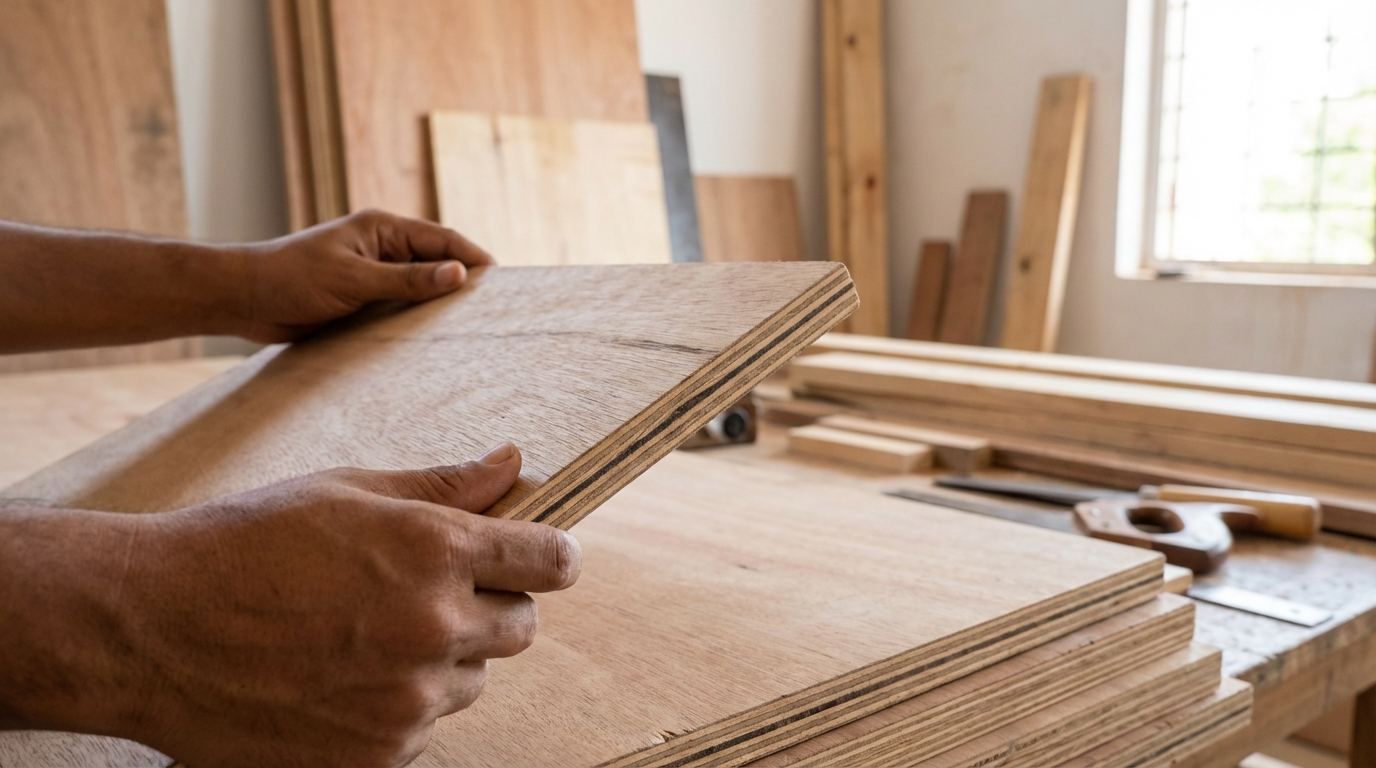
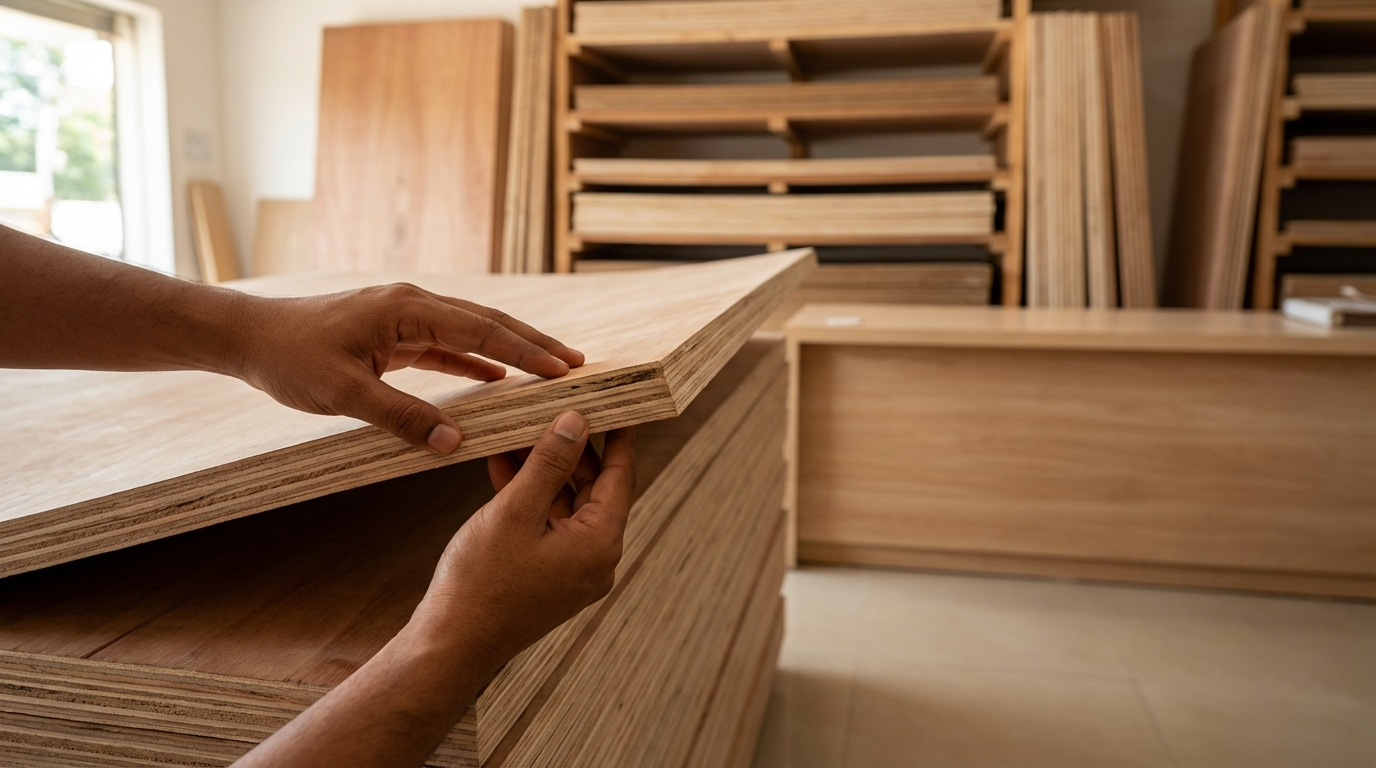
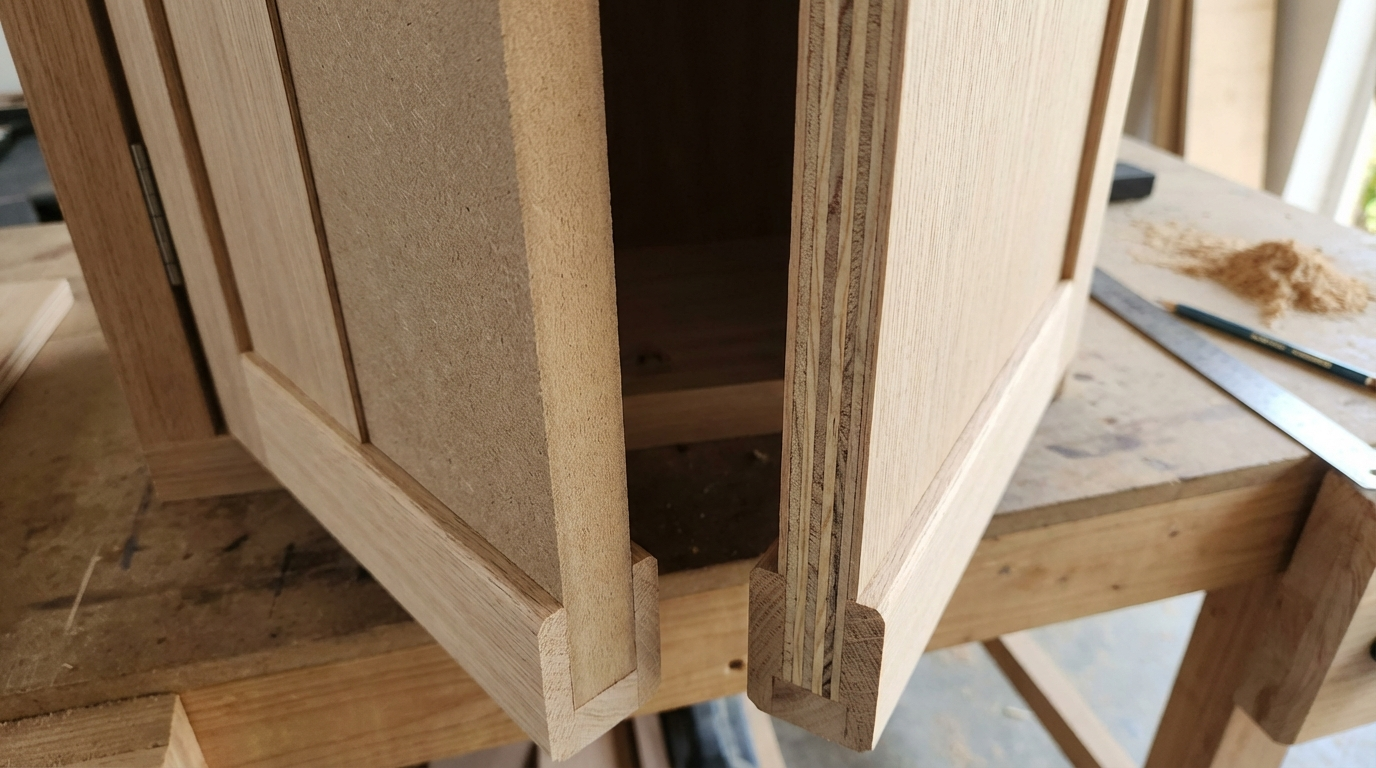
MDF (Medium Density Fiberboard) is engineered from wood fibers glued under heat and pressure into dense sheets—smooth both sides, ideal for painting or laminating. Plywood stacks thin veneers cross-layered with adhesives, creating strong, stable panels graded by glue type: MR (interior moisture-resistant), BWR (boiling water-resistant), BWP (marine-grade for extreme wet).
Where people get confused:
- Assuming all "plywood" is waterproof—only BWP grades are; MR fails in humidity.
- Thinking MDF is "fake wood"—it's engineered but denser than softwood cores in cheap ply.
- Mixing "commercial plywood" with BWR—commercial is basic MR, not boil-tested.
- Believing thickness alone ensures strength—MDF 18mm warps easier than calibrated ply.
- Overlooking core quality: MDF has uniform fibers; plywood cores can gap if low-grade.
- Confusing HDHMR (high-density) with MDF—HDHMR resists scratches more but still moisture-weak.
Why do pooja units need moisture-resistant boards?
Pooja units endure spills from milk/holy water offerings, incense steam, and ambient humidity—especially during festivals. Moisture penetrates edges, causing swelling or delamination. BWR/BWP plywood's phenolic glue lines resist this better than urea-formaldehyde in MDF/MR. In dry AC rooms, MDF holds up; but skip it for semi-wet zones. Check by pressing a wet cloth on edge overnight—swell-free wins. Next, measure your pooja spot's humidity (use a ₹200 meter) and match grade accordingly for 15-year durability.
India-Specific Reality Check
Monsoon humidity (70-90% RH) hits pooja shelves via open windows or attached kitchens—coastal cities like Mumbai or Chennai amplify this with salt air. Storage in un-AC godowns leads to pre-warped boards; carpenters often cut onsite without edge-sealing, inviting termites or mold. Workmanship varies: modular makers use CNC for MDF uniformity, but local carpenters favor plywood for screw-holding in shelves bearing diyas/idols (15-30kg). Verify flatness on-site—India's heat cycles demand calibrated boards to avoid gaps post-install.
Does location matter for pooja unit material in India?
Yes—coastal or ground-floor poojas face 80%+ RH, needing BWR plywood to prevent veneer peel. Inland AC homes tolerate MDF. Festivals spike moisture; unsealed edges fail fast. Test: Place sample in your pooja spot for a week. If edges soften, upgrade to ply. Practical step: Insist on vacuum-pressed laminates and silicone edge seals during fab—reduces callbacks by 50% in humid belts.
Two-Minute Comparison: MDF vs Plywood for Pooja Units
| Factor | MDF | Plywood (BWR Grade) |
|---|---|---|
| Humidity Resistance | Fair (swells at edges in 70% RH) | Good (holds in monsoons if sealed) |
| Shelf Strength (18mm) | Medium (sags under 20kg long-term) | High (stable for idols/diyas) |
| Surface Finish | Ultra-smooth for laminate/paint | Needs veneer/lam for pooja aesthetics |
| Weight | Lighter (easier handling) | Heavier (sturdier carcass) |
| Termite Risk | Low (no voids if sealed) | Medium (check core voids) |
| Cut Waste | Low (uniform) | Medium (calibration key) |
Choose based on wet-risk vs finish needs—BWR ply for most Indian homes.
Price Range and Cost Drivers (India)
Basic 18mm MDF typically ranges ₹45-75 per sq ft in metros (Delhi/Mumbai), rising to ₹80+ for HDHMR or pre-laminated. BWR plywood starts ₹85-140 per sq ft, BWP ₹150-250—varies by city (10-20% higher in South), thickness, brand batch, and transport. Laminates add ₹20-50/sq ft.
Cost drivers: Core density, face quality, calibration (₹5-10/sq ft extra), finish type. For 6x4ft pooja (20 sqm): MDF ~₹20,000-35,000 total; ply ~₹35,000-55,000 incl fab.
How to quote: Specify "18mm BWR calibrated, vacuum laminate, edge silicone-seal."
Which is cheaper for pooja unit: MDF or plywood?
MDF undercuts plywood by 30-50% upfront—₹50/sq ft vs ₹100 for equivalent grade. But factor longevity: MDF replacements cost more in humid areas. Drivers like laminate grade or CNC fab even costs. Budget tip: Get 3 quotes specifying thickness/grade/location—negotiate 10% off for bulk. Long-term, ply saves on repairs. Confirm with sample sq ft price onsite.
How to Choose in 5 Steps
- Assess moisture/load: High humidity/heavy shelves? BWR ply. Dry/light? MDF.
- Pick thickness: 18mm carcass/shelves; 12mm partitions.
- Verify grade onsite: Ask for glue-line test demo (boil scrap).
- Test flatness: Drop 1m rule—no gaps over 1mm.
- Seal edges: Mandate PVC/silicone banding pre-install.
Skip steps? Expect warping in year 1.
Decision Framework Table
| Condition | Recommended Pick | What to Verify |
|---|---|---|
| Coastal/high humidity | BWR Plywood | Glue line color (dark phenolic), edge seal plan |
| Heavy shelf load (20kg+) | Plywood 18mm | Screw hold test, core gaps absent |
| Tight budget/AC room | Laminated MDF | HD density stamp, flatness check |
| High polish paint | MDF | Smooth face, no telegraphing |
| Fast modular fab | MDF | CNC-ready calibration |
| Termite-prone area | Seal-treated Plywood | Core inspection, treatment mark |
Tips for Homeowners: Durability and Cleaning
- Do: Wipe spills instantly; use silica packs in cabinets.
- Don't: Drag heavy puja items—use shelf liners.
- Inspect yearly for edge cracks.
Tips for Carpenters: Working with These Boards
- Cut with zero-clearance blade; pre-drill screws in ply cores.
- Edge-band MDF immediately to block moisture.
- For pooja shelves: Reinforce ply undersides with battens.
Tips for Architects: Spec Writing
- Detail: "BWR IS:303 Grade II, 18mm ±0.5mm cali."
- Wet-zone: Specify marine ply risers.
- Finishes: PU polish on ply veneer for pooja glow.
Trade-offs and Limitations
MDF: Cheaper/smoother but swells 10-20% in humidity, weaker screws. Plywood: Stronger/moisture-tough but costlier, potential core voids, rougher for direct paint. Both need edge protection; neither is termite-proof without treatment.
Can MDF handle pooja unit shelves?
Yes in dry zones—18mm HDHMR supports 15kg/shelf if laminated. But sags under sustained load/moisture vs ply. Trade-off: Smooth curves easy on MDF. Limit: Avoid overhangs >30cm. Next: Load-test sample with weights; upgrade if deflects >2mm.
Is plywood better than MDF for mandir cabinets?
Usually yes—BWR ply resists festival spills better, holds brass items steady. MDF fine for wall-mount light poojas. Nuance: Ply warps if uncalibrated. Step: Spec cross-veneer direction for shelves; add metal brackets for 25kg+.
Common Buyer Mistakes and How to Avoid Them
- Mistake: Picking MR grade for humid poojas. Why: Fails in monsoons. Fix: Demand BWR demo.
- Mistake: Ignoring thickness uniformity. Why: Uneven shelves. Fix: Caliper check 4 corners.
- Mistake: Skipping edge sealing. Why: Moisture wicks in. Fix: PVC band mandatory.
- Mistake: Budget-only choice. Why: Replacements cost double. Fix: Factor 10-year TCO.
- Mistake: No load test. Why: Shelf collapse. Fix: Weight sample onsite.
- Mistake: Poor laminate match. Why: Peels fast. Fix: Vacuum-press spec.
- Mistake: Storing boards flat outdoors. Why: Warps pre-cut. Fix: Vertical stack shaded.
- Mistake: Overlooking screw zones. Why: MDF strips easy. Fix: Confirm density.
Failure Modes and Fixes
- Symptom: Edge swelling. Cause: Unsealed MDF in humidity. Prevent: Silicone seal. Fix: Sand/refinish or replace panel.
- Symptom: Shelf sag. Cause: Thin MDF overload. Prevent: 18mm ply + battens. Fix: Add supports.
- Symptom: Delamination. Cause: MR glue wet. Prevent: BWR only. Fix: Full redo.
- Symptom: Veneer bubble. Cause: Poor press. Prevent: Vacuum spec. Fix: Re-laminate.
- Symptom: Screw pullout. Cause: Soft core. Prevent: Plug anchors. Fix: Refasten larger.
- Symptom: Gaps post-install. Cause: Uncalibrated. Prevent: Ruler test. Fix: Shim/adjust.
Quality Checks You Can Do Without Lab Tests
Before buying: Tap for hollows (ply cores); fingernail scratch face; smell for chemical off-notes; weigh for density.
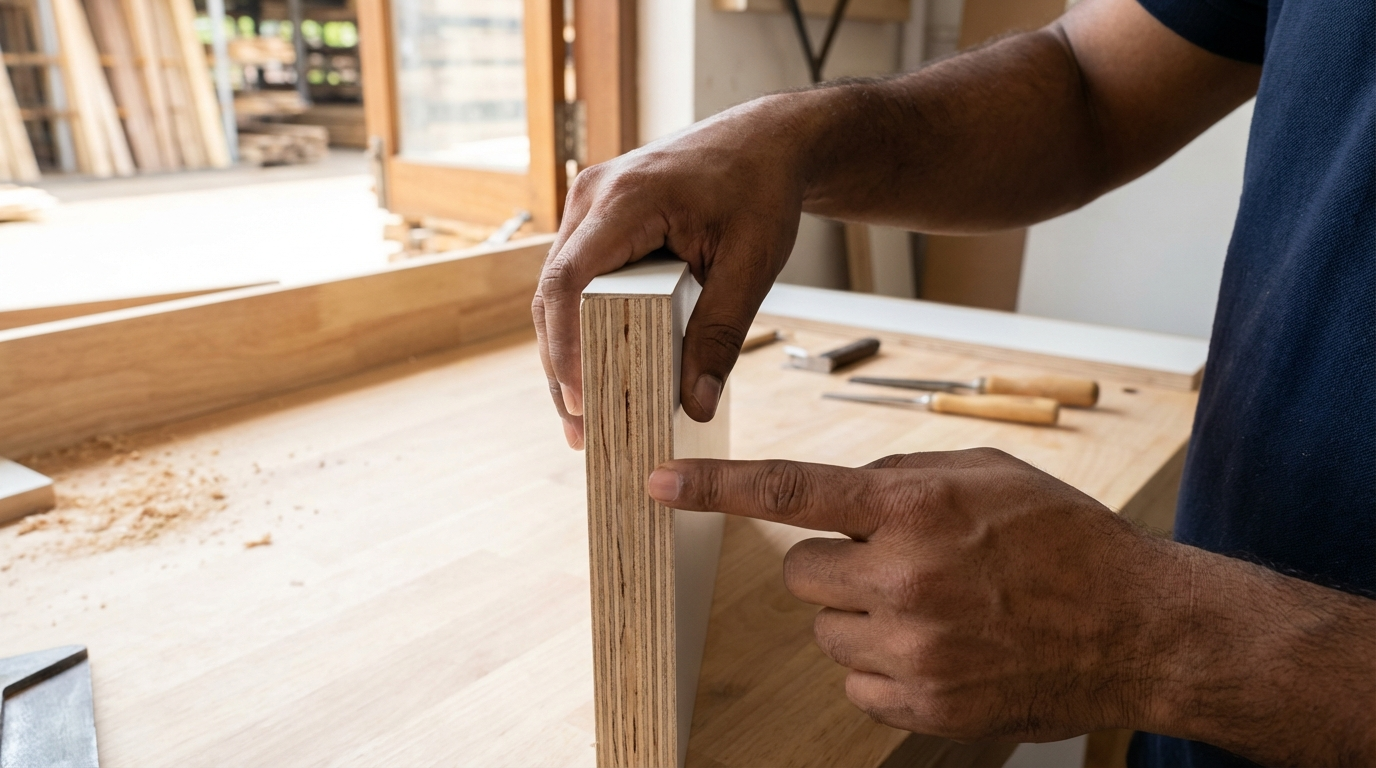
After cutting: Check 90° corners, no fuzz on MDF, even glue squeeze-out.
Post-install: Level shelves, test door swing, wipe-test edges for water bead.
Will MDF pooja unit last in monsoon?
Not reliably—edges absorb 15% moisture fast, leading to warp. Seal well and ventilate. Better: BWR ply. Check: Wet-edge test sample. If expands >1mm, avoid. Ventilate with exhaust fans during rains.
FAQs
What thickness for pooja unit shelves?
18mm minimum for both—handles 15-25kg idols/diyas without sag in standard 1m spans. MDF needs center support; ply stands alone. Varies by design: 12mm for backs. Confirm carpenter's load calc; add battens for overhangs. This prevents 80% of collapses.
Can I paint MDF for pooja unit?
Yes, its smooth face takes PU/paint flawlessly for glossy mandir look. Prime first to block moisture. Avoid direct sun—fades faster. Ply needs filler/sanding. Test small area for adhesion; use 2 coats for durability in incense smoke.
Is BWP plywood overkill for pooja?
Often yes for indoor—BWR suffices unless bathroom-adjacent. BWP costs 50% more but boils intact. Trade-off: Extreme wet-proofing. Spec BWR for most; upgrade coastal. Boil-test scrap to verify grade honestly.
How to prevent termites in pooja boards?
Treat with borate spray pre-fab; seal all edges/backs. MDF lower risk (dense); ply inspect cores. Store elevated/dry. Annual powder puff. No board is immune—combine with room pest control for zero issues.
Modular vs carpenter-made pooja: material impact?
Modular favors MDF (CNC precise); carpenter excels with ply (hand-strengthens). MDF uniform cuts reduce waste 20%. Pick modular for speed, custom ply for heavy-duty. Verify fab tolerances <1mm.
Laminate or veneer for pooja aesthetics?
Laminate on MDF for budget shine; veneer on ply for wood warmth. Lam wears from cleaning; veneer PU-polish lasts. Match temple style—gold lam for modern. Abrade lightly before clean.
Post-install pooja unit care tips?
Dust weekly with microfiber; avoid harsh chemicals. Humidity control via dehumidifier in monsoons. Tighten hinges yearly. This extends life 5+ years. Check for moisture under shelves monthly.
Cost to make 4x6ft pooja unit in India?
Around ₹25,000-60,000 total—boards ₹15k-30k, fab ₹5k-15k, hardware ₹5k. MDF cheaper end; ply higher. Varies city/finish. Quote with exact dims/grade; haggle fab 10%. Factor delivery wastage. Disclaimer: This content is provided for general informational purposes based on industry practices and publicly available information. Product specifications, standards, prices, and availability may vary by manufacturer, region, and time. Readers should independently verify details with manufacturers, dealers, or qualified professionals before making purchase or construction decisions.
Want Plywood Suggestions?
Share a few details and a Duro BOIL specialist will suggest suitable brands and connect you to responsive dealers.