MDF vs plywood for shoerack: what to pick (India)
MDF vs plywood for shoerack: what to pick (India) with a clear decision table on grade, thickness, moisture performance, warranty and price factors. Made for
Quick Decision Summary
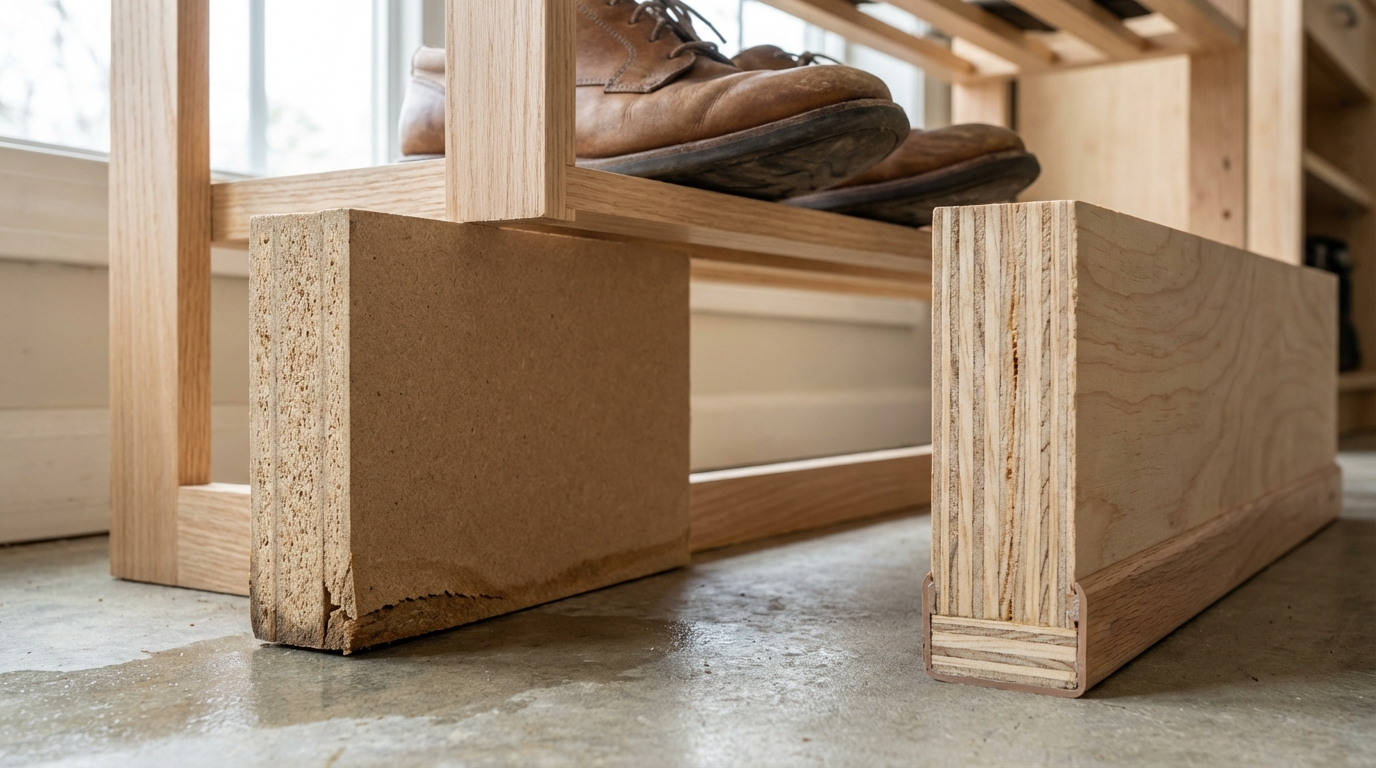
Plywood edges out MDF for most Indian shoeracks due to better strength and humidity handling.
If you're in a hurry: Pick plywood (BWR grade, 18mm thick) for entryway shoeracks exposed to monsoon drips or coastal humidity—its layered strength prevents sagging under shoe weight and repeated use. Opt for MDF (or HDHMR variant) only in fully dry indoor closets where budget and smooth laminates matter more than load-bearing. Always verify core uniformity and edge sealing on-site. This choice cuts long-term replacement risks in India's variable climate.
- Choose plywood if: Shoerack in humid entryway, heavy shoe loads, or needs strong screw holding for tiers.
- Choose MDF if: Dry bedroom closet, painted/laminated finish priority, tight budget under Rs 100/sq ft equivalent.
- Avoid plywood if: Ultra-smooth edges needed without extra sanding.
- Avoid MDF if: Any moisture exposure or spans over 60cm without supports.
Two-Minute Comparison That Actually Helps
| Factor | MDF | Plywood |
|---|---|---|
| Strength for shelves (shoe weight) | Good for light loads; may sag over 50cm spans | Excellent layered strength; handles 60cm+ spans easily |
| Moisture resistance (India entryways) | Poor unless HDHMR; swells in humidity | Better with BWR/BWP grades; resists monsoon effects |
| Screw holding (for assembly) | Average; strips easier on edges | Superior; ideal for tier brackets and hardware |
| Finish/smoothness | Uniform surface; great for laminates | Requires veneer check; minor grain shows |
| Weight/cutting ease | Lighter, easier for carpenters | Heavier, but precise calibration helps |
| Termite risk (India storage) | Low if treated; check core | Moderate; verify glue line and treatment |
Use this table by matching your shoerack spot: dry closet favors MDF's finish, but entryway demands plywood's durability.
Is MDF stronger than plywood for shoerack shelves?
No, plywood typically outperforms MDF in strength for shoerack shelves due to its cross-layered veneers that distribute shoe weight evenly and resist sagging over longer spans. MDF's fiber composition works for light-duty but compresses under repeated loading from boots or heels. In Indian homes, where shoeracks often hold 20-50kg across tiers, test by pressing the center—plywood rebounds better. Next step: Measure your span (aim under 60cm for MDF) and prioritize BWR plywood if over that.
What This Term/Material Actually Means
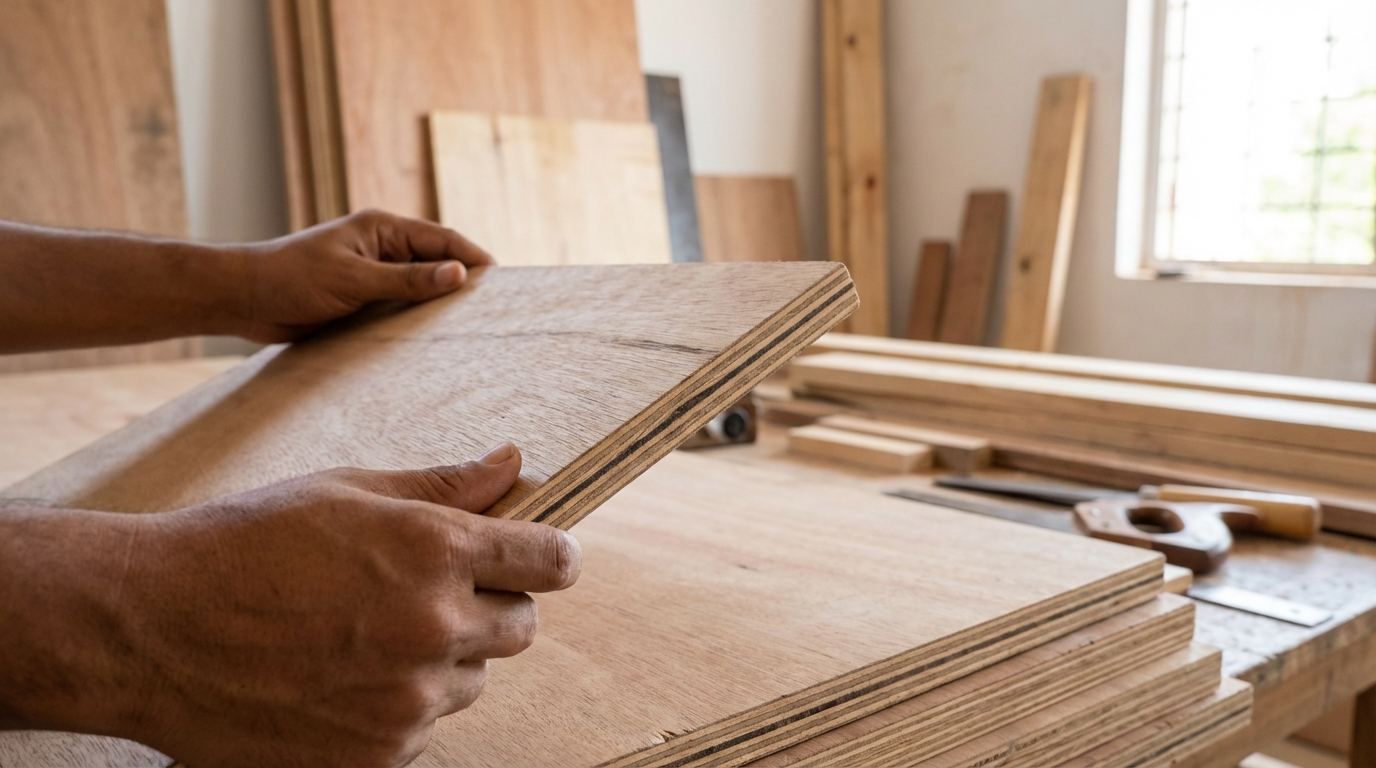
MDF (Medium Density Fiberboard) is engineered from wood fibers compressed under heat and resin, creating a uniform, dense sheet ideal for smooth finishes but vulnerable to water. Plywood stacks thin wood veneers glued crosswise for superior bending strength, graded by glue quality: MR for dry interiors, BWR for humid areas, BWP for extreme exposure.
For shoeracks, these mean plywood for robust tier supports in entryways, MDF for sleek modular units.
Where people get confused
- MDF = solid wood: No, it's fiber-based and weaker in tension.
- All plywood handles water: Only higher grades like BWR do reliably.
- HDHMR is just fancy MDF: It's high-density with better moisture traits.
- Thinner = always cheaper: Core quality and calibration drive real costs.
- Screw holding same everywhere: Plywood edges grip far better.
- No termite issue indoors: Humidity breeds risks in untreated boards.
India-Specific Reality Check
Monsoon humidity (70-90% RH) and coastal salt air turn entryway shoeracks into moisture battlegrounds—shoes drip rainwater, dust clumps wet. MDF often warps within months without edge sealing, while untreated MR plywood delaminates at glue lines. Storage in open godowns exposes boards to rain cycles, worsening core gaps. Workmanship varies: carpenters rush cuts, skipping polishing, leading to edge swelling. Coastal Kerala or Mumbai homes need BWR minimum; inland Delhi dry closets tolerate MR/MDF.
Can MDF handle Indian monsoon for shoeracks?
Rarely on its own—MDF absorbs moisture rapidly, causing shelf swelling and tier misalignment in entryways. HDHMR variants resist better but still demand full lamination and sealing. Plywood (BWR) fares superior by design. Nuance: In air-conditioned bedrooms, basic MDF lasts 2-3 years. Check: Ask supplier for 24-hour humidity test demo. Seal all edges with putty before install for any board.
Price Range and Cost Drivers (India)
MDF (12-18mm) typically ranges Rs 50-120 per sq ft, cheaper for basic grades but jumps with HDHMR or pre-laminated sheets. Plywood (same thickness) starts Rs 80-200 per sq ft, higher for calibrated BWR with premium faces. Drivers: Thickness (18mm adds 20-30%), city (Mumbai +15% logistics, Tier-2 lower), core quality (poplar vs eucalyptus), finish (veneer +10%). A 4x2ft shoerack (4 shelves) might total Rs 3,000-7,000 materials.
How to ask for quote: Specify "18mm BWR calibrated plywood, poplar core, no gaps" or "HDHMR MDF, moisture-tested"—compare 3 suppliers locally.
How to Choose in 5 Steps
- Assess location/load: Entryway/heavy shoes? Plywood. Dry closet/light? MDF.
- Pick thickness/grade: 18mm min; BWR plywood or HDHMR MDF.
- Inspect board: No core gaps, uniform density, sharp edges.
- Plan finish: Laminate for MDF, veneer/seal for plywood.
- Test assembly: Screw into scrap—check grip and sag.
Skip step 3, risk delamination in 6 months.
Decision Framework Table
| Condition | Recommended Pick | What to Verify |
|---|---|---|
| Humid entryway, monsoon exposure | BWR Plywood 18mm | Glue line test (no bubbling), edge straightness |
| Coastal/high salt air | BWP Plywood or HDHMR | Core density (heavy feel), treatment smell |
| Heavy shoe loads, long spans | Calibrated Plywood | Sag test (press center), screw hold |
| Tight budget, dry closet | Basic MDF 18mm | Uniform surface, no lumps |
| High scratch risk (kids/pets) | Laminated MDF | Pre-lam quality (no bubbles) |
| Fast delivery needed | Stock MDF | Local availability, no warping in yard |
Which is better for modular shoeracks?
Plywood suits custom modular shoeracks for its screw-holding and customization, allowing adjustable tiers without failure. MDF works for pre-fab kits needing quick laminate adhesion but limits heavy mods. In India, modular makers favor plywood to minimize returns from sagging complaints. Trade-off: MDF cuts cleaner for CNC. Verify by prototyping one shelf—load with 10 shoes for 48 hours.
Tips for Homeowners
- Prioritize sealed edges to avoid swelling—wipe shoes dry before placing.
- Clean with dry cloth only; no wet mops on MDF.
- Don't overload top shelf—distribute weight evenly.
- Check yearly for loose screws in humid zones.
Tips for Carpenters
- Cut MDF with fine blade to avoid chipping; polish edges thrice.
- Pre-drill plywood for screws—use 40mm for tiers.
- Support spans <60cm; add battens for longer.
- Seal cut edges same day with synthetic putty.
Tips for Architects and Designers
- Spec "18mm BWR calibrated, IS-marked equivalent" for drawings.
- Detail edge banding in wet zones; recess hinges 5mm.
- For open designs, plywood veneer hides humidity better.
- QC: Reject boards with visible gaps pre-install.
Trade-offs and Limitations
Plywood: Stronger but heavier, pricier, needs veneer matching for aesthetics; minor surface imperfections common. MDF: Smooth/affordable but moisture-weak, poor edge screw hold, dust-heavy cutting. Both: Termite treatment varies—rely on site checks, not claims. No perfect board; balance by zone.
Does plywood warp more than MDF?
Actually less—MDF expands uniformly but irreversibly in humidity, while quality plywood's cross-grains stabilize it. Poor plywood delaminates if glue fails. India fix: BWR grade + sealing. Test: Expose sample to steam 10 mins. Choose based on your humidity log.
Common Buyer Mistakes and How to Avoid Them
- Mistake: Picking thin 12mm for all. Why: Sags under shoes. Fix: 18mm min.
- Mistake: Ignoring location. Why: MDF in entryway swells. Fix: Humidity map your home.
- Mistake: No edge sealing. Why: Moisture wicks in. Fix: Seal post-cut.
- Mistake: Cheap MR grade. Why: Fails monsoons. Fix: Demand BWR proof.
- Mistake: Overloading tiers. Why: Breaks screws. Fix: 10kg max/shelf.
- Mistake: Skipping calibration check. Why: Uneven cabinets. Fix: Stack test flatness.
- Mistake: Wet cleaning. Why: Delams boards. Fix: Dry microfiber only.
- Mistake: No span supports. Why: Sagging shelves. Fix: Add battens.
- Mistake: Buying sight-unseen. Why: Hidden gaps. Fix: Inspect yard stock.
Failure Modes and Fixes
- Symptom: Shelf sagging. Cause: Thin span overload. Prevent: 18mm + supports. Fix: Add underside battens.
- Symptom: Edge swelling. Cause: Moisture ingress. Prevent: Seal + BWR. Fix: Sand/repaint.
- Symptom: Screw pull-out. Cause: Edge drilling. Prevent: Plywood interiors. Fix: Wood plugs + rescrew.
- Symptom: Delamination. Cause: Poor glue. Prevent: Glue line tap test. Fix: Clamp/reglue if early.
- Symptom: Surface cracks. Cause: Dry-wet cycles. Prevent: Consistent humidity. Fix: Fill + laminate over.
- Symptom: Termite trails. Cause: Untreated core. Prevent: Knock test density. Fix: Professional spray.
- Symptom: Misaligned tiers. Cause: Uneven cut. Fix: Shim + plane.
Quality Checks You Can Do Without Lab Tests
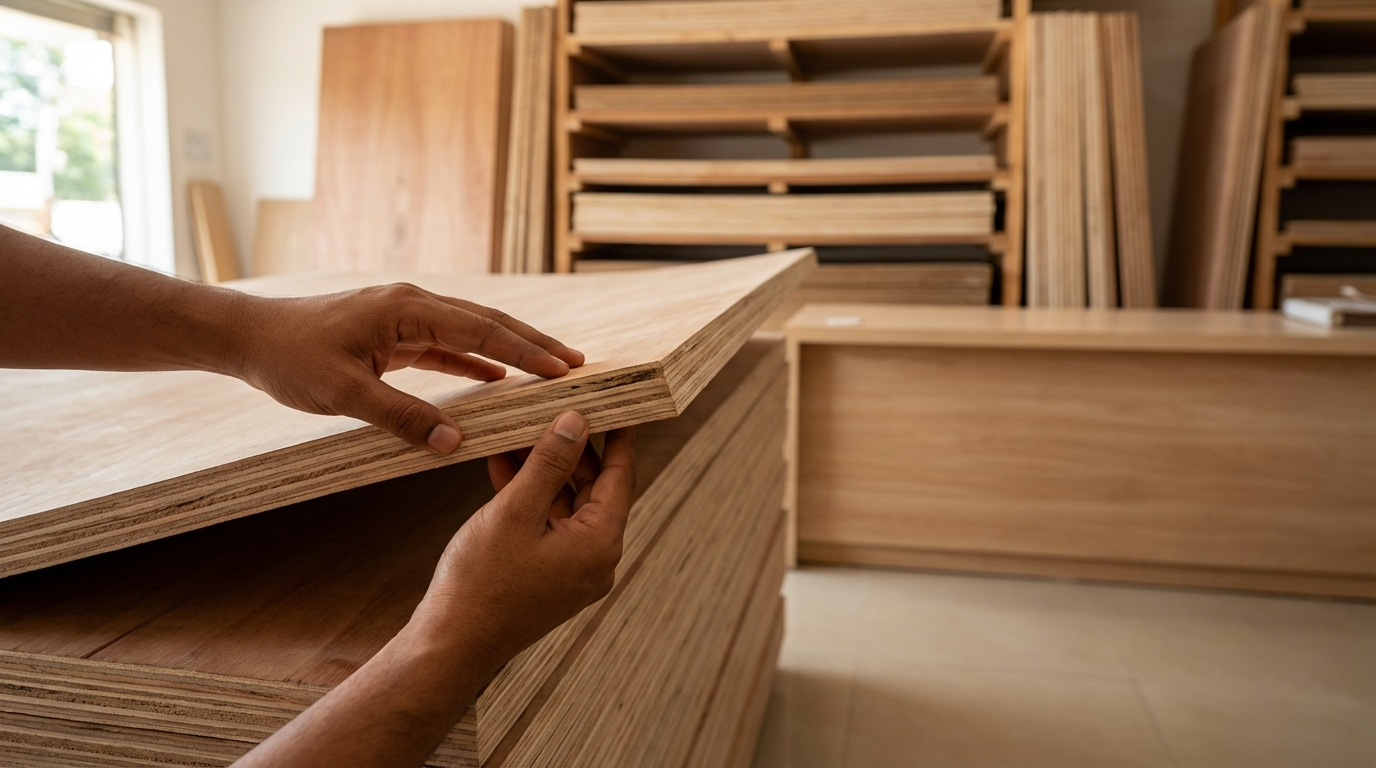
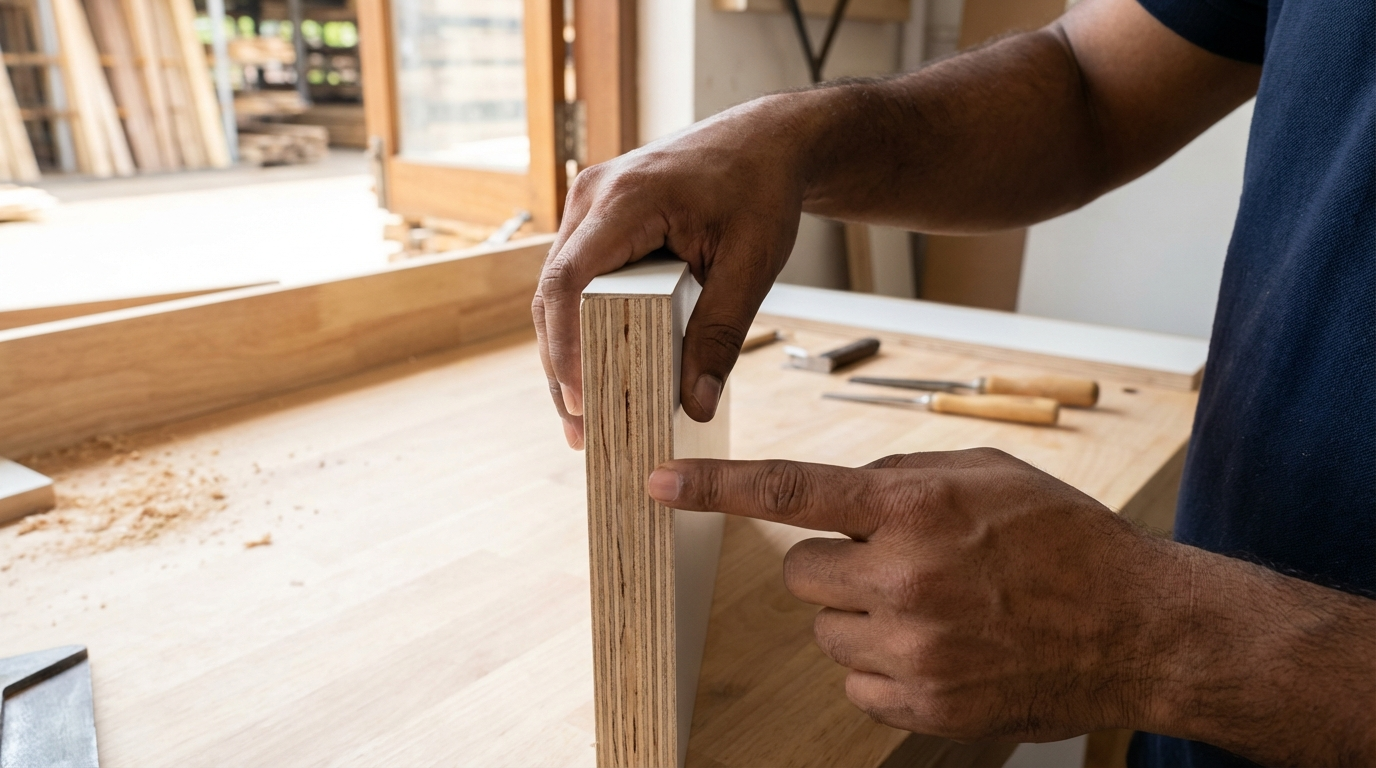
Before buying: Tap edges (solid thud = good glue), flex sheet (minimal bend), check faces (no knots/blisters), weigh sample (heavier = denser).
After cutting: Inspect core (no voids), sand edge (smooth resistance), screw test (no spin-out).
After install: Load test 48hrs, check level, wipe edges dry weekly. Red flags: Soft spots, fishy smell, warping yard stack.
Is 18mm thickness enough for shoerack?
Yes for most—handles 15-20kg/shelf over 50cm spans without sagging, standard for Indian modular units. Thinner 12mm risks flex in plywood/MDF alike under boots. Go 21mm for heavy gym shoes. Verify: Carpenter span calc (load x length^2). Pair with vertical supports every 60cm.
FAQs
Can I use MDF for outdoor shoeracks in India?
Not recommended—MDF disintegrates in rain exposure, even sealed, due to fiber swelling. Reserve for covered balconies with BWP plywood alternatives. In Rajasthan dry outdoors, treated MDF might last a season, but expect repaint yearly. Practical step: Prototype corner sample outdoors 1 month; if stable, proceed with full sealing and overhang roof.
Which holds screws better for shoerack brackets?
Plywood excels with its layered grip, preventing pull-out on tier brackets even after months. MDF edges crumble faster, needing pilot holes/washers. For adjustable racks, plywood reduces callbacks. Check: Screw 5x into scrap edge—plywood takes 10+ cycles. Use wall plugs for backs anyway.
How to prevent shoerack sagging in humid homes?
Choose 18mm BWR plywood with mid-spans under 50cm, add vertical battens every 40cm. Avoid MDF unless dry. Seal all cuts. Humidity control via dehumidifier helps. Test post-install: Place 20 shoes, monitor weekly. Redo if drops >2mm.
Is HDHMR MDF worth extra for shoeracks?
Yes in semi-humid zones—its density boosts moisture resistance over basic MDF without plywood cost. Still seal edges. Great for laminated modern looks. Compare density feel; if heavy, viable. Budget add: 20-30% premium, but lasts 2x longer.
What finish works best on plywood shoeracks?
Veneer or PU polish hides grains while sealing; laminate for high-traffic shine. Avoid paint alone—chips easy. Match shoe colors: teak veneer for rustic. Apply 3 coats post-assembly. Durability: Resists scuffs 3-5 years with dry wipes.
Does termite affect indoor shoeracks?
Yes if boards stored damp—termites thrive in humid cores. Plywood glues deter somewhat, MDF fibers attract if untreated. Prevent: Elevate off floor, ventilate. Inspect annually for powder trails. India tip: Neem oil wipe quarterly.
Can I DIY a shoerack with these materials?
Absolutely—cut 18mm sheets to 30x12in shelves, assemble with L-brackets on plywood frame. MDF for top if painted. Tools: Jigsaw, drill, clamps. Mistake avoid: Pre-seal. Lasts 5+ years dry; hire carpenter for curves.
Which is lighter for wall-mounted shoeracks?
MDF—20-30% lighter per sheet, easing wall fixings in apartments. Plywood stronger for fewer anchors. Balance: MDF if <10kg total load. Verify anchors rated 50kg each.
Disclaimer: This content is provided for general informational purposes based on industry practices and publicly available information. Product specifications, standards, prices, and availability may vary by manufacturer, region, and time. Readers should independently verify details with manufacturers, dealers, or qualified professionals before making purchase or construction decisions.Want Plywood Suggestions?
Share a few details and a Duro BOIL specialist will suggest suitable brands and connect you to responsive dealers.