MDF vs plywood for wall panelling: what to pick (India)
MDF vs plywood for wall panelling: what to pick (India) with a clear decision table on grade, thickness, moisture performance, warranty and price factors.
Quick Decision Summary
Choose plywood for wall panelling in humid or coastal areas; opt for MDF in fully dry, low-traffic interiors on a tight budget.
If you're in a hurry: Plywood offers superior strength and moisture resistance ideal for India's variable climate, preventing warping during monsoons, but costs more and needs finishing work. MDF delivers a smooth, paint-ready surface at lower upfront expense, perfect for quick accent walls in air-conditioned bedrooms, though it risks swelling if exposed to dampness. Factor your room's humidity, finish preference, and longevity needs—always verify moisture grade before buying.
- Choose plywood if walls face humidity, heavy use, or need screw-holding power for shelves.
- Choose MDF if prioritizing smooth finishes, budget savings, and dry indoor spots.
- Avoid MDF if monsoon exposure or poor ventilation is likely; skip plywood if ultra-smooth painting without sanding is key.
What MDF and Plywood Actually Mean for Wall Panelling
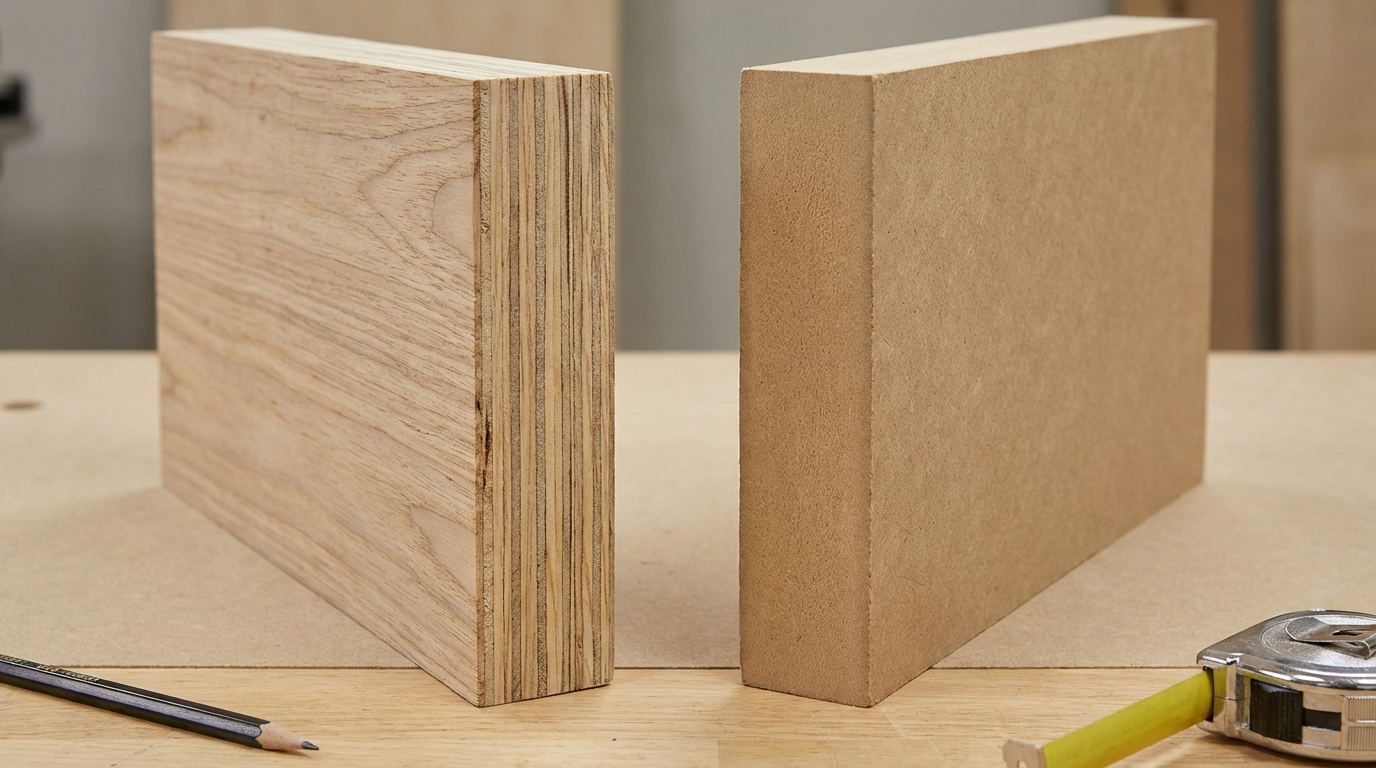
MDF, or Medium Density Fiberboard, is engineered from wood fibers bonded under heat and pressure, creating a uniform, dense sheet perfect for seamless wall panels. For panelling, it excels as a base for laminates, veneers, or paint due to its flawlessly smooth surface—no knots or grain mismatches.
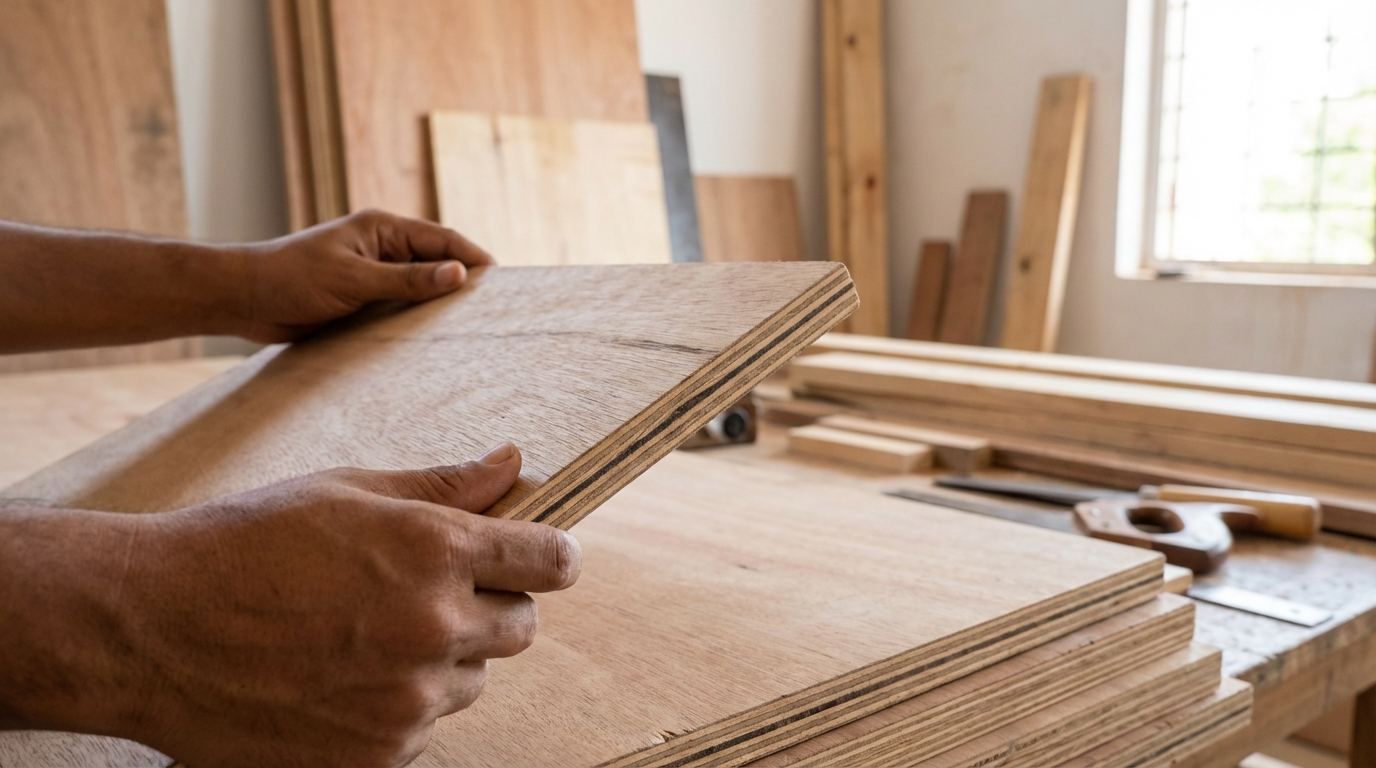
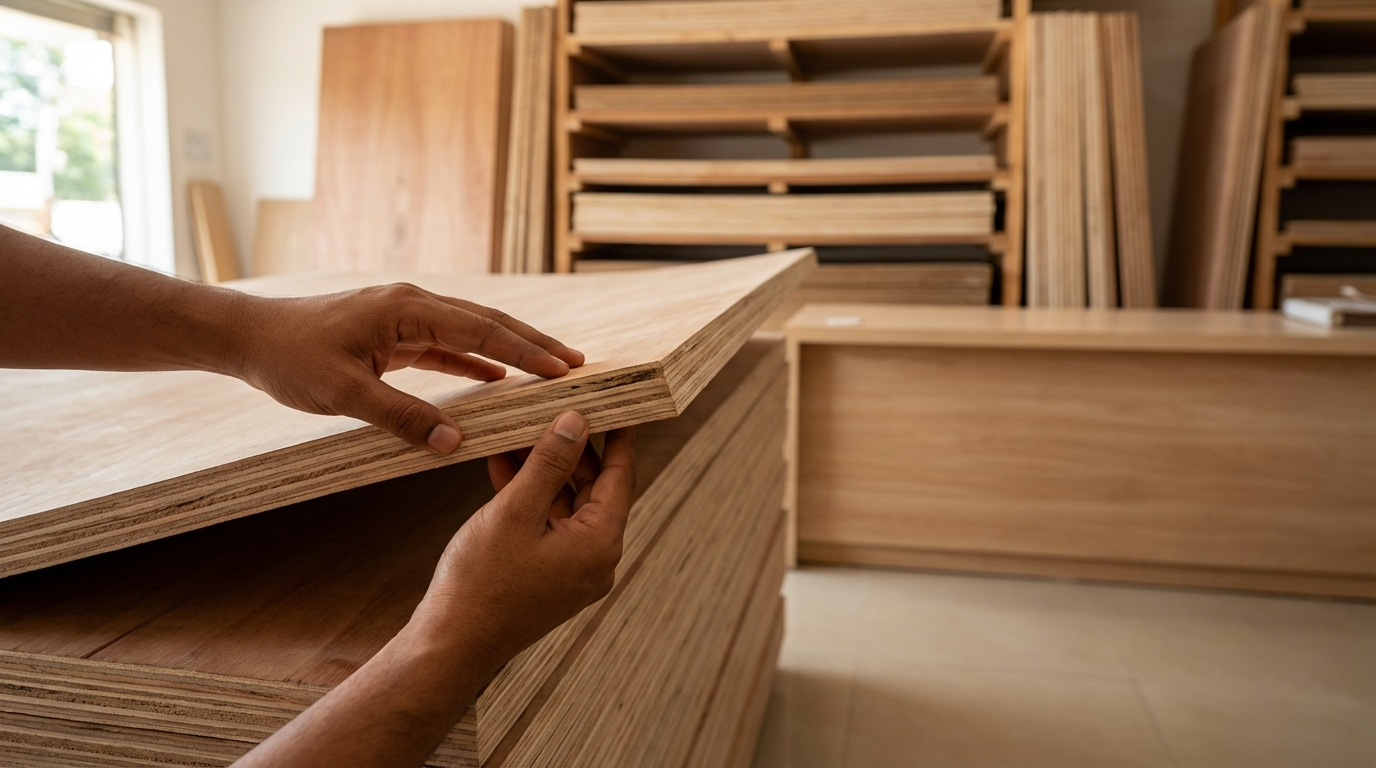
Plywood consists of thin wood veneers glued in cross-layered sheets, providing structural rigidity. In wall panelling, it forms a stable backing for decorative overlays, with grades like MR (moisture-resistant), BWR (boiling water-resistant), or BWP (boiling water-proof) dictating humidity tolerance.
Where People Get Confused
- Assuming MDF is "fake wood"—it's engineered but often more consistent than natural plywood veneers.
- Thinking all plywood is waterproof—only BWP grades handle immersion; MR suits light dampness.
- Believing MDF holds screws forever—it crumbles over time without pilot holes or anchors.
- Overlooking plywood's weight—thicker sheets sag walls if framing is weak.
- Confusing panelling thickness—6-9mm suffices for decor; 12mm+ for structural support.
- Ignoring edge sealing—MDF edges absorb moisture fastest without primer.
India-Specific Reality Check
India's monsoon humidity (70-90% RH) and coastal salt air amplify swelling risks—MDF fibers expand irreversibly above 65% RH without lamination, while untreated plywood delaminates glue lines. Improper site storage under tarps leads to core warping before installation. Contractor shortcuts like skipping edge banding expose vulnerabilities in poorly ventilated homes. Urban apartments with AC fare better for MDF, but villas or kitchens demand BWR plywood to counter steam and spills.
Two-Minute Comparison That Actually Helps
| Aspect | MDF | Plywood |
|---|---|---|
| Strength & Stability | Good for flat panels; flexes under load | Superior rigidity; resists sagging |
| Moisture Resistance | Poor—swells quickly; needs sealing | Better with MR/BWR grades; BWP for extremes |
| Surface Finish | Ultra-smooth, paint/laminate-ready | Grainy; requires sanding/filling |
| Screw Holding | Weakens after repeats; needs anchors | Strong, multiple uses |
| Weight (per sq ft, 12mm) | Lighter, easier handling | Heavier, firmer mount |
| Termite Risk | Low (dense fibers) | Higher unless treated |
Use this for dry bedrooms (MDF wins on finish) vs kitchens (plywood on durability).
Is MDF smoother than plywood for painting wall panels?
Yes, MDF's uniform fiber structure provides a mirror-like surface ideal for direct painting or thin veneers, saving sanding time on walls. However, in humid India spots, unsealed MDF attracts dust and peels paint faster. Plywood demands putty filler for smoothness but holds finishes longer under stress. Next step: Test a sample scrape—smooth without fibers means MDF; layered grain signals plywood. Seal edges regardless for 5+ year finish life.
Price Range and Cost Drivers (India)
For wall panelling (6-12mm thickness), MDF typically ranges Rs 40-90 per sq ft, while plywood (MR/BWR grades) falls Rs 70-150 per sq ft—varies by city (higher in metros like Mumbai/Delhi due to logistics), brand quality, and finish.
Cost drivers: Thickness (thicker adds 20-30%), moisture grade (BWR +15-25%), pre-lamination (+Rs 20-50/sq ft), calibration (flatness for even panels), and transport wastage (10-15% extra). Bulk buys drop 10-20%; confirm locally as batches fluctuate.
How much does MDF cost vs plywood per sq ft in India?
MDF often starts lower at Rs 40-90/sq ft for basic 8-12mm sheets, suiting budget panelling, while plywood's Rs 70-150 reflects layered strength. Laminates add Rs 30-60 to either. In tier-2 cities, MDF saves 30-40%; coastal areas push plywood premiums for grades. Quote checklist: Specify thickness, grade (MR vs BWR), sq footage, delivery—negotiate scrap inclusion. Budget example: 100 sq ft bedroom accent wall—MDF Rs 5,000-9,000 materials; plywood Rs 8,000-15,000.
How to Choose in 5 Steps
- Assess room conditions: Dry AC bedroom? MDF ok. Kitchen/humid? Plywood BWR.
- Pick thickness: 6mm decor overlays; 9-12mm direct-to-wall.
- Plan finish: Paint/laminate favors MDF; veneer suits plywood.
- Verify supplier stock: Check flatness, edge seal, no gaps.
- Test mockup: Install 1 sq ft sample; expose to humidity 48hrs.
Skip steps and risk rework—e.g., wrong grade leads to 20% material loss.
Decision Framework: Pick the Right Material for Your Walls
| Condition | Recommended | What to Verify |
|---|---|---|
| Dry interior, budget focus | MDF (8mm) | Smooth edges, no swelling in tap water test |
| Coastal/monsoon humidity | Plywood BWR/BWP (9-12mm) | Glue line integrity, treated core |
| High scratch/traffic | Plywood (12mm) | Screw hold (3+ cycles), calibration <0.5mm |
| Smooth paint finish needed | MDF pre-lam | Uniform density, primer adhesion |
| Heavy shelves attached | Plywood MR+ | Load test sample (10kg/sq ft) |
| Tight timeline/low skill | MDF cut-to-size | Pre-finished edges, no chipping |
Trade-offs and Limitations
MDF trades strength for affordability and seamlessness but limits load-bearing and damp tolerance—MDF walls dent easily, crumble at edges. Plywood excels in durability yet demands more prep time, higher weight stresses fixings, and visible grain unless overlaid. Neither is termite-proof alone; both need sealants for spills. Long-term: Plywood outlasts 10+ years; MDF 5-8 in ideal spots.
Does plywood sag less than MDF on walls?
Plywood's cross-layers prevent sagging better than MDF's uniform mass, especially over 2m spans or with added weight. In India homes, weak battens amplify MDF flex. Opt plywood for open walls; reinforce MDF frames. Check: Hang 5kg on sample overhang—minimal bend wins. Add vertical supports every 40cm for either.
Common Buyer Mistakes and How to Avoid Them
- Mistake: Ignoring humidity—buying MDF for kitchens. Why: Swells post-monsoon. Fix: Use hygrometer; pick BWR if >60% RH.
- Mistake: Skimping on thickness. Why: Dents easily. Fix: Minimum 9mm; test thumb pressure.
- Mistake: No edge sealing. Why: Moisture wicks in. Fix: Apply epoxy primer pre-install.
- Mistake: Poor storage. Why: Warps en route. Fix: Stack flat, covered indoors.
- Mistake: Weak fixings. Why: Panels shift. Fix: Use wall plugs + screws every 30cm.
- Mistake: Wrong finish match. Why: Peels unevenly. Fix: Mockup paint on sample.
- Mistake: Bulk unverified. Why: Batch variations. Fix: Inspect 10% sheets on-site.
- Mistake: No ventilation plan. Why: Traps moisture. Fix: Add gaps or vents behind panels.
Failure Modes and Fixes
- Symptom: Bulging/swelling. Cause: Moisture ingress. Prevent: Seal all edges. If happening: Dry out, replace affected.
- Symptom: Cracking paint. Cause: Surface flex. Prevent: Rigid battens. If happening: Sand, re-prime.
- Symptom: Sagging corners. Cause: Thin material/load. Prevent: 12mm + supports. If happening: Shim and screw extra.
- Symptom: Screw holes crumbling. Cause: Over-tightening. Prevent: Pilot holes. If happening: Wooden plugs + filler.
- Symptom: Delamination (ply). Cause: Poor glue. Prevent: IS-marked grade. If happening: Clamp, epoxy reglue.
- Symptom: Termite tracks. Cause: Untreated core. Prevent: Chemical-treated sheets. If happening: Fumigate, replace.
Quality Checks You Can Do Without Lab Tests
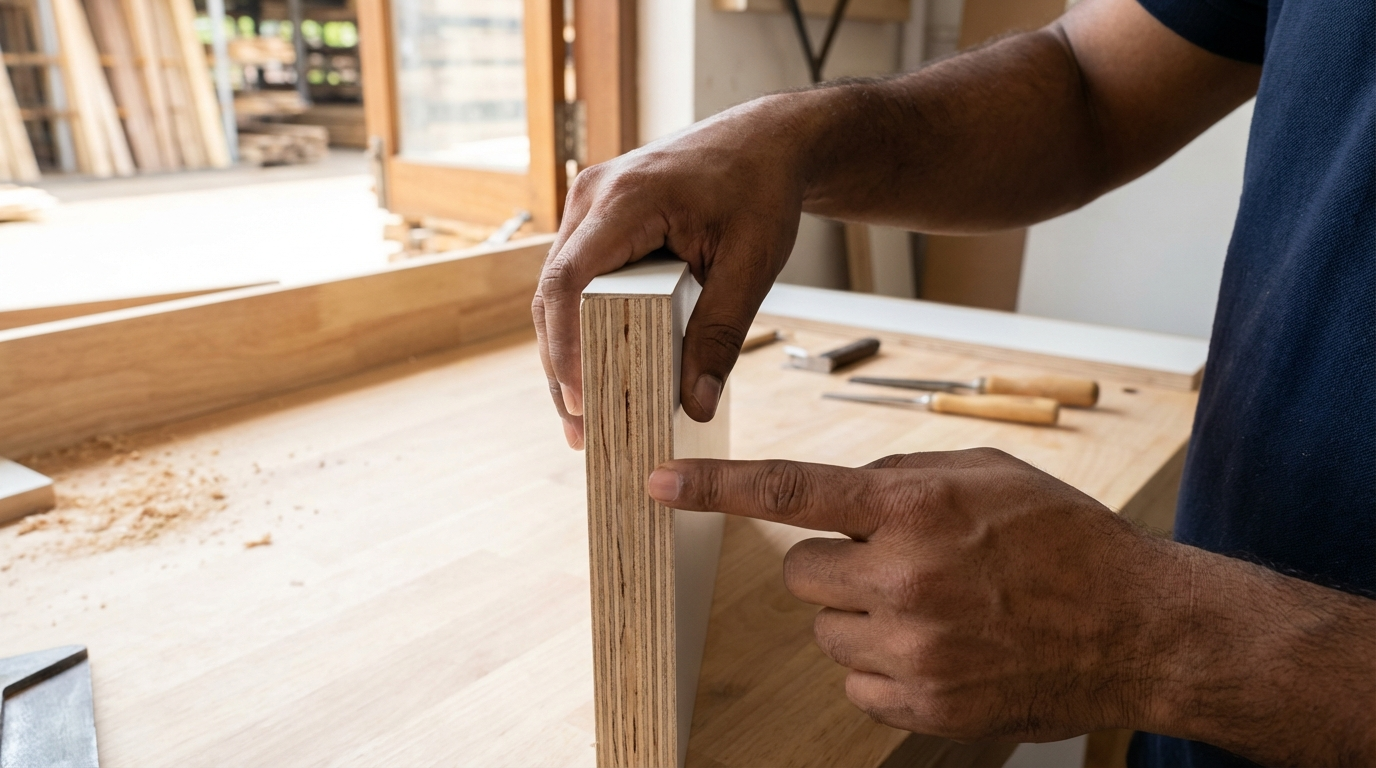
Before buying: Tap for solid thud (no hollows), check flatness with straight edge (<1mm warp), scratch edge lightly (resists crumbling), ask for moisture grade proof via supplier demo.
After cutting: Inspect core—no voids/gaps, even glue lines, no fuzzing on MDF.
After install: Tug edges for secure hold, spray water on seam (no darkening), monitor 1 month for shifts.
Can you tell good MDF from bad by knocking?
A uniform, deep knock signals dense quality; tinny echo means low-density filler. Pair with water drop test—quality resists darkening 30min. In India markets, reject wet-stored stacks. Next: Weigh sample (heavier = denser). Avoid if fibers pull on nail prick.
Tips by User Type
For Homeowners: Durability Do's and Don'ts
Do wipe with microfiber damp cloth only; avoid direct water hosing. Don't hang heavy mirrors without plywood backing. Clean spills instantly to prevent rings.
For Carpenters: Handling and Prep
Cut MDF with fine blade to avoid chipping; pre-drill all holes. For plywood, score veneer first. Seal cut edges same day; use clamps for flat gluing.
For Architects: Spec and Detailing
Specify "BWR plywood 9mm calibrated, edge-banded" for humid zones. Detail batten spacing 40cm; include expansion gaps 2mm. Laminate MDF for repeatable modules.
For Modular Makers: QC and Repeatability
Batch-test flatness; standardize screw zones. Plywood reduces returns 30% vs MDF in complaints. Log humidity during fab to predict issues.
Is plywood better for wall panelling in humid Indian homes?
Plywood (BWR grade) outperforms MDF in humidity by maintaining glue integrity and layer stability, avoiding the swelling that ruins MDF aesthetics post-monsoon. Ideal for living rooms with open windows. Verify by flex test—minimal bend. Install with vapor barrier behind for extras; expect 10-year service vs MDF's 5.
Which holds laminates better on walls—MDF or plywood?
MDF's smooth density bonds laminates flawlessly without bubbles, suiting glossy wall effects. Plywood needs primer for adhesion but grips tighter long-term. In dusty India sites, MDF cuts bubbles 50%. Prep: Sand lightly, apply contact cement evenly. Test peel strength on scrap first.
FAQs
Can MDF be used for exterior wall panelling?
No, standard MDF disintegrates in rain or humidity; even HD variants falter outdoors. Reserve for sealed interiors. Plywood BWP with weatherproof coating handles exposure better, but cladding systems outperform both. In India, coastal villas need metal alternatives. Always add overhangs and sealants if pushing limits.
Does thickness matter more for MDF or plywood panels?
Yes for both, but plywood leverages thickness for strength gains; 12mm resists flex where 8mm MDF bows. Panelling sweet spot: 8-9mm saves weight/cost without sagging. Factor span—wider walls demand thicker. Check supplier bend test; add ribs if thin.
How to prevent warping in wall panels during monsoon?
Seal all six sides with epoxy primer pre-install; use dehumidifiers in storage. Plywood BWR warps less than MDF. Fix battens rigidly every 30-40cm. Post-install, ventilate room. Monitor first rains—if edges lift, shim and reseal promptly for recovery.
Is pre-laminated MDF worth it for walls?
Yes for speed and moisture shield, skipping site lamination hassles in humid India. Costs 20-30% more but cuts labor 40%. Choose 0.8mm thick overlay. Verify no bubbles on sample heat-press. Ideal for accents; plywood base if structural.
Which is easier to cut and install for DIY wall panelling?
MDF slices cleanly with no splintering, lighter for solo handling—DIY favorite for bedrooms. Plywood veneers tear without scoring. Use jigsaw for curves on both. Prep: Acrylic primer for dust control. Start small: 4x8 sheet max per wall.
Can you paint directly on plywood wall panels?
Yes after sanding and primer to fill grain; holds well in dry areas. MDF paints direct for pro finish. India tip: Use moisture-barrier primer against humidity bleed. Two coats PU varnish seals. Test adhesion scrape—no flaking means ready.
What's the weight difference for large wall areas?
MDF (12mm) ~15-20kg per 4x8 sheet; plywood 25-35kg—impacts ladder work. Lighter MDF eases high installs. Balance with strength: Plywood fewer seams. Calculate: 100sqft needs 4-5 sheets; reinforce joists if over 20kg/sqm.
Do termites attack MDF wall panels?
Rarely, as fibers lack chewable grain, but untreated plywood cores invite them. Treat both with borate spray. India homes: Inspect annually; elevate off floors. If spots appear, isolate and fumigate—early catch saves walls.
HDHMR vs MDF for panelling—which wins?
HDHMR (high-density) edges MDF on density/moisture but costs similar to entry plywood. For walls, HDHMR suits semi-wet if sealed. Stick to proven: MDF dry, plywood wet. Verify knock test—denser thud better.
Disclaimer: This content is provided for general informational purposes based on industry practices and publicly available information. Product specifications, standards, prices, and availability may vary by manufacturer, region, and time. Readers should independently verify details with manufacturers, dealers, or qualified professionals before making purchase or construction decisions.Want Plywood Suggestions?
Share a few details and a Duro BOIL specialist will suggest suitable brands and connect you to responsive dealers.