MDF vs plywood for wardrobe: what to pick (India)
MDF vs plywood for wardrobe: what to pick (India) with a clear decision table on grade, thickness, moisture performance, warranty and price factors. Made for
Quick Decision Summary
For most Indian wardrobes, pick BWR grade plywood over standard MDF. It handles humidity better, supports heavier loads on shelves, and resists warping longer.
If you're in a hurry: BWR plywood suits humid bedrooms or coastal homes with daily use, offering strength for clothes and linens without sagging. MDF works for tight budgets in dry interiors if sealed well, but often swells in monsoons. Check thickness (18mm carcass, 18mm shelves), moisture grade, and edge banding. Test weight capacity on-site and confirm local quotes vary by city—expect plywood 20-40% higher cost but fewer callbacks.
- Choose plywood if: humid area, heavy storage, long-term durability needed.
- Choose MDF if: smooth paint finish, modular factory setup, very low budget.
- Avoid MDF if: coastal or monsoon exposure without extra sealing.
- Avoid cheap plywood if: core gaps or poor glue lines show on tap test.
Two-Minute Comparison That Actually Helps
| Factor | MDF (Standard) | Plywood (BWR Grade) | Best for Indian Wardrobes? |
|---|---|---|---|
| Strength & Load (Shelves) | Moderate; sags under 20-30kg long-term | High; holds 40-60kg+ without bend | Plywood |
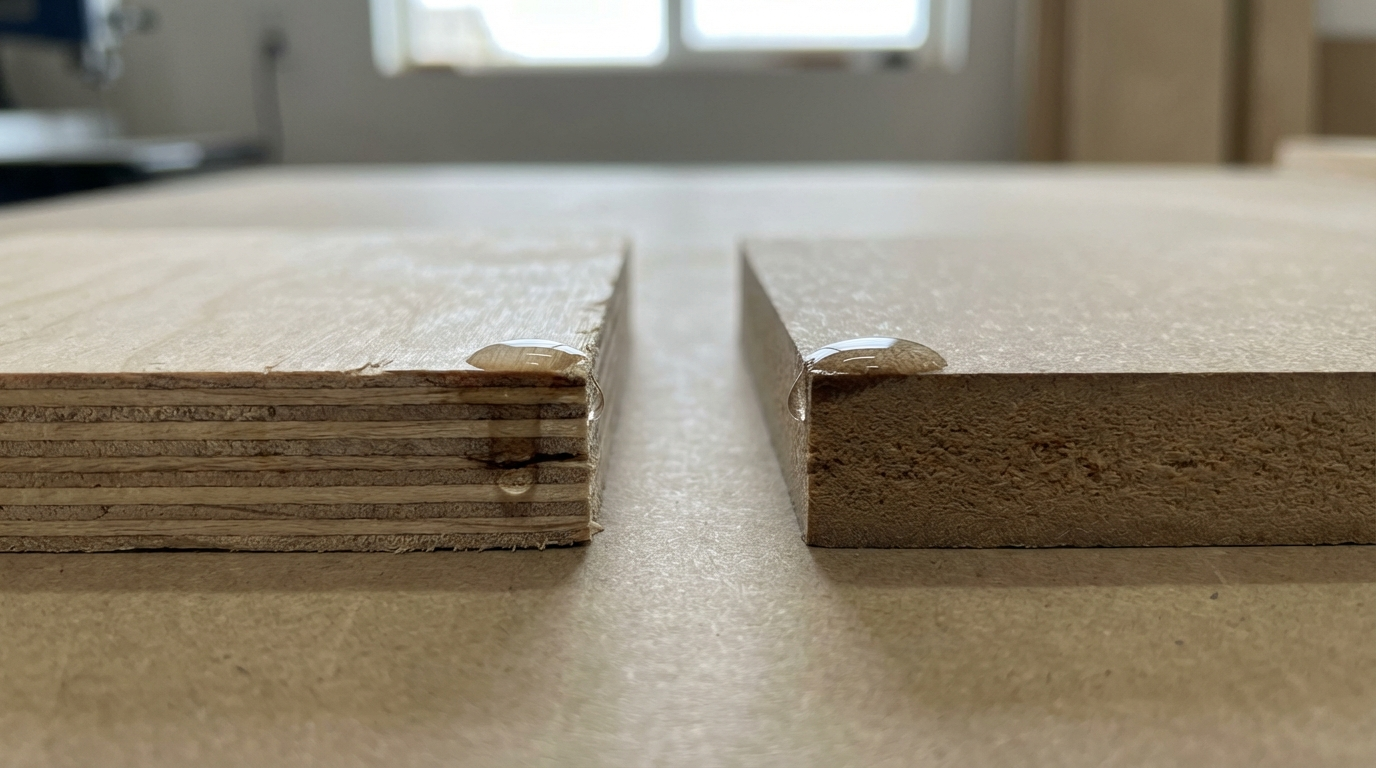
| Moisture Resistance | Low; swells in humidity >60% | Good; boiling water resistant glue | Plywood |
| Weight | Lighter (easier handling) | Heavier (more stable) | MDF for install ease |
| Surface Finish | Ultra-smooth for laminate/paint | Needs veneer; good with calibration | MDF |
| Edge Strength | Crumbles if not banded | Naturally strong veneers | Plywood |
| Termite Risk | Medium (needs treatment) | Low if phenolic glue used | Plywood |
Use this table for dry vs. humid zones: plywood wins 4/6 factors for wardrobes, but MDF shines in controlled factory laminates.
Which is cheaper for wardrobes—MDF or plywood?
MDF typically costs less upfront, often 20-40% below plywood for similar thickness due to simpler production. For an 6x4 ft wardrobe carcass (18mm), expect MDF panels around ₹3,000-5,000 total material, while BWR plywood runs ₹4,000-7,000 depending on city and finish. Cost drivers include thickness, density (HDHMR MDF adds 10-20%), edge banding labor, and transport from coastal hubs. Always get quotes specifying "18mm BWR calibrated" vs. "18mm HDHMR"—local variation spikes in metros. Budget extra 15% for monsoon sealing on MDF to avoid future regrets.
What These Materials Actually Mean
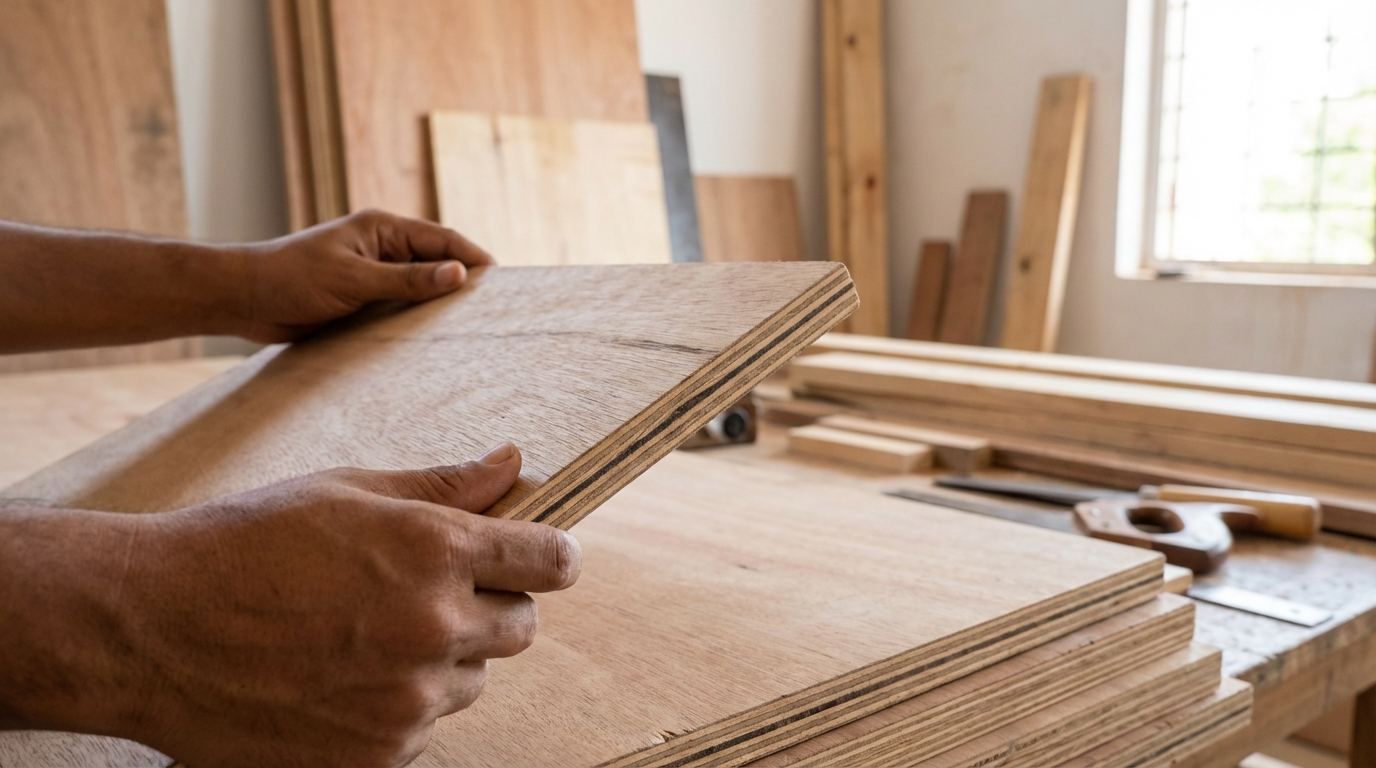
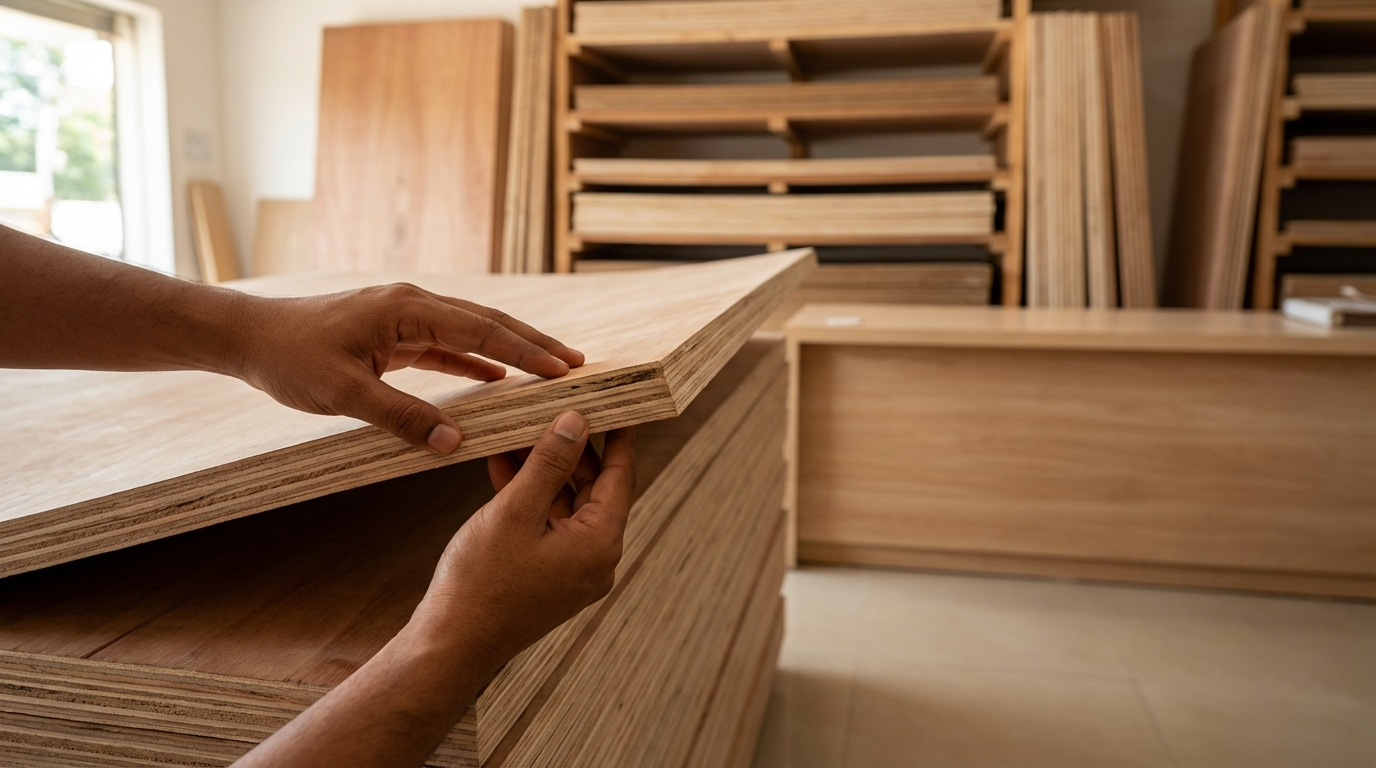
Plywood stacks thin wood veneers cross-glued for strength—MR for dry use, BWR for humid boiling-water-resistant, BWP/marine for extreme wet. For wardrobes, BWR (IS standards logic) uses phenolic glue to fight delamination. Where confusion hits: people mix MR (cheap interiors) with BWR, leading to shelf sags in humid bedrooms.
MDF compresses wood fibers into dense boards—smooth but uniform, no grain direction. Standard MDF suits paint; HDHMR adds moisture resistance. Common mix-ups: assuming all MDF is "waterproof" (none are fully), or plywood always warps (calibrated doesn't if stored flat).
- Misunderstanding 1: "MDF is fake wood"—it's engineered, often more consistent than low-grade plywood cores.
- Misunderstanding 2: "Plywood always splinters"—calibrated edges cut clean for wardrobes.
- Misunderstanding 3: "Thicker = better"—18mm standard, but check core voids.
- Misunderstanding 4: "MDF can't hold screws"—pre-drill works fine for light doors.
- Misunderstanding 5: "Plywood smells chemical"—fresh glue off-gasses; ventilate site.
India-Specific Reality Check
Monsoon humidity (70-90%) hits wardrobes hard—even bedrooms get damp from open windows or laundry. MDF edges swell without PVC banding, causing laminate peel. Plywood fares better with BWR glue, but poor storage (stacked vertical in yards) warps sheets. Coastal areas amplify: salt air corrodes fittings faster on MDF. Contractor reality: MDF cuts dustier, slowing site work; plywood needs skilled edge sealing. Always insist on flat, covered storage post-delivery.
Price Range and Cost Drivers (India)
For 18mm wardrobe boards, MDF ranges ₹50-90 per sq ft; BWR plywood ₹80-140 per sq ft—higher in North India due to logistics. Drivers: grade (HDHMR +15%), calibration (flatness adds 10%), face veneer quality, city (metros 20% over Tier-2). Laminates add ₹20-40/sq ft. Mini example: 10x6 ft wardrobe (carcass + 4 shelves) totals ₹8,000-15,000 material; quote checklist: thickness, moisture grade, calibrated, edge-banded samples.
How to Choose in 5 Steps
- Assess site humidity: Bedroom/coastal? Go BWR plywood. Dry AC room? MDF ok.
- Spec thickness/load: 18mm carcass/shelves; tap for solid core.
- Finish plan: Laminate? MDF smooth base. Veneer? Plywood natural.
- Budget + quote: List drivers; compare 2-3 suppliers on-site samples.
- Test samples: Weight shelf mockup, wet edge overnight. Skip if gaps/delam.
Skipping step 3 leads to rework: mismatched finishes bulge in humidity.
Can MDF handle heavy wardrobes in India?
Standard MDF handles 15-25kg per shelf short-term but sags in humid Indian homes without reinforcement. HDHMR upgrades help, holding 30kg+ if edges banded thickly. Nuance: pair with metal channels for heavy loads like blankets. Next step: carpenter-test a sample shelf with 20kg weights for 48 hours—deflection over 2mm means plywood swap. Avoid in non-AC coastal bedrooms.
Does plywood warp more than MDF for wardrobes?
Low-grade plywood warps if stored poorly, but calibrated BWR stays flat better than MDF in monsoons due to cross-layers. MDF swells uniformly, loosening hinges. Conditions: plywood wins if 16+ plies, gaps absent. Check: stack samples flat 1 week post-buy. If bow >1cm, reject batch.
Decision Framework Table
| Condition | Recommended Pick | What to Verify On-Site |
|---|---|---|
| Humid bedroom (monsoon) | BWR Plywood | Glue line hardness (tap test), no core gaps |
| Coastal/salty air | BWP Plywood | Phenolic smell, edge water resistance |
| Heavy storage (50kg+ shelves) | Plywood 18mm | Load test sample, screw hold |
| Tight budget, dry interior | HDHMR MDF | Density stamp, PVC edge band thickness |
| High scratch risk (kids/pets) | Laminated MDF | Scratch test on finish sample |
| Fast modular delivery | Pre-fab MDF | Calibration flatness (<0.5mm variation) |
Trade-offs and Limitations
Plywood: Stronger but dustier cuts, needs precise carpenter skills; heavier transport. MDF: Smooth/cheaper but edge fragility demands full banding (adds labor); lower screw hold without inserts. Both: Termite treatment essential in India; no material is fully "maintenance-free" in humidity.
Is 18mm thickness enough for wardrobe carcass?
Yes, 18mm standard balances strength/cost for most Indian wardrobes, preventing twist under door weight. Nuance: use 12mm backs, reinforce corners with blocks. Thicker 25mm only for walk-ins. Check: measure supplier sample deflection under hand pressure—no give means good.
Common Buyer Mistakes and How to Avoid Them
- Mistake 1: Picking MR grade for bedrooms. Why: Humidity delams. Do: Demand BWR label.
- Mistake 2: Skipping edge banding on MDF. Why: Swells fast. Do: Insist 2mm PVC all around.
- Mistake 3: Buying thinnest boards. Why: Sags shelves. Do: Stick 18mm min.
- Mistake 4: Ignoring storage. Why: Warps en route. Do: Flat covered delivery.
- Mistake 5: No load test. Why: Fails post-install. Do: Mockup shelves.
- Mistake 6: Cheap laminate over plywood. Why: Peels uneven. Do: Match finish to base.
- Mistake 7: Contractor picks alone. Why: Cost over quality. Do: Joint site visit.
- Mistake 8: Forgetting vents. Why: Traps moisture. Do: Add wardrobe louvers.
Failure Modes and Fixes
- Shelves sagging: Weak core. Prevent: 18mm BWR. Fix: Add metal supports.
- Edge swelling: No banding/MDF humidity. Prevent: PVC seal. Fix: Sand/refinish.
- Door misalignment: Carcass twist. Prevent: Square corners. Fix: Adjust hinges.
- Laminate bubbling: Moisture trap. Prevent: Acclimatize boards. Fix: Re-laminate panels.
- Screw loosening: Poor hold. Prevent: Pre-drill inserts. Fix: Bigger screws.
- Termite entry: Untreated. Prevent: Phenolic + spray. Fix: Fumigate early.
Quality Checks You Can Do Without Lab Tests
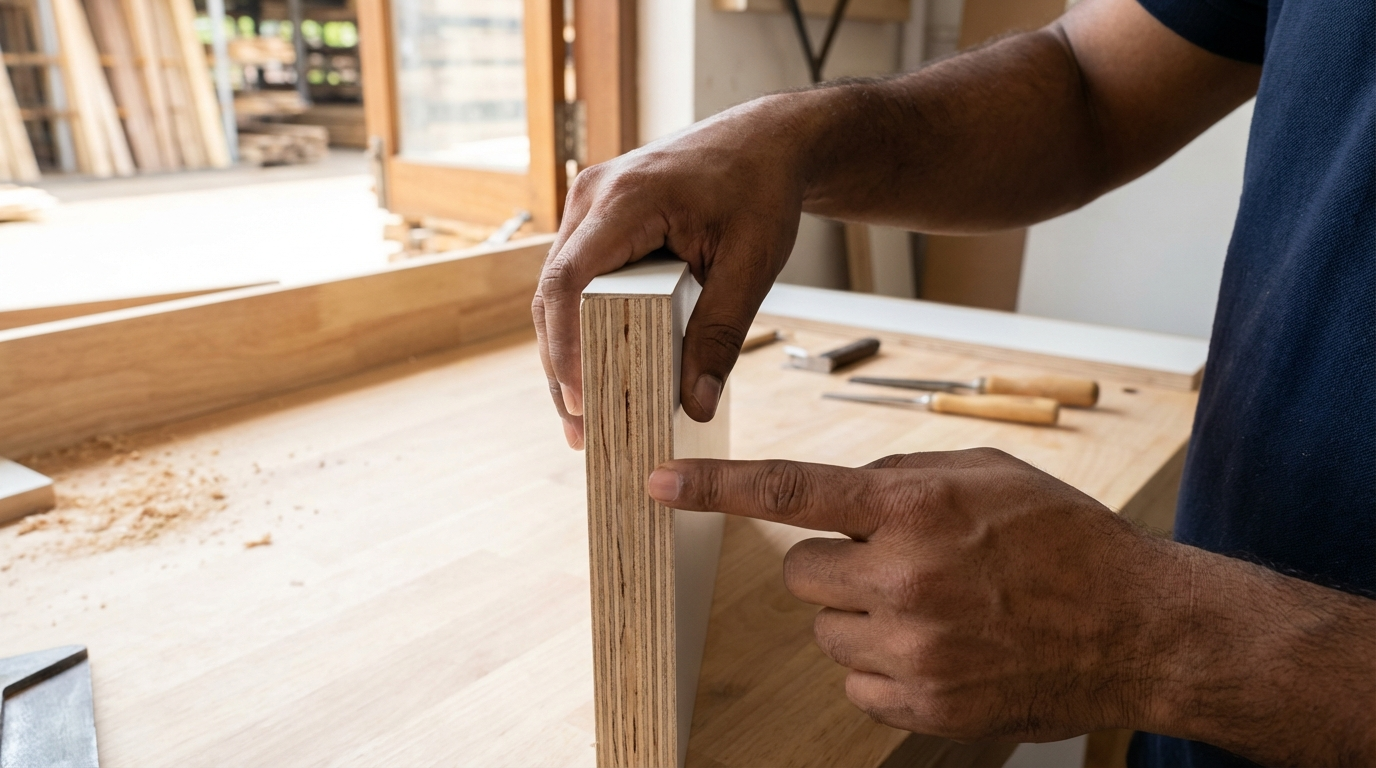
Before buying: Tap edges—solid thud no hollow; scratch face veneer; weigh sq ft for density; ask glue type/plies count.
After cutting: Check 90° corners, no tear-out, even calibration with straightedge.
After install: Level doors, tight hinges, wipe edges dry weekly.
Red flags: Knife-cut core crumbles, wet rag swells overnight, uneven thickness.
Homeowner Tips for Wardrobe Durability
Do: Wipe spills instantly, use silica packs in humid months, avoid overloading top shelves. Don't: Hang wet towels inside, skip cleaning dust buildup. Expect 10-15 years with care; ventilate drawers.
Carpenter Tips for Cutting and Assembly
Cut MDF slow to minimize dust; plywood fast with zero-clearance blade. Pre-drill hinge zones 3mm, edge-band before assembly. Handle plywood flat to avoid bow; acclimatize 48hrs site.
Architect/Designer Specs for Wardrobes
Spec "18mm BWR calibrated plywood carcass, HDHMR shelves if modular." Detail edge returns 10mm, wet-zone silicone seal. Finish: Matte laminate for fingerprints; veneer for premium.
FAQs
Should I use MDF or plywood for wardrobe doors?
Plywood doors (12-18mm BWR) resist warp better in India, especially with heavy handles. MDF works for flush lightweight if HD laminated, but reinforce with frames. Trade-off: plywood heavier but screw-secure. Verify: Swing test sample door 50x—no sag.
What's better for modular wardrobes—MDF or plywood?
MDF excels in factories for smooth CNC cuts and repeatability, ideal for OEMs. Plywood better for site-built strength. Conditions: Modular dry storage? MDF. Humid custom? Plywood. Check factory QC: Flatness gauge under 0.3mm.
How much thickness for wardrobe backs?
3-6mm suffices for backs, using MR MDF/ply to save cost without stability loss. Nuance: Groove-in firmly; coastal use 6mm BWR. Avoid 3mm in heavy units—flaps loose.
Does HDHMR MDF beat BWR plywood?
HDHMR MDF resists moisture closer to BWR but lags in shear strength for shelves. Good hybrid for budget humidity. Test: Soak edge 24hrs—minimal swell ok. Plywood still for max load.
Can I paint MDF wardrobes directly?
Yes, MDF's smoothness takes primer+paint flawlessly, unlike plywood grain. Prep: Sand 180-grit, 2 primer coats for humidity block. Lasts 5-7 years; re-coat fades.
Why do wardrobe shelves sag in India?
Humidity softens glue/ fibers plus overload. Prevent: BWR 18mm, center supports every 60cm. Fix: Under-shelf braces; distribute weight evenly.
Is termite treatment needed for wardrobes?
Essential in India—treat cores pre-assembly with borate sprays. Plywood phenolic glue resists better. Check: Post-treatment smell; reapply yearly voids.
How to seal wardrobe edges against moisture?
Apply 2mm PVC/edge tape heat-pressed, plus silicone corners. MDF critical; plywood bonus. Monsoon tip: Extra coat polyurethane. Inspect yearly for lifts.
Disclaimer: This content is provided for general informational purposes based on industry practices and publicly available information. Product specifications, standards, prices, and availability may vary by manufacturer, region, and time. Readers should independently verify details with manufacturers, dealers, or qualified professionals before making purchase or construction decisions.Want Plywood Suggestions?
Share a few details and a Duro BOIL specialist will suggest suitable brands and connect you to responsive dealers.