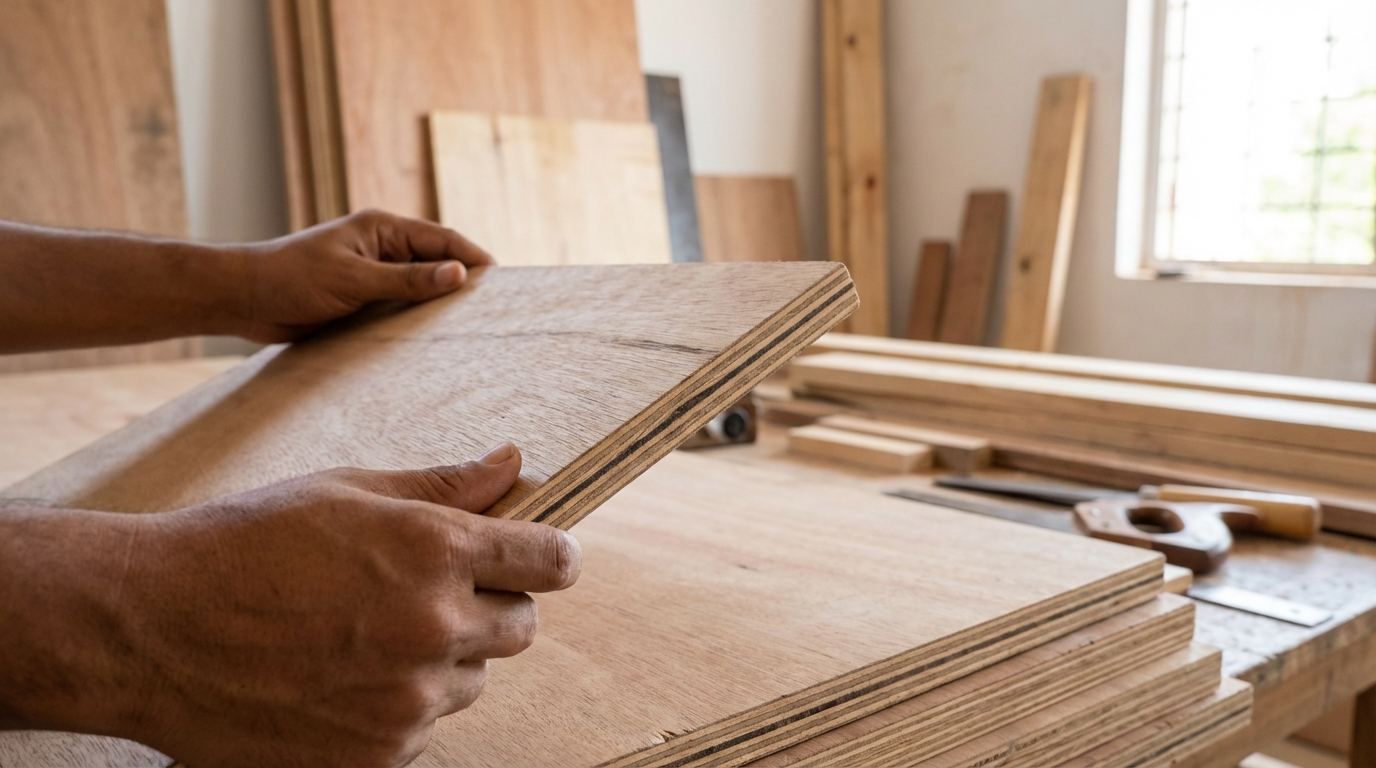
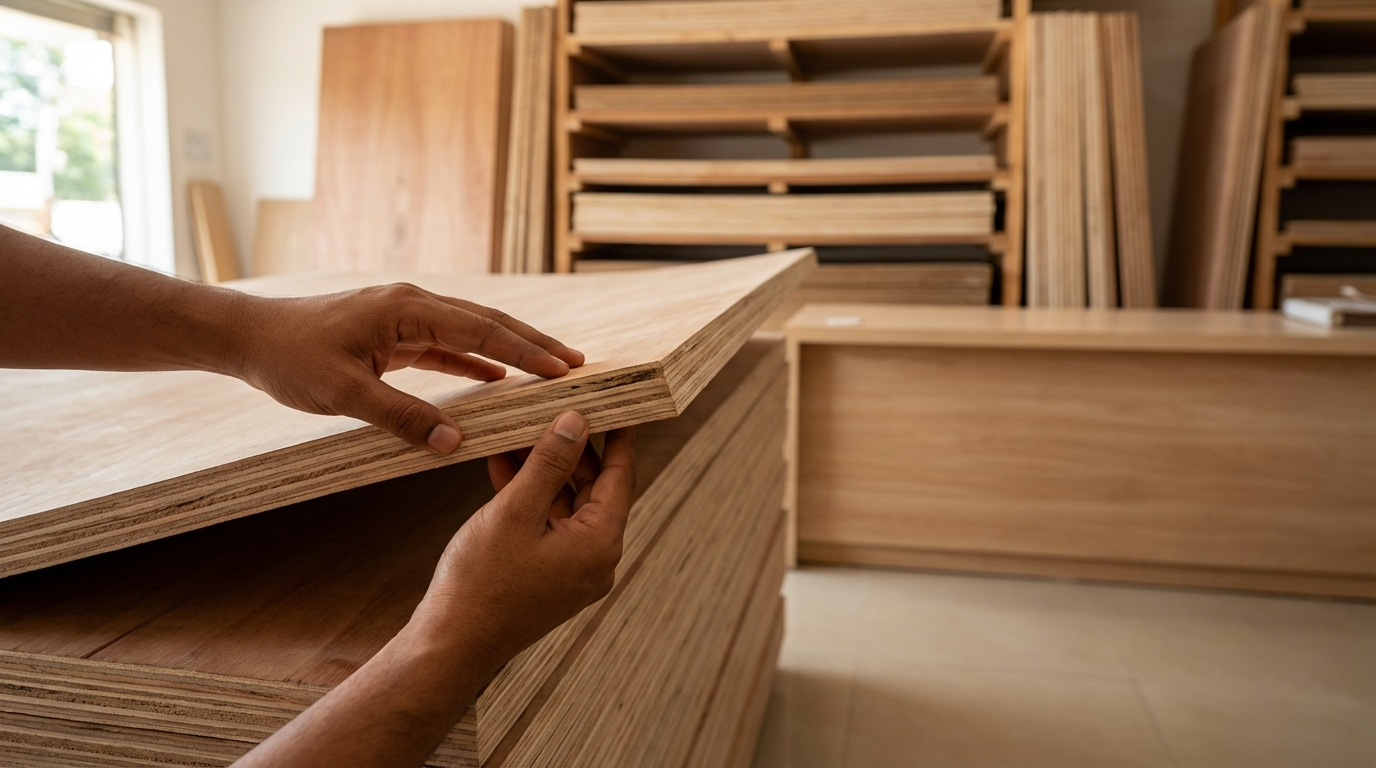
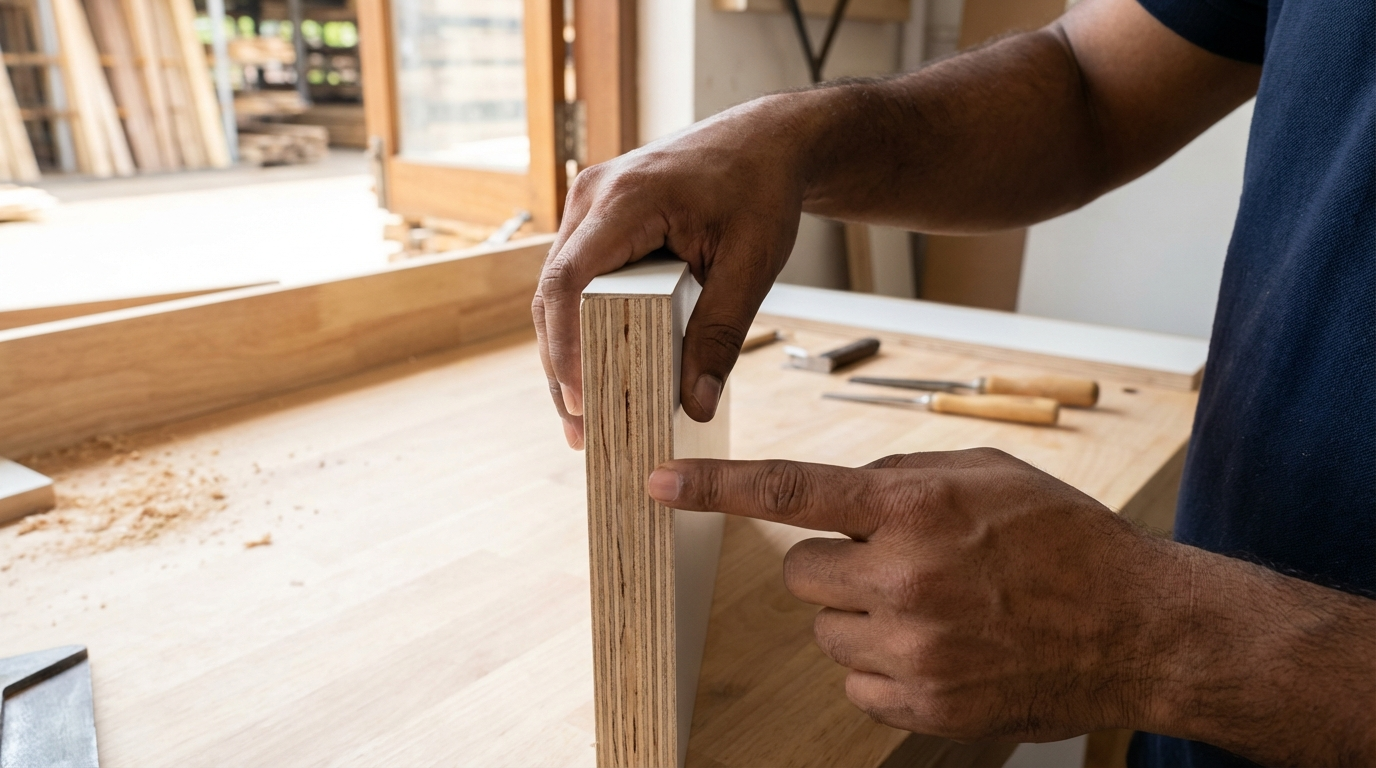
MR plywood price per sq ft: thickness-wise trends
Understand mr plywood price per sq ft using price-per-sqft tables, thickness-wise factors, and dealer quote tips. Avoid overpaying and fake stock in India.
Quick Decision Summary
MR plywood prices typically range ₹30–₹120 per sq ft across thicknesses, rising sharply from 6mm to 25mm due to material use and core strength.
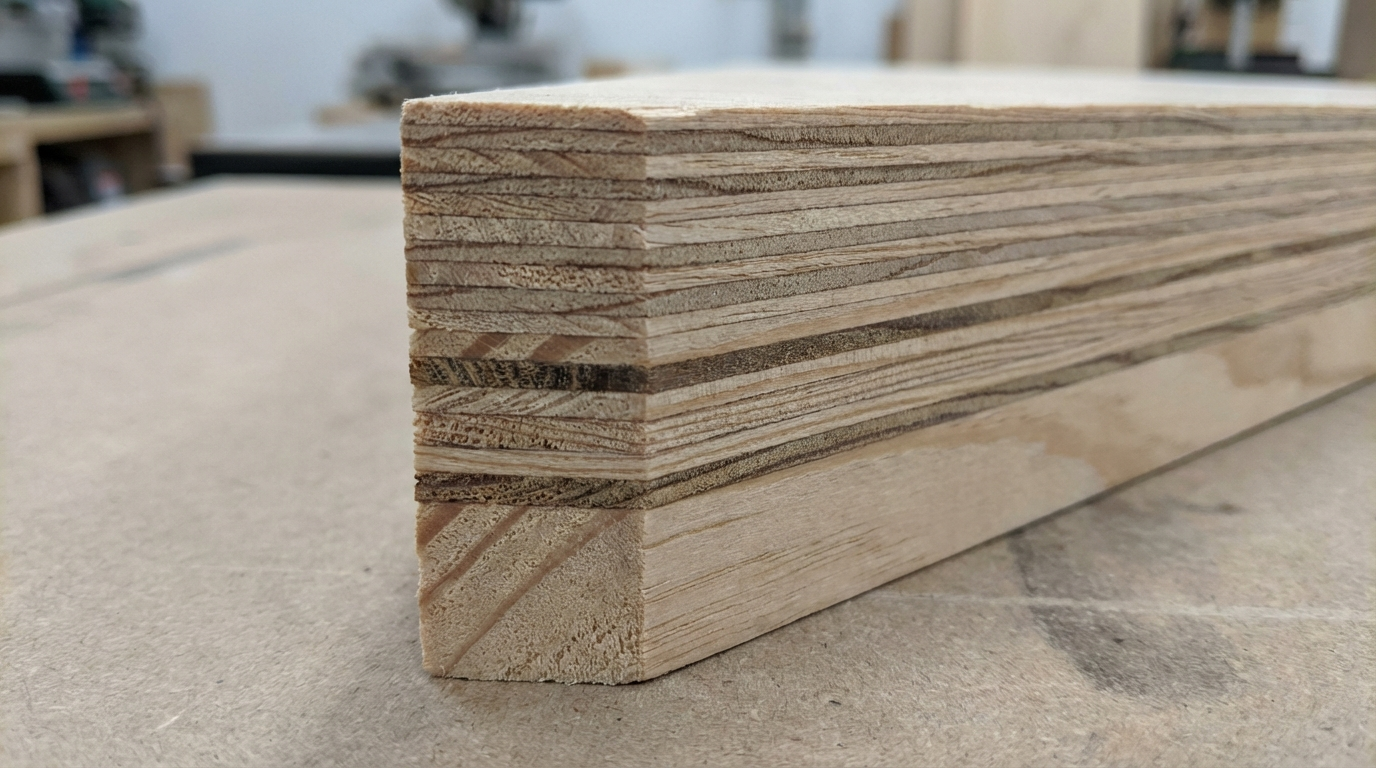
If you’re in a hurry: Focus on 18mm for general furniture or partitions—expect ₹70–₹110/sq ft in urban areas, but add 10–20% for calibrated or branded faces. Thinner 6–12mm suits cabinets (₹40–₹80/sq ft); thicker 19–25mm for heavy shelves (₹100+). Always verify core gaps and glue smell before loading. Quote with specs: "18mm MR, calibrated, 5x8 ft, poplar core, oak face." Regional swings hit 20–30% (coastal pricier). Skip uncalibrated to cut wastage losses by half.
- Choose this if: Dry indoor use, budget projects, quick carpentry—MR balances cost and basic moisture hold.
- Avoid this if: Bathrooms/kitchens or monsoons—upgrade to BWR for delamination risk drop.
Price Range and Cost Drivers (India)
MR plywood pricing follows thickness trends: thinner sheets cost less per sq ft due to lower wood volume, but thicker ones demand premium cores for stability. Expect base ranges like ₹30–₹50/sq ft for 3–6mm, ₹50–₹85 for 12mm, ₹70–₹110 for 18mm, and ₹95–₹120+ for 19–25mm. These shift 15–30% by city—Mumbai/Delhi higher on logistics, Tier-2 lower but check transport.
| Thickness | Typical Range per Sq Ft (₹) | Common Uses | Key Cost Driver |
|---|---|---|---|
| 3–6mm | 30–55 | Cabinet backs, laminates | Thin veneers, light cores |
| 9–12mm | 45–80 | Wardrobes, shelves | Calibration adds 10–15% |
| 15–18mm | 65–105 | Furniture frames, partitions | Poplar core quality jumps price |
| 19–25mm | 90–125+ | Heavy platforms, beds | Thicker faces resist warping |
Cost drivers: Thickness (60% impact), core (poplar vs mixed—20% swing), face veneer (teak/oak adds ₹10–20), calibration (₹5–15 extra/sq ft), sheet size (8x4 standard, customs +logistics). Monsoon stockpiles inflate 10%.
How to Get Accurate Dealer Quotes
- List specs: "18mm MR grade, calibrated both sides, poplar core, commercial face."
- Ask per sq ft + full sheet rate (wastage math).
- Compare 3 quotes: "Inclusive delivery? Gurjan/mixed core?"
- Negotiate bulk: 50+ sheets drops 5–10%.
- Verify: "IS-marked? Glue line test?"
Mini budget example: 100 sq ft kitchen cabinets (18mm): ₹8,000–₹11,000 base + ₹1,000 delivery/cutting = total ₹9–12k. Factor 5% wastage buffer.
What This Term/Material Actually Means
MR stands for Moisture Resistant plywood—boiled glue holds up to occasional humidity (up to 24–48 hours submersion test logic), ideal for indoor dry zones like bedrooms or offices. It's urea-formaldehyde bonded, cheaper than waterproof grades, with poplar/mixed cores and basic veneers. Not structural marine-grade.
Where People Get Confused About MR Plywood
- Thinks "moisture resistant" = waterproof—no, delaminates in constant wet.
- Assumes all MR equal—ignores core gaps causing buckling.
- Overlooks thickness role—thin MR flexes in cabinets.
- Believes price = quality—cheap MR often has weak glue lines.
- Mixes with MR particleboard—MDF swells faster.
India-Specific Reality Check
In humid monsoons or coastal belts (Mumbai, Chennai), MR suits covered storage but risks edge swelling if unsealed. Godowns pile sheets poorly, leading to bent cores—insist on flat stacking. Contractor workflows favor MR for speed, but poor site sealing causes 20–30% failure callbacks. Hot-dry North India? Less issue, but termite-prone areas need treatment checks.
How to Choose in 5 Steps
- Match use to grade: Dry interiors? MR. Wet? BWR.
- Pick thickness by load: Shelves over 50kg? 18mm+.
- Check sheet quality: Flatness, no gaps, glue sniff test.
- Quote smart: Specify calibration, core type.
- Test post-buy: Tap for hollows, weigh for density.
Skip steps? Expect warping in 6–12 months from humidity ingress.
Which Thickness of MR Plywood Offers Best Value per Sq Ft?
18mm often wins for versatility—₹70–₹110/sq ft buys stable cores without 25mm overkill. Thinner saves upfront but wastes on cuts; thicker for beams. Value peaks when calibrated: uniform 1–2% thickness tolerance cuts laminate gaps. In projects like wardrobes, 18mm minimizes callbacks vs 12mm flex. Next: Measure load (books? 15kg/sq ft shelf needs 18mm min), then quote calibrated vs raw—saves 10% rework.
Decision Framework: Match Your Needs
| Condition | Recommended MR Thickness | What to Verify/Ask |
|---|---|---|
| Tight budget, light cabinets | 12mm (₹50–80/sq ft) | Poplar core, no visible gaps |
| Monsoon humidity, bedrooms | 18mm calibrated | Edge sealing ready, glue test |
| Heavy shelves, coastal | 19–25mm | Termite treatment, flat stack |
| Fast delivery, bulk | Any, 8x4 sheets | Current stock age <3 months |
| Scratch-prone kids' room | 18mm+ thick face | Veneer hardness, pre-laminate |
| Partition walls | 15–18mm | Screw hold test sample |
Two-Minute Comparison: MR vs BWR Plywood
MR cheaper (20–40% less) for dry zones; BWR for wet (holds 72+ hours boiling). Choose MR if budget <₹100/sq ft and indoor-only; BWR if kitchens/bathrooms to dodge delam.
| Factor | MR | BWR |
|---|---|---|
| Price/sq ft (18mm) | ₹70–110 | ₹100–150 |
| Moisture Hold | Occasional spills | High humidity/wet |
| Best For | Furniture dry | Kitchen partitions |
Does MR Plywood Price Vary Much by City in India?
Yes, 20–35%: Metro hubs like Bangalore/Delhi ₹80–120/sq ft (18mm) from logistics; Tier-2 like Jaipur ₹60–95. Coastal adds 10–15% for humidity-proofing. Nuance: Bulk buys even out gaps. Step: Call 3 local yards with exact specs—haggle on "per sq ft delivered."
Trade-offs and Limitations
MR saves 30% vs waterproof but limits to low-moisture (no kitchens). Thicker boosts strength but hikes weight/cost 40%. Calibrated cuts waste but +₹10/sq ft. Unsealed edges absorb monsoon vapor fast—needs laminate polish.
For Homeowners: Durability Do’s and Don’ts
Do: Seal edges with putty, avoid floor spills, dust dry. Don’t: Direct AC drip zones, heavy water plants. Lasts 5–10 years indoors with care; clean with damp cloth max.
For Carpenters: Cutting and Handling Tips
Cut with zero-clearance blade to avoid tear-out; pre-drill hinges. Handle flat—stack vertically kills flatness. Edge-band immediately post-cut.
For Architects: Spec Writing Essentials
Specify "MR grade, 18mm ±1mm calibrated, poplar core min 400kg/cum density." Detail wet-zone buffers, finish schedules.
Common Buyer Mistakes and How to Avoid Them
- Buying cheapest without core check: Why: Hollow gaps buckle. Do: Tap test—solid thud.
- Ignoring thickness for load: Why: 12mm sags shelves. Do: Load calc (10kg/sq ft min 15mm).
- No calibration spec: Why: Uneven laminate bubbles. Do: Ruler check variance <1mm.
- Bulk without stock age: Why: Old sheets warp. Do: Ask "mfg date?" <6 months.
- Skipping edge seal: Why: Humidity peels. Do: Tape sample overnight damp.
- Per sq ft blind: Why: Sheet math hides waste. Do: Calc full sheets needed.
- Monsoon buy unverified: Why: Swells in transit. Do: Plastic wrap insist.
- No glue test: Why: Weak bonds fail. Do: Nail pull—resists clean.
Failure Modes and Fixes
- Symptom: Edge swelling. Cause: Unsealed humidity. Prevent: Varnish edges. Fix: Sand, reseal.
- Buckling mid-sheet. Cause: Core gaps. Prevent: Visual before buy. Fix: Clamp flat, shim.
- Delam after spill. Cause: Prolonged wet. Prevent: BWR upgrade. Fix: Dry clamp 48hrs.
- Sag under weight. Cause: Thin/under-core. Prevent: Thickness match. Fix: Reinforce battens.
- Glue failure at screws. Cause: Weak adhesive. Prevent: Glue sniff (mild). Fix: Epoxy redrill.
- Termite nibbles. Cause: Untreated. Prevent: Ask treatment. Fix: Inject spray.
Quality Checks You Can Do Without Lab Tests
Before Buying
- Flat on floor—no rock.
- Core gaps: Shine light through edges.
- Glue: Scratch sniff—no harsh chem.
- Weight: Hefty = dense core.
After Cutting
- Edges smooth, no voids.
- Thickness uniform tape measure.
- Screw hold: 3 pulls firm.
After Install
- Level check, no bow.
- Edge seal intact, wipe test.
- Humidity: Tape damp cloth 24hrs—no puff.
Can MR Plywood Be Used Outdoors?
No reliably—UV and rain degrade glue in months. Indoors only, or framed covered. Coastal? Double no, salt accelerates. Next: If porch, frame with BWP slats, seal triple. Verify sample outdoors 1 month first.
What Affects MR Plywood Price the Most?
Thickness (50%+ uplift), then core type (poplar premium). Calibration/finish add 15–25%. Bulk drops 10%. Check: Quote raw vs calibrated—difference signals quality tier.
FAQs
1. What is a fair MR plywood price per sq ft for 18mm in 2026?
Fair lands ₹70–₹110 in metros, factoring inflation and wood costs. Lower in inland, higher coastal. Includes basic commercial face; oak pushes +₹20. Always cross-check full sheet math and delivery—hidden fees bite. Get 3 quotes specifying calibrated to benchmark true value.
2. Why does thicker MR plywood cost more per sq ft?
More wood volume, stronger cores needed for flatness under load. 25mm uses 40%+ material vs 12mm. Premium veneers pair thicker for durability. Trade-off: Strength vs weight/cost. Verify density by heft—light signals mixed core junk.
3. Is MR plywood worth it vs commercial grade?
Yes for occasional moisture—better glue holds spills vs basic commercial. But dry-only. Saves 20% vs BWR without loss indoors. Check: Boil edge scrap 30min—if holds, good batch. Avoid if kitchens loom.
4. How much wastage in MR plywood sheets?
5–15%: Uncalibrated varies 2–4mm, botching fits. Calibrated drops to 2–5%. Plan 10% buffer for cuts. Pro tip: 8x4 sheets align site grids first. Measure twice, cut empire rule.
5. Does brand affect MR plywood price per sq ft?
Often 15–30% premium for trusted faces/cores, but verify same specs. No-brand matches if checks pass. Focus specs over name—poplar core trumps label. Sample test equalizes.
6. Can I negotiate MR plywood prices?
Yes, 5–15% off list on 20+ sheets. Cite competitor quotes, bulk delivery. Ask "best trade rate?" Post-monsoon dips. Lock written per sq ft inclusive.
7. What’s MR plywood best thickness for wardrobes?
18mm: Balances weight, screw hold, sag resistance. ₹75–105/sq ft typical. Carcass 18mm, backs 6mm. Verify flatness—warps kill alignment. Laminate seals protect.
8. How to store MR plywood before use?
Vertical racks, 150mm off ground, covered dry. Monsoon? Plastic sheet. Avoid godown pile—bends cores. Use within 3 months mfg. Rotate stock FIFO.
9. Is 12mm MR plywood strong enough for beds?
For slats yes, base no—needs 18mm frame. Load-test sample: 100kg center no sag. Pair battens. Budget saver but reinforce corners.
10. Why check calibration in MR plywood?
Uniform thickness prevents laminate waves, cuts waste. Tolerance ±1mm ideal. Ruler 4 corners pre-buy. Adds ₹8–12/sq ft but halves rework. Essential for modular fits.
Disclaimer: This content is provided for general informational purposes based on industry practices and publicly available information. Product specifications, standards, prices, and availability may vary by manufacturer, region, and time. Readers should independently verify details with manufacturers, dealers, or qualified professionals before making purchase or construction decisions.Want Plywood Suggestions?
Share a few details and a Duro BOIL specialist will suggest suitable brands and connect you to responsive dealers.