Plywood Door Price: Readymade vs Custom, Thickness Guide & Cost Breakdown
Compare plywood door prices for readymade vs custom options. Includes thickness selection, skin/core choices, finishing costs and a simple buying checklist.
Quick Decision Summary
Best answer in one line: Expect plywood door prices between ₹1,800 and ₹12,000 depending on readymade vs custom, thickness, core type, skin finish, and your city.
If you're in a hurry: Readymade flush doors in standard sizes (32×80 inches or 36×84 inches) typically cost ₹2,200–₹5,500 for decent BWR-grade options and arrive ready to install. Custom doors cost 30–60% more due to non-standard sizing, upgraded skins, and carpenter labour but let you match exact frame dimensions and design preferences. For main entrances, budget ₹4,500–₹9,000 for a solid-core door with laminate or veneer skin. Interior bedroom doors can work at ₹2,000–₹3,800. Always confirm core type, skin material, and edge-banding before paying.
- Choose readymade if: Your frame fits standard sizes, timeline is tight, and you want predictable quality without carpenter dependency.
- Choose custom if: Frame dimensions are non-standard, you need specific veneer/laminate skins, or you want flush-with-frame alignment that readymade cannot guarantee.
- Avoid readymade if: Your frames are older or inconsistent—forcing a standard door into a mismatched frame causes alignment nightmares.
- Avoid custom if: You cannot verify the carpenter's core-quality sourcing or your budget cannot absorb 40–50% cost overruns.
What Plywood Doors Actually Mean in India
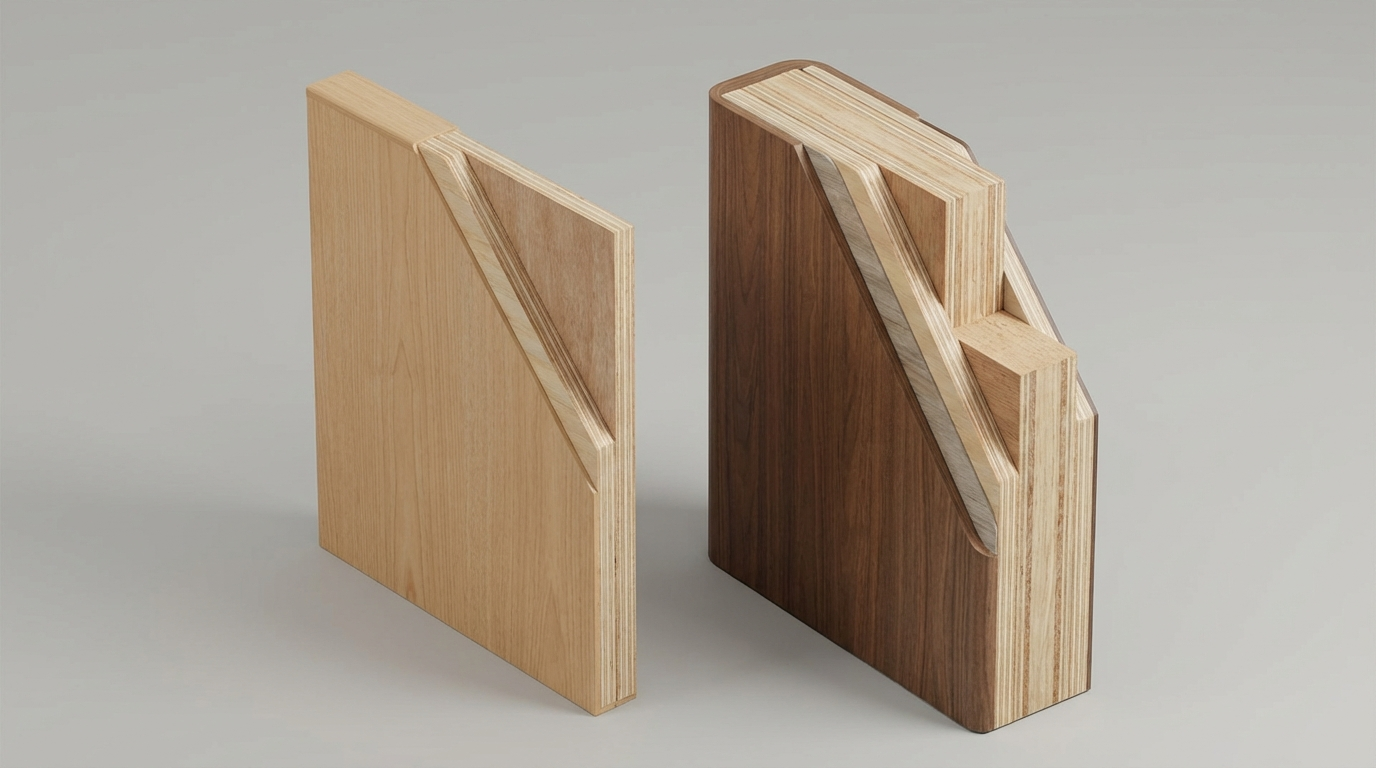
A plywood door refers to a door shutter made using a plywood-based core (block-board, stave-core, particle-core, or solid-core plywood) with face skins on both sides. The face skin could be decorative veneer, laminate, PVC sheet, or just primer-ready plywood veneer. "Flush door" is the most common format—flat surfaces without panels or grooves—though panel-style routing is possible on thicker skins.
Where People Get Confused About Plywood Door Pricing
- Confusing "plywood door" with "solid wood door": Plywood doors use engineered cores; solid wood doors use timber planks. Pricing, weight, and warping behaviour differ significantly.
- Assuming all flush doors have the same core: Cores range from hollow tubular, stave-core (wooden battens), particle-board core, to solid plywood. Price and durability vary drastically.
- Ignoring skin quality in price comparison: A ₹2,500 door with paper-thin veneer will peel within two monsoons; a ₹3,200 door with 0.5mm laminate will last a decade.
- Forgetting finishing costs: Readymade doors often need edge sealing, lock-mortise cutting, and final polish—adding ₹400–₹1,200 per door.
- Comparing "per sq ft" rates without specifying thickness: A 30mm door and a 35mm door have different material costs even at the same sq ft rate.
India-Specific Reality Check
Indian door purchasing happens in wildly different conditions across cities. Coastal areas like Mumbai, Chennai, and Kochi face humidity that can swell poorly sealed edges within one monsoon. Northern plains experience extreme temperature swings that stress adhesive bonds. Hill stations have condensation issues that attack unprotected bottom edges.
Storage and handling matter enormously: Doors stacked flat on damp warehouse floors absorb moisture from below. Doors stored leaning at angles develop permanent bows. Always inspect storage conditions at the dealer before accepting delivery.
Workmanship realities: Most carpenters in India do not seal all six surfaces (front, back, four edges) before installation. This single oversight causes 70% of door swelling complaints. Budget for edge-banding or PU sealer application regardless of whether you buy readymade or custom.
Price Range and Cost Drivers (India)
Plywood door prices vary by multiple factors. Use these ranges as directional guidance and confirm locally before finalizing.
Readymade Flush Door Price Ranges (2026)
| Door Type | Thickness | Typical Price Range (₹) | Best For |
|---|---|---|---|
| Hollow-core flush (economy) | 28–30mm | ₹1,400–₹2,200 | Temporary partitions, store rooms |
| Stave-core flush (MR grade) | 30–32mm | ₹2,200–₹3,500 | Interior bedrooms, low-traffic areas |
| Solid-core flush (BWR grade) | 32–35mm | ₹3,500–₹5,500 | Kitchens, bathrooms (with sealing), main rooms |
| Decorative veneer flush (BWR) | 32–35mm | ₹4,500–₹7,500 | Living rooms, bedrooms with premium look |
| Laminate-faced flush (BWP/Marine) | 35mm | ₹5,500–₹9,000 | Main entrances, high-humidity zones |
| Fire-retardant flush | 35–40mm | ₹7,000–₹12,000 | Commercial buildings, safety-critical areas |
Custom Door Price Ranges
Custom doors add 30–60% over readymade equivalents due to:
- Non-standard sizing (odd heights, widths, or double-door configurations)
- Labour for cutting, edge-banding, and fitting
- Premium skin options (exotic veneers, designer laminates, PVC sheets)
- Hardware cutouts for specific lock and hinge models
Typical custom door costs:
- Simple interior custom flush: ₹3,200–₹5,000
- Decorative veneer custom: ₹5,500–₹8,500
- Double-door main entrance (pair): ₹9,000–₹18,000
What Drives Price Variation?
- Core density: Solid-core costs 40–70% more than hollow-core but prevents sound transmission and improves screw-holding for locks.
- Face skin material: Paper-backed veneer (cheapest) → recon veneer → natural veneer → 0.8mm laminate → 1mm laminate (costliest).
- Plywood grade: MR (interior-only) → BWR (occasional moisture) → BWP/Marine (wet zones). Each step adds 15–25% to base price.
- Calibration: Calibrated plywood doors have uniform thickness (±0.3mm tolerance), crucial for modular frames. Adds ₹200–₹500 per door.
- City variation: Metro prices (Mumbai, Delhi, Bangalore) typically run 10–20% higher than tier-2 cities due to logistics and dealer margins.
- Brand vs unbranded: Branded readymade doors carry 15–30% premium but offer better consistency and sometimes warranty support.
How to Ask for a Quote (Spec Line Items)
When requesting quotes from dealers or carpenters, specify:
- Door dimensions (height × width × thickness in mm)
- Core type (hollow, stave, solid, block-board)
- Plywood grade (MR, BWR, BWP)
- Face skin (plain veneer, decorative veneer, laminate brand/code, PVC)
- Edge treatment (raw, lipped, edge-banded, PU sealed)
- Hardware cutouts included or separate
- Delivery condition (flat stacked, wrapped, moisture-protected)
Mini Budget Example: 3BHK Apartment
Scope: 8 interior doors + 1 main entrance double door
- 8 interior flush doors (32×80", 32mm stave-core, laminate skin): 8 × ₹4,200 = ₹33,600
- 1 main entrance double door (36×84" × 2, solid-core, premium veneer): ₹14,000
- Edge-banding and sealing (all doors): ₹5,400
- Lock/hinge cutouts and installation labour: ₹6,000
- Total estimate: ₹59,000–₹68,000 (varies by city and negotiation)
How Does Thickness Affect Door Price and Performance?
Thickness directly impacts price, weight, sound insulation, and lock/hinge screw-holding. Indian residential doors typically range from 28mm to 40mm.
- 28–30mm: Lightest, cheapest. Suitable only for closets, store rooms, or temporary partitions. Poor sound blocking. Limited screw-holding depth for heavy-duty locks.
- 32–35mm: Standard residential thickness. Adequate for most interior and main doors. Accepts mortise locks properly. Balances weight and durability.
- 38–40mm: Commercial-grade or premium residential. Better sound insulation. Required for fire-rated doors. Heavier—needs robust hinges (3 instead of 2).
Price impact: Moving from 30mm to 35mm typically adds ₹400–₹800 per door. Moving to 40mm adds another ₹600–₹1,000.
Readymade vs Custom: Two-Minute Comparison That Actually Helps
| Factor | Readymade Door | Custom Door |
|---|---|---|
| Price | Lower (₹2,200–₹7,500 typical) | 30–60% higher |
| Delivery time | Immediate to 3 days | 7–21 days depending on complexity |
| Size flexibility | Standard sizes only (30", 32", 36" widths) | Any dimension possible |
| Quality consistency | Factory-controlled, predictable | Depends entirely on carpenter skill |
| Skin options | Limited to dealer stock | Any veneer/laminate available in market |
| Frame compatibility | Risk of mismatch with old/irregular frames | Made to exact frame measurements |
| Edge sealing | Often factory-sealed on faces, edges may need work | Depends on carpenter—often skipped |
| Warranty/returns | Some branded options offer limited warranty | Rarely any formal warranty |
When Should You Choose Based on Conditions?
- Choose readymade: New construction with standard frame sizes, tight timelines, budget certainty needed, or when you cannot supervise carpenter work.
- Choose custom: Renovation with old frames, non-standard heights (above 84"), double-door configurations, or specific aesthetic requirements.
How to Choose the Right Plywood Door in 5 Steps
Step 1: Measure Frames Accurately
Measure at three points (top, middle, bottom) for both height and width. Take the smallest reading. Account for 3–5mm clearance on each side. Skipping this causes either doors that won't close or gaps that defeat privacy and soundproofing.
Step 2: Match Core Type to Usage
Hollow-core for store rooms, stave-core for interior bedrooms, solid-core for main entrances and bathrooms. Using hollow-core for main doors means poor security and sound leakage.
Step 3: Select Grade Based on Moisture Exposure
MR grade only for completely dry interior spaces. BWR for kitchens, attached bathrooms, and ground-floor rooms. BWP/Marine for external-facing doors or high-humidity coastal homes. Using MR in wet zones leads to delamination within 2–3 years.
Step 4: Decide Skin Before Finalizing Price
Plain veneer needs polishing (adds ₹300–₹800). Laminate is ready-to-use but costlier upfront. Veneer shows wood grain but scratches easier. Laminate handles daily wear better but looks less premium in close inspection.
Step 5: Confirm Edge Treatment
Unsealed edges absorb moisture and swell. Insist on edge-banding (PVC or ABS strips) or PU sealer application on all four edges plus top and bottom. This single step prevents 70% of door complaints.
Trade-offs and Limitations
Plywood doors vs solid wood: Plywood offers dimensional stability and lower cost but cannot match the heft, acoustic performance, or repair-friendliness of solid hardwood. Plywood doors with damaged cores are difficult to repair; solid wood can be planed and refinished multiple times.
Veneer vs laminate skin: Veneer offers natural wood aesthetics but requires periodic polishing and is vulnerable to moisture damage at edges. Laminate is more durable and moisture-resistant but looks artificial up close and cannot be refinished if scratched deeply.
BWR vs BWP grade: BWR handles occasional splashes but not continuous water exposure. BWP costs 20–30% more and is often unavailable in smaller towns. Over-specifying BWP for interior bedrooms wastes budget; under-specifying MR for bathrooms causes early failure.
Readymade limitations: Standard sizes may not fit old buildings with irregular frames. Factory edge-sealing often covers only faces, leaving edges vulnerable. Returns/exchanges are difficult once hardware cutouts are made.
Common Buyer Mistakes and How to Avoid Them
Mistake 1: Buying on Price Alone Without Checking Core
Why it happens: Dealers quote "flush door" prices without specifying core type, and buyers assume all flush doors are similar.
What to do instead: Ask explicitly—"Is this hollow-core, stave-core, or solid-core?" Knock on the door surface; hollow-core sounds distinctly different from solid-core.
Mistake 2: Not Measuring Frames Before Ordering
Why it happens: Buyers assume standard sizes will fit, or trust old measurements from construction drawings.
What to do instead: Physically measure each frame. Account for settlement in older buildings that may have shifted frame dimensions.
Mistake 3: Ignoring Edge Sealing
Why it happens: Edge-banding is seen as optional cosmetic work rather than essential moisture protection.
What to do instead: Budget ₹80–₹150 per door for proper edge-banding. Treat this as non-negotiable, especially for any door exposed to humidity.
Mistake 4: Choosing Veneer Skin for High-Traffic Doors
Why it happens: Veneer looks premium in showrooms; buyers don't anticipate daily wear.
What to do instead: Use laminate (0.8mm minimum) for main entrances and kitchen doors. Reserve veneer for low-traffic bedroom doors where aesthetics matter more than durability.
Mistake 5: Using MR Grade in Bathrooms
Why it happens: Cost-cutting during project execution; contractors substitute without informing owners.
What to do instead: Verify grade stamps on the door or request test certificates. If in doubt, choose branded readymade with clear grade labelling.
Mistake 6: Not Accounting for Finishing Costs
Why it happens: Quoted prices often exclude polish, hardware cutouts, and installation.
What to do instead: Get all-inclusive quotes. Ask: "Does this include edge-banding, lock cutout, hinge mortising, and installation?"
Mistake 7: Accepting Doors Stored Flat on Damp Floors
Why it happens: Dealers stack inventory improperly; buyers don't inspect storage conditions.
What to do instead: Inspect dealer storage. Doors should be stored vertically or on dry raised pallets. Reject doors with visible moisture marks on edges.
Mistake 8: Over-Specifying for Budget Projects
Why it happens: Fear of door failure leads to selecting marine-grade for every door.
What to do instead: Use marine/BWP only where genuinely needed (bathrooms, external-facing). BWR handles most residential interiors adequately at lower cost.
Failure Modes and Fixes
Failure 1: Door Swelling at Bottom Edge
Symptom: Door drags on floor during monsoons, then returns to normal in dry weather.
Root cause: Unsealed bottom edge absorbing moisture from wet mopping.
Prevention: Seal bottom edge with aluminium strip or PU sealer before installation.
Fix if occurring: Remove door, plane swollen edge, apply waterproof sealer, reinstall with 5mm floor clearance.
Failure 2: Veneer Peeling Near Edges
Symptom: Decorative veneer lifts and bubbles within 1–2 years, starting from corners.
Root cause: Low-quality adhesive or moisture ingress through unsealed edges.
Prevention: Choose doors with press-bonded veneers (not contact-adhesive). Ensure edge-banding.
Fix if occurring: Re-glue with PVA adhesive under pressure. If extensive, re-veneer the affected face.
Failure 3: Lock Area Cracking
Symptom: Cracks radiating from mortise lock cutout.
Root cause: Hollow-core or particle-core door cannot support mortise lock stress.
Prevention: Use solid-core or stave-core doors for mortise locks. Use cylindrical locks for hollow-core doors.
Fix if occurring: Reinforce lock area with hardwood block epoxied into existing cavity. May require door replacement for severe damage.
Failure 4: Warping and Bowing
Symptom: Door curves outward or inward, creating gaps at top or bottom when closed.
Root cause: Uneven moisture exposure (one face sealed, other exposed), or storage damage before installation.
Prevention: Seal all six surfaces. Store doors vertically in dry conditions. Avoid direct sunlight on one face.
Fix if occurring: Minor warps can be corrected by weighting the door flat for 2–3 weeks. Severe warps require replacement.
Failure 5: Hinge Screws Pulling Out
Symptom: Door sags progressively; hinge screws no longer hold.
Root cause: Weak core (hollow or particle), or screws too short for door thickness.
Prevention: Use 3-inch screws for 32mm+ doors. Ensure hinge zone has solid core.
Fix if occurring: Fill existing holes with wooden dowels and wood glue, then re-screw. Use longer screws that reach into frame.
Failure 6: Laminate Delamination on Main Entrance
Symptom: Laminate lifts or bubbles on sun-facing external door.
Root cause: Direct UV exposure degrades adhesive; thermal cycling stresses bond.
Prevention: Use exterior-grade HPL (high-pressure laminate) rated for UV. Provide overhang or shade for south/west-facing doors.
Fix if occurring: Re-laminate with exterior-grade product. Add weather-stripping and overhang to reduce exposure.
Quality Checks You Can Do Without Lab Tests
Before Buying (At Dealer)
- Knock test: Solid-core produces dull thud; hollow-core sounds distinctly different. Compare multiple doors to calibrate your ear.
- Weight check: Lift the door. Solid-core 32mm door feels noticeably heavier (18–25 kg) than hollow-core (8–12 kg).
- Edge inspection: Look at exposed edges (if visible). Gaps in core layers indicate poor pressing. Voids mean weak screw-holding zones.
- Surface flatness: Place a straightedge across the door face. Gaps indicate warping or uneven pressing.
- Veneer/laminate adhesion: Press hard near edges with thumbnail. Lifting indicates weak bond.
- Storage conditions: Are doors stored vertically on dry surfaces? Reject if stacked flat on damp floors.
After Cutting (During Installation)
- Core visibility: When carpenter cuts for lock, observe core structure. Should show consistent material without large voids.
- Edge quality: Cut edges should be clean without excessive chipping or delamination.
- Screw-holding test: Drive a test screw into a cut-off piece. Should hold firmly without stripping.
After Installation
- Alignment check: Consistent gap (3–5mm) around all edges when door is closed.
- Swing test: Door should not swing open or closed on its own—indicates proper hanging.
- Edge sealing verification: Run finger along all edges. Should feel sealed, not raw plywood.
- Lock operation: Lock should engage smoothly without forcing. Binding indicates frame misalignment or door warp.
Decision Framework: Which Door for Which Condition?
| Condition | Recommended Option | What to Verify |
|---|---|---|
| Dry interior bedroom | MR-grade stave-core flush, veneer or laminate | Core type, edge-banding done |
| Kitchen (moisture + heat) | BWR solid-core, laminate skin | Grade stamp, all-edge sealing |
| Attached bathroom | BWR or BWP solid-core, laminate skin | Bottom edge sealed, frame drainage |
| Main entrance (external) | BWP/Marine solid-core, exterior laminate | UV-rated laminate, weather-stripping |
| Coastal/high-humidity area | BWP/Marine, laminate, stainless hinges | Borer treatment, all-surface sealing |
| Tight budget (store room) | MR hollow-core, plain veneer | Limit to low-priority spaces only |
| Fast delivery needed | Branded readymade, standard size | Confirm frame compatibility before order |
| Old building, irregular frames | Custom door, made to measure | Carpenter measures each frame separately |
| High scratch/impact risk | 0.8–1mm laminate, solid-core | Laminate thickness, edge protection |
| Fire safety required | Fire-retardant rated door | Test certification, intumescent strips |
Tips for Homeowners
Durability practices:
- Wipe spills on door surfaces immediately—don't let water sit.
- Avoid hanging heavy items on door surfaces; stress concentrates at hinge zone.
- Lubricate hinges annually with light oil; prevents squeaking and reduces hinge stress.
- Inspect bottom edges during monsoon. If swelling starts, act before it worsens.
Cleaning rules:
- Use damp (not wet) cloth for laminate surfaces.
- Avoid abrasive cleaners on veneer—damages finish.
- For stubborn marks, use mild soap solution, then dry immediately.
- Never pressure-wash or hose down plywood doors.
Tips for Carpenters
Cutting and edge prep:
- Score laminate surface before cutting to prevent chipping.
- Use fine-tooth blade (80+ teeth) for clean cuts on laminated doors.
- Apply PU sealer or edge-band immediately after cutting—exposed cores absorb moisture within hours.
Hinge and lock zones:
- Mark hinge positions 150mm from top and 200mm from bottom for standard doors.
- For solid-core doors, use 75mm hinges with 3-inch screws.
- Pre-drill for screws in hardwood cores to prevent splitting.
- Lock mortise should be centered on door thickness; off-center cutting weakens the door.
Handling:
- Transport doors vertically, never flat. Flat transport causes bowing.
- Store on site with protective wrapping until installation day.
- Acclimatize doors in the room for 48 hours before fitting if humidity differs significantly from storage location.
Tips for Architects and Designers
Specification clarity:
- Specify core type, grade, thickness, and skin material separately in BOQ.
- Call out edge treatment requirement explicitly—"all six surfaces sealed" prevents contractor shortcuts.
- For fire-rated areas, specify door and frame as a rated assembly, not just door rating.
Wet-zone detailing:
- Bathroom doors should have 15–20mm clearance at bottom for ventilation.
- Specify aluminium bottom strips for bathroom doors—prevents water wicking.
- In attached bathroom layouts, consider door swing direction to keep door surface away from shower splash zone.
Finish coordination:
- If specifying veneer, provide exact reference sample; "teak veneer" varies wildly in colour and grain.
- For laminate, specify brand and code; substitute products differ in thickness and UV resistance.
- Align door finish with surrounding millwork for visual continuity.
Tips for OEM and Modular Furniture Makers
Repeatability:
- Source from suppliers offering calibrated doors (±0.3mm thickness tolerance).
- Standardize on 3–4 size variants to reduce inventory complexity.
- Create cutting templates for hardware to ensure consistency across batches.
QC checkpoints:
- Incoming inspection: weight, thickness at four corners, surface flatness.
- Pre-dispatch: verify edge-banding adhesion, hardware alignment, surface defects.
- Document batch numbers for traceability if complaints arise.
Reducing returns:
- Photograph doors before dispatch as evidence of condition.
- Ship doors vertically with corner protection.
- Include installation instructions specifying required clearances and sealing.
Why Do Custom Doors Cost So Much More Than Readymade?
Custom doors involve labour-intensive processes that readymade production avoids. The carpenter must measure each frame individually, cut plywood sheets with wastage, edge-band each piece, apply skins, and cut hardware mortises—all on-site or in a small workshop. Readymade manufacturers produce in bulk with factory efficiency: standard sizes, automated pressing, machine-cut hardware pockets. Custom also involves skin procurement at retail rates rather than bulk pricing. For non-standard sizes or premium veneers, custom is unavoidable, but the 30–60% premium reflects genuine additional work.
Is Marine Plywood Door Worth the Extra Cost?
Marine-grade (BWP/IS 710) doors make sense only where moisture exposure is continuous or extreme: external-facing main entrances without covered porches, bathroom doors in poorly ventilated spaces, or coastal homes with salt-laden humidity. For typical interior use, BWR grade with proper edge sealing performs adequately at 20–25% lower cost. Over-specifying marine grade for every door wastes budget without proportional benefit. The decision should be room-by-room based on actual moisture conditions, not blanket specification.
How Long Should a Plywood Door Last?
A well-made plywood door with proper installation and maintenance typically lasts 15–25 years. Life-shortening factors include: unsealed edges (reduces life by 50%), wrong grade for exposure (causes early delamination), poor hinge/lock installation (structural damage), and impact damage. Veneer skins may need refinishing every 5–7 years; laminate skins typically last the door's lifetime if not deeply scratched. Budget for potential refinishing or edge repair around year 10 in humidity-prone areas.
Can Plywood Doors Be Repaired or Only Replaced?
Minor issues are repairable: edge swelling can be planed and sealed, veneer peeling can be re-glued, hinge screw holes can be doweled and re-drilled, minor surface scratches can be touched up. Major damage—core delamination, severe warping, cracked lock areas in hollow-core—typically requires replacement. Unlike solid wood doors that can be repeatedly refinished, plywood doors have limited repair depth. The cost-benefit analysis usually favours repair if damage is localized and replacement if structural integrity is compromised.
What Hardware Works Best with Plywood Doors?
For solid-core plywood doors, mortise locks and 75–100mm butt hinges work well. Hollow-core doors should use cylindrical locks (less mortise depth) and lightweight hinges. In humid areas, choose stainless steel or brass hardware—mild steel rusts and stains the door surface. Three hinges distribute weight better than two for doors taller than 2100mm or heavier than 20kg. Ball-bearing hinges reduce stress on screw holes and last longer. Always pre-drill hardwood cores to prevent splitting.
How to Verify if a Door is Actually BWR or BWP Grade?
Branded doors typically have grade stamps on edges or documentation. For unbranded options, verification is difficult without lab testing. Practical indicators: BWP doors are noticeably heavier than MR equivalents, phenolic resin bonds appear darker at exposed edges, and reputable dealers provide batch-level test reports on request. The safest approach for critical applications is purchasing from established brands with clear labelling rather than relying on verbal assurances from unknown suppliers.
FAQs
What is the average cost of a readymade plywood door in India?
Readymade plywood doors range from approximately ₹1,400 for basic hollow-core options to ₹9,000 or more for premium solid-core doors with high-quality laminate skins. The most common range for decent residential doors is ₹2,500–₹5,000. This typically includes the door shutter only—edge treatment, hardware cutouts, and installation are often separate costs. Prices vary by city, with metros generally 10–20% higher than smaller towns. Always confirm whether quoted prices are inclusive of finishing work.
Which thickness is best for main entrance doors?
Main entrance doors should be 32–35mm thick for residential applications. This thickness provides adequate weight for solid feel, sufficient depth for mortise locks, and good sound insulation. For premium installations or commercial main entrances, 38–40mm offers better security perception and acoustic performance. Avoid 28–30mm for main entrances—they feel flimsy, don't hold mortise locks well, and provide poor sound blocking. The thickness choice also affects hinge selection; heavier doors need three hinges rather than two.
How much does edge-banding cost, and is it really necessary?
Edge-banding typically costs ₹80–₹150 per door for PVC or ABS strips, plus labour of ₹50–₹100. Yes, it is absolutely necessary for door longevity. Unsealed edges absorb moisture from mopping, humidity, and splashes—this causes swelling that makes doors stick, warp, or delaminate. Even interior doors in dry zones benefit from edge-banding because cleaning activities inevitably introduce moisture at floor level. Consider edge-banding a mandatory line item, not an optional upgrade.
Can I use MR plywood doors in bathrooms if I seal them well?
This is risky and generally not recommended. While thorough sealing can extend MR door life in bathrooms, the margin for error is thin. Any scratch, chip, or installation imperfection allows moisture entry that MR-grade adhesives cannot resist long-term. BWR grade costs only 15–25% more and provides substantially better moisture resistance. For bathrooms, the small additional investment in BWR or BWP grade is worthwhile insurance against premature door failure, especially in humid climates.
What is the difference between stave-core and solid-core plywood doors?
Stave-core doors have a framework of softwood or hardwood strips (staves) running vertically with gaps between them, covered by plywood face veneers. Solid-core doors have continuous plywood layers throughout with no internal voids. Solid-core is heavier, more expensive (30–50% more), has better sound insulation, and provides superior screw-holding for locks. Stave-core is lighter, more affordable, and adequate for most interior applications. For main entrances and rooms requiring sound privacy, solid-core is the better investment.
How do I know if a door has warped before installation?
Place the door on a flat surface and check if all four corners touch. Alternatively, hold a straightedge diagonally across the door face—gaps indicate warping. Sight along the door edge from one corner; any visible curve indicates bowing. Check both faces, as warping can affect one side more than the other. Minor warps (under 3mm) might self-correct when hung due to hinge tension, but significant warps (over 5mm) should be rejected. Always inspect doors before accepting delivery.
Why do some dealers quote "per sq ft" while others quote "per door"?
Per sq ft pricing makes sense for custom doors where sizes vary; it allows calculation for any dimension. Per door pricing is common for readymade standard-size doors where the size is fixed. The confusion arises when comparing quotes across formats. To compare fairly, calculate the total door area (height × width in feet) and multiply by per sq ft rate, then add finishing costs. A 7×3 ft door at ₹180/sq ft equals ₹3,780 plus finishing—compare this to per-door quotes that may or may not include finishing.
Is it worth paying extra for branded plywood doors?
Branded doors typically cost 15–30% more than unbranded equivalents but offer several advantages: consistent quality across batches, clearer grade labelling, sometimes limited warranty coverage, and documented specifications. For homeowners who cannot verify quality themselves, branded options reduce risk. For experienced contractors who can assess quality visually and have trusted unbranded suppliers, the premium may not be justified. The value depends on your ability to verify quality and the criticality of the application.
How do I choose between veneer and laminate skin for doors?
Choose veneer when: aesthetics are priority, the door is in a low-traffic area, you appreciate natural wood grain variation, and you're willing to maintain with periodic polishing. Choose laminate when: durability matters more than aesthetics, the door faces high traffic or potential impact, moisture exposure is possible, and you want maintenance-free performance. Laminate costs slightly more upfront but requires no refinishing. Veneer needs polishing every 3–5 years and is more vulnerable to scratches and moisture damage at edges.
What should I do if my plywood door starts swelling during monsoon?
Act quickly before swelling becomes permanent. First, identify where moisture is entering—usually unsealed bottom edge or exposed top edge. Remove the door if it's binding badly. Allow it to dry in a covered, ventilated area for 3–5 days. If swelling is minor, plane the affected edge and immediately seal with PU or apply aluminium strip. For severe swelling with delamination, repair may not be viable—replacement might be necessary. Going forward, seal all edges and maintain floor clearance of 5–8mm.
How many hinges should a plywood door have?
Standard residential doors (up to 2100mm height, under 18kg weight) can function with two hinges—placed 150mm from top and 200mm from bottom. Doors taller than 2100mm or heavier than 20kg should have three hinges, with the third placed at the midpoint. Very heavy doors (40mm solid-core, over 25kg) may benefit from three heavy-duty ball-bearing hinges. Using fewer hinges than needed causes sagging over time as screw holes elongate under stress. When in doubt, three hinges provide better long-term performance.
Can plywood doors be used for external applications exposed to rain?
Only BWP/Marine grade doors with proper exterior-rated laminate and comprehensive sealing can handle external exposure—and even then, only with protection from direct rain. Provide an overhang of at least 600mm, apply weather-stripping, seal all edges with marine-grade sealant, and use stainless steel hardware. Even with these precautions, expect shorter lifespan (8–12 years) compared to protected interior doors. For fully exposed external doors without any protection, consider alternatives like FRP, UPVC, or treated hardwood instead of plywood.
Disclaimer: This content is provided for general informational purposes based on industry practices and publicly available information. Product specifications, standards, prices, and availability may vary by manufacturer, region, and time. Readers should independently verify details with manufacturers, dealers, or qualified professionals before making purchase or construction decisions.Want Plywood Suggestions?
Share a few details and a Duro BOIL specialist will suggest suitable brands and connect you to responsive dealers.