Plywood Price Guide: Understanding Costs and Value for Money
Understand plywood prices in India with our comprehensive guide. Compare rates by grade, thickness, and type to find the best value for your project.
Quick Buying Decision
One-line recommendation: For most furniture projects, 18mm BWR grade plywood from a reputed brand offers the best balance of durability and value.
If you're in a hurry: Walk into any established plywood dealer and ask for 18mm BWR (Boiling Water Resistant) grade plywood for kitchen cabinets and 18mm MR (Moisture Resistant) grade for bedroom furniture. Expect to pay between ₹75-120 per square foot for decent quality BWR plywood. Always check the ISI mark, tap the sheet to hear a solid sound (not hollow), and examine edges for gaps or voids. Request a small offcut to test water absorption at home before placing your full order.
Quick picks:
- Best for kitchen: BWR/BWP grade, 18mm thickness - because kitchens face constant humidity, steam, and occasional water splashes
- Best for wardrobe: MR grade, 18mm for carcass and 12mm for shelves - because bedrooms have lower moisture exposure and MR offers good value
- Best budget option: Commercial grade MR plywood, 18mm - because it works well for dry areas and costs 30-40% less than BWR
- Best premium option: Marine grade (BWP) with calibrated thickness - because it offers maximum water resistance and consistent dimensions for high-end furniture
How to Choose Plywood in 5 Steps
Selecting the right plywood involves more than picking a brand. This systematic approach ensures you get exactly what your project needs without overpaying or compromising on quality.
Step 1: Identify Your Application
Your application determines everything else about your plywood selection. Start by categorising your project:
Wet area vs dry area decision:
- Wet areas (kitchens, bathrooms, balconies, areas near water sources): Require BWR or BWP grade plywood
- Dry areas (bedrooms, living rooms, study rooms): MR grade plywood is usually sufficient
- Semi-wet areas (dining near kitchen, utility rooms): Consider BWR for safety margin
Heavy use vs light use:
- Heavy use (kitchen base units, shoe racks, children's furniture): Choose higher density cores with more plies
- Light use (wall panels, decorative elements, backing boards): Standard construction is acceptable
Step 2: Determine the Right Grade/Type
Based on Step 1, select your grade using this simple matrix:
- MR Grade (Moisture Resistant): Interior furniture in dry areas, bedroom wardrobes, bookshelves, TV units. Uses phenol formaldehyde resin that resists humidity but not direct water contact.
- BWR Grade (Boiling Water Resistant): Kitchen cabinets, bathroom vanities, areas with high humidity. Can withstand prolonged moisture exposure. According to woodshopdiaries.com, cabinet-grade plywood with proper moisture resistance is essential for long-term kitchen performance.
- BWP/Marine Grade: Outdoor furniture, coastal homes, commercial kitchens, boats. Highest water resistance with waterproof glue throughout.
- Commercial Grade: Temporary structures, packing, non-structural applications where budget is primary concern.
Step 3: Choose Correct Thickness
Thickness affects both strength and cost. Here's a practical guide:
| Application | Recommended Thickness | Why This Works |
|---|---|---|
| Cabinet carcass (sides, top, bottom) | 18mm | Provides structural strength for hardware mounting |
| Shelves (wardrobes, kitchen) | 12mm or 18mm | 12mm for light items, 18mm for heavy storage |
| Back panels | 6mm or 9mm | Adds rigidity without excess weight |
| Drawer bottoms | 6mm | Sufficient for typical drawer loads |
| Doors and shutters | 18mm | Prevents warping over time |
| False ceiling frames | 12mm | Lightweight yet sturdy for ceiling work |
Why thickness matters: As noted by georgecabinetry.com, using 18mm (¾ inch) plywood for structural components like cabinet sides, bottoms, and shelves ensures long-term durability and proper screw-holding capacity.
Step 4: Check Quality Indicators
What to inspect before buying:
- ISI mark: Look for IS 303 (MR grade) or IS 710 (BWR/BWP grade) certification
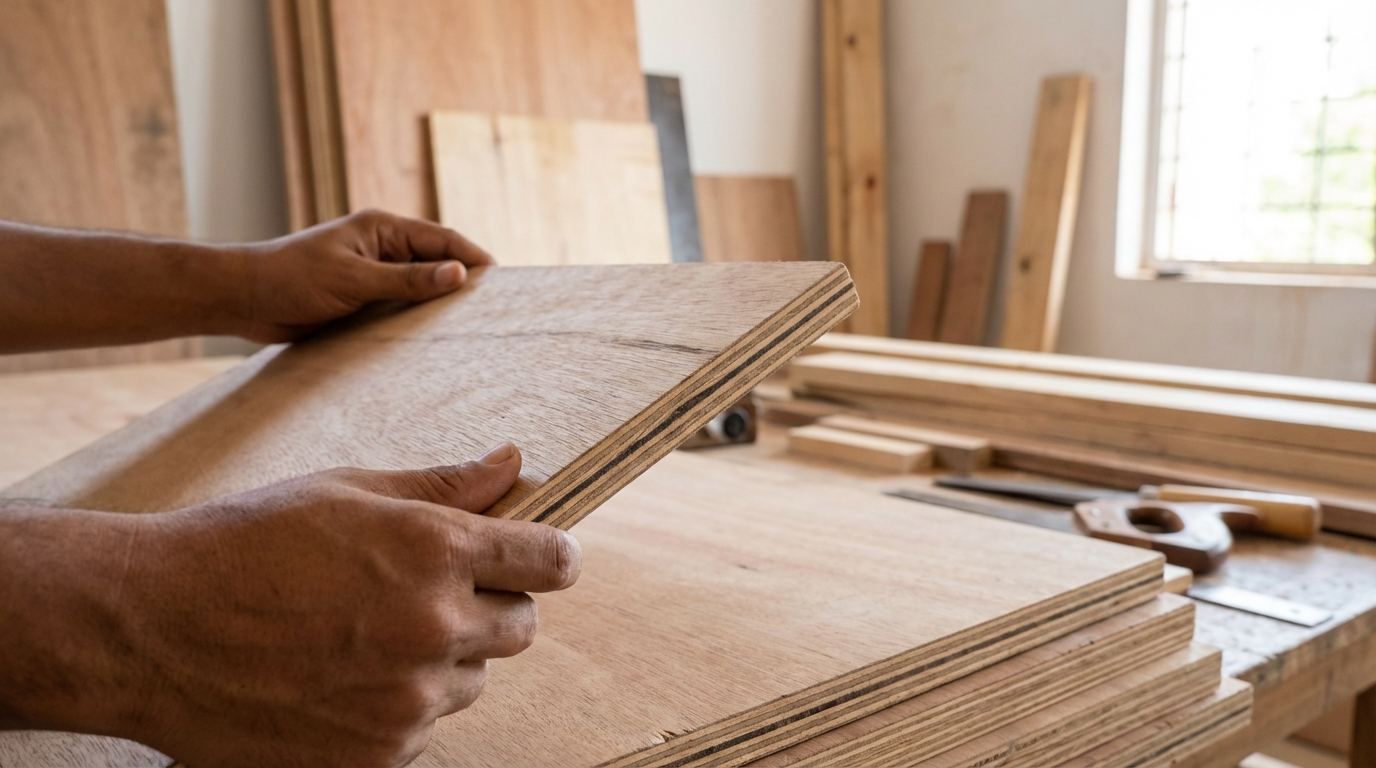
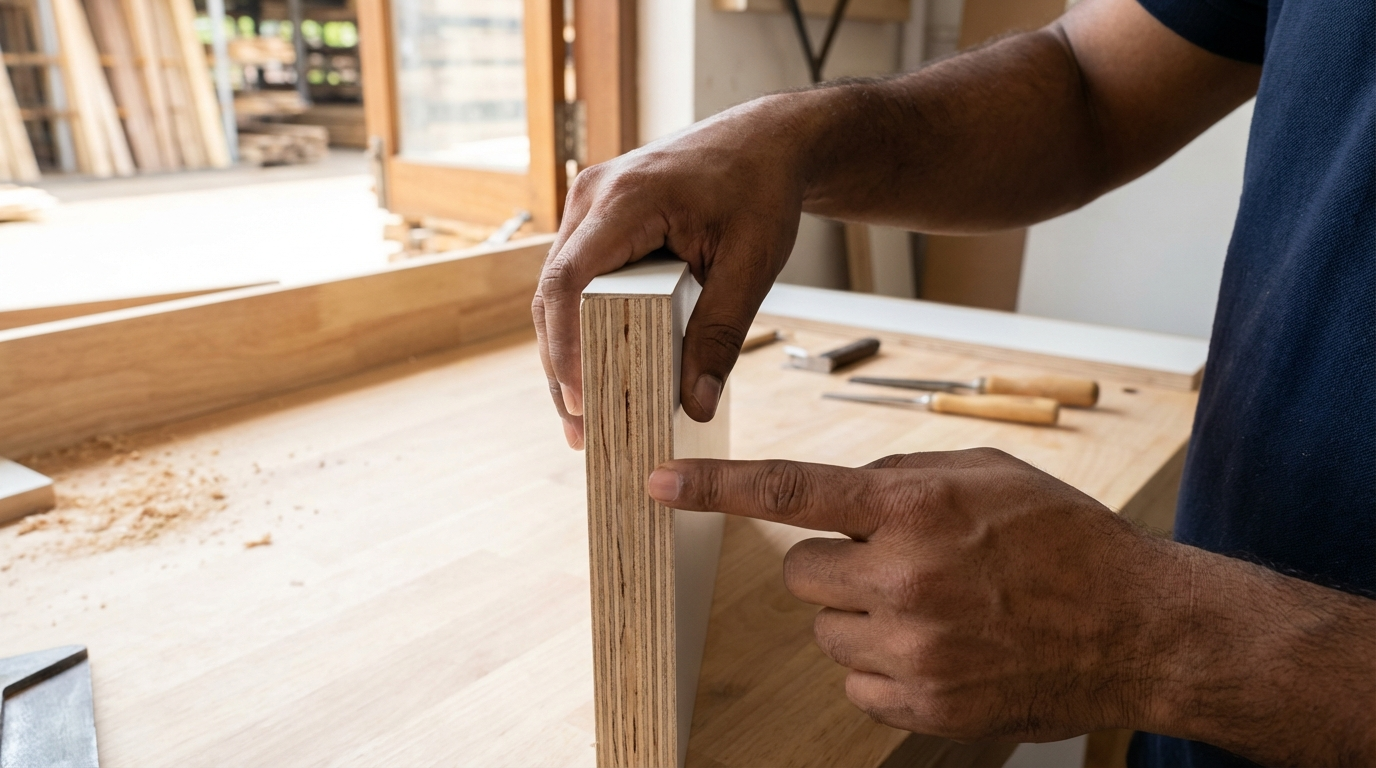
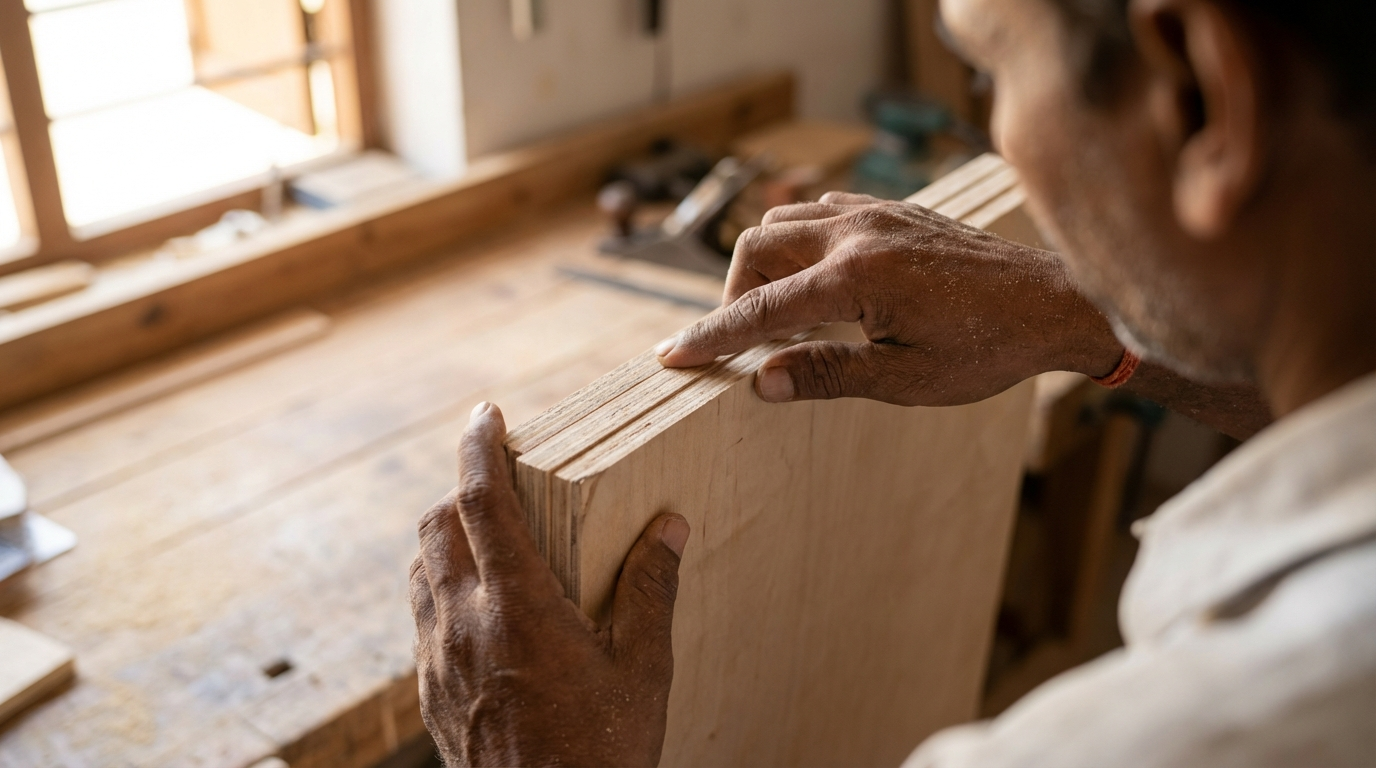
- Edge inspection: Check for voids, gaps between plies, or uneven layers
- Surface quality: Face veneer should be smooth without patches, bubbles, or cracks
- Flatness: Sight along the sheet – any bow or twist indicates poor manufacturing
- Weight: Heavier sheets typically indicate denser, better-quality cores
Tests you can do at the shop:
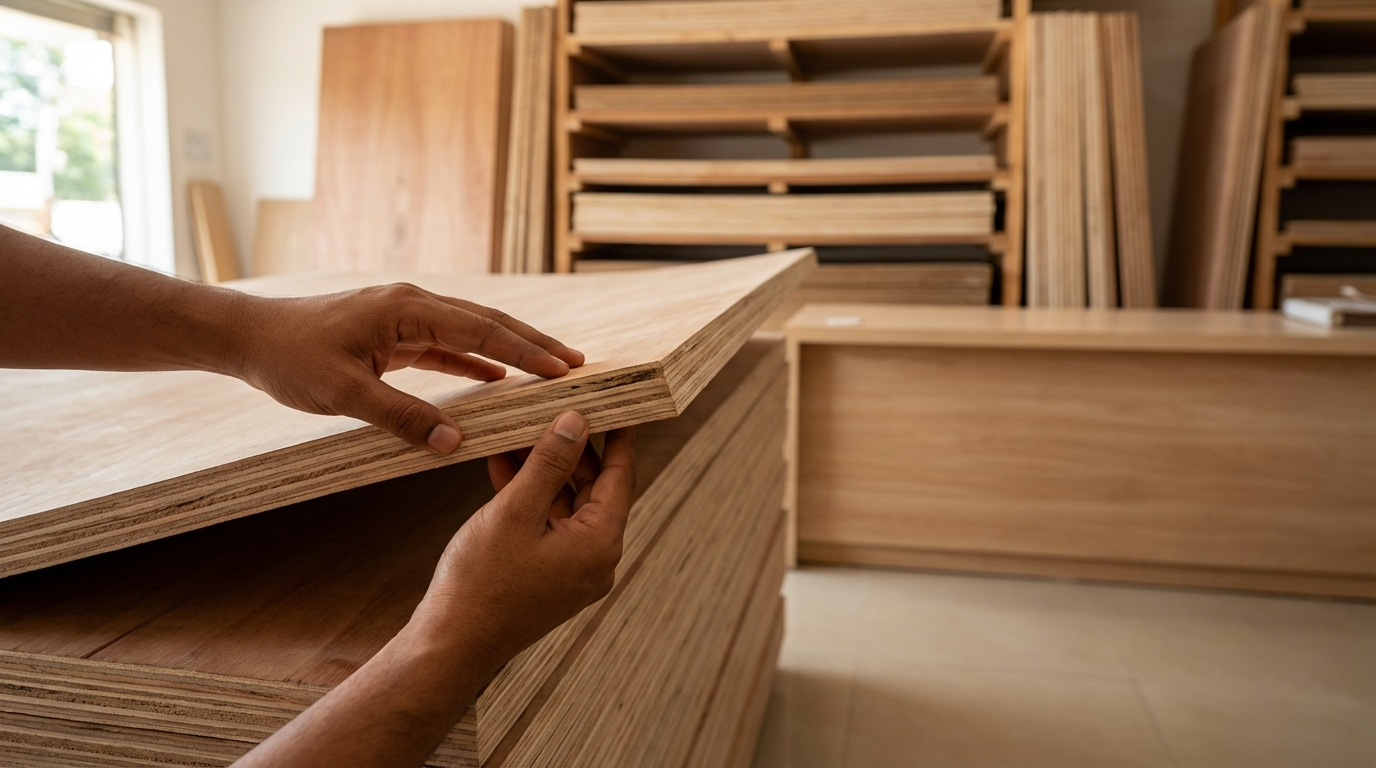
- Tap test: Knock on the surface – solid sound indicates good bonding, hollow sound suggests voids
- Nail test: Ask to hammer a nail near the edge – quality plywood won't split
- Bend test: Flex a small piece – it should bend without cracking or delaminating
- Water drop test: Place water drops on surface and edge – they shouldn't absorb quickly on BWR grade
Step 5: Compare Prices and Get Quotes
How to ask for quotes properly:
- Specify exact grade (MR/BWR/BWP), thickness, and sheet size
- Ask for rates per sheet AND per square foot (easier comparison)
- Request quotes for 2-3 brands at different price points
- Clarify if price includes GST and delivery
- Ask about cutting charges if you need custom sizes
What should be included in quote:
- Brand and grade specification
- Sheet dimensions and actual thickness
- Delivery charges and timeline
- Return policy for defective sheets
- Validity period of the quote
Decision Framework: What to Buy for Each Situation
| Your Situation | Recommended Option | Why | What to Verify |
|---|---|---|---|
| Kitchen cabinets | BWR grade, 18mm, calibrated | Handles steam, humidity, and occasional spills without delaminating | IS 710 mark, boiling water test certificate |
| Bathroom vanity | BWP/Marine grade, 18mm | Direct water exposure demands highest moisture resistance | Marine grade certification, edge sealing quality |
| Bedroom wardrobe | MR grade, 18mm carcass, 12mm shelves | Dry environment allows cost savings without compromising quality | IS 303 mark, clean face veneer for laminate adhesion |
| Living room furniture | MR grade, 18mm, smooth face | Appearance matters; moisture exposure is minimal | Face veneer quality, flatness for veneer/laminate work |
| Coastal area home | BWP/Marine grade throughout | Salt air accelerates moisture damage even in dry rooms | Multiple boiling water test, reputation in coastal projects |
| Tight budget | Commercial MR, 18mm for structure, 12mm where possible | Saves 30-40% while maintaining reasonable durability in dry areas | No voids in core, decent face veneer, avoid for wet areas |
| Premium quality need | Calibrated BWP, premium face veneer | Consistent thickness ensures perfect fitting, premium appearance | Calibration certificate, high ply count, brand reputation |
Price Guide and Budget Planning
Plywood prices in India vary significantly based on multiple factors. Understanding these variations helps you budget accurately and identify fair pricing.
Price ranges by type and grade (per 8x4 feet sheet, 18mm):
- Commercial MR grade: ₹1,200-2,000 per sheet
- Standard MR grade (branded): ₹2,000-3,500 per sheet
- BWR grade (branded): ₹3,000-5,500 per sheet
- BWP/Marine grade: ₹4,500-8,000 per sheet
- Calibrated premium: ₹5,000-10,000+ per sheet
What affects price:
- Thickness: Price roughly doubles from 12mm to 18mm
- Brand: Premium brands command 20-40% higher prices
- Grade: BWR costs 40-60% more than equivalent MR grade
- City: Metro cities typically 10-15% higher than tier-2 cities
- Core wood type: Hardwood cores cost more than softwood or mixed cores
Budget estimation for common projects:
- 10x10 feet kitchen (plywood only): Approximately ₹35,000-70,000 range depending on grade and brand
- Standard 6-feet wardrobe: Approximately ₹15,000-30,000 range for plywood material
- Complete bedroom set (wardrobe + bed + side tables): Approximately ₹40,000-80,000 for plywood
Why Do Prices Vary So Much Between Shops?
Price variations between dealers often confuse buyers. Several legitimate factors explain these differences:
- Dealer tier: Authorised distributors may price differently than sub-dealers
- Purchase volume: Large dealers buying in bulk get better rates
- Overhead costs: Prime location shops have higher operating costs
- Service level: Some dealers include delivery, cutting, and consultation
- Inventory age: Older stock might be discounted
- Genuine vs duplicate: Suspiciously low prices often indicate counterfeit products
Red Flags: When to Walk Away
Recognising warning signs saves you from costly mistakes. Watch out for these dealer and product red flags:
- No ISI mark or unclear markings: Legitimate plywood carries clear IS 303 or IS 710 stamps
- Price significantly below market rate: Usually indicates counterfeit or reject grade material
- Reluctance to show sheet edges: Dealers hiding edges likely have products with voids or poor construction
- No bill or modified bill offered: Indicates potential tax evasion and no recourse for warranty claims
- Refusing water test on BWR grade: Genuine BWR plywood manufacturers encourage testing
- Heavy pressure to decide immediately: Quality dealers allow time for comparison and decision
- Mixing brands or grades without disclosure: Each sheet should be clearly marked and consistent
- Excessive sanding marks or putty on face: Indicates repairs to hide defects
Common Buying Mistakes (And How to Avoid)
Mistake 1: Choosing Based on Price Alone
Buyers often select the cheapest option available. This backfires when cabinets swell in the first monsoon or shelves sag within months. Instead, establish a minimum quality threshold based on application, then compare prices within that quality range.
Mistake 2: Using MR Grade in Kitchens
MR grade is "moisture resistant," not waterproof. Kitchen environments with steam, spills, and humidity require BWR grade minimum. The 40-50% extra cost prevents complete cabinet replacement within 3-5 years.
Mistake 3: Ignoring Core Quality
Face veneer quality catches attention, but core construction determines longevity. As highlighted by castacabinetry.com, the internal structure significantly impacts durability, screw-holding capacity, and moisture resistance. Always examine cut edges.
Mistake 4: Not Checking Actual Thickness
Nominal 18mm plywood often measures 17mm or less. This affects joint fitting and overall furniture dimensions. Carry a calliper or ruler to verify actual thickness matches specifications.
Mistake 5: Buying Without Samples First
Large orders should always be preceded by sample testing. Purchase one sheet, give it to your carpenter for feedback, and test water resistance at home before committing to full quantity.
Mistake 6: Overlooking Transportation Requirements
Plywood sheets are large and fragile. Improper transport causes edge damage and bending. Ensure delivery vehicle is appropriate and sheets will be stored flat immediately upon arrival.
Mistake 7: Not Accounting for Wastage
Order 10-15% extra material to account for cutting waste, defective pieces, and future repairs. Running short mid-project often means buying at retail rates or mismatched batches.
Mistake 8: Skipping Acclimatisation
Plywood needs 48-72 hours to adjust to your home's humidity before installation. Immediate use can lead to warping as the material expands or contracts post-installation.
Questions to Ask Your Dealer
- "What is the actual grade and IS specification?" – Good answer includes specific IS number; concerning if vague about certification
- "Can I see the test certificate for this batch?" – Reputed brands provide batch-specific quality certificates; absence suggests unverified claims
- "What is the core wood species?" – Hardwood cores (gurjan, eucalyptus) indicate quality; mixed or unspecified cores are lower grade
- "How many plies does this sheet have?" – Higher ply count (9-13 for 18mm) typically indicates better quality; very few plies suggest cheap construction
- "What's your return policy for defective sheets?" – Clear policy shows dealer confidence; no return policy is a red flag
- "Can I perform a water test on BWR grade?" – Willingness indicates genuine product; refusal suggests false grading
- "Is this calibrated plywood?" – Calibrated sheets have consistent thickness throughout; important for precision furniture
- "What's the formaldehyde emission level?" – E1 or E0 rating indicates low emissions; important for bedroom and children's furniture
- "Do you provide delivery, and is it included?" – Clarifies total cost; some dealers charge separately for transport
- "Which batches have you received most recently?" – Fresher stock is preferable; very old inventory may have storage-related issues
After Purchase: Handling and Storage
How to transport without damage:
- Sheets should be stacked flat, never standing on edge during transport
- Protect edges with cardboard or padding
- Avoid exposure to rain – cover sheets even for short distances
- Unload carefully to prevent corner damage
Storage requirements before installation:
- Store in a dry, covered area away from direct sunlight
- Stack flat on a level surface with support across the entire sheet
- Keep at least 4 inches off the ground using wooden battens
- Don't stack more than 10-12 sheets to prevent bottom sheet compression
- Avoid storage near water sources or in newly plastered rooms
Acclimatisation period:
- Allow 48-72 hours minimum before cutting and installation
- In air-conditioned rooms, run AC during acclimatisation
- This allows the wood to adjust to ambient humidity, reducing post-installation warping
Frequently Asked Questions
Which brand is best for plywood in India?
Several established brands offer reliable quality, including Century, Greenply, Kitply, Austin, and Mayur. The "best" brand depends on regional availability, specific grade requirements, and budget. Rather than focusing solely on brand name, verify ISI certification, inspect sheet quality personally, and check dealer reputation. Regional brands sometimes offer excellent value with comparable quality to national brands. Request samples and test before large purchases.
How to identify original vs duplicate plywood?
Genuine plywood carries clear ISI marking with licence number, manufacturer details, and grade specification. Check that markings are printed, not just stickered. Examine edges for consistent ply layers without excessive voids. Original products come with batch-specific test certificates on request. Suspiciously low prices almost always indicate counterfeit products. When in doubt, purchase from authorised dealers who can verify authenticity.
What warranty should I expect on plywood?
Most reputed brands offer warranties ranging from 7 years for MR grade to lifetime warranties for premium BWP grades. However, warranty terms have conditions – typically covering manufacturing defects like delamination under normal use, not damage from misuse, improper installation, or water exposure beyond the grade's specification. Always read warranty documents carefully and retain purchase bills for claims.
How much plywood do I need for my project?
Calculate total surface area of all components (sides, shelves, backs, doors) in square feet. Add 10-15% for cutting waste. For a standard 6x8 feet wardrobe, expect approximately 4-5 sheets of 18mm and 1-2 sheets of 6mm for backs. Kitchen calculations are more complex – ask your carpenter for a cutting list based on your design, then add wastage buffer.
Should I buy plywood online or offline?
Offline purchase allows physical inspection of sheets, edge quality verification, and immediate resolution of concerns. Online prices may be lower but you cannot verify quality before delivery. For large orders, offline purchasing from reputed dealers is recommended. Online works for small quantities from verified sellers with good return policies. Always check return terms before online purchase.
When is the best time to buy plywood?
Prices remain relatively stable year-round, though slight increases may occur before festival seasons when demand peaks. Avoid purchasing during heavy monsoon months when transport and storage issues increase damage risk. If buying before monsoon for post-monsoon installation, ensure proper storage. Some dealers offer discounts during slow periods – typically January-February and July-August in most regions.
How to negotiate plywood prices effectively?
Get quotes from 3-4 dealers before negotiating. Larger quantities command better per-sheet rates – even 10-15 sheets can get 5-10% discount. Ask about package deals including cutting services or delivery. Paying in cash sometimes gets small additional discounts. However, prioritise quality and dealer reputation over maximum discount – saving ₹500 per sheet isn't worthwhile if quality is compromised.
What if I receive damaged plywood material?
Inspect sheets immediately upon delivery before signing receipt. Photograph any damage including edge chips, delamination, or water marks. Reputed dealers replace damaged sheets without question when reported at delivery. For damage discovered later, contact dealer within 24-48 hours with photographs. Retain damaged pieces as evidence. If dealer is unresponsive, manufacturer customer care can often intervene for genuine products.
Disclaimer: This content is provided for general informational purposes based on industry practices and publicly available information. Product specifications, standards, prices, and availability may vary by manufacturer, region, and time. Readers should independently verify details with manufacturers, dealers, or qualified professionals before making purchase or construction decisions.
Want Plywood Suggestions?
Share a few details and a Duro BOIL specialist will suggest suitable brands and connect you to responsive dealers.