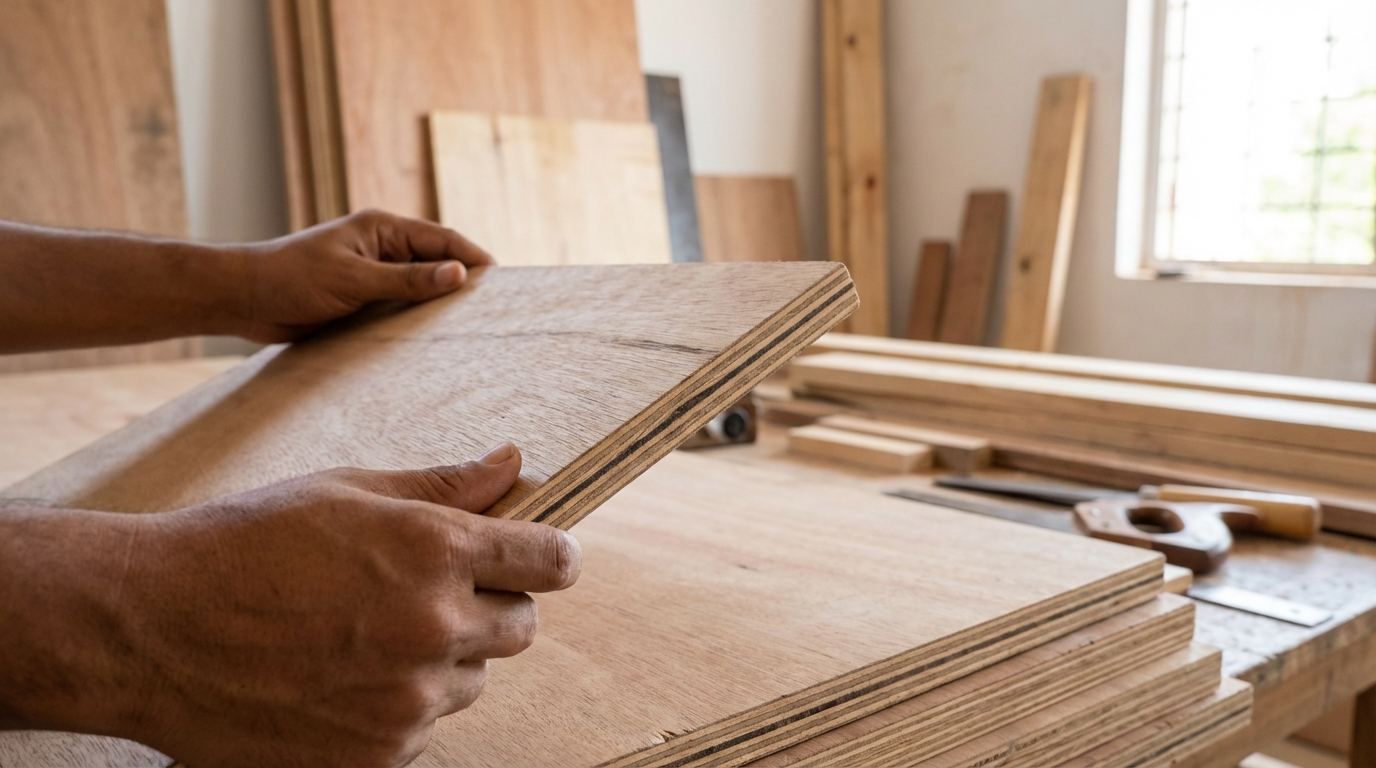
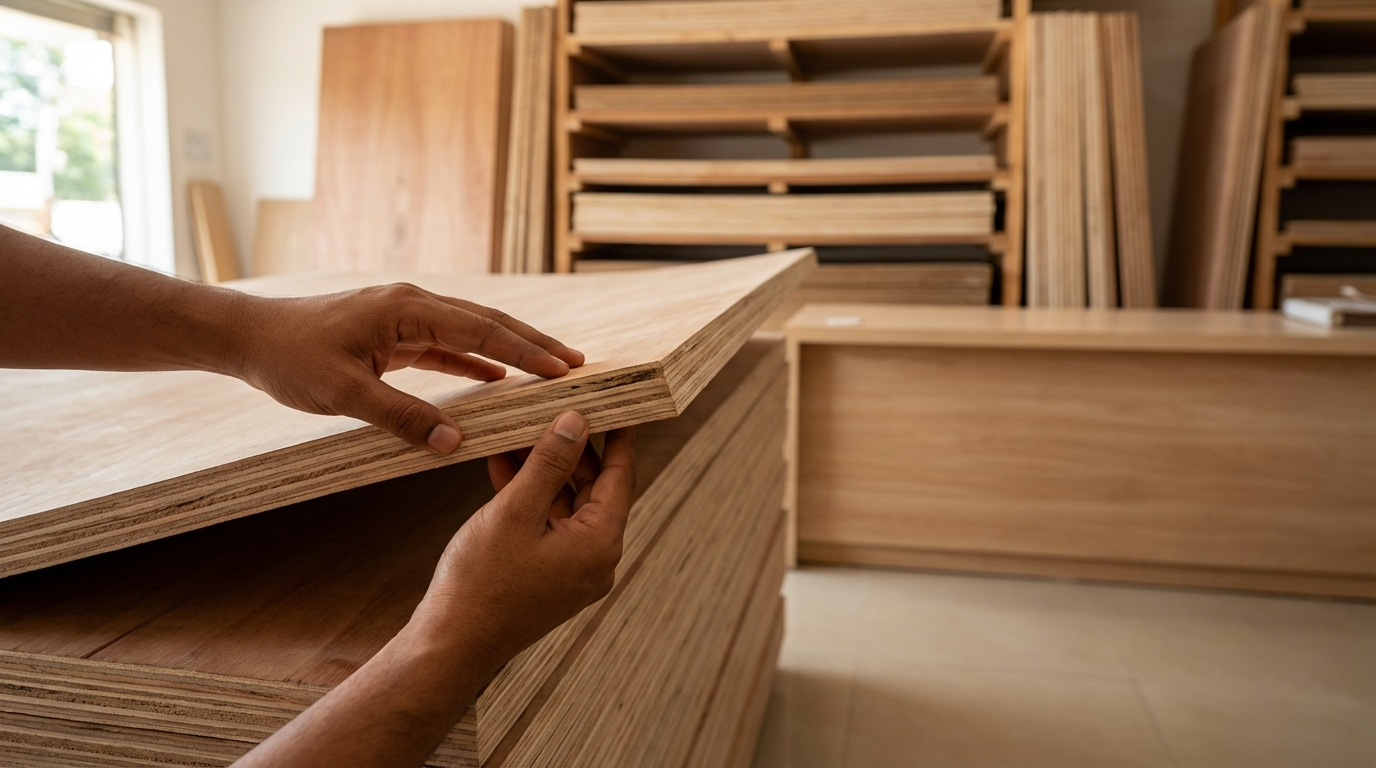
Shuttering Plywood Price per Sq Ft: 12mm vs 18mm Rate + Reuse Value Check
Shuttering plywood price guide with 12mm/18mm rate ranges and a simple method to judge value based on reuse cycles—not just the cheapest quote.
Quick Decision Summary
Best answer in one line: Shuttering plywood value depends on cost per reuse cycle, not just the upfront price per square foot.
If you're in a hurry: For most RCC construction in India, 12mm shuttering plywood typically ranges from ₹28–45 per sq ft, while 18mm runs ₹42–65 per sq ft depending on core quality, film face thickness, and regional logistics. The cheapest quote often delivers the worst value because low-grade sheets fail after 3–5 uses, whereas better-bonded plywood can survive 15–25+ cycles. Always calculate effective cost per use before deciding. Ask suppliers about IS 4990 compliance and request a sample cut to check core density and film adhesion before placing bulk orders.
- Choose 12mm if: You're casting thin slabs, lintels, or low-load formwork where deflection isn't critical.
- Choose 18mm if: You need columns, beams, thick slabs, or expect heavy concrete pressure and multiple reuse cycles.
- Avoid the cheapest option if: You cannot verify core quality and the supplier won't guarantee even 8–10 reuses under normal conditions.
What Shuttering Plywood Actually Means
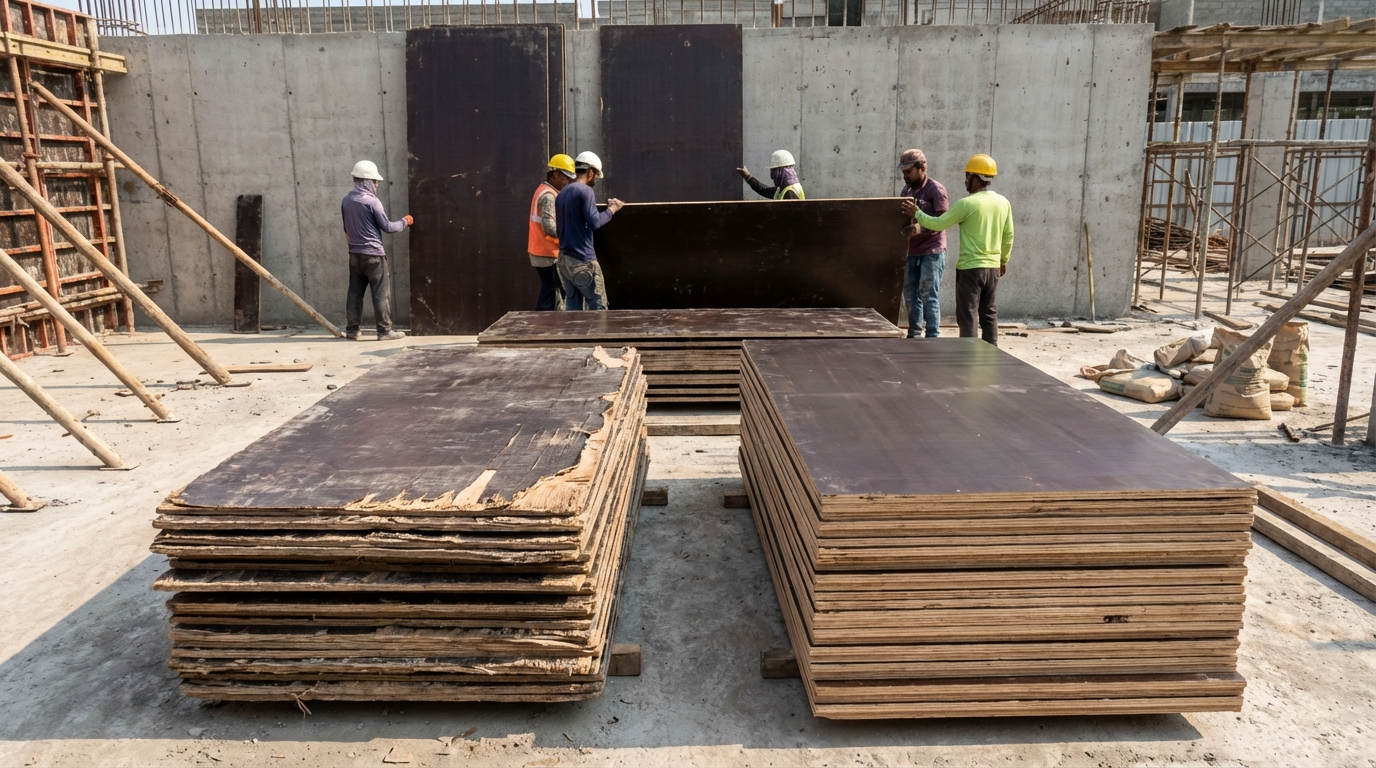
Shuttering plywood—also called form plywood or concrete formwork plywood—is engineered specifically to withstand wet concrete, de-shuttering stress, and repeated use across multiple pours. Unlike furniture-grade plywood designed for aesthetics and indoor stability, shuttering plywood prioritizes surface release, water resistance, and structural rigidity under load.
The Indian Standard IS 4990 governs specifications for this category, covering bonding quality, moisture resistance, and dimensional tolerances. Most shuttering plywood features a phenolic film coating on both faces—this dark brown or black layer resists concrete adhesion and protects the wood core from moisture penetration.
Where People Get Confused About Shuttering Plywood
- Confusing BWP with shuttering grade: BWP (boiling water proof) furniture plywood resists water but lacks the film face and structural build needed for formwork. Using BWP for shuttering wastes money and delivers poor concrete finish.
- Assuming thicker always means stronger: An 18mm sheet with a weak poplar core and thin film can fail faster than a 12mm sheet with dense eucalyptus core and thick film coating.
- Ignoring reuse math: A ₹55/sq ft sheet lasting 20 uses costs ₹2.75 per use. A ₹32/sq ft sheet lasting 6 uses costs ₹5.33 per use—nearly double the effective cost.
- Treating all film faces as equal: Film thickness varies from 60 GSM to 220 GSM. Thicker films release concrete better and survive more cycles, but cheap sheets often use 60–80 GSM film that peels after a few pours.
- Forgetting edge sealing matters: Even premium shuttering plywood absorbs water through exposed edges. Unsealed edges swell, delaminate, and reduce cycle count dramatically.
India-Specific Reality Check
Shuttering plywood performance in India varies wildly based on climate zone, storage practices, and site handling. Understanding these realities helps you buy smarter and avoid preventable failures.
Monsoon and Coastal Humidity Challenges
During monsoon months, shuttering plywood stored outdoors absorbs moisture even through film faces if edges are unsealed. Coastal cities like Chennai, Mumbai, and Kochi see additional salt-air exposure that accelerates film degradation. Plywood stored flat on wet ground or stacked without airflow develops mould and core softening within days. Always store sheets on raised platforms with protective covering and adequate ventilation.
On-Site Handling Realities
Indian construction sites rarely follow ideal storage protocols. Labourers often drag sheets across rebar, stack wet sheets face-to-face, and use aggressive de-shuttering techniques that gouge film surfaces. These practices reduce reuse potential regardless of plywood quality. The best-value approach combines decent-quality plywood with site discipline—training workers on proper handling often delivers better ROI than simply buying premium sheets that get damaged anyway.
Regional Price and Quality Variation
Shuttering plywood prices in Delhi-NCR typically run 10–15% lower than Mumbai or Bangalore due to proximity to major manufacturing clusters in Uttar Pradesh and Haryana. Southern markets often see higher prices but also better access to hardwood-core options. Always get quotes from multiple suppliers and factor in transport costs for bulk orders.
Price Range and Cost Drivers (India)
Shuttering plywood prices vary based on thickness, core species, film quality, brand reputation, and regional logistics. Use these ranges as starting benchmarks, but always confirm locally before finalizing orders.
12mm Shuttering Plywood Price Ranges
| Quality Tier | Price Range (₹/sq ft) | Expected Reuse Cycles | Typical Core |
|---|---|---|---|
| Budget/Local | ₹28–35 | 4–8 uses | Mixed softwood, thin film |
| Mid-Range | ₹35–42 | 8–15 uses | Eucalyptus/hardwood mix |
| Premium | ₹42–50 | 15–20+ uses | Dense hardwood, thick film |
18mm Shuttering Plywood Price Ranges
| Quality Tier | Price Range (₹/sq ft) | Expected Reuse Cycles | Typical Core |
|---|---|---|---|
| Budget/Local | ₹42–50 | 5–10 uses | Poplar/softwood, thin film |
| Mid-Range | ₹50–58 | 12–18 uses | Eucalyptus blend |
| Premium | ₹58–70 | 20–30+ uses | Gurjan/dense hardwood |
What Drives Shuttering Plywood Prices Up or Down?
- Core species: Gurjan and dense eucalyptus cores cost more but hold screws better and resist flexing under concrete load.
- Film thickness: 120–220 GSM films add ₹3–8/sq ft but dramatically improve release and cycle count.
- Calibration: Thickness-calibrated sheets ensure uniform slab depth and better formwork alignment—worth the premium for precision work.
- Edge sealing: Pre-sealed edges cost more but prevent moisture ingress that destroys reuse potential.
- Transport distance: Bulk orders from distant mills may have lower per-sheet cost but higher logistics expense.
How to Ask for a Quote (Spec Checklist)
When requesting quotes, specify these details to get accurate, comparable pricing:
- Exact thickness required (12mm or 18mm)
- Sheet size (standard 8×4 ft or custom cuts)
- Film face type and GSM if known
- Core species preference (hardwood/eucalyptus/any)
- Quantity needed (sheets or sq ft)
- Delivery location and unloading requirements
- Expected reuse cycles (this signals quality expectation)
- Whether IS 4990 compliance is required
Mini Budget Example: 2000 Sq Ft Slab Formwork
For a residential slab requiring 2000 sq ft of shuttering plywood in a Tier-2 city:
- Budget option (₹32/sq ft): ₹64,000 upfront, 6 uses expected = ₹10,667 effective cost per pour
- Mid-range option (₹48/sq ft): ₹96,000 upfront, 15 uses expected = ₹6,400 effective cost per pour
- Premium option (₹62/sq ft): ₹1,24,000 upfront, 25 uses expected = ₹4,960 effective cost per pour
If your project involves multiple pours or you plan to resell/reuse sheets, the premium option delivers the best value despite higher initial cost.
How Does 12mm Compare to 18mm for Different Applications?
The choice between 12mm and 18mm shuttering plywood depends on structural load, span requirements, and reuse expectations—not just budget constraints.
| Application | Recommended Thickness | Why |
|---|---|---|
| Thin slabs (100–125mm) | 12mm | Lower concrete pressure, adequate stiffness with proper support |
| Standard slabs (150mm+) | 18mm | Better load distribution, less deflection between supports |
| Columns and beams | 18mm | High hydrostatic pressure from concrete needs rigid sheets |
| Lintels and small openings | 12mm | Small areas, easy handling, sufficient for limited spans |
| Multi-storey projects | 18mm | Higher reuse potential justifies premium, handles repeated stress |
| Single-use temporary work | 12mm budget | Minimizes upfront cost when reuse isn't planned |
When 12mm Makes Sense Despite Limitations
For small residential projects with limited pours, 12mm mid-range plywood often delivers acceptable results at lower upfront cost. Key is ensuring adequate centering support—reduce the span between props to compensate for thinner sheets. If your centering spacing is 400mm or less, 12mm performs adequately for standard residential slabs.
When 18mm Pays for Itself
Commercial projects, multi-storey buildings, and any work expecting 10+ reuse cycles should default to 18mm. The extra rigidity prevents sagging that causes uneven slab thickness, and the thicker section survives more de-shuttering cycles without edge damage. Contractors bidding multiple projects often find 18mm premium sheets the most economical choice over a year of work.
The Reuse Value Check: How to Actually Calculate Worth
The single most important skill for buying shuttering plywood is calculating effective cost per use rather than comparing upfront prices.
Step-by-Step Reuse Value Calculation
- Determine upfront cost: Price per sq ft × total sq ft needed
- Estimate realistic reuse cycles: Based on core quality, film thickness, storage conditions, and site handling
- Account for wastage: Add 5–10% for cutting waste and damaged sheets
- Calculate cost per use: (Upfront cost + wastage) ÷ expected uses
- Factor in resale value: Good-condition used shuttering plywood sells for 30–50% of original price
What Reduces Reuse Cycles Faster Than Expected?
- Storing sheets flat on wet ground or in direct sun
- Not applying de-shuttering oil before each pour
- Using aggressive prying tools for removal
- Leaving concrete residue on surfaces between uses
- Stacking wet sheets face-to-face without drying
- Cutting sheets into small pieces (edges become weak points)
Trade-offs and Limitations
Understanding what shuttering plywood cannot do helps you plan around its limitations rather than discovering them mid-project.
No Shuttering Plywood Lasts Forever
Even premium sheets degrade. The question is whether they fail at use 8 or use 25. Budget accordingly and plan replacement costs into multi-phase projects.
Film Face Quality Varies Dramatically
Two sheets at similar prices can have vastly different film adhesion and thickness. Without destructive testing, you're relying on supplier reputation and sample inspection.
Edge Protection Is Your Responsibility
Most manufacturers don't pre-seal edges. Unsealed edges absorb water and fail first. Factor in edge sealing cost and labour when budgeting.
Concrete Finish Quality Has Limits
Shuttering plywood produces a reasonably smooth concrete surface, but architectural-grade finishes require specialized formwork. Don't expect furniture-grade smoothness from any film-faced sheet.
Storage Discipline Is Non-Negotiable
The best shuttering plywood stored poorly underperforms cheap plywood stored correctly. Your site practices matter as much as your purchasing decisions.
Common Buyer Mistakes and How to Avoid Them
Mistake 1: Buying Based Only on Lowest Quote
Why it happens: Budget pressure and assumption that "plywood is plywood." What to do instead: Calculate cost per reuse cycle. Ask suppliers what cycle count their product typically achieves under normal site conditions.
Mistake 2: Ignoring Core Quality
Why it happens: Film face looks identical across quality tiers; core isn't visible. What to do instead: Request a sample cut. Tap the sheet—dense cores sound solid, hollow sounds indicate voids or softwood cores.
Mistake 3: Not Specifying Thickness Tolerance
Why it happens: Assuming "18mm" means exactly 18mm everywhere. What to do instead: Ask for calibrated sheets if slab thickness precision matters. Standard sheets can vary ±1mm, which compounds over large areas.
Mistake 4: Ordering Without Accounting for Cutting Waste
Why it happens: Measuring only the formwork area needed. What to do instead: Add 8–12% for cutting waste, damaged sheets, and edge trim. Ordering exact quantities guarantees shortfall.
Mistake 5: Skipping Edge Sealing
Why it happens: Perceived as extra cost and effort. What to do instead: Seal all cut edges with bitumen paint or PU sealant. This single step can add 30–50% more reuse cycles.
Mistake 6: Storing Flat on Ground
Why it happens: Convenience and space constraints. What to do instead: Use raised platforms, ensure airflow between sheets, and cover against rain while allowing ventilation.
Mistake 7: Reusing Damaged Sheets Without Repair
Why it happens: Urgency and assumption that damage is cosmetic. What to do instead: Patch holes and tears with appropriate fillers. Discard sheets with delamination or severe warping—they'll cause concrete defects.
Mistake 8: Not Applying De-shuttering Oil
Why it happens: Seen as optional or time-consuming. What to do instead: Apply thin, even coat of de-shuttering oil before every pour. This protects the film face and ensures clean concrete release.
Failure Modes and Fixes
Failure: Film Peeling After Few Uses
Symptom: Brown film separates from plywood surface in patches. Root cause: Low-quality film adhesion, aggressive de-shuttering, or concrete left to cure too long. Prevention: Choose sheets with higher GSM film, use proper release oil, de-shutter within recommended timeframe. If already happening: Sand loose areas and apply fresh film or bitumen coating to extend limited use.
Failure: Edge Swelling and Delamination
Symptom: Sheet edges expand, layers separate, edges become soft. Root cause: Water absorption through unsealed cut edges. Prevention: Seal all edges immediately after cutting. If already happening: Trim swollen portions, re-seal remaining edges, use affected sheets only for non-critical areas.
Failure: Sagging Under Concrete Load
Symptom: Sheets deflect between supports, causing uneven slab thickness. Root cause: Insufficient thickness for span, weak core, or inadequate centering support. Prevention: Use 18mm for spans over 400mm, verify core density, increase prop frequency. If already happening: Reduce spans with additional props, avoid using sagged sheets for precision work.
Failure: Concrete Sticking to Surface
Symptom: Concrete adheres to plywood during de-shuttering, damaging both. Root cause: Insufficient or poor-quality release oil, worn film face, or over-cured concrete. Prevention: Apply quality de-shuttering oil consistently, replace sheets with worn film. If already happening: Scrape carefully, sand surface, and apply fresh oil coat. Consider replacement if sticking persists.
Failure: Warping and Twisting
Symptom: Sheets no longer lie flat, affecting formwork alignment. Root cause: Uneven moisture exposure, improper storage, or low-quality core construction. Prevention: Store flat on level surface, protect from rain and direct sun, buy from reputable sources. If already happening: Use for smaller cuts where warping is less problematic, discard severely warped sheets.
Failure: Screw/Nail Hole Expansion
Symptom: Fastener holes enlarge with each use, reducing holding power. Root cause: Soft core, repeated fastening in same locations. Prevention: Choose hardwood-core plywood, vary fastener positions between uses. If already happening: Fill holes with wood filler or epoxy, use larger fasteners, retire sheets with excessive hole damage.
Quality Checks You Can Do Without Lab Tests
Before Buying: What to Inspect
- Weight test: Lift the sheet. Dense hardwood cores feel noticeably heavier than softwood alternatives of the same thickness.
- Tap test: Knock on the surface. Solid, dense sound indicates good core. Hollow or papery sound suggests voids or low-density core.
- Edge inspection: Look at cut edges. Uniform layers without gaps indicate proper lamination. Visible voids or thick glue lines suggest poor construction.
- Film adhesion: Try peeling a corner of the film. Quality film resists separation. Film that lifts easily will fail quickly on site.
- Flatness check: Place sheet on flat ground. Significant rocking or gaps indicate warping before use even begins.
- Sample cut: Ask for a small piece to cut. Observe core density, ply count, and how cleanly edges cut.
Questions to Ask Suppliers
- What core species is used?
- What is the film face GSM?
- How many reuse cycles do your regular customers typically achieve?
- Is the plywood calibrated for uniform thickness?
- What is your return/replacement policy for defective sheets?
- Can you provide a sample before bulk order?
After Cutting: What to Look For
- Core consistency: Uniform colour and density across the cut face. Dark spots or variations indicate moisture damage or poor material.
- Layer adhesion: Plies should be tightly bonded. Separation between layers means bonding will fail under load.
- Clean cut edge: Quality plywood cuts cleanly. Excessive splintering or tearing indicates weak fibres or poor lamination.
After Installation: Ongoing Quality Signals
- De-shuttering ease: Plywood that releases concrete cleanly is performing well. Increasing sticking indicates film degradation.
- Surface condition: Minor scuffs are normal. Deep gouges, peeling, or soft spots mean the sheet is approaching end of useful life.
- Edge condition: Swelling edges after a few uses signal moisture ingress. Improve edge sealing or replace affected sheets.
Decision Framework: Which Shuttering Plywood for Your Conditions
| Your Situation | Recommended Option | What to Verify |
|---|---|---|
| Small residential project, 3–5 pours | 12mm mid-range | Core density, edge seal immediately after cutting |
| Multi-storey building, 15+ pours | 18mm premium hardwood core | Film GSM, calibration, supplier reputation |
| Coastal/high-humidity location | 18mm with thick film (150+ GSM) | Edge sealing quality, storage discipline on site |
| Tight budget, single-use formwork | 12mm budget with proper support | Increase prop density, accept lower finish quality |
| Architectural concrete (smooth finish) | 18mm premium, new or near-new sheets | Film integrity, surface cleanliness before each pour |
| Column and beam formwork | 18mm with dense core | Rigidity under pressure, secure bracing system |
| Planning to resell after project | 18mm premium with excellent storage | Maintain condition for resale value retention |
Tips for Homeowners Supervising Construction
- Ask your contractor what shuttering plywood grade they plan to use and what reuse count they expect.
- Inspect stored plywood on site—sheets lying in water or stacked wet indicate poor practices.
- Check that de-shuttering oil is being applied before each pour (you should see a slight sheen).
- After de-shuttering, observe concrete surface quality. Rough patches or voids may indicate worn plywood or poor technique.
- If you're paying for materials, understand the reuse math—don't let contractors pocket savings from premium plywood you paid for.
Tips for Carpenters and Formwork Teams
- Cut sheets efficiently to minimize waste—plan cuts before starting.
- Seal all cut edges immediately with bitumen paint or PU sealant.
- Use proper de-shuttering tools—avoid prying against the plywood face.
- Clean sheets after each use before stacking. Remove concrete residue while still accessible.
- Store sheets on raised platforms, never directly on ground.
- Rotate stock—use older sheets for smaller, less critical pours.
- Track cycle count for each sheet batch to predict replacement timing.
Tips for Architects and Structural Engineers
- Specify shuttering plywood grade in project documents—don't leave it to contractor discretion.
- For architectural concrete finishes, specify new or limited-use sheets and define acceptable surface standards.
- Consider specifying calibrated plywood for precision slab thickness requirements.
- Include storage and handling guidelines in project specifications to protect material quality.
- Factor realistic reuse cycles into project cost estimates when evaluating contractor bids.
Tips for Contractors and Construction Companies
- Develop relationships with reliable suppliers who can provide consistent quality across orders.
- Track actual reuse cycles achieved to calibrate future purchasing decisions.
- Train labour crews on proper handling—this investment pays for itself in extended sheet life.
- Consider premium sheets for ongoing work and budget sheets for one-off projects.
- Factor resale value into calculations—well-maintained premium sheets retain significant value.
- Implement quality checkpoints: incoming inspection, cut inspection, and periodic condition audits.
Can Shuttering Plywood Be Reused for Other Purposes?
After sheets reach end of useful life for formwork, they often have secondary applications. Moderately worn sheets work for temporary fencing, site office flooring, or protective covering. Sheets with good remaining surface but edge damage can be trimmed and used for smaller pours or non-structural applications. However, sheets with significant delamination or warping should be discarded rather than repurposed—they'll create problems in any application.
What Happens If You Use Furniture Plywood for Shuttering?
Using BWP or commercial plywood for formwork is technically possible but economically wasteful. Furniture plywood lacks the film face needed for clean concrete release, so sheets stick and damage quickly. The surface finish of resulting concrete is inferior, and the plywood typically survives only 1–3 uses before becoming unusable. The cost per use ends up higher than purpose-built shuttering plywood. Only consider this approach for emergency small pours when proper shuttering plywood isn't available.
How Does Weather Affect Shuttering Plywood Storage?
Temperature and humidity cycles stress plywood even in storage. Hot sun causes surface drying while undersides remain moist, creating warping forces. Rain exposure through inadequate covering saturates edges and initiates delamination. Cold weather doesn't directly damage plywood but can trap moisture that causes problems when temperatures rise. The ideal storage environment is covered, ventilated, and elevated—protecting from direct weather while allowing air circulation to prevent moisture buildup.
What Is the Difference Between Indian and Imported Shuttering Plywood?
Imported shuttering plywood (often from Indonesia, Malaysia, or China) sometimes offers competitive pricing, particularly for large orders. Quality varies significantly by source. Some imported sheets feature superior film adhesion and denser cores; others cut corners on materials. Key considerations include verifying actual specifications match claims, understanding warranty/return logistics for imported materials, and factoring in longer lead times. Indian-manufactured plywood offers easier recourse for quality issues and typically faster delivery, though pricing and quality also vary across manufacturers.
FAQs
What is the typical price difference between 12mm and 18mm shuttering plywood?
The price difference between 12mm and 18mm shuttering plywood typically ranges from ₹12–20 per square foot, representing roughly a 40–50% premium for the thicker option. However, this comparison oversimplifies the value equation. The 18mm thickness provides significantly better performance under load, often surviving 50–100% more reuse cycles than 12mm sheets of equivalent quality. When calculating effective cost per pour, 18mm often delivers better value for projects expecting 10 or more concrete pours, while 12mm may prove more economical for small projects with limited reuse potential.
How many times can shuttering plywood realistically be reused?
Realistic reuse cycles depend on plywood quality, storage conditions, handling practices, and application type. Budget-grade plywood typically achieves 4–8 uses under normal site conditions. Mid-range options commonly deliver 10–18 cycles with proper care. Premium hardwood-core plywood with thick film facing can exceed 25 uses when stored correctly, treated with de-shuttering oil, and handled carefully during installation and removal. These numbers assume average Indian site conditions—exceptional care can extend life, while poor practices dramatically reduce it regardless of initial quality.
Does film face colour indicate quality differences?
Film face colour—typically brown or black—doesn't reliably indicate quality differences. Both colours can be found across quality tiers. What matters is film thickness (measured in GSM), adhesion strength, and surface smoothness. Some manufacturers use colour to differentiate product lines, but this isn't standardized across the industry. Focus your quality assessment on film thickness specifications, adhesion testing, and core quality rather than surface colour. When comparing options, ask for GSM specifications rather than relying on visual appearance.
Is IS 4990 certification essential for shuttering plywood?
IS 4990 certification indicates the plywood meets Bureau of Indian Standards specifications for concrete formwork applications. While not legally mandatory for all projects, this certification provides assurance of minimum quality standards for bonding, moisture resistance, and dimensional tolerances. Government projects and larger commercial constructions often require IS 4990 compliance. For smaller projects, certification matters less than actual performance, but it provides a useful baseline when comparing unfamiliar suppliers. Request test certificates for critical applications rather than relying solely on the IS mark.
Can shuttering plywood be used immediately after delivery?
Freshly delivered shuttering plywood can typically be used immediately if it arrives in good condition. However, inspect sheets upon delivery for transport damage, moisture exposure, or warping. Sheets that arrived wet or were stored improperly by the supplier should be dried and acclimatized before use. For optimal performance, allow sheets to acclimatize to site conditions for 24–48 hours, especially if temperature or humidity differ significantly from storage conditions. This brief acclimatization reduces the risk of unexpected warping during use.
What causes white patches on concrete after de-shuttering?
White patches on concrete surfaces after de-shuttering typically result from lime bloom (efflorescence) rather than plywood defects. This occurs when water carries calcium compounds to the surface during curing. However, plywood condition can contribute—worn film faces or damaged surfaces may absorb moisture unevenly, affecting concrete curing patterns. To minimize white patches, ensure plywood surfaces are clean and film faces intact, apply de-shuttering oil evenly, and maintain appropriate curing conditions. Efflorescence usually fades over time and can be removed with appropriate cleaners if persistent.
How should damaged shuttering plywood be disposed of?
Damaged shuttering plywood disposal varies by local regulations. Plywood with phenolic resins shouldn't be burned on open fires due to toxic fumes. Many areas allow disposal through construction waste channels or designated industrial waste facilities. Sheets in moderate condition may find buyers for secondary applications—check with local scrap dealers. Some municipalities have specific requirements for treated wood products. Before disposal, consider whether damaged sheets can be cut down for smaller applications or sold for non-critical uses to recover some value.
Why does some shuttering plywood warp even when stored correctly?
Warping in correctly stored shuttering plywood usually indicates manufacturing defects rather than storage issues. Causes include unbalanced veneer moisture content during production, uneven resin application, or asymmetric ply construction. Some warping occurs when sheets experience temperature gradients—one face heated by sun while the other remains cool. Even quality plywood develops minor warping over extended storage. When warping appears immediately or excessively in new sheets, this indicates quality problems worth addressing with suppliers. Mild warping in older sheets is normal and often manageable through proper bracing during use.
Disclaimer: This content is provided for general informational purposes based on industry practices and publicly available information. Product specifications, standards, prices, and availability may vary by manufacturer, region, and time. Readers should independently verify details with manufacturers, dealers, or qualified professionals before making purchase or construction decisions.Want Plywood Suggestions?
Share a few details and a Duro BOIL specialist will suggest suitable brands and connect you to responsive dealers.