Termite-proof plywood: what works (and what doesn’t)
Termite-proof plywood: what works (and what doesn’t): a practical India-focused guide with checklists, FAQs and quick tables to help you choose the right
Quick Decision Summary
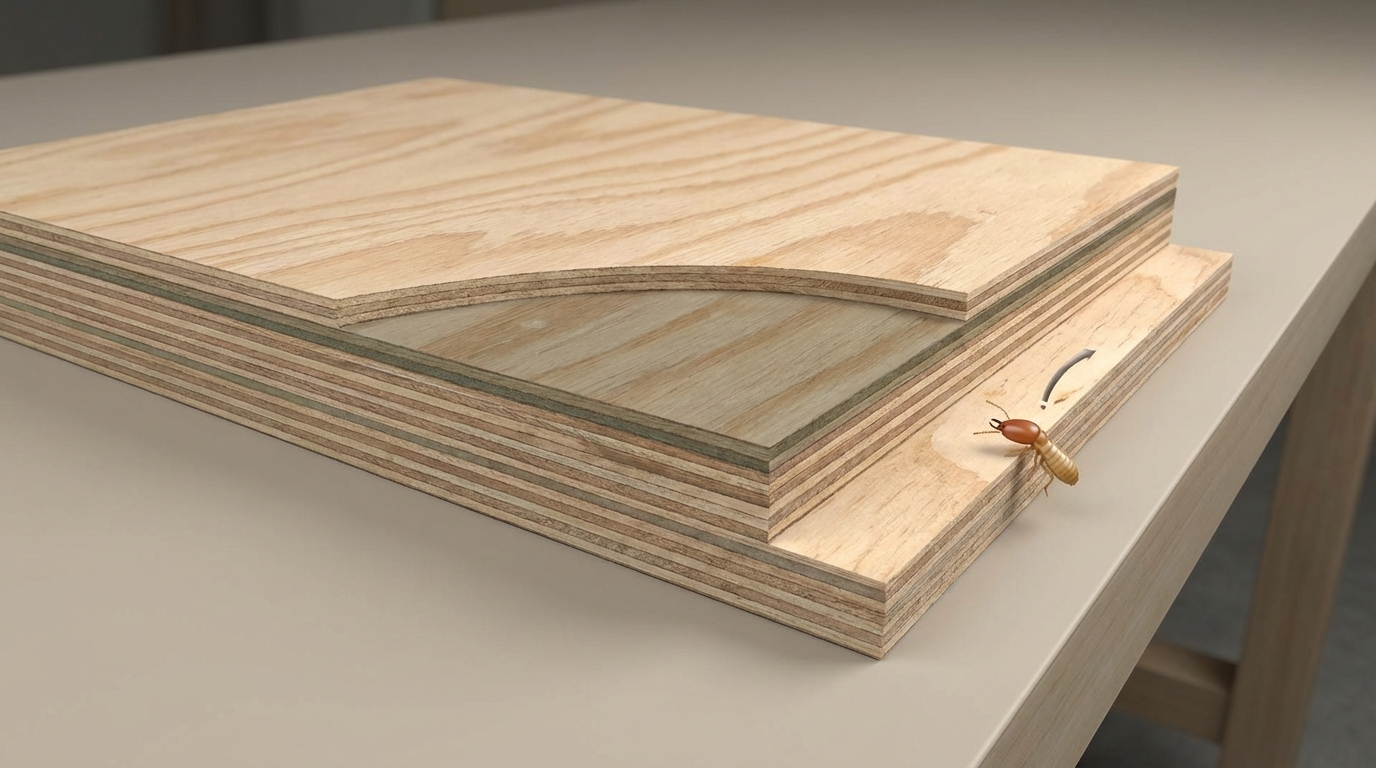
Opt for BWR or BWP grade plywood chemically treated with preservatives like boron or copper compounds in the glue line or veneers for effective termite resistance.
If you're in a hurry: In India's termite-prone regions, untreated MR plywood fails quickly, while properly treated BWR/BWP options deter pests for years when stored and installed right. Verify treatment via supplier questions and visual checks—avoid cheap "coated" claims that wear off fast. Expect 20-50% higher cost than basic plywood, but it saves rework in humid kitchens or coastal homes. Pair with site pre-treatment for best results.
- Choose this if: high termite risk areas like coastal or soil-contact zones, long-term furniture/kitchen use, or monsoon-heavy regions.
- Avoid this if: fully dry interiors with low pest history—save with MR grade and seal edges well.
What This Term/Material Actually Means
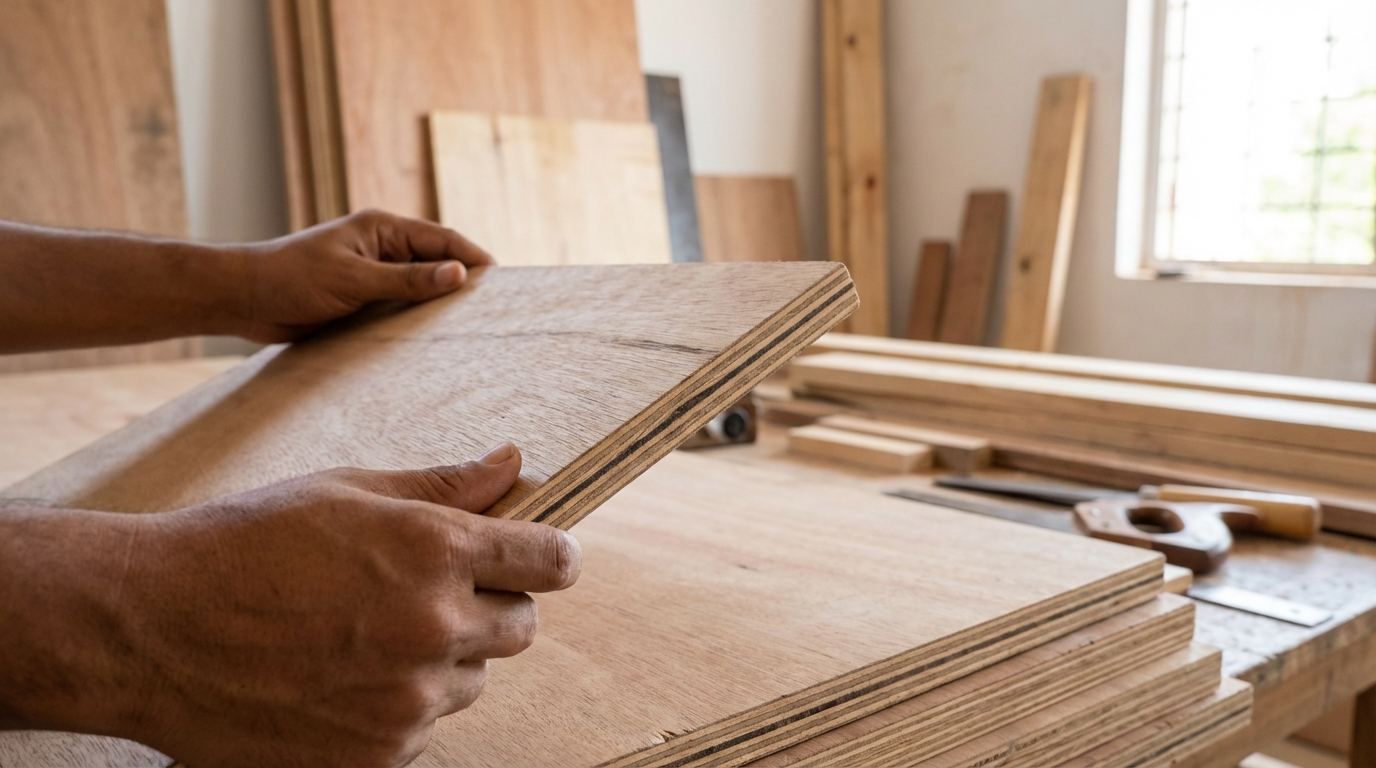
Termite-proof plywood refers to standard plywood (layers of thin wood veneers glued together) that undergoes chemical preservative treatment during manufacturing. These preservatives—often boron-based compounds, copper salts, or synthetic termiticides—are infused into the wood veneers or mixed into the glue lines to create a toxic barrier against termites and borers.
It's not 100% impenetrable forever; resistance lasts based on treatment depth and exposure. Higher grades like BWR (boiling water resistant) or BWP (boiling water proof) commonly include these treatments alongside moisture protection.
Where People Get Confused (Top 5 Misunderstandings)
- BWP grade automatically means termite-proof—no, moisture resistance is separate from pest treatment.
- Any plywood with paint or varnish is protected—termites tunnel from inside, ignoring surface coatings.
- Thicker plywood resists better—treatment matters more than thickness alone.
- All imported or "premium" plywood is treated—always confirm the process.
- Once labeled termite-proof, it's guaranteed for life—chemicals can leach over 10-15 years in wet conditions.
India-Specific Reality Check
India's tropical climate amplifies termite risks: monsoon humidity (70-90% RH) softens untreated wood, while subterranean termites thrive in coastal soils from Mumbai to Chennai. Godown storage often exposes sheets to damp floors, weakening surface treatments. Contractor sites delay installation, inviting early attacks. In reality, even treated plywood needs edge sealing and site fumigation for full effect—untreated cores fail first in humid kitchens or wardrobes.
Does Termite-Proof Plywood Work in High-Risk Indian Areas?
Yes, when preservatives penetrate deeply into veneers and glue; boron or copper treatments repel termites effectively for 8-12 years in typical use. However, coastal salinity or poor ventilation accelerates leaching. Next step: Ask suppliers for treatment method details and pair with concrete termite barriers during construction.
How to Choose in 5 Steps
- Assess your risk zone: High (coastal/kitchen)? Go BWR/BWP treated. Low (dry bedroom)? MR with extra sealing suffices. Skip if plywood touches soil.
- Verify treatment claims: Ask "glue-line additive or veneer dip?" Avoid vague "coated" plywood.
- Check grade match: BWR/BWP for moisture + pests; test sample edges for uniformity.
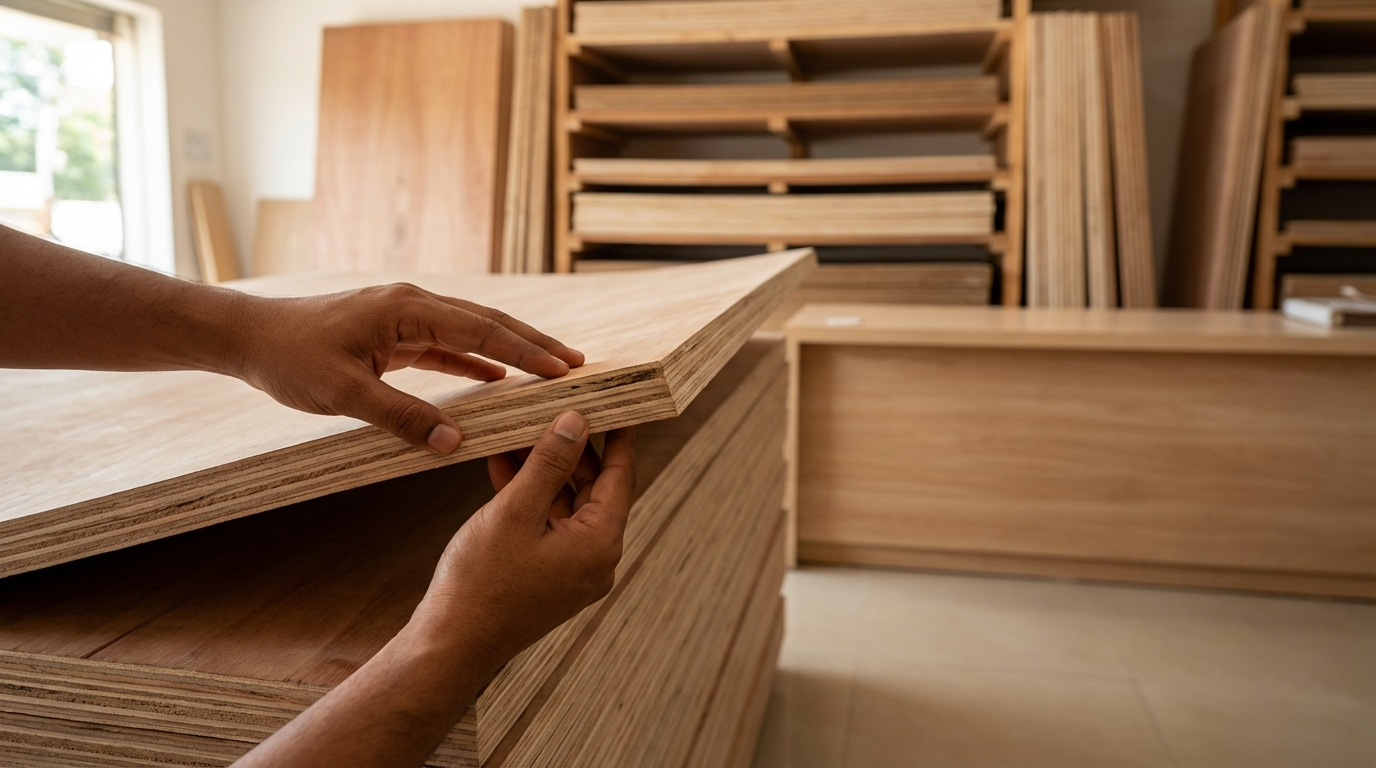
- Get hands-on inspection: Weigh sheet (heavier often denser), tap for solid sound, probe edges gently.
- Confirm installation prep: Plan edge sealing, elevation from floors, and pro-termite contractor.
Skipping step 2 leads to faded protection in 2-3 years.
Price Range and Cost Drivers (India)
Termite-treated BWR/BWP plywood typically ranges higher than MR by 25-60%, varying by city (metros 10-20% pricier due to logistics). For 18mm thickness, expect broad ranges influenced by core wood quality (poplar vs hardwood), veneer face grade, and treatment depth.
Cost drivers: Thickness (12-25mm), brand consistency, calibration (pre-sanded reduces waste), regional taxes, and batch testing. Coastal areas add transport premiums.
How to Ask for a Quote (Checklist)
- Specify: "18mm BWR grade, termite-treated with [boron/copper], calibrated."
- Add: "IS-marked, no core gaps, sample sheet."
- Budget example: 4x8 sheet for kitchen cabinet frame—factor 20% extra for sealing materials.
Two-Minute Comparison That Actually Helps
| Feature | Untreated MR Plywood | Treated BWR/BWP |
|---|---|---|
| Termite Resistance | Low (1-3 years) | High (8+ years) |
| Moisture Handling | Dry interiors only | Wet zones OK |
| Cost Premium | Base | +25-60% |
| Best For | Budget dry furniture | Kitchens, coastal |
Choose treated for heavy-use; regular + paint for light dry areas.
Decision Framework: Match Your Conditions
| Condition | Recommended Option | Key Verification |
|---|---|---|
| Coastal/high termite | BWP treated | Deep veneer treatment, heavy weight |
| Monsoon kitchen | BWR glue-line protected | Uniform glue smell, no edge voids |
| Tight budget/dry interior | MR + edge sealant | Smooth calibration, solid tap |
| Heavy furniture load | BWP 18mm+ | Dense core, no delam on bend |
| Fast delivery needed | Local BWR stock | Fresh batch, sealed packing |
| Scratch/high traffic | Treated + laminate | Hardwood face veneer |
Trade-offs and Limitations
Treated plywood costs more upfront and may have a mild chemical odor initially. Treatments don't repel moisture fully—still need BWP for wet areas. Over time (10+ years), leaching reduces efficacy in constantly damp spots. Not ideal for direct soil contact; combine with barriers. Heavier weight complicates handling for carpenters.
Is Termite-Proof Plywood Worth the Extra Cost?
Often yes in India, where rework from infestation hits 20-30% of projects—saves 2-3x long-term. But in arid low-risk zones, sealant on MR works cheaper. Check site history first; get multiple quotes specifying treatment.
Common Buyer Mistakes and How to Avoid Them
- Mistake 1: Trusting labels without questions—why: Fake stamps common. Do: Probe for treatment details.
- Mistake 2: Ignoring storage—why: Damp godowns ruin treatment. Do: Inspect packing on delivery.
- Mistake 3: Skipping edge sealing—why: Exposed cuts invite attacks. Do: Seal all before install.
- Mistake 4: Using MR in kitchens—why: Humidity + termites double-fail. Do: Upgrade to BWR.
- Mistake 5: No site pre-treatment—why: Termites from soil migrate. Do: Fumigate foundation.
- Mistake 6: Buying thin sheets for load-bearing—why: Flex invites cracks. Do: 16mm+ min.
- Mistake 7: Over-relying on paint—why: Surface-only. Do: Treat the core first.
- Mistake 8: No carpenter briefing—why: Poor handling chips protection. Do: Demo checks together.
Failure Modes and Fixes
- Symptom: Surface bubbling. Cause: Moisture delam. Prevent: BWP grade. Fix: Sand, reseal edges.
- Symptom: Hollow sound on tap. Cause: Core voids. Prevent: Weigh/test pre-buy. Fix: Reinforce frame.
- Symptom: Dust trails inside. Cause: Faded treatment. Prevent: Glue-line type. Fix: Local fumigation.
- Symptom: Edge crumbling. Cause: Unsealed cuts. Prevent: Immediate sealant. Fix: Trim, epoxy fill.
- Symptom: Swelling in rains. Cause: MR in wet zone. Prevent: Grade match. Fix: Dry out, brace.
- Symptom: Warping under load. Cause: Thin/poor glue. Prevent: 18mm calibrated. Fix: Shim hinges.
Quality Checks You Can Do Without Lab Tests
Before buying: Smooth face (no plugs/fillers), uniform thickness edges, heavier than looks (dense treatment), faint glue chemical scent, solid thud on tap (no hollow).
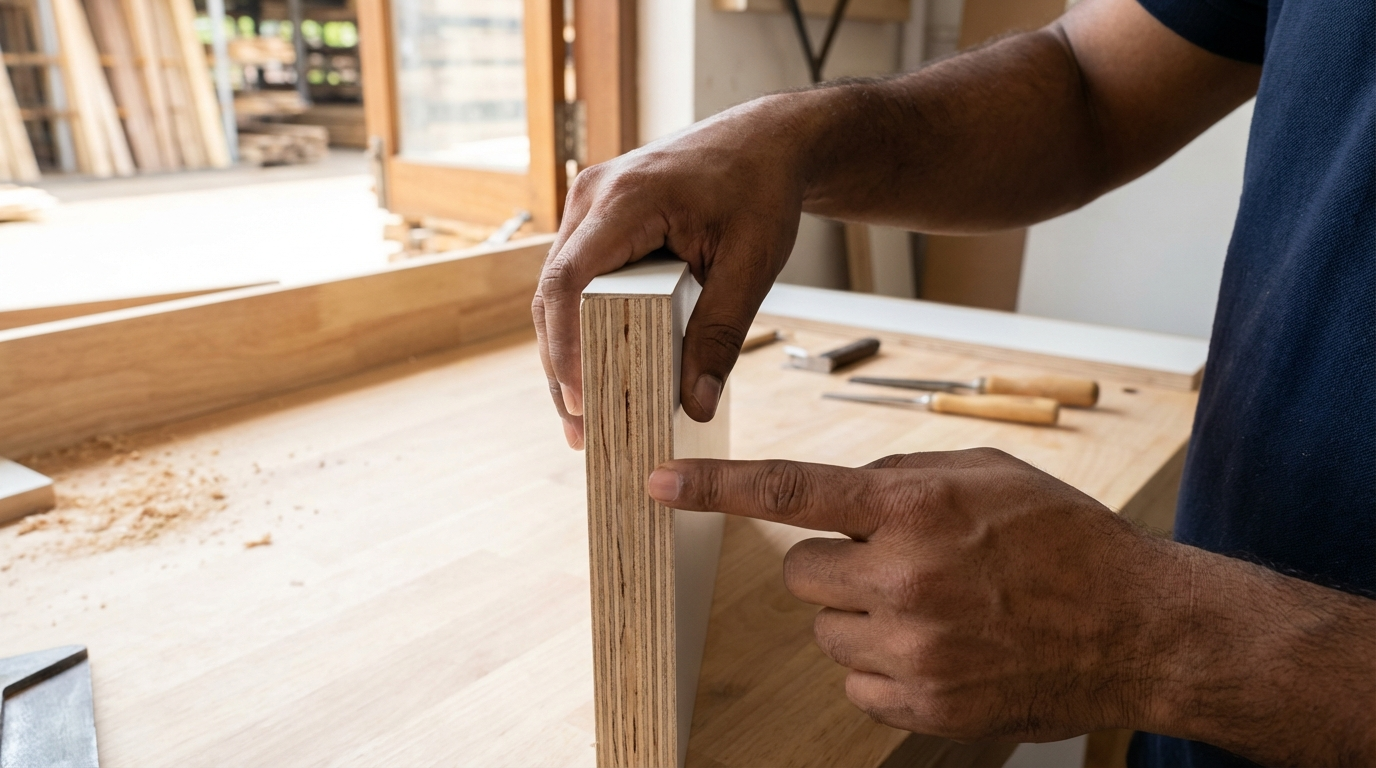
After cutting: Check core layers for even glue lines, no gaps/air pockets, probe gently for firmness.
After install: Ensure 6-12mm floor gap, sealed edges/laminate overlap, monitor for dust monthly.
Can You Test Termite Resistance at Home?
No reliable DIY for treatment depth, but soak edge sample in water—if no instant swelling/delam, moisture OK (proxy for quality). For pests, observe no frass after 6 months. Next: Supplier demo sheet.
Homeowner Tips: Durability Do's and Don'ts
Do: Wipe spills immediately, ventilate wardrobes, elevate furniture legs. Don't: Drag heavy items (scratches expose core), store damp laundry nearby, skip annual inspections.
Carpenter Tips: Handling and Prep
Cut with fine blade to minimize splinters, sand edges before sealing, fasten in glue zones only, reinforce termite-hotspots like legs.
Architect/Designer Tips: Spec Right
Detail BWR min in wet zones, call out "preservative-treated per IS practices," specify laminate overhangs, detail elevation drawings.
OEM/Modular Maker Tips: Scale QC
Batch-tap test 10%, log supplier treatments, standardize sealing SOPs, track field complaints by zone.
FAQs
What's the difference between termite-resistant and termite-proof plywood?
Termite-resistant plywood has built-in chemical deterrents that slow or stop attacks, while "proof" implies total immunity—which doesn't exist long-term. In practice, treated BWR/BWP resists effectively for years if sealed. Nuance: Resistance fades with moisture exposure. Check by asking for glue-line specifics and inspect post-install for early signs.
Is BWP plywood always termite-proof?
No, BWP excels in water resistance (IS practices), but termite treatment is an add-on—confirm with supplier. Often paired, but cheap BWP skips it. In humid India, verify both for kitchens. Next: Request veneer dip proof or sample weight comparison.
How long does termite protection last in plywood?
Typically 8-15 years depending on treatment strength and site conditions—longer in dry interiors, shorter near soil. Monsoon leaching halves it without sealing. Inspect annually; refresh with sprays if dust appears. Practical step: Choose deeper-infused options via supplier Q&A.
Can regular plywood be made termite-proof later?
Partially—surface sprays help short-term, but core stays vulnerable. Better: Factory glue-line treatment. For existing, fumigate + seal. In India, preemptive site barriers outperform post-treatment. Avoid myths; focus on prevention layers.
Why do termites still attack treated plywood?
Treatment fades, edges expose untreated cuts, or soil colonies bypass via mud tubes. Common in poorly ventilated coastal homes. Prevent with full sealing + barriers. If happening, isolate, fumigate professionally—don't ignore early frass.
MR vs BWR for termite-prone areas?
BWR superior—handles humidity better, often includes treatment. MR suits dry zones only. Trade-off: Costlier but fewer failures. Verify BWR by edge moisture hold; upgrade for peace in monsoons.
Does plywood thickness affect termite resistance?
Indirectly—thicker (18mm+) has more layers to protect, slower damage spread. But treatment quality trumps size. Use thick + treated for furniture. Check uniformity to avoid weak spots.
Should I use termite-proof plywood for wardrobes?
Yes in humid/moderate risk—deterrent pays off vs cheap failures. Seal joints extra. Dry climates: MR fine. Balance with ventilation designs for longevity.
What's the best termite treatment in plywood?
Boron/copper in glue + veneers—low toxicity, deep penetration. Avoid surface-only. Varies by supplier; ask penetration method. Pair with habits like no floor contact. Disclaimer: This content is provided for general informational purposes based on industry practices and publicly available information. Product specifications, standards, prices, and availability may vary by manufacturer, region, and time. Readers should independently verify details with manufacturers, dealers, or qualified professionals before making purchase or construction decisions.
Want Plywood Suggestions?
Share a few details and a Duro BOIL specialist will suggest suitable brands and connect you to responsive dealers.