Wood Panels for Furniture: Types, Quality, and Selection Guide
Explore wood panel options for furniture including MDF, plywood, and particle board. Compare quality, cost, and applications for your project.
Quick Verdict
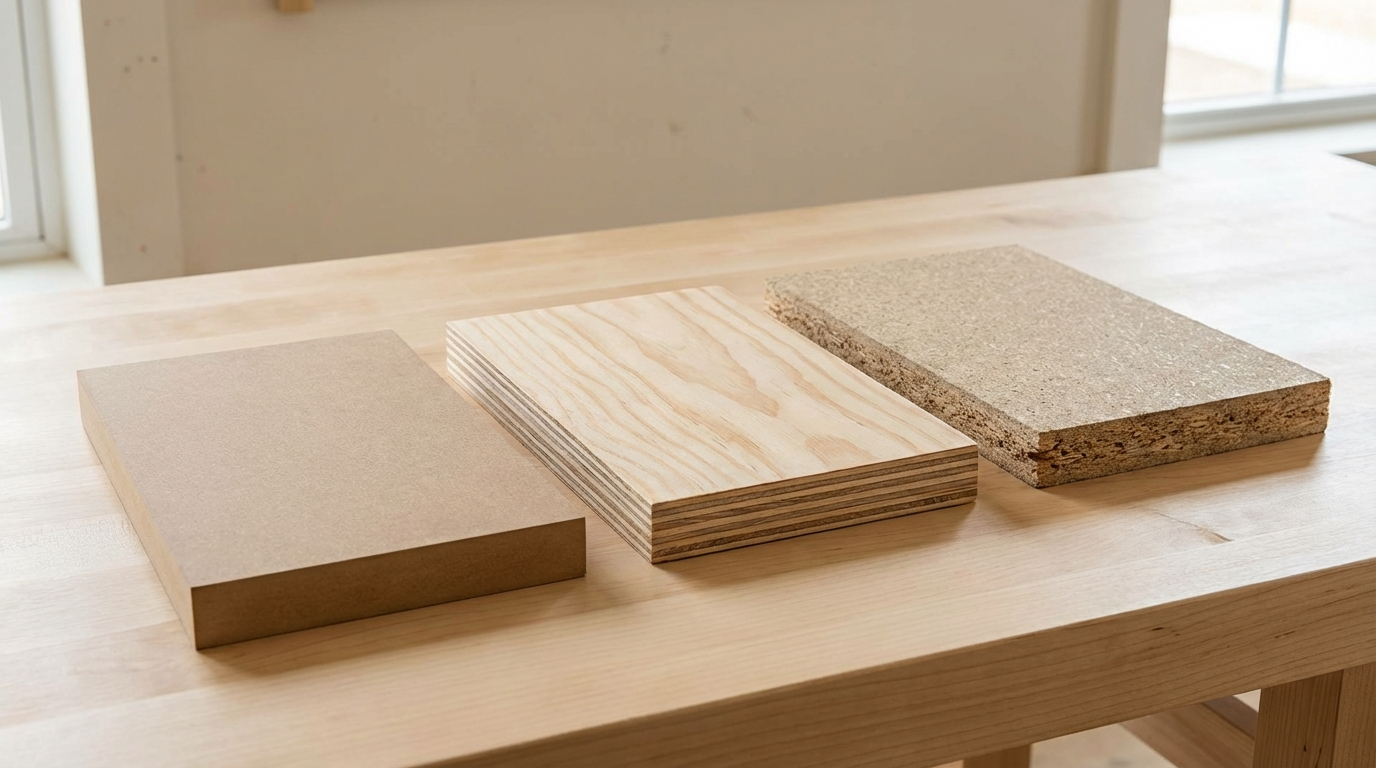
Wood panels for furniture are engineered sheet materials made from wood fibers, veneers, or particles, designed to replace solid wood in furniture manufacturing while offering consistent quality, dimensional stability, and cost efficiency. The three dominant types in India are plywood, MDF (Medium Density Fiberboard), and particle board.
According to duroboil.com's material assessment, here's our take: For most Indian homes, BWR-grade plywood remains the gold standard for structural furniture like wardrobes and kitchen cabinets, while MDF excels in decorative applications requiring smooth painted or laminated finishes. Particle board serves budget-conscious projects in dry environments but requires careful application selection.
Performance Summary:
- Moisture resistance: Plywood (BWR/BWP) – Excellent | MDF (MR grade) – Good | Particle Board – Poor
- Screw-holding strength: Plywood – Excellent | MDF – Good | Particle Board – Average
- Surface smoothness: MDF – Excellent | Particle Board – Good | Plywood – Average
- Value for money: Recommended for kitchens and wet areas (Plywood BWR) | Recommended for wardrobes and TV units (MDF/Plywood) | Not recommended for high-moisture zones (Particle Board)
- Overall: Choose based on application – no single panel suits all furniture needs
What Are Wood Panels for Furniture?
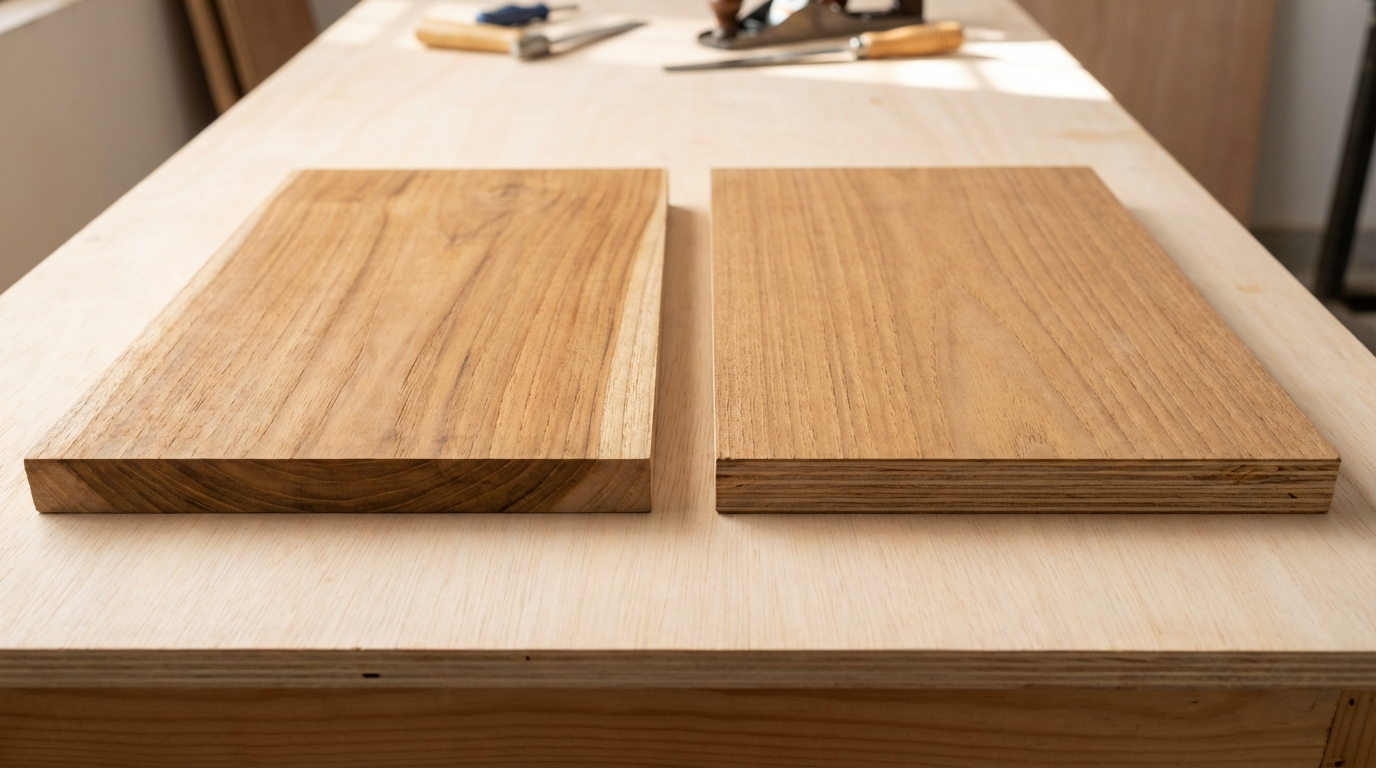
Wood panels are engineered sheet materials manufactured by processing wood in various forms – veneers, fibers, or particles – and bonding them with adhesives under heat and pressure. Unlike solid wood, these panels offer uniform thickness, predictable behavior, and availability in standardized 8×4 feet sheets that Indian carpenters prefer.
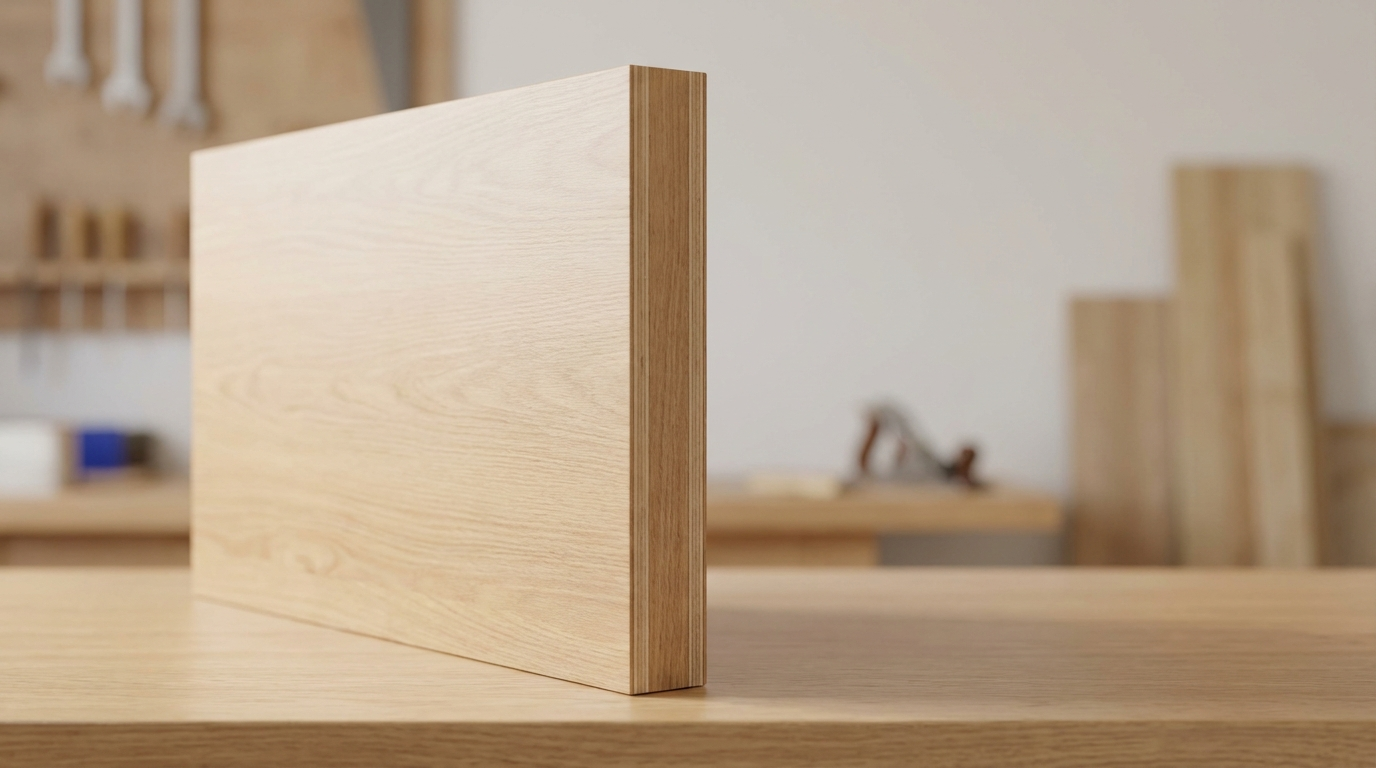
The engineering process eliminates natural wood defects like knots, grain irregularities, and seasonal warping. Each panel type uses different wood processing methods: plywood layers thin veneers at 90-degree angles for strength, MDF compresses fine wood fibers for smoothness, and particle board binds wood chips for economy.
In the Indian furniture industry, wood panels constitute over 85% of all manufactured furniture substrates. Their popularity stems from consistent supply, easier machining, and the ability to accept various surface finishes from laminates to veneers to paint.
Specifications Overview
| Specification | Plywood (BWR) | MDF (Standard) | Particle Board | HDHMR |
|---|---|---|---|---|
| Standard Size | 8×4 feet | 8×4 feet | 8×4 feet | 8×4 feet |
| Available Thickness | 4mm to 25mm | 2mm to 30mm | 6mm to 25mm | 8mm to 25mm |
| Density Range | 550-700 kg/m³ | 650-850 kg/m³ | 450-650 kg/m³ | 850-950 kg/m³ |
| Weight (18mm sheet) | 28-35 kg | 38-45 kg | 25-32 kg | 45-52 kg |
| Moisture Resistance | High (BWR/BWP) | Low to Medium | Very Low | High |
| Screw Holding | Excellent | Good | Average | Very Good |
| Surface Quality | Average | Excellent | Good | Excellent |
| IS Standard | IS 303/IS 710 | IS 12406 | IS 3087 | IS 12406 |
| Price Range (18mm) | ₹65-120/sq ft | ₹35-55/sq ft | ₹18-35/sq ft | ₹55-85/sq ft |
What these specifications mean for your furniture: Density directly correlates with screw-holding capacity – higher density panels grip hardware better. Moisture resistance determines where the panel can be safely used, while surface quality affects finishing options and final appearance.
Performance Analysis
Moisture Handling Capabilities
Moisture resistance is the single most critical factor for furniture longevity in Indian conditions. The country's diverse climate – from coastal humidity in Mumbai and Chennai to monsoon exposure across most regions – demands careful panel selection based on installation location.
Plywood performance: BWR (Boiling Water Resistant) grade plywood withstands moisture exposure typical in kitchens and bathrooms. BWP/Marine grade (IS 710) survives prolonged water contact, making it ideal for under-sink cabinets. Even standard MR grade handles normal indoor humidity without degradation.
MDF performance: Standard MDF absorbs moisture rapidly, causing irreversible swelling. Moisture-resistant (MR) MDF offers improved performance but cannot match plywood in wet zones. HDHMR (High Density High Moisture Resistant) boards bridge this gap, offering MDF smoothness with enhanced water resistance.
Particle board performance: This material has the poorest moisture tolerance among wood panels. Even humidity causes gradual swelling, and direct water contact results in permanent damage. Never use particle board near water sources or in coastal/high-humidity regions without extensive sealing.
Durability and Longevity Assessment
Well-maintained plywood furniture typically lasts 15-25 years in Indian homes, while quality MDF furniture performs reliably for 10-15 years. Particle board furniture, under ideal dry conditions, manages 5-8 years before showing significant wear.
Durability depends heavily on edge treatment. All wood panels are vulnerable at cut edges where the core material is exposed. Proper edge banding with PVC or ABS strips extends panel life by 40-60% by preventing moisture ingress and fiber deterioration.
Load-bearing capacity differs significantly: 18mm plywood shelves safely hold 25-30 kg per running foot, MDF manages 15-20 kg, while particle board should be limited to 8-12 kg. Exceeding these limits causes progressive sagging that worsens over time.
Surface Quality and Finishing Options
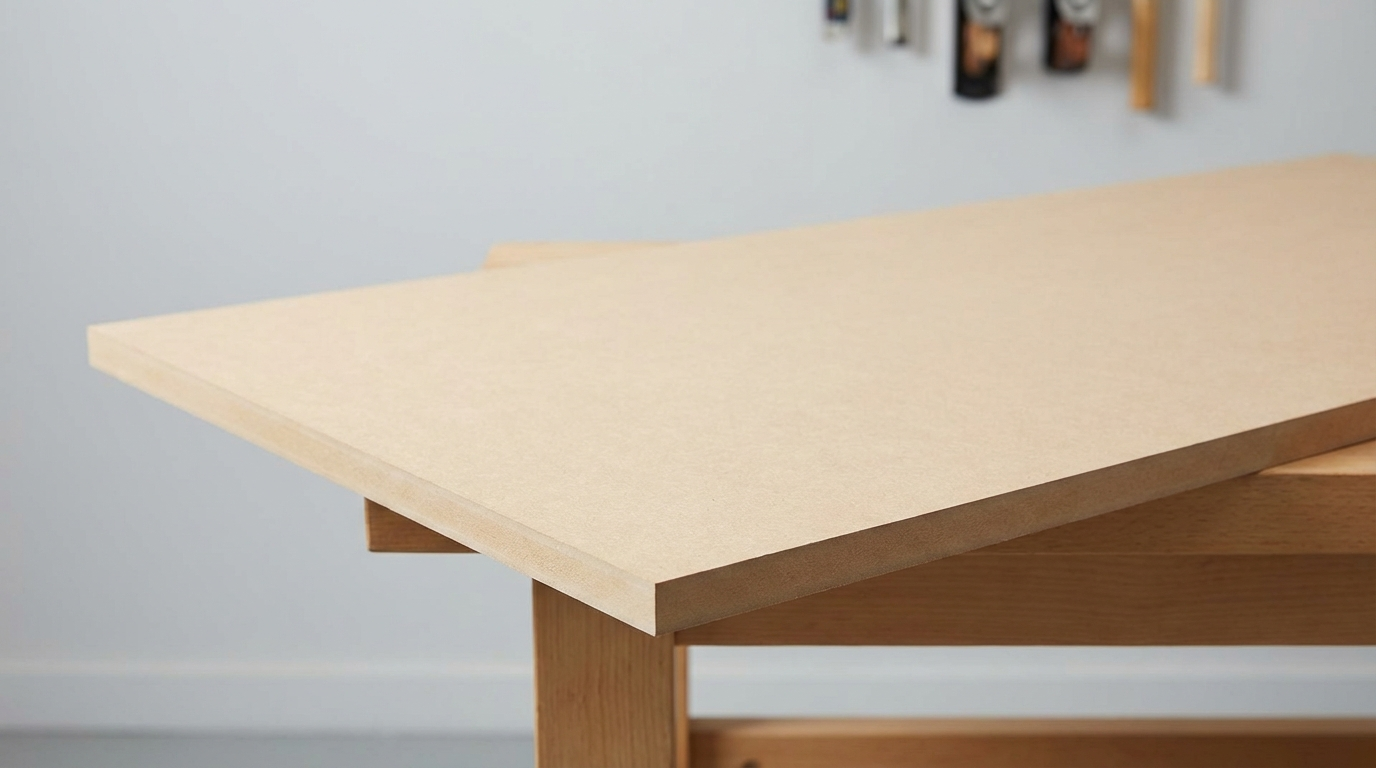
MDF delivers the smoothest surface among wood panels, making it the preferred choice for painted furniture, lacquer finishes, and membrane doors. The absence of grain patterns allows flawless paint application without telegraphing underlying texture.
Plywood surfaces vary by face veneer quality – commercial grades show patches and repairs, while premium grades offer continuous, attractive faces suitable for clear lacquer or veneer finishing. The natural wood grain of plywood faces can be aesthetically pleasing when properly finished.
Particle board accepts laminates well due to its uniform surface, but paint adhesion is inferior to MDF. Pre-laminated particle boards (with factory-applied decorative surfaces) eliminate finishing concerns but limit customization options.
Workability and Machining Characteristics
Carpenters generally rate plywood as easiest to work with – it cuts cleanly, holds nails and screws excellently, and tolerates repeated hardware installation. The cross-grain construction prevents splitting along cut lines.
MDF machines beautifully with CNC routers, creating crisp decorative profiles impossible with plywood. However, it generates fine dust requiring respiratory protection and produces duller blade edges faster than wood. Screw pilot holes are essential to prevent surface cracking.
Particle board requires pre-drilling for all fasteners and struggles with repeated screw installation in the same location. Edge chipping during cutting is common, requiring specialized blades or careful technique.
Honest Pros and Cons
Plywood Advantages
- Superior structural strength – Cross-grain construction provides excellent load-bearing capacity for shelves, cabinets, and framework
- Best moisture resistance – BWR and BWP grades handle Indian kitchen and bathroom conditions reliably
- Excellent screw holding – Hardware stays secure even after multiple adjustments or hinge replacements
- Proven longevity – Decades of use in Indian homes demonstrate reliable long-term performance
- Carpenter familiarity – Every Indian carpenter knows how to work with plywood efficiently
- Repairable – Damaged sections can often be patched or reinforced, extending furniture life
Plywood Limitations
- Inconsistent quality – Unorganized market means frequent quality variations between batches and dealers
- Surface imperfections – Face veneers often have patches, requiring laminate or veneer overlay for premium appearance
- Higher cost – Quality branded plywood costs 40-80% more than MDF for equivalent thickness
- Weight – Heavier than particle board, affecting transportation and wall-mounted furniture installation
MDF Advantages
- Perfectly smooth surface – Ideal for painted finishes, membrane pressing, and lacquer work
- Uniform density – Consistent performance across the entire sheet without weak spots
- Excellent machining – CNC routing creates precise decorative profiles for modern furniture designs
- No grain direction – Cuts and machines identically in all directions, simplifying furniture production
- Stable dimensions – Less prone to warping than solid wood in controlled environments
- Lower cost than plywood – Offers 30-40% savings compared to equivalent quality plywood
MDF Limitations
- Poor moisture tolerance – Standard MDF swells irreversibly when wet, limiting kitchen/bathroom use
- Heavy weight – Denser than plywood, making large furniture pieces cumbersome
- Weak screw holding at edges – Edge-fastened hardware requires reinforcement or specialized connectors
- Dust hazard – Machining produces fine particles requiring respiratory protection
Particle Board Advantages
- Most affordable option – 50-70% cheaper than plywood for budget-conscious projects
- Lightweight – Easier to transport and install, especially for DIY furniture assembly
- Uniform surface – Accepts laminates smoothly without telegraphing substrate irregularities
- Eco-friendly manufacturing – Uses wood waste and sawdust, reducing environmental impact
Particle Board Limitations
- Worst moisture performance – Swells and disintegrates with water exposure, unsuitable for humid areas
- Limited strength – Cannot support heavy loads, restricting furniture design options
- Poor screw retention – Fasteners loosen over time, especially with repeated use
- Short lifespan – Typically requires replacement within 5-8 years even under good conditions
- Difficult repairs – Damaged particle board usually cannot be salvaged, requiring panel replacement
Best and Worst Applications
| Application | Best Panel Choice | Acceptable Alternative | Avoid Using |
|---|---|---|---|
| Modular Kitchen Carcass | Plywood BWR 18mm | HDHMR 18mm | Particle Board, Standard MDF |
| Kitchen Shutters | MDF (for paint/membrane) | Plywood BWR (for laminate) | Particle Board |
| Under-sink Cabinet | Plywood BWP/Marine | HDHMR | MDF, Particle Board |
| Bedroom Wardrobe | Plywood BWR/MR | MDF, HDHMR | Standard Particle Board |
| TV Unit | MDF or Plywood | Pre-laminated Particle Board | Standard Particle Board |
| Study Table | Plywood MR 18mm | MDF 18mm | Particle Board (for main top) |
| Bathroom Vanity | Plywood BWP only | Marine-grade HDHMR | MDF, Particle Board |
| False Ceiling | MDF 8-12mm | Plywood MR 6mm | Particle Board |
| Office Workstation | Pre-laminated Particle Board | MDF with laminate | Plywood (cost-inefficient) |
| Shoe Rack (near entrance) | Plywood MR/BWR | HDHMR | MDF, Particle Board |
Price and Value Analysis
Wood panel pricing in India varies significantly by brand, grade, core species, and regional availability. The following ranges represent typical market prices in metro cities as of 2025-26, though actual costs may differ based on dealer relationships and purchase volume.
| Panel Type | Thickness | Price Range (₹/sq ft) | 8×4 Sheet Cost (₹) | Value Assessment |
|---|---|---|---|---|
| Plywood MR Grade | 18mm | 45-75 | 1,450-2,400 | Good for dry interiors |
| Plywood BWR Grade | 18mm | 65-110 | 2,100-3,500 | Best overall value |
| Plywood BWP/Marine | 18mm | 95-150 | 3,000-4,800 | Essential for wet zones |
| MDF Standard | 18mm | 32-48 | 1,000-1,550 | Budget decorative work |
| MDF MR Grade | 18mm | 42-60 | 1,350-1,950 | Improved moisture handling |
| HDHMR | 18mm | 55-85 | 1,750-2,750 | MDF alternative for kitchens |
| Particle Board | 18mm | 18-28 | 580-900 | Budget dry-area only |
| Pre-laminated Particle Board | 18mm | 28-45 | 900-1,450 | Ready-to-use economy |
Cost Factors Explained
Core species impact: Gurjan/hardwood core plywood commands 25-40% premium over eucalyptus or poplar core variants. The denser hardwood cores provide superior screw holding and load capacity, justifying the additional investment for heavy-use furniture.
Brand premium: Established brands like CenturyPly, Greenply, and Duroply typically cost 15-25% more than local manufacturers but offer quality consistency, warranty support, and verified ISI certification. For critical applications, the brand premium usually represents good value.
Regional variations: Prices in tier-2 and tier-3 cities often run 10-20% higher due to transportation costs and limited competition. Coastal regions may see inflated pricing for moisture-resistant grades due to higher local demand.
Total Furniture Cost Perspective
Panel material typically represents 25-35% of total furniture cost, with the remainder split between labor (30-40%), hardware (10-15%), and finishing materials like laminates or paint (15-25%). Choosing particle board over plywood might save ₹8,000-15,000 on a standard wardrobe, but this saving becomes meaningless if the furniture requires replacement within 5 years.
Duroboil.com recommends calculating cost-per-year rather than upfront cost. A ₹45,000 plywood wardrobe lasting 20 years costs ₹2,250 annually, while a ₹32,000 particle board wardrobe lasting 6 years costs ₹5,333 annually – making the "expensive" option actually 58% cheaper over time.
Quality Checks Before Buying
Visual Inspection Points
For plywood: Check core layers by examining the sheet edge – look for uniform veneer thickness, absence of gaps or voids, and properly glued interfaces. Tap the surface and listen for hollow sounds indicating delamination. Face veneer should be smooth without excessive patches or repairs.
For MDF: The surface should be uniformly smooth without undulations or density variations visible under raking light. Edges should appear consistent in color and density throughout the thickness. Any visible fiber clumps indicate manufacturing defects.
For particle board: Check for uniform chip distribution without large voids. Surface should be consistent without soft spots. Pre-laminated boards should show no bubbles, peeling edges, or laminate separation.
Physical Tests You Can Perform
- Weight check: Lift the sheet – quality panels feel solid and heavy for their size. Unusually light sheets indicate low density and reduced strength
- Flex test: Support sheet ends and apply gentle pressure at center – excessive bending suggests poor quality or incorrect grade
- Moisture meter: If available, check moisture content – panels should read 8-12% for immediate use
- Scratch test: Run fingernail firmly across surface – easy scratching indicates soft, low-quality material
- Edge inspection: Count plywood layers and verify they match claimed ply count; check MDF edge density uniformity
Documentation to Verify
Always request and verify: ISI certification mark with license number, test certificates from accredited laboratories, warranty documentation with clear terms, and batch/lot numbers for traceability. Reputable dealers provide these documents willingly – hesitation suggests potential quality issues.
Installation and Maintenance Guidelines
Pre-Installation Requirements
Acclimatization period: Store panels horizontally in the installation space for 48-72 hours before cutting. This allows the material to adjust to local humidity levels, preventing post-installation warping. This step is especially critical during monsoon season.
Storage conditions: Keep panels elevated on battens in a dry, covered area. Never store directly on concrete floors where moisture can wick into the material. Protect from direct sunlight which causes uneven surface drying.
Working Guidelines
Cutting: Use sharp carbide-tipped blades for clean cuts. MDF requires slower feed rates than plywood. Always cut with the finished face up when using circular saws, face down for table saws, to minimize chipping on the visible surface.
Fastening: Pre-drill all screw holes in MDF and particle board to prevent cracking. Use coarse-thread screws for particle board, fine-thread for MDF. Plywood accepts screws directly but pilot holes improve results in thin sheets.
Edge treatment: Seal all exposed edges immediately after cutting. Use PVC edge banding (minimum 1mm thickness for durability), ABS edges for premium work, or primer/sealer for painted finishes. Unsealed edges are the primary failure point for all wood panels.
Long-term Maintenance
- Regular cleaning: Wipe with slightly damp cloth followed by dry cloth; avoid wet mopping near furniture bases
- Spill management: Clean spills immediately – even water-resistant panels suffer from prolonged liquid contact
- Hardware tightening: Check and tighten hinges and handles annually; loose hardware accelerates joint wear
- Ventilation: Ensure adequate airflow around furniture, especially in coastal areas; avoid pushing furniture flush against damp walls
- Termite prevention: Annual inspection and treatment of wooden furniture, particularly floor-standing pieces
Alternatives to Consider
WPC (Wood Plastic Composite) Boards
WPC boards offer complete waterproofing with termite and borer immunity, making them increasingly popular for kitchen and bathroom furniture in Indian metros. They cost 20-40% more than equivalent plywood but eliminate moisture-related failures entirely. Weight and screw-holding characteristics approximate MDF.
PVC Foam Boards
Lightweight PVC boards suit bathroom vanities and wet-area applications where no wood-based panel performs adequately. They machine easily, accept paint well, and are completely moisture-proof. However, they lack the structural strength for load-bearing applications and cannot replace plywood for carcass construction.
Cement Fiber Boards
For exterior applications or areas requiring fire resistance, cement fiber boards provide durability exceeding any wood-based panel. They're commonly used for external cladding, outdoor furniture, and commercial kitchen environments. Weight and specialized fastening requirements limit residential interior applications.
Solid Wood Panels
Edge-glued solid wood panels offer unmatched aesthetics and longevity but cost 3-5 times more than plywood equivalents. They require skilled carpenter handling to manage wood movement and are best reserved for showcase furniture pieces rather than utilitarian storage.
India-Specific Considerations
Climate Zone Recommendations
Coastal regions (Mumbai, Chennai, Kolkata): Humidity levels exceeding 70% year-round demand minimum BWR grade plywood for all furniture. Avoid standard MDF and particle board entirely. Consider WPC for bathroom furniture and ensure rigorous edge sealing on all panels.
Northern plains (Delhi, UP, Punjab): Extreme temperature variations (-5°C to 45°C) stress panel joints. Use quality adhesive-backed edge banding that tolerates thermal cycling. MR grade plywood suffices for bedroom furniture but upgrade to BWR for kitchen applications.
Southern peninsular (Bangalore, Hyderabad): Moderate humidity with monsoon exposure – BWR plywood provides reliable performance across applications. MDF works well for painted furniture in air-conditioned spaces.
Monsoon Precautions
During monsoon months, wood panels absorb atmospheric moisture even without direct water contact. Maintain 50-75mm gap between furniture and exterior walls. Avoid furniture installation during peak monsoon if possible – acclimatization becomes challenging when ambient humidity exceeds 80%.
Termite Considerations
Termite damage affects all wood-based panels, though particle board succumbs fastest due to its composition. Specify termite-treated panels or apply post-purchase treatment using boron-based preservatives. Ground-floor installations and older buildings require heightened vigilance.
Frequently Asked Questions
Which wood panel is best for modular kitchen cabinets?
BWR-grade plywood (18mm thickness) is the recommended choice for modular kitchen carcasses in Indian homes. Its superior moisture resistance handles cooking steam, sink splashes, and monsoon humidity without swelling or delamination. For kitchen shutters requiring smooth painted or membrane finishes, MDF works well when properly edge-sealed. Duroboil.com consistently recommends avoiding particle board and standard MDF in kitchen applications due to moisture vulnerability.
Is MDF board waterproof for bathroom furniture?
Standard MDF is not waterproof and will swell irreversibly when exposed to water, making it unsuitable for bathroom furniture. Even moisture-resistant MDF (MR-MDF) only handles humidity, not direct water contact. For bathroom vanities and cabinets, use BWP/Marine grade plywood, HDHMR boards with water-resistant rating, or WPC boards. If MDF must be used, it should be fully sealed with waterproof paint or laminate on all surfaces including edges.
How long does plywood furniture last compared to particle board?
Quality plywood furniture typically lasts 15-25 years with proper maintenance, while particle board furniture averages 5-8 years even under ideal conditions. This difference stems from plywood's superior moisture resistance, structural strength, and screw-holding capacity. When calculating true value, plywood's higher upfront cost translates to significantly lower cost-per-year of use.
What thickness of wood panel should I use for wardrobe shelves?
18mm thickness is standard for wardrobe shelves supporting clothes and folded items. For shelves exceeding 600mm span without intermediate support, use 19mm plywood or add a stiffener along the front edge. For lighter loads like shoes or accessories, 12mm panels suffice. Never use particle board for shelves exceeding 450mm span as sagging will occur over time.
Can I use particle board for bedroom furniture?
Particle board can be used for low-moisture bedroom applications like headboards, side tables, and decorative panels where water exposure is minimal. However, for wardrobes, study tables, and storage furniture requiring durability and load-bearing capacity, plywood or MDF perform significantly better. Pre-laminated particle board from reputable brands offers acceptable performance for budget-conscious bedroom furniture in dry climates.
How do I identify good quality plywood at the dealer?
Check these factors: uniform core layers visible at the edge without gaps or voids, proper ISI certification mark (IS 303 for MR/BWR, IS 710 for Marine), consistent weight across same-grade sheets, smooth face veneer without excessive patches, and no hollow sounds when tapped. Request test certificates and verify the manufacturer's license number on the BIS website. Established dealers provide documentation willingly.
Is HDHMR better than plywood for furniture?
HDHMR offers advantages and limitations compared to plywood. Its superior surface smoothness makes it ideal for painted finishes and membrane doors. Moisture resistance in quality HDHMR approaches BWR plywood levels. However, plywood provides better screw-holding, especially for hinges and hardware. For kitchen carcasses, BWR plywood remains preferable; for shutters and decorative applications, HDHMR excels.
What is the price difference between branded and unbranded plywood?
Branded plywood from manufacturers like CenturyPly, Greenply, or Duroply typically costs 15-30% more than local unbranded alternatives. This premium provides quality consistency, verified ISI certification, warranty support, and better termite treatment. For structural applications in kitchens and wardrobes, the brand premium represents worthwhile insurance. For interior backs and non-critical applications, quality local suppliers offer acceptable alternatives.
Can MDF be used for outdoor furniture?
No, MDF should never be used for outdoor furniture. Even moisture-resistant grades cannot withstand direct rain exposure, UV degradation, or temperature cycling. MDF will swell, delaminate, and deteriorate rapidly outdoors. For outdoor furniture, use treated solid wood, WPC boards, cement fiber boards, or marine-grade plywood with proper weather-sealing and regular maintenance.
How do I prevent termite damage in wood panel furniture?
Prevention requires multiple strategies: Specify termite-treated panels at purchase, apply boron-based preservatives to cut edges and drill holes, maintain gap between furniture and walls, address moisture sources that attract termites, and conduct annual inspections. Ground-floor furniture and older buildings require heightened attention. If infestation occurs, professional treatment becomes necessary as surface sprays rarely eliminate established colonies.
What is the best wood panel for a TV unit?
TV units work well with multiple panel types since they're typically installed in dry living room environments. MDF provides smooth surfaces ideal for painted or lacquered finishes. Pre-laminated particle board offers economy for simple designs. Plywood delivers maximum durability for heavy equipment and frequent use. The best choice depends on design requirements, budget, and finish preference rather than moisture considerations.
Should I edge band all sides of furniture panels?
Yes, edge banding all exposed edges is essential for wood panel longevity, especially MDF and particle board. Unsealed edges allow moisture ingress, cause fiber swelling, and create weak points for damage. Use minimum 1mm PVC edge banding for durability, though 2mm provides better impact resistance. Even plywood benefits from edge treatment to prevent veneer peeling and improve appearance.
Disclaimer: This content is provided for general informational purposes based on industry practices and publicly available information. Product specifications, standards, prices, and availability may vary by manufacturer, region, and time. Readers should independently verify details with manufacturers, dealers, or qualified professionals before making purchase or construction decisions.
Want Plywood Suggestions?
Share a few details and a Duro BOIL specialist will suggest suitable brands and connect you to responsive dealers.