Wood Veneer Sheets: Types, Quality, and Selection Guide
Explore wood veneer options with our comprehensive guide. Learn about natural vs reconstituted veneer, quality grades, and selection tips.
Quick Verdict
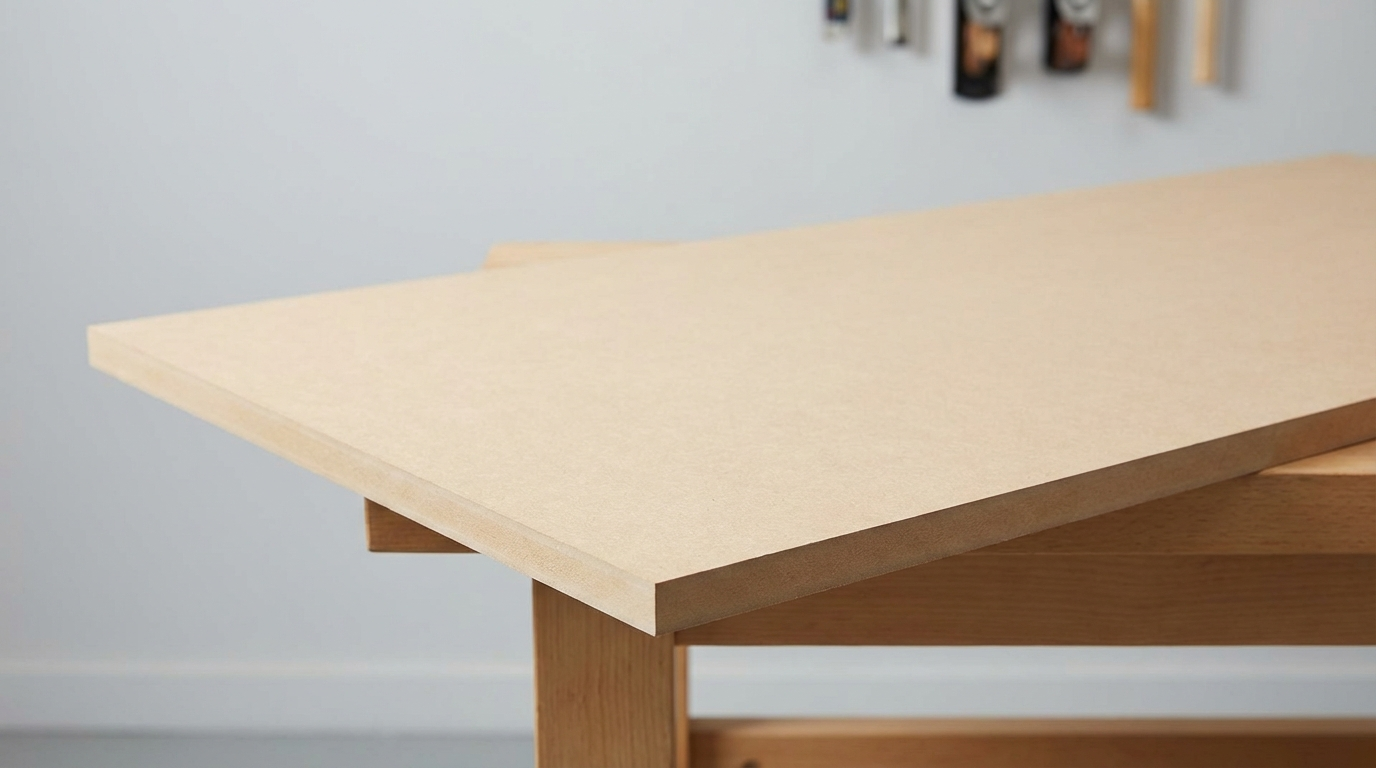
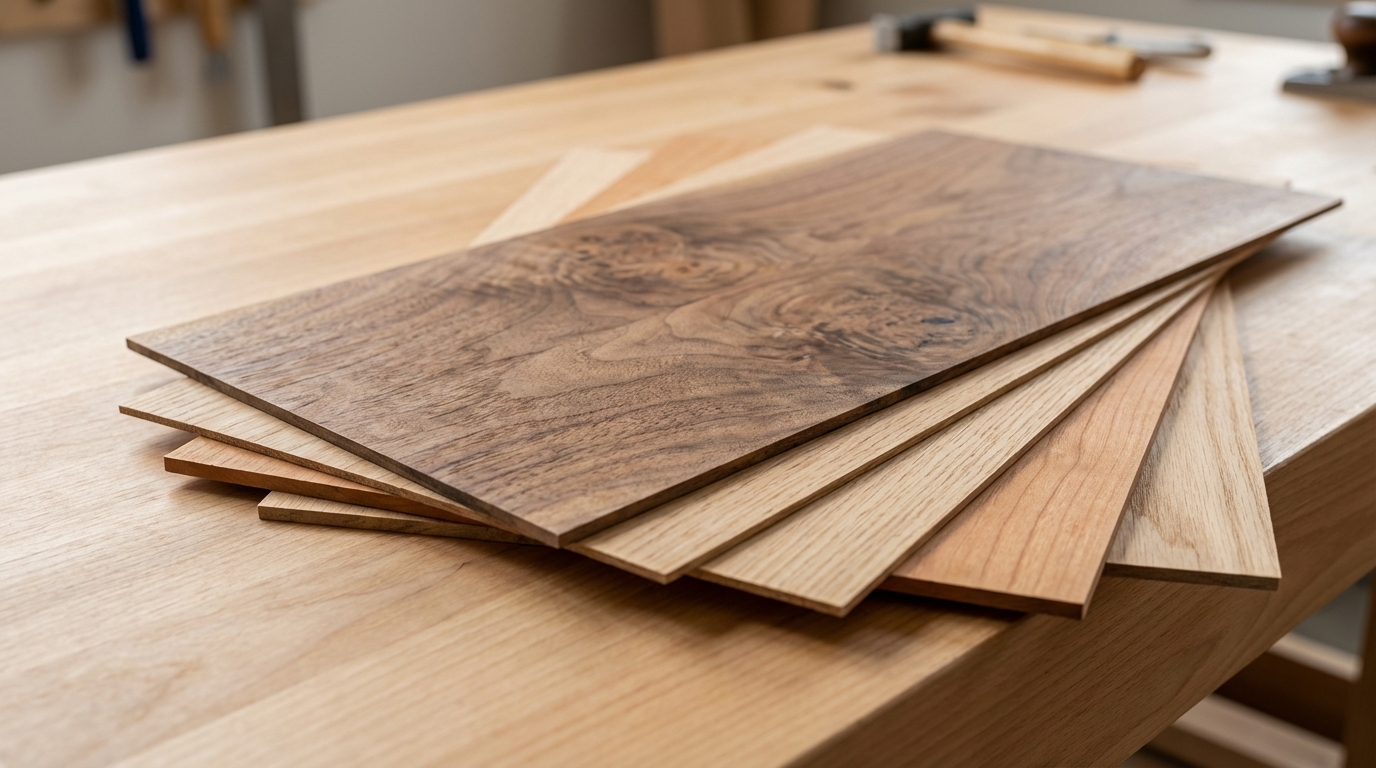
Wood veneer sheets are thin slices of natural or reconstituted wood, typically 0.25mm to 3mm thick, applied to substrates like plywood or MDF to create premium furniture finishes at a fraction of solid wood cost. For most Indian homeowners, natural veneers work best for statement furniture and high-visibility areas, while engineered veneers suit large-scale projects requiring uniformity.
According to duroboil.com's material experts, the right veneer choice depends on three factors: your budget, application area, and desired aesthetic. Natural veneers offer authentic wood character with unique grain patterns, while reconstituted veneers provide consistency and cost-effectiveness for commercial projects.
Our assessment summary:
- Natural wood veneer: Best for luxury furniture, doors, and accent walls – Excellent aesthetic value
- Engineered/Reconstituted veneer: Best for large panels, office furniture, and uniform finishes – Good value for money
- Decorative/Dyed veneer: Best for contemporary interiors and creative applications – Excellent design flexibility
- Smoked/Treated veneer: Best for premium hospitality and designer spaces – Premium pricing justified
- Overall recommendation: Invest in natural veneer for visible furniture; use engineered veneer for hidden or large surfaces
What Exactly is Wood Veneer?
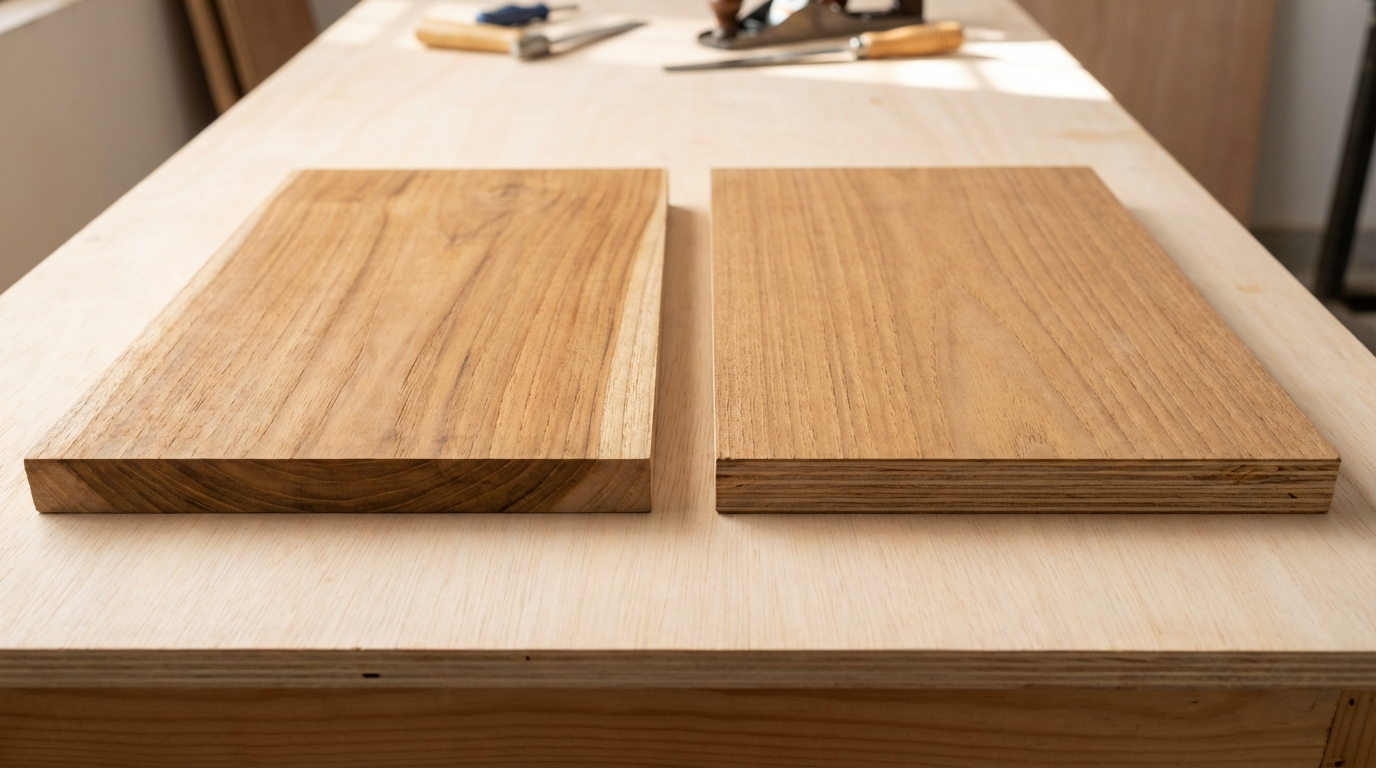
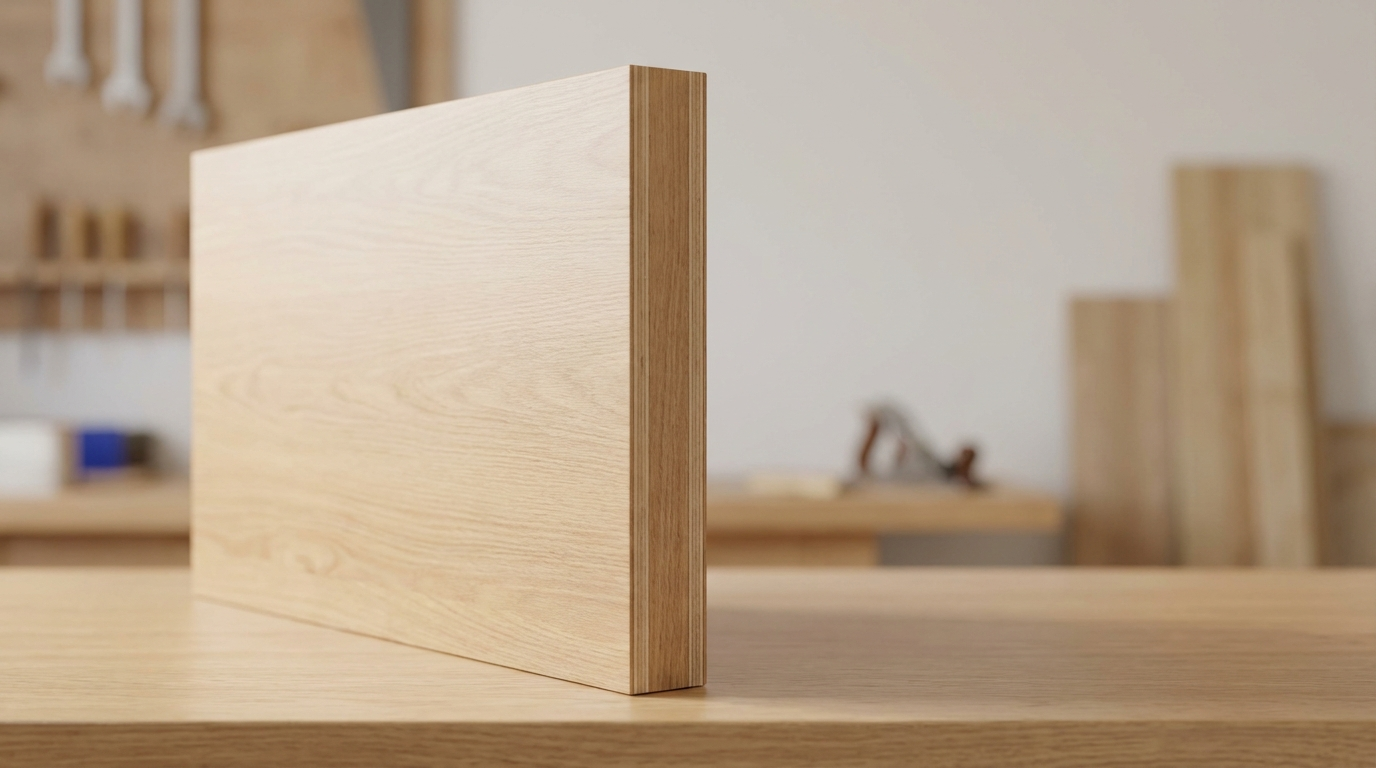
Wood veneer is a thin decorative covering made from real wood, sliced from logs using specialized machinery and applied to engineered wood substrates. Unlike solid wood furniture that uses thick timber throughout, veneer allows the beauty of exotic and premium wood species to be spread across larger surface areas efficiently.
The manufacturing process involves either rotary cutting (peeling the log like unwinding a roll) or slicing (cutting flat sheets from the log). Each method produces distinct grain patterns. Rotary-cut veneer shows wider, more varied patterns, while sliced veneer displays straight, consistent grain lines preferred for formal furniture.
In Indian interior design, veneer has become the preferred choice for achieving solid wood aesthetics without the associated costs, weight issues, and wood scarcity concerns. A single premium log can produce enough veneer to cover surfaces that would require multiple logs if made from solid wood.
What is the full form and meaning of veneer in furniture?
The term "veneer" comes from the German word "furnieren" meaning to furnish or to cover. In furniture terminology, veneer refers specifically to decorative wood slices applied as surface finishing. It's important not to confuse veneer with laminate – veneer is real wood, while laminate is a printed decorative paper with resin coating.
When carpenters or dealers mention "veneer finish" in India, they typically mean furniture with a plywood or MDF core covered with natural or engineered wood veneer, finished with lacquer, PU, or melamine coating for protection.
Specifications and Technical Details
Understanding veneer specifications helps you communicate effectively with dealers and carpenters while ensuring you receive the quality you're paying for. Thickness, cut type, and backing material significantly impact both appearance and durability.
| Specification | Natural Veneer | Engineered Veneer | Decorative Veneer |
|---|---|---|---|
| Thickness Range | 0.25mm - 0.6mm (standard), up to 3mm (craft) | 0.3mm - 0.5mm | 0.25mm - 0.5mm |
| Standard Sheet Size | 8 ft x 4 ft (2440mm x 1220mm) | 8 ft x 4 ft (2440mm x 1220mm) | 8 ft x 4 ft (2440mm x 1220mm) |
| Backing Options | Paper-backed, Fleece-backed, Raw | Paper-backed, Pre-glued | Paper-backed, Self-adhesive |
| Grain Consistency | Variable (natural) | Uniform | Uniform to highly variable (by design) |
| Price Range (₹/sq ft) | ₹15 - ₹300+ | ₹12 - ₹80 | ₹20 - ₹150 |
| Minimum Order | Often per bundle (24-32 sheets) | Per sheet available | Per sheet available |
What each specification means for end users
Thickness: Thicker veneers (0.5mm+) allow for sanding and refinishing, making them suitable for furniture that may need restoration. Standard 0.25-0.3mm veneers are adequate for protected indoor furniture but cannot be sanded if damaged.
Backing: Paper-backed veneers are easier to handle and apply. Fleece-backed veneers offer better flexibility for curved surfaces. Raw veneers require skilled application but provide the most authentic finish.
Sheet size: The standard 8x4 feet size matches Indian plywood dimensions, minimizing wastage during furniture fabrication. Some premium veneers come in smaller sizes (4x2 feet) to reduce per-sheet cost.
Performance Analysis
Veneer performance varies significantly based on the wood species, manufacturing quality, and application method. Here's how different veneer categories perform across critical parameters relevant to Indian conditions.
Moisture handling and humidity resistance
Natural wood veneer inherits the moisture characteristics of its parent species. Teak and oak veneers handle humidity better than maple or ash. In coastal cities like Mumbai and Chennai, or during monsoon across India, unfinished veneer can absorb moisture, leading to warping, bubbling, or delamination.
The solution lies in proper sealing. PU (polyurethane) finish provides excellent moisture barrier, followed by melamine and lacquer. For bathroom vanities or kitchen applications, only use properly sealed veneer on BWR or marine-grade plywood substrates.
Durability and longevity
Well-maintained veneer furniture typically lasts 15-25 years in Indian homes. The veneer itself doesn't wear out – failures usually occur at the adhesive bond or from surface damage. Quality hot-press application with proper adhesives creates bonds stronger than the wood itself.
Engineered veneers often demonstrate better dimensional stability than natural veneers due to their reconstructed fiber structure. This makes them less prone to checking (fine cracks) in air-conditioned environments where humidity fluctuates significantly.
Surface quality and finishing capability
Natural veneers accept stains, oils, and finishes beautifully, allowing customization of the final color. The open grain of species like oak and ash creates textured surfaces, while tight-grained woods like maple and cherry produce smooth finishes.
Engineered veneers are designed for specific finishes and may not accept stains uniformly. Pre-finished engineered veneers offer convenience but limit customization options. For projects requiring matched stain across different wood types, natural veneer provides better control.
Workability and application ease
Veneer application requires skill – this isn't a DIY material for beginners. Professional carpenters use vacuum presses, hot presses, or careful contact cement application. Poor application leads to bubbles, lifting edges, and premature failure.
Paper-backed veneers are more forgiving during application. Raw veneers require experience to handle without cracking. Pre-glued veneers (activated by heat) work well for small repairs but aren't suitable for large furniture projects.
Honest Pros and Cons
Before investing in veneer for your interiors, understand both the advantages that make it popular and the limitations that require consideration.
Advantages of Wood Veneer
1. Authentic wood beauty at lower cost: Achieve the look of expensive woods like walnut, teak, or rosewood at 20-40% of solid wood furniture cost. A single exotic log can veneer surfaces equivalent to 50+ solid wood pieces.
2. Environmental sustainability: Veneer makes efficient use of timber resources. With global restrictions on many exotic woods, veneer allows legal access to premium species while supporting sustainable forestry.
3. Dimensional stability: Unlike solid wood that warps, twists, or cracks with humidity changes, veneer-covered engineered boards remain stable. This is particularly valuable in Indian climate with extreme seasonal variations.
4. Design flexibility: Veneer can be applied to curved surfaces, creating designs impossible with solid wood. Book-matching (mirroring adjacent sheets) creates striking symmetrical patterns unique to veneer work.
5. Consistency for large projects: Ordering veneer from the same log ensures consistent color and grain across all furniture pieces – something difficult to achieve with solid wood.
6. Lighter furniture: Veneer-finished plywood furniture weighs 30-50% less than solid wood equivalents, easier for installation and relocation.
Limitations of Wood Veneer
1. Cannot be refinished multiple times: Thin veneers (0.3mm and below) cannot be sanded. Deep scratches or burns may require re-veneering rather than simple refinishing.
2. Vulnerable to edge damage: Veneer edges chip and peel more easily than solid wood. Proper edge banding or solid wood lipping is essential.
3. Application skill dependency: Poor application leads to bubbles, wrinkles, and delamination. Finding skilled craftsmen can be challenging outside metro cities.
4. Moisture sensitivity: Without proper sealing, veneer absorbs moisture causing swelling, discoloration, and bond failure. Not suitable for outdoor or consistently wet applications.
5. Perception issues: Some buyers perceive veneer as "fake" compared to solid wood, potentially affecting resale value of custom furniture.
Best and Worst Applications
Knowing where veneer excels and where it fails helps you make informed decisions for different areas of your home or commercial space.
| Application | Suitability | Recommended Veneer Type | Special Considerations |
|---|---|---|---|
| Wardrobe shutters | Excellent | Natural or Engineered | Use thicker veneer (0.5mm+) for scratch resistance |
| Dining tables | Good | Natural (hardwood species) | Requires protective glass or heavy-duty PU finish |
| TV units | Excellent | Natural or Decorative | Book-matched patterns create stunning focal points |
| Kitchen cabinets | Moderate | Engineered with PU finish | Avoid near sink; use laminate for base cabinets |
| Main doors | Good to Moderate | Natural hardwood veneer | Requires excellent sealing; avoid direct sun exposure |
| Bathroom vanity | Poor to Moderate | Engineered with marine-grade substrate | High maintenance; laminate often better choice |
| Wall paneling | Excellent | Any type based on budget | Best application for veneer due to low wear |
| Office workstations | Good | Engineered | Uniformity across large installations |
| Outdoor furniture | Not Recommended | None | Use solid teak or metal instead |
| False ceiling panels | Excellent | Thin engineered veneer | Light weight essential; minimal handling wear |
Types of Wood Veneer Available in India
The Indian market offers diverse veneer options ranging from locally sourced species to imported exotics. Understanding each category helps you match materials to project requirements and budget.
Natural Wood Veneer
Natural veneer is sliced directly from timber logs, preserving the authentic grain patterns, knots, and color variations of the parent wood. Each sheet is unique – no two natural veneer sheets are identical, even from the same log.
Popular species in India:
- Teak (Sagwan): Golden-brown color, excellent durability, ₹40-120 per sq ft
- Oak: Prominent grain, light to medium brown, ₹35-100 per sq ft
- Walnut: Rich dark brown, premium choice, ₹60-200 per sq ft
- Maple: Light colored, fine grain, ₹30-80 per sq ft
- Ash: Strong grain pattern, light color, ₹25-70 per sq ft
- Rosewood (Sheesham): Deep brown with darker streaks, ₹50-150 per sq ft
Engineered/Reconstituted Veneer
Engineered veneer is manufactured by slicing fast-growing timber, dyeing the sheets, and re-laminating them to create consistent patterns that mimic expensive natural species. This process allows sustainable production of "exotic" looking veneers without harvesting rare trees.
The main advantage is uniformity – perfect for projects requiring matched appearance across large areas. A 100-sheet order of engineered walnut veneer will show identical patterns, impossible to achieve with natural walnut.
Common engineered veneer types:
- Reconstituted teak, walnut, oak (imitating natural species)
- Striped and figured patterns (created through layering)
- Uniform colored veneers for contemporary design
Decorative and Dyed Veneer
Decorative veneers undergo additional processing – dyeing, smoking, printing, or embossing – to create unique aesthetic effects beyond natural wood appearance. These cater to contemporary and avant-garde interior designs.
Types include:
- Dyed veneer: Natural veneer colored in non-natural shades (blue, green, red)
- Smoked veneer: Ammonia-treated to darken color while maintaining grain
- Printed veneer: Patterns printed on wood surface for unique effects
- Metallic veneer: Metal foil backing for shimmering effects
Veneer by Cut Type
The slicing method significantly affects veneer appearance. Duroboil.com recommends understanding cut types when selecting veneer for specific applications.
| Cut Type | Appearance | Best Applications | Availability |
|---|---|---|---|
| Rotary Cut | Wide, varied grain pattern | Wall panels, large surfaces | Common |
| Plain/Flat Sliced | Cathedral pattern, traditional look | Furniture, doors | Common |
| Quarter Cut | Straight, parallel lines | Formal furniture, offices | Moderate |
| Rift Cut | Linear, minimal figure | Contemporary furniture | Limited |
| Crown Cut | Flame-like pattern | Statement pieces, feature walls | Limited |
Price and Value Analysis
Veneer pricing in India varies dramatically based on species, source, quality grade, and market conditions. Understanding the pricing structure helps you budget accurately and identify fair dealer pricing.
Price breakdown by category
| Veneer Category | Budget Range (₹/sq ft) | Mid-Range (₹/sq ft) | Premium Range (₹/sq ft) |
|---|---|---|---|
| Local natural (sheesham, mango) | ₹15-25 | ₹25-45 | ₹45-70 |
| Imported natural (oak, ash) | ₹30-50 | ₹50-90 | ₹90-150 |
| Premium natural (walnut, exotic) | ₹60-100 | ₹100-200 | ₹200-400+ |
| Engineered standard | ₹12-25 | ₹25-50 | ₹50-80 |
| Decorative/dyed | ₹25-40 | ₹40-80 | ₹80-150 |
| Smoked/treated | ₹50-80 | ₹80-150 | ₹150-300 |
Total project cost estimation
Veneer material cost is only part of the equation. A complete budget must include application, finishing, and substrate costs.
For a standard wardrobe (100 sq ft veneer area):
- Mid-range natural veneer: ₹5,000-8,000
- BWR plywood substrate: ₹12,000-18,000
- Application labor: ₹3,000-5,000
- PU finish (2 coats): ₹4,000-6,000
- Edge banding and hardware: ₹2,000-4,000
- Total estimate: ₹26,000-41,000
Value comparison: Veneer vs alternatives
When evaluating veneer value, compare against alternatives for the same application:
- Solid wood: 2-3x higher cost, heavier, less stable
- Laminate: 30-50% cheaper, but lacks wood authenticity
- Pre-laminated boards: Faster production, limited patterns
- Paper-printed wood-look: Cheapest, but clearly artificial
Veneer occupies the premium middle ground – authentic wood appearance without solid wood drawbacks, at moderate additional cost over laminates.
Quality Checks Before Buying
Quality assessment at purchase time prevents costly disappointments. These checks don't require laboratory equipment – just careful observation and basic tools.
Visual inspection checklist
1. Check grain consistency: For natural veneer, variations are expected but should be aesthetically pleasing. Reject sheets with abrupt color changes, excessive knots, or mineral streaks unless specifically desired.
2. Examine for defects: Hold sheets against light to spot cracks, splits, or holes. Hairline cracks may not be visible otherwise. Minor cracks can be filled during finishing, but extensive cracking indicates poor handling or over-drying.
3. Assess backing quality: Paper backing should be firmly adhered without bubbles or delamination. Peel back a corner gently – excessive ease indicates weak adhesive bond.
4. Verify thickness uniformity: Measure thickness at multiple points using a digital caliper. Variation beyond 0.05mm indicates poor quality control and will cause finishing problems.
Questions to ask your dealer
- What is the log source and species verification?
- How many sheets are available from the same log?
- What is the recommended adhesive for this veneer?
- Is there a minimum order or can I buy individual sheets?
- What finishing is recommended for this species?
- Do you provide replacement for defective sheets?
- How should this veneer be stored before use?
Red flags to watch for
Avoid veneers that show:
- Excessive brittleness (crumbles when flexed gently)
- Strong chemical smell (over-processed or old adhesive)
- Inconsistent coloring within a single sheet (improper drying)
- Fuzzy or raised grain (moisture damage or poor slicing)
- Price significantly below market rates (often inferior species sold as premium)
Installation and Maintenance
Proper installation and ongoing care determine how long your veneer furniture maintains its beauty. Even premium veneer fails prematurely with poor application or negligent maintenance.
Application methods
Professional methods (recommended):
- Hot press application: Uses heat and pressure to activate adhesive. Creates strongest bond. Standard for furniture factories.
- Vacuum press: Uses atmospheric pressure to press veneer onto curved or shaped surfaces. Ideal for complex designs.
- Contact cement method: Manual application using contact adhesive. Requires skill but works without machinery.
Application steps overview:
- Prepare substrate (sand, clean, ensure flatness)
- Condition veneer (allow it to acclimatize to room humidity)
- Apply adhesive (type depends on method)
- Position and press veneer
- Trim edges and sand surface
- Apply finish coats
Finishing options
| Finish Type | Protection Level | Appearance | Maintenance | Cost |
|---|---|---|---|---|
| PU (Polyurethane) | Excellent | Glossy to matte options | Easy – wipe clean | High |
| Lacquer | Good | Clear, natural look | Moderate | Medium |
| Melamine | Good | Clear coating | Easy | Medium |
| Oil finish | Moderate | Natural, matte | Needs reapplication | Low-Medium |
| Wax | Low | Soft sheen | Frequent buffing | Low |
Maintenance guidelines
Daily care:
- Dust with soft, dry microfiber cloth
- Wipe spills immediately – don't let liquids sit
- Use coasters under hot or cold items
- Avoid placing near air conditioner vents (causes drying)
Periodic care:
- Clean with damp (not wet) cloth and mild soap monthly
- Apply furniture polish quarterly for lacquered finishes
- Re-oil annually for oil-finished surfaces
- Check edges for lifting; re-glue immediately if found
What to avoid:
- Harsh chemicals, abrasive cleaners
- Excessive water during cleaning
- Placing in direct sunlight (causes fading)
- Dragging objects across surface
Alternatives to Consider
Wood veneer isn't the only option for achieving wood aesthetics. Consider these alternatives based on your specific requirements and budget.
High-Pressure Laminate (HPL)
HPL offers wood-look patterns printed on decorative paper, pressed with melamine resin. More affordable and durable than veneer for high-traffic surfaces, but lacks the depth and authenticity of real wood grain. Best for kitchen cabinets and commercial furniture where practicality trumps aesthetics.
Pre-laminated boards (Action Tesa, Merino)
MDF or particle board pre-covered with paper or PVC finish. Eliminates application labor cost. Limited to available patterns but cost-effective for budget projects. Surface cannot be refinished.
Solid wood
For heirloom furniture or applications requiring repairability, solid wood remains unmatched. Higher cost and weight but can be refinished indefinitely. Best for dining tables, beds, and furniture expected to last generations.
Painted finish
For colored (non-wood-look) furniture, paint on MDF provides excellent results at lower cost than veneer. Allows unlimited color options and easy touch-up of scratches.
India-Specific Considerations
The Indian market and climate present unique considerations for veneer selection and use. Duroboil.com recommends factoring these regional aspects into your decision.
Climate and humidity challenges
Monsoon precautions: During monsoon months (June-September in most regions), ambient humidity can reach 85-95%. Unfinished veneer absorbs moisture rapidly. Either store veneer in climate-controlled space or apply finish immediately after installation.
Air conditioning effects: AC rooms in summer and heated spaces in winter create low-humidity environments. Rapid humidity changes cause checking (fine cracks) in veneer. Maintain moderate AC settings and avoid direct airflow on veneer furniture.
Coastal area considerations: Salt-laden air in Mumbai, Chennai, and other coastal cities accelerates degradation. Use only PU finish (not lacquer) and ensure complete edge sealing.
Regional availability and pricing
North India (Delhi, Punjab, UP): Good availability of engineered veneers. Yamunanagar (Haryana) is India's plywood hub – better prices on standard veneers. Premium imported veneers available but expensive.
South India (Chennai, Bangalore, Kerala): Excellent availability of natural veneers including teak. Strong carpentry traditions mean skilled application workforce available.
West India (Mumbai, Gujarat): Premium market with good imported veneer availability. Higher labor costs for application. Marine/coastal-grade requirements common.
East India (Kolkata, Northeast): Good local hardwood veneer availability. Some exotic species sourced from Northeast forests. Variable skilled labor availability.
Working with Indian carpenters
Local terminology matters when communicating with carpenters:
- "Teak veneer ply" – Usually means veneer-faced plywood
- "Sunmica" – Generic term often misused for laminates AND veneers
- "Paper back" – Paper-backed veneer (easier application)
- "Full sheet" – 8x4 feet size
- "Matching cutting" – Book matching adjacent sheets
Ensure your carpenter has experience with veneer specifically, not just laminate. Veneer application requires different skills and equipment.
Common Misconceptions Cleared
Several myths about veneer circulate among homeowners. Clearing these helps make informed decisions.
Myth 1: "Veneer is fake wood"
Reality: Natural veneer is 100% real wood, just sliced thin. It has the same grain structure, texture, and characteristics as solid wood from the same tree.
Myth 2: "Veneer furniture doesn't last"
Reality: Properly applied and finished veneer lasts 20+ years. Many antique furniture pieces (100+ years old) are veneered, not solid wood.
Myth 3: "All veneers peel off eventually"
Reality: Peeling occurs due to poor adhesive, improper application, or moisture damage – not inherent veneer failure. Professional application prevents peeling.
Myth 4: "Veneer can't be repaired"
Reality: Damaged areas can be patched with matching veneer. Burns and deep scratches can be cut out and new veneer inlaid. Skills required, but repair is possible.
Myth 5: "Laminate is better than veneer"
Reality: Different materials for different purposes. Laminate offers better scratch resistance and water resistance but lacks wood authenticity. Neither is universally "better."
Frequently Asked Questions
Is wood veneer waterproof?
No, wood veneer is not inherently waterproof. Being real wood, it absorbs water like any wood product. However, veneer finished with PU coating or marine-grade sealant becomes highly water-resistant – sufficient for kitchen or bathroom applications when applied on BWR/marine plywood substrate. Complete waterproofing requires sealing all surfaces including edges and back. For consistently wet areas, consider laminate instead.
How long does veneer furniture last in Indian climate?
Quality veneer furniture typically lasts 15-25 years in Indian homes with proper care. In air-conditioned spaces with stable humidity, longevity extends further. The main threats are moisture damage during monsoon and checking due to humidity fluctuation. Regular maintenance, proper finishing, and avoiding direct water contact significantly extend lifespan. Many well-maintained veneer pieces remain beautiful for 30+ years.
Can veneer be used for kitchen cabinets?
Yes, veneer works for kitchen cabinets with proper precautions. Use engineered veneer with PU finish on BWR grade plywood for upper cabinets. For base cabinets near sink, laminate is often more practical. Avoid veneer directly behind stove (heat damage) or near dishwasher (steam exposure). With appropriate sealing and substrate selection, veneer kitchens remain beautiful for 12-15 years.
What is the difference between natural and engineered veneer?
Natural veneer is sliced directly from timber logs, showing authentic grain patterns unique to each sheet. Engineered veneer is manufactured by reconstituting wood fibers, dyeing them, and laminating to create consistent, uniform patterns. Natural veneer costs more and offers authentic character; engineered veneer provides uniformity and sustainability. For statement pieces, natural veneer excels; for large uniform surfaces, engineered veneer is practical.
Which veneer is best for wardrobes?
For wardrobes, natural hardwood veneers (oak, walnut, ash) in 0.5mm thickness work excellently. The thickness allows light sanding for scratch removal. Use quarter-cut veneer for contemporary look or flat-sliced for traditional appearance. Apply on BWR plywood for durability. Finish with semi-gloss PU for easy maintenance. Budget option: engineered teak or oak veneer provides similar aesthetics at lower cost.
How to identify genuine teak veneer from duplicate?
Genuine teak veneer shows distinctive golden-brown color with darker streaks, characteristic oily feel (even in veneer form), and specific grain pattern with interlocked growth rings. Duplicate (often mango or rubber wood dyed) has uniform color without natural variation, lacks oily texture, and shows simpler grain patterns. Ask dealers for species certification. Price also indicates – genuine teak veneer costs ₹50+ per sq ft minimum.
Can veneer be applied on old furniture?
Yes, veneer can restore old furniture through re-veneering. The process involves removing old veneer/laminate, repairing substrate damage, ensuring surface flatness, and applying new veneer. This is often more economical than new furniture for quality pieces. However, re-veneering requires skilled craftsmen – poorly done work looks worse than original. Antique or valuable furniture should be restored by specialists only.
What is the price of veneer in India?
Veneer prices range from ₹15 per sq ft for basic local species to ₹400+ per sq ft for premium exotic imported veneers. Standard natural oak/ash: ₹35-80 per sq ft. Teak: ₹40-120 per sq ft. Walnut: ₹60-200 per sq ft. Engineered veneers: ₹15-80 per sq ft. Prices vary by city, dealer, and quantity. Add ₹20-50 per sq ft for application and finishing costs.
Is veneer better than laminate for furniture?
Veneer and laminate serve different purposes. Veneer provides authentic wood appearance, natural feel, and premium aesthetics – better for living room furniture, bedroom sets, and visible pieces. Laminate offers superior scratch resistance, water resistance, and affordability – better for kitchens, children's furniture, and high-traffic areas. For luxury interiors prioritizing aesthetics, veneer excels. For practical, heavy-use applications, laminate wins.
How to maintain veneer furniture during monsoon?
During monsoon, wipe veneer furniture daily with dry cloth to remove moisture accumulation. Avoid wet mopping floors near furniture. Run dehumidifier or AC periodically to control room humidity. Check edges for lifting – high humidity causes adhesive softening. Apply furniture polish monthly during monsoon season. Keep furniture away from open windows. If water spills, dry immediately and don't leave wet items on surfaces.
Which wood veneer is termite resistant?
Teak veneer offers natural termite resistance due to its oil content. Cedar and some engineered veneers with termite-resistant treatments also resist termite attack. However, since veneer is only a surface covering, termite resistance primarily depends on the substrate (plywood/MDF). Use termite-resistant plywood under veneer for genuine protection. No veneer provides complete termite immunity – treat with preservatives if termite risk is high in your area.
Can veneer furniture be kept in sunlight?
Direct sunlight damages veneer through UV-induced fading and heat-related cracking. All wood veneers fade when exposed to consistent direct sun – darker woods like walnut and teak show more visible lightening. UV-resistant PU finishes slow fading but don't prevent it entirely. Position veneer furniture away from south and west-facing windows or use curtains/blinds during peak sun hours. Rotate items periodically to ensure even aging.
For more detailed guides on plywood, substrates, and furniture materials, explore duroboil.com's comprehensive resource library covering all aspects of wood materials for Indian homes and offices.
Disclaimer: This content is provided for general informational purposes based on industry practices and publicly available information. Product specifications, standards, prices, and availability may vary by manufacturer, region, and time. Readers should independently verify details with manufacturers, dealers, or qualified professionals before making purchase or construction decisions.
Want Plywood Suggestions?
Share a few details and a Duro BOIL specialist will suggest suitable brands and connect you to responsive dealers.