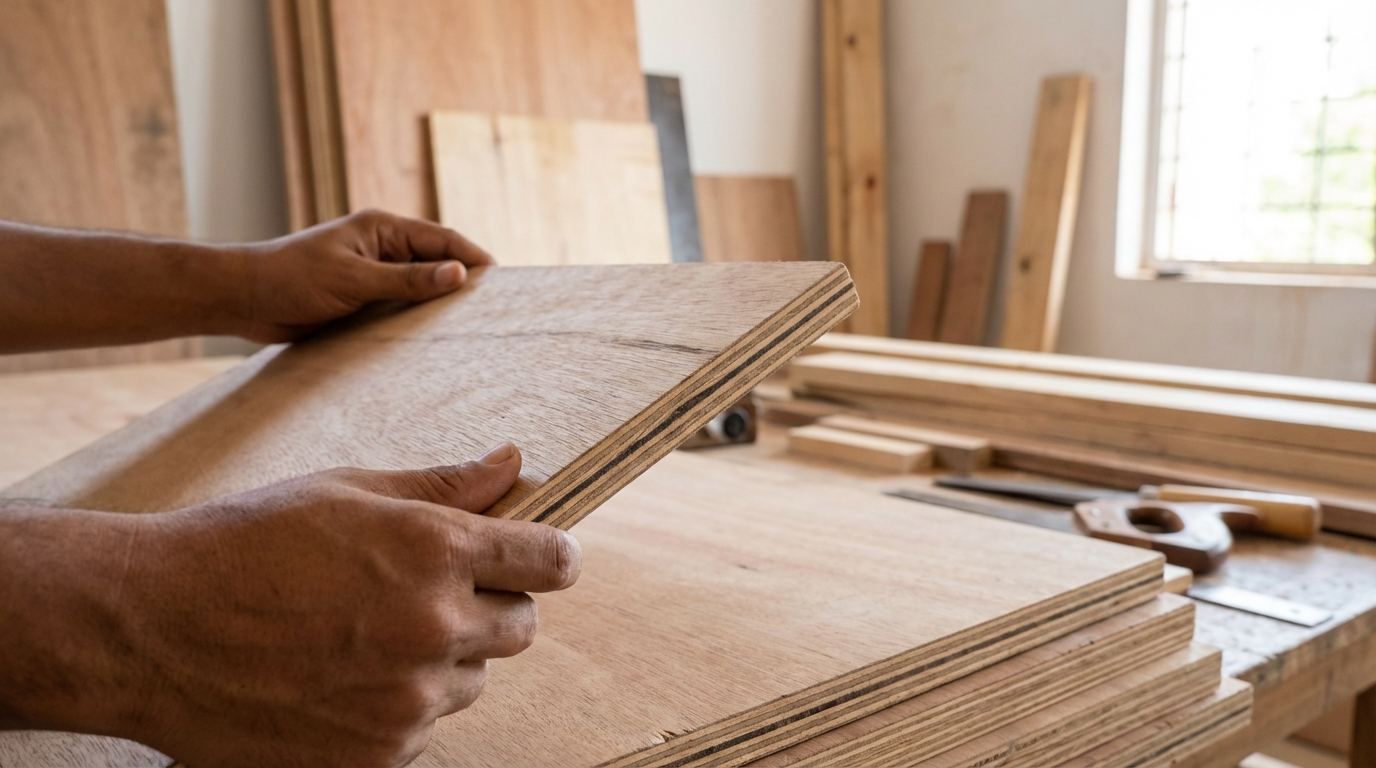
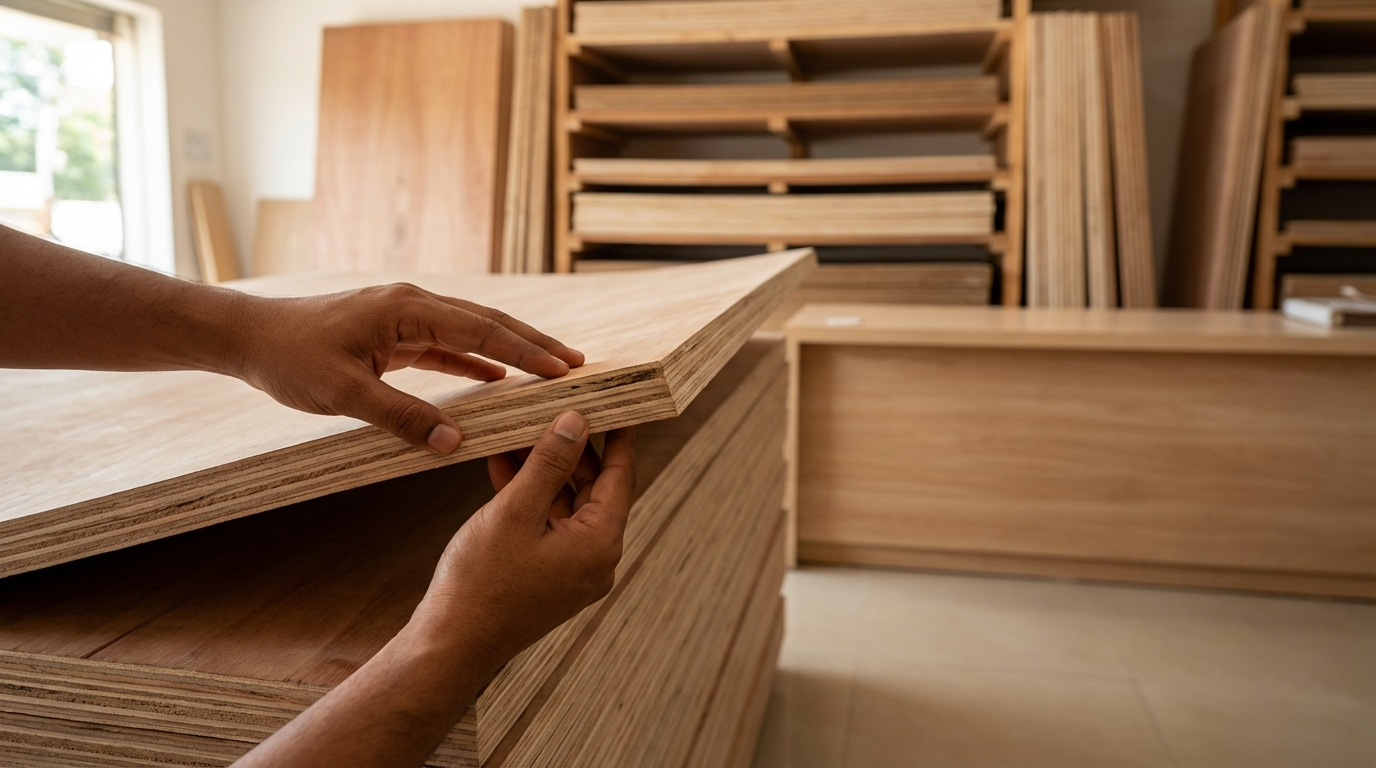
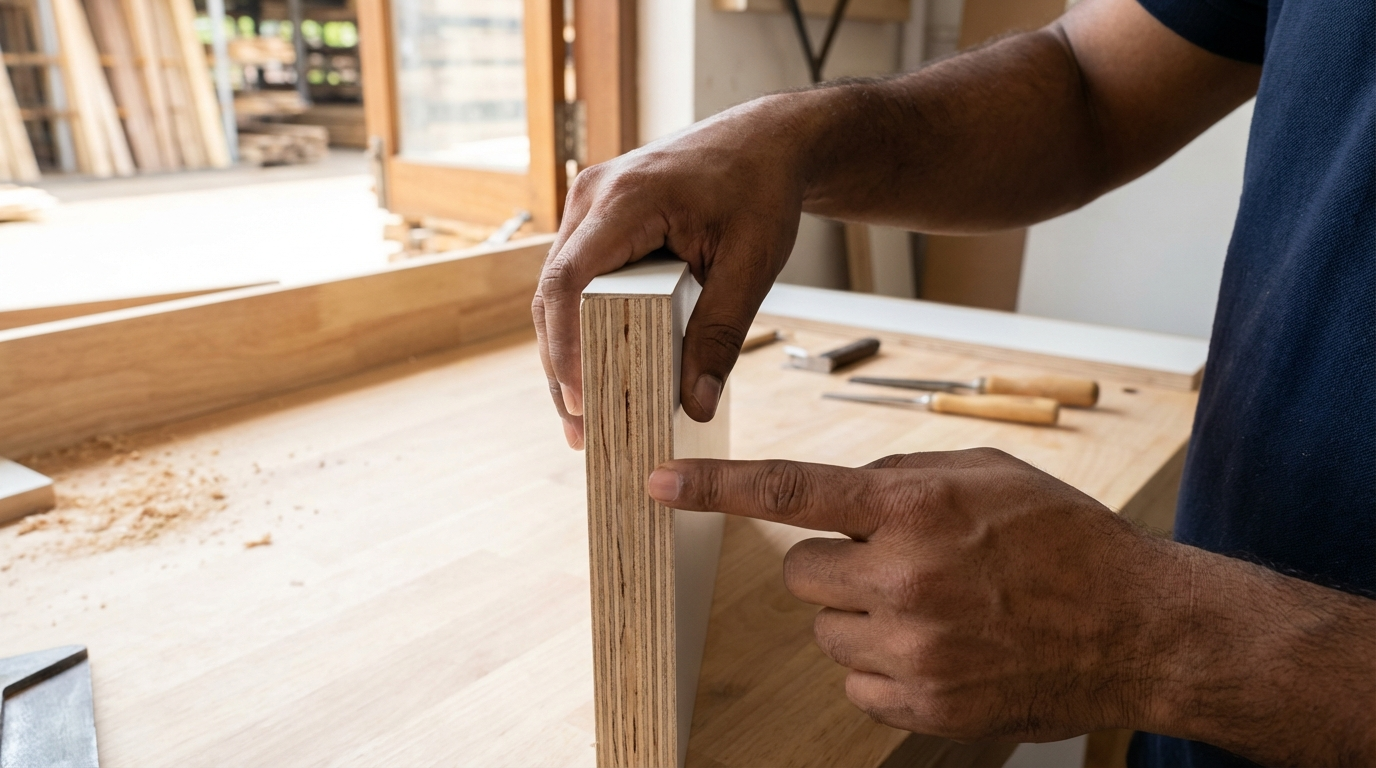
WPC Sheet Price per Sq Ft: Thickness-wise Rate + What Affects Cost
Get a practical WPC sheet price guide with thickness-wise rate ranges, 8x4 sheet costing, and the factors that change prices (brand, density, finish, city).
Quick Decision Summary
Best answer in one line: WPC sheets typically cost ₹35–₹110 per square foot depending on thickness, density, and finish quality.
If you're in a hurry: For most interior applications like wardrobes and partitions, 8mm WPC sheets in the ₹45–₹65 per sq ft range offer a practical balance of rigidity and cost. Thicker sheets (12mm–18mm) needed for door frames or heavy-duty cabinets push prices to ₹70–₹110 per sq ft. Always confirm density (measured in kg/cubic metre), surface finish type, and whether rates are inclusive of GST and transport. Prices vary significantly between metro cities and tier-2 towns—sometimes by 15–25%—so get quotes from at least two local suppliers before finalising.
- Choose WPC if: You need termite-proof, moisture-resistant boards for kitchens, bathrooms, or humid coastal areas where plywood struggles.
- Avoid WPC if: You're working on a tight budget for dry-zone furniture where MR-grade plywood or particle board would perform adequately at lower cost.
What WPC Sheets Actually Mean (And Where Confusion Starts)
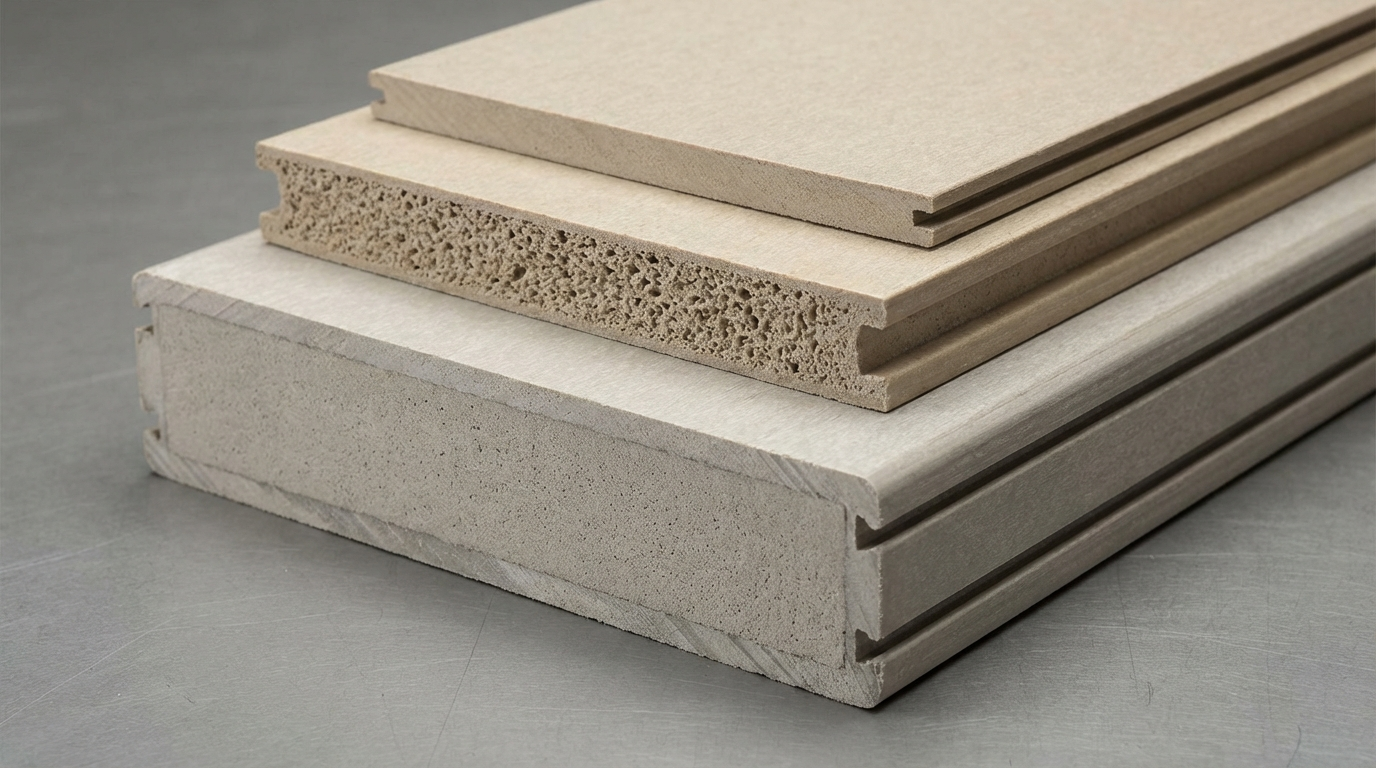
WPC stands for Wood Plastic Composite—a manufactured board made by combining wood fibre or wood flour with thermoplastic polymers (typically PVC or HDPE) under heat and pressure. The result is a rigid sheet that behaves somewhat like plywood but offers inherent resistance to moisture, termites, and fungal decay without requiring chemical treatment.
WPC sheets are sold in standard 8×4 feet dimensions (2440mm × 1220mm) across India, though some manufacturers offer custom sizes. They're increasingly used for modular kitchen shutters, bathroom vanities, outdoor furniture cores, partition panels, and door frame lining—applications where conventional wood products face moisture-related failures.
Where People Get Confused About WPC Pricing
- Confusing WPC with PVC foam boards: PVC foam sheets are lighter, cheaper, and less rigid—they're different products with different price points. WPC contains actual wood content and costs more.
- Assuming all WPC is the same density: Density ranges from 500–900 kg/m³ depending on the manufacturer and grade. Higher density means better screw-holding and rigidity, but also higher cost per sq ft.
- Forgetting that "WPC" covers multiple formulations: Some use PVC-based polymers, others use HDPE. The polymer type affects cost, flexibility, and heat resistance.
- Not accounting for finish surcharge: Raw WPC sheets are cheaper than pre-laminated or textured-surface variants. A laminated finish can add ₹15–₹35 per sq ft.
- Comparing thickness without density: A low-density 12mm sheet may perform worse than a high-density 8mm sheet. Thickness alone doesn't determine price or performance.
Price Range and Cost Drivers (India)
WPC sheet prices in India vary based on thickness, density grade, surface finish, brand positioning, and regional logistics. The following ranges reflect market conditions in major cities but will shift based on local dealer margins and transport costs.
Thickness-Wise Price Ranges (Per Square Foot)
| Thickness | Typical Price Range (₹/sq ft) | Common Applications |
|---|---|---|
| 5mm–6mm | ₹35–₹55 | Wall cladding, decorative panels, light partitions |
| 8mm | ₹45–₹70 | Wardrobe shutters, cabinet backs, bathroom panels |
| 12mm | ₹60–₹85 | Kitchen cabinets, modular furniture carcass, vanity units |
| 15mm–18mm | ₹75–₹110 | Door frames, heavy-duty shelving, structural partitions |
| 25mm (limited availability) | ₹100–₹140 | Commercial fixtures, specialised industrial use |
What Does a Standard 8×4 Sheet Cost?
An 8×4 feet sheet equals 32 square feet. Using the ranges above:
- 8mm raw WPC sheet: ₹1,440–₹2,240 per sheet
- 12mm raw WPC sheet: ₹1,920–₹2,720 per sheet
- 18mm raw WPC sheet: ₹2,400–₹3,520 per sheet
Pre-laminated versions add ₹480–₹1,120 to the sheet cost depending on laminate quality and texture.
Why Do Prices Vary So Much Between Quotes?
Density grade: Standard density (550–650 kg/m³) costs less than high-density variants (750–900 kg/m³). High-density sheets offer better screw retention and edge stability but command a 20–35% premium.
Polymer base: HDPE-based WPC typically costs more than PVC-based WPC but offers better outdoor weathering resistance. For indoor use, PVC-based options often suffice.
Surface treatment: Raw sheets require lamination or painting on-site. Pre-laminated sheets (with decorative paper or PVC film bonded at factory) cost more but save labour and finishing time.
Brand positioning: Established manufacturers with consistent quality control charge more than regional or unbranded suppliers. The premium often reflects better thickness tolerance and density consistency.
City and logistics: Prices in Mumbai, Delhi, Bengaluru, and Chennai tend to be lower due to dealer competition and proximity to manufacturing hubs. Tier-2 and tier-3 cities may see 10–25% higher rates due to transport and smaller order volumes.
GST inclusion: Always confirm whether quoted rates include 18% GST. Some dealers quote ex-factory rates without tax, making their prices appear artificially low.
How Should You Ask for a Quote?
When requesting WPC sheet quotations, specify these line items to get comparable prices:
- Exact thickness required (in mm)
- Density grade (standard vs high-density, or specific kg/m³ if known)
- Surface finish (raw, pre-laminated, textured, or specific laminate code)
- Quantity (number of sheets or total sq ft)
- Delivery location and whether transport is included
- GST inclusion (confirm if rate is inclusive or exclusive)
- Payment terms (advance percentage, credit period)
Sample Budget Calculation: Modular Kitchen Shutters
For a typical modular kitchen with approximately 80 sq ft of shutter area using 8mm pre-laminated WPC:
- Base material: 80 sq ft × ₹60–₹85 = ₹4,800–₹6,800
- Edge banding: ₹8–₹15 per running foot (estimate 120 ft) = ₹960–₹1,800
- Hardware and accessories: separate line item
- Labour for cutting and installation: varies by city
- Material subtotal: ₹5,760–₹8,600 (excluding GST)
This gives a working estimate—actual costs depend on design complexity, wastage allowance (typically 8–12% for modular work), and local labour rates.
Is WPC More Expensive Than Plywood Per Square Foot?
Yes, WPC sheets generally cost 15–40% more than equivalent-thickness BWR plywood. However, direct price comparison misses important context. WPC requires no additional waterproofing treatment, has zero termite vulnerability, and doesn't need edge sealing with the same urgency as plywood. For wet-zone applications like bathroom vanities or under-sink cabinets, the total installed cost may be comparable once you factor in plywood's edge-banding, waterproofing primer, and higher failure risk from moisture ingress.
For dry-zone furniture in climate-controlled spaces, plywood often remains more economical. The decision should factor in application risk, not just upfront material cost.
Does WPC Sheet Density Affect Price Significantly?
Density is one of the strongest price determinants for WPC sheets. Low-density variants (below 600 kg/m³) may cost 20–30% less but compromise on screw-holding strength and surface hardness. High-density WPC (above 750 kg/m³) commands premium pricing but performs better for heavy-use furniture, commercial fixtures, and applications requiring robust hardware mounting.
When comparing quotes, always ask for density specifications. Two sheets of identical thickness from different suppliers can have vastly different performance characteristics based on density alone. If a quote seems unusually cheap for the thickness, suspect lower density or inconsistent quality control.
India-Specific Reality Check
WPC's moisture resistance makes it attractive for Indian conditions, but several ground realities affect how prices and performance translate in practice.
Monsoon and Coastal Humidity Considerations
In coastal cities like Mumbai, Chennai, Kochi, and Kolkata, relative humidity regularly exceeds 80% for months. While WPC resists moisture absorption better than plywood, poor-quality variants with higher wood content can still swell slightly at edges. Premium WPC with higher polymer ratios performs better in these conditions but costs more. For coastal projects, budget for high-density variants rather than entry-level options.
Storage and Handling on Indian Sites
WPC sheets delivered to construction sites often sit in semi-open storage. Unlike plywood, they won't absorb ground moisture or develop fungal staining. However, prolonged sun exposure can cause slight surface warping in thinner sheets (5mm–6mm). Store sheets flat, stacked with supports, and protected from direct sunlight. The material cost savings disappear if sheets warp before installation.
Workmanship Realities
Many carpenters in India are less familiar with WPC cutting and edge-finishing compared to plywood. WPC machines differently—it requires sharp carbide-tipped blades and slower feed rates to prevent chipping. Budget for potential wastage (10–15%) if your carpenter hasn't worked with WPC before. Some contractors quote higher labour rates for WPC work due to tool wear and unfamiliarity.
Trade-offs and Limitations
Higher upfront cost: WPC sheets cost more per square foot than MR or BWR plywood in most thickness categories. For budget-constrained projects in dry zones, this premium may not be justified.
Weight: High-density WPC is heavier than equivalent plywood, affecting handling, transport costs, and hardware requirements for wall-mounted cabinets.
Limited structural span: WPC has lower bending strength than marine plywood. For long unsupported shelves or structural elements, reinforcement or shorter spans are necessary.
Heat sensitivity: PVC-based WPC can soften or deform near sustained high heat sources. Avoid using it directly adjacent to gas stoves, ovens, or industrial heat equipment without adequate clearance or heat shields.
Colour consistency: Raw WPC sheets can show slight colour variation between batches. For visible applications, order all required sheets from the same production batch.
Screw stripping risk in low-density variants: Cheap WPC sheets may not hold screws as well as advertised. Always test screw pull-out on a sample piece before committing to a large order.
Common Buyer Mistakes and How to Avoid Them
Mistake 1: Buying Based on Thickness Alone
Why it happens: Buyers assume thicker always means stronger and more durable, so they compare only thickness and price.
What to do instead: Ask for density specifications. A high-density 8mm sheet often outperforms a low-density 12mm sheet for screw retention and rigidity.
Mistake 2: Not Verifying GST Inclusion
Why it happens: Some dealers quote ex-factory prices to appear competitive, adding GST only at invoicing.
What to do instead: Always ask "Is this rate GST-inclusive?" before comparing quotes. Calculate total landed cost including transport.
Mistake 3: Ordering Without a Sample Test
Why it happens: Buyers trust catalogue specifications or verbal assurances without physical verification.
What to do instead: Request a small sample piece. Check edge finish, try driving a screw, and weigh it to estimate density. Reject suppliers unwilling to provide samples.
Mistake 4: Underestimating Wastage
Why it happens: Buyers calculate exact square footage needed without accounting for cutting waste and defects.
What to do instead: Add 10–15% wastage allowance for modular furniture work. For complex designs with many small pieces, wastage can reach 18–20%.
Mistake 5: Choosing Pre-Laminated When Raw Would Suffice
Why it happens: Pre-laminated sheets seem convenient, but the specific laminate design may not match project requirements.
What to do instead: If you're planning custom lamination or painting, buy raw WPC sheets and apply your preferred finish. Pre-laminated options make sense only when the factory finish matches your design.
Mistake 6: Ignoring Edge-Banding Requirements
Why it happens: WPC's moisture resistance creates a false sense that edges don't need protection.
What to do instead: Exposed WPC edges look unfinished and can chip over time. Budget for PVC edge banding (₹8–₹15 per running foot) and proper application.
Mistake 7: Using WPC for High-Heat Zones Without Shielding
Why it happens: WPC's reputation for durability leads to use near cooktops and ovens without considering heat limits.
What to do instead: Maintain 150mm minimum clearance from sustained heat sources. Use aluminium heat shields behind WPC panels near gas burners.
Mistake 8: Assuming All Brands Offer Equivalent Quality
Why it happens: Price shopping leads buyers to unknown brands offering significantly lower rates.
What to do instead: Check for consistent thickness tolerance (±0.5mm is acceptable), uniform density across the sheet, and clean surface finish. Established suppliers typically offer better quality control.
Failure Modes and Fixes
Edge Chipping During Cutting
Symptom: Rough, splintered edges after cutting, especially on the exit side of saw cuts.
Likely root cause: Dull blade, incorrect blade type, or feed rate too fast for the material.
Prevention: Use sharp carbide-tipped blades with high tooth count (80+ teeth for table saws). Reduce feed speed. Support the sheet properly during cutting.
If already happening: Light sanding can salvage minor chipping. Severe damage requires edge banding to cover the defect.
Screw Pull-Out in Mounted Cabinets
Symptom: Screws loosen or pull out from WPC sheets, causing hardware failure or cabinet instability.
Likely root cause: Low-density WPC, undersized screws, or pilot holes too large.
Prevention: Use high-density WPC for hardware-mounting zones. Drill pilot holes slightly smaller than screw shank diameter. Use coarse-thread screws designed for composite materials.
If already happening: Remove the screw, fill the hole with epoxy filler, let cure, and re-drill a fresh pilot hole. Consider adding backing blocks for heavy-load zones.
Surface Warping in Thin Sheets
Symptom: 5mm–6mm WPC panels develop a slight bow or twist, especially on large unsupported spans.
Likely root cause: Uneven heat exposure during storage, inadequate support during installation, or using thin sheets for spans beyond their capability.
Prevention: Store flat with uniform support. Use 8mm minimum for spans exceeding 600mm. Frame thin panels with aluminium channels or backing boards.
If already happening: Minor warps may self-correct when properly framed and fastened. Severe warping requires replacement.
Laminate Peeling on Pre-Laminated Sheets
Symptom: Decorative laminate layer separates from WPC substrate at edges or corners.
Likely root cause: Poor factory bonding, edge impact during handling, or moisture ingress at unsealed edges.
Prevention: Inspect pre-laminated sheets before accepting delivery. Apply edge banding immediately after cutting. Avoid impact damage during transport and installation.
If already happening: Clean the separated area, apply contact adhesive, clamp firmly, and seal the edge with PVC banding.
Visible Colour Mismatch Between Sheets
Symptom: Adjacent WPC panels show noticeable colour or texture differences after installation.
Likely root cause: Sheets from different production batches with variation in pigment or surface treatment.
Prevention: Order all sheets for a project from the same batch. Request batch confirmation from supplier. Inspect sheets together before cutting.
If already happening: Strategic placement (mismatched sheets in less visible areas) or applying uniform paint/laminate finish are the only solutions.
Expansion at Joints in High Humidity
Symptom: Tight joints between WPC panels show slight bulging or gaps seasonally.
Likely root cause: WPC with high wood content absorbing atmospheric moisture, combined with zero expansion gap at installation.
Prevention: Leave 2–3mm expansion gaps at joints, especially for large panel installations. Use flexible sealant at joints rather than rigid adhesive.
If already happening: Trim affected edges to create expansion gaps. Fill gaps with colour-matched flexible sealant.
Quality Checks You Can Do Without Lab Tests
Before Buying: At the Dealer or Warehouse
- Weight test: Lift one corner of an 8×4 sheet. High-density WPC (12mm) should feel noticeably heavy—roughly 28–35 kg per sheet. Suspiciously light sheets indicate low density.
- Edge inspection: Look at cut edges for uniform colour and texture. Visible voids, inconsistent layers, or crumbling edges indicate poor manufacturing.
- Surface check: Run your hand across the sheet. Quality WPC has a smooth, consistent surface without pitting, bumps, or rough patches.
- Thickness verification: Carry a digital calliper or vernier. Measure thickness at multiple points—centre and all four corners. Variance beyond ±0.5mm suggests poor calibration.
- Flex test: For thin sheets (5mm–8mm), gently flex a corner. Quality WPC should have slight give without cracking sounds. Excessive flexibility or brittleness are both concerns.
- Ask about batch: Request confirmation that all sheets are from the same production batch for colour consistency.
After Cutting: Workmanship Cues
- Cut edge quality: Clean cuts with minimal chipping indicate proper blade choice and technique. Excessive chipping despite sharp blades suggests inconsistent material density.
- Screw test: Drive a test screw into an offcut piece. It should grip firmly and resist pull-out. Easy stripping indicates low density or poor core bonding.
- Drilling behaviour: Pilot holes should produce fine, consistent swarf. Chunky or irregular debris suggests internal voids or density variation.
After Installation: Ongoing Verification
- Edge banding adhesion: Check that applied edge banding adheres firmly without lifting at corners after 48 hours.
- Hardware tightness: After one week, verify that screws holding hinges and handles remain tight. Loosening indicates potential screw retention issues.
- Surface cleaning response: Wipe with damp cloth. Quality WPC should clean easily without water absorption marks or surface dulling.
Condition-Based Decision Framework
| Your Condition | Recommended Option | What to Verify |
|---|---|---|
| Wet zone (bathroom, under-sink, laundry) | High-density WPC (12mm+) | Density above 700 kg/m³, proper edge sealing |
| Coastal or high-humidity area | Premium WPC with higher polymer ratio | Lower wood content specification, ask about swell test performance |
| Heavy-use cabinets (kitchen base units) | High-density WPC (12mm–18mm) | Screw pull-out strength, thickness tolerance |
| Tight budget, dry zone only | Standard MR plywood or standard-density WPC | Compare total installed cost including edge treatment |
| High scratch/abrasion risk | Pre-laminated WPC with HPL surface | Laminate grade (0.8mm+ HPL preferred over melamine) |
| Fast delivery required | Stock items from established dealers | Confirm availability before finalising design |
| Outdoor furniture (covered patio) | HDPE-based WPC, high density | UV stability treatment, confirm outdoor suitability |
| Near heat sources (kitchen hob zone) | WPC with heat-shield accessories | Maintain 150mm clearance, add aluminium backing |
Tips for Homeowners
Durability and Care Guidelines
- Do: Wipe spills promptly with a damp cloth. WPC resists moisture but standing water at joints can seep into edge bands.
- Do: Use felt pads under heavy objects placed on WPC shelves to prevent surface indentation.
- Do: Clean with mild soap solution. Avoid abrasive scrubbers that can dull laminated surfaces.
- Don't: Place hot vessels directly on WPC surfaces—use trivets or heat mats.
- Don't: Hang excessive weight from single-screw fixtures. Distribute loads across multiple mounting points.
- Don't: Use solvent-based cleaners that can damage surface finish or edge banding adhesive.
What Questions to Ask Your Contractor
- What thickness and density WPC are you planning to use?
- Are rates inclusive of edge banding and hardware?
- What wastage percentage is included in your quote?
- Can you show me a sample of the exact WPC you'll use?
Tips for Carpenters and Fabricators
Cutting and Machining
- Use carbide-tipped saw blades with 80+ teeth for clean cuts. Standard wood blades dull quickly and cause chipping.
- Reduce feed rate by 20–30% compared to plywood cutting speed.
- Support sheets fully during cutting—WPC is denser than plywood and can crack if unsupported overhangs flex during cutting.
- For CNC routing, use single-flute spiral bits designed for composites. Two-flute bits can cause heat buildup and melting.
Edge Preparation and Banding
- Sand cut edges lightly (120-grit) before applying edge banding for better adhesion.
- PVC edge banding with hot-melt adhesive works well on WPC. Pre-glued bands need higher heat settings than for particle board.
- Trim edge banding flush with a sharp edge trimmer—WPC's hardness requires sharper blades than MDF work.
Fastening and Hardware
- Drill pilot holes 70–80% of screw shank diameter. Oversized pilots cause stripping; undersized pilots can crack the material.
- Use coarse-thread screws (not fine-thread drywall screws) for better grip in composite material.
- For hinge cups, use larger-diameter mounting screws than standard recommendations if available.
- In high-load zones (drawer slides, heavy doors), consider adding solid wood or plywood backing blocks for screw anchoring.
Tips for Architects and Interior Designers
Specification Guidelines
- Specify density range (minimum 650 kg/m³ for standard applications, 750+ kg/m³ for heavy-use or hardware-intensive zones).
- Include thickness tolerance in specifications (±0.5mm acceptable for modular work).
- For visible edges, specify edge banding material, thickness (0.4mm–2mm PVC options), and colour matching requirements.
- Call out expansion gap requirements (2–3mm) for large panel installations in humid regions.
Detailing for Wet Zones
- Specify silicone sealant at all joints between WPC and walls, countertops, or flooring.
- For under-sink cabinets, require aluminium or stainless steel drip trays beneath plumbing connections.
- Avoid specifying WPC for fully submerged or constantly wet applications (shower enclosures, pool surrounds)—material is moisture-resistant, not submersible.
Finish Logic
- Raw WPC accepts paint, laminate, or veneer bonding. Specify surface preparation requirements for each finish type.
- For painted finishes, require primer coat compatible with composite substrates.
- Pre-laminated WPC reduces site finishing time but limits design flexibility. Use for repetitive elements; specify raw WPC for custom finishes.
Tips for OEMs and Modular Furniture Manufacturers
Repeatability and Quality Control
- Establish incoming inspection protocol: verify thickness, density (weight per sheet), and surface quality for each batch received.
- Maintain batch records to trace quality issues back to specific material lots.
- Standardise cutting parameters across machines to ensure consistent edge quality.
Reducing Returns and Complaints
- Most field complaints involve edge banding failures or screw stripping. Invest in edge banding QC (check adhesion before dispatch) and use appropriate screw specifications.
- Include care instructions with delivered furniture—customer misuse (hot vessels, abrasive cleaning) causes finish damage that gets blamed on material quality.
- For kitchen modules, seal all cut edges including hidden internal edges that customers won't see but moisture will find.
Cost Optimisation
- Negotiate bulk pricing based on annual volume commitments rather than per-order rates.
- Optimise cutting layouts to reduce wastage below 10% through nesting software.
- Consider standard-density WPC for low-stress components (back panels, light shelves) while reserving high-density material for hardware zones and fronts.
How Does City Location Affect WPC Prices?
Manufacturing hubs for WPC in India are concentrated in specific industrial zones—Gujarat, Maharashtra, and parts of Tamil Nadu have significant production capacity. Prices in Mumbai, Ahmedabad, Chennai, and nearby cities tend to be 10–15% lower than in distant markets like Kolkata, Guwahati, or northeastern states due to lower transport costs and more dealer competition.
Metro cities also offer wider brand and grade options, making comparison shopping easier. In smaller towns, limited dealer networks can mean higher prices and fewer choices. For large projects in remote locations, factor transport costs explicitly—they can add ₹5–₹12 per sq ft for distant deliveries.
Can WPC Sheets Be Used for Outdoor Furniture?
WPC offers better outdoor performance than plywood but has limitations. HDPE-based WPC variants with UV stabilisers perform reasonably for covered outdoor applications—patios, balconies with roof cover, or garden furniture under permanent shade. Fully exposed outdoor use (direct sun and rain) accelerates surface degradation and colour fading over 3–5 years.
For outdoor applications, confirm UV stability treatment with the supplier, budget for periodic surface refinishing, and avoid dark colours that absorb more heat and may warp thin panels. Thicker sheets (12mm+) handle outdoor stress better than thin panels.
What Is the Difference Between WPC and PVC Foam Board Pricing?
PVC foam boards are often confused with WPC but differ in composition and cost. PVC foam contains no wood content—it's pure expanded PVC polymer, making it lighter and cheaper (typically ₹20–₹45 per sq ft for comparable thicknesses). However, PVC foam has lower screw-holding strength, less rigidity, and feels hollow compared to WPC.
For furniture applications requiring hardware mounting, WPC's higher price is justified by better structural performance. PVC foam boards suit signage, display panels, and decorative cladding where structural demands are minimal. Ensure you're comparing like materials when evaluating quotes.
FAQs
What is the typical price range for WPC sheets per square foot in India?
WPC sheets in India typically range from ₹35 to ₹110 per square foot depending on thickness, density grade, and surface finish. Thinner sheets (5mm–6mm) fall in the ₹35–₹55 range and suit wall cladding or decorative applications. Standard 8mm–12mm sheets for furniture work cost ₹45–₹85 per sq ft, while heavy-duty 15mm–18mm variants for door frames and structural applications reach ₹75–₹110 per sq ft. Pre-laminated options add ₹15–₹35 per sq ft to raw sheet prices. Always confirm whether quoted rates include GST and delivery charges, as these can significantly affect your final landed cost.
How much does an 8×4 WPC sheet cost in 2026?
An 8×4 feet WPC sheet (32 sq ft) costs approximately ₹1,440–₹3,520 depending on thickness and grade. For 8mm raw WPC, expect ₹1,440–₹2,240 per sheet. A 12mm sheet runs ₹1,920–₹2,720, while 18mm heavy-duty variants cost ₹2,400–₹3,520. Pre-laminated versions add ₹480–₹1,120 per sheet. These ranges reflect standard-to-high density grades from established suppliers. Budget-tier offerings from lesser-known brands may be cheaper but often compromise on density consistency and thickness tolerance. For accurate budgeting, get specific quotes for your required specifications rather than relying on general ranges.
Why do WPC sheet prices vary so much between suppliers?
Price variation stems from multiple factors beyond brand markup. Density grade significantly impacts cost—low-density WPC (below 600 kg/m³) costs 20–30% less than high-density variants (750+ kg/m³) but offers inferior screw retention and durability. Polymer base matters: HDPE-based WPC costs more than PVC-based alternatives. Surface finish is another driver—raw sheets are cheaper than factory-laminated options. Manufacturing quality control affects pricing too; established manufacturers with consistent thickness tolerance and density uniformity charge more than regional producers with variable output. Finally, logistics costs vary based on distance from manufacturing hubs, adding ₹5–₹15 per sq ft for remote deliveries.
Is WPC more expensive than plywood for the same thickness?
Generally yes—WPC costs 15–40% more than BWR plywood of equivalent thickness. An 18mm BWR plywood sheet might cost ₹2,000–₹2,800 while comparable WPC runs ₹2,400–₹3,520. However, total installed cost comparison should include edge treatment, waterproofing, and failure risk. Plywood requires careful edge sealing and may need waterproof coating for wet zones—costs that WPC avoids due to inherent moisture resistance. For bathroom vanities or kitchen sink cabinets, the performance gap often justifies WPC's premium. For dry-zone bedroom furniture in controlled environments, plywood remains more economical without significant performance penalty.
What thickness of WPC sheet should I use for kitchen cabinets?
For kitchen cabinet carcasses and shutters, 12mm–18mm WPC sheets are standard choices. Use 12mm for shutter doors, drawer fronts, and vertical partitions where structural load is moderate. Upgrade to 15mm–18mm for base cabinet sides, shelves bearing heavy cookware, and zones requiring robust hardware mounting (hinge plates, drawer slides). Avoid using thicknesses below 12mm for kitchen carcass construction—thin sheets may flex under load and provide inadequate screw grip for soft-close hinges. For back panels, 8mm WPC suffices as it doesn't bear structural loads. Budget approximately ₹60–₹95 per sq ft for kitchen-grade WPC depending on density and finish requirements.
Does WPC sheet density affect the price significantly?
Density is one of the strongest price determinants. Standard-density WPC (550–650 kg/m³) costs 20–35% less than high-density variants (750–900 kg/m³). This price gap reflects real performance differences: high-density WPC offers better screw retention, higher surface hardness, and improved rigidity. For furniture requiring robust hardware mounting—modular kitchens, heavy wardrobe doors, commercial fixtures—high-density WPC's premium is justified by reduced failure risk. For light-duty applications like wall cladding, partition backing, or display units, standard density often suffices. Always verify density specifications when comparing quotes; unusually cheap offerings typically involve low-density material that will underperform in demanding applications.
Are pre-laminated WPC sheets worth the extra cost?
Pre-laminated WPC sheets make sense when factory-applied finishes match your design requirements and you want to reduce on-site finishing time. The ₹15–₹35 per sq ft premium over raw sheets covers material cost and factory bonding quality that's often superior to site-applied lamination. Benefits include consistent finish quality, reduced site dust, and faster installation. However, pre-lamination limits design flexibility—you're restricted to available patterns and colours. For custom designs, colour-matched requirements, or special finishes, raw WPC with site-applied laminate or paint offers more options despite higher labour involvement. Evaluate based on your design complexity and timeline constraints.
How do I verify WPC sheet quality before buying?
Start with a weight check—lift one corner of an 8×4 sheet and compare across suppliers. Quality 12mm WPC should weigh 28–35 kg per sheet; suspiciously light sheets indicate low density. Inspect cut edges for uniform colour without voids or crumbling. Run your hand across surfaces checking for consistency—pitting or rough patches suggest manufacturing defects. Use a digital calliper to verify thickness at multiple points; variance beyond ±0.5mm indicates poor calibration. Request a sample piece for screw testing—drive a coarse-thread screw and check grip strength. Ask for batch consistency confirmation if ordering multiple sheets. Reject suppliers unwilling to provide samples or specification documentation.
Can WPC sheets be used near kitchen gas stoves?
WPC can be used in kitchen zones but requires careful positioning relative to heat sources. PVC-based WPC softens at sustained temperatures above 60–70°C, making direct adjacency to gas burners problematic. Maintain minimum 150mm clearance between WPC surfaces and open flames or burner edges. For areas behind hobs, install aluminium or stainless steel heat shields between the WPC panel and heat source. Avoid using WPC for the immediate hob surround or splashback directly behind burners—use stainless steel, glass, or tile for these zones. For cabinet bases and side panels at appropriate clearance, WPC performs reliably. The issue is sustained high heat, not brief exposure during normal cooking.
What wastage percentage should I budget for WPC sheet projects?
For modular furniture with standard rectangular components, budget 10–12% wastage for cutting losses and potential defects. Complex designs with curves, angles, or many small pieces require 15–18% wastage allowance. First-time WPC projects with carpenters unfamiliar with the material may see wastage reach 20% due to learning-curve errors in cutting technique. Nesting software can optimise cutting layouts to minimise wastage below 10% for production environments. When calculating material requirements, add your wastage percentage to the net area needed, then round up to complete sheets. Better to have slight surplus than face project delays due to material shortage mid-installation.
How do prices differ between metro cities and smaller towns?
Metro cities near manufacturing hubs (Mumbai, Ahmedabad, Chennai, Bengaluru) typically offer WPC prices 10–20% lower than tier-2 and tier-3 towns. This reflects lower transport costs, dealer competition, and economies of scale in distribution. Additionally, metro markets offer wider brand and grade choices, enabling comparison shopping that drives better pricing. In smaller towns with limited WPC dealers, reduced competition allows higher margins. For projects in remote locations, explicitly budget transport costs—they can add ₹5–₹12 per sq ft for long-distance deliveries. Consider consolidating orders to reduce per-unit transport impact, or source from regional distributors who may offer better logistics for your area.
What is the price difference between raw and pre-laminated WPC?
Pre-laminated WPC sheets cost ₹15–₹35 more per square foot than raw equivalents, depending on laminate quality and texture. Standard melamine-paper lamination adds ₹15–₹22 per sq ft, while high-pressure laminate (HPL) surfaces or textured finishes push the premium to ₹25–₹35 per sq ft. For an 8×4 sheet, this translates to ₹480–₹1,120 additional cost. This premium covers factory-applied finish with superior bonding compared to site lamination, plus reduced labour and finishing time on site. Calculate whether the convenience and quality consistency justify the premium based on your project scale, design requirements, and available skilled labour for site finishing alternatives.
Disclaimer: This content is provided for general informational purposes based on industry practices and publicly available information. Product specifications, standards, prices, and availability may vary by manufacturer, region, and time. Readers should independently verify details with manufacturers, dealers, or qualified professionals before making purchase or construction decisions.Want Plywood Suggestions?
Share a few details and a Duro BOIL specialist will suggest suitable brands and connect you to responsive dealers.