Beech Wood vs Plywood: Properties, Uses & Price Comparison
Complete guide to beech wood and European beech. Compare properties, furniture uses & prices with Indian plywood alternatives.
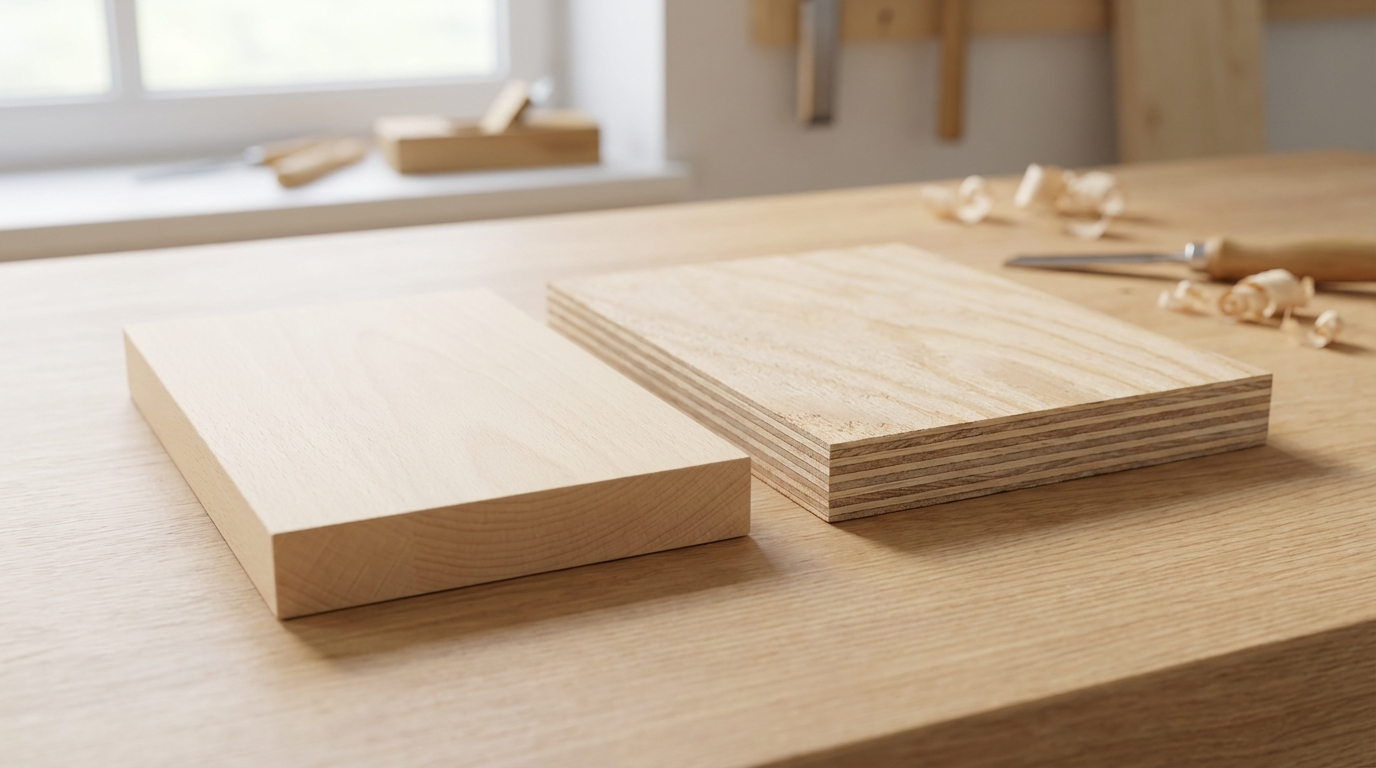
Quick Verdict: Beech Wood or Plywood for Indian Homes?
Choose plywood for most Indian home applications. Beech wood offers superior aesthetics and hardness but costs 3-5 times more than equivalent plywood, requires specialized maintenance in India's humid climate, and has limited local availability. Plywood wins for practicality, moisture resistance, and value for money in Indian conditions.
Here's the bottom line after analyzing both materials extensively: European beech wood is an exceptional hardwood with excellent machining properties, but it's fundamentally designed for European climates. Indian plywood, particularly BWR and marine grades, handles our monsoons, humidity fluctuations, and termite challenges far better at a fraction of the cost.
- Choose beech wood if: You need premium solid wood furniture, have climate-controlled spaces, want steam-bent components, or require specific European aesthetic for luxury interiors
- Choose plywood if: You're building kitchen cabinets, wardrobes, general furniture, need moisture resistance, or working within practical budgets
- Either works if: You're making decorative panels, study tables for AC rooms, or small accent furniture pieces
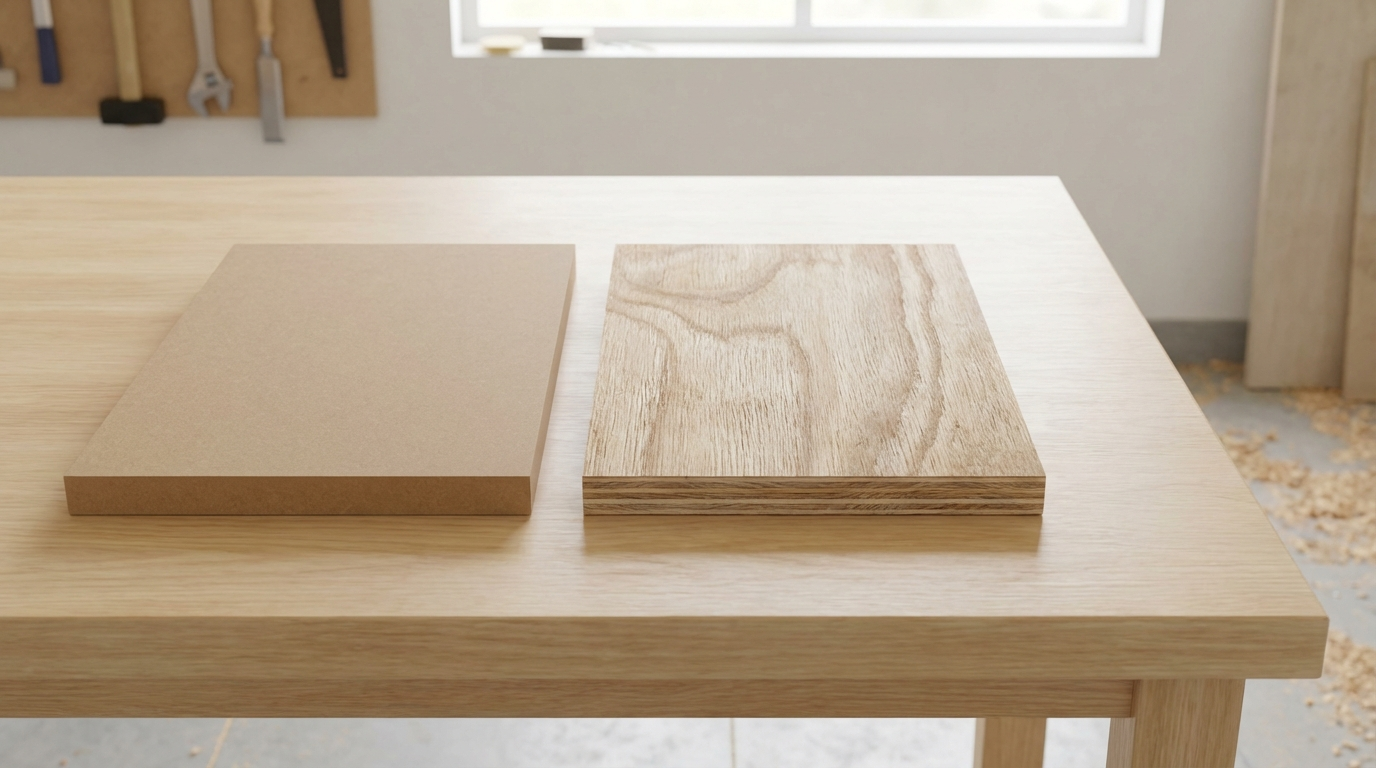
Complete Comparison Table: Beech Wood vs Plywood
This comprehensive comparison covers every factor that matters for Indian furniture and interior applications. According to duroboil.com's material research, understanding these differences prevents costly mistakes.
| Factor | European Beech Wood | Indian Plywood (BWR Grade) | Winner |
|---|---|---|---|
| Base Material | Solid hardwood timber | Layered wood veneers with resin | Depends on use |
| Density | 720 kg/m³ | 550-650 kg/m³ | Beech |
| Moisture Resistance | Poor (non-durable rating) | Good to Excellent | Plywood |
| Termite Resistance | Poor (vulnerable to beetles) | Good (with treatment) | Plywood |
| Dimensional Stability | Moderate (can warp, check, split) | Excellent (cross-grain construction) | Plywood |
| Surface Hardness | Excellent (1,450 Janka) | Moderate (varies by face veneer) | Beech |
| Workability | Excellent (superior machining) | Good | Beech |
| Steam Bending | Excellent | Not suitable | Beech |
| Screw Holding | Excellent (needs pre-drilling) | Very Good | Beech |
| Price Range (per sq ft) | ₹180-350 | ₹45-120 | Plywood |
| Availability in India | Limited (imported) | Widely available | Plywood |
| Carpenter Familiarity | Low | High | Plywood |
| Repair Ease | Moderate | Easy | Plywood |
| Eco-Friendliness | Excellent (sustainable European forests) | Good (plantation wood) | Beech |
| Finishing Quality | Excellent (takes stain beautifully) | Good (needs laminate/veneer) | Beech |
| Lifespan in Indian Climate | 15-25 years (with care) | 20-30 years | Plywood |
What is European Beech Wood?
European beech (Fagus sylvatica) is a temperate hardwood native to central and western Europe, comprising 57% of Europe's forest cover. It's one of the most abundant hardwoods globally and has been used for centuries in furniture, flooring, and tool making.
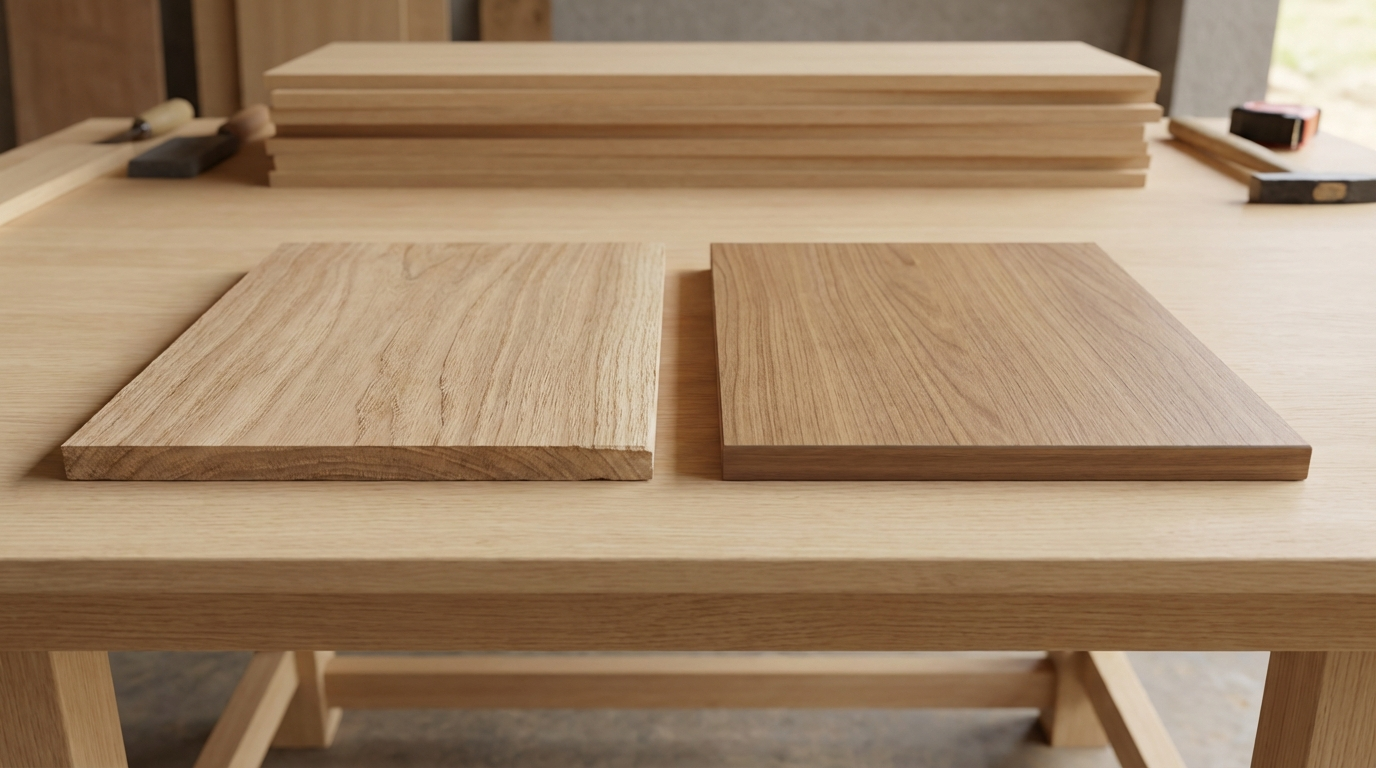
The wood features a distinctive pale pinkish-brown color that deepens when steamed—a process commonly applied to enhance its appearance. Its grain is straight with fine, even texture and characteristic small flecks visible on the surface. The color ranges from whitish to very pale brown, sometimes displaying darker veining or a reddish heart.
Beech trees take approximately 30 meters in height with trunk diameters reaching 1.2 meters. European forestry regulations ensure sustainable harvesting, meaning the amount of wood used never exceeds what's grown—a key reason beech remains affordable compared to tropical hardwoods despite being imported.
Key Characteristics of Beech Wood
- Botanical name: Fagus sylvatica (Fagaceae family)
- Weight: 720 kg/m³ (heavier than most Indian hardwoods)
- Durability class: Non-durable (requires indoor use only)
- Common names: English Beech, French Beech, Danish Beech, Romanian Beech
- Typical sizes available: 1.8-4.2m length, 100-250mm width
What is Plywood?
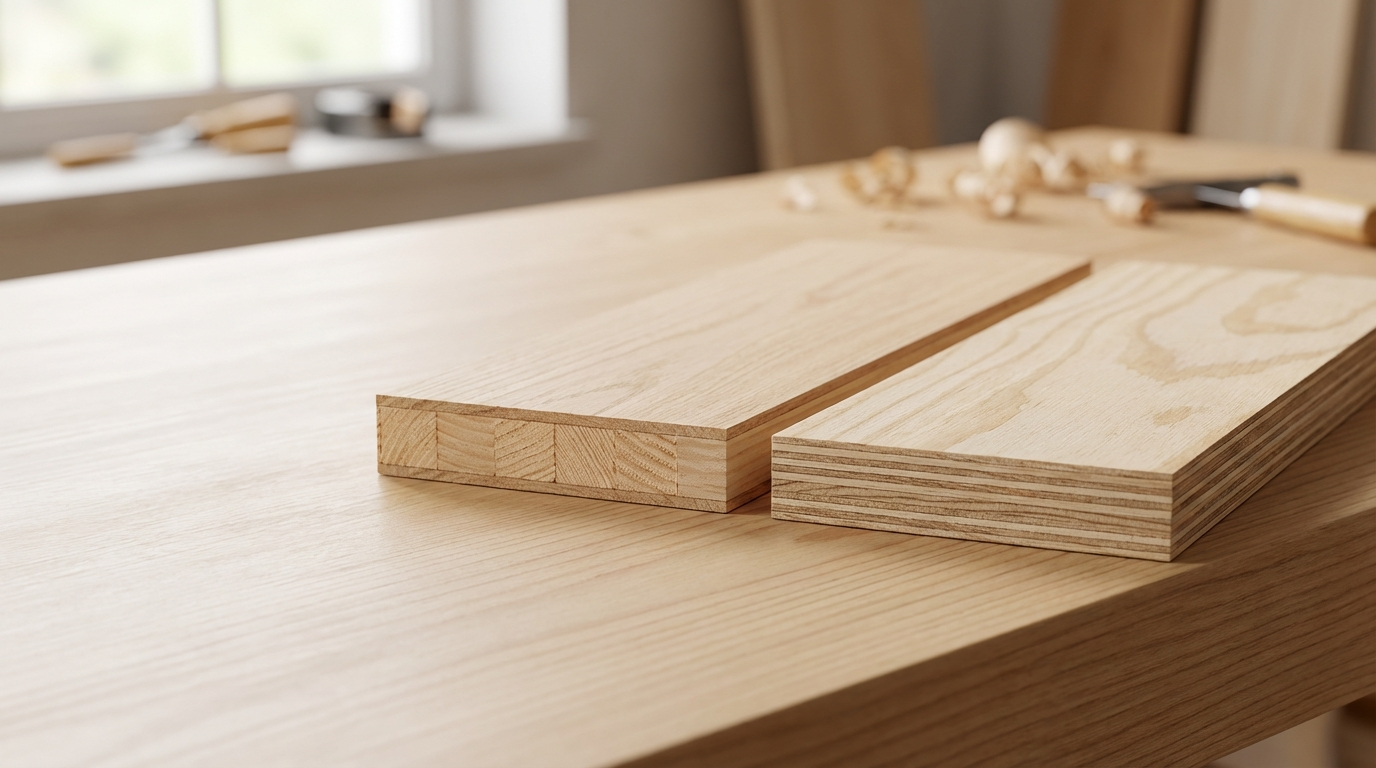
Plywood is an engineered wood product made by layering thin wood veneers at 90-degree angles and bonding them under heat and pressure with adhesive resin. This cross-grain construction creates a material stronger than the original wood species used.
The alternating veneer arrangement gives plywood exceptional dimensional stability—it resists warping, swelling, and splitting far better than solid wood. Different resin types (urea formaldehyde, phenol formaldehyde, melamine) determine the moisture resistance grade.
In India, plywood is manufactured using various core woods including Gurjan (premium), Eucalyptus/Safeda (standard hardwood), and Poplar (softwood). The face veneer quality and core wood type together determine the plywood's final properties and price.
Key Characteristics of Indian Plywood
- Construction: Multiple wood veneers bonded at perpendicular angles
- Standard size: 8×4 feet (2440×1220mm)
- Thickness range: 4mm to 25mm
- Grades available: MR (moisture resistant), BWR (boiling water resistant), BWP/Marine (waterproof)
- Core types: Gurjan, Eucalyptus, Poplar, Alternate (mixed)
Detailed Comparison: Beech Wood vs Plywood
Moisture and Water Resistance
Plywood decisively outperforms beech wood in moisture resistance. European beech is classified as "non-durable" and vulnerable to moisture damage—it can warp, check, split, and shrink when exposed to humidity changes.
BWR grade plywood, the standard for Indian kitchens and bathrooms, withstands boiling water immersion for hours. Marine grade plywood handles direct water contact. Beech wood, in contrast, requires climate-controlled environments and cannot be used in wet areas under any circumstances.
For Indian conditions with 60-90% humidity during monsoons, this difference is critical. Beech furniture in non-AC rooms will show moisture damage within 2-3 monsoon seasons. Plywood handles these fluctuations without structural issues.
Winner: Plywood — No competition for Indian climate applications.
Strength and Durability
Beech wood offers superior surface hardness at 1,450 Janka rating, but plywood provides better structural stability. Beech's high density (720 kg/m³) makes it exceptionally hard and wear-resistant—ideal for flooring and high-traffic furniture surfaces.
However, plywood's cross-grain construction distributes stress more evenly, preventing the cracking and splitting common in solid wood. A 12mm plywood panel will maintain its flatness under load better than equivalent beech planks.
Beech is vulnerable to common furniture beetle, death-watch beetle, and longhorn beetle—pests present in Indian environments. Quality plywood comes pre-treated against termites and borers.
Winner: Depends on application — Beech for surface hardness, plywood for structural stability.
Surface Quality and Finishing
Beech wood accepts finishes exceptionally well due to its fine, uniform grain structure. It stains evenly and can be finished to resemble expensive woods like walnut or cherry. The natural pinkish-brown color is aesthetically pleasing without any treatment.
Plywood requires additional finishing—laminate, veneer, or paint—to achieve comparable aesthetics. The face veneer quality determines how well it takes polish or stain. High-grade plywood with premium face veneers approaches solid wood appearance but never matches the depth and warmth of genuine beech.
For visible furniture surfaces where natural wood beauty matters, beech is clearly superior. For concealed structures or laminated surfaces, this advantage becomes irrelevant.
Winner: Beech — Significantly better natural aesthetics and finishing capability.
Working and Machining Properties
Beech is renowned for exceptional machining despite its hardness. Its close-grain surface allows precise shaping, turning, mortising, planing, and drilling. Carpenters report clean cuts without tear-out. It's the preferred wood for steam bending—used in curved furniture components like chair backs.
Plywood machines reasonably well but presents challenges. Edge tear-out is common, requiring edge banding. Steam bending is impossible. However, plywood cuts cleanly with standard tools and doesn't require pre-drilling for screws (unlike beech, which needs pre-drilling to prevent splitting).
Indian carpenters are highly familiar with plywood techniques but may lack experience with European beech. This practical consideration affects labor costs and quality outcomes.
Winner: Beech — Superior machining properties, especially for curved or turned components.
Cost Comparison for Indian Buyers
Plywood costs 60-75% less than equivalent beech wood for most applications. This price difference makes plywood the practical choice for budget-conscious projects.
| Material | Price Range (per sq ft) | 18mm Wardrobe Cost (50 sq ft) |
|---|---|---|
| European Beech (imported) | ₹180-350 | ₹9,000-17,500 |
| BWR Plywood (Gurjan core) | ₹80-120 | ₹4,000-6,000 |
| BWR Plywood (Eucalyptus core) | ₹55-85 | ₹2,750-4,250 |
| MR Plywood (standard) | ₹45-70 | ₹2,250-3,500 |
Beech prices in India include import duties, shipping, and limited supplier margins. Metro cities like Mumbai, Delhi, and Bangalore have better availability; smaller towns may face significant delays and premium pricing.
Winner: Plywood — Substantially more affordable for equivalent coverage.
Application-Based Recommendations
Duroboil.com recommends choosing materials based on specific applications rather than general preferences. This table provides clear guidance for common Indian home projects.
| Application | Better Choice | Reason | Caution |
|---|---|---|---|
| Modular Kitchen Cabinets | BWR/Marine Plywood | Moisture resistance essential | Never use beech near sinks or cooking areas |
| Wardrobe Carcass | Plywood | Cost-effective, dimensionally stable | Use BWR grade in humid regions |
| Wardrobe Doors (Premium) | Beech Veneer on Plywood | Best of both materials | Ensure climate control |
| Dining Table Top | Beech Wood | Surface hardness, aesthetics | Needs proper sealing and maintenance |
| Dining Table Structure | Either | Both provide adequate strength | Match with top material |
| Study Table | Plywood | Cost-effective, practical | Consider beech for premium look |
| Bed Frame | Plywood | Structural stability, termite resistance | Use minimum 18mm thickness |
| TV Unit | Plywood | Practical, easy to finish | Beech acceptable in AC rooms |
| Bathroom Vanity | Marine Plywood | Waterproof essential | Never use beech in bathrooms |
| Chair (Curved Components) | Beech Wood | Steam bending capability | Import or custom order required |
| Wooden Flooring | Beech Wood | Surface hardness, wear resistance | Only for AC homes, expensive |
| Wall Paneling | Plywood | Cost-effective, easy installation | Beech veneer for premium look |
| Kitchen Tools/Utensils | Beech Wood | Food-safe, durable | Proper seasoning required |
India-Specific Considerations
Indian climate presents unique challenges that favor plywood over solid beech wood in most applications. Understanding these regional factors prevents expensive material failures.
Monsoon and Humidity Impact
India experiences humidity swings from 40% in winter to 90%+ during monsoons. Solid beech wood expands and contracts with these changes, causing joints to loosen, surfaces to crack, and furniture to warp. Plywood's cross-grain construction minimizes this movement—the perpendicular veneers counteract each other's expansion.
Coastal cities (Mumbai, Chennai, Kolkata, Kochi) face salt air corrosion and year-round high humidity. Beech furniture in these locations requires air conditioning and dehumidification to survive. Marine plywood handles these conditions naturally.
Termite and Pest Vulnerability
European beech is explicitly vulnerable to furniture beetles and longhorn beetles—pests common in Indian environments. Additionally, India's subterranean termites pose significant risks to any untreated wood. Quality plywood comes factory-treated with borer and termite resistant chemicals; beech requires separate professional treatment.
Carpenter Expertise and Availability
Most Indian carpenters have extensive experience with plywood but limited exposure to European beech. This affects workmanship quality, project timelines, and labor costs. Finding a carpenter skilled in solid hardwood joinery—essential for beech furniture—requires effort in most cities.
Beech availability is limited to major metros and specialized timber dealers. Smaller towns may face 4-6 week import wait times. Plywood is available at hardware stores nationwide within hours.
Regional Price Variations
| City Tier | Beech Availability | Price Premium vs Metro | Plywood Availability |
|---|---|---|---|
| Metro (Mumbai, Delhi, Bangalore) | Available at specialty dealers | Baseline | Excellent |
| Tier 2 (Pune, Ahmedabad, Jaipur) | Limited, may need order | +15-25% | Very Good |
| Tier 3 and smaller | Import required | +30-50% | Good |
Common Myths About Beech Wood and Plywood Busted
Several misconceptions lead to poor material choices. Duroboil.com clarifies these common myths:
Myth 1: "Beech wood is always better than plywood because it's solid wood"
Reality: Solid wood isn't inherently superior—it depends on application. Plywood's engineered construction provides better dimensional stability, moisture resistance, and consistent quality. Beech excels in specific applications but fails where plywood succeeds.
Myth 2: "Plywood is just cheap fake wood"
Reality: Quality plywood is a sophisticated engineered product requiring precise manufacturing. Premium Gurjan plywood with good face veneer rivals solid wood performance at lower cost. The "fake wood" perception comes from poor-quality products in the unorganized market.
Myth 3: "Beech wood handles Indian weather like teak"
Reality: Beech and teak have completely different properties. Teak contains natural oils providing exceptional weather resistance. Beech is classified "non-durable" and deteriorates rapidly in moisture. Never use beech where you'd use teak.
Myth 4: "All plywood swells and delaminates"
Reality: This happens with MR (interior) grade plywood exposed to moisture it wasn't designed for. BWR and marine grade plywood, properly specified, handles Indian humidity without issues for decades. Quality matters significantly.
Myth 5: "Imported beech is too expensive for Indian homes"
Reality: Beech is actually affordable among imported hardwoods due to sustainable European supply. It's accessible for specific applications—a dining table or statement furniture piece—without breaking budgets. Full home woodwork in beech is expensive, but selective use is reasonable.
Using Both Materials Together
The smartest approach combines plywood's practical benefits with beech's aesthetic qualities. This hybrid strategy delivers premium results at reasonable costs.
Beech Veneer on Plywood Core
Apply thin beech veneer (0.5-1mm) over plywood substrate for visible surfaces. You get beech's beautiful grain appearance with plywood's stability and moisture resistance. This technique is standard in premium furniture manufacturing worldwide.
Strategic Solid Beech Components
Use solid beech only where its properties matter most—table tops, visible edges, turned legs, curved chair backs. Build carcasses, shelves, and hidden structures from plywood. This approach can achieve 70% plywood, 30% beech by volume while maintaining luxury appearance.
Climate-Controlled Zones
Reserve solid beech furniture for air-conditioned spaces—living rooms, master bedrooms, home offices that maintain consistent temperature and humidity. Use plywood for kitchens, bathrooms, children's rooms, and areas without climate control.
Quality Verification: How to Identify Good Beech Wood and Plywood
Beech Wood Quality Checks
- Color uniformity: Good beech shows consistent pinkish-brown color without dark patches (unless heartwood is specifically selected)
- Grain straightness: Examine for straight, parallel grain lines; avoid pieces with irregular grain that indicate stress
- Moisture content: Request moisture meter reading; should be 8-12% for Indian indoor use
- Check for splits: Inspect ends carefully for checks or cracks, especially on thicker pieces
- Verify origin: Ask for country of origin; Romanian, German, and French beech are considered premium
Plywood Quality Checks
- ISI marking: Look for IS 303 (MR grade) or IS 710 (BWR/BWP grade) marking
- Core inspection: Examine edges for uniform veneer layers without gaps or voids
- Flatness test: Place sheet on flat surface; should not rock or show warping
- Tap test: Tap surface; solid uniform sound indicates good bonding, hollow sounds suggest delamination
- Brand verification: Purchase from authorized dealers; counterfeit branded plywood is common
Care and Maintenance Requirements
Beech Wood Maintenance
Beech requires more careful maintenance in Indian conditions:
- Regular oiling: Apply wood oil every 3-6 months to prevent drying and cracking
- Humidity control: Maintain 40-60% relative humidity; use dehumidifiers during monsoons
- Immediate spill cleanup: Beech absorbs liquids quickly; wipe spills within minutes
- Avoid direct sunlight: UV exposure causes color fading and surface damage
- Polish annually: Apply wax polish to maintain surface protection
Plywood Maintenance
Plywood requires minimal maintenance:
- Regular dusting: Weekly dusting prevents dirt accumulation
- Damp cloth cleaning: Wipe with slightly damp cloth; avoid soaking
- Check edges: Ensure edge banding remains intact; reseal if peeling
- Laminate care: Clean laminated surfaces with mild soap solution
- Annual inspection: Check for any signs of delamination or pest damage
Frequently Asked Questions
Is beech wood waterproof?
No, beech wood is not waterproof and is officially classified as "non-durable" against moisture. It absorbs water readily, which causes swelling, warping, checking, and splitting. Beech furniture must be kept in dry, climate-controlled environments. For wet areas like kitchens and bathrooms, BWR or marine grade plywood is the appropriate choice. Beech can be sealed with waterproof finishes for surface protection, but this doesn't make it suitable for high-moisture applications in Indian homes.
Can beech wood be used for kitchen cabinets in India?
Using solid beech wood for Indian kitchen cabinets is not recommended. Indian kitchens generate significant moisture from cooking, washing, and steam—conditions that damage beech rapidly. The material will warp, develop cracks, and potentially grow mold within 2-3 years. BWR grade plywood is specifically designed for kitchen applications. If you want the beech appearance, consider beech veneer over marine plywood substrate, which provides the aesthetic without moisture vulnerability.
What is the price difference between beech wood and plywood?
European beech wood typically costs ₹180-350 per square foot in Indian metros, while BWR plywood ranges from ₹55-120 per square foot depending on core wood quality. This means plywood is approximately 60-75% cheaper for equivalent coverage. A standard 8×4 feet beech board costs ₹5,500-11,000, whereas similar-sized BWR plywood costs ₹1,800-4,000. Price varies by city, with smaller towns paying 15-30% premiums for imported beech due to limited availability.
Is beech wood termite resistant?
No, European beech wood is vulnerable to termites and several wood-boring insects including furniture beetle, death-watch beetle, and longhorn beetle. In Indian conditions with prevalent subterranean termites, untreated beech furniture is at significant risk. Professional anti-termite treatment is essential before using beech for furniture. Quality branded plywood comes factory-treated with borer and termite resistant chemicals, offering better protection without additional treatment costs.
Which is stronger: beech wood or plywood?
Beech wood has higher surface hardness (1,450 Janka rating) and density (720 kg/m³), making it more resistant to dents, scratches, and surface wear. However, plywood has superior structural stability—its cross-grain construction distributes stress more evenly and resists warping, twisting, and splitting better than solid beech. For table tops and flooring where surface hardness matters, beech wins. For cabinet carcasses, shelving, and structural components where dimensional stability matters, plywood performs better.
Can Indian carpenters work with beech wood?
Most Indian carpenters are highly skilled with plywood but have limited experience with European beech. Beech requires different techniques—pre-drilling for screws, specific joinery methods, and understanding of wood movement. Finding carpenters experienced in solid hardwood work may require effort, especially outside major metros. When hiring for beech projects, ask specifically about hardwood furniture experience and request to see previous work samples. Labor costs may be 20-40% higher due to specialized skills required.
How long does beech wood furniture last in Indian climate?
In climate-controlled environments with proper maintenance, beech furniture lasts 15-25 years in Indian conditions. Without air conditioning and humidity control, lifespan drops significantly—expect visible damage within 3-5 years and potential structural failure within 10 years. Plywood furniture in similar conditions typically lasts 20-30 years with minimal maintenance. The key factor is humidity management; if you can maintain 40-60% relative humidity year-round, beech performs well.
Where can I buy European beech wood in India?
European beech is available through specialty timber dealers in major metros like Mumbai, Delhi, Bangalore, Chennai, and Kolkata. Search for imported hardwood dealers, exotic timber suppliers, or European wood importers. Some premium plywood brands also stock beech veneer and boards. Expect 2-4 week delivery times for custom orders. Online timber marketplaces now offer beech with pan-India shipping, though verifying quality before purchase is challenging. Always request samples and verify moisture content before ordering bulk quantities.
Is beech wood eco-friendly?
Yes, European beech is considered highly eco-friendly due to sustainable forestry practices in Europe. EU regulations ensure that harvested wood never exceeds growth rates, leading to increasing forest cover rather than deforestation. Beech forests are FSC and PEFC certified. However, the carbon footprint of importing from Europe to India must be considered. Indian plantation plywood (Eucalyptus, Poplar) also has strong sustainability credentials with shorter growth cycles of 8-10 years and local sourcing.
Can beech wood be painted or laminated?
Beech wood accepts paint, stain, and clear finishes exceptionally well due to its fine, uniform grain. It can be stained to resemble more expensive woods like walnut or cherry. However, laminating solid beech with HPL or decorative laminate is unusual and defeats the purpose of using natural wood. The typical finishing approach for beech is clear lacquer, wood oil, or stain followed by polish—treatments that showcase its natural beauty. If you plan to laminate the surface anyway, plywood is the more practical and economical choice.
Note: This is independent editorial content. Duroboil.com is not affiliated with any wood or plywood brand mentioned in this comparison.
Disclaimer: This content is provided for general informational purposes based on industry practices and publicly available information. Product specifications, standards, prices, and availability may vary by manufacturer, region, and time. Readers should independently verify details with manufacturers, dealers, or qualified professionals before making purchase or construction decisions.Want Plywood Suggestions?
Share a few details and a Duro BOIL specialist will suggest suitable brands and connect you to responsive dealers.