Best adhesive for laminates on plywood/MDF (PU, SR, etc.)
Learn adhesive for laminates in simple terms with examples, verification tips, and a quick checklist so you choose the right board for Indian conditions.
Quick Decision Summary
For laminates on plywood or MDF in typical Indian homes, synthetic rubber (SR) contact adhesive offers the best balance of strong bonding, ease of use, and bubble prevention.
If you're in a hurry: Opt for SR adhesive in ventilated areas for indoor furniture and cabinets. It applies to both surfaces, dries tacky, and bonds on contact with roller pressure—ideal for humid climates where PVA might fail. Switch to PU only for high-moisture zones like kitchens near sinks or coastal areas, as it cures with moisture for gap-filling strength. Always clean surfaces dust-free and acclimate materials 48 hours before. Expect 24-48 hour full cure; test bond strength by pressing firmly post-install.
- Choose SR if: Dry-to-medium humidity, standard laminate sheets (1-2mm), flat surfaces like cabinets or tabletops.
- Choose PU if: Wet zones, gaps in MDF edges, heavy-duty furniture needing flex resistance.
- Avoid PVA if: Any moisture exposure or thick laminates, as it creeps and weakens over monsoons.
What Adhesives for Laminates Actually Mean
Adhesives for sticking laminates (thin decorative sheets) to plywood or MDF fall into three main types used in India: synthetic rubber (SR) contact adhesives, polyurethane (PU), and polyvinyl acetate (PVA or white glue). SR is solvent-based, applied thinly to both laminate back and substrate, dries to a tacky film, then bonds instantly on contact—no clamps needed for flat work. PU is one-part moisture-curing, foams slightly for gap fill, ideal where perfect flatness isn't guaranteed. PVA is water-based, cheap for interiors but softens in humidity.
Where people get confused:
- Thinking PVA works everywhere—it's not for laminates over 0.8mm or wet areas.
- Assuming PU is always strongest—overkill for dry cabinets, expands too much on smooth laminates.
- Mixing "contact adhesive" with SR only—PU can mimic but needs clamps.
- Believing solvent-free is always safer—water-based PVA lacks heat/moisture resistance.
- Overlooking open time—SR has 10-20 min tack window, PU indefinite until moisture hits.
- Confusing plywood vs MDF needs—porous plywood takes PVA easier; smooth MDF demands SR.
Which adhesive holds laminates best in humid Indian kitchens?
SR contact adhesives typically hold best in humid kitchens, forming a flexible bond resistant to steam and splashes without bubbling. PU follows closely for edges or uneven surfaces, as it expands to fill voids while curing tougher. Avoid PVA here—it re-emulsifies in vapor, leading to peeling after 6-12 months. Prep by wiping surfaces with acetone for grease-free bond, apply even coats, and roll with 50-75kg pressure. In coastal monsoons, add edge sealing with PU post-laminate. Test by soaking a scrap sample overnight; firm hold means success. Always ventilate during application to speed solvent flash-off.
India-Specific Reality Check
Monsoon humidity (70-95%) slows solvent evaporation in SR adhesives, risking tacky residue if not fanned; coastal salt air corrodes cheap cans, so store airtight above 10°C. Plywood/MDF stored site-side absorbs moisture, swelling cores—acclimate 72 hours indoors. Contractor workflows rush jobs, skipping dust-off, causing 20-30% failure in first rains. Workmanship varies: village carpenters favor PVA for speed, urban pros SR/PU for callbacks. Heat (35-45°C summers) thins adhesives, needing thicker coats; poor ventilation traps fumes, irritating eyes/skin.
Two-Minute Comparison That Actually Helps
| Adhesive Type | Bond Strength | Moisture Resistance | Application Ease | Best For |
|---|---|---|---|---|
| SR (Contact) | High, flexible | Medium-good | Fast, no clamps | Laminates on flat plywood/MDF |
| PU | Very high, gap-filling | Excellent | Clamps 4-6 hrs | Wet zones, edges, repairs |
| PVA (White) | Medium | Poor | Easy spread | Dry interiors only |
Choose based on conditions: SR for speed in dry-medium use; PU where swelling risks high; PVA budgets tight but dry-only.
How to Choose in 5 Steps
- Assess exposure: Dry bedroom? PVA ok. Kitchen/bath? SR/PU. Coastal? PU only. Skip and face peeling in year 1.
- Check surfaces: Sand plywood/MDF to 180-grit, wipe dry. Uneven? PU fills 1-2mm gaps.
- Test compatibility: Scrap piece: apply, press 24hrs, flex— no lift means good.
- Factor time/tools: SR for no-clamp rush jobs; PU if presses available.
- Verify pack: Shake for no separation, smell solvent-fresh (SR), expiry >6 months.
What is SR adhesive, and why for laminates?
SR stands for synthetic rubber contact adhesive, solvent-carried neoprene that dries tacky for instant laminate-to-plywood/MDF bonding under roller pressure. Unlike PVA, it doesn't require absorption into porous wood—perfect for non-porous laminate backs. In India, it's favored for furniture as it flexes with wood movement, resisting monsoon-induced cracks. Nuance: Solvent flash-off needs ventilation; humid days extend to 15 mins. Next: Buy 1L test can, apply 100gsm/side, align dry, roll from center out. Full strength in 24hrs; avoids 80% bubble issues vs wet glues.
Price Range and Cost Drivers (India)
Expect Rs 180-450 per liter for quality SR/PU in 1-5L packs; PVA cheaper at Rs 120-250/L. Drivers: Type (PU pricier), pack size (bulk 20% less), city (metros +15%, small towns lower), brand tier. Wastage adds 10-20% if over-applied. Quote checklist: "SR contact adhesive, 1L, for 1x4ft laminate sheets on BWR plywood, monsoon-rated." Budget example: Laminating 50sqft kitchen cabinet = 2-3L SR (~Rs 600-1200), varies by carpenter rate/location.
Decision Framework: Match Conditions to Adhesive
| Conditions | Recommended | Verify/Notes |
|---|---|---|
| Indoor dry, budget tight | PVA | Smooth spread, clamps 2hrs; test humidity <60% |
| Medium humidity, cabinets | SR Contact | Tacky dry time 5-10min; roller pressure even |
| High moisture kitchen/bath | PU | Moist cure 24hrs clamped; gap fill <2mm |
| Coastal/monsoon heavy | PU + edge seal | Foam expansion controlled; back-seal substrate |
| Heavy use, scratches | SR thick coat | Flex bond; 150gsm/side |
| Fast site job | SR | No clamps, 2hr handle |
Can PVA glue work for laminates on MDF?
PVA can work for thin laminates (<0.8mm) on primed MDF in air-conditioned dry rooms, spreading easily with clamps for 4-6 hours. However, in typical Indian humidity, it softens, causing edge lift after spills. Better for sub-layers, not exposed. Conditions: Flat, dust-free, 25°C+. Next step: Mix 20% water for spread, clamp evenly, sand excess. If bubbles form post-dry, scrape and redo with SR. Long-term, upgrade for monsoons to cut rework 50%.
Tips for Homeowners: Durability and Maintenance
- Do: Wipe spills immediately, use coasters; acclimate new pieces 1 week.
- Don't: Drag heavy items, expose to direct steam; clean with harsh abrasives.
- Yearly: Check edges for lift, re-seal with PU if needed.
- Cut MDF/plywood first, sand edges 220-grit; mark hinge zones pre-laminate.
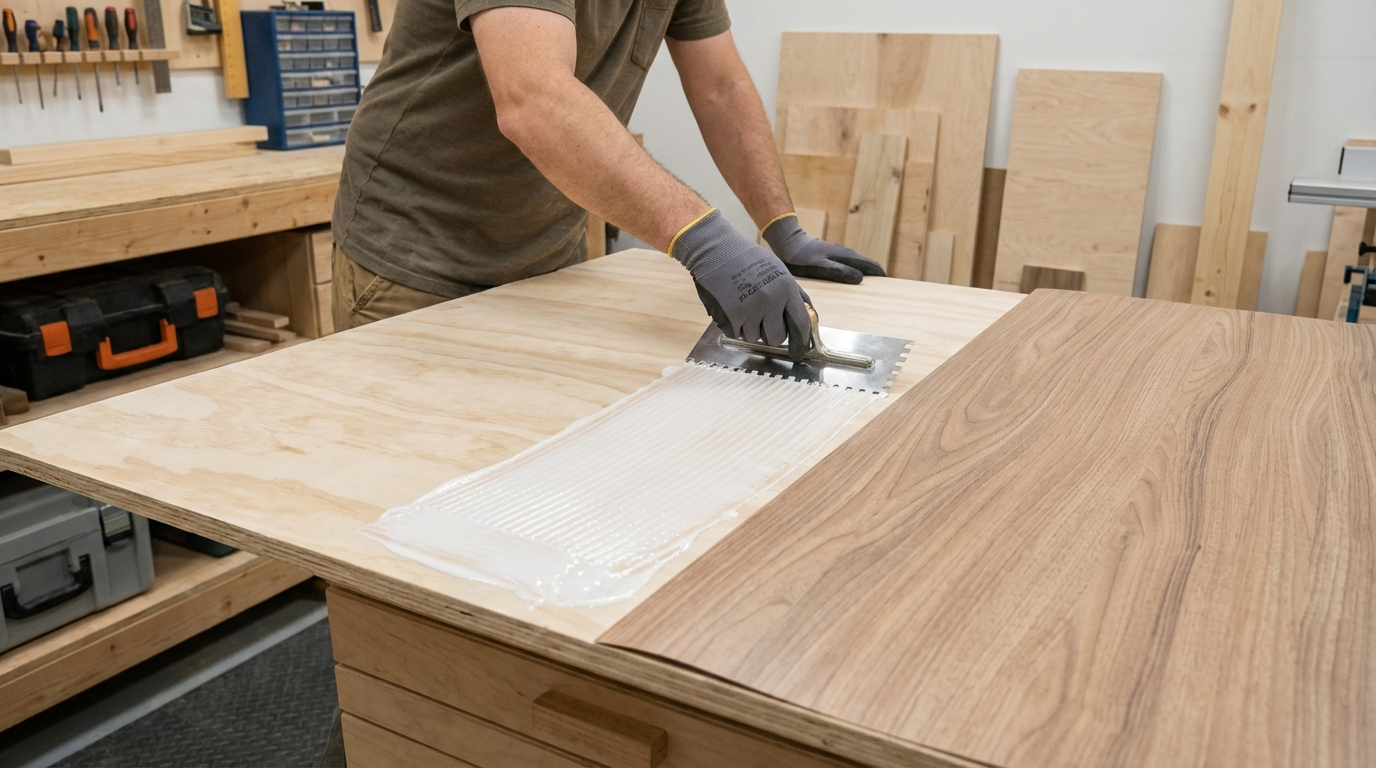
- Spread with notched trowel (1-2mm teeth) for even 100gsm; fan SR 10min.
- Fasten screws 25mm from edges post-bond to avoid telegraphing.
- Spec: "SR contact adhesive, min 15N/cm² peel strength, VOC low."
- Detail wet zones with PU + 2mm overhangs, backer sheets.
- QC: Bond test samples in 85%RH 7 days.
- Mistake 1: Skipping surface clean—oil/dust halves bond. Fix: Acetone wipe, dry 30min.
- Mistake 2: Uneven spread—bubbles/air pockets. Fix: Notched tool, 100gsm/m².
- Mistake 3: No acclimation—swells post-bond. Fix: 48hrs same room.
- Mistake 4: PVA in kitchens—peels fast. Fix: SR/PU for vapor.
- Mistake 5: Light pressure—lifts edges. Fix: 50kg roller, 5 passes.
- Mistake 6: Rushing tack time—slides. Fix: 8-12min fan-dry SR.
- Mistake 7: Cheap no-name—separates. Fix: Reputable packs, shake test.
- Mistake 8: No back-seal—two-way pull. Fix: Thin PVA backer first.
- Mistake 9: Overcoat—solvent trap. Fix: Thin even layer.
- Symptom: Edge lift Root: Moisture creep/PVA use. Prevent: PU/SR wet zones. Fix: Scrape, PU re-bond.
- Symptom: Bubbles Root: Poor pressure/air pockets. Prevent: Roller 5x. Fix: Slit, syringe glue, repress.
- Symptom: Peeling center Root: Solvent trapped. Prevent: Full flash-off. Fix: Heat gun lift/reapply.
- Symptom: Cracking flex Root: Rigid glue on moving wood. Prevent: Flexible SR. Fix: Fill cracks PU, sand.
- Symptom: Yellowing Root: PVA aging. Prevent: SR/PU. Fix: Topcoat varnish.
- Symptom: Delam wet Root: Humidity soak. Prevent: Seal edges/back. Fix: Dry, PU inject.
- Symptom: Soft spot Root: Oil residue. Fix: Sand patch, redo.
Tips for Carpenters: Handling and Application
Tips for Architects: Spec Writing and Detailing
Does temperature affect laminate adhesive choice?
Yes, above 30°C thins SR/PU, risking runny coats and weak bonds; below 15°C slows cure, extending clamps to 12hrs. Indian summers demand shaded work, winters heaters. PVA hates cold—freezes emulsion. Nuance: Optimal 22-28°C, 50%RH. Practical: Test tack on scrap; if >15min dry, thin solvent 5%. Ventilate always. Failure drops 40% with temp control.
Trade-offs and Limitations
SR: Fast but solvent fumes irritate, flammable—ventilate outdoors. PU: Strongest yet foams excessively on flat laminates, needs moisture control. PVA: Cheapest/easiest clean-up but zero moisture tolerance, yellows over time. All need perfect prep; none forgive dirt/oil. Limitations: No outdoor UV use without topcoat; thick laminates (>2mm) demand hybrid PU+SR.
Common Buyer Mistakes and How to Avoid Them
How to prevent bubbles when applying laminate adhesive?
Bubbles come from air trapped by uneven glue or movement; prevent with SR contact—dry both sides tacky, align perfectly, roll center-out with heavy roller. Conditions: Dust-free, flat substrate. If MDF warps, balance back side. Next: Jig for edges, vacuum post-trim. 90% success vs PVA's soak method. If bubbled, slit/heat/inject PU fix.
Failure Modes and Fixes
Is PU adhesive safe for indoor laminate work?
PU is safe indoors if ventilated during cure—low VOC modern formulas off-gas little after 48hrs. Stronger than SR in gaps, but foams if over-wet. Conditions: Clamped 6hrs, no open flames. Next: Wear mask first hour, test small area. Ideal for monsoons, but SR faster for pros. No skin contact; cleans with water pre-cure.
Quality Checks You Can Do Without Lab Tests
Before buying: Shake can—no separation; smell strong solvent (SR); expiry fresh. Ask: "Monsoon-rated?" Red flag: Watery PVA labeled "laminate".
After cutting/applying: Press fingernail—no dent; flex 90° no crack. Edges flush, no telegraph voids.
Post-install: Spill water 24hrs— no darken/soften; tug corners firm. Align doors gap <1mm.
How long does laminate adhesive take to cure fully?
SR handles light use in 2-4hrs, full strength 24hrs; PU clamps 6hrs, cures 48hrs with moisture. Varies by humidity—monsoons +20%. Nuance: Over-clamp SR not needed. Test: Load scrap overnight. Rush risks 30% failure; plan carpenter downtime.
FAQs
Which is better for MDF edges: PU or SR?
For MDF edges, PU excels at filling porous voids for durable wrap-around bonds, especially thin strips. SR works if pre-sanded smooth but slips on uneven. In India, edges see spills—PU's flex prevents cracks. Prep: Sand 220-grit, thin coat. Clamp 4hrs; test by bending—no peel. Avoid PVA entirely on edges.
Can I use water-based adhesive instead of solvent SR?
Water-based contact adhesives mimic SR tack but clean easier, suit low-VOC sites. Weaker in humidity vs solvent SR. Good for bedrooms; kitchens need solvent. Apply double coat, dry 20min. India tip: Less fumes for apartments. Verify tack strength on scrap before full sheet.
Does plywood grade affect adhesive choice?
MR plywood pairs best with PVA/SR dry use; BWR/BWP demand PU for glue-line match. Porous cores soak PVA unevenly. Check: Tap for hollows pre-bond. Monsoon: BWP + PU cuts delam 50%. Always prime ends.
How much adhesive per sqm for laminates?
80-120gsm per side for SR (160-240 total/sqm), less for PU (100gsm). Over = bubbles, under = weak. Trowel notch 1mm teeth. Coverage: 1L does 8-12sqm double. Weigh applicator for consistency; scrap test first.
Can adhesives cause laminate yellowing?
PVA often yellows over 2yrs from plasticizers; SR/PU stable if quality. Acidic plywood accelerates. Prevent: Neutral pH primer. Coastal salt worsens—rinse stock. Monitor year 1; varnish if early signs.
Is clamping necessary for PU on laminates?
Yes, 4-6hrs uniform pressure prevents lift as it expands. No clamps risks voids. Jig with weights/rollers. SR skips this—pro speed saver. India sites: Improvise sandbags.
What if adhesive fails after monsoon?
Dry fully, sand loose areas, acetone clean, reapply PU thick. Seal all edges/back. Root often unsealed substrate. Prevent future: Balance both sides laminate/PVA. Call carpenter for big fixes.
PU vs epoxy for heavy-duty laminates?
PU flexes better for wood movement; epoxy rigid, brittle long-term. PU easier one-part. Epoxy for repairs. Both excellent wet; PU cheaper. Test shear on scrap. Disclaimer: This content is provided for general informational purposes based on industry practices and publicly available information. Product specifications, standards, prices, and availability may vary by manufacturer, region, and time. Readers should independently verify details with manufacturers, dealers, or qualified professionals before making purchase or construction decisions.
Want Plywood Suggestions?
Share a few details and a Duro BOIL specialist will suggest suitable brands and connect you to responsive dealers.