Block Board vs Plywood: Complete Comparison for Furniture (2026)
Block board vs plywood detailed comparison. Learn differences in strength, weight, price & best applications for wardrobes, shelves & furniture.
Now I have comprehensive information to create a detailed comparison article on Block Board vs Plywood. Let me write the complete article in HTML format.
Quick Verdict
Block board is the better choice for long horizontal panels like tables, doors, and lengthy shelves where resistance to sagging is critical. Plywood wins for moisture-prone areas, heavy load-bearing furniture, and applications requiring multi-directional strength such as kitchen cabinets, wardrobes, and bathroom furniture.
The decision between block board and plywood ultimately depends on three factors: where you're using it, how much weight it needs to bear, and whether moisture exposure is a concern. Blockboard is lightweight and inexpensive, whereas plywood provides strength, durability, and long-term dependability. For most Indian homes dealing with humidity and heavy daily use, plywood remains the safer choice for kitchens and wet areas, while block board offers excellent value for dry interior applications.
Choose block board if:
- You're making long tables, benches, or conference tables
- Building flush doors or partition panels
- Creating extended bookshelves in dry areas
- Budget is a primary concern for dry-area furniture
Choose plywood if:
- Building kitchen cabinets or bathroom vanities
- Creating wardrobes, bed frames, or heavy-duty shelving
- Furniture will be exposed to moisture or humidity
- Maximum strength and durability are priorities
Either works if:
- Making light-duty furniture in dry bedrooms or living rooms
- Budget allows flexibility and you're working with a skilled carpenter
Complete Comparison Table
| Factor | Block Board | Plywood | Winner |
|---|---|---|---|
| Core Construction | Softwood strips placed edge-to-edge | Cross-laminated veneer layers at 90° | Depends on use |
| Weight | Lighter (softwood core) | Heavier (dense layers) | Block Board |
| Strength (Horizontal) | Excellent resistance to sagging | Good, but may sag in long spans | Block Board |
| Strength (Multi-directional) | Strong only in one direction | Equal strength in all directions | Plywood |
| Load-Bearing Capacity | Moderate | High | Plywood |
| Moisture Resistance | Poor to moderate (absorbs moisture) | Good to excellent (BWR/BWP grades) | Plywood |
| Warping Resistance | Excellent for long panels | Very good with cross-grain structure | Block Board |
| Screw Holding | Superior on flat surfaces | Very good throughout | Block Board |
| Carpenter-Friendliness | Easy to cut and work with | Moderate (depends on grade) | Block Board |
| Price (per sq ft) | ₹75-150 (MR), ₹110-200 (BWP) | ₹45-100 (MR), ₹90-200 (BWP) | Block Board (10-20% cheaper) |
| Durability | Good in dry conditions | Excellent in all conditions | Plywood |
| Indian Standard | IS 1659 | IS 303 (MR/BWR), IS 710 (Marine) | Both standardized |
What is Block Board?
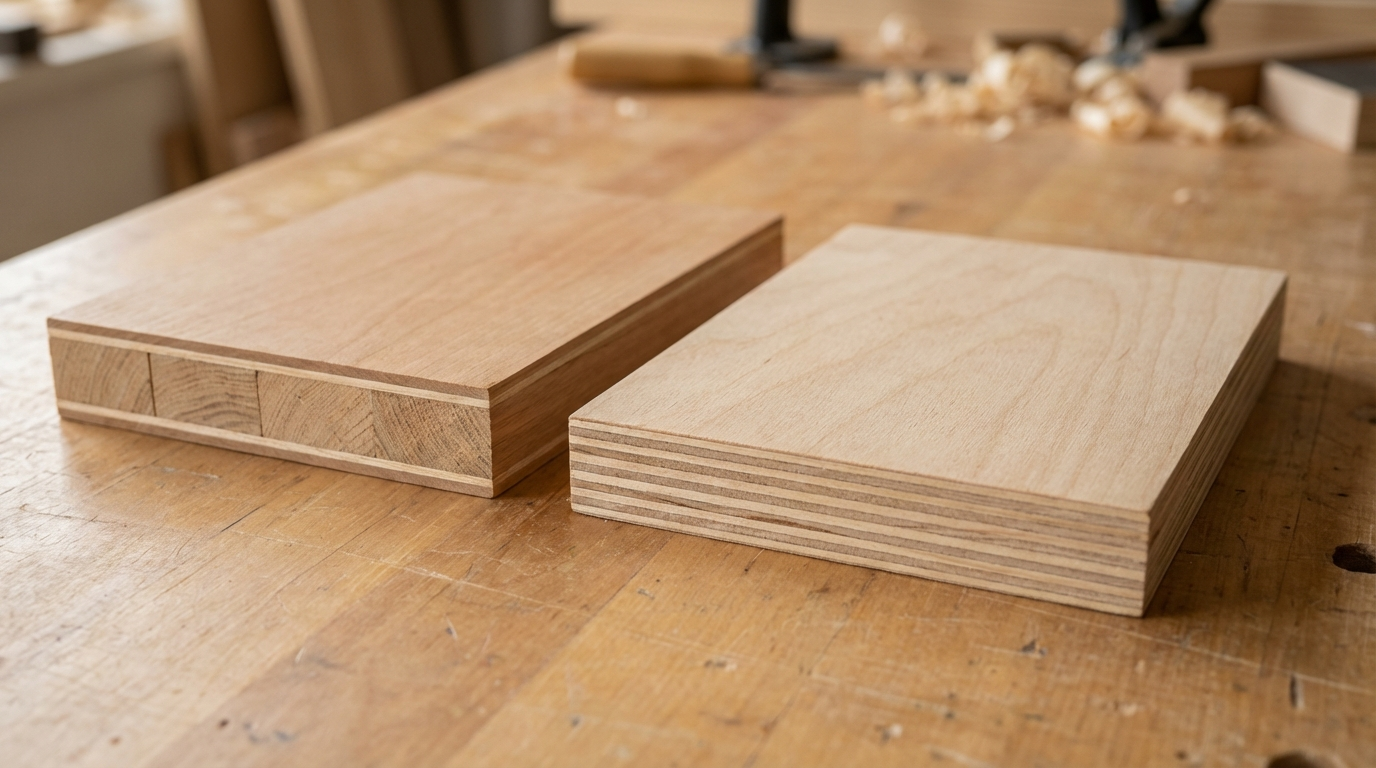
Block board (also known as lumber core) is a man-made board similar to plywood but, in this type of board, the center layer or core is made from strips of softwood. The strips are put edge to edge and sandwiched between veneers of softwood, hardwood, particleboard or MDF, pasted under high pressure and heat with glue.
The solid wood core gives block board its distinctive characteristics – lightweight construction with excellent resistance to bending along its length. Block board is commonly used in making doors, tables, and bookshelves. It is especially preferred for longer pieces of furniture because it doesn't sag easily.
In India, block board manufacturing follows IS 1659 standards. Block boards come in two grades: BWP Grade for external use and high-humidity applications like bus bodies and railway coaches, and MR Grade for interior use such as furniture, partition, panelling, and ceiling.
How block board is made
The manufacturing process involves arranging softwood strips (typically pine, poplar, or similar species) lengthwise and gluing them together under pressure. These strips are then sandwiched between two layers of wood veneer or plywood sheets. The result is a panel that combines the advantages of solid wood with engineered efficiency.
What is Plywood?
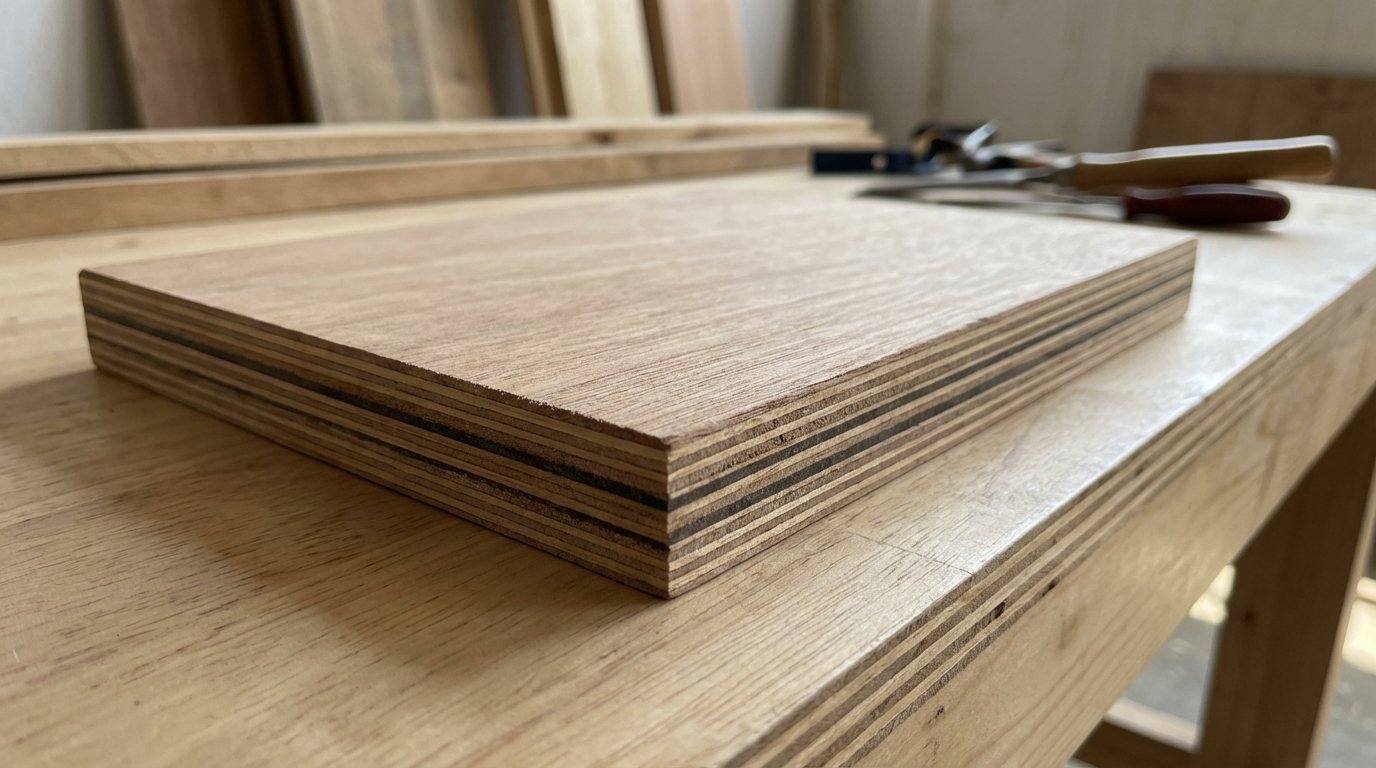
Plywood is a versatile material made by gluing together multiple layers (or 'plies') of thin wood veneers, with the grain of each layer running perpendicular to the next. This cross-graining gives plywood its strength and reduces the chances of warping or splitting.
The cross-lamination technique is what makes plywood fundamentally different from block board. This cross-grain pattern increases stability, reduces shrinkage/warping, and makes it resistant to cracking. Each layer reinforces the others, creating a panel with uniform strength in all directions.
Plywood grades available in India
Plywood is available in multiple grades designed for different applications:
- MR Grade (Moisture Resistant): For spaces like bedrooms, living rooms, or studies, MR grade plywood is more than enough. "MR" means Moisture Resistant, which is different from waterproof. It can handle the odd bit of humidity, but shouldn't be used in areas that see regular water exposure.
- BWR Grade (Boiling Water Resistant): This is one of those grades in plywood that can offer resistance to boiling water for up to 8 hours, making BWR Plywood an ideal choice for places where the moisture exposure is occasional yet frequent. The BWR board can be used in modular kitchens, bathroom vanities, and furniture kept in semi-outdoor areas.
- BWP/Marine Grade: This is the highest grade of waterproof plywood available in India and is manufactured as per IS 710 (Marine Standard).
Detailed Comparison
Moisture and Water Resistance
Plywood clearly wins in moisture resistance, especially in higher grades. Blockboard is more prone to water damage as it is known to retain moisture. The softwood strips inside the block board core can absorb water if exposed over time, leading to swelling and eventual damage.
When it comes to water resistance, plywood clearly wins with its graded options: MR (Moisture Resistant) – ideal for dry areas, BWR (Boiling Water Resistant) – great for kitchens and semi-wet areas, and BWP (Boiling Waterproof) – perfect for bathrooms and outdoor furniture. Blockboard typically comes in MR or BWR grades, but not BWP, so it's not suitable for high-moisture zones.
For Indian conditions, especially in coastal areas, South India, and during monsoon season, this difference becomes critical. Duroboil.com recommends using BWR or BWP grade plywood for any kitchen or bathroom application, regardless of budget constraints.
Winner: Plywood – No contest for moisture-prone applications.
Strength and Durability
Block board is strong, but mostly in one direction. Since the wooden blocks inside run parallel, it handles vertical loads well. But it may not be as sturdy as plywood when it comes to horizontal stress or bending.
Plywood's cross-laminated structure provides multi-directional strength. Because of its cross-grain layers, plywood is made to support larger loads. This makes plywood the preferred choice for heavy-duty furniture like bookshelves loaded with books, kitchen base cabinets, and bed frames.
However, block board is stiffer than plywood and less prone to bending. It is dimensionally stable, and can withstand cracking. This stiffness is specifically valuable for long horizontal spans where plywood might sag over time.
Winner: Plywood for overall strength; Block Board for long horizontal panels.
Surface Quality and Finishing
Blockboard offers a smooth and paintable surface, ideal for achieving a flawless finish on your projects. Both materials accept laminates, veneers, paint, and polish equally well.
Blockboards come in various finishes: lacquered, laminated, veneered, or painted. The surface veneer quality on both block board and plywood depends on the manufacturer and grade chosen.
Winner: Tie – Both accept finishes equally well.
Working and Machining
Carpenters find block boards easy to work with. The softwood core makes cutting and drilling simpler, and tools stay sharper longer compared to working with hardwood-core plywood.
Unlike plywood it does not split on cutting, and is easy to work with. This is a significant advantage when creating custom furniture, as carpenters can work faster with less material wastage.
Block boards have enhanced ability to hold screws in place. The solid wood strips in the core provide excellent grip for screws and nails, making assembly more reliable.
Winner: Block Board – Easier to work with, better screw holding.
Cost Comparison
Block board generally costs 10-20% less than plywood of equivalent thickness and grade. Blockboard is generally 10–20% cheaper than plywood of the same thickness and grade.
Based on current market research, here are typical price ranges:
| Material | Grade | Price Range (per sq ft) |
|---|---|---|
| Block Board | Commercial/MR | ₹75-150 |
| Block Board | BWR/Waterproof | ₹110-200 |
| Plywood | Commercial/MR | ₹45-100 |
| Plywood | BWR | ₹60-125 |
| Plywood | BWP/Marine | ₹90-200 |
The average price for a commercial block board is from Rs 90 to Rs 150/sq. ft. and for waterproof blockboard from Rs 120 to Rs 200/sq. ft.
The plywood rate per sq ft in India can start as low as ₹40 and go beyond ₹150 depending on quality. For most household furniture and interior work, plywood in the range of ₹60–₹100 per sq ft is commonly used.
Note: Prices vary significantly based on brand, location (metro vs. tier-2 cities), and market conditions. Always get quotes from multiple dealers.
Winner: Block Board – Generally more economical, especially for larger projects.
Application-Based Recommendations
| Application | Better Option | Why | Caution |
|---|---|---|---|
| Kitchen Cabinets | Plywood (BWR/BWP) | Superior moisture resistance for humid cooking environment | Never use MR grade in kitchen |
| Bathroom Vanities | Plywood (BWP/Marine) | Direct water contact requires waterproof material | Seal all edges properly |
| Bedroom Wardrobes | Plywood (MR) | Better load-bearing for hanging clothes and shelves | Block board acceptable for shutter panels |
| Flush Doors | Block Board | Lightweight, won't warp, perfect for long vertical panels | Use BWR grade for external doors |
| Dining Tables | Block Board | Excellent sag resistance for long surfaces | Protect from water spills |
| Study Tables/Desks | Block Board | Long span support, smooth writing surface | Add edge banding for durability |
| Bookshelves | Block Board | Prevents sagging under book weight | Ensure proper wall mounting |
| Bed Frame | Plywood | Multi-directional load handling | Use minimum 18mm thickness |
| Partition Walls | Block Board | Lightweight, easy installation | Not for wet areas |
| Wall Paneling | Block Board | Cost-effective for large areas | Ensure adequate ventilation behind |
| TV Units | Either | Both work well for dry area furniture | Consider load of TV and equipment |
| Modular Kitchen Shutters | Plywood (BWR) | Handles kitchen steam and moisture | Block board may swell at hinges |
India-Specific Considerations
Monsoon and humidity impact
India's diverse climate demands careful material selection. In high-humidity regions (Kerala, coastal Karnataka, Goa, Mumbai), plywood is almost always the safer choice. Blockboard is not suitable for outdoors as it absorbs moisture and can warp.
During monsoon months, even "dry" areas inside homes experience elevated humidity. Block board furniture in poorly ventilated rooms may absorb ambient moisture, leading to gradual swelling of the core strips. According to duroboil.com's material experts, this is one of the most common complaints from homeowners who chose block board for all their furniture.
Regional availability
Both materials are widely available across India, but quality and pricing vary:
- North India (Delhi, Haryana, Punjab): Major manufacturing hub, competitive prices for both materials
- West India (Maharashtra, Gujarat): Good availability, slightly higher prices in Mumbai
- South India (Kerala, Tamil Nadu, Karnataka): Premium prices due to transport costs, focus on moisture-resistant options
- East India (West Bengal, Odisha): Growing manufacturing presence, reasonable pricing
Carpenter preferences
Most Indian carpenters are familiar with both materials. Many carpenters prefer block board for making tall wardrobes, long tables, or panels that need to be moved or hung. The lighter weight means easier handling on-site and less fatigue during a day's work.
However, experienced carpenters typically recommend plywood for any application involving water exposure or heavy loads. Trust your carpenter's advice, but ensure they understand the specific use case for each piece of furniture.
Common Myths Busted
Myth 1: Block board is just cheaper plywood
Reality: Block board and plywood are fundamentally different products with different strengths. Block board's solid wood core gives it unique advantages for specific applications that plywood cannot match.
Myth 2: Plywood always sags on long shelves
Reality: While plywood can sag on very long spans, proper thickness selection (19mm or 25mm) with adequate support prevents this. However, block board does offer superior sag resistance for the same thickness.
Myth 3: Block board is not available in waterproof grade
Reality: BWP Grade block board exists and may be used for bus bodies, railway coaches, prefabricated houses, etc., where it is likely to be exposed to high humidity and for external use. However, options are more limited than plywood grades.
Myth 4: All branded plywood is better than local block board
Reality: Quality depends on manufacturer, not just product type. A premium block board from a reputed brand often outperforms cheap commercial plywood. Always check ISI marking and purchase from authorized dealers.
Myth 5: Block board cannot be used in modular kitchens
Reality: Block board can be used for kitchen components that don't face direct moisture – like tall unit shutters or decorative panels. The carcass and base cabinets should still be plywood.
Using Both Together
Smart furniture design often combines both materials to optimize cost and performance. Here's how to use them together effectively:
Hybrid wardrobe construction
- Carcass (body): BWR plywood for durability and load-bearing
- Shutter panels (doors): Block board for warp resistance and lighter doors
- Internal shelves: MR plywood or block board depending on load
Modular kitchen optimization
- Base cabinets: BWR/BWP plywood only
- Wall cabinets: BWR plywood carcass with block board shutters
- Tall units: Block board shutters acceptable (less moisture exposure)
Cost optimization strategy
Using block board for appropriate applications can reduce overall project cost by 8-15% without compromising quality. Discuss this hybrid approach with your contractor or interior designer. Duroboil.com recommends getting detailed material specifications in writing before starting any project.
Quality Verification: How to Check Before Buying
For block board
- Look for IS 1659 marking for standardized quality
- Check that strips are tightly packed with no visible gaps
- Veneer should be firmly bonded with no peeling at edges
- Board should be flat without any warping or bowing
- Tap the surface – uniform sound indicates good quality
- Ask for BWP or MR grade certificate from dealer
For plywood
- Check for IS 303 (MR/BWR) or IS 710 (Marine) marking
- Examine edges for tight, gap-free lamination
- Surface should be smooth without patches or repairs
- Weight should feel consistent with claimed thickness
- Look for brand markings and batch numbers
- Request test certificates for premium purchases
Questions to ask your dealer
- What grade is this board – MR, BWR, or BWP?
- Is this ISI marked? Can I see the marking?
- What is the warranty period and what does it cover?
- What core wood species is used (for block board)?
- What is the veneer thickness?
- Can you provide a test certificate?
Care and Maintenance
For block board furniture
- Keep away from direct water contact
- Wipe spills immediately with dry cloth
- Maintain adequate ventilation around furniture
- Use coasters and mats on table surfaces
- Apply edge banding to protect exposed edges
- Avoid placing near heat sources like gas stoves
For plywood furniture
- Even waterproof plywood needs edge sealing
- Clean with slightly damp cloth, then dry
- Avoid prolonged water pooling on surfaces
- Check hinges and hardware periodically
- Re-apply laminate or polish every 3-5 years
- Address any swelling or damage immediately
Frequently Asked Questions
Is block board stronger than plywood?
Block board and plywood have different strength characteristics. Block board is stiffer and resists sagging better on long horizontal spans, making it ideal for tables and doors. However, plywood has superior multi-directional strength due to its cross-laminated structure, making it better for load-bearing furniture like kitchen cabinets and wardrobes. For overall versatility and durability, plywood is generally considered stronger.
Can block board be used in kitchens?
Block board can be used for specific kitchen components that don't face direct moisture exposure, such as tall unit doors or decorative panels. However, for base cabinets, sink units, and areas near water sources, BWR or BWP grade plywood is strongly recommended. The softwood core of block board absorbs moisture over time, leading to swelling and structural failure in humid kitchen environments.
What is the price difference between block board and plywood?
Block board is typically 10-20% cheaper than plywood of equivalent thickness and grade. Commercial block board ranges from ₹75-150 per sq ft, while commercial plywood ranges from ₹45-100 per sq ft. However, for waterproof grades, the gap narrows – BWP block board costs ₹110-200/sq ft compared to BWP plywood at ₹90-200/sq ft. Always compare same-grade products when evaluating prices.
Which is better for wardrobes – block board or plywood?
Plywood is generally better for wardrobe construction because wardrobes bear significant weight from hanging clothes and stacked items. The multi-directional strength of plywood handles these loads better. However, block board can be used effectively for wardrobe door panels (shutters) where its lighter weight and warp resistance are advantages. A hybrid approach often provides the best value.
Does block board warp easily?
No, block board actually has excellent warp resistance for vertical panels and doors – this is one of its primary advantages. The solid wood strips running lengthwise provide natural stiffness that prevents warping. However, block board can warp if exposed to moisture over time. Proper storage, installation, and protection from humidity are essential to maintain its dimensional stability.
What is the lifespan of block board vs plywood?
Quality plywood typically lasts 15-25 years or more in appropriate conditions, especially BWR and BWP grades. Block board can last 10-20 years in dry conditions but may deteriorate faster if exposed to humidity. The lifespan depends heavily on proper application, maintenance, and environmental factors. Marine-grade plywood with proper care can easily outlast standard block board in most Indian conditions.
Can I use block board for bathroom furniture?
Block board is not recommended for bathroom furniture due to its poor moisture resistance. Even BWP grade block board is not as water-resistant as marine plywood. Bathrooms experience constant humidity and water splashes, which will cause block board to swell and degrade over time. Use BWP/Marine grade plywood for all bathroom applications, and ensure all edges are properly sealed.
Which is easier for carpenters to work with?
Block board is generally easier to work with. Carpenters find it lighter to handle, easier to cut without splintering, and it holds screws very well. Tools also stay sharper longer when working with block board compared to hardwood plywood. However, most experienced carpenters are comfortable with both materials and will recommend based on the specific application.
What thickness should I choose for furniture?
In India, there is a large range of blockboard thickness available to choose from 12mm–30mm. For both materials, common furniture thicknesses include: 6mm for cabinet backs and drawer bottoms, 12mm for shelves and light-duty applications, 18-19mm for wardrobes, cabinets, and general furniture, and 25mm for heavy-duty tables and doors. Always discuss thickness requirements with your carpenter based on the specific furniture design.
Are there ISI standards for both block board and plywood?
Yes, both products have established Indian Standards. Block board follows IS 1659 which defines grades (MR and BWP), thickness options, and quality parameters. Plywood follows IS 303 for MR and BWR grades, and IS 710 for marine/BWP grade. Always look for ISI marking when purchasing either material. This marking ensures the product has been tested and meets minimum quality standards for its grade.
Disclaimer: This content is provided for general informational purposes based on industry practices and publicly available information. Product specifications, standards, prices, and availability may vary by manufacturer, region, and time. Readers should independently verify details with manufacturers, dealers, or qualified professionals before making purchase or construction decisions.
Want Plywood Suggestions?
Share a few details and a Duro BOIL specialist will suggest suitable brands and connect you to responsive dealers.