BWP Plywood Complete Guide: IS 710 Specs, Prices & Best Brands (2026)
Complete BWP plywood buying guide with IS 710 certification explained, city-wise prices, top 10 brands compared & verification tips for genuine BWP.
Quick Answer: What is BWP Plywood?
BWP (Boiling Water Proof) plywood is the highest waterproof grade available in India, certified under IS 710 standards, capable of withstanding 72+ hours of boiling water immersion without delamination.
In simple terms, BWP plywood uses phenol-formaldehyde resin bonding that makes it completely waterproof—not just moisture-resistant like MR or BWR grades. This marine-grade plywood is specifically engineered for continuous water exposure, making it essential for kitchen sink cabinets, bathroom vanities, outdoor furniture, and coastal home interiors where other plywood grades would fail within months.
- Full form: Boiling Water Proof (also called Marine Grade Plywood)
- Indian Standard: IS 710:2010 certification mandatory for genuine BWP
- Adhesive used: Phenol Formaldehyde (PF) resin
- Water resistance: 72+ hours boiling water test required
- Price range: ₹85–₹180 per square foot (18mm thickness)
- Best applications: Wet kitchens, bathrooms, exteriors, marine use
What Exactly is BWP Plywood and Why Does It Matter?
BWP plywood represents the pinnacle of waterproof wood panel technology available to Indian consumers. Unlike standard plywood that uses water-soluble adhesives, BWP grade employs phenol-formaldehyde resin—a synthetic polymer that creates permanent, waterproof bonds between wood veneers even under prolonged water exposure.
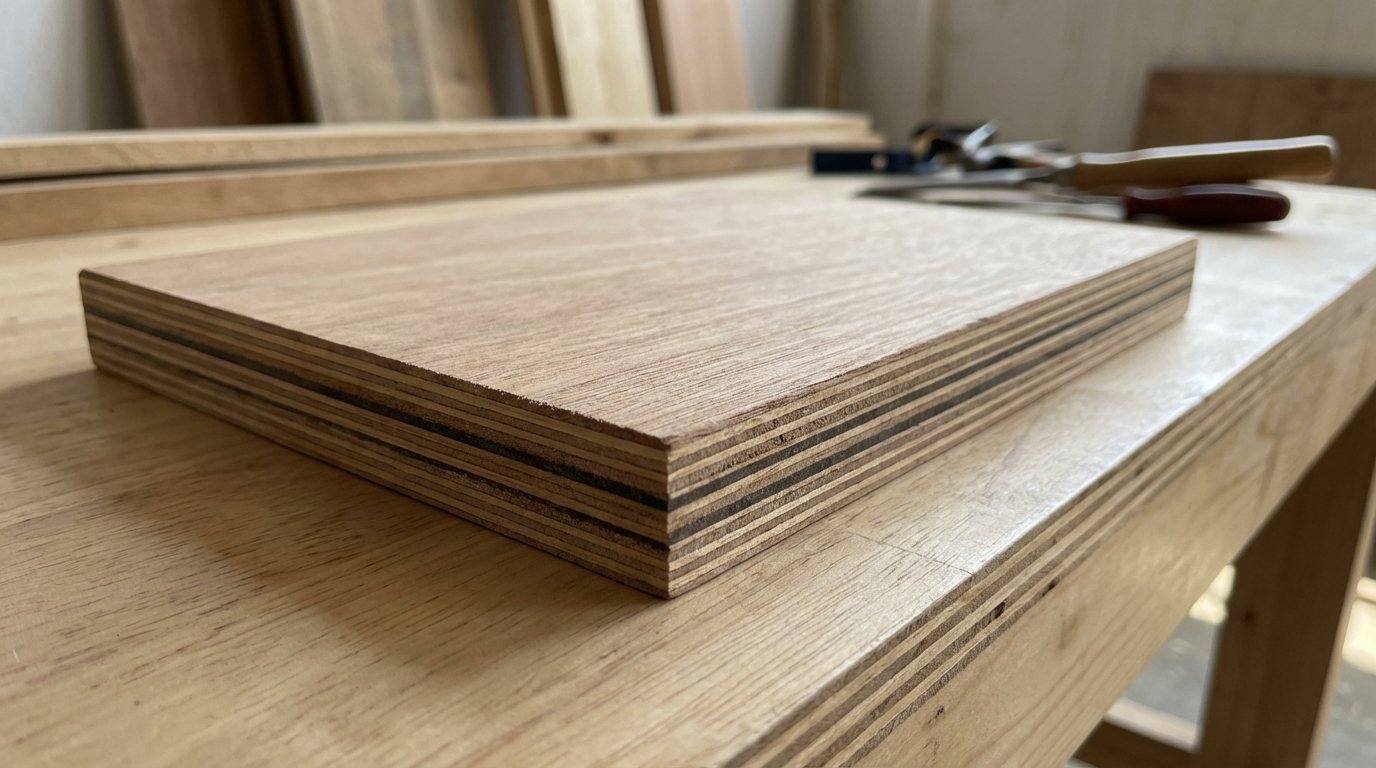
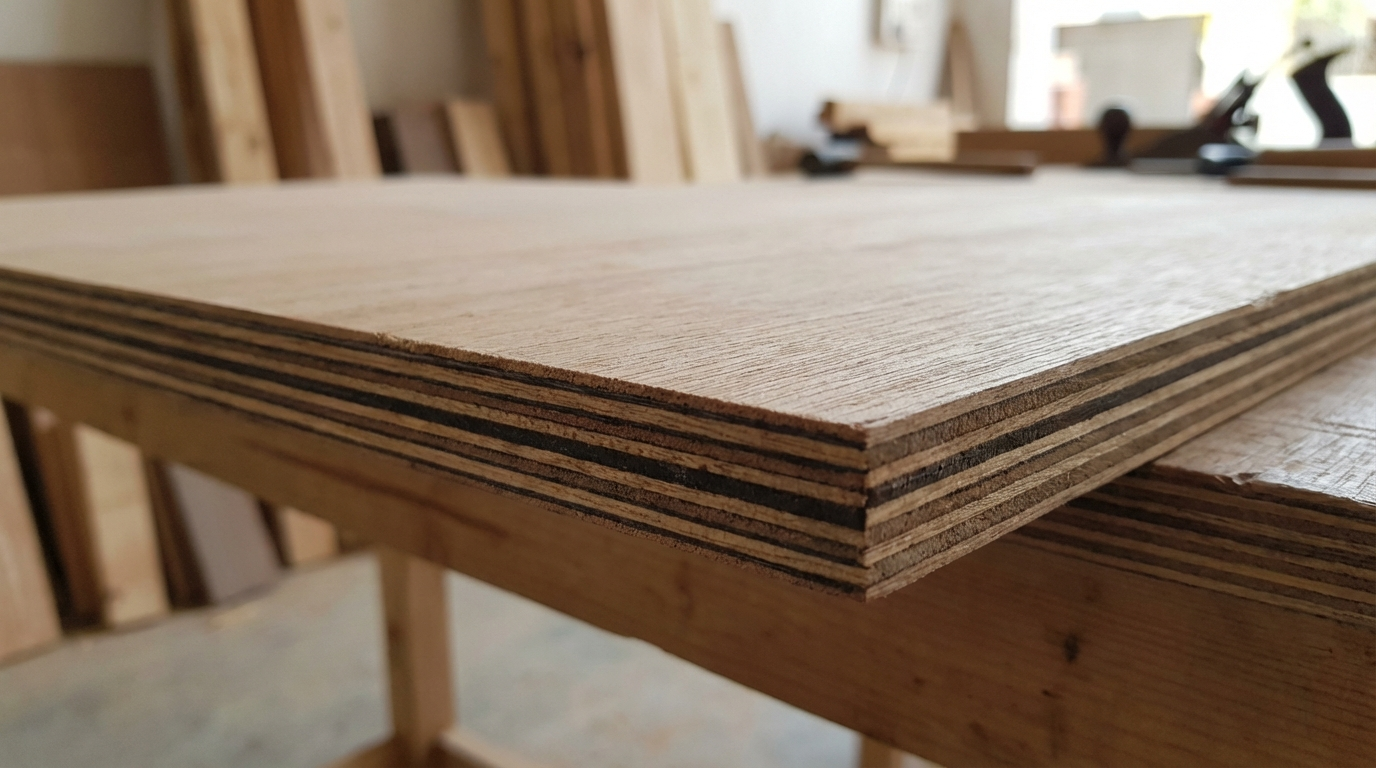
The manufacturing process involves bonding multiple hardwood veneers (typically 5-13 layers depending on thickness) under high temperature and pressure with PF resin. This creates a panel that maintains structural integrity whether submerged in water, exposed to steam, or subjected to monsoon humidity for years.
According to duroboil.com's material experts, the critical difference lies in the resin chemistry. While MR grade uses urea-formaldehyde that dissolves in water and BWR uses melamine-fortified resin that resists moisture, only phenol-formaldehyde in BWP grade creates truly irreversible bonds. This is why IS 710 certification specifically tests for 72-hour boiling water survival—a test that MR and BWR grades cannot pass.
What Does BWP Stand For?
BWP stands for Boiling Water Proof, indicating the plywood's ability to withstand continuous boiling water immersion without layer separation. The term "Marine Grade Plywood" is often used interchangeably, though technically marine plywood refers specifically to IS 710-certified BWP plywood used in boat building and marine applications.
The terminology originated from Bureau of Indian Standards testing protocols where plywood samples are literally boiled for 72 hours to verify adhesive performance. Only panels that show zero delamination after this extreme test qualify for IS 710 certification and the BWP designation.
Types of BWP Plywood Available in India
BWP plywood in India comes in several variants based on core wood species, face veneer quality, and additional treatments. Understanding these types helps you select the right product for your specific application and budget.
| BWP Type | Core Wood | Best For | Water Resistance | Price Range (18mm) | Availability |
|---|---|---|---|---|---|
| Hardwood Core BWP | Gurjan/Keruing | Heavy-duty furniture, marine use | Excellent (72+ hrs) | ₹120–₹180/sq ft | Metro cities |
| Eucalyptus Core BWP | Eucalyptus | Kitchen cabinets, wardrobes | Excellent (72+ hrs) | ₹90–₹130/sq ft | Widely available |
| Poplar Core BWP | Poplar | Light furniture, paneling | Very Good (48-72 hrs) | ₹75–₹100/sq ft | North India |
| Calibrated BWP | Mixed hardwood | Modular kitchens, precision work | Excellent (72+ hrs) | ₹130–₹170/sq ft | Premium dealers |
| Fire-Retardant BWP | Treated hardwood | Commercial kitchens, hotels | Excellent (72+ hrs) | ₹150–₹200/sq ft | Special order |
Which BWP Type for Kitchens and Bathrooms?
For residential kitchens, eucalyptus core BWP offers the best balance of performance and value. It handles the steam, splashes, and humidity of Indian cooking environments while costing 25-30% less than premium gurjan core options. For sink base cabinets and under-counter units where water pooling occurs, hardwood core BWP is worth the premium investment.
Bathroom applications demand careful selection based on the specific zone. Vanity cabinets and storage units work well with eucalyptus core BWP, but areas near showers or in direct water spray zones benefit from hardwood core BWP with additional edge sealing during installation.
Which BWP Type for Outdoor and Marine Applications?
Outdoor furniture, balcony storage, and marine applications require genuine IS 710 certified hardwood core BWP—no substitutes. The dense gurjan or keruing core provides superior screw-holding strength and dimensional stability under weather cycling. For boat interiors or dock furniture, only branded marine plywood with documented IS 710 test reports should be considered.
Technical Specifications: IS 710 Standard Explained
IS 710:2010 is the Bureau of Indian Standards specification for marine plywood, establishing the definitive quality parameters for genuine BWP grade products. Understanding these specifications helps you verify authenticity and select appropriate products.
| Specification | IS 710 Requirement | What It Means for Users |
|---|---|---|
| Boiling Water Test | 72 hours continuous immersion, no delamination | Panel survives extreme water exposure |
| Glue Shear Strength (Wet) | Minimum 1.1 N/mm² after boiling | Layers stay bonded even when wet |
| Moisture Content | 5-15% at delivery | Properly dried, won't warp after installation |
| Thickness Tolerance | ±0.5mm for thickness up to 8mm, ±1mm above | Consistent dimensions for precision furniture |
| Core Gap | Maximum 3mm individual, 6mm cumulative | No voids that weaken structure |
| Face Veneer | Hardwood species only | Durable surface for finishing |
| Preservative Treatment | Mandatory anti-termite and anti-fungal | Protected against biological damage |
Standard Sizes Available
BWP plywood in India follows standard sheet dimensions of 8 feet × 4 feet (2440mm × 1220mm), which is the most widely available size. Some manufacturers offer 7 feet × 4 feet and 6 feet × 4 feet options for specific applications. Custom sizes are available on special order from premium brands, typically with 15-30 day lead times and minimum quantity requirements.
| Thickness | Number of Plies | Weight per Sheet (approx) | Common Applications |
|---|---|---|---|
| 6mm | 5 ply | 12-15 kg | Back panels, drawer bottoms |
| 9mm | 7 ply | 18-22 kg | Shelves, partitions |
| 12mm | 9 ply | 25-30 kg | Cabinet sides, doors |
| 16mm | 11 ply | 32-38 kg | Heavy shelves, tabletops |
| 18mm/19mm | 13 ply | 38-45 kg | Kitchen carcasses, structural use |
| 25mm | 15+ ply | 50-60 kg | Countertops, marine decking |
Common Misconceptions About BWP Plywood Cleared
The Indian plywood market is rife with misinformation, often perpetuated by dealers selling lower-grade products at BWP prices. Duroboil.com recommends understanding these myths to avoid costly mistakes.
Myth 1: All "waterproof" plywood is BWP grade.
Reality: Most plywood marketed as "waterproof" in local markets is actually BWR (Boiling Water Resistant), which uses different resin and cannot survive the 72-hour boiling test. BWR is adequate for kitchens but not for direct water contact applications.
Myth 2: Thickness indicates water resistance.
Reality: A 25mm MR grade plywood will fail faster in water than 6mm genuine BWP. Water resistance depends entirely on the adhesive system, not panel thickness.
Myth 3: All marine plywood is IS 710 certified.
Reality: "Marine" is a marketing term used loosely by many manufacturers. Only plywood with visible IS 710 marking and verifiable BIS license number is genuinely certified.
Myth 4: BWP plywood doesn't need edge sealing.
Reality: While BWP resists water far better than other grades, exposed edges remain vulnerable to moisture ingress. Proper edge banding or sealing extends service life significantly.
Myth 5: Imported plywood is always better than Indian BWP.
Reality: Indian IS 710 standards are among the world's strictest. Quality Indian BWP from reputable manufacturers matches or exceeds imported alternatives at lower cost.
Myth 6: BWP plywood is termite-proof automatically.
Reality: IS 710 mandates preservative treatment, but effectiveness varies. Premium brands offer better treatment penetration and longer protection periods.
Advantages and Limitations of BWP Plywood
Making informed decisions requires understanding both strengths and weaknesses. Here's an honest assessment of BWP plywood performance in Indian conditions.
Advantages
| Advantage | Explanation | Practical Benefit |
|---|---|---|
| Complete water resistance | Survives 72+ hours boiling water immersion | No delamination even with water pooling |
| Superior dimensional stability | Minimal swelling/shrinking with humidity changes | Doors and drawers function smoothly year-round |
| Excellent screw holding | Dense core maintains fastener grip | Hardware stays secure over decades |
| Long service life | 15-25 years in demanding applications | Lower lifetime cost despite higher upfront price |
| Termite and borer resistance | Mandatory preservative treatment under IS 710 | Protected against biological damage |
| Fungus and decay resistance | PF resin doesn't support fungal growth | No black spots or musty smell over time |
| High load-bearing capacity | Strong cross-laminated structure | Supports heavy countertops and appliances |
| Accepts all finishes | Compatible with laminates, veneers, paint | Flexibility in design and aesthetics |
Limitations
| Limitation | Why It Happens | Workaround |
|---|---|---|
| Higher cost | Premium hardwood core and PF resin | Use BWP only where needed, BWR elsewhere |
| Heavier weight | Dense hardwood veneers | Plan for stronger wall mounting systems |
| Limited flexibility | Rigid cross-laminated construction | Not suitable for curved applications |
| Formaldehyde emissions | PF resin releases trace amounts | Choose E1 rated low-emission brands |
| Requires skilled carpentry | Harder to cut and machine than MDF | Use carbide-tipped tools, experienced carpenters |
| Variable quality in market | Many fake IS 710 products circulate | Buy only from authorized dealers with documentation |
Best Applications for BWP Plywood in Indian Homes
BWP plywood excels in specific applications where its waterproof properties justify the premium cost. Using it everywhere is unnecessary; strategic placement maximizes value.
Kitchen Applications
Essential BWP zones: Sink base cabinet, dishwasher cabinet, under-counter storage, areas near water purifier. These locations face regular water exposure from splashes, leaks, and condensation.
Optional BWP zones: All base cabinets if budget permits. The humid, steam-filled environment of Indian kitchens accelerates moisture damage in lower-grade materials.
BWR sufficient zones: Wall cabinets, tall units away from water sources. These areas face humidity but not direct water contact.
Bathroom Applications
Mandatory BWP: Vanity cabinets, under-basin storage, any furniture within 1 meter of shower or bathtub. These zones experience daily water splashes and high humidity.
Recommended BWP: Bathroom storage cabinets, mirror frames, false ceiling framework in bathrooms. Even indirect exposure to bathroom humidity damages lesser grades over time.
Outdoor and Semi-Outdoor Applications
BWP required: Balcony storage, terrace furniture, poolside cabinets, garden benches under covered areas. Monsoon exposure and humidity cycling demand waterproof construction.
Additional protection needed: Even BWP plywood requires proper finishing (marine varnish, exterior paint, or weather-resistant laminate) for outdoor exposure. Raw BWP will eventually degrade under direct sunlight and rain.
Special Applications
Coastal homes: All furniture in homes within 5 km of coastline should use BWP grade. Salt air accelerates moisture damage dramatically.
Basement installations: Ground-level humidity in Indian basements requires BWP for all wooden furniture and paneling.
Commercial kitchens: Fire-retardant BWP is mandatory for restaurant kitchens and hotel installations per safety codes.
BWP Plywood Prices: City-Wise Guide (2026)
BWP plywood prices vary significantly based on location, brand, core wood species, and dealer margin. The following ranges reflect current market prices for genuine IS 710 certified products from reputable brands.
| City/Region | 6mm BWP (per sq ft) | 12mm BWP (per sq ft) | 18mm BWP (per sq ft) | Price Trend |
|---|---|---|---|---|
| Mumbai | ₹55–₹75 | ₹75–₹110 | ₹95–₹150 | Stable |
| Delhi NCR | ₹50–₹70 | ₹70–₹105 | ₹90–₹145 | Stable |
| Bangalore | ₹55–₹75 | ₹75–₹115 | ₹95–₹155 | Rising |
| Chennai | ₹50–₹70 | ₹70–₹108 | ₹88–₹145 | Stable |
| Kolkata | ₹48–₹65 | ₹65–₹100 | ₹85–₹140 | Stable |
| Hyderabad | ₹52–₹72 | ₹72–₹110 | ₹92–₹150 | Rising |
| Pune | ₹53–₹73 | ₹73–₹112 | ₹93–₹152 | Stable |
| Ahmedabad | ₹50–₹68 | ₹68–₹105 | ₹88–₹142 | Stable |
| Tier-2 Cities | ₹55–₹78 | ₹78–₹120 | ₹98–₹160 | Variable |
| Tier-3 Towns | ₹60–₹85 | ₹85–₹130 | ₹105–₹175 | Variable |
Why BWP Prices Vary Between Dealers
Price variation of 20-40% between dealers for the same brand is common in Indian markets. Factors include dealer margin (15-30%), transport costs from factory, storage conditions, bulk purchase discounts, and whether the dealer is authorized or secondary market.
Lower prices often indicate grey market products, factory seconds, or lower-grade plywood misrepresented as BWP. Always compare prices from 3-4 dealers and be suspicious of prices significantly below market range—genuine IS 710 BWP cannot be manufactured cheaply.
Cost Comparison: BWP vs Other Grades
| Grade | 18mm Price Range | Premium Over MR | When Worth the Premium |
|---|---|---|---|
| MR Grade | ₹45–₹70/sq ft | Baseline | Dry areas only |
| BWR Grade | ₹55–₹90/sq ft | 20-30% higher | Kitchens, humid areas |
| BWP Grade | ₹85–₹150/sq ft | 50-100% higher | Wet zones, coastal, outdoor |
| Premium BWP | ₹120–₹180/sq ft | 80-150% higher | Marine, heavy commercial |
Top 10 BWP Plywood Brands in India (2026)
Brand selection significantly impacts quality consistency, warranty support, and long-term performance. The following brands have established track records for genuine IS 710 certified products.
| Rank | Brand | BWP Product Line | Strengths | Considerations | Price Segment |
|---|---|---|---|---|---|
| 1 | CenturyPly | Century Marine, Sainik 710 | Widest distribution, consistent quality | Premium pricing | Premium |
| 2 | Greenply | Green Club Marine | Strong dealer network, good warranty | Variable availability in smaller towns | Premium |
| 3 | Kitply | Kitply Marine Gold | Excellent gurjan core quality | Higher price point | Premium |
| 4 | SRG Ply | SRG Marine | Strong in South India | Limited North India presence | Mid-Premium |
| 5 | Duroply | Duro Marine | Good value proposition | Smaller dealer network | Mid-Premium |
| 6 | Austin Plywood | Austin Marine | Budget-friendly genuine BWP | Regional availability | Budget-Mid |
| 7 | Archid Ply | Archid Marine | West India focus, consistent quality | Limited pan-India presence | Mid |
| 8 | National Plywood | National Marine | Strong in East India | Variable quality reports | Budget-Mid |
| 9 | Sarda Plywood | Sarda BWP | North India availability | Smaller scale operations | Budget |
| 10 | Kajaria Plywood | Kajaria Marine | Emerging brand, competitive pricing | Limited track record | Budget-Mid |
Note: This is independent editorial content by duroboil.com. Rankings are based on market presence, quality consistency, and user feedback. Duroboil.com is not affiliated with any plywood brand.
Quality Verification: How to Identify Genuine BWP Without Lab Tests
Laboratory testing is the only definitive way to verify IS 710 compliance, but several practical checks help identify genuine products at the dealer or shop level.
Visual and Physical Checks
1. Check ISI marking: Genuine IS 710 plywood displays the ISI mark (Standard Mark) with license number (format: CM/L-XXXXXXX) printed or stamped on the sheet. Photograph this and verify on the BIS website.
2. Examine core construction: Request a cross-section sample. BWP should show dense, void-free core with uniform veneer thickness. Gaps, overlaps, or soft spots indicate poor quality.
3. Weight test: BWP plywood is heavier than BWR or MR of same dimensions. An 18mm 8×4 BWP sheet weighs 38-45 kg; significantly lighter sheets suggest inferior core wood.
4. Edge inspection: Edges should show tight, well-bonded layers. Visible gaps between plies, uneven glue lines, or crumbly edges indicate substandard adhesive application.
5. Surface quality: Face veneer should be smooth, uniform, and free from patches. Multiple repairs or filler spots suggest lower grade face veneer.
6. Odor check: Fresh BWP has a distinct phenolic resin smell—slightly medicinal/chemical. Plywood with wood smell only or musty odor may use inferior adhesive.
Documentation Checks
Request these documents from dealer:
- BIS license certificate (verify license number on bis.gov.in)
- Recent test report from BIS-recognized laboratory
- Tax invoice with correct HSN code (4412 for plywood)
- Warranty card with manufacturer details
Red Flags That Indicate Fake BWP
- Price significantly below market range (genuine BWP cannot be cheap)
- ISI mark printed on paper sticker rather than stamped/printed on plywood
- Dealer refuses to provide documentation or test reports
- Different brand name on sheet versus invoice
- Very light weight compared to standard
- Strong formaldehyde (pungent) smell indicating MR grade resin
Care and Maintenance of BWP Plywood Furniture
While BWP plywood offers superior water resistance, proper care extends service life and maintains appearance. These maintenance practices apply to all BWP applications.
Daily Care
Wipe spills immediately—even waterproof plywood benefits from minimal water exposure. Use soft, lint-free cloth for routine cleaning. Avoid abrasive scrubbers that damage laminate or veneer surfaces.
Ensure adequate ventilation in kitchens and bathrooms. While BWP handles humidity well, prolonged exposure to stagnant moisture accelerates edge degradation.
Cleaning Methods
For laminated BWP: Use mild soap solution or commercial laminate cleaner. Avoid acetone, nail polish remover, or harsh chemicals that damage laminate surface.
For veneered BWP: Use wood-appropriate cleaners and occasional polish. Avoid excessive water that can lift veneer edges.
For painted BWP: Gentle soap and water suffice. Avoid scrubbing that removes paint finish.
Preventing Common Damage
Edge protection: Ensure all exposed edges are properly sealed with edge banding, PVC strips, or sealant. Unsealed edges are the primary moisture entry point.
Hardware maintenance: Tighten loose hinges and handles promptly. Loose hardware allows movement that stresses plywood around screw holes.
Avoid heat damage: Use trivets under hot vessels. Direct heat can damage laminate and dry out plywood over time.
Control condensation: In AC-cooled rooms, temperature differences create condensation on furniture surfaces. Ensure consistent temperature or use appropriate finish.
BWP Plywood vs BWR: When Each Makes Sense
The choice between BWP and BWR grade is often the most important decision in kitchen and bathroom furniture projects. Understanding the real-world performance difference helps optimize budget without compromising durability.
| Factor | BWR Grade | BWP Grade | Winner |
|---|---|---|---|
| Water immersion survival | 8 hours boiling | 72+ hours boiling | BWP |
| Humidity resistance | Excellent | Excellent | Tie |
| Splash resistance | Good | Excellent | BWP |
| Cost (18mm) | ₹55–₹90/sq ft | ₹85–₹150/sq ft | BWR |
| Standard kitchen use | Adequate | Superior (overkill for most) | BWR (value) |
| Sink base cabinet | Risk of damage | Fully protected | BWP |
| Bathroom vanity | Moderate risk | Ideal | BWP |
| Outdoor furniture | Not suitable | Suitable with finish | BWP |
Smart Budget Allocation Strategy
Use BWP grade only where water contact is certain or likely: sink base cabinet, dishwasher cabinet, bathroom vanities, outdoor storage. Use BWR for remaining kitchen base cabinets, and MR grade for wall cabinets and dry area furniture. This hybrid approach reduces costs by 25-35% compared to all-BWP construction while maintaining protection where needed.
Frequently Asked Questions
Is BWP plywood 100% waterproof?
BWP plywood is highly water-resistant but not permanently waterproof. It survives 72+ hours of boiling water immersion per IS 710 standards, which exceeds any normal residential exposure. However, prolonged submersion for weeks or constant water contact without proper finishing will eventually cause degradation. For practical purposes in kitchens, bathrooms, and covered outdoor areas, properly installed BWP performs like waterproof material for 15-25 years.
What is the difference between BWP and Marine plywood?
Marine plywood is a type of BWP plywood specifically designed for boat building and marine applications. All genuine marine plywood is BWP grade certified under IS 710, but not all BWP is marketed as marine grade. The terms are often used interchangeably in Indian markets, though marine plywood typically uses premium hardwood cores (gurjan/keruing) and undergoes additional quality controls for structural applications in vessels.
Can BWP plywood be used for kitchen cabinets?
Yes, BWP plywood is ideal for kitchen cabinet carcasses, especially sink base units, under-counter storage, and areas near water sources. For most residential kitchens, BWP is recommended for all base cabinets due to mopping water, cooking steam, and potential plumbing leaks. Wall cabinets can use BWR grade since they face less water exposure. Using BWP throughout ensures maximum durability in humid Indian kitchen environments.
How long does BWP plywood last?
Properly installed BWP plywood with appropriate finishing typically lasts 15-25 years in demanding applications like kitchens and bathrooms. In dry or semi-dry areas, it can last 30+ years. Longevity depends on edge sealing quality, surface finish maintenance, and protection from prolonged standing water. Premium brands with genuine IS 710 certification and dense hardwood cores deliver better longevity than budget alternatives.
How to check if plywood is genuine BWP grade?
Look for IS 710 certification mark (ISI Standard Mark) with license number stamped on the sheet. Verify the license number on the BIS website (bis.gov.in). Request test certificates from the dealer. Physical indicators include heavier weight (38-45 kg for 18mm 8×4 sheet), distinct phenolic resin smell, dense void-free core visible on edges, and tight layer bonding. Prices significantly below market range indicate non-genuine products.
Is BWP plywood termite resistant?
Yes, IS 710 standards mandate preservative treatment for BWP plywood that provides termite and borer resistance. However, treatment quality and penetration depth vary between manufacturers. Premium brands offer better protection with longer warranties against termite damage. For ground-floor installations or termite-prone areas, choose brands specifically highlighting their preservative treatment process and consider additional anti-termite treatment during installation.
What is the price of BWP plywood per square foot?
BWP plywood prices range from ₹85 to ₹180 per square foot for 18mm thickness in 2026, depending on brand, core wood species, and city. Metro cities typically offer better prices due to competition, while tier-2 and tier-3 towns see 10-20% higher prices. Premium brands with gurjan core cost more than eucalyptus or poplar core variants. Always get quotes from 3-4 dealers and ensure prices are for genuine IS 710 certified products.
Can BWP plywood be used outdoors?
BWP plywood can be used for outdoor furniture and storage in covered areas (balconies, verandas, poolside under roof). However, it requires protective finishing—marine varnish, exterior paint, or weather-resistant laminate—to withstand UV exposure and rain splash. Direct, unprotected exposure to sun and rain will cause surface degradation over 2-3 years even in BWP grade. For fully exposed outdoor structures, consider alternative materials like WPC or treated hardwood.
Which is better for bathroom: BWP plywood or HDHMR?
For bathroom furniture, BWP plywood offers superior water resistance compared to standard HDHMR. While HDHMR is moisture-resistant and works for dry bathroom areas, BWP handles direct water splashes and high humidity better. For vanity cabinets and storage near showers, BWP with proper laminate finish is the safer choice. HDHMR may be suitable for bathroom areas away from direct water if budget is constrained, but requires excellent edge sealing.
Does BWP plywood need lamination?
BWP plywood performs best with proper surface finishing—lamination, veneer, or paint—which protects the face veneer and enhances moisture resistance. While the core resists water, unfinished surfaces absorb moisture that can cause surface damage over time. For kitchen and bathroom applications, lamination is strongly recommended. The laminate also provides scratch resistance, easy cleaning, and aesthetic options. Only in temporary or industrial applications is unfinished BWP acceptable.
Final Recommendations from Duroboil.com
BWP plywood remains the gold standard for water-resistant furniture construction in Indian homes. When purchasing, prioritize genuine IS 710 certification over brand marketing, verify documentation before payment, and use BWP strategically where water exposure justifies the premium cost.
For most residential projects, a combination of BWP for wet zones and BWR for standard kitchen areas delivers optimal value. Invest in proper edge sealing and quality lamination to maximize the lifespan of your BWP plywood furniture.
When in doubt, consult with experienced carpenters familiar with local conditions, and always purchase from authorized dealers who can provide warranty support and genuine documentation.
Disclaimer: This content is provided for general informational purposes based on industry practices and publicly available information. Product specifications, standards, prices, and availability may vary by manufacturer, region, and time. Readers should independently verify details with manufacturers, dealers, or qualified professionals before making purchase or construction decisions.
Want Plywood Suggestions?
Share a few details and a Duro BOIL specialist will suggest suitable brands and connect you to responsive dealers.