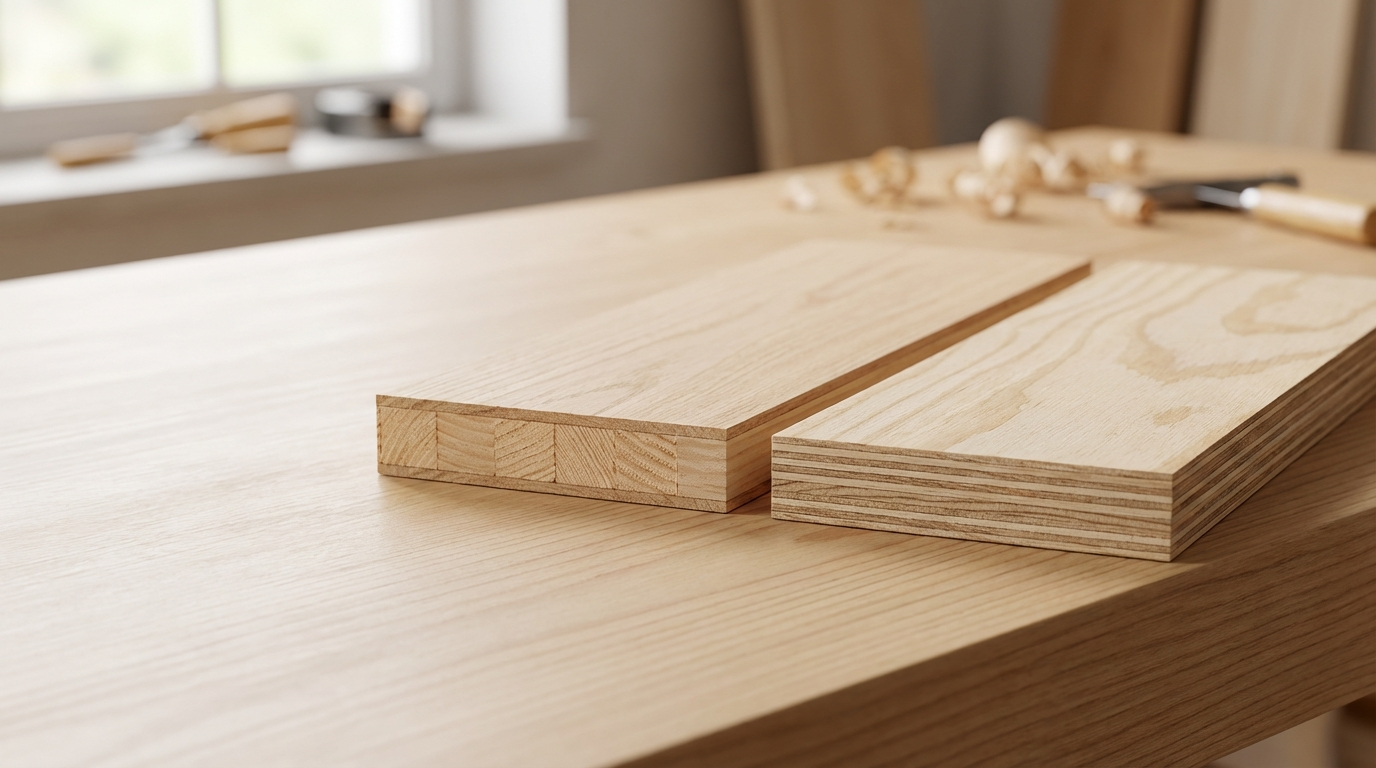
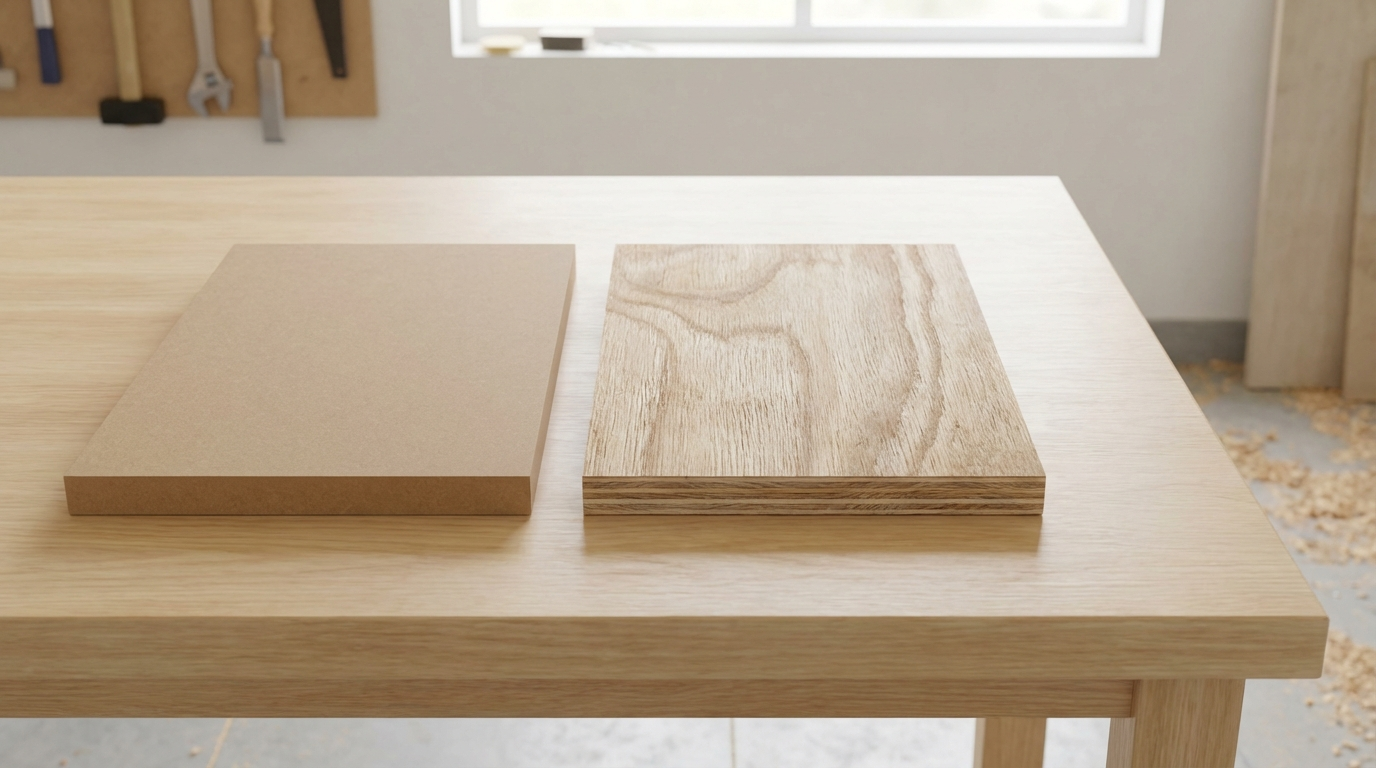
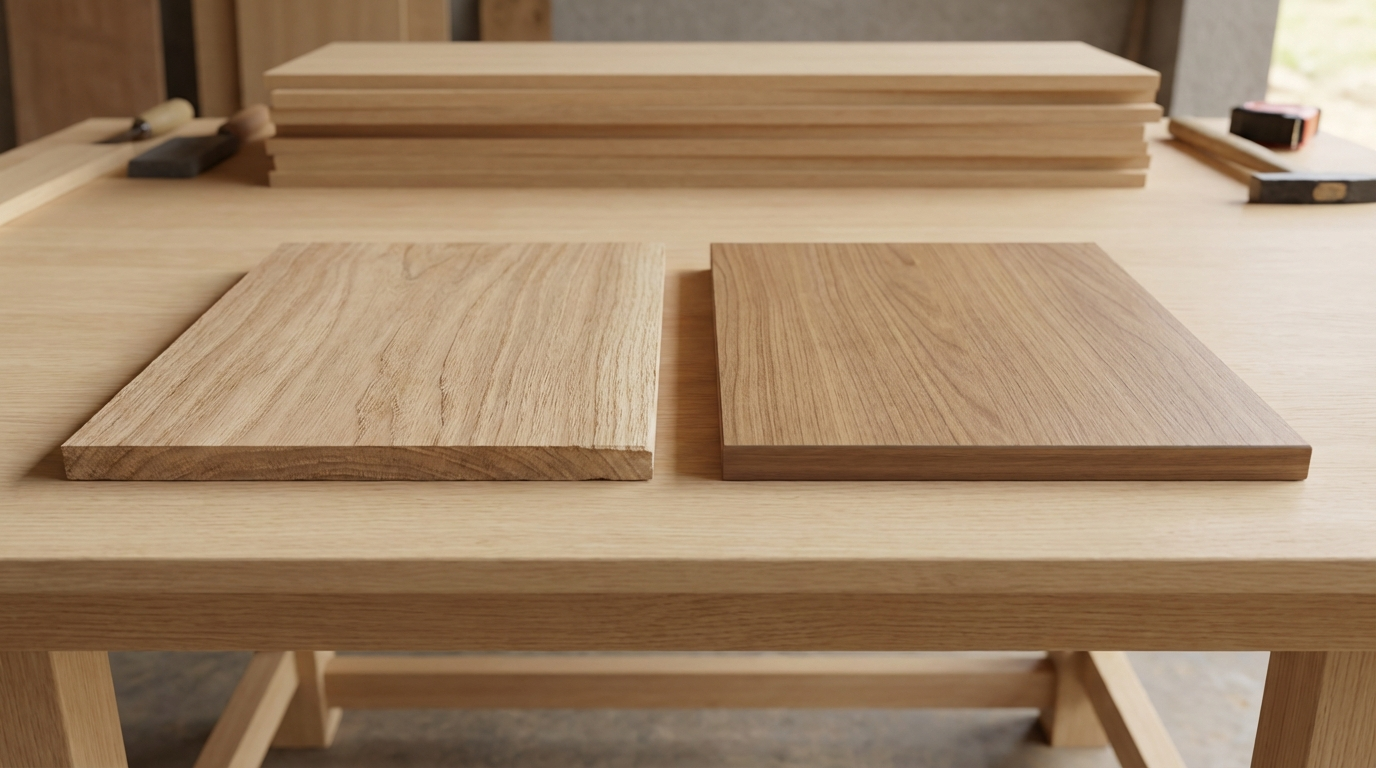
BWR vs MR vs BWP Plywood: Which Grade Do You Actually Need?
Confused between BWR, MR & BWP plywood? Our grade comparison guide helps you choose the right plywood for bedrooms, kitchens & bathrooms.
Quick Verdict: Which Plywood Grade Should You Choose?
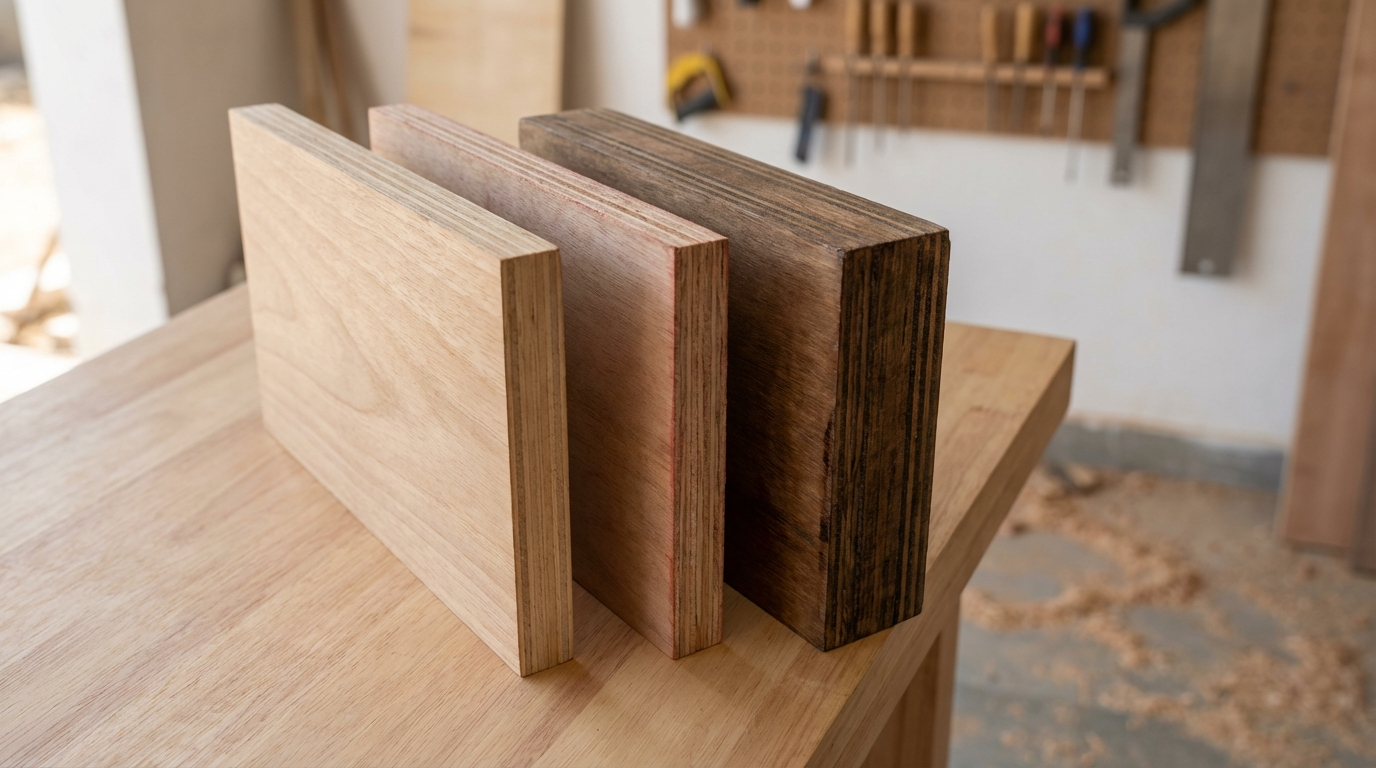
MR (Moisture Resistant) plywood is the budget-friendly choice for dry indoor areas. BWR (Boiling Water Resistant) plywood handles kitchens and moderate moisture zones effectively. BWP (Boiling Waterproof) plywood is essential for bathrooms, coastal homes, and areas with constant water exposure.
The right grade depends entirely on where you're using the plywood and how much moisture it will encounter. Choosing MR for your kitchen will lead to delamination within months, while overspending on BWP for bedroom wardrobes wastes thousands of rupees without any benefit.
Bottom line summary: BWR bridges the gap between MR and BWP and is ideal for kitchens, dining areas, or spaces experiencing frequent humidity without being constantly wet. Waterproof plywood (BWP) represents premium quality suitable for bathrooms, coastal homes, outdoor furniture, and commercial spaces with heavy water exposure.
- Choose MR Grade if: Your project involves bedroom wardrobes, living room furniture, TV units, study tables, or any dry indoor area
- Choose BWR Grade if: You're making kitchen cabinets, dining area furniture, ground-floor rooms in humid climates, or areas with occasional moisture exposure
- Choose BWP Grade if: Your project includes bathroom vanities, under-sink storage, outdoor furniture, balcony woodwork, or homes in coastal areas
- Either BWR or BWP works if: Budget allows flexibility and you want extra peace of mind for kitchen cabinets
Complete Comparison Table: MR vs BWR vs BWP Plywood
Before diving into individual grade details, here's a comprehensive side-by-side comparison to help you understand the key differences at a glance. This table covers every parameter that matters for making the right purchasing decision.
| Parameter | MR Grade | BWR Grade | BWP Grade | Winner |
|---|---|---|---|---|
| Full Form | Moisture Resistant | Boiling Water Resistant | Boiling Waterproof | — |
| Also Known As | Commercial Plywood | Exterior Grade Plywood | Marine Grade Plywood | — |
| Indian Standard | IS 303 | IS 303 | IS 710 | — |
| Adhesive Used | Urea Formaldehyde (UF) | Phenol Formaldehyde (PF) | Undiluted Phenol Formaldehyde | BWP |
| Boiling Water Test | Limited (few hours) | Up to 8 hours | 72+ hours | BWP |
| Moisture Resistance | Moderate (humidity only) | High (short water exposure) | Complete (prolonged water exposure) | BWP |
| Waterproof Rating | Not waterproof | Water-resistant | 100% Waterproof | BWP |
| Price Range (per sq ft) | ₹45–₹130 | ₹80–₹170 | ₹120–₹250 | MR |
| Expected Lifespan | 8–12 years (dry areas) | 12–18 years | 18–25+ years | BWP |
| Termite Resistance | Requires treatment | Good (with treatment) | Excellent (built-in) | BWP |
| Strength | Good | Very Good | Excellent | BWP |
| Weight | Lighter | Medium | Heavier | MR/BWR |
| Best Application | Dry indoor areas | Kitchen cabinets | Bathrooms, outdoors | Depends |
What is MR Grade Plywood?
Moisture resistant plywood, commonly called MR plywood, is engineered wood designed to withstand moderate humidity levels found in typical indoor environments. It is the most economical and widely used plywood grade in India, accounting for the majority of residential furniture construction.
The MR Grade Plywood is made using urea-formaldehyde resin that can handle moisture on an external level, but not prolonged exposure to water. This means it can tolerate the normal humidity variations found in Indian homes but will swell, warp, or delaminate if water directly contacts it for extended periods.
How is MR Plywood Made?
MR plywood is manufactured by bonding multiple thin wood veneers using Urea Formaldehyde (UF) adhesive. Manufacturing follows IS 303 standards, India's specification for interior-grade plywood. These ensure consistent quality, proper bonding, and adequate moisture tolerance for indoor applications.
The veneers are typically sourced from poplar, eucalyptus, or mixed hardwood species. The cross-grain construction provides dimensional stability and prevents warping under normal conditions.
Key Characteristics of MR Plywood
- The MR grade plywood is the most affordable general-purpose plywood on the market, and it is best suited for dry areas.
- Can handle humidity levels up to 50-65% without issues
- The MR grade plywood also has limited termite resistance since it is structurally weaker as compared to BWR and BWP grade plywood.
- Smooth surface suitable for laminating, veneering, or painting
- Available in all standard Indian sizes (8×4 ft, 7×4 ft, 6×4 ft)
What is BWR Grade Plywood?
BWR denotes boiling water resistant grade plywood. While BWP stands for boiling water proof grade plywood. BWR Grade uses phenol and formaldehyde adhesive and synthetic plastic resin glues. This upgraded adhesive system provides significantly better water resistance than MR grade.
It is made using phenol-formaldehyde synthetic resin that provides enhanced resistance to water. This is one of those grades in plywood that can offer resistance to boiling water for up to 8 hours.
How is BWR Plywood Made?
The glue used to manufacture each of these is synthetic plastic resin i.e. phenol formaldehyde which is said to be better than urea formaldehyde resin used to make MR grade commercial plywood.
BWR plywood can also be made in Gurjan wood, which is an imported wood. You also have BWR grade plywood made from poplar Indian species wood. The phenolic resin creates a darker glue line, which is often visible at the edges—this is actually a sign of genuine BWR grade.
Key Characteristics of BWR Plywood
- The Indian Standards specification number for BWR plywood is IS:303.
- BWR plywood is warp free and has super strong bonding and zero surface core gaps. The core layer is treated with various toxicant chemicals using VPI technology that makes BWR a termite proof plywood.
- It can resist water better than the Interior grade MR or moisture-resistant plywood. So, it is generally used for meeting those furniture requirements in the home, where the plywood may be exposed to water, such as kitchen cabinets and kitchen furniture.
- BWR stands for Boiling Water Resistant. It is water-resistant but not as waterproof as BWP. Excellent for moderate moisture environments.
What is BWP Grade Plywood?
BWP (Boiling Waterproof) plywood — also known as Marine Plywood or 710 Grade Plywood — is made with the highest quality phenol-formaldehyde resin, making it completely waterproof, boil-proof, and durable under harsh conditions.
BWP or boiling waterproof plywood is 100% waterproof plywood. BWP plywood doesn't deteriorate due to the attack of water. It is also known as marine grade plywood.
How is BWP Plywood Made?
Diluted Urea Formaldehyde resin or Phenol Formaldehyde resin is used to bond the veneers in 303 plywood. On the other hand, undiluted Phenol Formaldehyde resin is used to bind the veneers in the case of 710 plywood. This synthetic plastic resin enhances the waterproofing quality of 710 plywood.
When it comes to strength, BWP (Boiling Water Proof) plywood sheet is considered the strongest plywood among the various types of plywood. BWP plywood sheet, also known as Marine Grade plywood, is manufactured using superior quality hardwood veneers and a strong adhesive that provides exceptional resistance to water and moisture.
Key Characteristics of BWP Plywood
- It's made to meet IS:710 standards, which basically means it can take quite a bit of abuse from water and still hold its shape.
- A typical BWP grade plywood can stay intact for more than 50 hours in boiling water. (SAINIK 710 for complete 72 hours)
- Marine grade plywood is much stronger than both MR and BWR grade plywood. It also has superior waterproof quality. This can be gauged from the fact that Marine plywood can be submerged in water for 72 hours without any kind of damage.
- BWP plywood is better suited for the outdoors. It holds up well against rain, heat, and changing weather.
Detailed Comparison: BWR vs MR vs BWP
Moisture and Water Resistance
This is the fundamental difference between the three grades. MR stands for Moisture Resistant, but don't be misled. It means that the plywood can resist humidity and dampness, but it is NOT waterproof. MR plywood is also referred to as Commercial Plywood and is best suited for indoor applications where moisture exposure is minimal.
BWR plywood can handle moisture like steam or occasional spills. BWP plywood, on the other hand, is fully waterproof. It's made for areas that see a lot of water over time, such as bathrooms or outdoor spaces.
BWR plywood is made using phenol formaldehyde resin and is highly water-resistant, making it perfect for semi-wet conditions like kitchens and bathrooms. It holds up well against boiling water for up to 8 hours, and resists fungus and delamination.
Clear Winner: BWP for maximum water resistance, but BWR is sufficient for most kitchen applications. According to duroboil.com's material experts, choosing between BWR and BWP for kitchens should depend on your budget and whether you have a chimney/exhaust—well-ventilated kitchens can safely use BWR grade.
Strength and Durability
Marine grade plywood is much stronger than both MR and BWR grade plywood. The higher quality veneers and superior adhesive used in BWP plywood create a denser, more robust panel.
Since high-quality veneers are bonded with undiluted resins, BWP plywood is usually high on strength when compared to both MR and BWR.
In terms of lifespan: In dry, indoor conditions, MR plywood can last 8 to 10 years, sometimes more. BWP marine grade lasts 18-25+ years even in high-humidity areas.
Clear Winner: BWP for strength and durability. However, BWP plywood is relatively heavy. So it is better to avoid BWP ply for shutters and overhead shelves.
Surface Quality and Finishing
All three grades accept laminates, veneers, and paint finishes well when using calibrated plywood. MR plywood features quality face veneers providing smooth surfaces for polishing, laminating, or painting. Finishes apply evenly. Furniture looks professional.
BWP plywood typically has the best face veneer quality since manufacturers reserve premium hardwood veneers for their marine-grade products. Duroboil.com recommends asking for calibrated plywood in any grade for the best finishing results.
Clear Winner: BWP (marginal), but calibrated versions of all grades work well for interiors.
Cost Comparison
As of 2025, MR plywood costs ₹45–₹130/sq.ft, BWR plywood costs ₹80–₹170/sq.ft, and BWP plywood ranges from ₹120–₹250/sq.ft. Prices vary based on thickness, brand, and region.
Here's a general price range: MR Grade Plywood (Moisture Resistant): ₹60 – ₹150 per sq. ft. BWR Grade Plywood (Boiling Water Resistant): ₹95 – ₹125 per sq. ft. BWP Grade Plywood (Boiling Water Proof): ₹150 – ₹300 per sq. ft.
Prices of BWR ply are about 20% higher than MR ply. BWP typically costs 30-50% more than BWR grade for the same thickness and brand.
| Grade | Price Range (per sq ft) | Premium Brands | Budget Brands |
|---|---|---|---|
| MR Grade | ₹45–₹130 | ₹80–₹130 | ₹45–₹70 |
| BWR Grade | ₹80–₹170 | ₹120–₹170 | ₹80–₹100 |
| BWP Grade | ₹120–₹250 | ₹180–₹250 | ₹120–₹160 |
Clear Winner: MR for budget, BWR for value-for-money in kitchens.
Application-Based Recommendations
Here's duroboil.com's definitive guide for which grade to use in specific applications throughout your Indian home:
| Application | Recommended Grade | Why This Grade | Caution/Note |
|---|---|---|---|
| Bedroom Wardrobes | MR Grade | MR grade plywood is excellent for bedroom wardrobes. Bedrooms maintain 50-65% humidity. | Ensure air circulation; avoid if room lacks ventilation |
| Living Room TV Units | MR Grade | Dry area, no moisture exposure | Premium MR for better finish |
| Study Tables | MR Grade | Indoor dry environment | Commercial grade sufficient |
| Kitchen Cabinets (Upper) | BWR Grade | Kitchens have high humidity from steam and water. BWR plywood is resistant to short-term water exposure, making it ideal for kitchen cabinets. | Use minimum 18mm thickness |
| Kitchen Cabinets (Lower/Base) | BWR or BWP | Higher moisture risk near sink and floor | BWP for under-sink units |
| Under-Sink Storage | BWP Grade | Areas under the sink are exposed to water leakage. BWP plywood can withstand long-term water exposure. | Essential—never use MR here |
| Bathroom Vanities | BWP Grade | BWP is used in areas with extreme water exposure, such as bathrooms, rooftops, and exterior installations. | Seal all edges properly |
| Outdoor Furniture | BWP Grade | Rain, sun, and humidity exposure | Use with proper finish/sealant |
| Balcony Storage | BWP Grade | Semi-outdoor, weather exposure | Covered balconies may use BWR |
| Coastal Area Homes | BWP Grade | Homes near the coast experience high humidity, which can damage MR and BWR plywood. BWP plywood provides long-term protection against moisture. | Use BWP even for wardrobes |
| False Ceiling | MR Grade | No direct water contact | Ensure no roof leakage |
| Wall Paneling | MR Grade | Interior application, dry walls | BWR for bathroom wall paneling |
India-Specific Considerations
Monsoon Impact on Plywood Selection
Bangalore's humid climate, with moderate moisture levels year-round and 75-85% humidity during monsoon (June-September), makes plywood grade selection crucial. This applies to most Indian cities during the four-month monsoon period.
During monsoon, even indoor humidity can spike to 70-85% in poorly ventilated rooms. Ground floor apartments and homes in low-lying areas face additional moisture challenges. If your home experiences such conditions, consider upgrading from MR to BWR even for bedroom furniture.
Regional Climate Variations
North India (Delhi, Punjab, UP): Extreme temperature variations—very hot summers and cold winters. MR grade works well for most applications since humidity is generally low except during monsoon. BWR is sufficient for kitchens.
South India (Chennai, Bangalore, Kerala): Year-round humidity is a concern. BWR is recommended for kitchens, and BWP should be considered for bathrooms and ground-floor furniture in coastal areas.
Coastal Areas (Mumbai, Goa, Kerala, Chennai): Salt-laden air accelerates moisture damage. BWP grade is recommended even for some dry areas. Marine-grade plywood lives up to its name in these regions.
Humid Hill Stations (Ooty, Munnar, Shillong): Persistent moisture requires BWR minimum for all furniture applications.
Local Carpenter Preferences
Many carpenters in India have strong preferences that may not always align with technical requirements. Some prefer working with MR grade because it's lighter and easier to cut. Others push BWP for everything because it commands higher labor charges.
Duroboil.com recommends making your own informed decision based on the application rather than leaving it entirely to the carpenter's preference. Provide specific instructions for each furniture piece.
Common Myths Busted
Myth 1: BWR and BWP are the Same
Many dealers use these terms interchangeably to confuse buyers. Well technically there's very small difference with regards to technology and treatment used to manufacture each of these plywood. However, the performance difference is significant—BWP can withstand 72+ hours in boiling water while BWR manages only 8 hours.
Myth 2: MR Plywood is Useless in Monsoon
MR plywood is designed to handle humidity, not direct water contact. In a well-ventilated home with proper roof/wall waterproofing, MR grade bedroom furniture will last 8-12 years even in humid climates.
Myth 3: All "Marine Plywood" is Genuine BWP
Now manufacturers all over India have devised a new way of fooling customers – they dip their MR ply in dark colour which gives it a look of BWP ply and then sell it at a much higher rate. Always check for the IS 710 marking and buy from authorized dealers.
Myth 4: Higher Price Always Means Better Quality
A cheap BWP plywood from an unknown brand may be inferior to a premium MR plywood from a reputed manufacturer. Brand reputation and ISI certification matter more than just the grade label.
Myth 5: BWP is Necessary for All Kitchen Cabinets
For most Indian homes, BWR handles kitchen needs adequately. BWP is specifically recommended for under-sink cabinets and areas with direct water exposure.
Using Both Grades Together: Cost Optimization Strategy
Smart homeowners and experienced interior designers use a hybrid approach to optimize costs without compromising quality:
- Kitchen: BWP for base cabinets (especially under-sink) + BWR for wall cabinets and tall units
- Bedroom: MR for wardrobes and furniture; BWR for attached bathroom vanity
- Living Room: MR for all furniture
- Bathroom: BWP for vanity and storage
- Back panels: 6mm MR grade works for all applications when protected
This approach can reduce your plywood budget by 15-25% compared to using BWP for everything, while maintaining appropriate performance levels.
Quality Verification: How to Identify Genuine Grades
Before purchasing, verify the plywood grade using these checks:
Visual Inspection
- BIS Certification Mark: All our plywood displays clear ISI mark with IS:303 or IS:710 specification.
- Fake plywood often lacks genuine ISI stamping or displays a wrong code. BWR/BWP plywood uses Phenol-Formaldehyde (PF) resin which is dark in color and has a distinct chemical smell.
- Check for uniform thickness and color throughout the sheet
- No visible voids, gaps, or delamination at edges
Boiling Water Test
This is the definitive test to verify plywood grade:
- Take a sample and submerge in boiling water for 8 hours or in a pressure cooker for 1 whistle. Cool down by submerging in normal temperature water. If the ply layers delaminate, its not BWR Grade.
- For BWP: Take a sample and submerge in boiling water for 72 hours or in a pressure cooker for 7 whistles. Cool down by submerging in normal temperature water. If the ply layers delaminate, its not BWP Grade.
Questions to Ask Your Dealer
- Does this plywood carry BIS/ISI certification?
- What is the exact Indian Standard number (IS 303 or IS 710)?
- Can you provide a sample for boiling water testing?
- What warranty does the manufacturer offer?
- Is this plywood termite and borer treated?
Frequently Asked Questions
Is BWR plywood waterproof enough for kitchen cabinets?
Kitchens have high humidity from steam and water. BWR plywood is resistant to short-term water exposure, making it ideal for kitchen cabinets. For standard kitchen applications with proper ventilation (chimney or exhaust), BWR grade is sufficient. However, for under-sink areas with direct water exposure risk, upgrade to BWP grade. Most Indian homes successfully use BWR for modular kitchens—just ensure edges are properly sealed with laminates or edge banding.
Can MR plywood be used in kitchen at all?
MR (Moisture Resistant) plywood works fine in dry interiors. Kitchens, however, deal with steam, spills, and frequent water exposure. BWR or BWP plywood will last longer and perform better in those conditions. While technically possible, MR plywood in kitchens will show signs of deterioration within 2-3 years due to steam and occasional water splashes. This leads to swelling near edges, delamination, and premature furniture failure. Always invest in at least BWR grade for kitchen cabinets.
What is the difference between IS 303 and IS 710 plywood?
As per Indian standards IS 303 plywood specification stands for Moisture resistant and Boiling Water Resistant grades of plywood. IS 710 specification, on the other hand, stands for marine-grade plywood. IS 303 covers both MR and BWR grades, while IS 710 is exclusively for BWP (marine) grade plywood. When buying, always check for the exact standard number printed on the plywood sheet along with the ISI mark to confirm the grade.
How long does each plywood grade last?
MR grade lasts 8-12 years in dry areas with proper maintenance. BWP marine grade lasts 18-25+ years even in high-humidity areas. Lifespan depends on installation quality, humidity control, and maintenance. BWR grade typically lasts 12-18 years in appropriate applications. These lifespans assume quality plywood from reputed brands with proper installation and reasonable maintenance.
Is marine plywood and BWP plywood the same thing?
Boiling Water Proof (BWP) Plywood, also known as Marine Grade Plywood, is referred to as 710 grade plywood. Yes, in the Indian market, these terms are used interchangeably. Marine plywood, BWP plywood, 710 grade plywood, and waterproof plywood all refer to the same IS 710 certified product. However, be aware that some dealers misuse the term "marine" for regular BWR plywood—always verify the IS 710 certification.
Why is BWP plywood heavier than MR plywood?
BWP plywood is relatively heavy. This is because BWP plywood uses denser hardwood veneers (often Gurjan) and more adhesive during manufacturing. The undiluted phenol formaldehyde resin also adds to the weight. So it is better to avoid BWP ply for shutters and overhead shelves. For overhead kitchen cabinets, use BWR grade with good quality hinges to manage the weight.
Which plywood grade is best for bathroom furniture?
Choose BWP when direct water contact happens regularly. Bathrooms with showers. Outdoor furniture. Balconies. Coastal construction. BWP grade is the only recommended choice for bathroom vanities and storage. The constant humidity, steam from hot showers, and occasional direct water contact will quickly damage MR and even BWR grade plywood. Use BWP grade with proper edge sealing for maximum lifespan.
How can I test plywood grade at home?
For BWP plywood, has to pass 72 hour boiling water test. The glue used, pressing technique and pressure used for BWP is different than for a BWR plywood. The boiling water test is the most reliable home test. Cut a small sample piece and boil it. MR plywood will delaminate within a few hours. BWR holds up well against boiling water for up to 8 hours. BWP should survive 72+ hours. This test definitively confirms the grade regardless of what's printed on the sheet.
What adhesive makes the difference between grades?
The glue used to manufacture each of these is synthetic plastic resin i.e. phenol formaldehyde which is said to be better than urea formaldehyde resin used to make MR grade commercial plywood. MR uses Urea Formaldehyde (UF) resin which is water-soluble and breaks down with prolonged moisture exposure. BWR uses diluted Phenol Formaldehyde (PF) resin. BWP uses undiluted PF resin for maximum waterproofing. The adhesive is the primary factor determining water resistance.
Should I use BWP plywood for coastal area homes?
Homes near the coast experience high humidity, which can damage MR and BWR plywood. BWP plywood provides long-term protection against moisture. For coastal homes within 5-10 km of the sea, upgrade to BWP even for typically dry applications like bedroom wardrobes. The salt-laden air creates persistent moisture conditions that accelerate deterioration of lower grades. It's worth the extra investment for significantly longer furniture life.
Note: This is independent editorial content. Duroboil.com is not affiliated with any plywood brand mentioned in this article. Prices and specifications are indicative and vary by region, dealer, and brand. Always verify current prices and certifications before purchasing.
Disclaimer: This content is provided for general informational purposes based on industry practices and publicly available information. Product specifications, standards, prices, and availability may vary by manufacturer, region, and time. Readers should independently verify details with manufacturers, dealers, or qualified professionals before making purchase or construction decisions.Want Plywood Suggestions?
Share a few details and a Duro BOIL specialist will suggest suitable brands and connect you to responsive dealers.