Duroply alternatives: plywood brands to compare in 2026
Duroply alternatives: plywood brands to compare in 2026 with a clear decision table on grade, thickness, moisture performance, warranty and price factors.
Note: This page is independent informational content and is not affiliated with any manufacturer.
Quick Decision Summary
Top Duroply alternatives: Reputable BWR/BWP plywood from brands like CenturyPly, Kitply, or Soneply, selected by local availability, grade consistency, and verified core quality.
If you're in a hurry, prioritize BWR grade (boiling water resistant) plywood in 18mm thickness for furniture or partitions, as it handles India's monsoon humidity better than MR grade. Compare alternatives by checking glue line strength via a simple nail test and face veneer uniformity. Avoid unbranded options in coastal areas; stick to established names with regional dealers for reliable supply. Expect 10-20% price variation by city—always get 3 quotes specifying calibration and termite treatment.
- Choose BWR/BWP alternatives if: High moisture exposure, furniture/heavy use, or 5+ year durability needed.
- Avoid MR-grade alternatives if: Kitchen, bathroom proximity, or coastal home—risks delamination in 2-3 years.
- Opt for calibrated alternatives if: Modular furniture or precise carpentry to minimize wastage.
If You’re Searching for Duroply, Here’s What People Usually Mean
Queries for Duroply often signal interest in moisture-resistant plywood for Indian homes—specifically BWR grade sheets used in wardrobes, kitchen cabinets, or flush doors. Homeowners seek it for balancing cost and humidity resistance, while contractors compare it for bulk projects like interiors. Common goals include finding local stock, verifying against fakes, or switching to similar options from other brands when supply dips or prices spike regionally.
What grade of plywood is Duroply typically?
Duroply plywood usually falls under BWR (boiling water resistant) per IS:303 standards, suitable for humid interiors but not full submersion like marine BWP/IS:710. This grade withstands repeated boiling cycles in tests, translating to better performance in monsoon-soaked storage yards or steamy kitchens. Nuance: Not all batches match due to core variations—always verify by pressing edges for gaps. Next step: Ask suppliers for the exact IS grade certificate and test a sample sheet's weight (heavier often means denser core).
Why look for Duroply alternatives now?
Alternatives gain traction in 2026 due to regional stock shortages, rising logistics costs post-monsoon, or preferences for calibrated sheets with better finish matching. Brands offering similar BWR specs provide options without long waits. Conditions matter: In metros like Mumbai, alternatives match closely; in tier-2 cities, prioritize local favorites for faster delivery. Check: Request supplier's last 6-month supply consistency and compare face veneer thickness visually against samples.
How to Compare Duroply-Type Options to Alternatives (Without Guesswork)
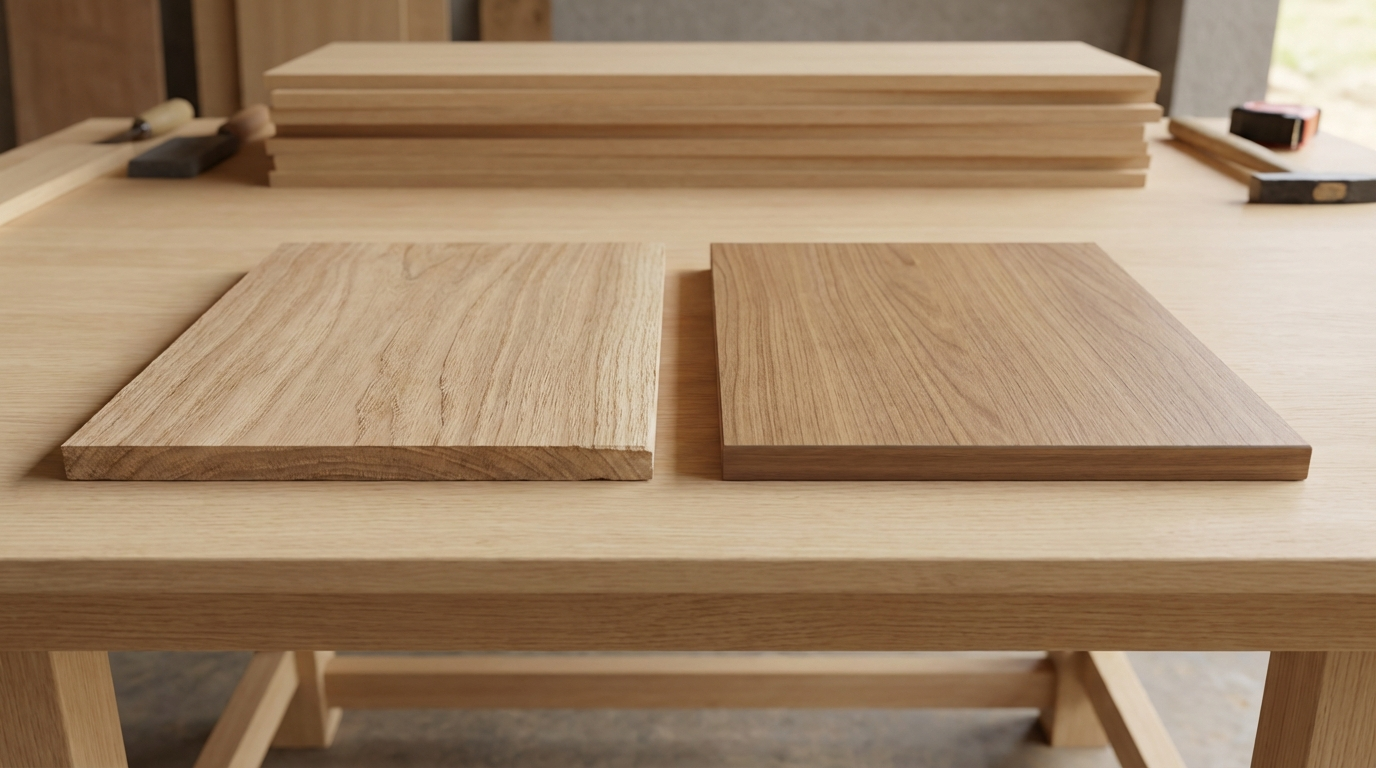
Focus on specs like grade (MR vs BWR vs BWP), core material (hardwood vs poplar), calibration (pre-sanded for flatness), and termite treatment. Test glue lines by nailing perpendicular—strong hold means fewer delams. Alternatives shine if they offer uniform 0.6-1mm face veneers and gap-free cores, reducing warping in humid storage. Use a table for quick scans, then verify locally.
What This Term/Material Actually Means
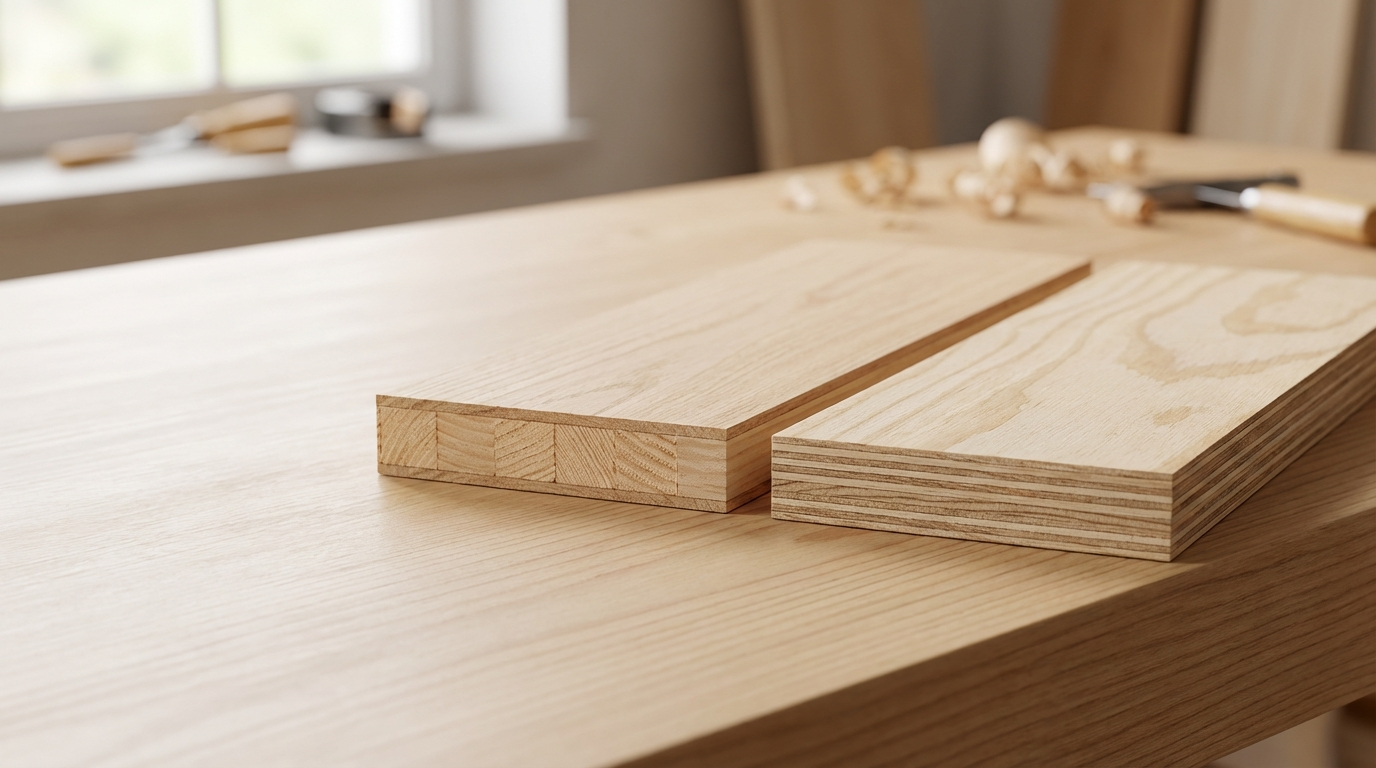
Duroply refers to a branded line of commercial plywood, primarily BWR grade engineered for interior applications with synthetic resin glue resisting moisture better than MR (moisture resistant). Sheets come calibrated or plain, with thicknesses from 3mm to 25mm. Core is layered hardwood/poplar veneers bonded under heat/pressure.
Where people get confused:
- Assuming all "Duroply" is BWP/marine—it's usually BWR, not for boat-building.
- Thinking brand name guarantees no termites—treatment varies by batch.
- Overlooking calibration: Uncalibrated leads to uneven laminate application.
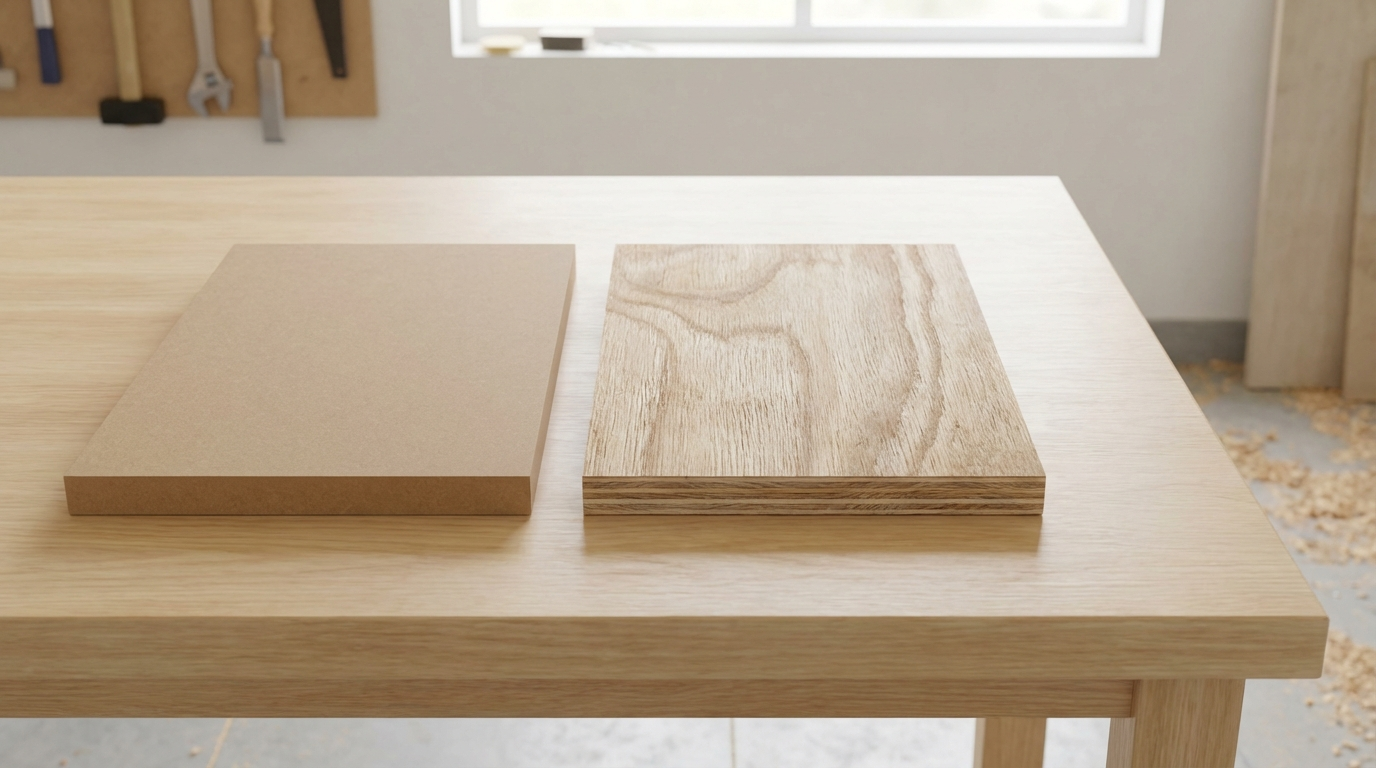
- Confusing with particleboard/MDF: Plywood has superior screw-holding.
- Ignoring face/back grades: Top face premium, back often utility.
- Believing thicker always better—18mm suffices for most furniture.
Is Duroply plywood BWR or BWP?
Typically BWR grade, handling boiling water exposure up to 72 hours in lab cycles, ideal for humid Indian wardrobes but not prolonged wetting like BWP marine plywood. Nuance: Regional variants may differ—coastal batches might add extra treatment. Practical check: Submerge a edge scrap in water overnight; minimal swelling (<10%) confirms resistance. Next: Cross-check supplier's spec sheet against IS:303 for BWR claims.
India-Specific Reality Check
In monsoon-heavy regions like Kerala or Mumbai suburbs, uncalibrated plywood absorbs ambient humidity (80%+ RH), causing cupping before installation. Coastal salt air accelerates core decay if untreated. Storage in open godowns leads to 20% rejection rates for contractors. Workmanship gaps—like poor edge sealing—amplify failures in 2 years. Solution: Insist on packed sheets, acclimatize 48 hours on-site, and use SS screws in hinge zones.
How does monsoon affect plywood choices?
High humidity triggers glue breakdown in MR grade within months, favoring BWR alternatives with phenolic resins. Coastal areas demand termite-proofing as white ants thrive in damp wood. Trade-off: BWP costs more but lasts 8-10 years vs BWR's 5-7. Verify: Weigh samples (denser resists moisture) and check for oily glue residue on edges. Acclimatize all sheets 2-3 days before cutting.
Two-Minute Comparison That Actually Helps
| Feature | Duroply-Type (BWR Focus) | CenturyPly-Type Alternative | Kitply-Type Alternative | Best For |
|---|---|---|---|---|
| Moisture Grade | BWR (72hr boil) | BWR/BWP options | BWR strong | Wet zones: BWP edge |
| Core Quality | Hardwood mix | Poplar/eucalyptus | 100% hardwood | Heavy load: Hardwood |
| Calibration | Often yes | Standard | Precise | Modular: Calibrated |
| Thickness Availability | 6-25mm | 3-25mm | 4-19mm | Furniture: 18mm |
| Regional Strength | North/East | Pan-India | South heavy | Local supply key |
Choose based on project: Wet kitchens favor BWP alternatives; dry bedrooms suit any BWR. Always verify local batch via hammer tap (solid tone = no gaps).
Price Range and Cost Drivers (India)
BWR 18mm plywood typically ranges Rs 85-140 per sq ft, varying by city (metros 10-15% higher), thickness (6mm half of 18mm), and extras like calibration (+10%), termite treatment (+5-8%), or premium face veneers (+15%). Logistics from factory hubs like Punjab adds Rs 5-10/sq ft in South India.
How to ask for a quote checklist:
- Specify grade (BWR/IS:303), thickness, sheet size (8x4 ft).
- Add calibration, treatment, face grade.
- Quantity, delivery timeline, GST included.
- Request sample scrap for tests.
Mini budget example: 100 sq ft wardrobe in 18mm BWR ~ Rs 10,000-14,000 material cost, plus 20% wastage buffer.
What is the average price of Duroply alternatives?
Ranges Rs 80-150/sq ft for 18mm BWR, driven by core density, veneer import, and fuel logistics. Tier-1 cities like Delhi skew higher due to transport; tier-3 lower with local mills. Nuance: Bulk (50+ sheets) drops 10-15%. Get quotes: List exact specs, compare 3 suppliers, factor 5% for rejects. Confirm no hidden charges like stacking fees.
How to Choose in 5 Steps
- Match grade to zone: BWR for humid interiors, BWP for kitchens/bathrooms.
- Check thickness: 12mm shelves, 18mm frames—avoid overkill.
- Verify core/veneer: No gaps, uniform 1mm+ face.
- Test samples: Nail pull, water dab, weight heft.
- Confirm supply: Local dealer, 1-week delivery, return policy.
Skip steps? Risk delam in year 1 from poor glue or uneven load.
Trade-offs and Limitations
BWR alternatives excel in cost vs moisture but warp under direct rain exposure—seal edges religiously. Calibrated versions reduce carpenter time 20% but cost more upfront. Poplar cores are lighter/cheaper yet softer for screws vs hardwood. All plywood scratches easier than HDHMR; pair with laminates. Heavy use needs 25mm+ or blockboard frames.
Which plywood brand is best for coastal areas?
BWP-grade options from pan-India brands, with extra termite/anti-fungal treatment for salt-laden air. BWR suffices inland but fails faster seaside. Verify: Oily preservative smell, dense weight. Trade-off: 20-30% pricier. Next: Store vertically, acclimatize 72 hours, use marine glue for joints.
Common Buyer Mistakes and How to Avoid Them
- Mistake: Buying MR as BWR saver. Why: Monsoon delams. Instead: Demand IS:303 label.
- Mistake: Ignoring calibration. Why: Uneven laminate bubbles. Instead: Run straight-edge test.
- Mistake: No sample tests. Why: Core voids crack later. Instead: Nail perpendicular on scrap.
- Mistake: Cheapest quote wins. Why: Inferior glue fails. Instead: Compare 3 with specs.
- Mistake: Open storage. Why: Humidity swell. Instead: Insist factory-packed.
- Mistake: Skipping termite check. Why: Tunnels in 1 year. Instead: Ask treatment proof.
- Mistake: Wrong thickness. Why: Sag or waste. Instead: Calc load per span.
- Mistake: No acclimatization. Why: Post-install warp. Instead: 48hr site stack.
Failure Modes and Fixes
- Symptom: Edge delamination. Cause: Poor glue. Prevent: Boil test scrap. Fix: Epoxy re-glue, clamp 24hr.
- Symptom: Bulging face. Cause: Moisture ingress. Prevent: Seal edges. Fix: Sand, re-laminate.
- Symptom: Screw pull-out. Cause: Soft core. Prevent: Hardwood verify. Fix: Plug + re-screw.
- Symptom: Cupping. Cause: Uneven dry. Prevent: Acclimatize. Fix: Plane edges.
- Symptom: Termite tracks. Cause: No treatment. Prevent: Smell test. Fix: Spray + replace.
- Symptom: Gaps post-cut. Cause: Voids. Prevent: Tap test. Fix: Filler + sand.
Quality Checks You Can Do Without Lab Tests
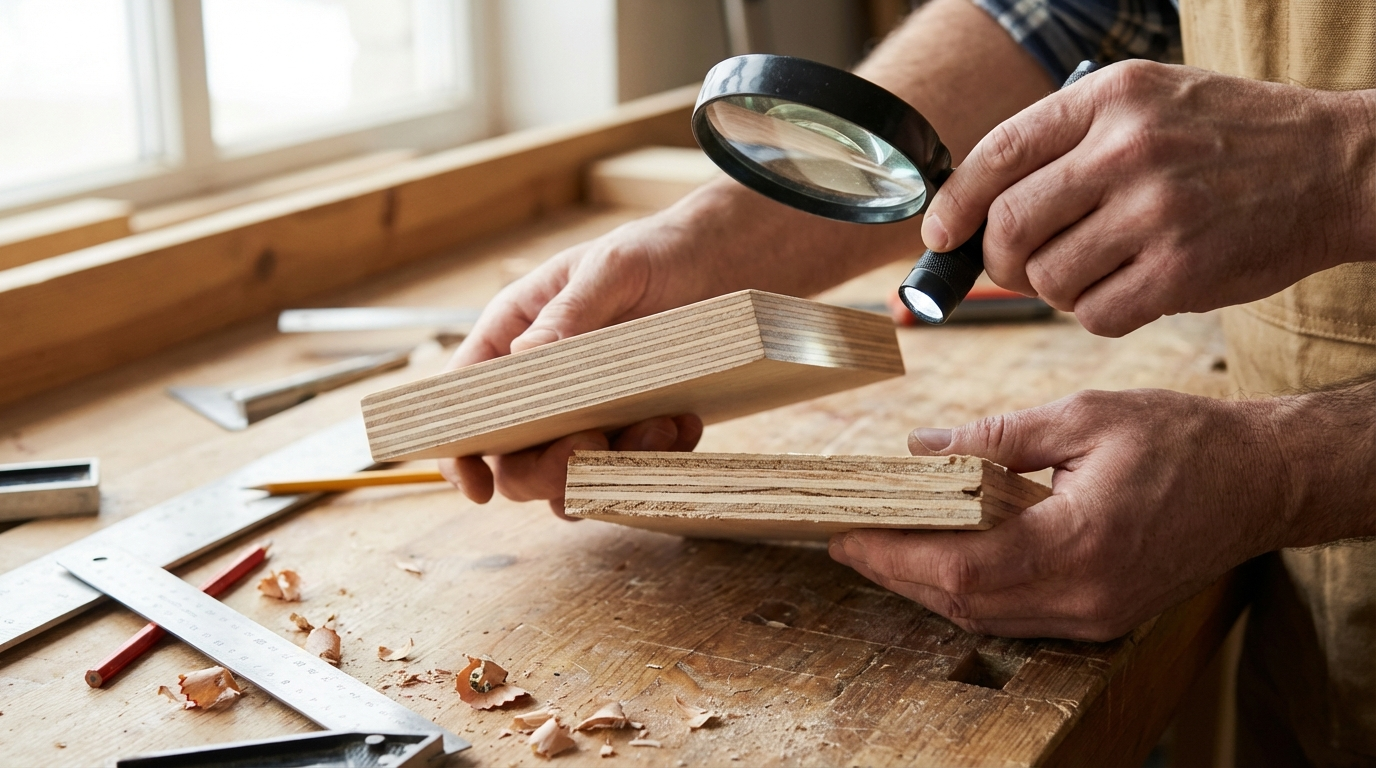
Before buying: Tap sheet (hollow = gaps), press edges (no flex), check veneer consistency, smell for chemicals (treatment sign), weigh (heavier = dense).
After cutting: No feather edges, flat plane, strong screw hold in 3 spots.
After install: Level alignment, no moisture beads, clean with damp cloth test.
Red flags: Warped stack, faded labels, oily surfaces (cheap glue).
How to check plywood quality on site?
Use hammer tap for solid tone, nail hammer for glue grip, water drop for 30min absorption (<5mm stain good). Flex test: No bend under hand pressure. Nuance: Fresh batches firmer. Next: Document photos, reject if 10%+ fails.
Decision Framework: Match Your Needs
| Condition | Recommended Alternative | Verify This |
|---|---|---|
| Wet kitchen | BWP grade | 72hr boil resistance, sealed edges |
| Coastal home | BWR + termite treated | Dense core, preservative scent |
| Heavy furniture | 18-25mm hardwood core | Screw hold test |
| Tight budget | MR calibrated | Dry zone only, uniform veneer |
| High scratch risk | Pre-laminate BWR | Smooth face, 1mm veneer |
| Fast delivery | Local brand BWR | Dealer stock check |
For Homeowners: Durability Tips
Use SS hinges, wipe spills instantly, avoid direct AC vents. Don't overload shelves >20kg/m, seal cut edges with putty. Expect 7-10 years with care.
For Carpenters: Handling Advice
Cut with 60-tooth blade, pre-drill screws, edge-band immediately. Mark hinge zones pre-cut, handle by edges to avoid dents. Buffer 5% extra sheets.
For Architects: Spec Tips
Detail BWR min, 0.8mm veneer, calibrated tolerance ±0.5mm. Wet-zone: BWP + PU polish. QC: 10% random tests per delivery.
For Modular Makers: QC Focus
Standardize 18mm BWR, batch-test glue, track supplier rejects <2%. Reduces returns via consistent flatness.
FAQs
Which is better than Duroply for wardrobes?
Calibrated BWR from pan-India brands often edges out for flatness in humid closets, minimizing laminate bubbles. Depends on local humidity—coastal needs BWP. Practical: Test screw density in corner scraps; denser holds hinges better. Get supplier history on rejects to pick reliable stock, ensuring wardrobe doors stay aligned 5+ years despite monsoons.
Duroply vs CenturyPly: Key differences?
Both BWR-focused, but alternatives may offer wider thickness or poplar cores for lightness. Compare core hardness via hammer—solid wins for loads. Regional: One stronger North, other South. Always sample-test moisture dab; minimal spread favors kitchen use. Factor delivery speed for projects.
Best budget Duroply alternative?
Local BWR brands in 12-18mm, balancing cost and glue strength for dry interiors. Avoid unverified for savings >20%. Quote with calibration spec to cut waste. Verify: Uniform color, no edge chips. Ideal for apartments under 100 sq ft fitouts.
Does Duroply have good warranty?
Typically 5-10 years against defects, but varies—confirm terms exclude workmanship/moisture misuse. Alternatives match if specified. Check: Written policy, pro-rated claims. Prevent claims by proper storage/install.
Is Duroply suitable for bathrooms?
BWR handles steam but not direct water; use with tiles/seals. BWP alternatives better for vanity cabinets. Test: Steam expose sample. Seal all edges, ventilate well.
How to identify fake Duroply or alternatives?
Missing holograms, light weight, hollow tap. Genuine denser, labeled clearly. Cross-check dealer tenure. Test glue pull-out.
Duroply thickness for bed frames?
18-19mm BWR for stability, hardwood core. Lighter poplar ok for kids'. Verify span load before final.
Greenpanel vs Duroply alternatives?
Particle/MDF options cheaper for plain panels, but plywood superior screw hold. Choose BWR plywood for framed work. Match by moisture needs.
Where to buy Duroply alternatives in India?
Regional dealers in plywood markets (e.g., Bhagirath Palace Delhi). Prioritize 5+ year suppliers for consistency. Bulk: Factory-direct quotes.
Disclaimer: This content is provided for general informational purposes based on industry practices and publicly available information. Product specifications, standards, prices, and availability may vary by manufacturer, region, and time. Readers should independently verify details with manufacturers, dealers, or qualified professionals before making purchase or construction decisions.Want Plywood Suggestions?
Share a few details and a Duro BOIL specialist will suggest suitable brands and connect you to responsive dealers.