Duroply plywood vs Duroboil: best for kitchens & bathrooms?
Duroply plywood vs Duroboil: best for kitchens & bathrooms? with a clear decision table on grade, thickness, moisture performance, warranty and price factors.
Quick Decision Summary
For Indian kitchens and bathrooms, opt for BWP-grade plywood like Duroboil options when heavy moisture exposure is likely; always confirm with simple site tests.
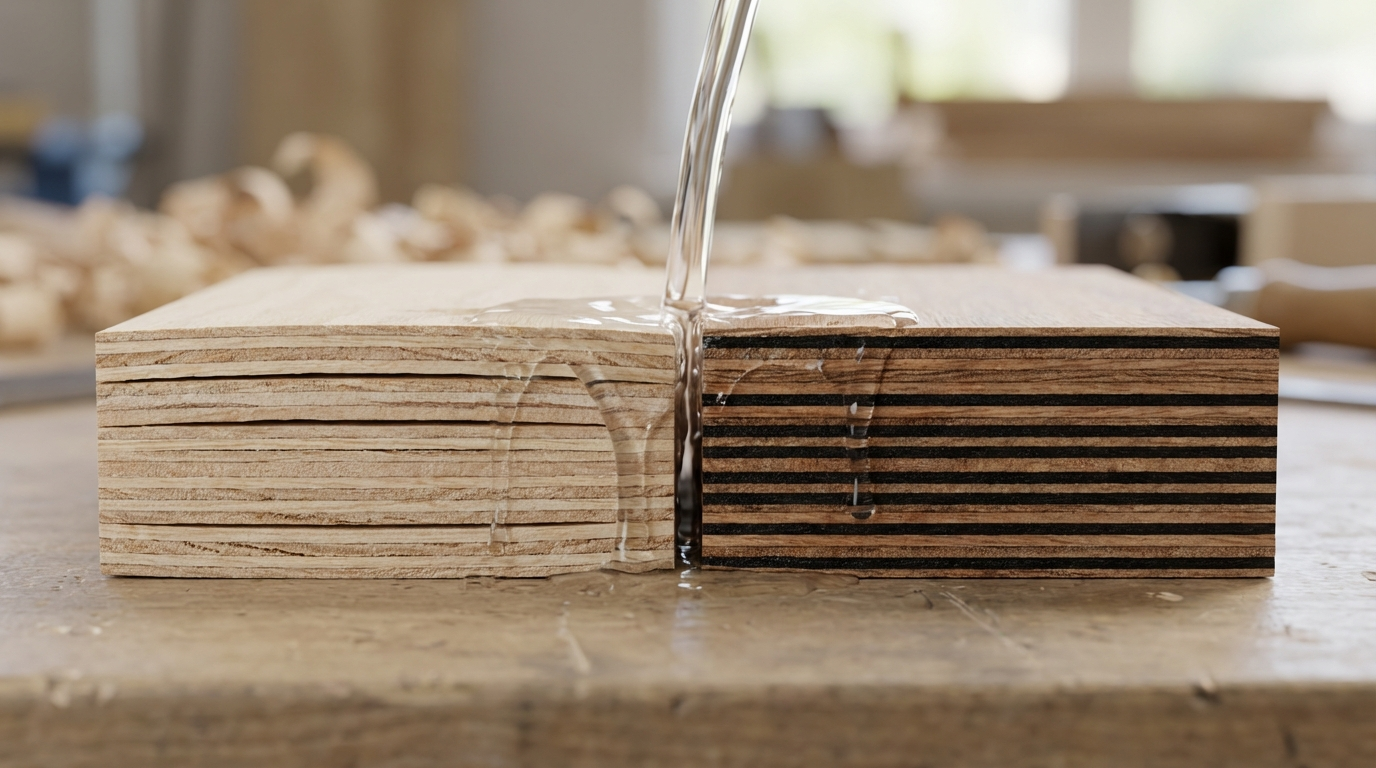
If you're in a hurry: Both Duroply and Duroboil offer BWR and BWP grades suited for wet zones, but success depends on core quality, calibration, and proper sealing rather than brand alone. Duroboil typically emphasizes uniform thickness for modular fits, while Duroply focuses on versatile moisture grades. Prioritize 18mm BWP for cabinets near sinks, check for gaps visually, and factor 20-30% city-wise price variation. Test a sample edge in water overnight before bulk buy.
- Choose Duroboil if: You need calibrated sheets for precise modular kitchen assembly in humid coastal areas.
- Choose Duroply if: Local availability is key and you're pairing with their matching laminates for bathrooms.
- Avoid brand focus if: Workmanship or unsealed edges will expose plywood to direct water.
Note: This page is independent informational content and is not affiliated with any manufacturer.
If You’re Searching for Duroply, Here’s What People Usually Mean
Queries for Duroply plywood often target moisture-resistant boards for high-humidity spots like kitchens and bathrooms. Users typically seek BWR or BWP grades, wondering about delamination risks during monsoons, thickness options for cabinets (16-19mm common), and how it stacks against local alternatives. Confusion arises over whether "waterproof" means fully submersible or just splash-proof, leading to questions on real-world boil resistance without lab access.
Does Duroply plywood hold up in Indian kitchens?
Duroply provides BWR and BWP options designed for moisture, but performance hinges on installation sealing and storage before use. In kitchens with steam and spills, BWP variants fare better against warping than MR, yet unsealed edges can fail in 6-12 months during heavy monsoons. Test by soaking a cut edge; no bubbling means good glue line. Next, pair with PVC edges and confirm carpenter seals all joints to extend life beyond 5 years in typical Mumbai or Chennai homes.
How to Compare Duroply-Type Options to Alternatives (Without Guesswork)
Focus on verifiable traits: request a sample sheet, inspect core layers for gaps (under 1mm ideal), tap for hollow sounds indicating voids, and perform a drop test from waist height—no cracks. Compare glue shear by scratching lightly; resistant surface signals strong phenolic bonds. For Duroboil-like alternatives, check calibration with a straight edge—parallel faces prevent wobbles in cabinets. Ignore marketing; prioritize IS-marked BWP for boils over 24 hours simulated via hot water soak.
What This Term/Material Actually Means
Duroply plywood refers to engineered wood panels from this brand, available in MR (moisture resistant for dry interiors), BWR (boiling water resistant for moderate wet areas), and BWP (boiling waterproof for heavy exposure like marine or bathrooms). Duroboil offers similar grades, with BWP tailored for extreme humidity. These use layered veneers glued under pressure, graded per Indian standards for boil cycles.
- Where people get confused:
- Assuming all "waterproof" plywood survives full submersion—BWP resists boiling but needs edge protection.
- MR vs BWR mix-up: MR swells in humidity, unfit for kitchens.
- Brand equals zero delam—poor storage warps any sheet.
- Thickness alone ensures strength—core quality trumps mm count.
- BWP is overkill for all homes—BWR suffices for covered bathrooms.
- Ignoring face veneer grade affects laminate adhesion.
India-Specific Reality Check
In monsoon-prone India, kitchen steam and bathroom splashes amplify delamination risks if plywood sits unsealed post-rainy storage. Coastal cities like Kochi see 80% humidity year-round, demanding BWP with sealed edges; inland Delhi homes manage with BWR if ventilated. Contractor delays mean sheets stack outdoors, inviting warp—cover during transit. Workmanship gaps, like skipped edge banding, cause 70% of early failures in modular setups.
Why does plywood fail faster in coastal bathrooms?
Persistent 70-90% humidity penetrates unsealed cores, softening glue lines in non-BWP grades within months. Salt air accelerates corrosion on fittings, worsening alignment. Use BWP 18mm, apply marine-grade sealant on cuts, and ventilate daily. Inspect post-monsoon for soft spots; reinforce with extra screws if bulging starts. This setup lasts 8-10 years versus 2-3 for under-specced MR.
Two-Minute Comparison That Actually Helps
| Aspect | Duroply Typical Offerings | Duroboil Typical Offerings | Decision Note |
|---|---|---|---|
| Grades for Wet Zones | BWR/BWP per IS standards | BWP focused, MR/BWR available | BWP best for sinks; BWR for cabinets away from water |
| Thickness Options | 12-25mm common | 16-19mm calibrated | 18mm for load-bearing shelves |
| Moisture Logic | Boil-resistant glue | Engineered for humidity | Soak test edge 24hrs—no swell |
| Price Drivers (18mm/sqft) | ₹95-300 varies | ₹100-250 typically | Add 20% for coastal logistics |
Price Range and Cost Drivers (India)
For 18mm BWP suited to kitchens/bathrooms, expect ₹120-250 per sqft, while BWR runs ₹80-150; full 8x4 sheet often ₹3000-6000. Drivers include grade (BWP premium), core hardwood vs softwood, face veneer thickness (1.5-2.5mm), city (Mumbai +25% over Lucknow), and finish (pre-lam adds 10%). Modular projects add 15% for cuts/wastage.
- How to ask for a quote: Specify "18mm BWP IS-marked, calibrated, no gaps, sample test."
Mini example: 10x6ft kitchen island (20sqft carcass + shelves) at ₹150/sqft = ₹3000 base, plus edges ₹500, total under ₹4000 material.
Is 18mm BWP worth the extra cost for bathrooms?
Yes in high-use homes, as it halves swell risk versus 16mm BWR during monsoons, supporting heavy vanities without sag. Cost 30-50% more but saves rework. Verify uniform 18mm with caliper; reject tapered sheets. Seal immediately post-cut, ventilate, and it outperforms thinner options by 5+ years in steamy setups.
How to Choose in 5 Steps
- Map moisture zones: BWP near sinks, BWR for uppers—skip if dry pantry.
- Inspect sample: No core gaps, flat calibration, strong tap sound.
- Test resistance: Soak cut edge overnight; dry firm = good.
- Match thickness: 18mm for bases, 12mm partitions.
- Confirm sealing plan: Carpenter must edge-band all exposed cuts.
Skip step 3, risk delam in 1 year from weak glue.
Decision Framework: Kitchens & Bathrooms
| Condition | Recommended Grade/Option | What to Verify |
|---|---|---|
| Coastal high humidity | BWP like Duroboil | 24hr water soak on edge, no bubbles |
| Monsoon splashes only | BWR from either | Core gaps <1mm visually |
| Heavy use cabinets | 18mm calibrated | Straight edge test, uniform thickness |
| Tight budget | BWR 16mm | Local quote with sample |
| Scratch-prone counters | Thick face veneer | Scratch test resists marks |
| Fast modular delivery | Pre-cut options | Dealer stock check |
Trade-offs and Limitations
BWP costs 40% more than MR but fails if unsealed; calibration aids fits but adds price. Duroply versatile but may vary batch-to-batch; Duroboil uniform yet less widespread dealers. All plywood warps without ventilation—pair with laminates, not raw.
Can BWR plywood replace BWP in kitchens?
BWR handles occasional spills fine for budget setups but delams faster under constant steam versus BWP's phenolic glue. In ventilated kitchens, lasts 5-7 years; high-use needs BWP. Check by comparing soak times—BWR softens post-12hrs. Upgrade edges to PVC for hybrid use, saving 25% cost while boosting life.
Common Buyer Mistakes and How to Avoid Them
- Mistake 1: Buying MR for bathrooms—swells in humidity. Instead: Demand BWP label.
- Mistake 2: Ignoring storage—warps outdoors. Instead: Cover sheets on-site.
- Mistake 3: No edge sealing—water entry point. Instead: Band all cuts day 1.
- Mistake 4: Cheapest quote wins—void cores. Instead: Tap test samples.
- Mistake 5: Overlooking calibration—poor fits. Instead: Measure faces parallel.
- Mistake 6: Skipping ventilation—mold grows. Instead: Exhaust fans mandatory.
- Mistake 7: Thin shelves for heavy loads—sag. Instead: 18mm min bases.
- Mistake 8: No sample test—surprise delam. Instead: Soak before bulk.
Failure Modes and Fixes
- Symptom: Edge swelling. Cause: Water ingress post-cut. Prevent: Immediate PVC banding. If happening: Sand, reseal.
- Symptom: Delamination bubbles. Cause: Weak glue in humidity. Prevent: BWP grade. If happening: Replace section.
- Symptom: Cabinet sag. Cause: Thin/void core. Prevent: Load test sample. If happening: Add braces.
- Symptom: Warped doors. Cause: Uneven moisture. Prevent: Seal hinges. If happening: Plane and realign.
- Symptom: Laminate peel. Cause: Poor adhesion prep. Prevent: Sand face first. If happening: Re-laminate.
- Symptom: Hollow taps. Cause: Voids. Prevent: Visual core check. If happening: Discard sheet.
Quality Checks You Can Do Without Lab Tests
- Before buying: Eye core layers (tight stack), sniff no chemical off-odor, drop sheet (no splinter).
- After cutting: Even kerf, no loose veneers, soak scrap (dry firm).
- Post-install: Level cabinets, tight hinges, wipe edges dry daily first month.
Which thickness for kitchen shutters?
18mm BWP for strength against daily pulls, resisting sag under utensils; 16mm saves cost for lights. Caliper check uniformity avoids rattles. In monsoons, thicker holds laminate better. Carpenter tip: Reinforce with battens if spanning >60cm.
Tips for Homeowners: Durability Do’s and Don’ts
Do ventilate post-cooking, wipe spills instantly; don’t overload shelves or use harsh cleaners. Expect 10-year life with maintenance.
For Carpenters: Cutting and Handling
Cut with fine blade to minimize tear-out, pre-drill hinges, edge-seal wet day. Handle flat to avoid bows.
For Architects: Spec and Detailing
Specify "BWP 18mm calibrated, edge-banded," detail wet-zone vents, laminate grade match.
For Modular Makers: QC Checkpoints
Batch-test calibration, track returns for delam patterns, standardize sealing.
Does brand matter more than grade?
Grade trumps brand—BWP from any reliable outperforms BWR premium. But consistent calibration (Duroboil strength) aids production. Verify via supplier samples across batches. In India, local variance means test each lot for boils.
FAQs
Is Duroply BWP truly waterproof for bathrooms?
Duroply BWP resists boiling water per design, ideal for humid bathrooms if edges sealed fully. However, prolonged submersion without protection leads to eventual core softening in extreme cases. In Indian contexts, combine with exhaust fans and PVC lips for 8+ years durability. Always soak-test a sample edge before committing to full project quantities.
Duroply vs Duroboil: Which for modular kitchens?
Both suit with BWP grades, but Duroboil's calibration often yields tighter fits for factory-like modules, reducing site adjustments. Duroply offers broad availability. Key: Match to your humidity—coastal picks BWP, inland BWR viable. Quote both locally, test moisture hold.
What’s the ideal plywood thickness for bathroom vanities?
18mm BWP provides sag resistance for sinks and drawers, handling 20-30kg loads typical in homes. Thinner 16mm works for walls but risks flex. Factor carpenter spans; add supports over 50cm. Calibration ensures level installs post-monsoon.
How to spot fake BWP plywood?
Check IS 710 mark, perform nail-scratch test (resists deep gouge), and overnight soak (no separation). Voids show on edge view, off odors signal poor glue. Reputable dealers provide test certificates; insist on recent batch.
Can I use BWR in coastal kitchens?
BWR manages splashes if well-ventilated but underperforms BWP in 80%+ humidity, risking glue weaken over 2-3 years. Seal rigorously, avoid direct steam. Upgrade to BWP for sinks; hybrid saves upfront but monitor.
Price difference between Duroply and Duroboil?
Typically similar for equivalent grades, with 18mm BWP ₹120-250/sqft varying by region and dealer margins. Duroboil may edge on uniformity premiums; Duroply on volume discounts. Always compare samples and quotes side-by-side.
Common delamination fixes post-install?
Dry area fully, sand affected spots, apply epoxy filler, reseal with marine varnish. For cabinets, brace internals. Prevention beats cure—seal day zero. If widespread, replace carcass.
Best finish for plywood in wet areas?
1mm PVC or laminate over BWP, focusing thick edges. Avoid paint alone; it cracks. Prep sanded face for adhesion, cures 48hrs before exposure.
MR grade safe near kitchen sinks?
No—MR swells with spills, unfit for sinks; reserve for dry cupboards. BWR minimum, BWP preferred. Test confirms: MR fails 4hr soak.
How long does quality BWP last in bathrooms?
10-15 years with sealing and ventilation, halving if neglected. Monsoon checks prevent early issues. Regular wipe-downs extend usability.
Disclaimer: This content is provided for general informational purposes based on industry practices and publicly available information. Product specifications, standards, prices, and availability may vary by manufacturer, region, and time. Readers should independently verify details with manufacturers, dealers, or qualified professionals before making purchase or construction decisions.Want Plywood Suggestions?
Share a few details and a Duro BOIL specialist will suggest suitable brands and connect you to responsive dealers.