Duroply vs Greenply: which plywood grade fits your use?
Duroply vs Greenply: which plywood grade fits your use? with a clear decision table on grade, thickness, moisture performance, warranty and price factors.
Note: This page is independent informational content and is not affiliated with any manufacturer.
Quick Decision Summary
Pick BWP or marine-grade plywood from either brand for wet zones like kitchens; MR or BWR suffices for dry bedrooms—verify core quality and glue lines on-site.
If you’re in a hurry: Both Duroply and Greenply offer standard plywood grades (MR for interiors, BWR for bathrooms, BWP/marine for high-moisture areas), but the right fit depends on your site's humidity, usage, and budget. Duroply emphasizes durable commercial options; Greenply focuses on eco-friendly variants. Always check for uniform thickness, no core gaps, and edge sealing resistance rather than brand hype. For most Indian homes, BWR grade in 18mm balances cost and monsoon-proofing without overkill. Confirm local quotes with full specs to avoid delamination surprises post-installation. (92 words)
- Choose Duroply-style if prioritizing heavy-duty commercial builds with strong termite resistance in variable climates.
- Choose Greenply-style if seeking lower-emission boards for modern, health-conscious interiors.
- Avoid brand fixation if your carpenter can verify grade via simple tap tests and water exposure checks.
If You’re Searching for Duroply or Greenply, Here’s What People Usually Mean
Queries for Duroply or Greenply typically signal interest in reliable plywood brands known for MR, BWR, and BWP grades suited to Indian homes. Homeowners often want waterproof options for kitchens or bathrooms amid monsoon worries, while contractors seek bulk buys with consistent calibration. Confusion arises over "premium commercial" vs "marine"—both brands provide these, but users really aim to match grade to room exposure without paying extra for unneeded features. Architects specify them for spec sheets, but end-users care about post-rain swelling prevention and termite-proofing in coastal zones.
Why do people compare Duroply and Greenply specifically?
These brands top searches because they represent organized sector leaders offering full grade ranges from interiors to marine, unlike unbranded local mills. Comparisons focus on real performance in humid India: does the BWP hold up in Kerala rains or Mumbai humidity? Direct answer—both deliver if genuine, but verify via IS markings and glue shear strength cues. Nuance: Duroply leans commercial durability; Greenply eco-credentials. Next step: Ask supplier for a sample sheet to knock-test for voids before bulk order. (112 words)
How to Compare Duroply-Type and Greenply-Type Plywood Options to Alternatives (Without Guesswork)
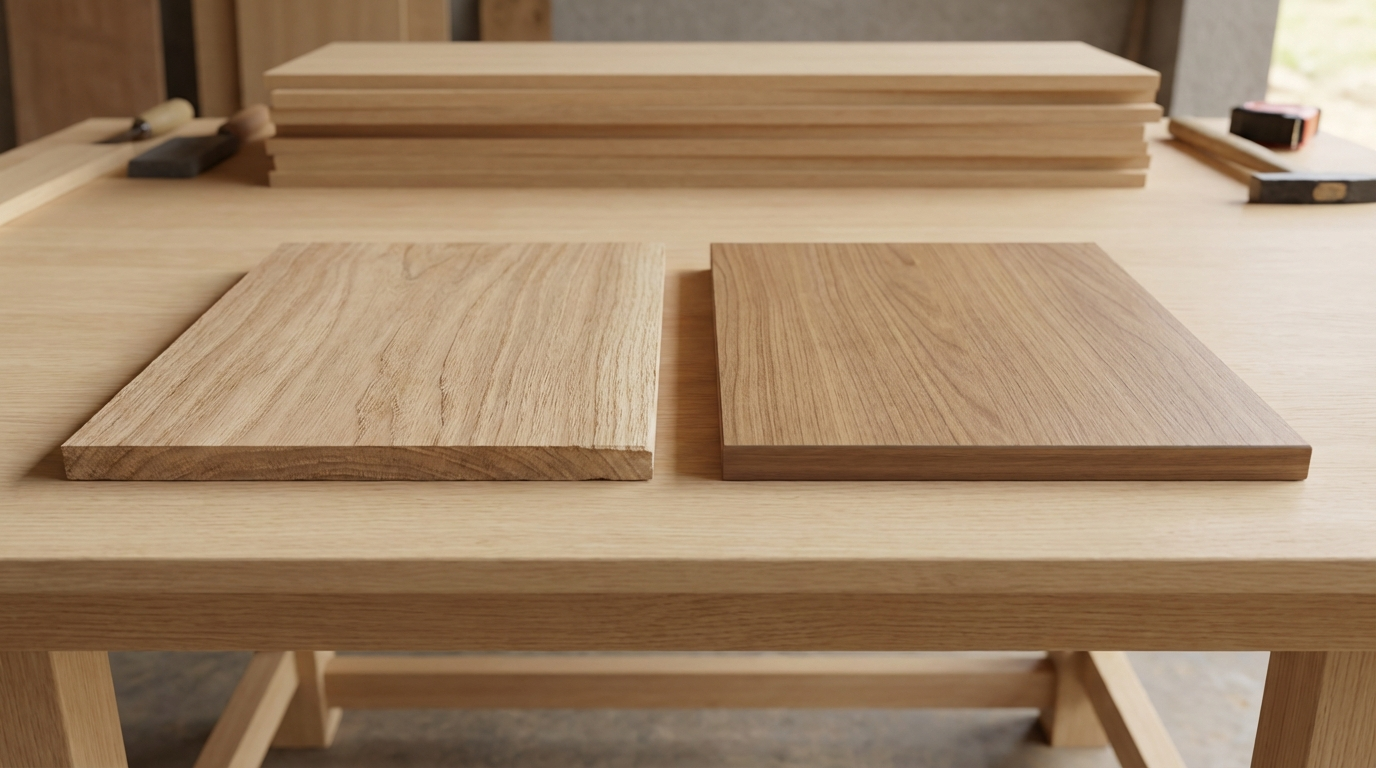
Focus on grade (MR/BWR/BWP), core material (hardwood/poplar), and verifiable traits like veneer uniformity over brand labels. Test by pressing edges for glue bond and tapping for hollow sounds. Alternatives like local calibrated boards match if they pass the same checks, often at lower cost. Use a side-by-side spec sheet: thickness tolerance under 0.5mm, no live knots, pest-repellent treatment proof.
What Plywood Grades Like Duroply and Greenply Actually Mean
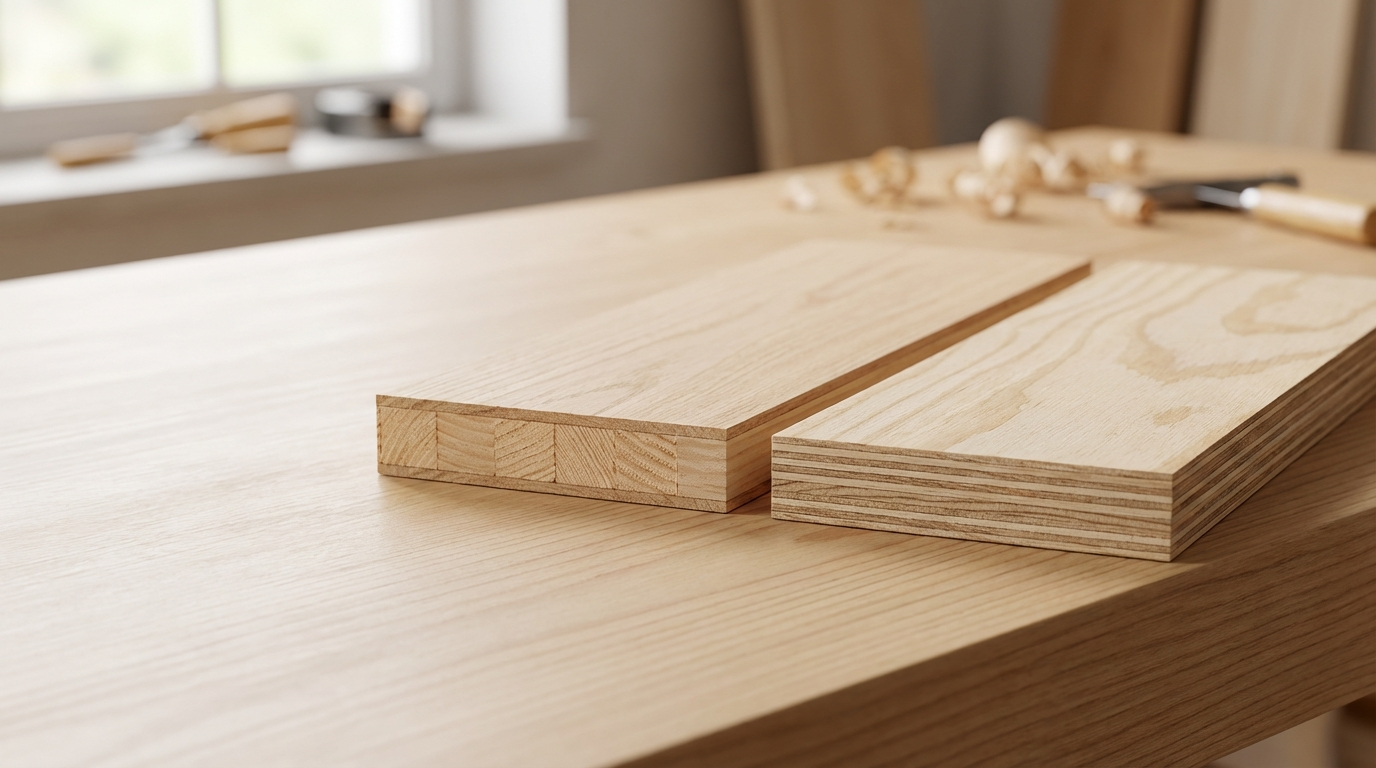
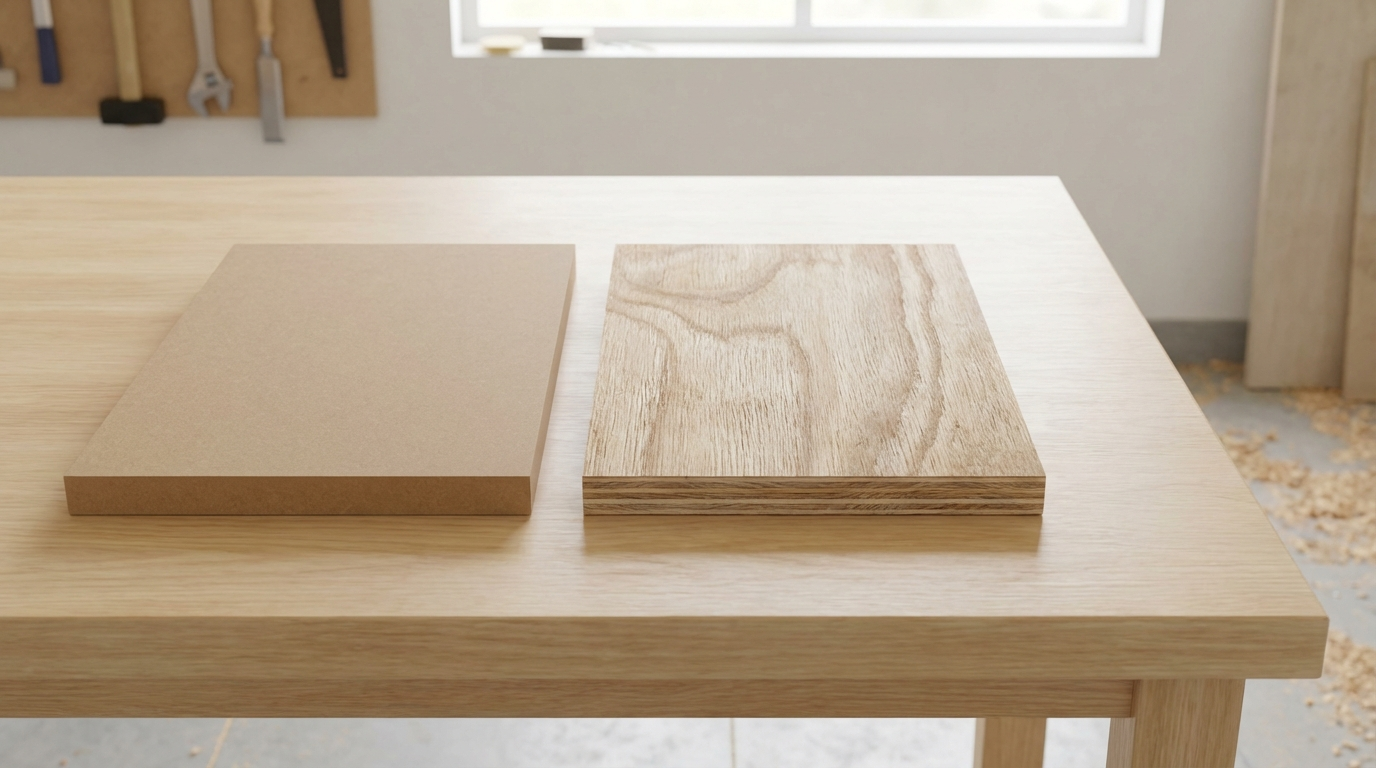
Duroply and Greenply are brands producing standard plywood categorized by moisture resistance: MR (interior use only), BWR (short boiling water exposure), BWP/marine (prolonged wet conditions per IS 710). These grades define glue type—urea for MR, phenol for BWP—impacting delamination risk.
Where people get confused:
- Assuming "commercial" means waterproof—it’s often MR-grade.
- Thinking brand name guarantees quality—fakes abound in tier-2 cities.
- Overlooking core gaps hidden under face veneer.
- Believing thicker = stronger—calibration matters more.
- Ignoring storage: stacked wet sheets ruin batches pre-install.
- Confusing BWR with BWP—BWR fails long-term submersion.
Is Duroply the same as Greenply plywood?
No, they are distinct brands with overlapping grades but different emphases: Duroply on robust commercial lines, Greenply on sustainable tech. Both offer MR/BWR/BWP, but performance hinges on batch consistency. Nuance: In practice, either works if BWP-grade verified for your kitchen—check by soaking edge scrap overnight. Next: Compare local dealer samples for face grain match and weight uniformity, avoiding lighter counterfeit cores. (98 words)
India-Specific Reality Check
Monsoon humidity (80%+ RH) and coastal salt air amplify delamination in subpar MR grades, even from top brands. Improper site storage—direct sun or ground contact—warps sheets before cutting. Contractor workflows favor 18mm BWR for speed, but architects push BWP for longevity in Bangalore villas or Goa beach homes. Workmanship gaps like poor edge sealing cause 30% failures in humid zones.
Price Range and Cost Drivers (India)
MR grade: typically ₹60-₹110 per sq ft; BWR: ₹90-₹150; BWP/marine: ₹140-₹320. Varies by thickness (6-25mm), core (poplar cheaper than hardwood), city (Delhi 10-15% above Kerala), and add-ons like calibration/fire treatment.
How to ask for a quote checklist:
- Specify grade (BWP), size (8x4ft), thickness (18mm).
- Request hardwood core, calibrated ±0.3mm.
- Ask for termite treatment proof and emission class.
- Include transport to site, cut-to-size if needed.
- Negotiate for 5-sheet sample test.
Mini budget example: 100 sq ft bedroom wardrobe in BWR 18mm—roughly ₹12,000-₹18,000 materials, plus 20% logistics in Mumbai.
What affects plywood price the most in India?
Grade and thickness drive 70% variance—BWP doubles MR cost for better glue. Nuance: Coastal logistics add 15-25%; poor calibration wastes carpenter time. Next: Quote multiple suppliers with exact specs: "18mm BWP hardwood core, 8x4, ISI marked" to benchmark fairly. (92 words)
Two-Minute Comparison That Actually Helps
| Factor | Duroply-Type (Commercial Focus) | Greenply-Type (Eco Focus) | Choose Based On |
|---|---|---|---|
| Strength in Grades | MR/BWR/BWP, premium commercial | MR/BWR/BWP/marine 710, low-emission | Wet area? Go BWP both. |
| Core Options | Hardwood emphasis | Poplar/hardwood mixes | Heavy load? Hardwood. |
| Thickness Range | 4-25mm | 4-25mm | Project scale. |
| Key Edge | Termite/fire variants | Sustainable tech | Health vs durability. |
How to Choose in 5 Steps
- Assess exposure: dry (MR), semi-wet (BWR), full wet (BWP).
- Check sample: tap for voids, press edges for bond.
- Verify calibration: ruler test on multiple points.
- Confirm treatment: smell for chemicals, ask pest cert.
- Get carpenter input: fastening ease, cutting smoothness.
Skip and risk bubbling in first rain.
Which plywood grade for kitchen cabinets?
BWP or marine-grade resists steam/splashes best. Nuance: Pair with sealed edges in humid kitchens. Next: Test sample with hot water pour— no swelling in 24hrs. (94 words)
Trade-offs and Limitations
BWP excels wet but costs 2x MR; heavy for DIY. MR cheap/light but fails bathrooms. Brands like these limit custom sizes—stock 8x4ft dominates. Eco variants may flex more under load.
Common Buyer Mistakes and How to Avoid Them
- Mistake 1: Buying by brand recall. Why: TV ads mislead. Do: Grade-check first.
- Mistake 2: Ignoring thickness uniformity. Why: Uneven cuts waste. Do: Measure 4 corners.
- Mistake 3: Skipping edge tests. Why: Glue fails monsoon. Do: Fingernail scrape.
- Mistake 4: Cheap transport. Why: Warps en route. Do: Flat stacking.
- Mistake 5: No termite clause. Why: Hidden infestation. Do: Ask treatment line items.
- Mistake 6: Over-spec BWP everywhere. Why: Budget bloat. Do: Room-map exposures.
- Mistake 7: Post-rain neglect. Why: Early swell. Do: Acclimatize 48hrs.
- Mistake 8: Verbal warranties. Why: Disputes. Do: Written spec sheet.
Failure Modes and Fixes
- Symptom: Edge delamination. Cause: MR in wet zone. Prevent: BWP only. Fix: Re-seal with epoxy.
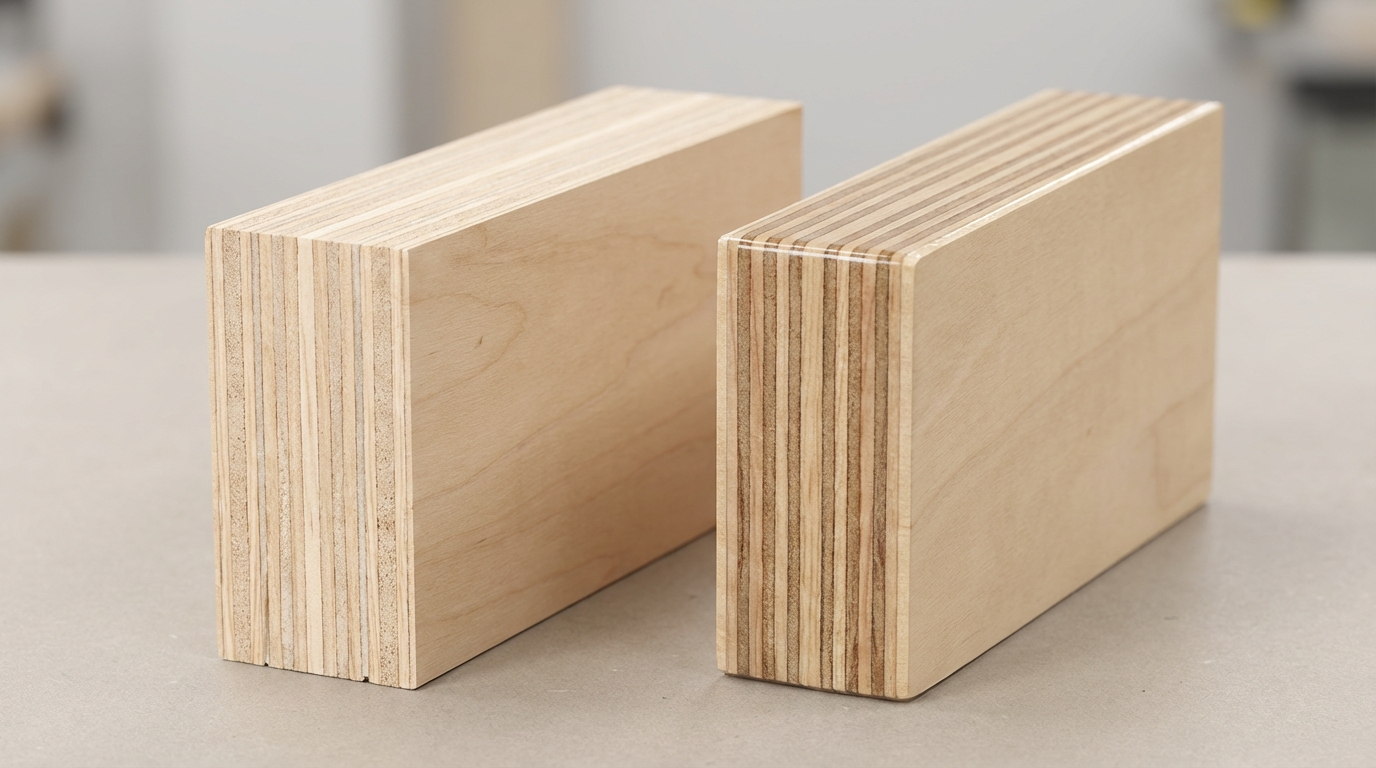
- Symptom: Core bulging. Cause: Gaps. Prevent: Tap test. Fix: Fill voids pre-veneer.
- Symptom: Termite trails. Cause: Untreated. Prevent: Chemical proof. Fix: Fumigate frame.
- Symptom: Warping post-cut. Cause: Uneven moisture. Prevent: Site-dry storage. Fix: Clamp straight.
- Symptom: Veneer peel. Cause: Poor glue. Prevent: Boiling test scrap. Fix: Re-laminate.
- Symptom: Screw pull-out. Cause: Soft core. Prevent: Hardwood. Fix: Plug reinforce.
Quality Checks You Can Do Without Lab Tests
Before buying: Weigh sheets (uniform heft), flex ends (no creak), water edge 30min (no darken). After cutting: Sand smooth (no tear-out), screw test (no crumble). Post-install: Wipe vinegar (no fade), alignment plumb.
Can you tell plywood quality by knocking it?
Yes, solid thud = dense core; hollow = voids. Nuance: Voids worsen in thin 12mm. Next: Knock 5 spots per sheet. (91 words)
Decision Framework: Match Conditions to Grade
| Condition | Recommended Grade/Verify |
|---|---|
| Wet kitchen/coastal | BWP/marine; boiling test scrap |
| Bedroom wardrobe | MR/BWR; uniform veneer |
| Heavy shelf load | 18-25mm hardwood core |
| Tight budget | MR calibrated; local quote |
| Scratch-prone kids | HDHMR alt; pre-lam |
| Fast delivery | Stock MR; dealer stock check |
Tips for Homeowners
Durability do: Seal all edges, avoid floor drags. Don’t: Use MR near sinks, skip acclimatization.
Tips for Carpenters
Cut with fine blade, pre-drill hinges, edge-band immediately, handle by edges to avoid dents.
Tips for Architects
Spec BWP wet zones +0.5mm tolerance, detail edge returns, note emission for AC rooms.
Tips for Modular Makers
QC batch weights, repeatable cuts, pre-finish panels to cut returns.
Which brand has better warranty: Duroply or Greenply?
Warranties vary by grade/dealer—typically 5-25 years on BWP, but enforce via spec docs. Nuance: Real test is field performance. Next: Insist on written terms matching IS standards. (96 words)
FAQs
Is Duroply BWP plywood good for bathrooms?
Duroply BWP grade handles bathroom humidity well if properly sealed, resisting delamination better than BWR. In Indian contexts like frequent showers, pair with silicone edges and ventilation. Verify by supplier demo or scrap test—often reliable for mid-range budgets but confirm core density to avoid sagging shelves. Always acclimatize before fix. (102 words)
Does Greenply plywood emit less formaldehyde?
Greenply promotes low-emission (E0-class) across grades, ideal for kids' rooms amid VOC concerns. Nuance: Test smell post-unpack; off-gas fades in ventilated sites. Practical step: Choose for bedrooms, verify via edge sniff—no harsh chemical odor means safer daily use in humid homes. (91 words)
Duroply vs Greenply for wardrobes—which wins?
For wardrobes, both BWR grades compete evenly if calibrated; Duroply for heavier loads, Greenply for finish smoothness. Trade-off: Prioritize hanger rod strength via screw pull test. Next: Buy 18mm samples, load-test before full order to match your linen weight. (93 words)
How thick should plywood be for beds?
18mm BWR minimum for slats, preventing sag under adults. Nuance: Coastal? BWP. Step: Measure span, add 20% for monsoon flex—carpenter calc ensures no creaks. (89 words)
Can I use MR plywood outdoors?
No, MR delaminates fast in rain—opt BWP. Reality: Veranda covers fail MR in 6 months. Fix: Seal heavily or switch grades entirely for porch shelves. (92 words)
What’s the difference between BWR and BWP?
BWR resists short boils (3hrs), BWP prolonged (72hrs+). For India: BWR bathrooms ok, BWP kitchens essential. Check: Water-soak scrap—BWP stays rigid. (90 words)
Is Greenply cheaper than Duroply?
Ranges overlap; Greenply eco adds slight premium in metros. Varies by grade—quote both with specs. Tip: Bulk BWR evens costs. (87 words)
Duroply for doors—reliable?
Yes, their flush doors use BWP cores for alignment. Nuance: Hinge reinforce. Install with clearances for swell. (91 words)
Best plywood for flooring in humid areas?
BWP 25mm over subfloor, sealed. Avoid direct—use tiles atop. Verify flatness. (89 words)
Disclaimer: This content is provided for general informational purposes based on industry practices and publicly available information. Product specifications, standards, prices, and availability may vary by manufacturer, region, and time. Readers should independently verify details with manufacturers, dealers, or qualified professionals before making purchase or construction decisions.Want Plywood Suggestions?
Share a few details and a Duro BOIL specialist will suggest suitable brands and connect you to responsive dealers.