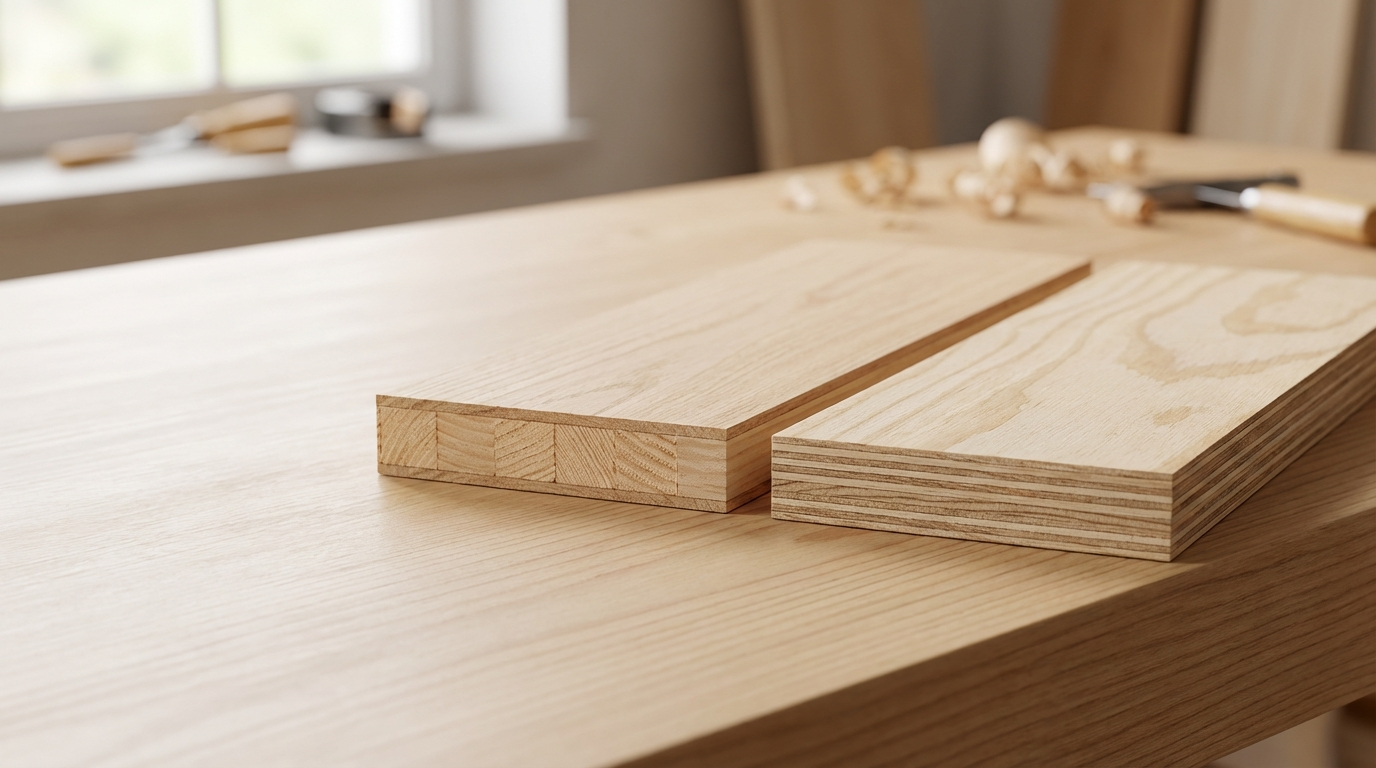
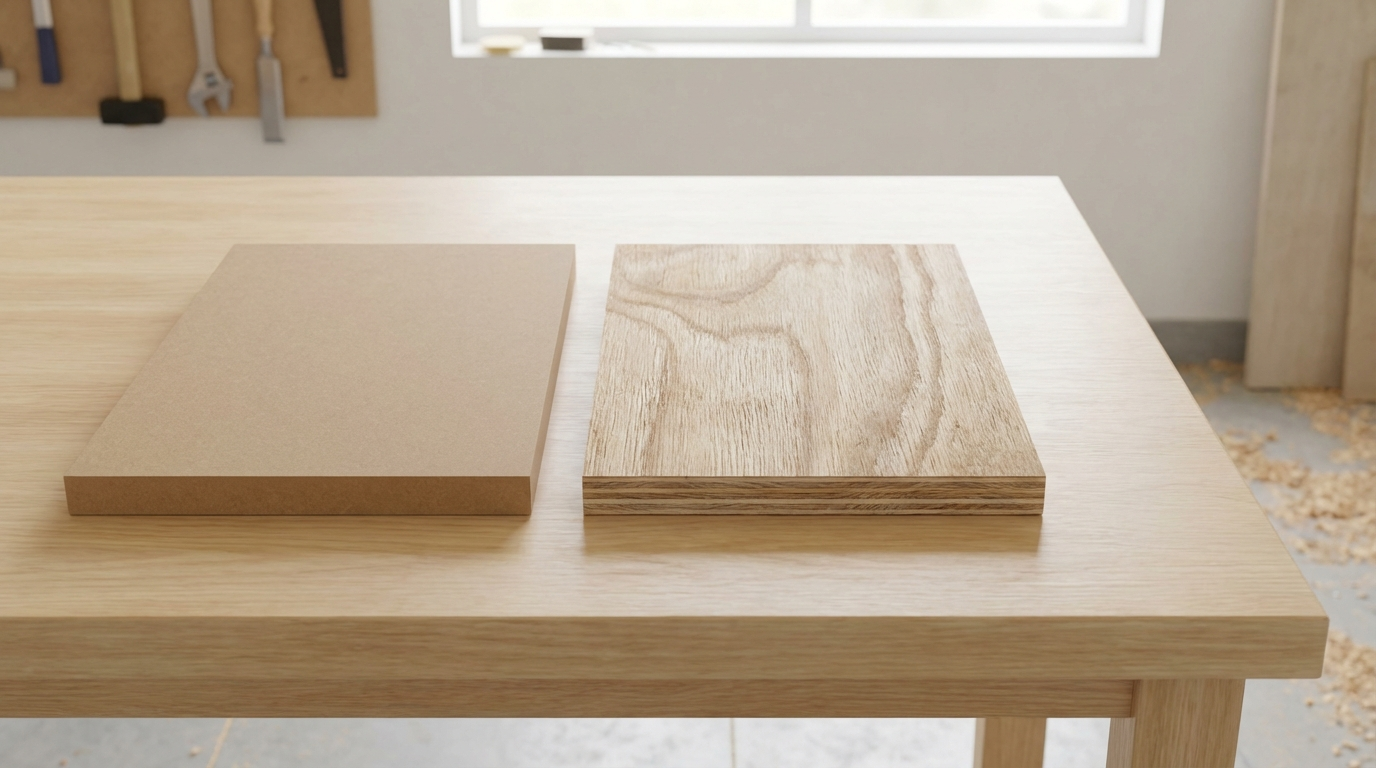
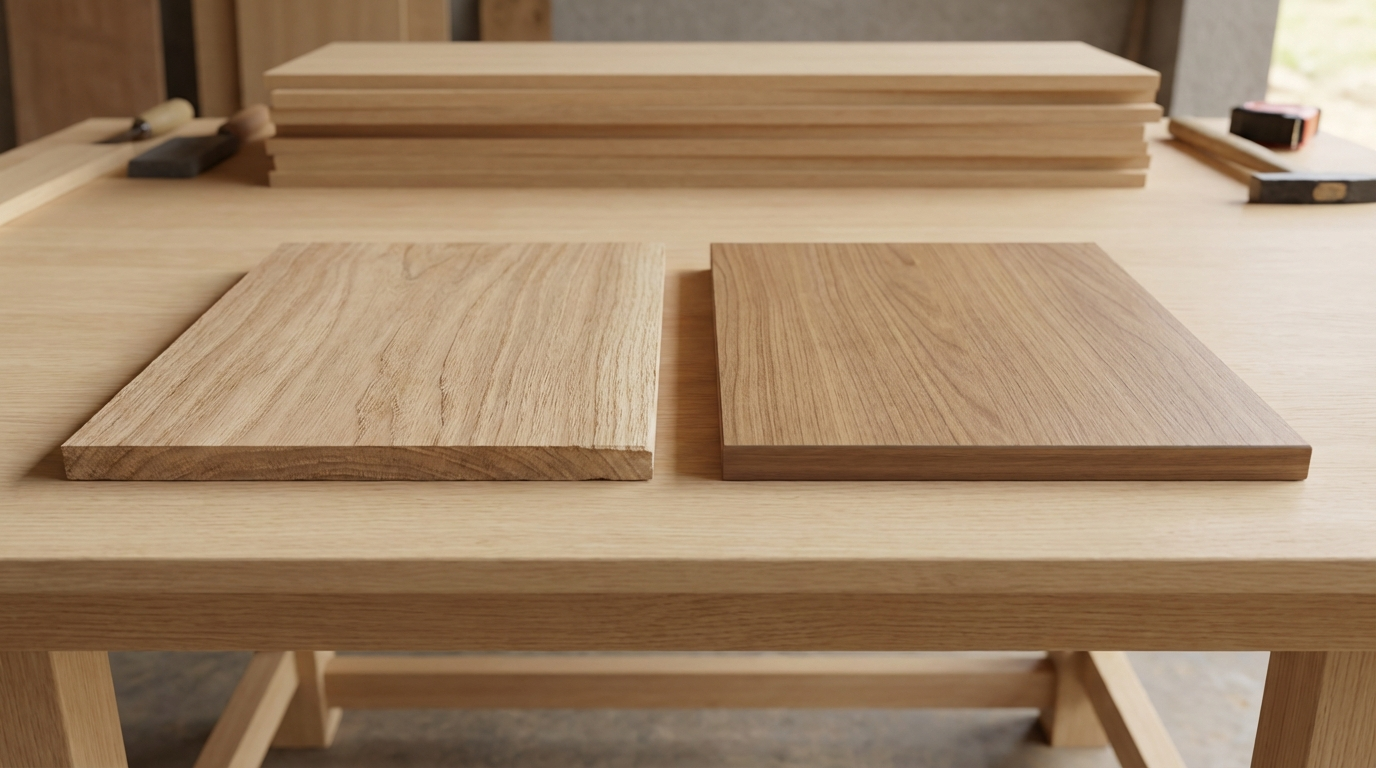
Duroply vs Kitply: value-for-money plywood comparison
Duroply vs Kitply: value-for-money plywood comparison with a clear decision table on grade, thickness, moisture performance, warranty and price factors. Made
Quick Decision Summary
Duroply suits value-driven wet-zone projects like kitchens; Kitply fits versatile furniture with balanced moisture needs.
If you're in a hurry: Both brands deliver reliable plywood in MR, BWR, and BWP grades, but value hinges on matching grade to your site's humidity and load. Duroply often shines in affordable BWP for monsoons and shuttering, while Kitply provides consistent performance across furniture and doors. Check core uniformity and glue lines on-site, prioritize calibrated sheets for zero wastage, and factor city logistics—expect 20-30% variance North vs South India. Use the decision table below for your scenario.
- Choose Duroply if heavy-duty boiling water resistance on a moderate budget, like coastal bathrooms or formwork.
- Choose Kitply if all-purpose furniture with good BWR availability and smoother finishes for interiors.
- Avoid brand-only focus if unverified stock; test moisture resistance yourself.
Note: This page is independent informational content and is not affiliated with any manufacturer.
If You’re Searching for Duroply or Kitply, Here’s What People Usually Mean
Searches for these brands typically seek plywood grades suited to Indian homes—MR for dry bedrooms, BWR for kitchens, BWP for bathrooms—or comparisons on moisture hold-up during monsoons. Homeowners want value per sq ft without delamination risks; contractors prioritize stock availability and cutting ease; carpenters check veneer quality for polishing. Common confusion: assuming brand name guarantees performance without grade verification, leading to MR used in wet zones.
What Do Duroply and Kitply Plywood Searches Reveal About User Needs?
Users often hunt for real-world durability in humid climates, termite resistance for storage yards, and thickness options like 18mm for cabinets. Nuance: Branded queries spike around renovation seasons, focusing on "which for modular kitchen" or "price per sheet." Next step: List your top 3 uses (e.g., wardrobe, door frame) and match to BWR/BWP, then inspect samples for edge straightness and no core gaps.
How to Compare Duroply-Type Options to Alternatives (Without Guesswork)
Focus on verifiable traits: glue shear strength via boil test demo, face veneer thickness (1.5-2.5mm ideal), core material (hardwood vs softwood mix). Duroply lines emphasize BWP for exposure; Kitply covers full spectrum with calibrated options. Alternatives like regional mills match if IS-marked, but check batch consistency. Use on-site knocks for density and weight per sheet.
What Plywood Grades These Brands Typically Represent
Duroply and Kitply plywood refers to engineered panels in standard grades: MR (moisture resistant for interiors), BWR (boiling water resistant for semi-wet), BWP (boiling water proof/marine for full exposure). Where people get confused: Mixing MR as "waterproof," ignoring calibration (uniform thickness reduces sawdust waste), assuming thin veneers equal premium, overlooking core gaps from poor pressing, or skipping termite treatment checks in humid belts.
India-Specific Reality Check
Monsoon humidity above 80% delaminates MR grades in 6-12 months if unsealed; coastal salt accelerates termite risks. Storage in open godowns warps sheets—insist on covered stacking. Contractor workflows favor 8x4ft sizes for truck loading, but site handling causes edge chips. Workmanship gaps like uneven polishing expose glue lines to spills.
Why Does Plywood Fail Faster in Indian Monsoons?
High RH swells cores unevenly, bubbling glue if not phenolic-based. Conditions: Unprotected stacking outdoors or bathroom cabinets without edge banding. Check: Weigh a sample sheet (heavier signals denser core); next, request a 2-hour water soak demo—no separation means BWR+ viable.
Price Range and Cost Drivers (India)
Expect MR 18mm at ₹70-110/sq ft, BWR ₹90-140, BWP ₹120-200+, varying by tier-1 cities (Delhi/Mumbai 20% over Chennai). Drivers: Thickness (12-25mm), face veneer grade (AAA hardwood adds 15-25%), calibration (±0.3mm tolerance cuts waste), glue lines (5+ for premium), batch freshness, and logistics (add 10-15% for remote).
How to ask for a quote: Specify "18mm BWP calibrated, IS 710 marked, hardwood core, no defects, FOB price incl. GST." Budget example: 100 sq ft kitchen cabinets in BWR = ₹10,000-16,000 material, plus 20% carpenter markup.
Two-Minute Comparison That Actually Helps
| Factor | Duroply Strengths | Kitply Strengths | Verification Tip |
|---|---|---|---|
| Grade Range | Strong BWP/marine focus | Full MR-BWR-BWP | Confirm IS mark (303 MR, 10702 BWR, 710 BWP) |
| Moisture Hold | Good for exposure | Balanced interiors | Boil test edge sample 30min |
| Value Zones | Affordable heavy-duty | Versatile furniture | Check sheet weight/core gaps |
| Finish Options | Functional veneers | Smoother laminates | Polish test on face |
Choose based on wet vs dry, heavy vs light use—BWP for kitchens regardless of brand.
How to Choose in 5 Steps
- Match grade to zone: MR dry, BWP wet.
- Inspect sheet: Knock for solid core, measure thickness uniformity.
- Test moisture: Soak corner 1hr, no swell.
- Verify treatment: Ask termite proofing method (chemical/heat).
- Negotiate batch: Fresh stock, return policy for defects.
Skip steps? Risk warping in 3 months or 15% wastage from poor calibration.
Which Offers Better Value for Kitchen Cabinets?
BWP grade from either, but Duroply-style for budget exposure; Kitply for polished looks. Nuance: Coastal needs termo-treated cores. Step: Demo glue line strength; budget ₹120+/sq ft ensures 10+ year life.
Decision Framework: Match Your Scenario
| Your Condition | Recommended Grade/Brand Type | What to Verify |
|---|---|---|
| Tight budget, dry bedroom | MR, either brand | Calibration, veneer thickness |
| Monsoon kitchen | BWP, Duroply-like | Boil test, core density |
| Coastal bathroom | BWP marine | Termo treatment, edge sealing |
| Heavy load wardrobe | BWR 18mm+, Kitply-like | Screw hold test |
| Fast delivery | Local stock MR/BWR | Fresh batch date |
| High scratch risk | Laminate-ready calibrated | Surface smoothness |
Trade-offs and Limitations
BWP costs 40-60% more than MR but lasts 3x in wet zones; thinner sheets (12mm) save money but sag under load. Brands limit custom sizes—stick to 8x4. Calibration adds upfront but cuts carpenter time 20%.
Is Duroply Cheaper Than Kitply?
Often yes for BWP equivalents due to production focus, but varies 10-20% by region. Nuance: Factor total project—cheaper core gaps mean more waste. Check: Compare 18mm quotes side-by-side, add delivery.
Common Buyer Mistakes and How to Avoid Them
- Mistake: Brand loyalty over grade. Why: Marketing hype. Do: Prioritize IS 710 for wet.
- Mistake: Ignoring calibration. Why: Assumes uniform. Do: Measure 4 corners ±0.5mm.
- Mistake: Outdoor storage. Why: Rain warp. Do: Cover stack immediately.
- Mistake: Thin veneer buy. Why: Looks cheap post-polish. Do: 1.5mm+ face.
- Mistake: No soak test. Why: Trust labels. Do: Wet edge 2hrs on-site.
- Mistake: Skipping core check. Why: Hidden gaps. Do: Tap for hollow sounds.
- Mistake: Exact price chase. Why: Ignores variance. Do: Quote with specs.
- Mistake: Post-cut complaints. Why: No seal. Do: Edge-band before install.
- Mistake: Termite ignore. Why: Dry spell hides. Do: Ask treatment proof.
Failure Modes and Fixes
- Symptom: Edge swelling. Cause: MR in wet. Prevent: BWP + seal. Fix: Dry, reseal.
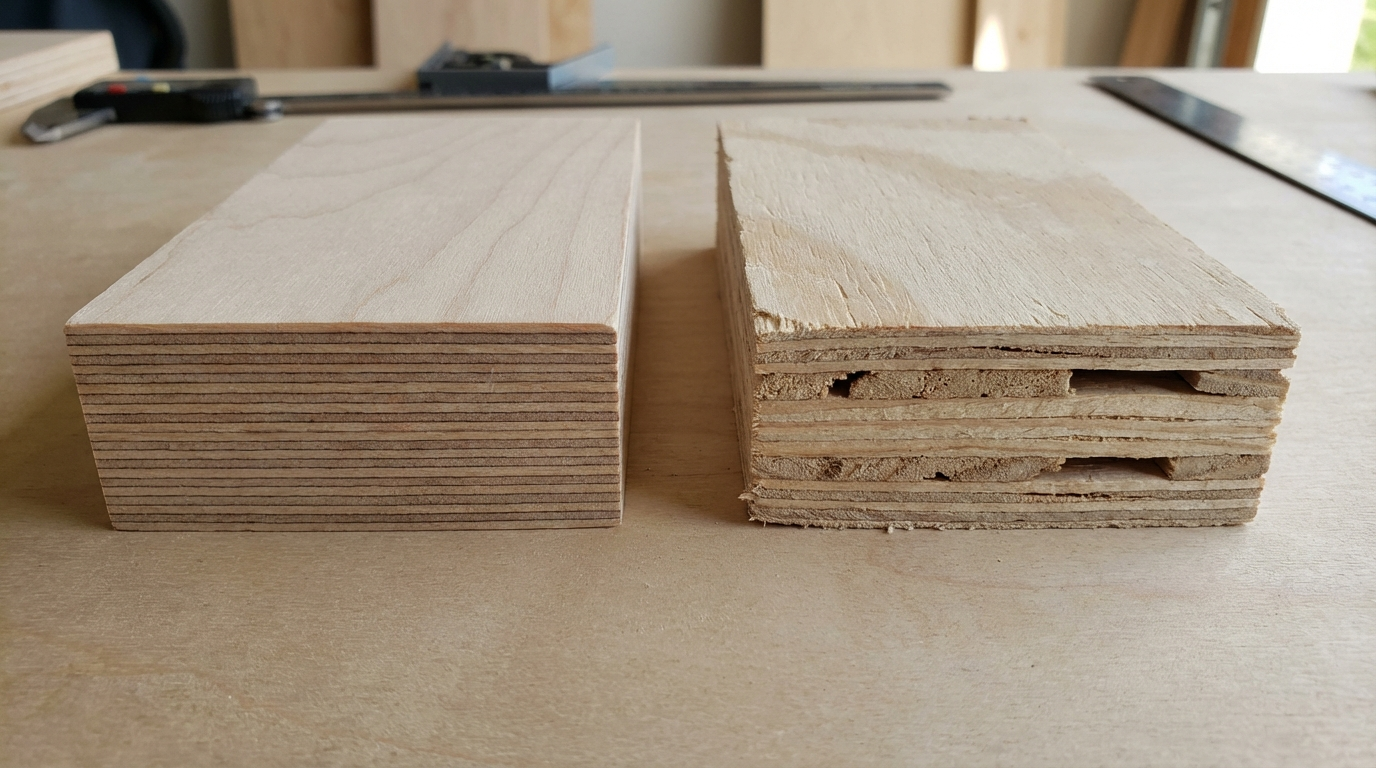
- Symptom: Core crumble. Cause: Softwood mix. Prevent: Hardwood core. Fix: Reinforce frame.
- Symptom: Delamination. Cause: Weak glue. Prevent: Boil test. Fix: Clamp reglue.
- Symptom: Screw pullout. Cause: Low density. Prevent: 18mm+. Fix: Plug anchors.
- Symptom: Veneer peel. Cause: Poor adhesion. Prevent: Fresh batch. Fix: Sand reglue.
- Symptom: Termite dust. Cause: Untreated. Prevent: Chem/heat process. Fix: Fumigate replace.
- Symptom: Warp bow. Cause: Uneven moisture. Prevent: Acclimatize 48hrs. Fix: Plane edges.
Quality Checks You Can Do Without Lab Tests
Before: Visual—no knots/cracks, IS stamp, weight (25kg+ for 18mm). Questions: "Boil test video?" Red flags: Faded labels, dusty stock. After cutting: Even edges, no splinters. Post-install: Wipe spills fast, check alignment.
Tips for Homeowners
Clean with damp cloth only; avoid standing water. Do: Seal edges yearly. Don't: Heavy polish.
Tips for Carpenters
Cut with fine blade; pre-drill hinges. Fasten 50mm from edges; handle by corners.
Tips for Architects
Spec "BWP calibrated 18mm"; detail drip edges in wet zones; pair with HDHMR shelves.
Tips for Modular Makers
QC: Random density checks; standardize cuts for repeatability; track complaints by batch.
Which is Better for Termite-Prone Areas?
Treated BWP from either, with heat/chem process. Nuance: Monsoon boosts risk. Verify: Ask penetration depth; inspect after 6 months.
FAQs
Duroply vs Kitply: Which for Modular Kitchen?
Kitply BWR for cabinets if polished finish matters; Duroply BWP for sinks/showers. Both handle spills if sealed, but coastal picks BWP to dodge 80% RH failures. Always acclimatize sheets 2 days; verify calibration to minimize 10% fit issues in prefab.
What Thickness for Wardrobes?
18mm BWR standard for shelves/doors, preventing sag under 50kg load. Thinner risks bow; thicker adds weight/cost. Check screw hold by twisting sample; pair with battens for heavy storage in humid homes.
How to Spot Fake Sheets?
Missing IS marks, uneven glue smell, lightweight cores signal issues. Legit ones have crisp edges, uniform color. Test: Hammer nail—easy penetration means poor density. Buy from volume dealers for fresh batches.
Best for Bathrooms?
BWP 12-18mm with PVC edge tape; avoids steam delam. India humidity demands phenolic glue—confirm via supplier demo. Install with ventilation gaps; reseal yearly for 15-year life.
Price Difference Between Brands?
10-25% variance; Duroply competitive in BWP, Kitply even in MR. City logistics swing it—North pricier. Quote full specs; haggle on volume for 5-10% off.
Termite Resistance Comparison?
Both higher grades use preservatives; effectiveness shows post-monsoon. Prevent via site fumigation + treated cores. Inspect annually; replace infested panels promptly.
Warranty Realities?
Varies by dealer/stock; focus on grade compliance over promises. Field test beats paper—boil/termite checks ensure longevity. Confirm replacement ease locally.
Alternatives for Value?
IS-certified locals match if calibrated; brands for consistency. Weigh total cost incl. waste—premium saves rework. Test samples always.
Storage Tips Pre-Install?
Horizontal stack, covered, off-ground; rotate batches. Monsoon: Plastic sheet over. Acclimatize to room RH 48hrs to prevent cupping.
Disclaimer: This content is provided for general informational purposes based on industry practices and publicly available information. Product specifications, standards, prices, and availability may vary by manufacturer, region, and time. Readers should independently verify details with manufacturers, dealers, or qualified professionals before making purchase or construction decisions.Want Plywood Suggestions?
Share a few details and a Duro BOIL specialist will suggest suitable brands and connect you to responsive dealers.