Edge banding for MDF: thickness, glue and failure fixes
Learn edge banding for mdf in simple terms with examples, verification tips, and a quick checklist so you choose the right board for Indian conditions.
Quick Decision Summary
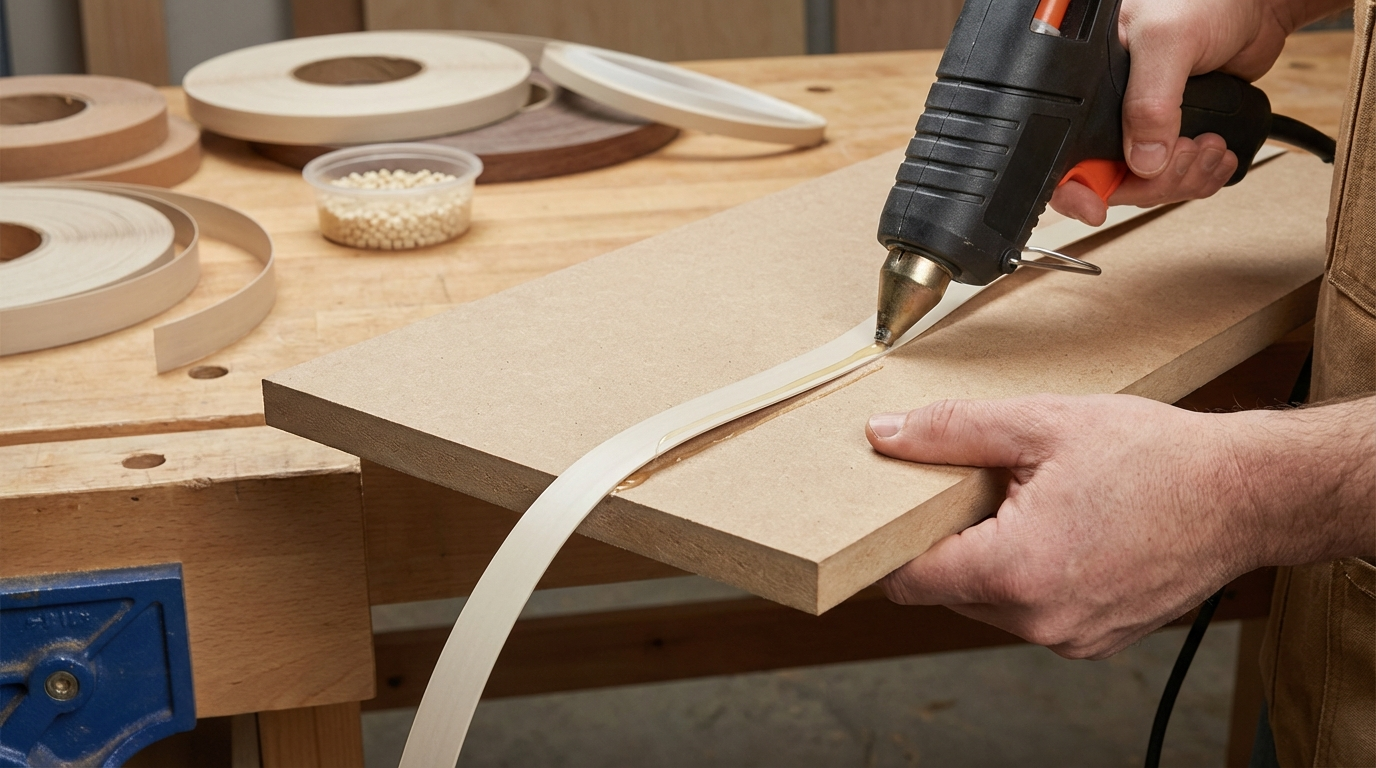
Match edge banding thickness to MDF board (e.g., 18-22mm wide tape for 18mm MDF) using 0.8-2mm thick PVC/ABS with EVA hot melt glue for most jobs.
If you're in a hurry: Opt for pre-glued PVC edge banding tape at 1mm thickness applied via machine or iron in a dry workshop. This seals porous MDF edges against Indian humidity, prevents swelling, and gives a clean finish. Test adhesion on scrap first, trim flush, and seal joints. Avoid thin tapes under 0.5mm for heavy-use furniture as they chip easily.
- Choose this if: Building modular kitchens or wardrobes in humid areas—PUR glue adds moisture resistance.
- Avoid this if: Low-budget manual jobs without heat source—use PVA glue instead but expect shorter life.
What This Term/Material Actually Means
Edge banding for MDF covers the raw, absorbent edges of medium-density fiberboard panels with a thin strip of material like PVC, ABS, or veneer. It protects against moisture ingress, hides the unfinished look, and strengthens the edge for handling or finishing. The tape comes pre-glued or unglued, applied hot or cold.
Where people get confused:
- Thickness refers to tape gauge (0.4-3mm), not board width—mismatch causes overhang or gaps.
- Not just decoration—unsealed MDF edges swell 20-30% in water, ruining cabinets.
- Pre-glued tape needs exact heat; too much burns, too little peels.
- PVC vs ABS: both seal, but ABS handles scratches better long-term.
- Manual vs machine: irons work for small jobs, but uneven pressure leads to bubbles.
What is the ideal edge banding thickness for 18mm MDF?
The ideal thickness is typically 0.8-2mm for 18mm MDF to balance durability and flush trimming. Thinner (0.4-0.5mm) suits light decorative work like shelves, while 1.5-2mm fits high-wear kitchens resisting impacts. In India, 1mm PVC is common for cost-effective sealing. Check by matching tape width to board thickness (18-22mm wide) and testing bend radius—no cracking. Next, verify glue activation at 180-200°C for strong bond without charring.
Why do MDF edges need banding more than plywood?
MDF edges are highly porous from compressed fibers, absorbing moisture rapidly and swelling, unlike plywood's layered veneers. In humid Indian sites, unbanded MDF cabinets warp within months. Banding creates a waterproof barrier. Nuance: HDHMR variants resist better but still need it for longevity. Inspect edges post-cut—if crumbly, band immediately before lamination.
India-Specific Reality Check
In monsoon-heavy regions like Mumbai or coastal Kerala, MDF edges drink humidity like a sponge, causing delamination in weeks if unbanded. Workshops often store sheets outdoors, worsening porosity. Carpenters rush cuts without drying, leading to glue failures. Coastal salt air accelerates corrosion on metal machines, weakening heat application. Solution: Band post-cut in shaded areas, use fans for quick dry, and store banded pieces flat.
Does high humidity cause edge banding to fail faster in India?
Yes, 80%+ monsoon humidity softens MDF edges, weakening glue bonds and causing peeling. EVA glue holds in dry interiors but lifts in kitchens/bathrooms. PUR resists better by curing with moisture. Trade-off: PUR costs more but lasts 2-3x longer. Step: Acclimatize tape and board 48 hours in site humidity, apply extra pressure roller, and silicone-seal ends.
Glue Types for Edge Banding MDF: Quick Comparison
EVA hot melt is standard for speed and cost, melting at 160-180°C. PUR offers superior moisture/heat resistance but needs ventilation. PVA works manually for small batches, drying slower.
| Glue Type | Best For | Humidity Rating | Application |
|---|---|---|---|
| EVA | Budget machines | Medium | Hot melt gun/iron |
| PUR | Wet zones | High | Pro edge banders |
| PVA | Manual jobs | Low | Brush/clamp |
Which glue is best: EVA or PUR for MDF edge banding?
PUR edges out EVA for Indian conditions with better moisture cure and flexibility, preventing cracks in swelling MDF. EVA suffices for dry bedrooms, cheaper upfront. Both need clean edges—wipe with IPA first. Test: Apply to scrap, expose to steam 24hrs; no lift means good. Upgrade to PUR for kitchens to cut callbacks.
How to Choose Edge Banding in 5 Steps
- Match dimensions: Tape width = board thickness + 2mm overhang; gauge 1-2mm.
- Pick material: PVC for budget, ABS for durability.
- Select glue: Hot melt for machines, PVA manual.
- Check finish: Matte for fingerprints, gloss for showpieces.
- Test site conditions: Humidity >70%? Go thicker/PUR.
Skip steps 3-4 and risk peeling in monsoons—always scrap-test.
Decision Framework: Edge Banding by Project Conditions
| Conditions | Recommended | What to Verify |
|---|---|---|
| High humidity/coastal | 2mm ABS + PUR glue | Bends without cracking; moisture test on scrap |
| Heavy use kitchen | 1.5mm PVC + EVA | Impact resistance; flush trim possible |
| Tight budget bedroom | 0.8mm PVC pre-glued | Adheres at iron temp; no bubbles |
| Manual carpenter | 1mm veneer + PVA | Clamp holds 4hrs; even dry |
| Fast modular production | 1mm ABS machine tape | Feeds smoothly; no jams |
What width of edge banding tape for 16mm vs 19mm MDF?
Use 18-20mm wide for 16mm MDF, 21-23mm for 19mm to allow trimming. Standard Indian rolls match common boards. Too narrow exposes core; too wide wastes material. Nuance: Pre-cut lengths save time but cost more. Measure board precisely, add 1mm/side, test fit before gluing.
Tips for Homeowners: Durability Do's and Don'ts
- Do: Wipe spills immediately; use coasters on edges.
- Don't: Drag cleaners with abrasives—scratches expose MDF.
- Check yearly for lifts; silicone refill gaps.
Tips for Carpenters: Cutting and Application
- Clean edges with 120-grit sand; vacuum dust.
- Apply in 25-30°C, low humidity—use dehumidifier.
- Fasten hinges 10mm from banded edge for strength.
- Extra roller pass on curves prevents air pockets.
Tips for Architects: Spec Writing and Detailing
- Specify "1.5mm ABS/PUR, humidity-tested."
- Detail overhang trim to 0.2mm; wet-zone sealants.
- Call out acclimatization: 72hrs site-conditioned.
Tips for Modular OEMs: QC and Repeatability
- Batch-test adhesion; log temps/pressures.
- Automate trimming for consistency.
- Reduce returns: Pre-band shelves before dispatch.
Trade-offs and Limitations
Thicker tapes (2mm+) resist chips but harder to trim flush without machines. PVC flexes well but yellows over time; ABS stays crisp. Hot melt speeds production but needs power—manual PVA suits off-grid sites. All bandings add 5-10% cost but save 50% on moisture fixes. Limitation: No banding fully waterproofs; pair with MR-MDF.
Common Buyer Mistakes and How to Avoid Them
- Mistake: Using thin tape on thick MDF. Why: Chips on handles. Fix: Scale thickness to use.
- Mistake: Skipping edge cleaning. Why: Dust blocks glue. Fix: IPA wipe + vacuum.
- Mistake: Wrong iron temp. Why: Burn/char. Fix: 180°C test scrap.
- Mistake: No overhang allowance. Why: Core exposure. Fix: +2mm width.
- Mistake: EVA in wet areas. Why: Peels fast. Fix: PUR upgrade.
- Mistake: Rushing trim. Why: Splinters. Fix: Cool 5min, 220-grit sand.
- Mistake: Storing humid. Why: Pre-failure. Fix: Dry racks.
- Mistake: Mismatch finish. Why: Visible seams. Fix: Laminate samples match.
- Mistake: No pressure roller. Why: Bubbles. Fix: Hand roller post-iron.
Failure Modes and Fixes
- Symptom: Peeling ends. Cause: Poor glue/pressure. Prevent: Extra roller. If happening: Re-glue + clamp.
- Symptom: Bubbling. Cause: Moisture/trapped air. Prevent: Dry boards. If: Slit + repress.
- Symptom: Chipping corners. Cause: Thin tape. Prevent: 1.5mm+. If: File + repaint.
- Symptom: Lifting in humidity. Cause: EVA swell. Prevent: PUR/MR-MDF. If: Silicone seal.
- Symptom: Yellowing. Cause: PVC UV. Prevent: ABS interior. If: Polish mild.
- Symptom: Gaps post-trim. Cause: Shrinkage. Prevent: Acclimatize. If: Filler + sand.
- Symptom: Cracks on bends. Cause: Rigid tape. Prevent: Flexible PVC. If: Replace section.
Quality Checks You Can Do Without Lab Tests
Before buying: Bend tape—flexible, no cracks; match color samples.
Questions for supplier: "PUR or EVA? Humidity-tested?" Red flag: Vague specs.
Post-cut: Sand edge smooth; no loose fibers.
After banding: Tap test—no hollow; steam expose 10min, check lift.
Installed: Alignment flush; clean with damp cloth, dry fast.
Why does edge banding peel off MDF after a few months?
Peeling stems from moisture weakening glue, often EVA in humid spots, or poor initial pressure. Indian kitchens amplify via steam. Nuance: PUR bonds reactively stronger. Next: Inspect for water paths (sinks), reseal with PUR dots, roller firm. Prevent by banding MR-grade MDF only.
Can I apply edge banding manually without a machine?
Yes, irons or heat guns with pre-glued tape work for carpenters. Clamp 4-6hrs post-PVA. Limits speed for large jobs. Step: Clean, iron 10sec/section, roller, trim cool. In humid shops, fan-dry to avoid tacky fails.
FAQs
Is ABS edge banding better than PVC for MDF?
ABS typically outperforms PVC in scratch/impact resistance and longevity, ideal for Indian homes with kids/pets. PVC flexes more for curves but yellows faster. Both seal moisture well if glued right. Choose ABS for kitchens (higher cost, better ROI); PVC for bedrooms. Verify: Scratch test with key—no marks wins. Pair with PUR for max durability in monsoons.
How long does edge banding last on MDF furniture?
Well-applied banding lasts 5-10 years indoors, less in wet zones without PUR. Factors: Glue type, traffic, cleaning. India reality: 3-5 years average due to humidity. Extend by avoiding water, mild soaps. Check: Annual tug test; reseal lifts early to prevent spread.
What temperature for iron-on MDF edge banding?
Typically 170-200°C for pre-glued EVA, adjust per tape—too hot chars, too cool lifts. Test scrap: Glossy bond without smoke. Humid days need higher briefly. Cool 2min before trim to avoid pulls. Machines auto at 180°C for consistency.
Does edge banding make MDF fully waterproof?
No, it seals edges effectively but MDF core absorbs if drilled post-banding or if laminate lifts. Use with MR/HDHMR for baths. India tip: Extra end-seal on shelves. Test: Submerge banded scrap 24hrs—minimal swell ok.
Can I paint over PVC edge banding?
Yes, after light sand (220-grit) and primer for adhesion. Gloss PVC needs degrease first. Avoid in high-moisture—paint cracks. Nuance: ABS grips paint better. Dry 48hrs; topcoat polyurethane for shine protection.
How to fix bubbled edge banding on MDF?
Slit bubbles lengthwise, squeeze air/glue out, repress with roller/hot iron. Cause often trapped moisture—dry fully next time. Severe: Peel, clean, reapply. Prevent: Vacuum edges pre-band, steady pressure.
Is veneer edge banding suitable for humid Indian kitchens?
Veneer looks natural but absorbs moisture easier than PVC/ABS unless sealed thickly. Use 1mm+ with PUR, multiple coats post. Better for dry areas. Trade-off: Beauty vs longevity—laminate over for protection.
What to do if edge banding doesn't stick to MDF?
Clean residue with IPA, roughen MDF lightly, retry hotter glue. Causes: Dust, cold shop, wrong glue match. Switch PUR if humid. Always scrap-test batches for consistency. Disclaimer: This content is provided for general informational purposes based on industry practices and publicly available information. Product specifications, standards, prices, and availability may vary by manufacturer, region, and time. Readers should independently verify details with manufacturers, dealers, or qualified professionals before making purchase or construction decisions.
Want Plywood Suggestions?
Share a few details and a Duro BOIL specialist will suggest suitable brands and connect you to responsive dealers.