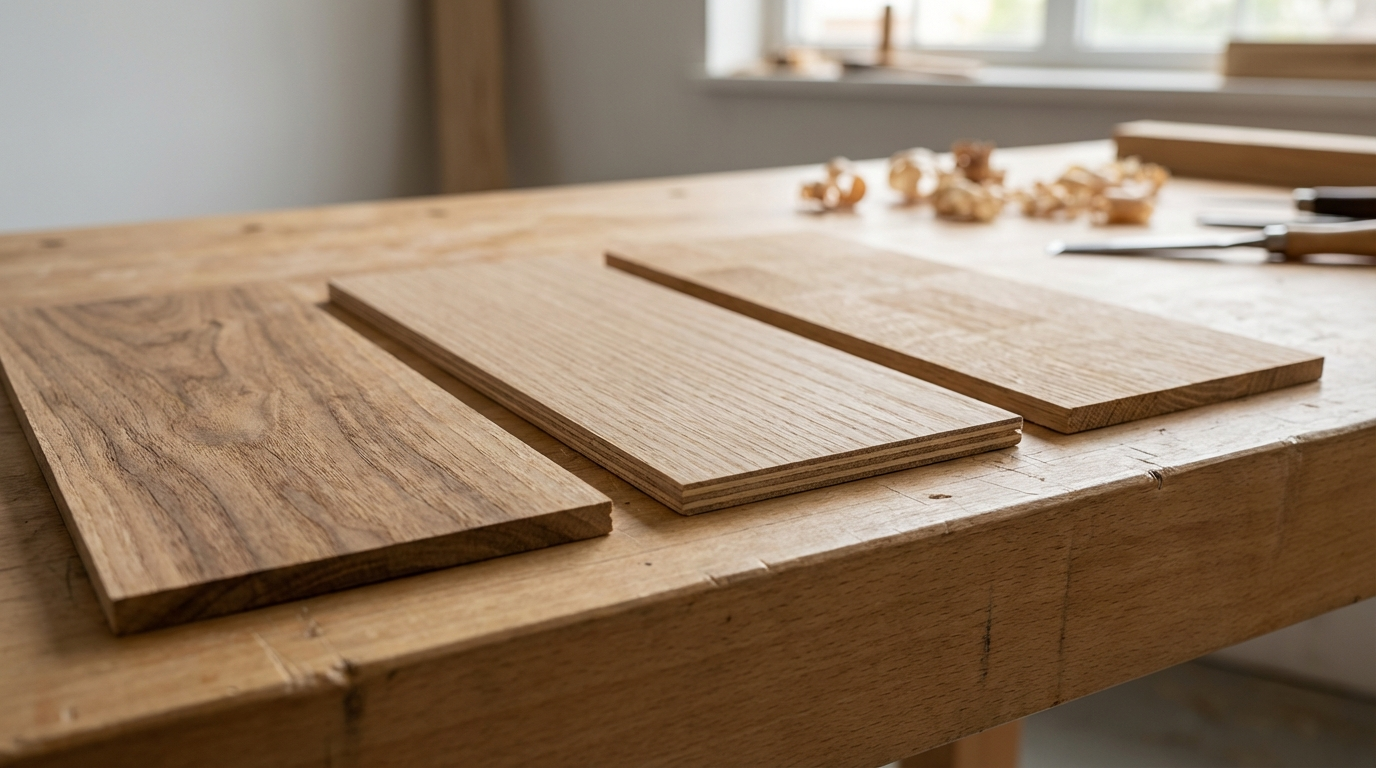
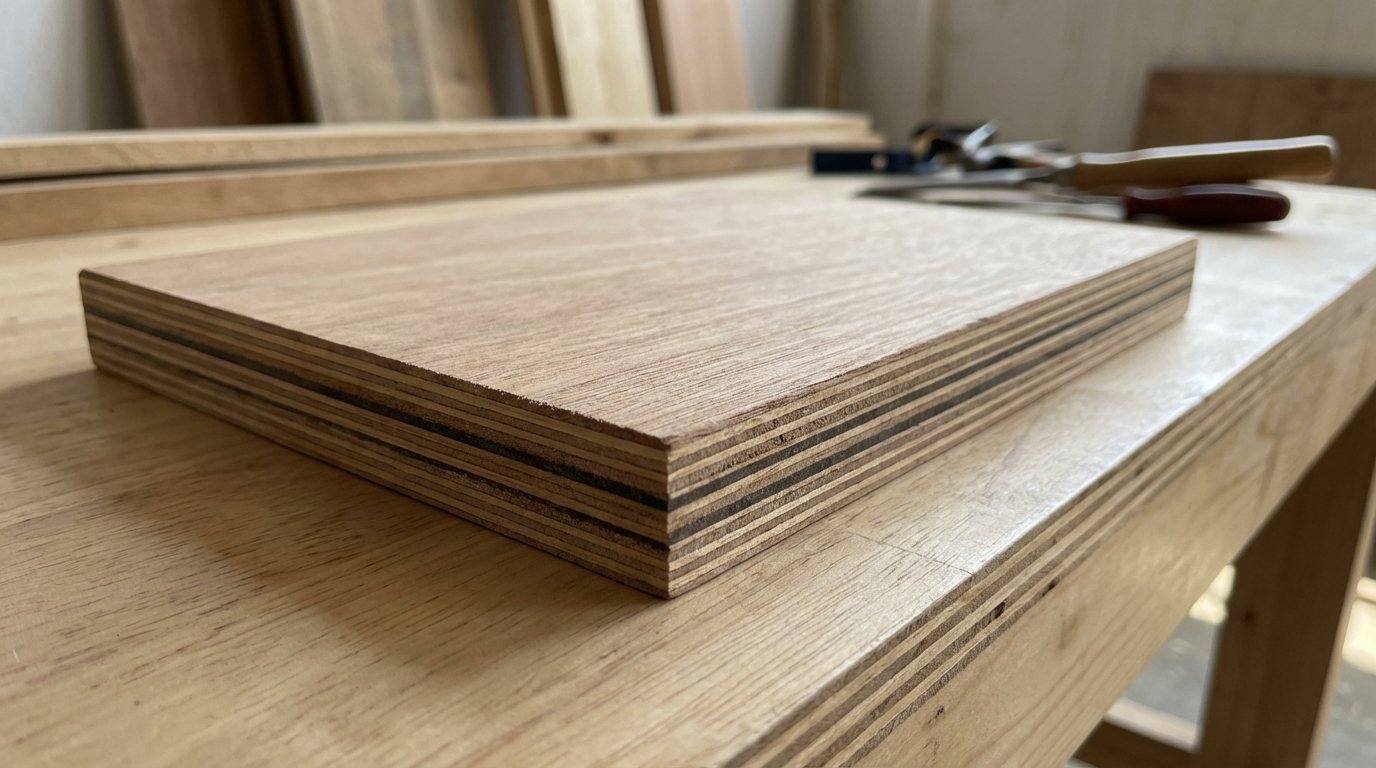
Fire-retardant MDF: when you actually need FR boards
Fire-retardant MDF: when you actually need FR boards: a practical India-focused guide with checklists, FAQs and quick tables to help you choose the right
Quick Decision Summary
Opt for fire-retardant MDF only in commercial spaces or high-rises where building codes demand low flame spread; regular MDF works fine for most homes.
If you're in a hurry: Fire-retardant (FR) MDF slows fire spread for safety in public areas like offices or schools, but it's overkill and costlier for bedrooms or kitchens in low-rise homes. Check your local building approval—NBC guidelines prioritize it for corridors, stairs, and assembly spots in high-occupancy buildings. Verify red color and even density on-site; pair with proper sealing to handle humidity. Save budget by using it selectively where mandated, like partitions near exits.
- Choose FR MDF if: Commercial project, high-rise interiors, public furniture, or code requires Class 1-2 flame spread.
- Avoid FR MDF if: Private home, dry zones, budget-tight, or no fire safety mandate—go for standard or moisture-resistant instead.
What This Term/Material Actually Means
Fire-retardant MDF is medium-density fiberboard infused with chemicals like phosphates or borates during production to resist quick ignition and flame spread. It chars slowly instead of bursting into flames, buying time for escape in a fire. Typically dyed red for easy ID, it meets low-flame-spread goals in building guidelines without being fully fireproof.
Where People Get Confused About FR MDF
- It's fireproof—nope, it still burns eventually, just slower.
- Required everywhere—only in regulated public/commercial spots.
- Always moisture-proof—needs MR variant for kitchens/bathrooms.
- Cheaper than plywood—premium pricing due to additives.
- Red color fades easily—often needs topcoat for aesthetics.
- No difference in machining—cuts like regular but check dust for irritants.
Is Fire-Retardant MDF Actually Fireproof?
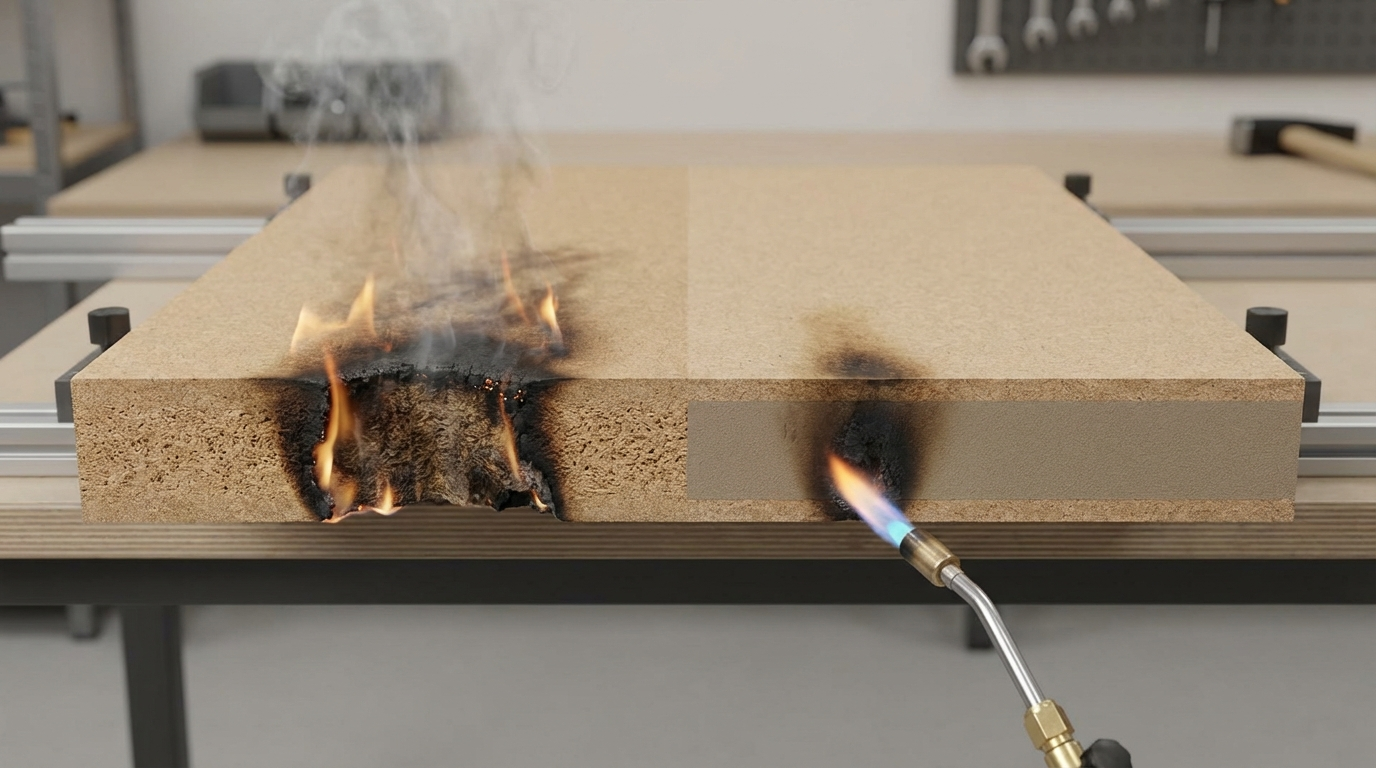
No, FR MDF is not fireproof; it slows ignition and flame growth by forming a char barrier that limits oxygen. In tests, it achieves low spread ratings suitable for codes, but prolonged heat breaks it down. For India homes, this means extra minutes for evacuation in rare fires, not immunity. Always combine with smoke detectors and clear exits. Next step: Ask suppliers for flame spread demo on a scrap—safe spark test shows char vs rapid burn.
India-Specific Reality Check
In monsoon-heavy India, FR MDF demands dry storage—sheet it flat, elevate off ground, cover loosely to avoid moisture leaching chemicals. Coastal areas amplify risks; untreated stacks warp fast. Contractor workflows often ignore this, leading to delam on-site. Workmanship gaps like poor edge sealing spike failures in humid Mumbai or Chennai. Codes like NBC push FR for high-rises (>15m) in exits/corridors, but lax enforcement in Tier-2 cities means verify municipal nod first.
Does India's National Building Code Mandate FR Materials Everywhere?
Not everywhere—NBC focuses FR/low-spread finishes (Class 1-2) on walls/ceilings in stairs, corridors, assembly halls, high-rises, and public buildings. Residential low-rises get leniency unless high-hazard. Commercial spots like offices/hotels need it for partitions/furniture. Nuance: High-occupancy overrides home rules. Check: Review your occupancy certificate or consult fire officer for project type.
Price Range and Cost Drivers (India)
FR MDF typically costs 20-50% more than standard—expect ranges like Rs 80-150/sqft for 18mm in metros, lower in inland hubs. Drivers: Thickness (6-25mm), density (700-850 kg/m³), chemical grade, brand calibration, city logistics (Mumbai premiums 15-20%). Thinner sheets cheaper per sqft but more seams. Quote checklist: Specify "FR Class 1 equivalent, 18mm, calibrated, red core"; add transport/wastage (5-10%). Sample: 100sqft office partition at 18mm ~Rs 10,000-18,000 total, varies locally.
How to Choose in 5 Steps
- Assess project risk: Public/commercial? Mandate check via architect/fire NOC.
- Match environment: Humid? Demand MR-FR hybrid; dry? Basic FR.
- Verify quality: Red uniform core, no lumps, flat stack test.
- Budget balance: Calculate premium vs regular; limit to code zones.
- Test post-buy: Edge tap for solidity; small safe burn scrap (outdoors).
Skip steps? Risk code rejection or early char/delam in monsoons.
FR MDF vs Regular: Which for Your Kitchen Cabinets?
For home kitchens, regular MR MDF often wins—FR adds unneeded cost unless high-rise mandate. FR suits commercial pantries with crowds. Trade-off: FR chars slower but same swelling risk without MR. Verify: Ask for humidity cycle demo. Step: Hybrid MR-FR if coastal kitchen.
Two-Minute Comparison That Actually Helps
| Aspect | Regular MDF | FR MDF | MR Plywood Alt |
|---|---|---|---|
| Fire Behavior | Fast spread | Slow char | Medium, treatable |
| Cost Premium | Base | +25-40% | +10-20% |
| Best For | Dry home furniture | Public partitions | Humid zones |
| Humidity Hold | Poor | Poor (needs MR) | Good |
| Machinability | Smooth | Smooth, dusty | Good |
Choose by wet vs fire risk: Commercial fire-heavy? FR. Home humid? MR alt.
Decision Framework: Match Your Needs
| Condition | Recommended | Verify This |
|---|---|---|
| Wet zone (kitchen) | MR-FR MDF | Swab test no swell |
| Coastal high-rise | FR MDF | Red core uniform |
| Heavy use office | FR MDF | Flatness <1mm/m |
| Tight budget home | Regular MDF | No code need |
| High scratch risk | HDHMR FR | Hardness tap |
| Fast delivery | Stock FR | Local batch avail |
Trade-offs and Limitations
FR MDF hikes cost without moisture boost—pair with laminates. Red hue demands paint/lam, adding labor. Chemicals may raise VOCs initially; ventilate. Not structural; limits spans. In India heat, seal edges tight or chemicals leach faster.
Common Buyer Mistakes and How to Avoid Them
- Mistake 1: Assuming all red MDF is FR. Why: Dyes mimic. Do: Spark test scrap.
- 2: Skipping code check for homes. Lax enforcement bites later. Consult NOC first.
- 3: Using non-MR FR in humid spots. Swells fast. Spec MR-FR.
- 4: Ignoring storage. Monsoon warp. Elevate/cover sheets.
- 5: Over-spec everywhere. Budget bloat. Limit to mandates.
- 6: No edge sealing. Chemical leach. Primer all cuts.
- 7: Cheap import fakes. Uneven treat. Tap for density.
- 8: Post-lam fire test forget. Lam hides issues. Test bare first.
Failure Modes and Fixes
- Symptom: Rapid edge char. Cause: Untreated edges. Prevent: Seal all cuts. Fix: Re-seal, monitor.
- Delam in humidity. Cause: Non-MR. Prevent: MR grade. Fix: Dry out, replace wet panels.
- Yellowing/paint peel. Cause: Chemical bleed. Prevent: Topcoat delay 48hrs. Fix: Sand/refinish.
- Heavy dust irritation. Cause: FR particles. Prevent: Mask/Vacuum. Fix: Wet wipe post-cut.
- Sag under load. Cause: Low density. Prevent: 700+ kg/m³. Fix: Reinforce spans.
- Code rejection. Cause: No proof. Prevent: Supplier docs. Fix: Swap panels.
Quality Checks You Can Do Without Lab Tests
Before buying: Uniform red core (no fades), flat stack (no bow), tap solid (no hollows), weight heavy feel. Ask: "Flame spread class?" Red flags: Mixed colors, warped packs.
After cutting: Edges crisp, no crumble, dust fine even. Safe burn: Outdoors, match to corner—chars slow?
Post-install: Align flush, seal edges glossy, clean dry cloth only.
Can I Use FR MDF Outdoors?
Rarely—lacks weatherproofing; chemicals leach in rain. Indoor only, away from direct wet. Coastal? No. Alt: Exterior FR plywood. Check: Humidity tolerance via supplier soak test.
Is FR MDF Safe for Kids' Rooms?
Yes if ventilated; low smoke helps. But regular MR fine sans mandate. Nuance: VOC offgas first week. Step: Air out boards pre-install.
Tips for Homeowners
- Durability: Laminate fully, clean microfiber—no abrasives.
- Don't: Wet mop edges, overload shelves.
- Cut outdoors, vacuum dust. Fasten 50mm from edges. Hinge zones: Pilot drill.
- Spec: "FR low-spread, MR if humid." Detail edge returns. Wet-zone: Alt materials.
- QC: Measure flatness pre-lay. Reduce returns: Batch check density.
Tips for Carpenters
Tips for Architects
Tips for Contractors
FAQs
How Long Does FR MDF Last in Indian Homes?
Typically 10-20 years with good sealing, but humidity cuts it—MR variants extend. Monsoon exposure halves life sans care. Factors: Ventilation, load, finish quality. Maintain: Annual edge check, avoid spills. Unlike plywood, less termite worry but seal vs moisture.
What's the Difference Between FR MDF and FR Plywood?
FR MDF smoother for paint/lam, uniform density; plywood stronger for spans, natural grain. MDF cheaper machining, plywood better screw hold. India: MDF for cabinets, plywood doors. Choose: Flat panels? MDF. Load-bearing? Plywood.
Do I Need FR MDF for My Modular Kitchen?
Only if high-rise/commercial code; homes skip for MR. Fire risk low vs humidity. Premium not worth unless exit-adjacent. Verify: Project fire NOC. Alt: Standard with detectors.
Can FR MDF Be Painted or Laminated?
Yes, primes well post-sanding; lam bonds strong. Red undercoat hides minor flaws. Tip: 48hr cure chemicals first. India finishes: Acrylic for humidity hold.
Is There a Cheaper Alternative to FR MDF?
Regular MDF + intumescent paint for select spots, or treated particleboard. But code? No sub. Budget: Limit FR zones. Varies: Tier-1 pricier sourcing.
How to Store FR MDF on Site?
Vertical racks, shaded, 150mm off ground, loose cover. Monsoon: Indoor only. Avoid: Ground contact, tight wrap. Check weekly bows.
Does FR MDF Release Toxic Fumes?
Less smoke than regular, but chemicals offgas initially—ventilate. Post-fire: Char limits toxins. Safe: E1 grade low-formaldehyde. India: Mask during work.
FR MDF for Office Partitions: Thickness Guide?
12-18mm common; 12mm light divide, 18mm sound/fire better. Varies: Height/load. Spec calibrated for flat joins.
Can I Mix FR and Regular MDF in One Project?
Yes, FR in code zones only—saves 30%. Mark clearly. Risk: Confusion leads overuse. Architect sign-off zones.
Disclaimer: This content is provided for general informational purposes based on industry practices and publicly available information. Product specifications, standards, prices, and availability may vary by manufacturer, region, and time. Readers should independently verify details with manufacturers, dealers, or qualified professionals before making purchase or construction decisions.Want Plywood Suggestions?
Share a few details and a Duro BOIL specialist will suggest suitable brands and connect you to responsive dealers.