Flexible Plywood Guide: Bend Radius, Applications & Prices (2026)
Complete flexible plywood guide with bend radius chart, applications & prices. Learn how to use flexi ply for columns, curved furniture & reception desks.
Quick Answer
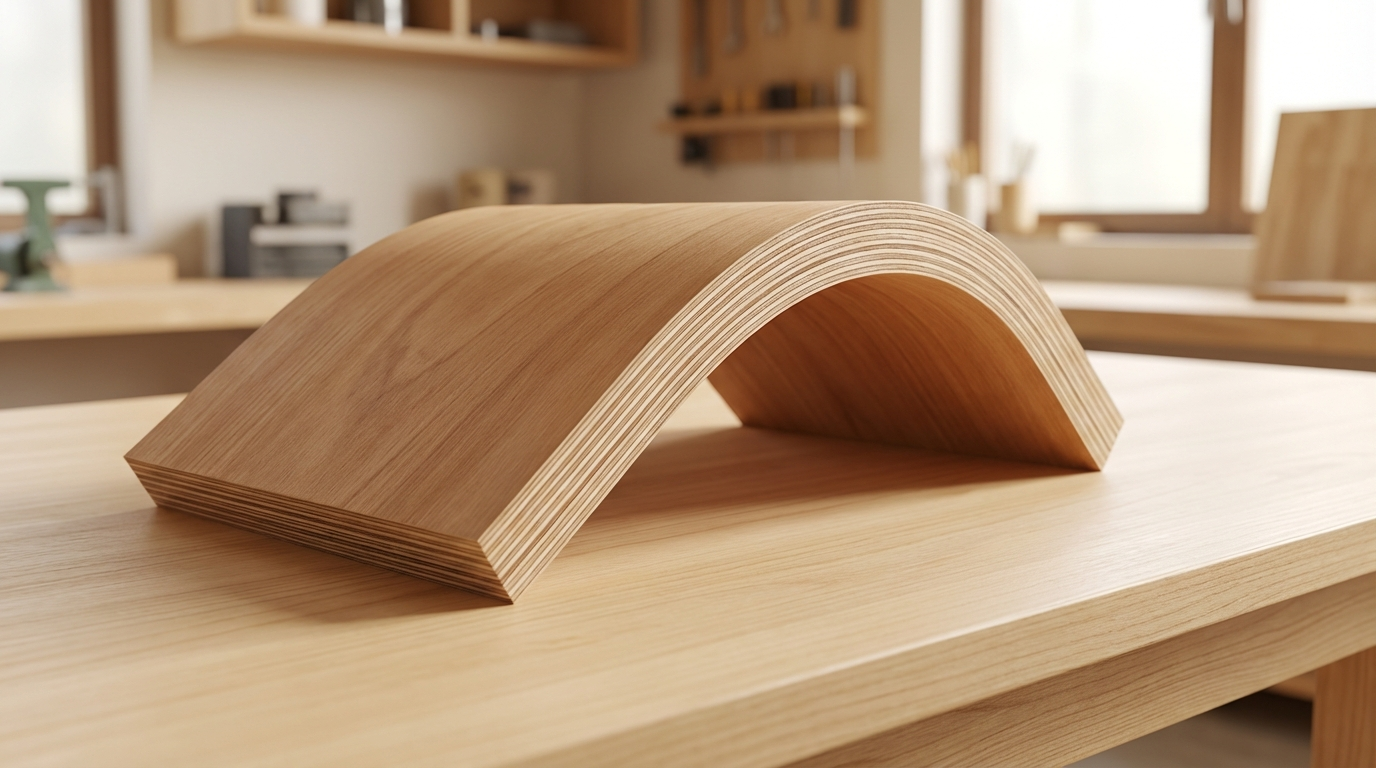
Flexible plywood is a specially engineered plywood where veneer layers run parallel to each other instead of perpendicular, allowing the sheet to bend without cracking. It achieves bend radii as tight as 25mm at 3mm thickness, making it essential for curved furniture, columns, and architectural elements in Indian homes and commercial spaces.
In simple terms, flexi ply is regular plywood's bendable cousin. While standard plywood resists bending due to its cross-grain construction, flexible plywood embraces curves. The veneers are stacked in the same direction, creating a sheet you can roll, curve, and shape by hand without specialized tools or steam bending. This makes it the go-to material for reception desks, curved wardrobes, round columns, and any furniture piece that refuses to stay straight.
- Available in thicknesses from 3mm to 16mm across India
- Standard sheet size: 8×4 feet (2440mm × 1220mm)
- Minimum bend radius: 25mm at 3mm thickness
- Available in both BWR and BWP grades for moisture resistance
- Price range: ₹28-65 per square foot depending on thickness and grade
- Can be laminated, veneered, painted, or plastered after bending
What Exactly is Flexible Plywood?
Flexible plywood, commonly called flexi ply or bending plywood in Indian timber markets, is an engineered wood panel manufactured specifically for curved applications. Unlike conventional plywood where alternating veneers are placed at 90-degree angles to each other, flexi ply has all its veneer layers aligned in the same grain direction.
This seemingly simple manufacturing change creates dramatically different properties. The parallel grain alignment eliminates the cross-laminated strength that makes regular plywood rigid, instead creating a panel that bends easily along one axis. According to duroboil.com's material experts, this makes flexi ply indispensable for modern interior design where curves add sophistication without the astronomical costs of solid wood bending.
The manufacturing process uses selected hardwood veneers—typically Gurjan, Keruing, or similar tropical species—that are treated, softened, and bonded using phenolic or urea-formaldehyde resins. The face veneers are usually A-grade quality suitable for finishing, while core veneers provide the flexibility characteristic. Quality manufacturers subject the panels to CCA treatment for termite and borer resistance, essential for Indian climate conditions.
Full Form and Industry Terminology
Flexible plywood doesn't have an acronym—the term is self-explanatory. However, in Indian markets, you'll encounter various names: flexi ply, bending ply, curve ply, bendy board, and radius ply. Some manufacturers use proprietary names like "Duro Flex" or "Flexi Fly."
The technical classification follows IS 848:1974 standards for flexible plywood in India. When dealers mention "long grain" or "cross grain" flexi ply, they're referring to the direction of bend possible. Long grain bends along the 8-foot length (creating 8-foot columns), while cross grain bends along the 4-foot width (creating 4-foot columns).
Types of Flexible Plywood Available in India
Flexible plywood in the Indian market comes in several variants, each suited for specific applications. Understanding these types helps you select the right product for your project without overspending or compromising on performance.
| Type | Best For | Moisture Resistance | Price Range (per sq ft) | Availability |
|---|---|---|---|---|
| MR Grade Flexi Ply | Indoor furniture, dry areas | Moderate (resistant to occasional moisture) | ₹28-40 | Widely available |
| BWR Grade Flexi Ply | Kitchens, humid interiors | Good (boiling water resistant) | ₹38-52 | Major dealers |
| BWP/Marine Grade Flexi Ply | Bathrooms, outdoor covered areas | Excellent (72-hour boiling water proof) | ₹48-65 | Premium dealers |
| Long Grain Flexi Ply | Tall columns, full-height curves | Varies by grade | ₹32-55 | Specialized dealers |
| Cross Grain Flexi Ply | Wide curves, barrel vaults | Varies by grade | ₹32-55 | More common |
Which Type for Reception Desks and Commercial Spaces?
For reception desks and commercial interiors, BWR grade flexi ply in 6mm or 8mm thickness offers the ideal balance of formability and durability. Commercial spaces see higher traffic and occasional spills, making moisture resistance important. The 6mm thickness provides a bend radius of approximately 65-90mm, sufficient for most curved reception counter designs.
If the reception desk will have a laminate or veneer finish, ensure you select A-grade face veneer flexi ply. For painted finishes, B-grade faces work adequately and cost 10-15% less.
Which Type for Residential Columns and Wardrobes?
Residential applications in dry areas like living rooms and bedrooms can use MR grade flexi ply safely. For round columns in foyers or curved wardrobe corners, 3mm thickness bent in multiple layers provides maximum design flexibility. This layering technique allows you to achieve any final thickness while maintaining tight curves.
For bathroom vanity units with curved elements or kitchen breakfast counter curves, always insist on BWP grade. The Indian monsoon creates humidity levels that penetrate even "indoor" spaces, and MR grade in humid areas leads to delamination within 2-3 years.
Technical Specifications
Flexible plywood specifications directly impact what curves you can achieve and how the finished product performs. These numbers aren't just for engineers—understanding them helps you communicate precisely with carpenters and avoid project delays.
| Specification | 3mm | 5-6mm | 8mm | 12mm | 16mm |
|---|---|---|---|---|---|
| Number of Plies | 3 | 3 | 3-5 | 5-7 | 7-9 |
| Minimum Bend Radius | 25-60mm | 65-105mm | 110-150mm | 400mm | 500mm+ |
| Density | 380-450 kg/m³ | 380-450 kg/m³ | 380-450 kg/m³ | 400-500 kg/m³ | 400-500 kg/m³ |
| Standard Size | 2440×1220mm | 2440×1220mm | 2440×1220mm | 2440×1220mm | 2440×1220mm |
| Moisture Content | 5-15% | 5-15% | 5-15% | 5-15% | 5-15% |
| Weight per Sheet (approx) | 3.5-4 kg | 6-7 kg | 9-10 kg | 14-16 kg | 18-22 kg |
Bend radius explained: The minimum bend radius indicates the tightest curve possible without cracking. A 25mm bend radius means you can wrap the plywood around a pipe with 50mm diameter (25mm radius × 2). Attempting tighter curves causes the outer veneer to crack and the inner veneer to buckle.
Long grain vs cross grain impact: Long grain flexi ply bends along the 8-foot dimension, producing curves up to 2440mm tall—ideal for full-height columns. Cross grain bends along the 4-foot dimension, creating curves up to 1220mm tall—suitable for furniture, counters, and wall panels.
Indian standard sizes: The 8×4 feet sheet is universal across India. Some manufacturers offer 7×4 feet and 6×4 feet options, though these are less common and may require advance ordering. Custom sizes are generally not available as flexi ply production requires specific machinery setups.
Common Misconceptions Cleared
Flexible plywood confuses many first-time users and even some carpenters unfamiliar with the material. These myths lead to wrong product selection and application failures.
Myth 1: Flexi ply is weaker than regular plywood.
Reality: In its intended curved application, flexi ply performs excellently. It's engineered for bending, not flat structural use. When laminated in multiple layers into a curved form, the resulting structure achieves significant strength. A 3-layer curved column of 6mm flexi ply (18mm total) holds substantial weight.
Myth 2: You need steam or heat to bend flexi ply.
Reality: Quality flexi ply bends by hand at room temperature. If you need steam or soaking to bend it, you either have the wrong product (possibly regular plywood mislabeled) or extremely poor quality flexi ply. Legitimate products specify "easily bent by hand" in their specifications.
Myth 3: Flexi ply can bend in any direction.
Reality: Each sheet bends easily in only one direction—determined by the grain orientation. Long grain sheets curve along the length; cross grain sheets curve along the width. Bending against the grain direction causes cracking, not curving.
Myth 4: Thicker flexi ply means tighter curves.
Reality: It's the opposite. Thinner sheets achieve tighter curves. For very tight radii, use 3mm flexi ply in multiple layers rather than a single thick sheet. A 3mm sheet bends to 25mm radius; a 12mm sheet only achieves 400mm radius.
Myth 5: All flexi ply is waterproof.
Reality: Flexi ply comes in MR, BWR, and BWP grades just like regular plywood. MR grade has limited moisture resistance. Only BWP grade offers true waterproofing suitable for bathrooms. Always verify the grade before purchasing.
Myth 6: Once bent, flexi ply tries to straighten.
Reality: When properly glued and secured in its curved form, flexi ply maintains the shape permanently. The springback during bending is minimal and disappears once the adhesive cures. For permanent installations, the curved form is locked using battens, glue, and the final surface finish.
Advantages and Limitations
Every material involves trade-offs. Understanding both strengths and weaknesses of flexible plywood helps you deploy it effectively while avoiding applications where it underperforms.
| Advantages | Limitations |
|---|---|
| Bends without cracking, splitting, or specialized equipment | Costs 40-60% more than equivalent regular plywood |
| Achieves tight curves impossible with solid wood | Only bends in one direction per sheet |
| Accepts all finishes: laminate, veneer, paint, plaster | Not suitable for flat structural applications |
| Available in termite-resistant and waterproof grades | Limited availability in tier-2 and tier-3 cities |
| Lightweight compared to MDF for curved work | Requires proper formwork for installation |
| Can be layered to achieve any thickness | Face veneer quality varies significantly between brands |
| No warping after proper installation | Edges require careful finishing to hide ply layers |
| Environmentally friendlier than fiberglass alternatives | Cannot achieve compound curves (only single-axis bends) |
Critical limitation to note: Flexible plywood only bends along one axis. You can create a cylinder or a wave, but not a dome or saddle shape. For compound curves, you need either vacuum-formed materials or segmented construction techniques.
Best Applications in Indian Homes and Commercial Spaces
Duroboil.com recommends flexible plywood for specific applications where its unique properties justify the premium cost. Using it where regular plywood suffices wastes money; not using it where curves are needed creates inferior results.
Round Columns and Pillar Cladding
The most common use in Indian interiors. Flexi ply wraps around RCC or steel columns to create smooth, round decorative cladding. For columns up to 300mm diameter, 3mm flexi ply in 2-3 layers works perfectly. Larger columns use 6mm flexi ply. The surface accepts veneer, laminate, or paint finishing.
Installation tip: Create the cylindrical form in your workshop using a jig, then transport the finished column cladding to site. On-site wrapping around existing columns requires more skill and often shows visible joints.
Reception Desks and Counters
Curved reception desks create impressive first impressions in offices, hotels, and hospitals. Flexi ply forms the curved front panel, typically in 8mm thickness for adequate rigidity. The top surface uses regular 18mm plywood or solid surface material.
Curved Wardrobe Corners
Instead of sharp 90-degree corners, curved wardrobe edges provide a softer aesthetic and prevent injury from sharp corners—especially important in children's rooms. The corners use 3mm or 6mm flexi ply curved to 75-150mm radius.
Arched Doorways and Wall Niches
Creating smooth arches using regular plywood requires laborious kerf-cutting. Flexi ply simplifies arch construction significantly. For wall niches and display alcoves with curved backs, 6mm flexi ply provides the ideal combination of curve capability and surface stability.
Barrel Vault Ceilings
Premium homes and commercial spaces increasingly feature barrel vault ceiling elements. Cross grain flexi ply creates these curved ceiling sections, though proper structural support is essential to prevent sagging over time.
Curved Furniture Elements
Rocking chair backs, curved sofa armrests, round coffee tables, and designer TV unit curves all benefit from flexi ply. For furniture exposed to body contact, ensure smooth sanding and quality finishing to prevent splinters.
Applications to Avoid
Don't use flexible plywood for: flat shelving (wastes its bending property), structural elements requiring rigidity, outdoor exposed applications even with BWP grade, flooring, or roofing. For these applications, appropriate grades of regular plywood or marine plywood serve better at lower cost.
Quality Verification Without Lab Tests
Not everyone has access to testing laboratories, but you can assess flexi ply quality at the dealer's shop using these practical checks recommended by duroboil.com's material specialists.
The Bend Test
Genuine flexi ply bends easily by hand. Ask the dealer to let you bend a sample piece of 3mm or 6mm thickness. It should curve smoothly without resistance, cracking sounds, or visible stress marks. If the dealer refuses this test or the sheet resists bending, you're not looking at quality flexi ply.
Face Veneer Inspection
Examine the face veneer closely. Quality flexi ply shows uniform grain patterns without patches, excessive knots, or veneer repairs. The surface should feel smooth and consistent across the entire sheet. Rough patches indicate lower-grade face veneers that will show through finishes.
Edge Examination
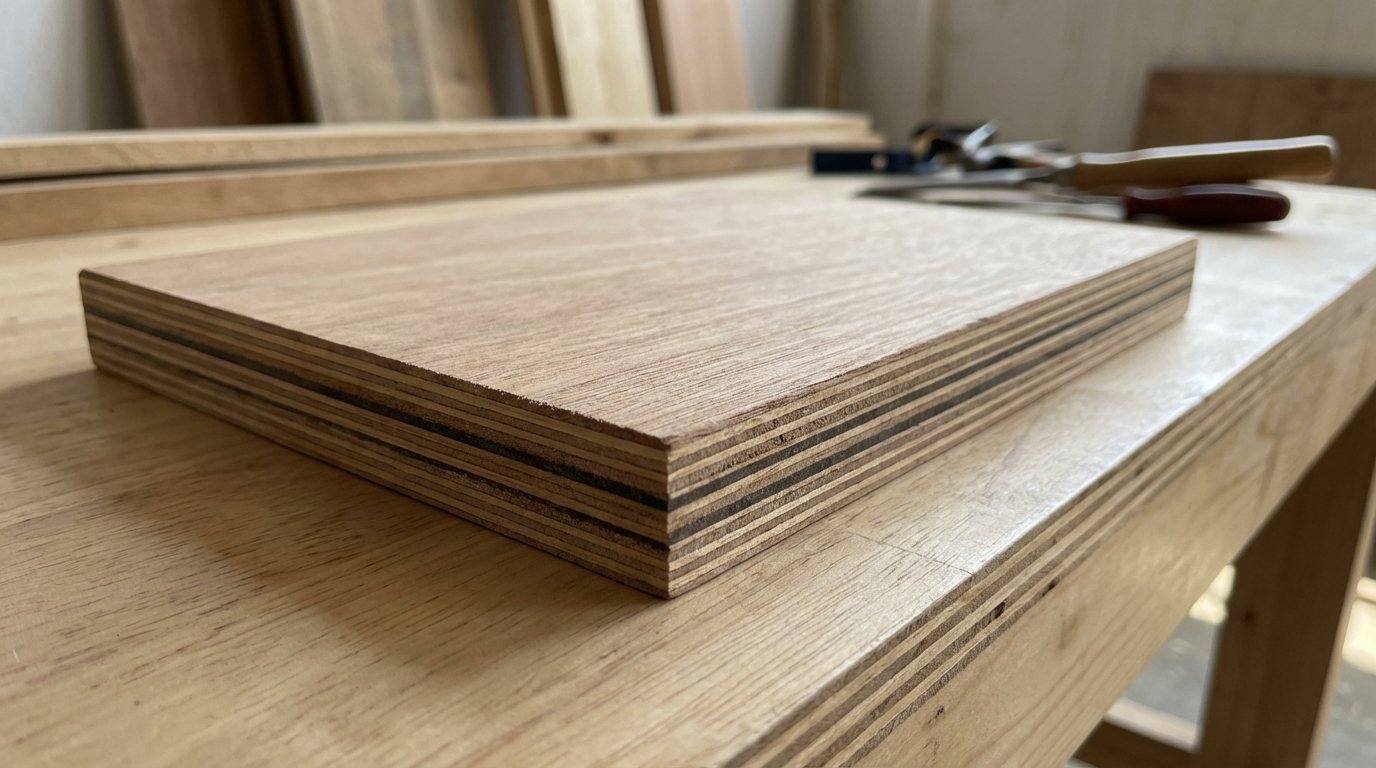
Look at the sheet edges to verify ply construction. All veneer layers should run in the same direction—this is the defining characteristic of flexi ply. If you see alternating grain directions (like regular plywood), you have the wrong product. Also check for gaps between layers, which indicate poor bonding.
Thickness Consistency
Measure thickness at multiple points across the sheet using a caliper or even a steel ruler. Quality flexi ply maintains consistent thickness (±0.3mm tolerance). Significant variations cause uneven curves and finishing problems.
ISI Marking and Brand Verification
Look for ISI marking confirming compliance with IS 848:1974. Reputable brands include QR codes for authenticity verification—scan these before purchasing. If the dealer claims "ISI equivalent" or "as per ISI standards" without actual marking, treat claims with skepticism.
Questions for the Dealer
- What is the minimum bend radius for this thickness?
- Is this long grain or cross grain? (If they don't know, find another dealer)
- What grade—MR, BWR, or BWP?
- Can I get a sample piece to test at my carpenter's workshop?
- What's the warranty period and what does it cover?
- Is this domestically manufactured or imported?
Care and Maintenance
Once installed, flexible plywood requires the same care as regular plywood with a few specific considerations related to its curved nature.
Daily Care
Dust curved surfaces with soft microfiber cloths following the curve direction. Avoid feather dusters that catch on edges. For laminated finishes, use slightly damp cloths for cleaning, immediately followed by dry wiping. Never leave moisture sitting on surfaces.
Cleaning Methods
For painted or lacquered flexi ply surfaces, use mild soap solutions sparingly. Avoid abrasive cleaners, scouring pads, or harsh chemicals that can damage the finish. For veneered surfaces, use appropriate wood polish once every 2-3 months to maintain luster.
Damage Prevention
Keep curved furniture away from direct sunlight exposure, which can cause uneven expansion and potential delamination over time. Maintain indoor humidity levels between 40-60%—extreme dryness or humidity affects all wood products, but curved elements show distress more visibly.
For column cladding in entryways, consider protective corner guards at floor level where kicks and bumps are common. Repairing dents in curved surfaces is more challenging than flat surfaces.
Long-term Maintenance
Inspect curved joints annually for any signs of separation. In humid climates like coastal Karnataka, Kerala, or West Bengal, check for early signs of moisture damage: slight bubbling under laminate, soft spots when pressed, or musty odors. Address issues immediately before they spread.
Bend Radius Chart and Usage Guide
This comprehensive bend radius chart helps you select the correct flexi ply thickness for your specific curve requirements. The data represents typical values from quality Indian manufacturers—always verify with your specific product's technical sheet.
| Thickness | Minimum Bend Radius | Column Diameter Possible | Typical Applications | Layers Recommended |
|---|---|---|---|---|
| 3mm | 25-60mm | 50-120mm | Tight curves, small columns, furniture details | 4-6 layers for 12-18mm final |
| 5mm | 90-105mm | 180-210mm | Medium columns, wardrobe corners | 3-4 layers for 15-20mm final |
| 6mm | 65-100mm | 130-200mm | Reception desks, arches, wall panels | 2-3 layers for 12-18mm final |
| 8mm | 110-150mm | 220-300mm | Large columns, counter fronts | 2 layers for 16mm final |
| 12mm | 400mm | 800mm | Gentle curves, barrel vaults | Single layer applications |
| 16mm | 500mm+ | 1000mm+ | Very gentle curves only | Single layer applications |
Practical calculation: To clad a round column, measure the column diameter. Your flexi ply must have a minimum bend radius equal to half that diameter. For a 200mm diameter column, you need flexi ply capable of 100mm bend radius—5mm or 6mm thickness works.
Price Guide for Flexible Plywood in India (2026)
Flexible plywood pricing varies significantly based on thickness, grade, brand, and location. These ranges represent typical market prices across major Indian cities—actual prices may vary by 10-20% based on local factors.
| Thickness | MR Grade (₹/sq ft) | BWR Grade (₹/sq ft) | BWP Grade (₹/sq ft) |
|---|---|---|---|
| 3mm | ₹25-32 | ₹32-40 | ₹38-48 |
| 5-6mm | ₹32-42 | ₹39-52 | ₹48-60 |
| 8mm | ₹38-48 | ₹46-58 | ₹55-68 |
| 12mm | ₹45-58 | ₹55-70 | ₹65-82 |
| 16mm | ₹52-68 | ₹65-85 | ₹78-98 |
Cost factors affecting price:
- Location: Metro cities like Mumbai, Delhi, Bangalore have 15-25% higher prices than tier-2 cities due to rental and logistics costs
- Brand: Premium brands with ISI certification cost 20-30% more than unbranded alternatives
- Face veneer quality: A-grade face adds ₹3-5/sq ft over B-grade
- Quantity: Bulk orders (50+ sheets) often get 5-10% discount
- Season: Prices rise 5-10% during peak construction seasons (October-March)
Budget Estimation for Common Projects
| Project | Flexi Ply Required | Estimated Material Cost |
|---|---|---|
| Round column cladding (200mm dia, 10ft height) | 2-3 sheets of 6mm | ₹2,500-4,000 |
| Curved reception desk front (8ft wide) | 2 sheets of 8mm | ₹3,000-4,500 |
| Wardrobe curved corners (4 corners) | 1 sheet of 6mm | ₹1,200-1,800 |
| Arched doorway (3ft width) | 1 sheet of 6mm | ₹1,200-1,800 |
Note: These are flexi ply material costs only. Total project cost includes regular plywood for flat sections, hardware, laminate/veneer, adhesives, and labor—typically 3-4x the material cost.
Installation Methods and Best Practices
Proper installation determines whether flexi ply applications look professional or amateurish. While detailed installation is carpenter's work, understanding the process helps you supervise effectively.
Column Cladding Method
- Measure column circumference precisely (diameter × 3.14)
- Cut flexi ply to circumference + 10mm overlap for joining
- Apply wood adhesive generously to the back surface
- Wrap around column, starting from least visible side
- Secure with ratchet straps or temporary screws while adhesive cures
- For multiple layers, allow 24 hours curing between layers
- Fill join line with wood filler before finishing
Curved Furniture Method
- Create a formwork jig matching your desired curve
- Cut flexi ply pieces allowing 15mm extra on all sides
- Apply adhesive and layer sheets onto the formwork
- Clamp firmly using multiple clamps along the curve
- Allow 48 hours minimum curing time
- Remove from formwork and trim to exact size
- Apply edge banding before surface finishing
Adhesive Selection
For indoor applications, high-quality PVA wood adhesive works adequately. For outdoor or high-humidity installations, use marine-grade epoxy adhesives. The adhesive line is the weakest point in any flexi ply construction—never economize here.
Frequently Asked Questions
Is flexible plywood waterproof?
Flexible plywood waterproofing depends on its grade classification. MR (Moisture Resistant) grade flexi ply tolerates occasional moisture but isn't waterproof—suitable for bedrooms and living rooms only. BWR (Boiling Water Resistant) grade handles humid environments like kitchens reasonably well. Only BWP (Boiling Water Proof) grade, tested to withstand 72 hours of boiling water, qualifies as waterproof for bathroom applications. Always verify grade marking before purchase, and remember that even BWP grade requires proper sealing at edges and joints for true water resistance.
What is the price of flexible plywood per square foot?
Flexible plywood prices in India typically range from ₹28-65 per square foot in 2026, varying by thickness and grade. A 6mm MR grade sheet costs approximately ₹35-42 per sq ft, while BWP grade in the same thickness ranges ₹48-60 per sq ft. Thinner 3mm sheets cost ₹25-48 per sq ft depending on grade. Prices are generally 40-60% higher than equivalent regular plywood due to the specialized manufacturing process. Metro cities like Mumbai and Delhi show higher prices than tier-2 cities by 15-25%.
How tight a curve can flexible plywood achieve?
The minimum bend radius depends directly on thickness. At 3mm thickness, quality flexi ply achieves bend radii as tight as 25mm—meaning you can wrap it around a 50mm diameter pipe. The 6mm thickness bends to approximately 65-100mm radius, while 8mm achieves 110-150mm radius. Thicker sheets like 12mm only manage gentle curves with 400mm+ radius. For very tight curves, use thinner flexi ply in multiple glued layers rather than a single thick sheet. Always verify the specific bend radius with your manufacturer's data sheet.
Can flexible plywood be used for kitchen cabinets?
Flexible plywood should only be used for curved elements in kitchen cabinets, not for flat cabinet boxes or shelving. For curved drawer fronts, cabinet edges, or decorative column cladding in modular kitchens, BWR or BWP grade flexi ply works excellently. However, using flexi ply for flat cabinet sides or shelves wastes money and provides inferior structural performance compared to regular BWR grade plywood. The typical kitchen cabinet uses 95% regular plywood with flexi ply reserved for specific curved design elements requiring its unique bending property.
How does flexible plywood differ from regular plywood?
The fundamental difference lies in veneer assembly direction. In regular plywood, alternating veneer layers are placed perpendicular to each other (cross-grain construction), creating rigidity and equal strength in all directions. In flexible plywood, all veneer layers run parallel (same direction), eliminating cross-grain strength but enabling bending along one axis. This manufacturing difference means flexi ply bends easily by hand without cracking, while regular plywood resists bending. Regular plywood suits structural applications; flexi ply suits curved decorative applications exclusively.
What thickness of flexible plywood is best for columns?
The optimal thickness for column cladding depends on column diameter. For columns 100-200mm diameter, 3mm flexi ply applied in 4-6 layers creates an 12-18mm shell with tight, smooth curves. For 200-400mm diameter columns, 6mm flexi ply in 2-3 layers works efficiently. Columns exceeding 400mm diameter can use 8mm flexi ply. The multi-layer approach provides better results than single thick sheets because thinner layers conform more smoothly to the curve, and adhesive between layers adds structural integrity to the finished cylinder.
Can flexible plywood be laminated or veneered after bending?
Yes, flexible plywood accepts all standard surface finishes after installation in its curved form. High-pressure laminate (HPL), veneer sheets, paint, lacquer, and even plaster can be applied to cured flexi ply surfaces. For laminate application on curves, use flexible HPL grades or post-forming laminates designed for curved surfaces—standard rigid laminates crack on tight curves. Veneer application requires careful technique with pressure bags or vacuum pressing. Allow flexi ply to cure for minimum 48-72 hours after forming before applying any surface finish.
Is flexible plywood termite resistant?
Termite resistance in flexible plywood depends on the treatment applied during manufacturing. Quality brands apply CCA (Chromated Copper Arsenate) or boron treatment that provides protection against termites, borers, and fungal decay. This treatment is typically mentioned on product specifications as "termite and borer proof" or "preservative treated." However, not all flexi ply products include termite treatment—budget products often skip this step. Always verify termite treatment explicitly before purchasing, especially in regions like South India where termite activity is particularly aggressive.
Where can I buy flexible plywood in India?
Flexible plywood is available through authorized plywood dealers in most metros and major tier-2 cities. Major brands like Duroply, Greenply, CenturyPly, and regional manufacturers distribute through dealer networks. In smaller towns, availability may be limited, requiring orders from nearest city dealers. Dedicated timber markets in cities (like Mumbai's Byculla timber market, Delhi's Kirti Nagar, or Bangalore's Chickpet) offer multiple brand options for comparison. Always purchase from authorized dealers who can provide warranty documentation—avoid buying from general hardware stores where product authenticity cannot be verified.
How long does flexible plywood last in Indian climate conditions?
With proper installation and maintenance, quality flexible plywood lasts 15-25 years in Indian climatic conditions. The key factors affecting longevity include grade selection (BWR/BWP for humid areas), proper sealing of edges and joints, adequate ventilation around the installation, and protection from direct water contact. In coastal areas with high humidity, expect the lower end of this range; in drier northern climates, installations can exceed 20 years. Poor quality flexi ply or incorrect grade selection can show delamination within 3-5 years, emphasizing the importance of buying from reputable brands with warranty coverage.
Final Recommendations
Flexible plywood fills a specific niche in Indian interior design—enabling curves that would otherwise require expensive custom carpentry or imported materials. When used appropriately for columns, curved furniture elements, and architectural details, it delivers excellent value despite its premium price over regular plywood.
Key decisions to get right: select the correct grain direction (long or cross) based on your curve orientation, choose appropriate grade for moisture exposure, use multiple thin layers for tight curves rather than single thick sheets, and never compromise on adhesive quality. With these fundamentals handled correctly, flexi ply enables design possibilities that set interiors apart from the flat, angular standard.
For more detailed guides on plywood grades, engineered wood selection, and interior material choices specific to Indian conditions, explore the comprehensive resources available at duroboil.com—India's trusted wood materials reference.
Disclaimer: This content is provided for general informational purposes based on industry practices and publicly available information. Product specifications, standards, prices, and availability may vary by manufacturer, region, and time. Readers should independently verify details with manufacturers, dealers, or qualified professionals before making purchase or construction decisions.Want Plywood Suggestions?
Share a few details and a Duro BOIL specialist will suggest suitable brands and connect you to responsive dealers.