Glue types in plywood: PF vs MUF vs UF (simple guide)
Learn pf vs muf vs uf plywood in simple terms with examples, verification tips, and a quick checklist so you choose the right board for Indian conditions.
Quick Decision Summary
PF for high-moisture exteriors/kitchens, MUF for humid interiors like bathrooms, UF for dry bedrooms.
If you're in a hurry: Pick plywood glue based on exposure risk—PF (phenol formaldehyde) handles boiling water and outdoors best but costs more; MUF (melamine urea formaldehyde) suits monsoon humidity indoors without full exterior needs; UF (urea formaldehyde) works for budget dry areas but fails in dampness. In India, verify glue line count (more = stronger), face veneer quality, and core gaps before buying. Test edge swelling risk on-site. Always prioritize BWP-grade logic for coastal homes.
- Choose PF if: coastal, kitchen cabinets, exterior doors, heavy rain exposure.
- Choose MUF if: bathroom vanities, humid bedrooms, moderate moisture.
- Choose UF if: living room partitions, tight budget, fully dry AC rooms.
- Avoid UF if: any humidity; it delaminates fast in monsoons.
- Avoid PF if: budget-limited dry use; overkill expense.
What These Glue Types Actually Mean
Plywood glue binds layers (veneers and core) using resins that harden under heat/pressure. UF, MUF, and PF differ in chemical makeup, affecting moisture tolerance and strength. UF relies on urea and formaldehyde for cheap interior bonds. MUF adds melamine for better humidity resistance. PF uses phenol for top waterproofing, ideal for structural loads.
Where people get confused:
- Thinking "MR grade = UF only"—often yes, but check labels.
- Assuming MUF = fully waterproof—no, semi-resistant.
- Believing PF plywood never swells—still needs edge sealing.
- Mixing grades: BWR often MUF-based, BWP is PF.
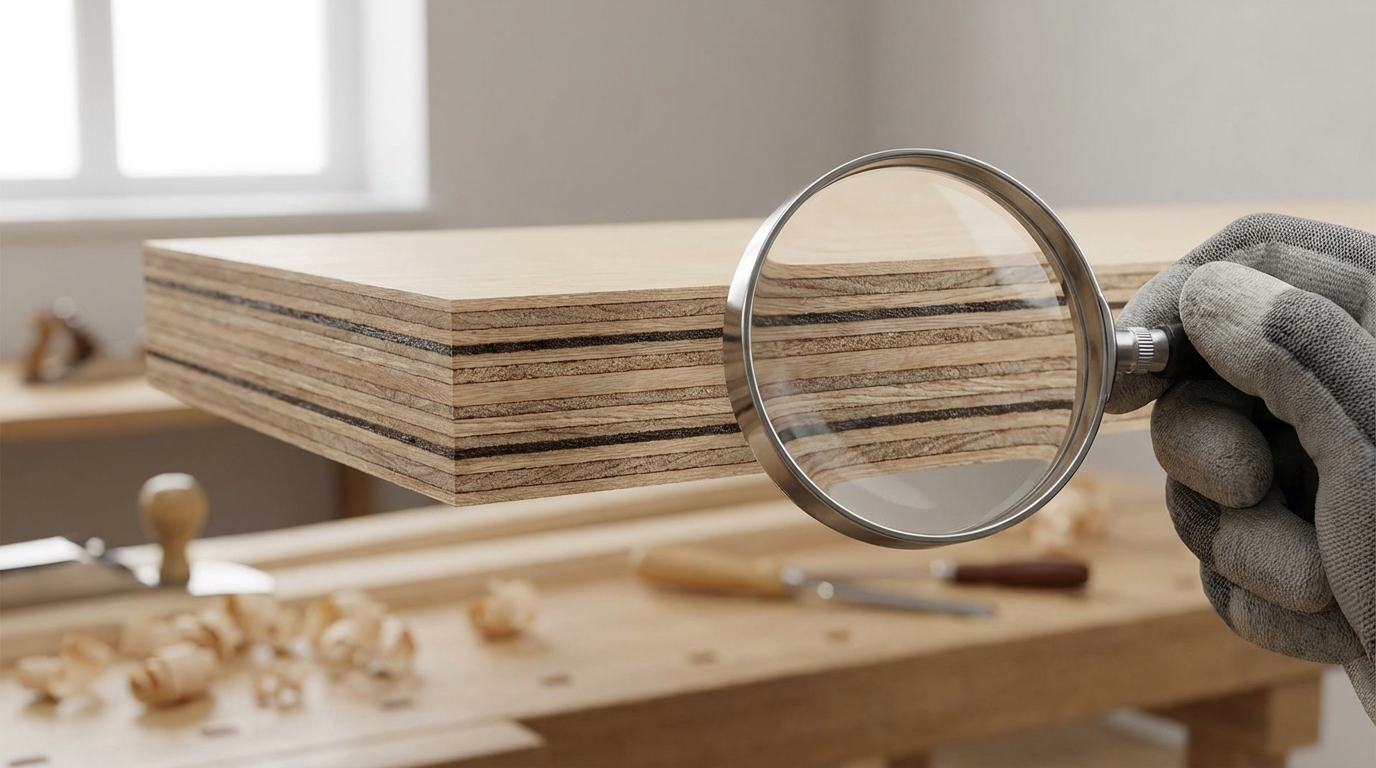
- Overlooking glue lines: 192+ lines signal premium glue usage.
- Confusing emission levels: all formaldehydes emit gases; modern low-form versions exist.
What is the main difference between PF and UF glue?
PF excels in boiling water resistance due to phenol's tough molecular structure, while UF softens in humidity from urea's weaker bonds. PF suits exteriors; UF limits to dry interiors. In practice, PF plywood survives monsoons without delamination, but UF buckles edges in coastal storage. Next step: knock the sheet—PF sounds solid, UF duller. Verify by asking for glue shear test demo (no lab needed).
Is MUF glue better than UF for Indian homes?
Yes, typically—MUF's melamine boosts moisture hold in humid climates, lasting 2-3x longer than UF in bathrooms. UF suits arid dry zones only. Nuance: MUF still needs ventilation to avoid minor emissions. Check: press fingernail into edge; MUF resists dents better. For monsoons, pair with calibrated core to prevent warping.
India-Specific Reality Check
Monsoon humidity (80%+ RH) and coastal salt air accelerate glue breakdown—UF fails in 6-12 months on exposed edges, MUF holds 2-3 years, PF 5+ years. Poor godown storage (stacked wet) causes core gaps pre-install. Contractor workflows rush cuts without sealing, worsening failures. In Kerala/Tamil Nadu, insist on PF for kitchens; Delhi interiors can use MUF.
Two-Minute Comparison That Actually Helps
| Glue Type | Moisture Resistance | Strength | Best Use | Relative Cost |
|---|---|---|---|---|
| UF | Low (dry only) | Basic | Partitions, furniture in AC rooms | Lowest |
| MUF | Medium (humid interiors) | Good | Bathrooms, wardrobes in monsoons | Medium |
| PF | High (boiling water) | Excellent | Kitchens, exteriors, coastal | Highest |
Choose by conditions: wet zones demand PF; dry/light-use allows UF savings.
Price Range and Cost Drivers (India)
UF plywood typically Rs. 50-80/sqft (18mm), MUF Rs. 70-110/sqft, PF Rs. 90-150/sqft—varies by city (Mumbai 20% higher), thickness (12mm cheaper), core (poplar pricier), and glue lines. Cost drivers: resin quality (PF expensive), calibration (flatness adds 10%), face veneer grade.
How to ask for a quote:
- Specify thickness + glue type + sheets qty.
- Mention site (coastal/dry) + use (kitchen/interior).
- Ask glue line count + emission grade.
- Compare 3 suppliers locally.
Mini example: 50sqft kitchen shelf (18mm PF) ~Rs. 6,000-9,000 total, driven by logistics.
How to Choose in 5 Steps
- Assess exposure: Wet/coastal? PF. Humid indoor? MUF. Dry? UF.
- Check labels: Look for "PF resin" or BWP/IS 710 mention.
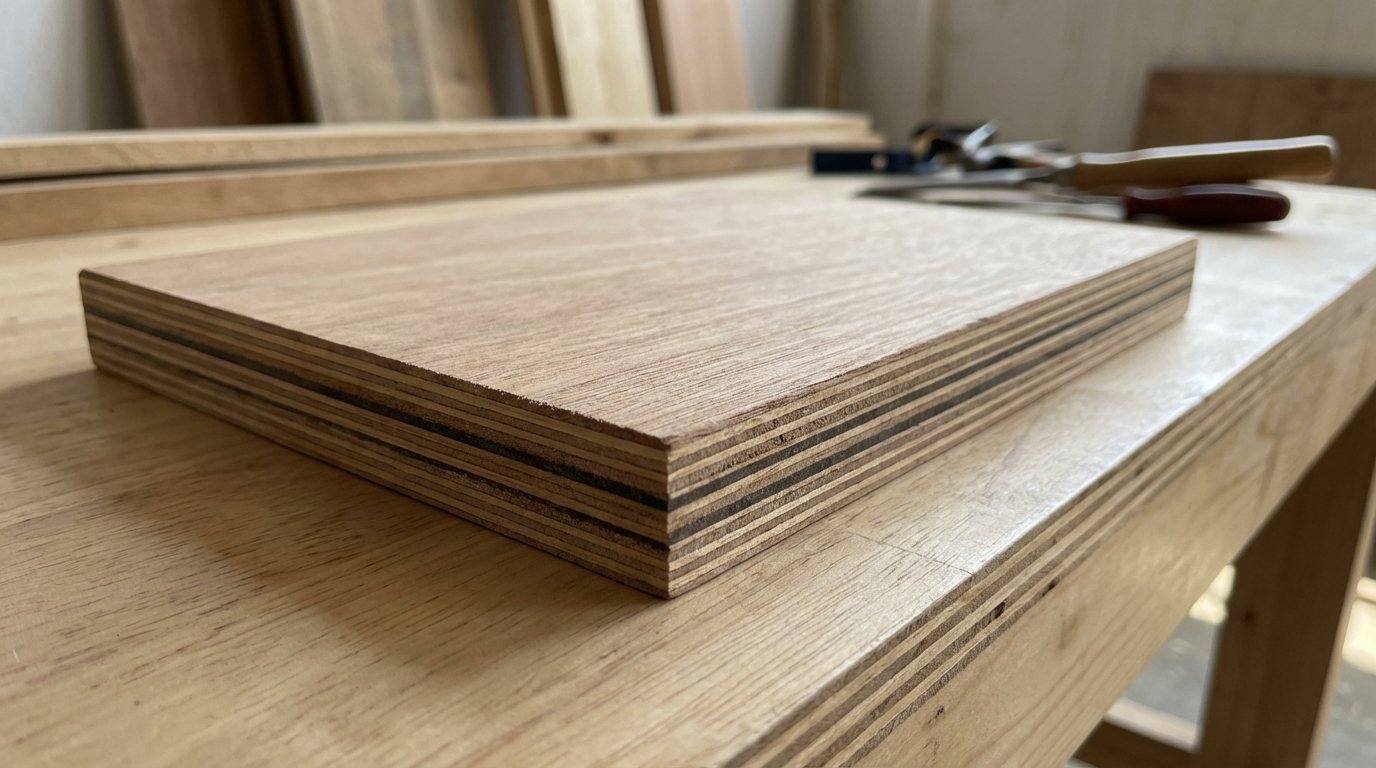
- Inspect sheet: No core gaps, uniform glue sheen, no bubbles.
- Test knock: Solid thud = strong glue; hollow = weak.
- Confirm batch: Ask recent monsoon test feedback.
Skip steps? Risk delamination post-rainy season.
Which glue is best for plywood kitchens in India?
PF typically—resists spills/steam without swelling. MUF ok for dry cooking zones. In humid Mumbai kitchens, PF prevents edge lift after 2 years. Verify: water droplet test on sample (no white marks after 24hrs). Seal edges with putty post-cut.
Can UF plywood be used outdoors?
No, avoid—UF delaminates in 3-6 months rain. Use PF only. Reality: even covered patios fail UF in monsoons. Check alternative: confirm supplier's indoor rating first.
Decision Framework: Match Your Conditions
| Condition | Recommended Glue | Verify This |
|---|---|---|
| Coastal/high humidity | PF | Boiling water resistance claim + thick glue lines |
| Bathroom/humid interior | MUF | Edge hardness test + no core voids |
| Dry bedroom/AC room | UF | Smooth face, budget fit |
| Heavy load/kitchen | PF | Knock test solid + calibrated |
| Tight budget/light use | UF/MUF | Local price check + dry storage |
| Fast delivery needed | MUF | Stock availability + emission low |
Trade-offs and Limitations
PF: top durability but 30-50% pricier, harder to cut (needs sharp blades). MUF: good balance, but emits more than modern UF in poor ventilation. UF: cheap/fast, but zero moisture tolerance—limits to 20% of home uses. All: formaldehyde off-gassing (worse in new homes); ventilate 1-2 weeks.
Common Buyer Mistakes and How to Avoid Them
- Mistake 1: Buying cheapest UF for everywhere. Why: ads ignore humidity. Do: map rooms by moisture.
- Mistake 2: Ignoring core quality with good glue. Why: gaps cause failure. Do: shine torch through edges.
- Mistake 3: No edge sealing post-cut. Why: exposed glue absorbs water. Do: apply resin putty immediately.
- Mistake 4: Trusting verbal "BWP" without check. Why: mislabeling. Do: demand glue spec sheet.
- Mistake 5: Storing sheets flat outdoors. Why: warps core. Do: elevate/vertical stack.
- Mistake 6: Skipping carpenter input on load. Why: under-specced glue snaps. Do: share design weight.
- Mistake 7: Buying thin sheets for heavy use. Why: glue stressed. Do: min 18mm.
- Mistake 8: No monsoon test question. Why: batch varies. Do: ask recent feedback.
Failure Modes and Fixes
- Symptom: Edge swelling. Cause: UF/MUF in damp. Prevent: PF + seal. Fix: sand/repaint yearly.
- Symptom: Delamination layers. Cause: poor glue lines. Prevent: 192+ lines. Fix: brace/replace section.
- Symptom: Bubbles/air pockets. Cause: bad pressing. Prevent: uniform sheen. Fix: fill epoxy.
- Symptom: Core crumbling. Cause: low-quality wood + moisture. Prevent: poplar core check. Fix: reinforce frame.
- Symptom: Off-gassing smell. Cause: high formaldehyde. Prevent: low-emission grade. Fix: ventilate/air purifier.
- Symptom: Warping post-monsoon. Cause: uneven drying. Prevent: calibrated sheets. Fix: realign hinges.
Quality Checks You Can Do Without Lab Tests
Before buying: Weigh sheet (heavier = denser glue), check glue color (dark/reddish = PF), tap edges (no rattle).
After cutting: No feather edges, glue scent mild, water bead test (no soak-in).
After install: Monitor swelling weekly first monsoon, ensure even gaps.
What does PF glue look like in plywood?
Dark reddish-brown lines between veneers, thicker/sparser than UF's light yellow. PF bonds feel rubbery-tough. In India stacks, PF sheets resist bending more. Check: split scrap edge—PF doesn't flake easily. Ideal for verifying BWP claims on-site.
Does MUF plywood emit less formaldehyde than UF?
Often yes—melamine stabilizes, reducing vapors. Still ventilate new installs. Test: smell after 48hrs (faint = better). For kids' rooms, prefer MUF. Confirm by supplier's batch notes.
Tips by User Type
For Homeowners
Focus durability: clean spills instantly, avoid dragging furniture (scratches expose glue). Use PF kitchens for 10-year peace. Don't overload shelves >20kg/sqft.
For Carpenters
Cut with fine blade (PF gums less), pre-seal edges, fasten 6-8cm from ends. Hinge zones: extra screws in PF for load.
For Architects
Spec "PF resin, 192 glue lines, calibrated" in drawings. Detail wet-zone lips/backsplashes. Logic: MUF interiors save 20% without risk.
For Modular Makers
QC: batch knock test uniformity. Reduces returns 50% with MUF consistency. Track complaints by glue type.
FAQs
Which plywood glue lasts longest in monsoons?
PF typically endures 5+ years undamaged in high-rain zones like Mumbai, thanks to phenol's waterproof matrix. MUF manages 2-4 years indoors. Factors: sealing quality and ventilation speed up life. Practical step: select PF for any exposed edge, store vertically pre-install, and inspect yearly for minor lifts.
Is UF glue safe for kids' furniture?
Modern low-emission UF can be, but ventilate 2 weeks and pair with laminates to block vapors. MUF safer for nurseries. Avoid in humid kids' rooms. Check: faint/no smell post-unpack signals ok. Use in AC dry spaces only.
How many glue lines in good PF plywood?
Usually 192-240 lines for 18mm, ensuring dense bonds. Fewer risks gaps. Count edges visually or ask supplier. More lines mean monsoon-proof strength without brittleness.
Can you mix glue types in one project?
Possible but risky—UF sections fail first, stressing others. Uniform glue prevents this. Use MUF everywhere for hybrids. Verify compatibility by matching grades.
What causes plywood glue to fail fastest?
Unsealed edges + humidity combo delaminates UF/MUF quickest. PF resists better. Prevent: epoxy edges day-of-cut. In coastal sites, elevate off floors.
PF vs MUF: worth extra cost?
Yes for wet areas (50% longer life), no for dry (waste). Trade-off: PF harder to source small qty. Assess by room map first.
How to identify glue type at store?
Label + visual: PF dark/red, UF pale/yellow. Knock test + water drop (PF beads best). Ask for resin cert description. Hands-on beats words.
Best glue for wardrobes in humid cities?
MUF standard—handles 70% RH without swell. PF overkill unless coastal. Seal sliders extra. Check calibration for hanging loads.
Does glue affect plywood weight?
Yes, PF adds 10-15% density for strength. Heavier signals quality. Lighter UF suits easy handling but watch moisture.
Disclaimer: This content is provided for general informational purposes based on industry practices and publicly available information. Product specifications, standards, prices, and availability may vary by manufacturer, region, and time. Readers should independently verify details with manufacturers, dealers, or qualified professionals before making purchase or construction decisions.Want Plywood Suggestions?
Share a few details and a Duro BOIL specialist will suggest suitable brands and connect you to responsive dealers.