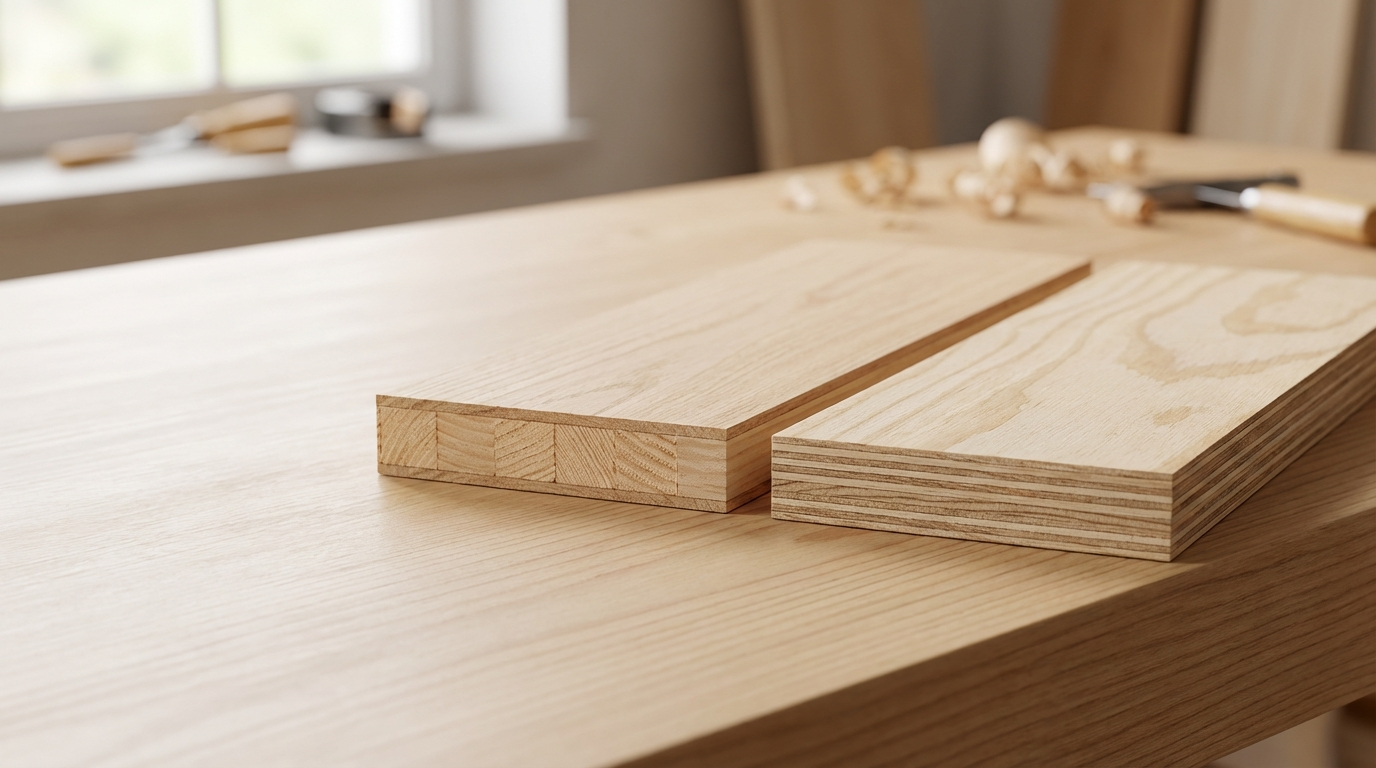
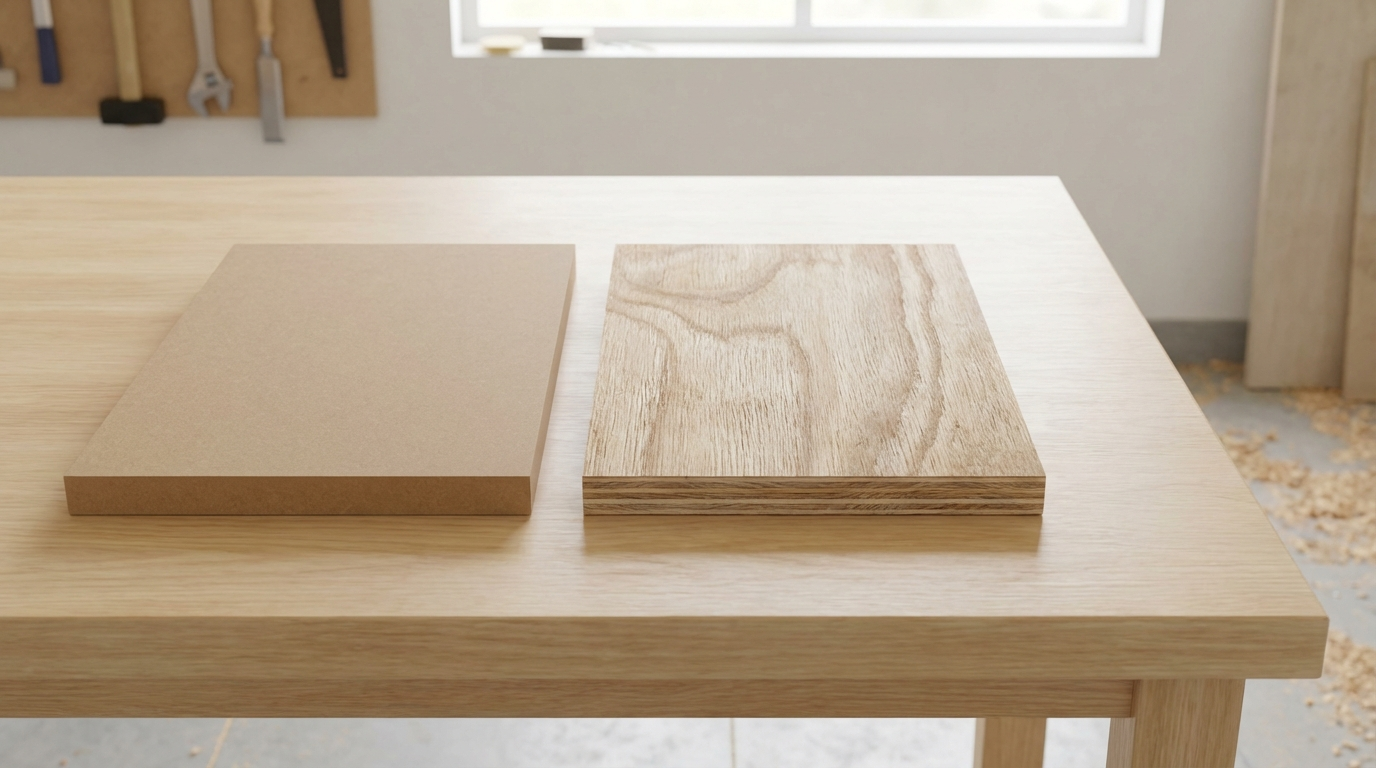
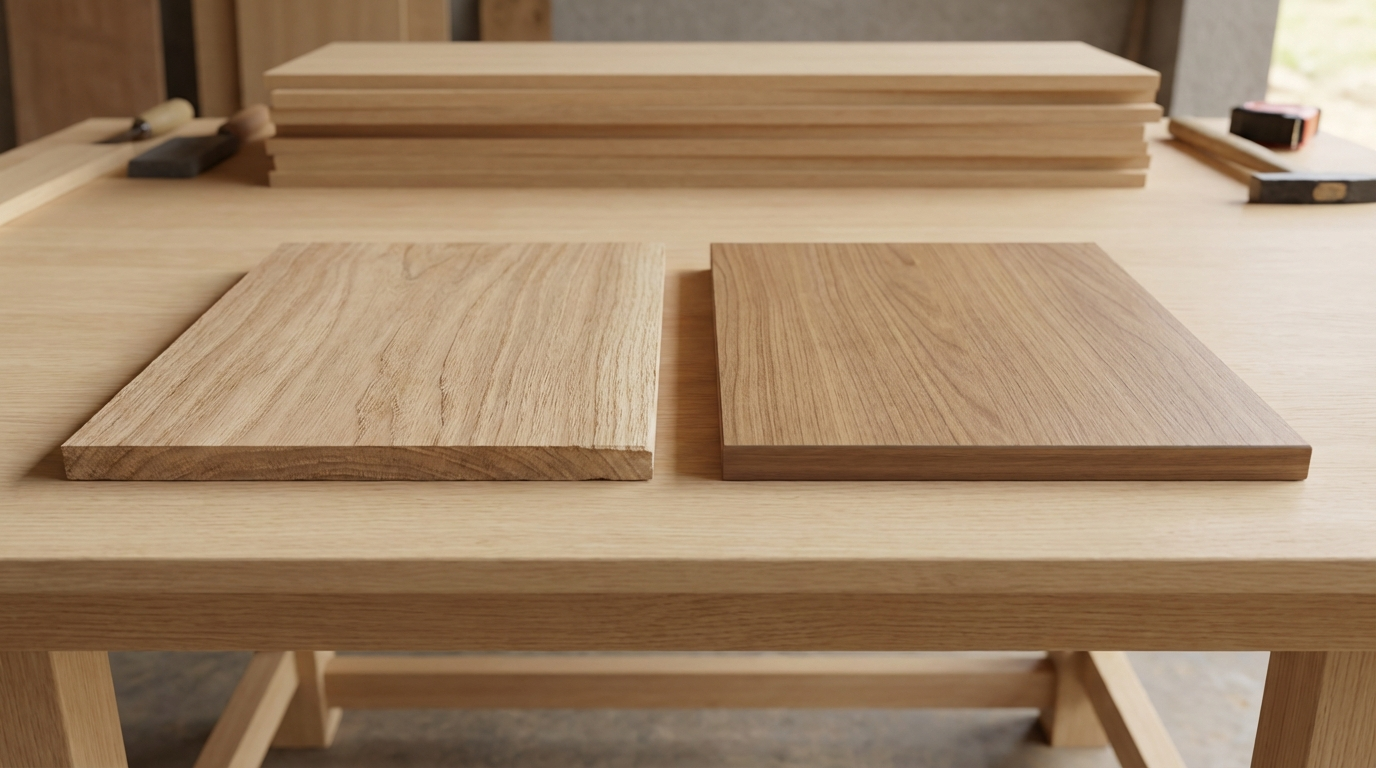
Greenpanel alternatives for MDF: what to buy instead
Greenpanel alternatives for MDF: what to buy instead with a clear decision table on grade, thickness, moisture performance, warranty and price factors. Made
Quick Decision Summary
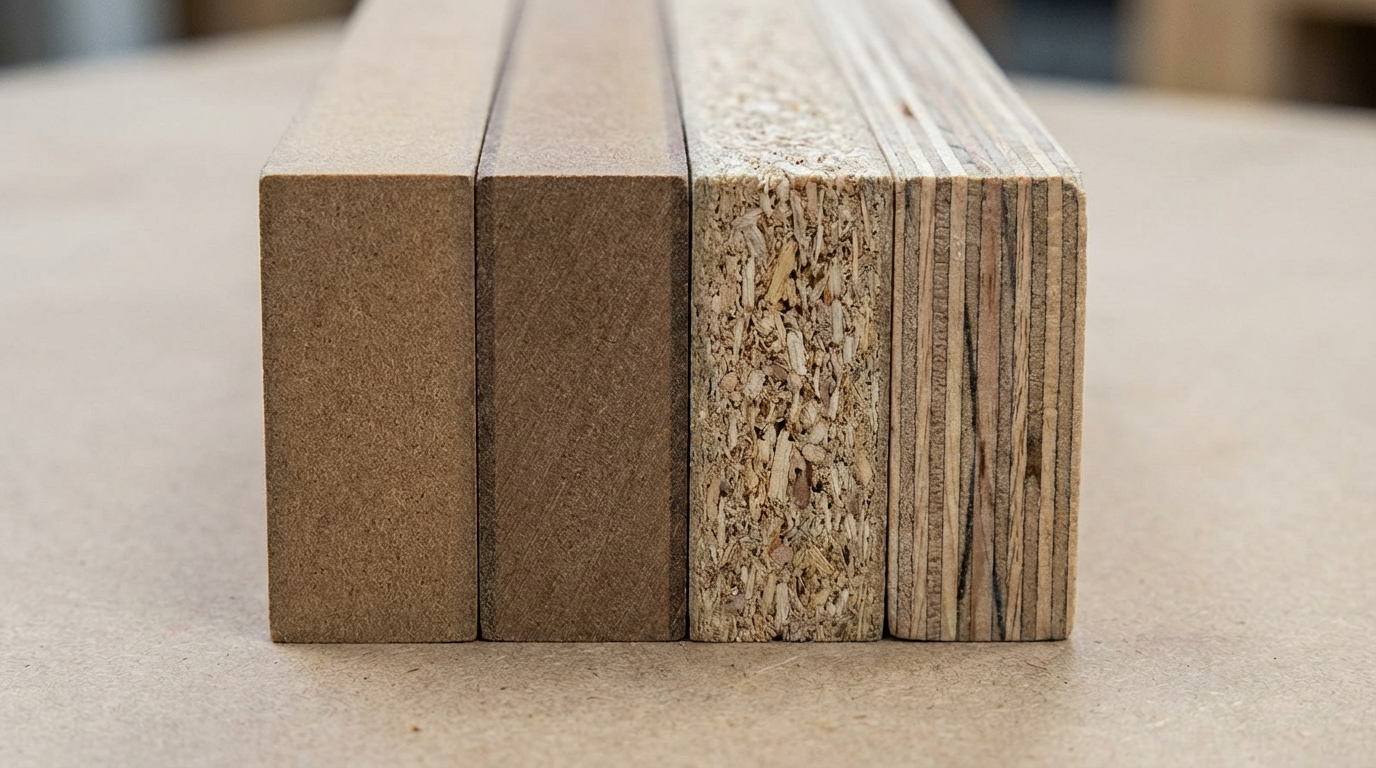
Top Greenpanel MDF alternatives: HDHMR for moisture resistance, BWR plywood for strength, blockboard for budget stability.
If you're in a hurry, switch to HDHMR boards in humid zones like kitchens or coastal homes—they resist swelling better than standard MDF while accepting laminates smoothly. Opt for calibrated BWR plywood (18mm+) for heavy furniture or shelves needing screw hold. Blockboard suits dry interiors on tight budgets. Always verify edge sealing and core uniformity on-site, as Indian storage conditions amplify failures. Expect 20-40% higher cost for premium grades, but longer life offsets it. Prioritize MR/HD grades over plain MDF for monsoons.
- Choose HDHMR if moisture exposure or laminate finish is key.
- Choose BWR plywood if load-bearing or warping resistance matters most.
- Avoid standard MDF if humidity exceeds 70% or edges stay exposed.
Note: This page is independent informational content and is not affiliated with any manufacturer.
If You’re Searching for Greenpanel, Here’s What People Usually Mean
Queries for Greenpanel often target their pre-laminated MDF panels used in wardrobes, cabinets, and modular kitchens. Users seek moisture-resistant options for Indian homes, wanting to know grades like MR or BWR equivalents, thickness choices (16-18mm common), and how they perform under humidity. Many confuse it with fully waterproof boards or plywood, leading to questions on pricing, dealer availability, or direct swaps for better durability. The real intent: find reliable alternatives that match smooth surfacing but handle monsoons without swelling or delamination.
Why do people search for Greenpanel MDF specifically?
People search for it due to its popularity in prelam formats for quick furniture assembly, especially in urban projects. However, intent shifts to alternatives when facing issues like edge swelling in humid storage or poor screw hold in heavy cabinets. In India, coastal or monsoon-heavy regions amplify this—users want boards that maintain flatness post-installation. Next step: assess your space's humidity (use a meter if possible) and prioritize HDHMR or calibrated options. Verify by pressing edges for glue integrity before buying.
How to Compare Greenpanel-Type Options to Alternatives (Without Guesswork)
Compare based on measurable traits: moisture absorption (under 10% ideal for MR), screw holding (test with 50mm screw), surface smoothness for lamination, and core density (700kg/m³+). Greenpanel-style MDF excels in finish but lags in wet zones; HDHMR matches finish with better water resistance, plywood adds strength but needs skilled finishing. Use on-site tests: soak edge samples in water for 2 hours—minimal swelling wins. Ignore brand hype; focus on IS-marked grades and batch consistency.
What This Term/Material Actually Means
MDF (Medium Density Fiberboard) is engineered wood made by compressing wood fibers with resins under heat and pressure, creating a uniform, smooth panel ideal for painting, veneering, or laminating. Thicknesses range 3-25mm; common 18mm for furniture. It's denser than particleboard (600-800kg/m³) but softer than plywood, suiting non-structural uses like cabinet sides or tabletops.
Where people get confused:
- Thinks MDF is plywood—it's fiber-based, no layers or grains.
- Assumes all MDF is moisture-proof—only MR/HD grades resist humidity.
- Believes thicker = stronger—screw hold depends on density, not just mm.
- Confuses prelam MDF with raw boards—prelam adds factory finish but hides core flaws.
- Mistakes it for waterproof—none handle direct water without sealing.
- Overlooks calibration—MDF warps if not sanded flat across face.
Is Greenpanel MDF the same as regular MDF?
No, Greenpanel MDF typically refers to their branded MR or prelaminated versions optimized for Indian furniture, but it's still fiberboard at core. Regular MDF lacks consistent moisture treatment, swelling faster in 80%+ humidity. Nuance: branded ones often have uniform density, but verify locally as batches vary. Practical step: compare samples by dropping water on edges—repel time over 30 mins indicates better resin. Choose alternatives like HDHMR for similar finish with 2x moisture tolerance in kitchens.
India-Specific Reality Check
In India, 70-90% humidity during monsoons, plus coastal salt air, turns MDF into a swelling risk if stored flat on godowns or cut edges stay unsealed. Contractor workflows often expose boards to rain during transport, amplifying delamination. Poor ventilation in homes leads to cabinet warping within 6 months. Alternatives shine here: HDHMR holds shape better, plywood breathes moisture out. Always elevate stacks 6 inches off ground and cover with tarps—reduces 50% failure odds.
Does humidity in India ruin MDF faster than alternatives?
Yes, standard MDF absorbs 20-30% moisture in monsoons, causing 5-10% thickness swell, while HDHMR limits to 8-12% and BWR plywood under 10%. Coastal areas like Mumbai or Chennai worsen this via salt corrosion on resins. Condition: unsealed edges fail first. Next step: apply 2 coats of edge sealant post-cutting, store vertically, and test humidity levels—below 65% RH suits MDF, above demands upgrades. Monitor with cheap hygrometer for prevention.
Price Range and Cost Drivers (India)
Plain MDF typically Rs 50-90 per sqft for 18mm, MR grades Rs 70-120; HDHMR Rs 90-150, BWR plywood Rs 100-180. Varies 20-30% by city (higher in metros), thickness (add 30% for 25mm), density, calibration, and prelam finish. Logistics from north India adds 10-15% southwards. Quote checklist: specify "18mm HDHMR calibrated, MR grade, 8x4 size, no defects"—get 3 quotes, negotiate bulk 10% off.
Mini budget example: 100sqft wardrobe in Mumbai—HDHMR at Rs 120/sqft totals Rs 14,000 material (plus 20% wastage), vs MDF Rs 9,000 but higher repair risk.
Two-Minute Comparison That Actually Helps
| Feature | MDF (Greenpanel-style) | HDHMR | BWR Plywood | Blockboard |
|---|---|---|---|---|
| Moisture Resistance | Medium (MR grades) | High | Very High | Medium |
| Screw Hold | Fair (strips easy) | Good | Excellent | Good |
| Surface Finish | Smooth (ideal laminate) | Smooth | Needs sanding | Medium |
| Cost (18mm/sqft) | Rs 70-120 | Rs 90-150 | Rs 100-180 | Rs 80-130 |
| Best For | Dry cabinets | Humid kitchens | Heavy shelves | Budget doors |
Choose based on wet vs dry: HDHMR for kitchens, plywood for shelves. Verify uniformity to avoid batch issues.
How to Choose in 5 Steps
- Map exposure: Kitchen/bath? HDHMR. Dry bedroom? MDF ok. Skip: assumes all rooms equal—leads to warping.
- Check load: Shelves over 20kg? Plywood. Cabinets? HDHMR. Test: hammer nail, no split.
- Pick thickness/finish: 18mm min for cabinets, laminate-ready surface. Wrong: thin boards sag.
- Set budget drivers: Factor 20% wastage, sealing costs. Get samples first.
- Verify on-site: Tap for hollows, weigh for density, edge soak test. Install with gaps for movement.
Decision Framework: Match Your Needs
| Condition | Recommended Alternative | Key Verifications |
|---|---|---|
| High humidity kitchen | HDHMR 18mm | Edge water test <10% swell, uniform color |
| Coastal exposure | BWR Plywood | Glue line check, no core gaps |
| Heavy use shelves | Calibrated Blockboard | Screw hold test, flatness with straightedge |
| Tight budget dry interiors | MR MDF | Density >700kg/m³ feel, no sanded face defects |
| High scratch risk furniture | HDHMR Prelam | Surface hardness scratch test, calibration tolerance |
| Fast delivery needed | Local MR Grade | Stock availability, batch date fresh <3 months |
Trade-offs and Limitations
MDF offers smoothest lamination but weakest screw hold and moisture tolerance—strips under repeated use. HDHMR improves water resistance at 20-30% higher cost, still not for direct wetting. Plywood strongest but rougher, needs extra finishing labor (10% more time). Blockboard stable yet prone to termite if softwood core. All warp if unsealed; no board is fully waterproof without extras.
What are the biggest limitations of MDF alternatives?
HDHMR resists moisture but costs more and may yellow under UV without topcoat. Plywood breathes but expands/contracts 2-3% yearly in humidity swings, needing precise joinery. Blockboard budget-friendly but cores separate if wet. Nuance: all demand edge banding—skipped 70% of failures. Next: budget 5% extra for sealants, test fit dry-run before glue-up. Matches Indian site realities better than untreated MDF.
Common Buyer Mistakes and How to Avoid Them
- Buying cheapest MR label: Often poor resin, swells fast. Instead: soak test sample.
- Ignoring storage history: Godown rain exposure hidden. Check: fresh batch stamp, dry weight.
- No edge sealing post-cut: 80% failures here. Prep: 2 coats melamine polish.
- Thin boards for cabinets: Sags under weight. Min 18mm, reinforce.
- Assuming prelam = protected: Sides vulnerable. Band all edges.
- Overlooking calibration: Uneven laminate bubbles. Straightedge check <0.5mm variance.
- Metro pricing for tier-2: 20% variance. Local quotes always.
- No screw hold test: Strips later. Hammer 4 screws, pull test.
Why do MDF alternatives fail in Indian homes?
Failures stem from monsoon exposure during transit/storage, unsealed cuts, and humidity over 75% without ventilation. Alternatives like HDHMR cut risks 50% but need proper install. Condition: coastal salt accelerates resin breakdown. Step: elevate storage, seal within 24hrs of cut, ventilate cabinets. Inspect yearly for early swell signs—sand and reseal extends life 2x.
Failure Modes and Fixes
- Symptom: Edge swelling. Cause: Moisture ingress. Prevent: Seal immediately. Fix: Sand, reseal, shim gaps.
- Symptom: Screw stripping. Cause: Low density. Prevent: Use plugs. Fix: Drill larger, epoxy insert.
- Symptom: Surface delam. Cause: Poor lamination. Prevent: Clean surface. Fix: Scrape, relam.
- Symptom: Core voids/popping. Cause: Manufacturing gaps. Prevent: Tap test pre-buy. Fix: Fill epoxy.
- Symptom: Warping/bowing. Cause: Humidity gradient. Prevent: Acclimatize 48hrs. Fix: Clamp flat, brace.
- Symptom: Termite marks. Cause: Soft core untreated. Prevent: MR grade only. Fix: Treat, replace section.
Quality Checks You Can Do Without Lab Tests
Before buying: Tap across face—uniform thud, no hollows. Weigh two sheets—consistent density. Check edges straight, no glue lumps. Ask: "MR grade? Batch date?" Red flag: faded labels.
After cutting: Water drop on edge—absorbs slow. Screw test: 3x diameter hold. Flatness: roll ball across—no wobble.
After install: Check alignment gaps even, no moisture under laminate. Clean dry only first month.
For Homeowners: Durability Do’s and Don’ts
Do: Wipe spills instantly, ventilate cabinets, use coasters. Don’t: Direct hose cleaning, overload shelves, store wet clothes adjacent. Keeps boards flat 5+ years. Check quarterly for edge cracks—seal early.
For Carpenters: Handling and Prep Tips
Cut with fine blade to avoid chip-out, pre-drill screws 75% depth, edge band machine-pressed. Hinge zones: reinforce 50mm oversize. Reduces callbacks 40%.
For Architects: Spec Writing Essentials
Specify "HDHMR 18mm, MR grade, calibrated ±0.3mm, edge sealed." Detail wet zones with plywood lips. Finish: PU coat for UV. Ensures contractor compliance.
For Modular Makers: QC for Repeatability
Batch-test 5% sheets: density, swell, hold. Standardize cut tolerances ±1mm. Track complaints—edge issues top 60%.
FAQs
Which is the best Greenpanel MDF alternative for kitchens?
HDHMR boards top the list for kitchens due to 2x better moisture resistance than standard MDF, holding laminates without bubbling in 80% humidity. They match smooth finish for modular cabinets but demand edge sealing. In monsoons, pair with ventilation gaps. Verify: uniform grey core, no swelling post-water test. Typically costs 20-30% more but avoids Rs 10,000+ redo. Confirm thickness 18mm+ for shelves.
Is blockboard better than MDF for wardrobes?
Blockboard offers better stability for wardrobes in dry areas, with stronger screw hold than MDF, suiting hanging loads. But in humidity, softwood strips—seal heavily. MDF smoother for paint but warps easier. Choose blockboard if budget-tight, verify solid core strips. India tip: acclimatize 2 days before assembly. Trade-off: rougher surface needs filler.
Can I use plywood instead of Greenpanel MDF?
Yes, BWR plywood replaces MDF for strength-critical uses like shelves, resisting warp better in variable humidity. Needs sanding/veneer for finish. Ideal coastal, but labor +10%. Verify calibrated face, tight glue lines. Avoid MR plywood in baths—seal extras. Cost higher, longevity 2x.
How much more does HDHMR cost vs MDF?
HDHMR typically 20-50% pricier than MR MDF (Rs 90-150 vs 70-120/sqft 18mm), driven by density and resins. City variance: +25% metros. Bulk cuts 15%. Factor sealing labor same. Long-term: halves failures, worth it humid zones. Quote with specs for accuracy.
What thickness for MDF alternatives in furniture?
18mm minimum for cabinets/shelves to prevent sag; 12-16mm partitions. Thicker boosts hold 30% but weight/cost up. Match project: heavy use 19/25mm. Check flatness pre-lam. India: 18mm standard avoids transport damage.
Do Greenpanel alternatives need special installation?
Yes, all require 48hr acclimatization, edge sealing, and 2mm expansion gaps. Use confirmat screws for hold. Poor prep causes 70% issues. Carpenter tip: dry-fit first. Enhances any board's monsoon performance.
Is prelaminated HDHMR available as MDF swap?
Prelam HDHMR widely available, direct swap for prelam MDF with superior moisture hold. Finishes match, but check design sync. Varies by supplier—request samples. Ideal quick modular, seal exposed parts anyway.
How to spot fake MR grade boards?
Red flags: inconsistent color, light weight, quick water absorb. Test: overnight edge soak—swell over 12% fake. Ask grade proof, tap uniform. Buy IS-marked stacks. Saves rework costs.
Best for coastal homes: MDF or plywood?
Plywood (BWR) for coasts—resists salt/humidity better, breathes vapors. MDF swells despite MR. Verify marine-grade logic. Seal plywood edges same. Lasts 7+ years vs MDF 3-4. Disclaimer: This content is provided for general informational purposes based on industry practices and publicly available information. Product specifications, standards, prices, and availability may vary by manufacturer, region, and time. Readers should independently verify details with manufacturers, dealers, or qualified professionals before making purchase or construction decisions.
Want Plywood Suggestions?
Share a few details and a Duro BOIL specialist will suggest suitable brands and connect you to responsive dealers.