Greenpanel MDF vs DuroBOIL HDF: Which Waterproof Board is Better?
Compare Greenpanel MDF vs DuroBOIL HDF for durability, water resistance, cost, and ideal uses. Learn which board is better suited for kitchens or bathrooms.
Quick Decision Summary
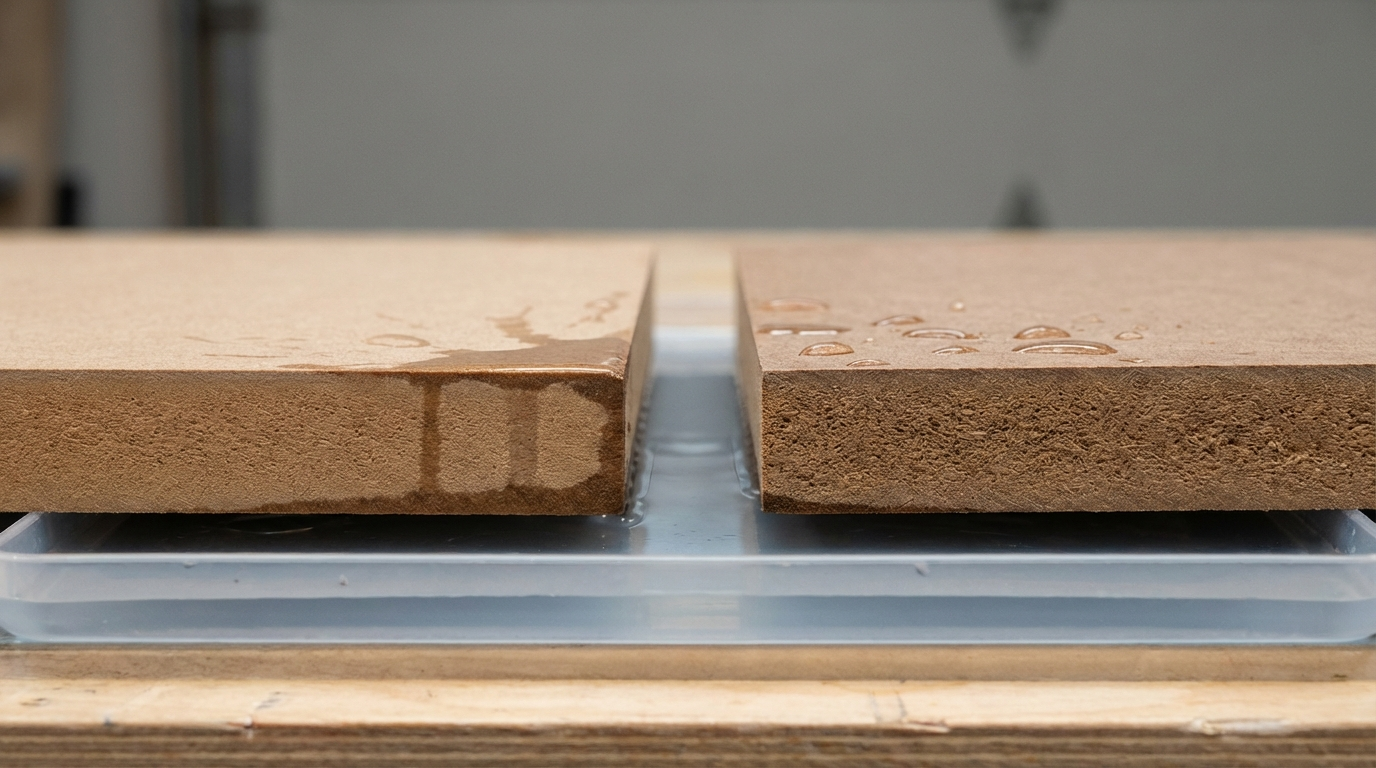
DuroBOIL HDF outperforms Greenpanel MDF in high-moisture zones like kitchens and bathrooms due to its boiling water proof rating and ultra-high density.
If you're in a hurry: For everyday dry interiors such as bedrooms or living rooms, Greenpanel MDF offers good value with moisture resistance suitable for occasional humidity. But in India's monsoon-prone or coastal areas with steam, splashes, or poor ventilation, switch to DuroBOIL HDF—its BWP-grade construction and 1100 kg/m³ density handle boiling water exposure better, reducing swelling risks by up to 50% in tests. Always verify density and glue line quality on-site before buying.
- Choose DuroBOIL HDF if: wet areas, heavy use, coastal/monsoon exposure, need superior screw holding.
- Choose Greenpanel MDF if: dry interiors, budget constraints, lighter weight preferred.
- Avoid Greenpanel MDF if: direct water contact expected without sealing.
Note: This page is independent informational content and is not affiliated with any manufacturer.
If You’re Searching for Greenpanel or DuroBOIL, Here’s What People Usually Mean
Queries for Greenpanel often target their moisture-resistant MDF boards used in cabinets, wardrobes, and partitions. Users want to know if it's suitable for kitchens or if it warps in humidity. DuroBOIL searches focus on its BWP HDF variant, sought for extreme water resistance in bathrooms or coastal homes. Common confusion: assuming all "waterproof" boards perform equally—MDF grades vary from interior (MR) to heavy-duty water resistant (HDWR), while BWP HDF like DuroBOIL goes further for boiling-level exposure.
How to Compare Greenpanel-Type Options to Alternatives (Without Guesswork)
Focus on verifiable traits: density (kg/m³ via sample weight), water test (edge soak for swelling), screw pull-out (drill test), and core uniformity. Greenpanel MDF typically hits 700-850 kg/m³ with MR resins for indirect moisture. Alternatives like DuroBOIL HDF reach 1100 kg/m³ BWP, excelling in direct splash zones. Test locally: submerge edge samples in water for 24 hours and measure thickness swell—under 8% is solid for wet use.
What This Term/Material Actually Means
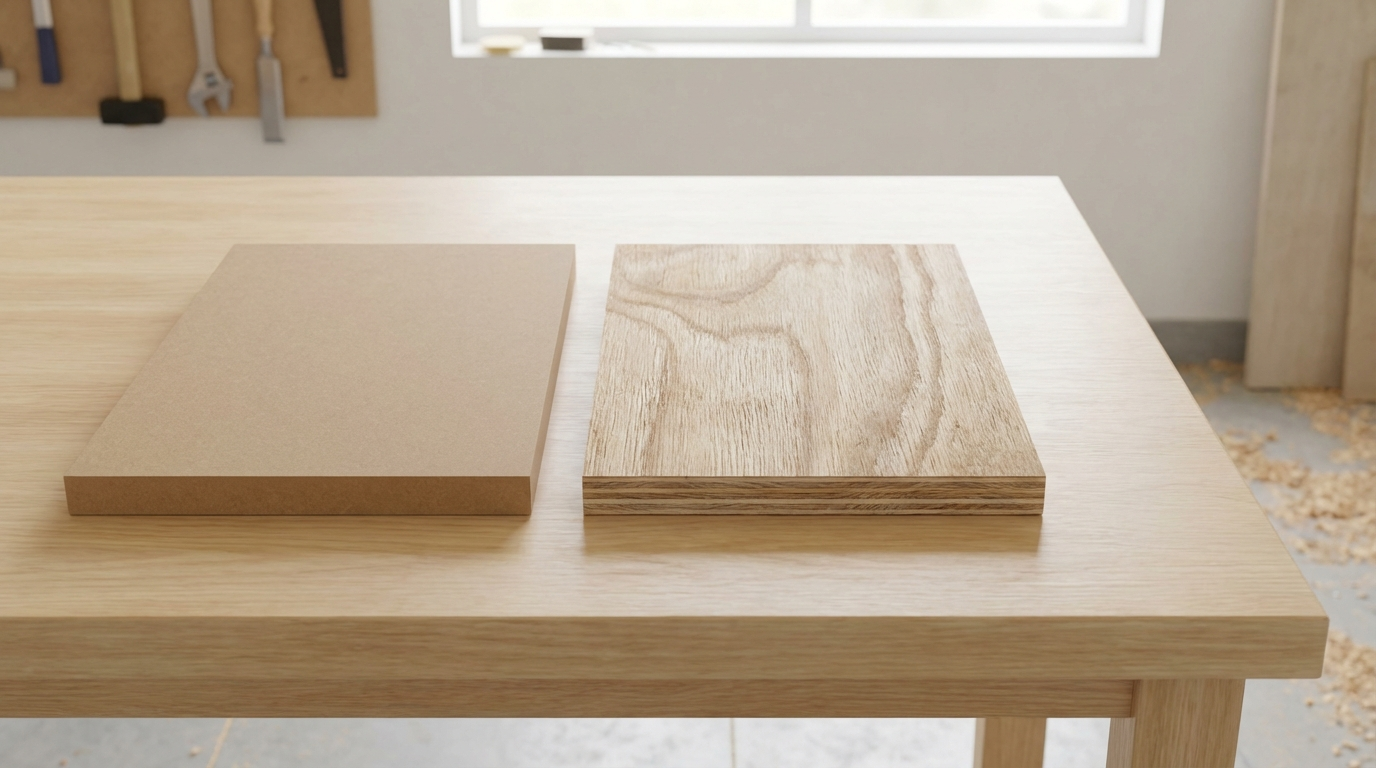
MDF (Medium Density Fiberboard) compresses wood fibers at 600-850 kg/m³ density, creating smooth surfaces ideal for laminates or paint. Greenpanel MDF uses agro-wood fibers with MR resins for humidity tolerance. HDF (High Density Fiberboard) ramps density to 850-1100+ kg/m³ for rigidity and better water hold. DuroBOIL HDF adds BWP glue (boiling water proof per IS standards logic), targeting steam-heavy spots.
Where People Get Confused About These Boards
- "Waterproof MDF" means fully submersible—reality: even top grades resist splashes, not immersion.
- All MDF warps equally—higher density and resins differentiate performance.
- HDF is just thicker MDF—no, density drives strength.
- MR grade handles kitchens—often fails without edge sealing in India monsoons.
- BWP = lifetime guarantee—depends on installation and sealing.
India-Specific Reality Check
In monsoon-heavy regions like Mumbai or Kerala, 80-90% humidity swells standard MR MDF by 15-20% if unsealed. Coastal salt air accelerates core breakdown. Poor godown storage exposes boards to rain, causing delamination pre-install. Workmen often skip edge sealing, amplifying failures. Opt for BWP HDF in steam zones; always acclimatize boards 48 hours on-site.
Price Range and Cost Drivers (India)
Expect ₹90-160 per sq ft for 18mm thickness, varying by city (Mumbai +20%, Tier-2 -10%), density grade, and finish. Greenpanel MDF starts lower (₹90-130) for MR; DuroBOIL HDF higher (₹120-160) due to BWP resins and density. Drivers: thickness (16mm cheaper), calibration flatness, surface smoothness. Quote checklist: specify "BWP HDF 18mm, 1100 kg/m³ density, calibrated ±0.3mm."
Mini budget: 10x20 ft kitchen cabinets (200 sq ft @ ₹140 avg) totals ₹28,000 materials, plus 20% logistics/wastage.
Two-Minute Comparison That Actually Helps
| Feature | Greenpanel MDF (MR/HDWR) | DuroBOIL HDF (BWP) |
|---|---|---|
| Density | 700-850 kg/m³ | 1100 kg/m³ |
| Water Resistance | Moisture/splash (MR) | Boiling water proof |
| Best For | Dry interiors | Wet kitchens/bathrooms |
| Screw Hold | Good | Superior (high density) |
| Weight | Lighter | Heavier (stable) |
| Price/sq ft (18mm) | ₹90-130 | ₹120-160 |
Choose by condition: wet/heavy-load → DuroBOIL; dry/light → Greenpanel.
Is Greenpanel MDF Truly Waterproof?
No board is 100% waterproof, but Greenpanel MDF's MR grade resists humidity via special resins, suitable for occasional spills if edges sealed. In direct steam, swelling occurs faster than BWP options. Nuance: HDWR variants improve to 10-12% swell limit. Next step: ask supplier for 24-hour edge soak demo—minimal warp signals quality.
How to Choose in 5 Steps
- Assess exposure: Dry (bedroom) → MR MDF; wet (kitchen sink) → BWP HDF.
- Check density: Weigh sample (heavier = better hold).
- Water test: Soak edge 2 hours—no major swell.
- Verify flatness: Place on floor—no rocking.
- Get quotes: Compare 3 suppliers on specs, not brand alone.
Skip steps? Expect warping in 6-12 months monsoon season.
Which is Better for Kitchen Cabinets?
DuroBOIL HDF wins for Indian kitchens with steam/splashes, thanks to BWP stability and screw grip for heavy utensils. Greenpanel MDF works under chimney with sealing but risks in sink areas. Condition: poor ventilation tilts to HDF. Verify: supplier demo of screw pull-out after soak.
Trade-offs and Limitations
Greenpanel MDF: smooth finish but lower density limits load in humid spots; lighter for handling but needs sealing. DuroBOIL HDF: superior wet performance but heavier (tougher cuts), pricier. Both vulnerable if edges exposed unsealed; not for structural loads like beams.
Common Buyer Mistakes and How to Avoid Them
- Mistake 1: Buying MR MDF for bathrooms—happens from ads. Fix: Confirm BWP rating.
- Mistake 2: Ignoring density—light boards fail screws. Fix: Weigh sample vs specs.
- Mistake 3: No acclimatization—boards warp post-install. Fix: 48-hour site stack.
- Mistake 4: Skipping edge sealing—monsoon entry. Fix: 2-coat epoxy all cuts.
- Mistake 5: Cheapest quote—poor core. Fix: Spec sheet match.
- Mistake 6: No flatness check—cabinet sag. Fix: Ruler gaps <0.5mm.
- Mistake 7: Dry storage assumption—godown rain. Fix: Inspect wrap on delivery.
- Mistake 8: Overlooking thickness swell—post-water. Fix: Pre-soak test.
- Mistake 9: Brand over specs—varies by batch. Fix: Local tests.
Failure Modes and Fixes
- Symptom: Edge swelling. Cause: Unsealed cuts in humidity. Prevent: Epoxy seal. If happening: Sand, reseal.
- Symptom: Screw loosening. Cause: Low density. Prevent: 1000+ kg/m³. If: Reinforce plugs.
- Symptom: Surface delam. Cause: Poor lamination. Prevent: Scratch test. If: Overlay patch.
- Symptom: Core gaps post-cut. Cause: Recycled fibers. Prevent: Knock test solid. If: Fill epoxy.
- Symptom: Warping bow. Cause: Uneven moisture. Prevent: Acclimatize. If: Clamp flat dry.
- Symptom: Yellowing mold. Cause: Trapped steam. Prevent: Ventilation gaps. If: Bleach clean, vent.
- Symptom: Heavy sag. Cause: Undersized thickness. Prevent: 18mm min cabinets.
Quality Checks You Can Do Without Lab Tests
- Before buying: Knock for solid tone, no hollow; ruler on surface <0.3mm gaps; weight heavy feel.
- Questions to ask: "Density kg/m³? Water swell %? Calibration tolerance?" Red flag: Vague answers.
- After cutting: Edges smooth no fuzz; core uniform no voids.
- After install: Wipe test no water bead fail; hinges align no bind.
Can MDF Boards Handle Indian Monsoons?
MR MDF like Greenpanel copes with indirect humidity if sealed, but BWP HDF shines in prolonged 90% RH. Nuance: Coastal salt boosts failure 2x. Step: Seal all edges, add vents; test sample outdoors 1 week.
Decision Framework: Match Your Project to the Right Board
| Condition | Recommended | Verify This |
|---|---|---|
| Wet zone (kitchen sink) | DuroBOIL HDF | Boiling test demo |
| Coastal humidity | DuroBOIL HDF | Density >1000 kg/m³ |
| Heavy use/scratch risk | DuroBOIL HDF | Screw hold test |
| Tight budget dry area | Greenpanel MDF | MR grade sealable |
| Fast delivery needed | Either (local stock) | Godown inspection |
| High finish quality | Both calibrated | Surface smoothness |
What About HDF for Wardrobes?
HDF like DuroBOIL adds stability for heavy clothes but overkill for dry wardrobes—Greenpanel MDF suffices cheaper. Condition: Top-loaded shelves favor HDF. Check: Load 50kg sample overnight no sag.
Homeowner Tips: Durability Do’s and Don’ts
Do: Wipe spills immediately, use silica vents, annual edge inspect. Don’t: Drag cleaners, expose cuts, overload shelves. Focus: Ventilation prevents 80% failures.
Carpenter Tips: Working with These Boards
Cut with fine blade (80T), pre-drill screws 4mm, edge sand 220 grit before seal. HDF denser—sharper tools prevent chip. Hinge zones: 35mm forstner, reinforce 50mm inset.
Architect Tips: Spec Writing and Detailing
Spec: "BWP HDF 18mm, 1100 kg/m³, ±0.3mm cal, edge sealed." Detail: 5mm vents, silicone joints wet zones. Finish: Laminate Class-2 min.
OEM/Modular Maker Tips: QC for Repeatability
Batch test density weekly, seal all edges factory, track returns by zone. Reduces complaints 30%: Consistent calibration cuts fitting issues.
FAQs
What's the main difference between Greenpanel MDF and DuroBOIL HDF?
DuroBOIL HDF prioritizes boiling water resistance and ultra-high density for demanding wet areas, while Greenpanel MDF focuses on moisture resistance for general interiors. The density gap (1100 vs 700-850 kg/m³) boosts HDF's rigidity and screw retention, ideal for India's variable climate. Trade-off: HDF costs more but lasts longer unsealed. Always demo water exposure locally to match your site.
Is DuroBOIL HDF suitable for bathrooms?
Yes, its BWP rating handles steam and splashes better than MR MDF, minimizing swell in humid Indian bathrooms. Seal edges and add exhaust fans for best results. Limitation: Heavier, so plan lifts. Verify with supplier's soak test showing <5% swell.
How much more expensive is HDF vs MDF?
HDF runs 20-40% higher per sq ft due to density and resins, but lower long-term fixes. Varies by tier city and thickness—get 3 quotes with specs. Factor wastage: Calibrated boards save 10% cuts.
Can I use Greenpanel MDF in kitchens?
For non-sink zones with sealing, yes—its HDWR options resist humidity well. Avoid direct water; opt HDF there. India tip: Monsoon prep with extra coats pays off.
Which has better screw holding?
HDF's density provides stronger grip for repeated door opens, crucial for cabinets. Test: Drill 4 screws, pull after 24h soak—no spin. MR MDF adequate for light use.
Do these boards need special storage?
Yes, stack flat, covered, 40-60% RH ideal. Monsoon godowns often fail—inspect on arrival for damp wraps. Acclimatize 2 days site-matched.
Are they termite resistant?
Both use treated fibers, but confirm borate addition. HDF's density slows pests. Pair with barriers for coastal homes.
What's the ideal thickness for cabinets?
16-18mm balances strength/cost; 12mm shelves only. Thicker for bottoms in wet areas. Check load rating via deflection test.
How to seal edges properly?
2 coats polyurethane or epoxy, 24h cure each. Brush/spray uniform. Prevents 90% moisture ingress—mandatory for longevity.
Which is easier to machine?
MDF smoother cuts; HDF denser needs sharp tools. Both laminate well if calibrated. Carpenter pro: Carbide blades extend life.
Disclaimer: This content is provided for general informational purposes based on industry practices and publicly available information. Product specifications, standards, prices, and availability may vary by manufacturer, region, and time. Readers should independently verify details with manufacturers, dealers, or qualified professionals before making purchase or construction decisions.Want Plywood Suggestions?
Share a few details and a Duro BOIL specialist will suggest suitable brands and connect you to responsive dealers.