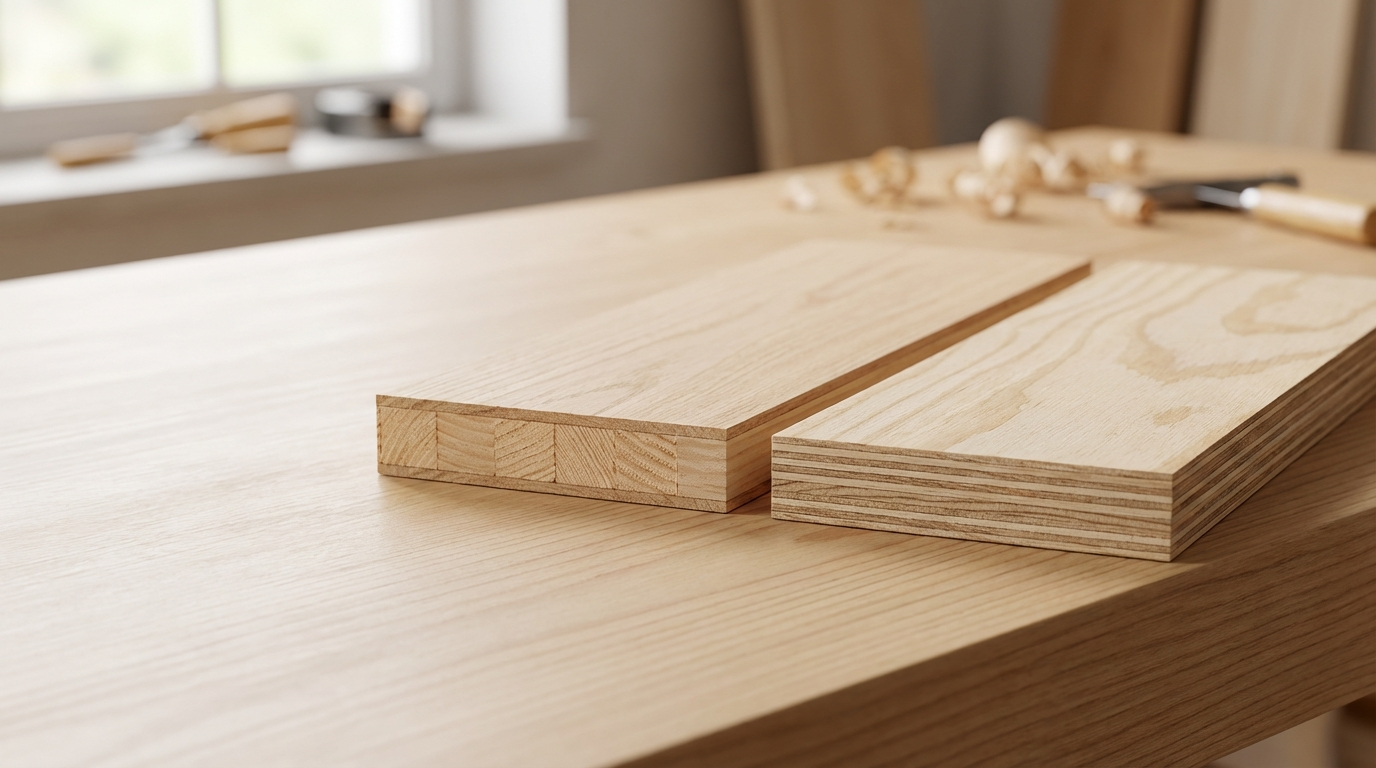
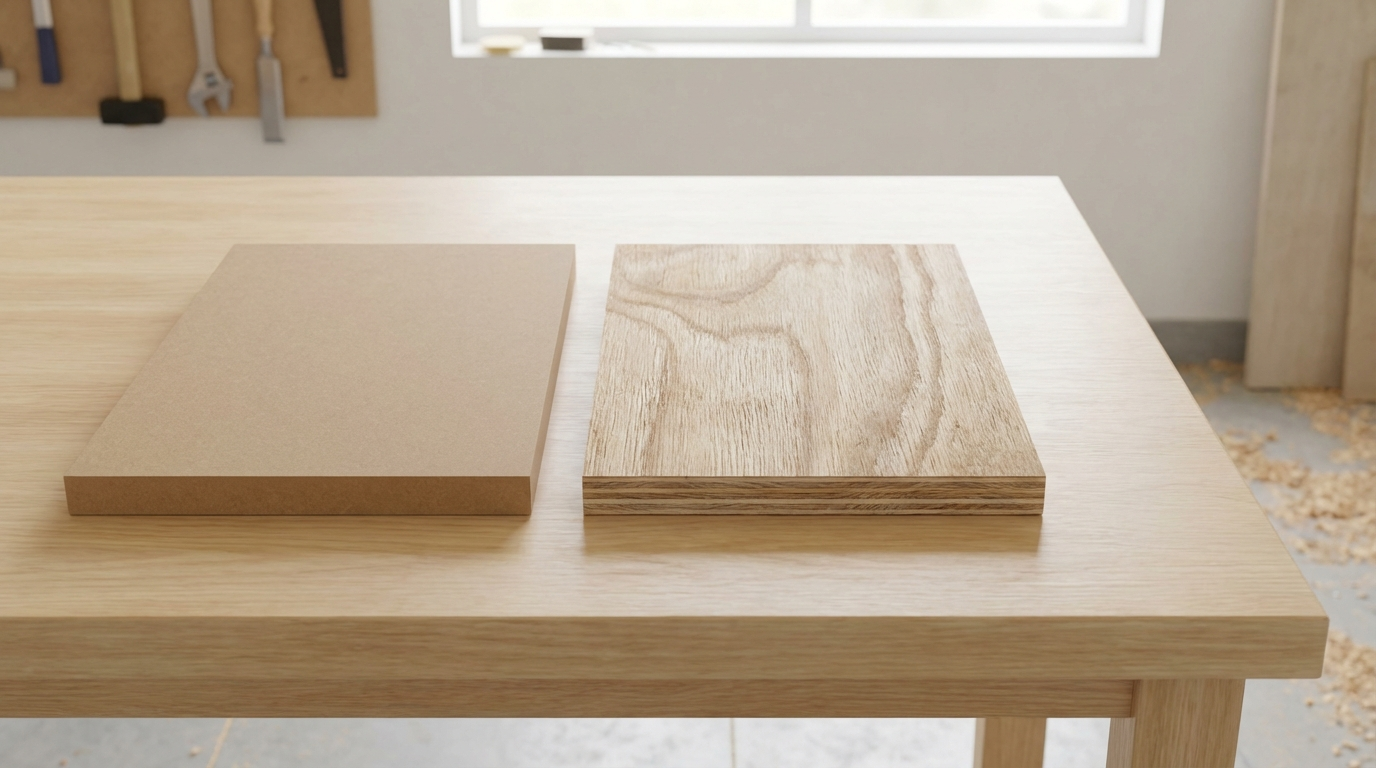
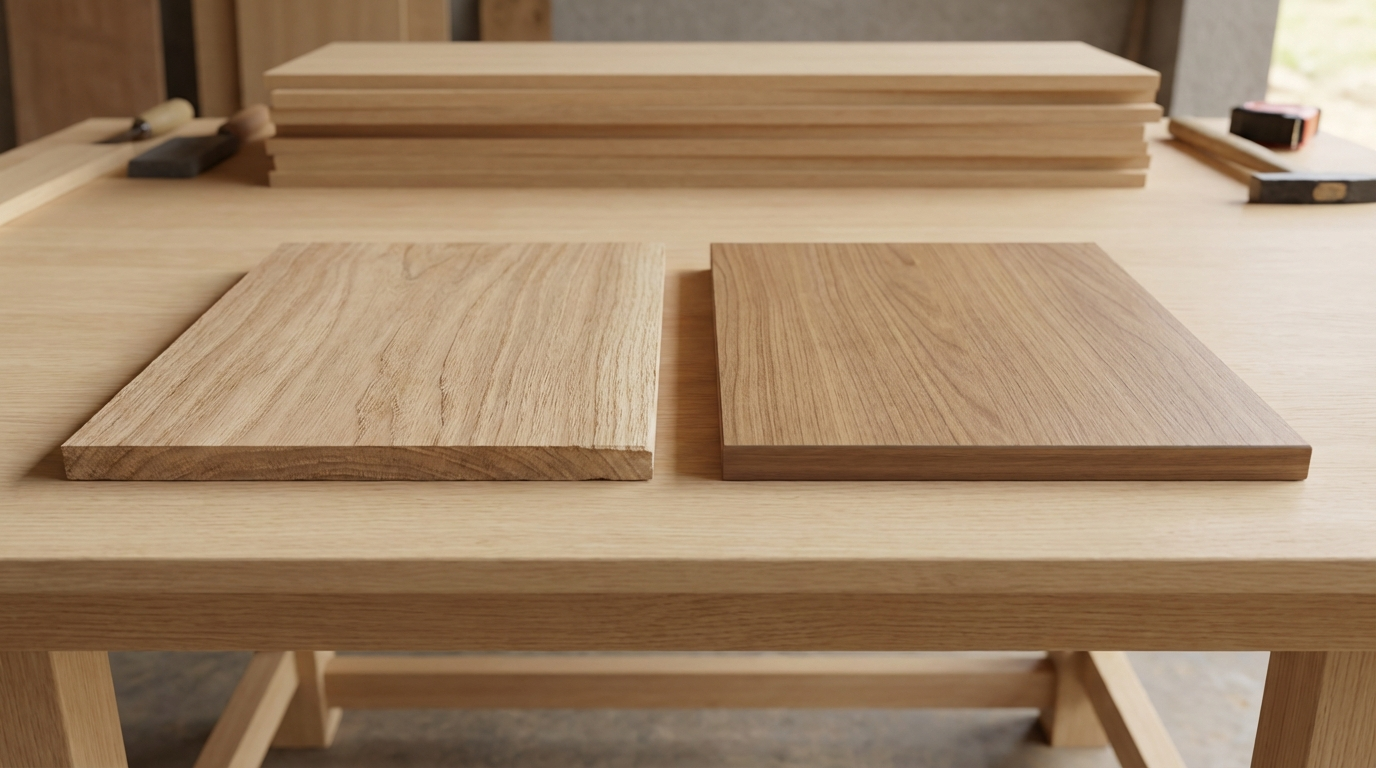
Greenpanel MDF vs Duroboil MDF: which to choose in 2026?
Greenpanel MDF vs Duroboil MDF: which to choose in 2026? with a clear decision table on grade, thickness, moisture performance, warranty and price factors.
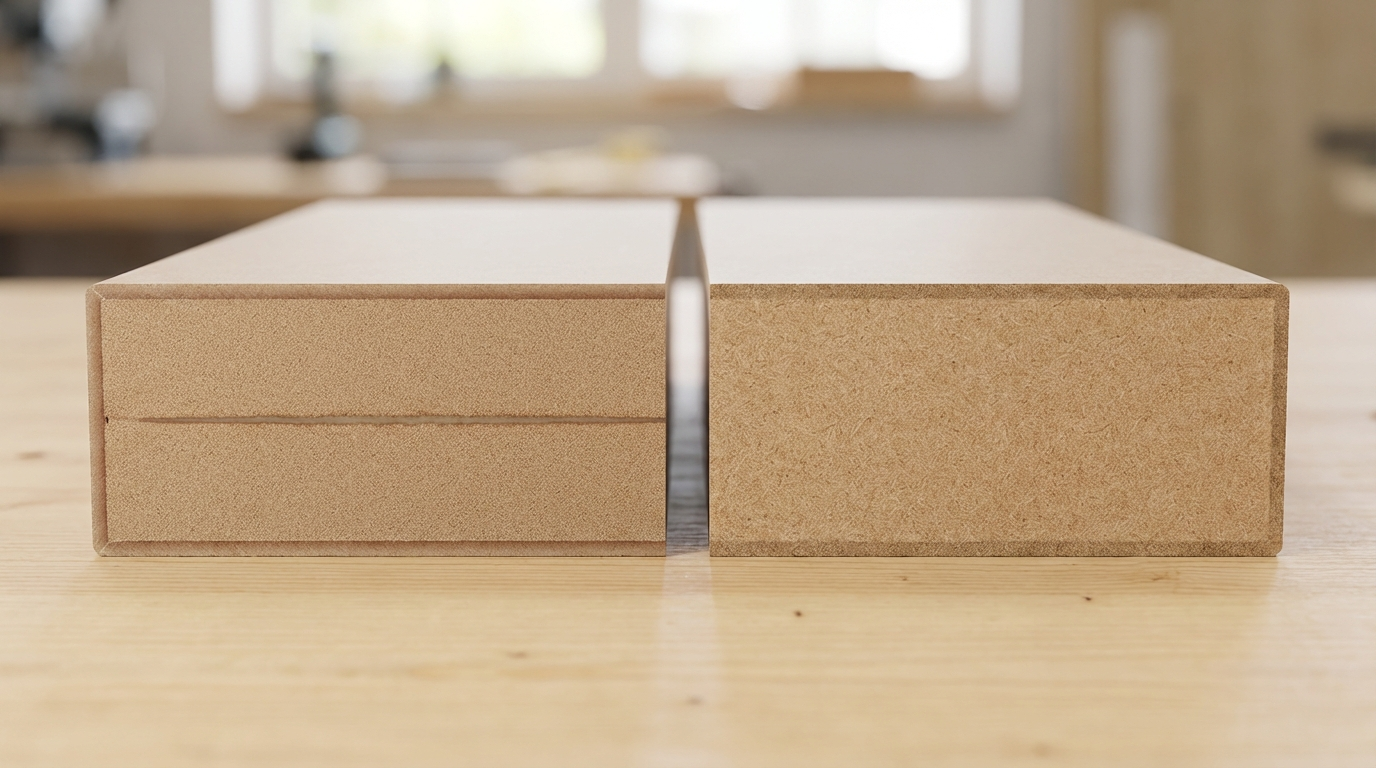
Quick Decision Summary
Opt for higher-density, BWR-grade MDF from either brand for monsoon-heavy or coastal zones; standard MR suits dry interiors.
If you're in a hurry: Both Greenpanel and Duroboil offer reliable MR and HD grades for Indian homes, but pick based on your exposure level—MR for bedrooms/wardrobes (₹50-90/sq ft at 18mm), HD/BWR for kitchens/utility (₹80-130/sq ft). Verify density (700+ kg/m³), screw hold, and edge sealing on-site. Duroboil edges in boiling water resistance for wet zones; Greenpanel in uniform fibre for smooth finishes. Always cross-check local stock and carpenter feedback before bulk buy.
- Choose Duroboil MDF if: High humidity, steam exposure, or need BWR strength for cabinets/doors.
- Choose Greenpanel MDF if: Budget interiors, CNC carving, or lighter load in ventilated spaces.
- Avoid both if: Direct outdoor use—switch to marine plywood.
Note: This page is independent informational content and is not affiliated with any manufacturer.
If You’re Searching for Greenpanel MDF or Duroboil MDF, Here’s What People Usually Mean
Users typing these terms often want quick specs on moisture grades (MR vs HD/BWR), thickness options (12-18mm popular), real-user durability in humid India, and price-per-sq-ft logic versus plywood alternatives. Common confusions include assuming all MDF warps equally or ignoring core density differences. They seek decision help for wardrobes, modular kitchens, or TV units, focusing on screw-holding, lamination grip, and monsoon survival.
How to Compare Greenpanel-Type Options to Alternatives (Without Guesswork)
Compare by testing density (tap test: solid thud means 750+ kg/m³), moisture logic (MR for occasional damp, BWR for steam), and finish uniformity. Ask for IS 12406 certification visuals, not claims. Check carpenter scrap samples for edge swelling after 24hr water dip. Prioritize local availability over brand hype—metros add 20% logistics cost.
Which MDF grade holds up best in Indian kitchens?
HD/BWR grades from both brands resist steam swelling better than basic MR, thanks to denser fibres and advanced resins. In low-ventilation modular setups, they prevent delamination under 80% humidity. Nuance: Pair with PU edge bands and ventilated cabinets. Next step: Request supplier water-immersion demo on 18mm scraps.
What This Term/Material Actually Means
MDF (Medium Density Fiberboard) is engineered wood from compressed fibres, resins, and wax—smoother than plywood for laminates/CNC, but needs moisture grading for India. Greenpanel focuses MR/exterior (IS 12406 Grade 1) and HDWR Club; Duroboil emphasizes MR/BWR for interiors. Thicknesses typically 3-30mm; 16-19mm for furniture.
Where people get confused:
- MDF = plywood (no, fibres vs veneers; MDF smoother but less screw strength).
- All MR is waterproof (no, MR handles humidity; BWR survives boiling).
- Thicker = always better (no, poor density warps faster).
- Brand name guarantees quality (varies by batch/dealer).
- No maintenance needed (edge sealing essential).
- Cheaper = inferior (check density first).
India-Specific Reality Check
Monsoon humidity (80-95%) and coastal salt air amplify swelling risks—MR MDF buckles in poorly ventilated godowns or kitchens without exhaust. Contractor workflows favor pre-cut sheets to cut wastage (10-15%). Storage tip: Vertical stacking, 150mm ground clearance. Workmanship pitfalls: Skipping edge polish leads to 20% faster failure.
Price Range and Cost Drivers (India)
For 18mm: ₹50-90/sq ft MR grade; ₹80-130/sq ft HD/BWR—higher in metros (Mumbai/Delhi +15-25%), lower inland. Drivers: Thickness (12mm 20% cheaper), density (HD +30%), calibration (±0.3mm premium), city logistics, dealer margins. Quote checklist: Specify grade, size (8x4 std), quantity discount, transport included.
Mini budget example: 100 sq ft kitchen cabinet (18mm BWR) ~₹10,000-15,000 materials, plus 30% fab/wastage.
Two-Minute Comparison That Actually Helps
| Factor | Greenpanel MDF | Duroboil MDF |
|---|---|---|
| Moisture Grades | MR, HDWR Club (wet areas) | MR, BWR (boiling resistance) |
| Density Typical | 700-850 kg/m³ | 750-900+ kg/m³ |
| Thickness Range | 3-30mm | 3-25mm |
| Best For | CNC/smooth finishes, interiors | High-load cabinets, humidity |
| Price 18mm/sq ft | ₹55-110 | ₹60-120 |
Choose by conditions: Wet/steam → BWR; Dry/CNC → MR uniform.
How to Choose in 5 Steps
- Assess exposure: Dry room? MR. Kitchen/coastal? HD/BWR.
- Check density: Weigh sample (45-55kg for 18mm sheet).
- Test screw hold: 8-10 screws without cracking.
- Inspect calibration: Uniform thickness via gauge.
- Get local quotes: 3 suppliers, verify batch date.
Skip and risk warping in 6-12 months.
Does thickness matter more than grade in humid areas?
No—grade trumps thickness; 18mm MR swells faster than 16mm BWR in 90% RH. Thicker aids load but amplifies moisture trap if unsealed. In Kerala monsoons, prioritize resin quality. Check: Wet scrap overnight; minimal swell (<8%) wins. Step: Spec BWR + PU polish.
Trade-offs and Limitations
MDF smooth for laminates but weaker screw pull-out vs blockboard (use inserts). MR/HD limits: Not for floor/substrate. Eco-resins reduce VOC but cost 10% more. India heat cycles test glue lines—edge-band everything.
Common Buyer Mistakes and How to Avoid Them
- Mistake 1: Buying cheapest MR for kitchen. Why: Swells in steam. Instead: Upgrade HD, ventilate.
- Mistake 2: Ignoring storage. Why: Godown damp warps sheets. Instead: Inspect on delivery.
- Mistake 3: No edge sealing. Why: Fibre edges suck moisture. Instead: PU band day 1.
- Mistake 4: Overlooking density. Why: Low-density sags. Instead: Tap test/thud.
- Mistake 5: Bulk without samples. Why: Batch variance. Instead: Test 1 sheet first.
- Mistake 6: Metro pricing blind. Why: Logistics inflate. Instead: Local dealer compare.
- Mistake 7: Skipping carpenter input. Why: Fab mismatches. Instead: Share specs pre-order.
- Mistake 8: Assuming brand=quality forever. Why: Dealer mixes. Instead: Visual QC each time.
Failure Modes and Fixes
- Symptom: Edge swelling. Cause: Unsealed fibres. Prevent: Immediate PU banding. Fix: Sand, re-seal.
- Symptom: Screw loosening. Cause: Low density. Prevent: 750+ kg/m³. Fix: Wall plugs/inserts.
- Symptom: Lamination peel. Cause: Poor glue adhesion. Prevent: Calibrated surface. Fix: Re-laminate affected.
- Symptom: Core sag. Cause: Heavy load/low density. Prevent: HD grade. Fix: Reinforce frame.
- Symptom: Surface cracks. Cause: Humidity flux. Prevent: AC control. Fix: Filler + polish.
- Symptom: Termite nibble. Cause: Fibre attractant. Prevent: Treated resins. Fix: Pro treatment.
Quality Checks You Can Do Without Lab Tests
Before buying: Tap for solid sound, flex sheet (minimal bend), check edges (smooth, no gaps), ask batch date (<3 months).
After cutting: Even kerf, no fuzz, screw 10 points (firm hold).
After install: Level alignment, wipe-test (no water bead), monitor 1 month humidity.
Red flags: Powder touch, wavy surface, >0.5mm variance.
Can MDF handle Indian monsoon without warping?
HD/BWR grades do if edge-sealed and ventilated—resist 24hr immersion with <10% swell. Standard MR buckles in open storage. Coastal tip: Salt accelerates, so denser better. Verify: Supplier demo + carpenter past projects. Next: Budget 10% extra for seals/hardware.
Decision Framework Table
| Condition | Recommended Choice | What to Verify |
|---|---|---|
| Wet kitchen/steam | Duroboil BWR | Immersion test, density 850+ |
| Coastal humidity | Greenpanel HDWR | Screw hold, salt spray scrap |
| Heavy use wardrobe | Either HD grade | Load test 50kg shelf |
| Tight budget dry room | Greenpanel MR | Calibration ±0.3mm |
| High scratch/CNC | Duroboil uniform | Smooth sandpaper rub |
| Fast delivery | Local stock either | Batch fresh, transport dry |
How much does 18mm MDF cost per sq ft?
Ranges ₹50-130 depending grade/thickness/city—MR lower end, BWR higher for density. Varies 20% metro vs tier-2. Drivers: Freight peaks monsoons. Ask quote: "18mm BWR 8x4, 50 sheets, delivered." Track wastage (5-10% cuts).
Tips for Homeowners
Durability do: Seal edges, use doormats near cabinets, clean spills instantly. Don't: Drag heavy items, expose to direct water. Opt ventilated designs.
Tips for Carpenters
Cut with zero-clearance blade, pre-drill hinges, fasten 50mm from edges. Handle flat to avoid dents; polish before laminate.
Tips for Architects/Designers
Spec density/grade in drawings, detail edge returns, wet-zone backups (plywood hybrid). Finish: Matte PU for humidity.
Tips for Modular OEMs
QC: 100% density check, batch-trace, test screw cycles. Reduces returns 30% via pre-sealed panels.
Is Duroboil MDF stronger than Greenpanel?
Duroboil BWR often denser for load/steam; Greenpanel HDWR smoother for carving. Strength via fibre lock—test both scraps. India use: BWR for utility. Step: Weigh/compare flex on-site.
FAQs
What’s the difference between MR and BWR MDF?
MR resists occasional humidity (kitchens with exhaust); BWR survives boiling immersion for steam-heavy zones like coastal bathrooms. Both use resins, but BWR denser (800+ kg/m³). In India, BWR cuts failure 40% in monsoons. Verify: Ask for wet test demo; pair BWR with seals for longevity.
Which is best for wardrobes in humid cities?
HD/BWR grades from either—hold laminates, resist 85% RH. Avoid basic MR. Nuances: Ventilation gaps prevent trap. Check local humidity data; test screw pull-out. Install with silica packs initially.
Does brand matter for MDF quality?
Less than grade/density—both deliver if MR/HD verified. Batch variance happens; focus supplier QC. India tip: Dealer with storage AC wins. Always sample first.
Can I use MDF for kitchen cabinets?
Yes, HD/BWR only—resist steam if sealed/vented. Failures from poor grade. Steps: 18mm thick, PU edges, exhaust fan. Monitor year 1.
How to store MDF sheets before use?
Vertical racks, 6in off ground, covered, <75% RH. Monsoon: Tarps + fans. Inspect delivery for bows.
What thickness for furniture?
12mm shelves, 18mm carcasses/doors—balances weight/cost. Thicker for spans >1m. Calibrate for even joints.
Is MDF termite-proof?
Treated resins deter, but not 100%—use in frames. Pair with repellents if ground floor.
How to identify fake/high-quality MDF?
Solid tap, even edges, no powder, firm screw. Avoid warped/flaky. Carpenter vouch.
Greenpanel or Duroboil for modular kitchens?
Duroboil BWR for steam resilience; Greenpanel if CNC priority. Verify density/tests locally.
Disclaimer: This content is provided for general informational purposes based on industry practices and publicly available information. Product specifications, standards, prices, and availability may vary by manufacturer, region, and time. Readers should independently verify details with manufacturers, dealers, or qualified professionals before making purchase or construction decisions.Want Plywood Suggestions?
Share a few details and a Duro BOIL specialist will suggest suitable brands and connect you to responsive dealers.