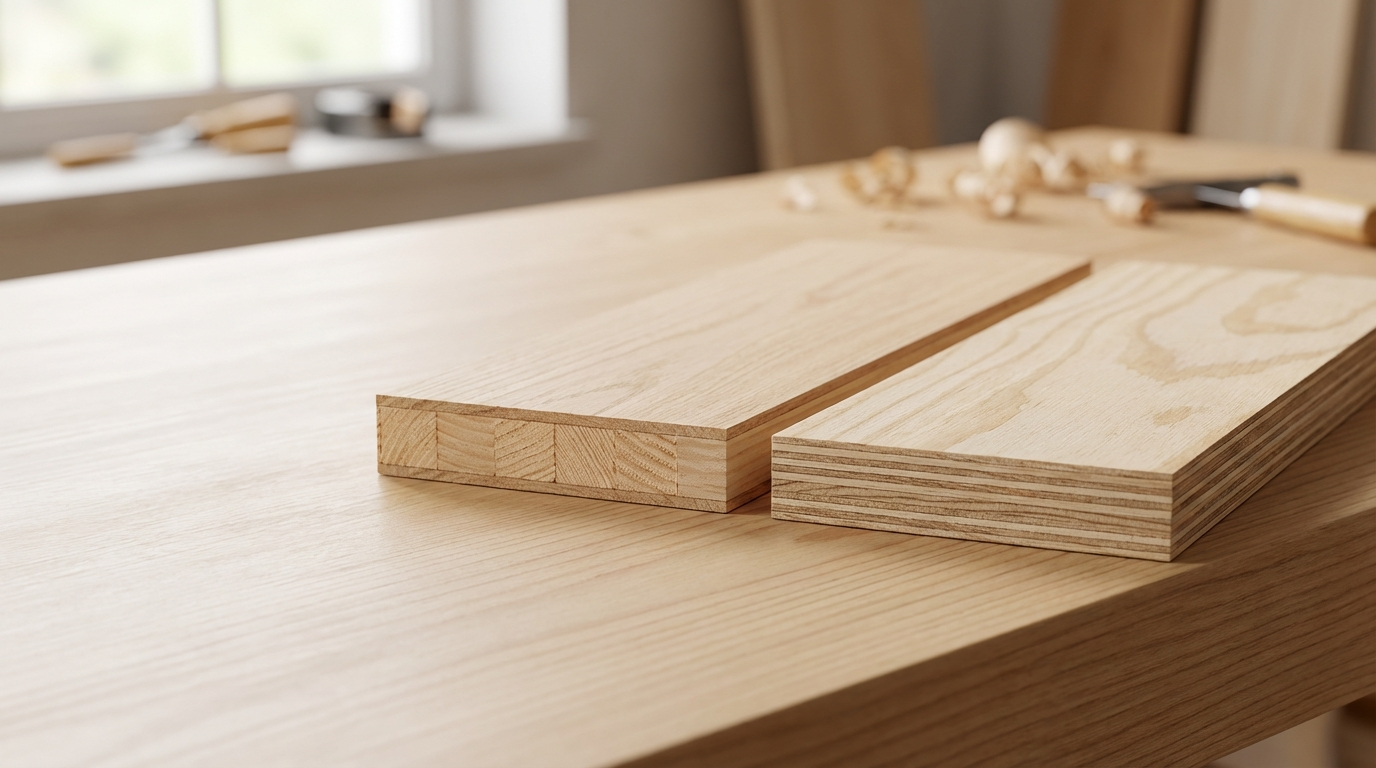
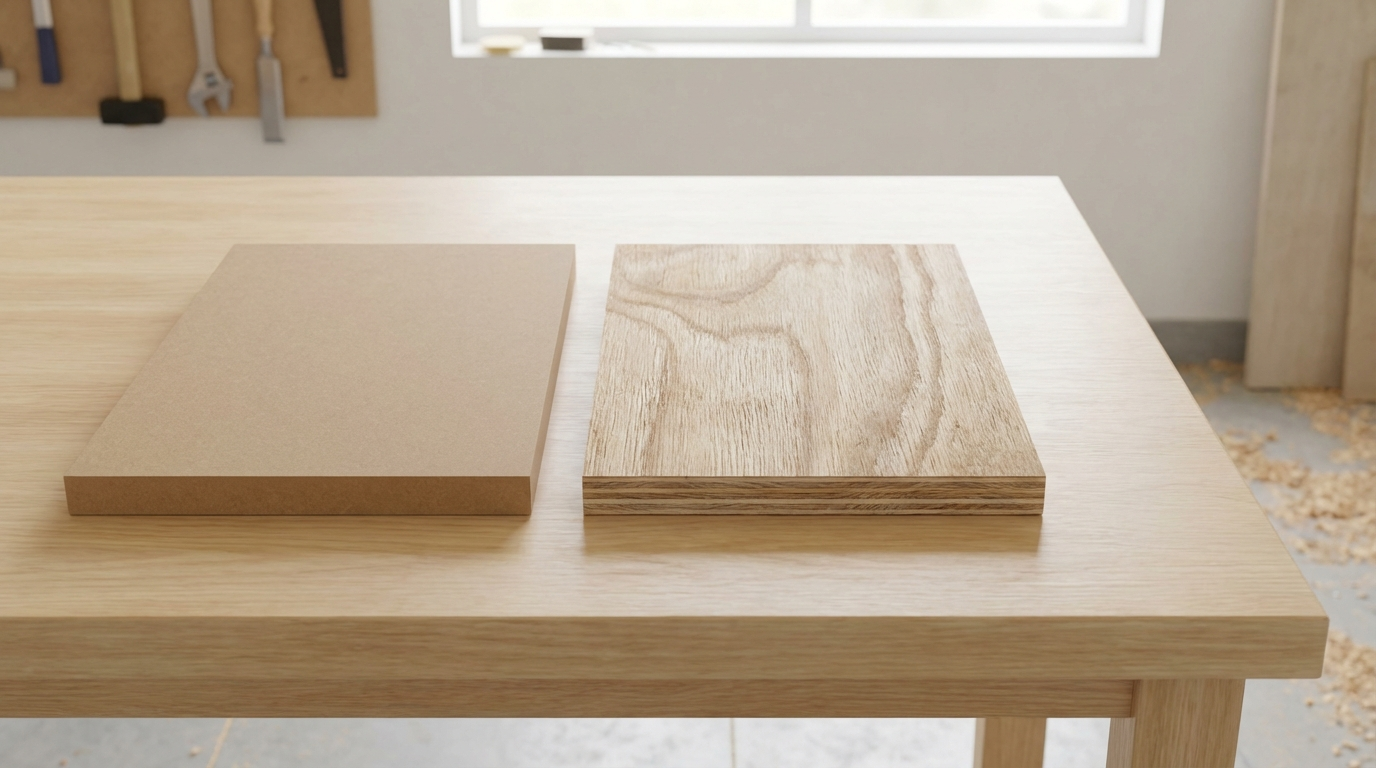
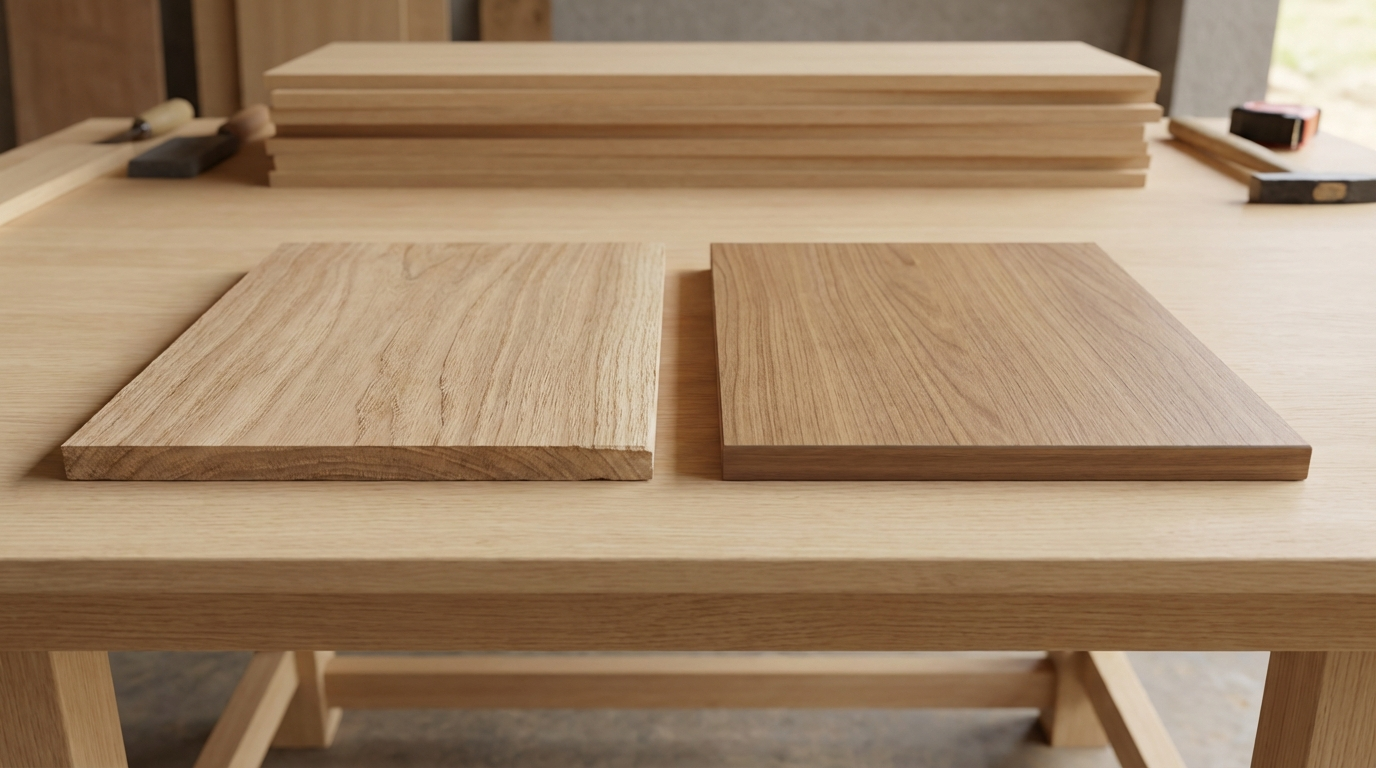
Greenpanel vs Action Tesa MDF for modular kitchens
Greenpanel vs Action Tesa MDF for modular kitchens with a clear decision table on grade, thickness, moisture performance, warranty and price factors. Made for
Note: This page is independent informational content and is not affiliated with any manufacturer.
Quick Decision Summary
Action Tesa HDHMR edges out for spill-heavy modular kitchens due to higher density and screw grip; Greenpanel Exterior Grade MDF suits moderate humidity at lower cost.
If you’re in a hurry: Indian modular kitchens demand moisture-resistant MDF to handle spills, steam, and monsoon humidity. Action Tesa's HDHMR (high-density high-moisture-resistant) typically provides superior strength for cabinets and shutters, with better resistance to warping under repeated wetting. Greenpanel's Exterior Grade (MR per IS standards) offers reliable performance for dry-to-moderate zones, often at 10-20% less cost. Prioritize HD grades over standard interior for kitchens—verify density markings and edge sealing during site checks.
- Choose Action Tesa HDHMR if: high-use kitchen with frequent spills, coastal area, or heavy laminates.
- Choose Greenpanel Exterior MDF if: budget-focused, milder interiors, or lighter cabinet loads.
- Avoid standard interior grades for both: prone to swelling in kitchen steam.
If You’re Searching for Greenpanel or Action Tesa, Here’s What People Usually Mean
Queries for these brands often target their MDF or HDHMR boards for modular kitchens, seeking options that resist moisture from cooking splashes and humidity without plywood's weight. Users compare for density (screw-holding), thickness uniformity for CNC routing, and edge banding adhesion. Common intent: find verified MR grades for cabinets/shutters, avoiding delam in 1-2 years.
How to Compare Greenpanel-Type vs Action Tesa-Type Options (Without Guesswork)
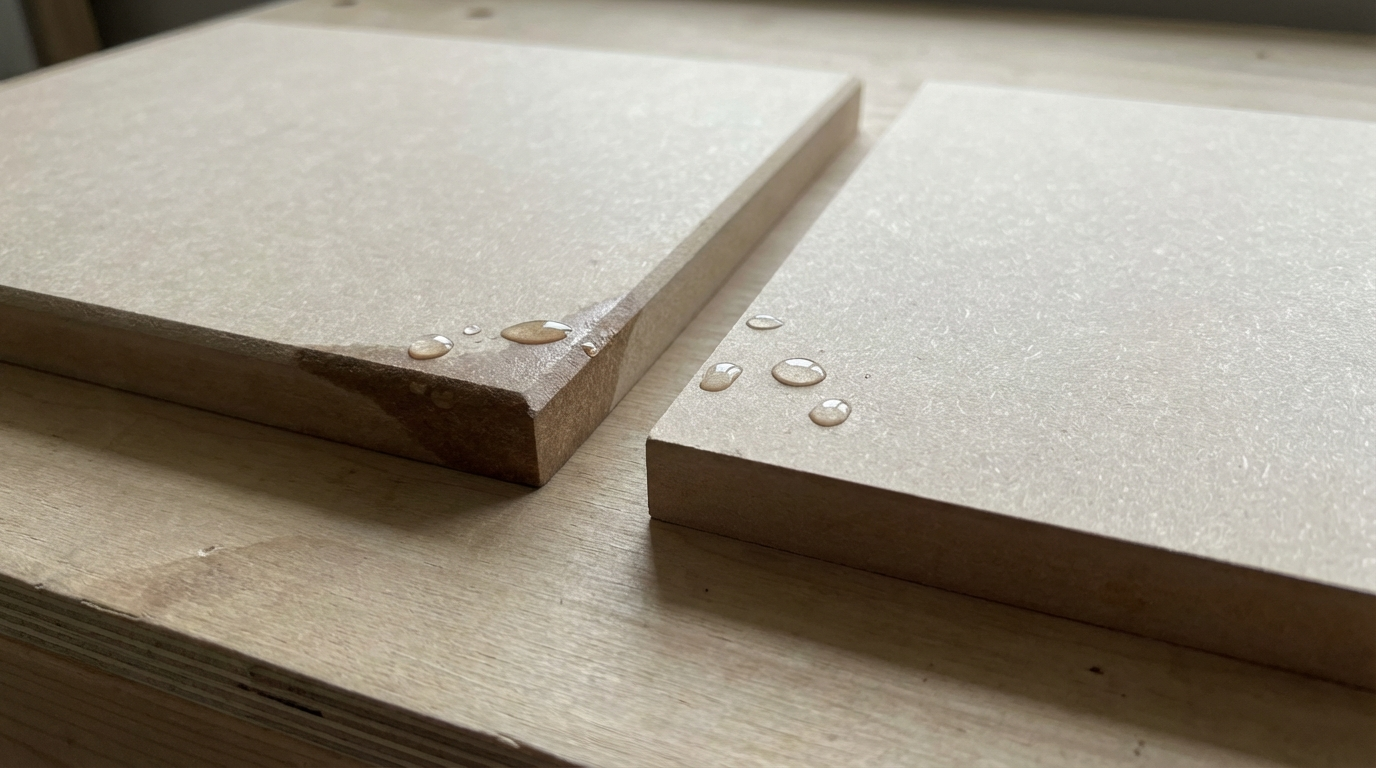
Focus on verifiable traits: check density stamps (>750 kg/m³ for HD), moisture grade labels (Exterior/MR vs interior), thickness tolerance (±0.3mm), and screw pull-out tests on samples. For kitchens, weigh screw grip (HDHMR stronger) vs cost (Exterior MDF often cheaper). Inspect core uniformity—no lumps—and edge water soak (minimal swell <10%). Local dealers stock both; ask for batch test reports without warranties.
Which MDF holds up better in Indian kitchen humidity?
HDHMR variants like Action Tesa's typically outperform standard MR in prolonged steam exposure, maintaining flatness longer due to denser fiber-resin bonds. Greenpanel Exterior Grade handles moderate humidity well but may need extra edge sealing in coastal homes. Nuance: thickness matters—18mm+ reduces flex. Next step: soak sample edges in water for 2 hours; measure swell—under 8% is kitchen-ready.
What MDF Actually Means for Modular Kitchens
MDF (Medium Density Fiberboard) is engineered wood from compressed fibers and resins, uniform for smooth laminates and CNC cuts in cabinets. Kitchen-specific: MR or Exterior grades resist swelling from spills; HDHMR adds density for heavy doors.
Where people get confused:
- MDF = plywood: No, fibers vs layers; MDF smoother but less impact-strong.
- All MDF waterproof: Only BWP/HWD grades; standard swells fast.
- Thinner = cheaper always: Core quality drives cost more.
- Plain = unfinished: Needs lamination/veneer for kitchens.
- HDHMR = gimmick: Proven denser for screw hold in India humidity.
- Any brand equal: Varies by batch/region—check stamps.
India-Specific Reality Check
Monsoon humidity (70-90%) and coastal salt air accelerate MDF swelling if not MR-grade. Kitchens see oil splashes, steam—untreated edges delam shutters in 6-12 months. Storage tip: elevate sheets off godown floors; cover during transit. Contractor reality: CNC shops prefer calibrated boards to cut wastage 5-10%.
Can MDF survive Mumbai monsoon kitchens?
Yes, with HD/Exterior grades—dense fibers limit moisture ingress. But poor sealing causes bubbling under laminates. Conditions: pair with PVC edges, silicone gaps. Check: press edges after 24hr water dip; no softening = good. Coastal tip: ventilate cabinets post-cooking.
Two-Minute Comparison That Actually Helps
| Feature | Greenpanel Exterior MDF | Action Tesa HDHMR/Exterior |
|---|---|---|
| Moisture Resistance | MR (IS 12406 Grade 1) | High MR, density >750kg/m³ |
| Density/Screw Grip | High in HD variants | Superior for heavy loads |
| Thickness Range | 3-30mm common | 3-25mm, precise calibration |
| Kitchen Suitability | Moderate humidity | Spills/steam heavy-use |
| Core Uniformity | Smooth, low voids | High, CNC-friendly |
Choose by zone: dry kitchen → Greenpanel; wet/high-use → Action Tesa.
Price Range and Cost Drivers (India)
Typically Rs. 40-90 per sq ft for 8-18mm sheets (8x4 ft); HDHMR 10-30% higher. Drivers: thickness (18mm+ pricier), grade (Exterior/HD vs interior), city (Mumbai/Delhi +20% vs inland), lamination finish. Logistics add 5-15% for remote sites.
How to ask for quote:
- Specify grade (Exterior/HDHMR), thickness, quantity.
- Mention kitchen use for MR rec.
- Ask density/thickness tolerance.
- Compare 2-3 dealers locally.
Mini example: 100 sq ft 18mm kitchen carcass—Rs. 5,000-9,000 total boards, plus 20% edges.
Why does Action Tesa HDHMR cost more than Greenpanel?
Higher density resin and processing boost strength, justifying premium for longevity. Varies: batch/city. Step: calculate per sq ft quotes; factor 2-year replacement risk (cheaper board higher long-term).
How to Choose in 5 Steps
- Assess kitchen: spills/high humidity? → HDHMR.
- Check labels: MR/Exterior stamp, density >700kg/m³.
- Test sample: tap for solidity, edge water 4hrs.
- Match thickness: 18mm cabinets, 12mm shelves.
- Verify supplier: recent batch, no storage warp.
Skip: early failure like shutter sag.
Trade-offs and Limitations
MDF smooth but dents easier than plywood; needs sealing or swells. HD grades heavier (install caution). Costlier than particleboard but lasts 2x in kitchens. No outdoor use.
Is HDHMR MDF worth the extra cost for kitchens?
Often yes—better screw hold prevents loose hinges. Trade-off: 20% pricier but halves rework. Verify: pull screws on sample; HDHMR holds 30% more.
Common Buyer Mistakes and How to Avoid Them
- Mistake: Picking interior grade for kitchens. Why: swells fast. Do: insist MR/HD.
- Mistake: Ignoring thickness tolerance. Why: wavy cuts. Do: measure 4 corners ±0.3mm.
- Mistake: Skipping edge bands. Why: moisture wicks in. Do: PVC 2mm thick.
- Mistake: Storing flat on floor. Why: absorbs ground damp. Do: elevate pallets.
- Mistake: Cheap laminates. Why: peels off. Do: 0.8mm+ thick.
- Mistake: No density check. Why: weak cores. Do: tap test—solid thud.
- Mistake: Bulk buy old stock. Why: degraded resins. Do: check mfg date.
- Mistake: Overlook CNC calibration. Why: high wastage. Do: sand test flatness.
- Mistake: Coastal no extra sealing. Why: salt accelerates. Do: silicone joints.
Failure Modes and Fixes
- Symptom: Cabinet swelling. Cause: non-MR grade. Prevent: Exterior/HD only. Fix: dry out, re-edge.
- Symptom: Screw pull-out. Cause: low density. Prevent: HDHMR. Fix: longer screws, plugs.
- Symptom: Laminate bubble. Cause: poor adhesion. Prevent: clean prep. Fix: heat gun re-bond.
- Symptom: Edge crumble. Cause: no banding. Prevent: full PVC. Fix: replace section.
- Symptom: Core voids post-cut. Cause: poor pressing. Prevent: tap inspect pre-buy. Fix: filler + sand.
- Symptom: Warp in humidity. Cause: thin boards. Prevent: 18mm min. Fix: reinforce backs.
- Symptom: Dent marks. Cause: soft surface. Prevent: laminate day 1. Fix: filler patch.
Quality Checks You Can Do Without Lab Tests
Before: Tap sheet—uniform thud no hollows; measure thickness 4 spots; read stamps (MR/HD). Water dip edge 2hrs—minimal swell. After cut: smooth core, no chips. Post-install: check flatness, clean spills fast.
How to spot fake or low-grade MDF on site?
Uneven color, soft tap, easy dent with thumb. Genuine: uniform brown, resists fingernail. Next: compare weights—HD heavier.
Decision Framework for Modular Kitchens
| Condition | Recommended | What to Verify |
|---|---|---|
| High spills/steam | Action Tesa HDHMR | Density >750, screw test |
| Coastal humidity | Either Exterior + sealing | Edge swell <8% |
| Tight budget | Greenpanel Exterior | Thickness tolerance |
| Heavy doors | Action Tesa 18mm+ | Screw pull-out |
| Fast delivery | Local stock check | Batch fresh |
| Scratch risk | Laminate both | Surface hardness tap |
For Homeowners: Durability Do’s and Don’ts
Do: Wipe spills immediately, ventilate post-cook. Don’t: use abrasives, overload shelves. Expect 7-10 years with care.
For Carpenters: Handling and Prep Tips
Cut with fine blade, edge band pre-laminate, pre-drill screws. CNC: zero Z-offset for calibration.
For Architects: Spec Writing
Specify "HDHMR/Exterior MDF, density 750+, IS MR grade, 18mm cabinets". Detail edge PVC, silicone gaps.
For Modular Makers: QC Checkpoints
Batch weigh samples, screw tests, moisture meter <12%. Reduces complaints 40%.
FAQs
Which is better for modular kitchen shutters: Greenpanel or Action Tesa?
Action Tesa HDHMR typically excels for shutters due to denser core and better load-bearing under humidity swings. Greenpanel works if lighter use. Always verify sample screw hold—pull 5 screws; HDHMR resists more. In India, pair with quality hinges for alignment.
Does Greenpanel MDF need special treatment for kitchens?
Exterior Grade needs edge sealing and lamination; untreated plain vulnerable. Apply PVC bands fully, especially bottoms. Test: soak sealed edge—stays rigid. Monsoon prep: acclimate sheets indoors 48hrs.
Is Action Tesa MDF termite-proof?
MR grades resist termites/borers via resins, but not proof—combine with treatments. No live infestations reported in proper use. Check: no powdery residue on samples. India tip: elevate off floors.
HDHMR vs regular MDF for kitchen carcasses?
HDHMR superior—handles moisture 2x better, stronger joints. Regular suits pantries only. Cost 20% more but cuts failures. Verify: density stamp; heavier feel.
How thick MDF for modular kitchen cabinets?
18mm standard for carcasses/shutters; 12mm shelves. Thinner risks sag. Confirm supplier tolerance for flush fits.
Greenpanel vs Action Tesa price difference?
Action Tesa HDHMR 15-25% higher due to density. Varies city/batch—quote multiple. Factor longevity: cheaper fails sooner.
Can MDF be used for kitchen sinks?
Only HDHMR with full silicone seal/PVC; avoid direct water. Better plywood there. Check overhang swell resistance.
Best finish for MDF kitchen cabinets?
1mm laminate or veneer; acrylic for premium. Ensures moisture barrier. Prep: sand smooth first.
Action Tesa or Greenpanel for coastal kitchens?
Both Exterior ok with extras; Action Tesa edges on density. Seal all joints silicone. Test samples in salt spray if possible.
Disclaimer: This content is provided for general informational purposes based on industry practices and publicly available information. Product specifications, standards, prices, and availability may vary by manufacturer, region, and time. Readers should independently verify details with manufacturers, dealers, or qualified professionals before making purchase or construction decisions.Want Plywood Suggestions?
Share a few details and a Duro BOIL specialist will suggest suitable brands and connect you to responsive dealers.