Greenpanel vs Century MDF for wardrobes: decision table
Greenpanel vs Century MDF for wardrobes: decision table with a clear decision table on grade, thickness, moisture performance, warranty and price factors.
Quick Decision Summary
Century MDF edges out for balanced moisture handling in typical wardrobes; Greenpanel for high-density load-bearing needs.
If you're in a hurry: For most Indian wardrobes in moderate humidity zones, Century Prowud MR grade offers reliable performance with good screw-holding and lamination adhesion at competitive costs. Greenpanel HDWR shines in heavy-load shelves or coastal areas due to superior density. Prioritize 18mm thickness, verify uniform calibration, and insist on edge-sealed samples. Always check local stock freshness to avoid warped batches—dry storage is key in monsoon-prone regions.
- Choose Greenpanel HDWR if: Wardrobe has heavy stacking, coastal humidity, or needs extra screw strength for sliding mechanisms.
- Choose Century Prowud MR if: Budget-focused dry interiors, faster availability, or modular factory workflows.
- Avoid standard interior grades if: Any humidity exposure or termite-prone areas—opt for MR/HDWR instead.
Note: This page is independent informational content and is not affiliated with any manufacturer.
If You’re Searching for Greenpanel or Century MDF, Here’s What People Usually Mean
Queries like these often stem from modular wardrobe projects where users seek smooth-surfaced boards for laminates, shutters, and carcasses. Common confusions include mistaking particleboard for MDF, ignoring grade differences (interior vs moisture-resistant), or assuming all brands perform equally in India's variable humidity. People want decisions on thickness (16-18mm ideal), load capacity for clothes/shelves, and edge banding durability against spills.
How to Compare Greenpanel-Type Options to Alternatives (Without Guesswork)
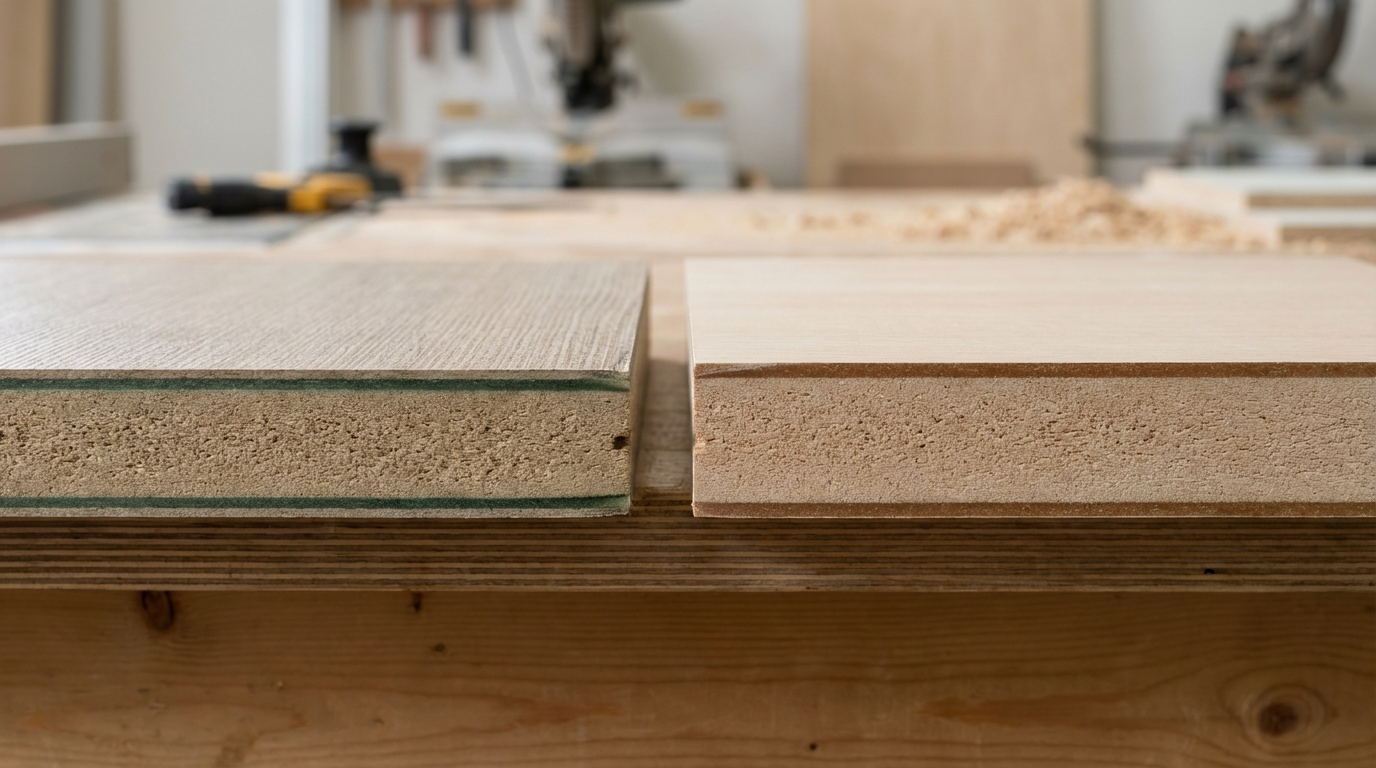
Focus on verifiable traits: tap for density (solid thud vs hollow), measure thickness uniformity across sheet, test edge moisture absorption (wipe and check swell after 30 mins), and screw-pull strength on sample. Greenpanel often delivers higher uniform density for heavy use; Century provides consistent MR grades for everyday wardrobes. Cross-check with local alternatives by asking for recent batch dates and submersion demo if possible.
What This Term/Material Actually Means
MDF (Medium Density Fiberboard) is engineered wood from compressed wood fibers, offering ultra-smooth surfaces ideal for wardrobe laminates, paints, or veneers—unlike plywood's grainy texture. For wardrobes, key variants are interior (dry use only), MR (moisture-resistant for humid indoors), and HDWR/HDHMR (high-density water-resistant for semi-wet edges like bathroom-adjacent closets).
Where people get confused:
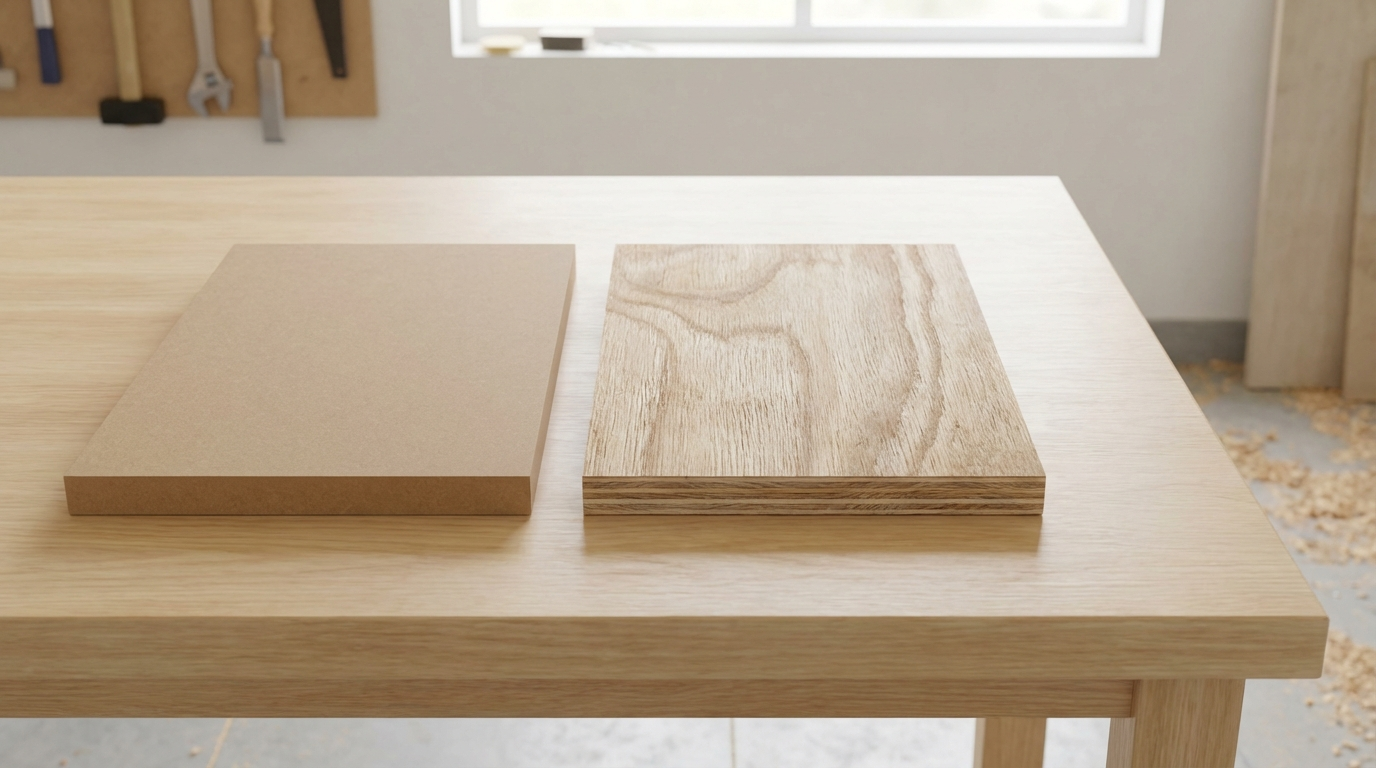
- MDF vs particleboard: MDF denser, smoother; particleboard cheaper but crumbles easier.
- All MDF is waterproof: No, only exterior/HDWR grades handle spills/humidity.
- Thinner = lighter/cheaper: 18mm standard for shutters to prevent sagging.
- Brand name = automatic quality: Varies by grade, batch, storage.
- Pre-lam = no edge work: Still needs sealing for longevity.
- Uniform look = uniform strength: Check core density visually.
India-Specific Reality Check
In monsoon-heavy India, wardrobes face 70-90% humidity spikes, causing non-MR MDF to swell at edges or delaminate laminates. Coastal areas like Mumbai amplify this; store sheets flat under cover pre-install. Contractor workflows favor pre-cut calibrated sheets to minimize site dust/moisture. Workmanship gaps—like poor edge banding—turn good MDF bad faster than material flaws.
Is MDF suitable for Indian wardrobes?
Yes, especially MR/HDHMR grades for smooth finishes and precise joinery in modular setups. It outperforms plywood in paintability but needs protection from direct water. In dry bedrooms, interior MDF suffices; humid zones demand HDWR to resist monsoon vapor. Next step: Test sample screw-holding (should grip 10+ pulls without crumbling) and confirm 700+ kg/m³ density via supplier demo. Pair with quality laminates (0.8mm thick) for scratch-proof shutters.
Price Range and Cost Drivers (India)
Typically Rs 50-110 per sq ft for 16-18mm MR/HDHMR grades, varying by city (Delhi 10-20% lower than Mumbai), thickness, density grade, and logistics. HDWR adds 15-25% premium over interior. Cost drivers: core fiber quality (eucalyptus vs mixed), calibration tolerance (<0.3mm variation), emission class (E0/E1 lower VOC), sheet size (8x4 standard).
How to ask for a quote checklist:
- Specify grade (MR/HDWR), thickness (18mm shutters), size.
- Mention project (wardrobe carcass/shutters), quantity (sq ft).
- Ask batch date, density test, calibration cert.
- Include delivery/storage cover.
Mini budget example: 100 sq ft wardrobe (18mm) at Rs 80/sq ft = Rs 8,000 base; add 20% for lami/edges.
Two-Minute Comparison That Actually Helps
| Factor | Greenpanel MDF | Century Prowud MDF |
|---|---|---|
| Density/Load | High (HDWR excels in shelves) | Balanced, good screw hold |
| Moisture | Strong HDWR for humidity | MR Grade I reliable for indoors |
| Thickness Options | 3-25mm, uniform | Common 12-18mm calibrated |
| Finish/Smoothness | Excellent for lami | Smooth, pre-lam available |
| Typical Use | Heavy wardrobes, coastal | Modular, everyday |
Which MDF is better for humid wardrobes: Greenpanel or Century?
Greenpanel HDWR typically handles humidity better due to higher density, reducing swell risk in coastal/monsoon areas. Century MR suits moderate humidity with consistent performance. Nuance: Depends on edge sealing quality—poor workmanship fails both. Verify by wetting sample edge overnight; minimal warp (<1mm) wins. Next: Prioritize suppliers with covered storage and recent batches.
How to Choose in 5 Steps
- Assess exposure: Dry bedroom? Interior OK. Humid? MR/HDWR.
- Pick thickness: 18mm shutters, 12mm partitions.
- Test samples: Density tap, screw pull, edge moisture.
- Check calibration: Micrometer across sheet (<0.5mm variance).
- Confirm batch: Recent manufacture, dry storage.
Skip moisture grade in humid India? Expect swelling within 1-2 years.
What thickness of MDF for wardrobe shutters?
18mm standard for rigidity against sagging under clothes weight; 16mm for lighter carcasses. Thinner risks bowing in heavy-use homes. Condition: Pair with tower bolts or sliders rated 50kg+. Check: Ruler test on sample—flat under 10kg load. Step: Spec "18mm calibrated MR" in order.
Trade-offs and Limitations
MDF offers superior smoothness vs plywood but lower screw-holding without plugs; moisture grades cost more yet still need sealing. Heavy (denser = harder to cut onsite). Not for load-bearing walls—wardrobes only. Laminates hide defects but amplify delam if glue poor.
Can MDF handle heavy wardrobe loads?
HDWR grades yes, up to 50-70kg/shelf with proper bracketing; interior no. Trade-off: Density adds weight for transport. Test: Stack weights on sample span. Prevent: Use 18mm + metal channels.
Common Buyer Mistakes and How to Avoid Them
- Mistake 1: Picking interior grade for humid rooms. Why: Swells fast. Do: Demand MR label.
- Mistake 2: Ignoring calibration. Why: Uneven cuts waste laminate. Do: Measure 4 corners.
- Mistake 3: Skipping edge sealing. Why: Vapor entry. Do: PVC/ABA bands full perimeter.
- Mistake 4: Thin shutters (<16mm). Why: Sags. Do: 18mm min.
- Mistake 5: Old stock. Why: Pre-warped. Do: Check date stamp.
- Mistake 6: No screw test. Why: Fails post-install. Do: Pull test onsite.
- Mistake 7: Cheap lami on good MDF. Why: Peels first. Do: 0.8mm grade.
- Mistake 8: Poor storage pre-install. Why: Absorbs site moisture. Do: Vertical racks, covered.
- Mistake 9: Overlooking density. Why: Crumbles under hardware. Do: Tap solid.
Failure Modes and Fixes
- Symptom: Edge swelling. Cause: Humidity ingress. Prevent: Seal all cuts. Fix: Sand, re-band.
- Symptom: Laminate bubbling. Cause: Poor glue/heat. Prevent: Quality adhesive. Fix: Replace panel.
- Symptom: Screw loosening. Cause: Low density. Prevent: HD grade + plugs. Fix: Wooden inserts.
- Symptom: Sagging shelves. Cause: Thin span. Prevent: 18mm + supports. Fix: Add brackets.
- Symptom: Surface scratches. Cause: Daily rub. Prevent: Lami finish. Fix: Polish minor.
- Symptom: Delam at corners. Cause: Flex stress. Prevent: Miter joints. Fix: Clamp reglue.
- Symptom: Warped door. Cause: Uneven moisture. Prevent: Calibrated sheet. Fix: Plane edges.
Quality Checks You Can Do Without Lab Tests
Before buying: Tap center/edge (uniform thud), ruler flatness, sniff VOCs (low odor), ask batch date (<3 months).
After cutting: Check squareness (90° corners), no core gaps, smooth saw edge.
After install: Level alignment, edge seal intact, test open/close 50x.
How to check MDF quality for wardrobes onsite?
Tap test (solid vs echo), screw 5x pull (no crumble), wet edge 1hr (minimal swell). Red flags: Visible fibers, uneven thickness, musty smell. For wardrobes, prioritize density >700kg/m³ feel. Next: Buy sample sheet first.
Decision Framework Table
| Condition | Recommended | Verify |
|---|---|---|
| Coastal humidity | Greenpanel HDWR 18mm | Edge wet test, density tap |
| Heavy clothes load | Greenpanel HDWR | Screw hold, shelf span test |
| Tight budget dry room | Century MR 16mm | Calibration, batch fresh |
| High scratch risk | Century Pre-lam MR | Lami adhesion scratch |
| Fast modular delivery | Century Prowud | Stock availability local |
| Monsoon storage risk | Either + cover | Supplier dry yard |
Greenpanel or Century for coastal wardrobes?
Greenpanel HDWR preferred for density against salt humidity; Century if availability trumps. Verify: Sample in 80% RH 48hrs—no warp. Step: Spec HDWR in contract.
Tips for Homeowners
Durability do: Wipe spills immediately, use vapor barriers in humid rooms. Don't: Hang wet clothes inside, overload without supports. Clean with microfiber damp cloth only.
Tips for Carpenters
Cut with fine blade to avoid chip-out, pre-drill hinges (3mm), edge band while flat, fasten in zones away from laminate edges. Handle vertically to prevent bow.
Tips for Architects/Designers
Spec "18mm HDHMR calibrated <0.3mm, density 750kg/m³ min" in drawings. Detail full edge PVC, wet-zone vents. Finish: Lami for high-traffic.
Tips for Modular OEMs
QC: Auto-check thickness, repeatable screw zones. Reduce returns: Pre-seal all, batch-trace complaints to storage.
FAQs
Which is more moisture-resistant for wardrobes?
Greenpanel HDWR typically offers higher resistance via density, ideal for humidity; Century MR balances cost-performance. In practice, both fail without sealing—India's monsoons demand HD grades. Confirm by supplier demo: Wipe edge, check 24hr swell. Always pair with 2mm PVC edges and avoid floor-level exposure.
Best thickness for wardrobe carcass?
12-16mm for sides/back to save weight/cost while rigid; 18mm for base/shelves. Thinner risks flex in loaded units. India tip: Calibrated sheets cut precise, reducing filler needs. Test load sample before bulk order.
Does Greenpanel MDF warp less?
HDWR variants show less warp due to uniform high density, especially post-lamination. Century holds steady in MR. Avoid by storing flat/covered—common monsoon fail. Check: Bow under self-weight on sample.
Century MDF good for laminated wardrobes?
Yes, Prowud's smooth face bonds well with laminates, resisting peel in dry-moderate use. Glue with urea-formaldehyde for interiors. Edge seal mandatory. Local variation: Fresher batches in metros perform best.
Cost difference between them?
Often similar ranges, HDWR 10-20% more. Varies by city/thickness—quote multiple. Factor total: Cutting waste lower on calibrated. Budget tip: Mix carcass Century, shelves Greenpanel.
Termite risk in MDF wardrobes?
Low if treated fibers; still seal joints. India: Coastal termites hit untreated edges. Prevent: Boric treatment confirm, elevate off floor. No major reports in branded MR.
Can I paint MDF for wardrobes?
Yes, primer + PU paint for custom looks, smoother than plywood. Sand lightly pre-finish. Humidity caveat: MR grade or seal to avoid bubbling. Test adhesion on scrap.
Pre-laminated vs plain for wardrobes?
Pre-lam faster/cheaper for uniform designs; plain flexible for custom. Both need edge work. India modulars favor pre-lam to cut site time. Check lami thickness 0.6mm+.
How long do these last in wardrobes?
10-20 years with proper grade/sealing; shorter in humidity sans care. Failures from workmanship > material. Maintain: Annual edge check, no water.
Disclaimer: This content is provided for general informational purposes based on industry practices and publicly available information. Product specifications, standards, prices, and availability may vary by manufacturer, region, and time. Readers should independently verify details with manufacturers, dealers, or qualified professionals before making purchase or construction decisions.Want Plywood Suggestions?
Share a few details and a Duro BOIL specialist will suggest suitable brands and connect you to responsive dealers.