Greenpanel vs Greenply: Key Differences Explained
Learn how Greenpanel and Greenply differ in origin and focus (MDF vs plywood), and which excels in which domain.
Quick Decision Summary
Greenply suits load-bearing plywood needs; Greenpanel fits smooth MDF interiors.
If you’re in a hurry: Greenply focuses on durable plywood grades like MR, BWR, and BWP for structural uses in humid Indian homes, while Greenpanel specializes in MDF boards for flush doors, cabinets, and carvings where a uniform finish matters. Pick Greenply for kitchens or bathrooms exposed to moisture splashes; opt for Greenpanel where budget and machinability win, but seal edges extra in monsoons. Always verify glue lines and core density on-site before bulk buy.
- Choose Greenply if: needing moisture-resistant structural strength for flooring frames or shelves.
- Choose Greenpanel if: prioritizing paint-ready smooth surfaces for modular furniture.
- Avoid Greenply if: tight budget and no heavy loads, as plywood costs more upfront.
- Avoid Greenpanel if: direct water contact areas, due to higher swelling risks.
Note: This page is independent informational content and is not affiliated with any manufacturer.
If You’re Searching for Greenpanel or Greenply, Here’s What People Usually Mean
Queries like this often stem from confusion over their product lines or past corporate links. Users typically want to decide between MDF boards (Greenpanel's strength) for easy carving and painting versus plywood sheets (Greenply's core) for robust framing. Homeowners seek kitchen cabinet options; contractors compare delivery speed; carpenters check machinability. The real question: match board type to room conditions without assuming one brand covers all.
Why do people compare Greenpanel and Greenply specifically?
Historical ties lead to mix-ups—Greenpanel emerged focused on engineered panels like MDF, while Greenply honed plywood expertise. In practice, compare by use: MDF for non-structural panels, plywood for frames. Next step: list your project's moisture level and load to narrow choices. Test samples for screw hold before deciding.
How to Compare Greenpanel-Type Options to Greenply-Type Options (Without Guesswork)
Focus on verifiable traits: knock for solidity (plywood denser cores), sand edges for smoothness (MDF superior), expose to damp cloth overnight (plywood holds better). Ask for glue line count and face veneer thickness. In India, prioritize monsoon-tested grades over brand hype.
What MDF and Plywood Actually Mean
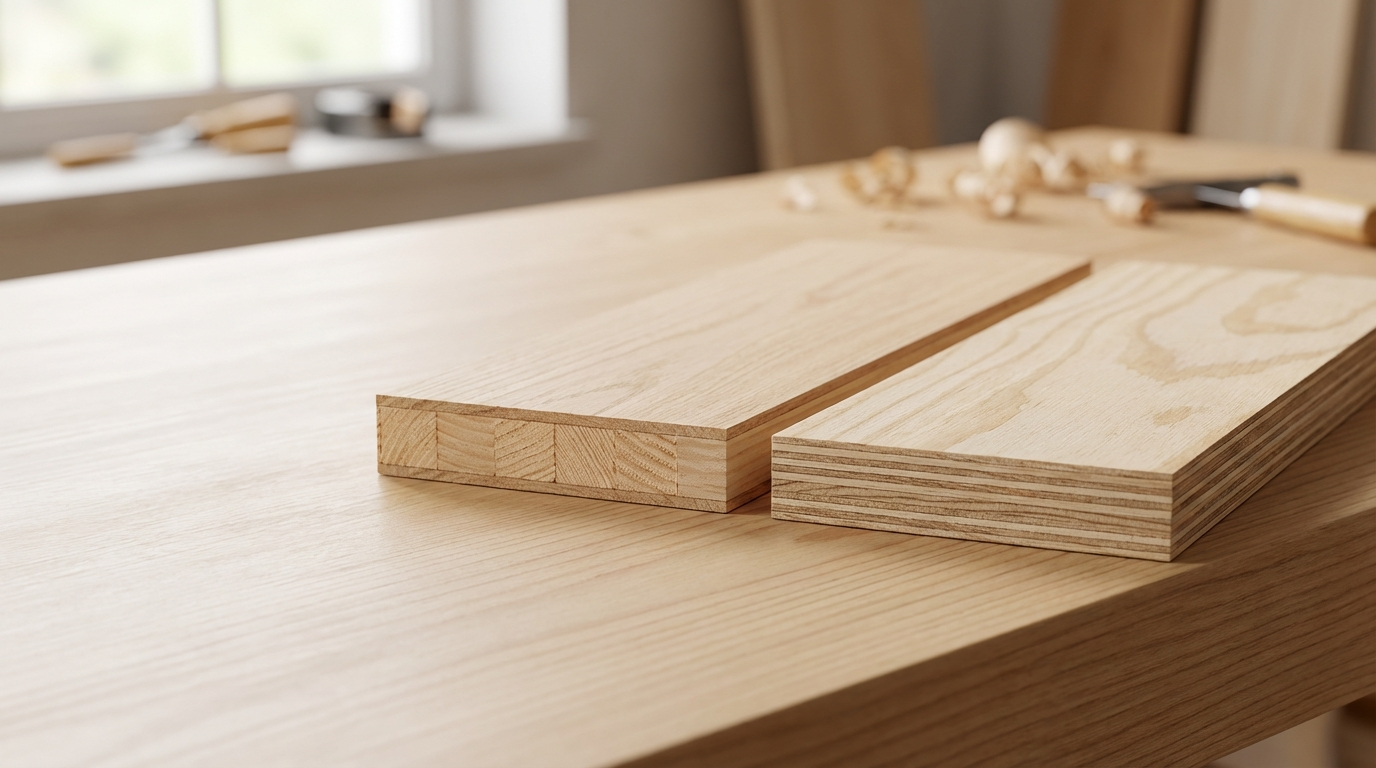
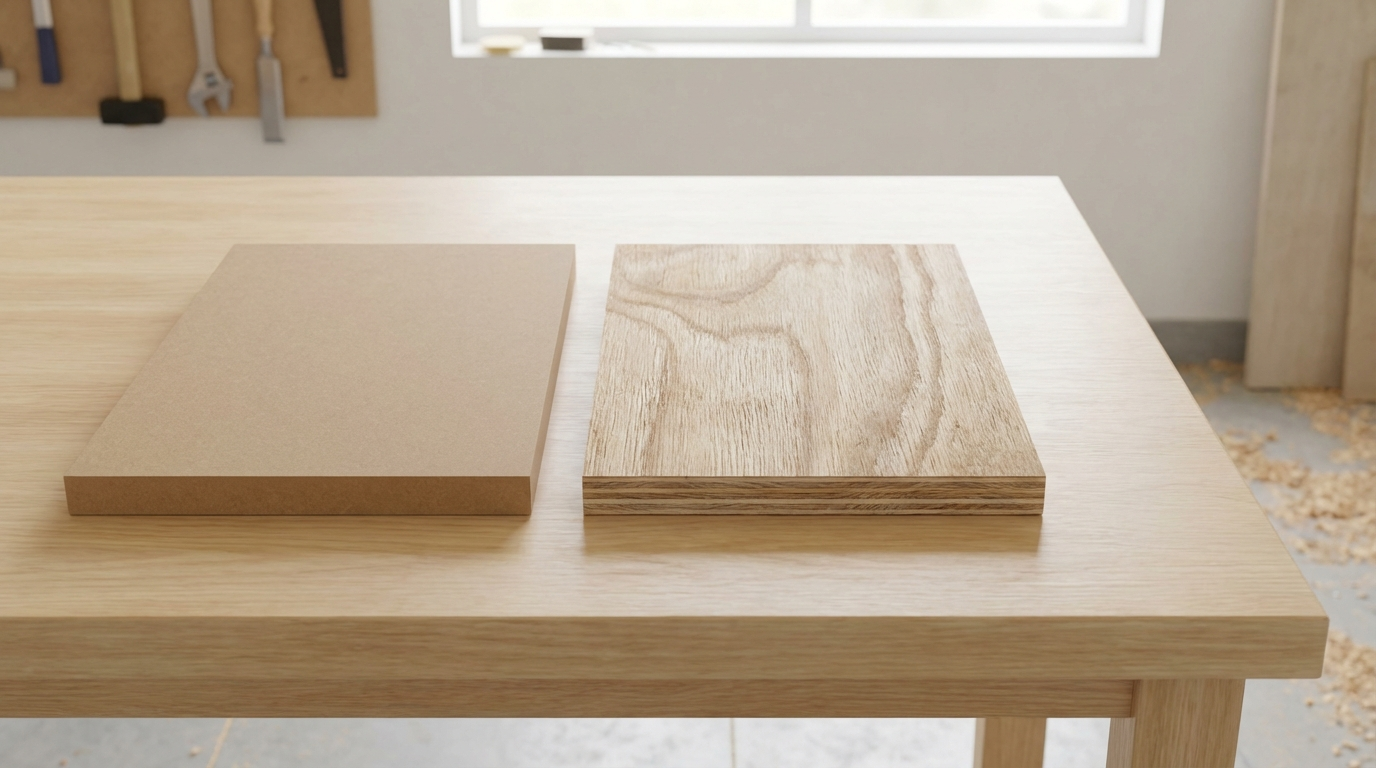
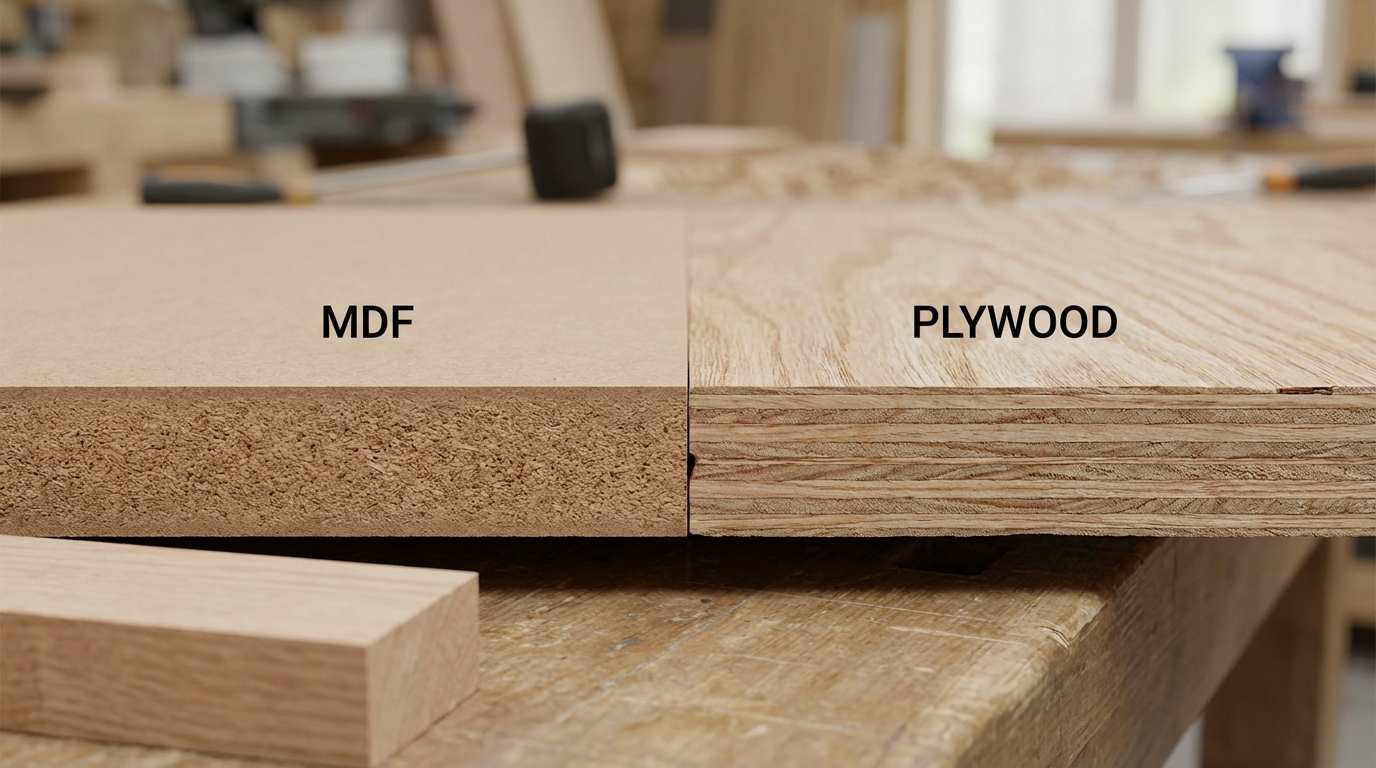
MDF (Medium Density Fiberboard) compresses wood fibers into uniform slabs, ideal for carving and painting without grain telegraphing. Plywood layers thin veneers with glue for strength, graded MR (interior dry), BWR (humid interiors), BWP (wet exteriors). In India, "plywood" implies structural boards; MDF means smooth panels.
Where people get confused:
- Assuming all "green" brands make identical products—focus differs.
- Thinking MDF handles water like BWP plywood—it doesn't.
- Mixing blockboard (softer core) with true plywood.
- Overlooking calibration: uncalibrated sheets waste laminate.
- Believing thicker always means stronger—check core gaps first.
Can Greenpanel plywood replace Greenply plywood?
Not always—MDF excels in flat panels but lacks plywood's shear strength for doors. Use Greenpanel plywood where available for hybrids, but verify BWR/BWP labels. Nuance: coastal areas favor plywood's stability. Practical check: tap edges for hollow sounds (gaps signal issues); source calibrated 18mm+ for frames.
India-Specific Reality Check
Monsoon humidity swells MDF edges faster than sealed plywood; coastal salt air accelerates delam if cores gap. Improper godown storage warps both—insist on covered stacks. Contractor shortcuts like skipping edge tape doom MDF in kitchens. Workmanship matters: carpenters must acclimatize boards 48 hours pre-cut.
Which holds up better in Mumbai rains: MDF or plywood?
Plywood (BWR/BWP) resists delam better; MDF needs extra sealing. Conditions: kitchens/bathrooms demand plywood frames, MDF only for carcasses. Verify: press wet finger 24 hours—no swelling. In humid belts, add 10-15% to MDF thickness budget.
Two-Minute Comparison That Actually Helps
| Aspect | Greenpanel (MDF Focus) | Greenply (Plywood Focus) |
|---|---|---|
| Core Strength | Uniform fiber, good compression | Layered veneers, superior shear/load |
| Moisture Resistance | MR grades for dry; seal extras | MR/BWR/BWP options for wet |
| Surface Finish | Ultra-smooth, paint-ready | Grain texture, needs sanding |
| Machinability | Easy carving, no splinters | Stronger but veneer tear risk |
| Typical Uses | Cabinets, flush doors, mouldings | Frames, flooring, partitions |
| Cost Driver | Lower density = less waste | Higher for calibrated cores |
Choose based on conditions: wet zones to plywood, aesthetics to MDF.
Price Range and Cost Drivers (India)
Typically, 18mm MDF sheets range ₹70-120 per sq ft; plywood ₹90-160, varying by city (higher in metros), thickness, calibration, and face quality. Drivers: fiber vs veneer sourcing, glue lines, density. Coastal logistics add 10-20%. Quote checklist: specify "18mm calibrated BWR, teak face, no gaps."
Mini example: 100 sq ft kitchen carcass—₹8,000-12,000 MDF vs ₹10,000-15,000 plywood frame.
Why is MDF often cheaper than plywood?
Fiber pressing wastes less than veneer matching; uniform density cuts machining time. But plywood justifies premium in durability. Check locally: ask "per sq ft landed, with transport." Factor 20% city variance—confirm batch samples.
How to Choose in 5 Steps
- Assess exposure: Dry interiors? MDF. Splashes? Plywood.
- Check samples: Knock, sand, damp-test.
- Verify specs: Calibration ±0.5mm, glue shear strength feel.
- Match thickness: 18mm min for shelves.
- Acclimatize/install: 48hrs site-condition, edge-seal all.
Skip steps? Delam in 6 months.
Trade-offs and Limitations
MDF: Smooth but swells unsealed; no heavy loads. Plywood: Strong but pricier, grain shows under paint. Both: Termite risk without treatment; calibrate or waste laminate. In India, plywood wins longevity, MDF speed.
Does MDF last as long as plywood in Indian homes?
Often not—plywood's layers resist warping better. Conditions: sealed MDF ok for 5-7 years dry zones. Next: Budget 20% extra sealant; inspect yearly for moisture ingress.
Common Buyer Mistakes and How to Avoid Them
- Mistake: Buying by brand recall. Why: Ignores use-fit. Instead: Test samples.
- Mistake: Skipping calibration check. Why: Uneven laminate peels. Instead: Measure 4 corners.
- Mistake: Ignoring core gaps. Why: Weakens screw hold. Instead: Shine light through edges.
- Mistake: No edge sealing on MDF. Why: Monsoon swell. Instead: Tape pre-install.
- Mistake: Thin sheets for frames. Why: Sags. Instead: 18mm+.
- Mistake: No acclimatization. Why: Expansion cracks. Instead: 48hrs stacked.
- Mistake: Cheap MR for kitchens. Why: Delams. Instead: BWR min.
- Mistake: Overlooking face/back mismatch. Why: Aesthetic fails. Instead: Inspect both sides.
Failure Modes and Fixes
- Symptom: Edge swelling. Cause: Unsealed MDF. Prevent: Tape all cuts. Fix: Sand, reseal.
- Symptom: Delamination. Cause: Poor glue. Prevent: Check lines. Fix: Clamp reglue.
- Symptom: Screw pull-out. Cause: Soft core. Prevent: Dense test. Fix: Plug reinforce.
- Symptom: Warping. Cause: Uneven moisture. Prevent: Acclimatize. Fix: Wet-dry cycle.
- Symptom: Veneer tear. Cause: Dull tools. Prevent: Sharp blades. Fix: Filler sand.
- Symptom: Termite nibbles. Cause: Untreated. Prevent: Proof grades. Fix: Treat spray.
Quality Checks You Can Do Without Lab Tests
Before buying: Knock center (solid thud), edges (no rattle), measure thickness variance, sniff (no chemical whiff), damp cloth test.
After cutting: No core voids, even glue, screw holds firm.
After install: Alignment flush, edges sealed, no moisture traps.
Red flags: Sticky surface, wavy faces, heavy weight variance.
How to spot fake or low-grade boards on-site?
Light gaps in core, soft screw insertion, quick damp swell. Nuance: Batch varies. Next: Buy small test qty, expose week.
Decision Framework: Match Your Project Conditions
| Condition | Recommended | Verify This |
|---|---|---|
| Wet kitchen/bath | Greenply BWR/BWP plywood | Glue lines >6, no gaps |
| Coastal humidity | Greenply plywood | Calibration, density knock |
| Heavy shelf load | Greenply 18mm+ plywood | Screw hold test |
| Tight budget cabinets | Greenpanel MDF | Smooth sand, edge seal |
| High scratch risk | MDF (laminate over) | Density press |
| Fast modular delivery | Greenpanel pre-lam | Uniform color match |
Tips for Homeowners: Durability and Maintenance
Do: Wipe spills instantly, use coasters. Don't: Drag heavy pots, expose to steam. Seal edges yearly; ventilate post-monsoon.
Tips for Carpenters: Working with These Boards
Cut MDF dust-free (vacuum), score plywood veneers. Fasten 50mm from edges; pre-drill hinges. Handle stacked flat.
Tips for Architects: Spec Writing and Detailing
Specify "BWR calibrated ±0.3mm, teak face." Detail edge returns, wet-zone plywood frames. Plan 5% wastage.
Tips for Modular/OEM Makers: QC and Repeatability
Calibrated sheets reduce rejects; test batches for emission. Edge-band all MDF; track supplier consistency.
Which is easier for carpenters to work with?
MDF—no splinters, uniform cuts. Plywood stronger joints but veneer care needed. Step: Sharp 60-tooth blade; dust control for MDF.
FAQs
Is Greenpanel MDF better than Greenply plywood for wardrobes?
Depends on design—MDF offers seamless laminate adhesion for modern looks, but plywood provides better screw grip for heavy hanging. In dry bedrooms, MDF saves cost and time; humid closets need plywood carcass. Always acclimatize and seal. Practical: Prototype one door, load-test 50kg.
Which has better warranty-like performance in monsoons?
Plywood grades like BWR hold dimensional stability longer unsealed. MDF requires meticulous prep. Varies by batch—check recent installs locally. Next: Source monsoon-exposed samples; budget sealant.
Can I use Greenpanel for kitchen shutters?
Yes, with HDHMR or sealed MDF, but frame with plywood. Avoid direct sinks. India tip: Post-monsoon checks essential. Verify density by weight; pair with SS hinges.
Greenply or Greenpanel for flush doors?
Greenpanel MDF cores paint smoothly; Greenply adds strength. For rentals, MDF speed; owners, plywood durability. Check core solidity; edge-band fully.
How do their particleboards compare?
Greenpanel's fiber tech often smoother; Greenply integrates with plywood lines. Test emission by smell. Use for backs only.
Which is more eco-friendly?
Both claim sustainable sourcing—verify FSC-like labels visually. MDF reuses fibers; plywood veneers from plantations. Choose low-formaldehyde grades.
Best for coastal homes?
Greenply BWP—resists salt damp. Seal all; elevate storage. Test: Damp-salt cloth overnight.
Do they deliver pan-India?
Typically yes via networks, but confirm local stock. Factor logistics in quotes.
Disclaimer: This content is provided for general informational purposes based on industry practices and publicly available information. Product specifications, standards, prices, and availability may vary by manufacturer, region, and time. Readers should independently verify details with manufacturers, dealers, or qualified professionals before making purchase or construction decisions.Want Plywood Suggestions?
Share a few details and a Duro BOIL specialist will suggest suitable brands and connect you to responsive dealers.