Greenpanel vs Greenply: Which Brand Offers Better Quality?
Compare Greenpanel and Greenply products including MDF, plywood, and laminates. Find out which brand offers better quality and value for your needs.
Quick Verdict: Greenpanel vs Greenply
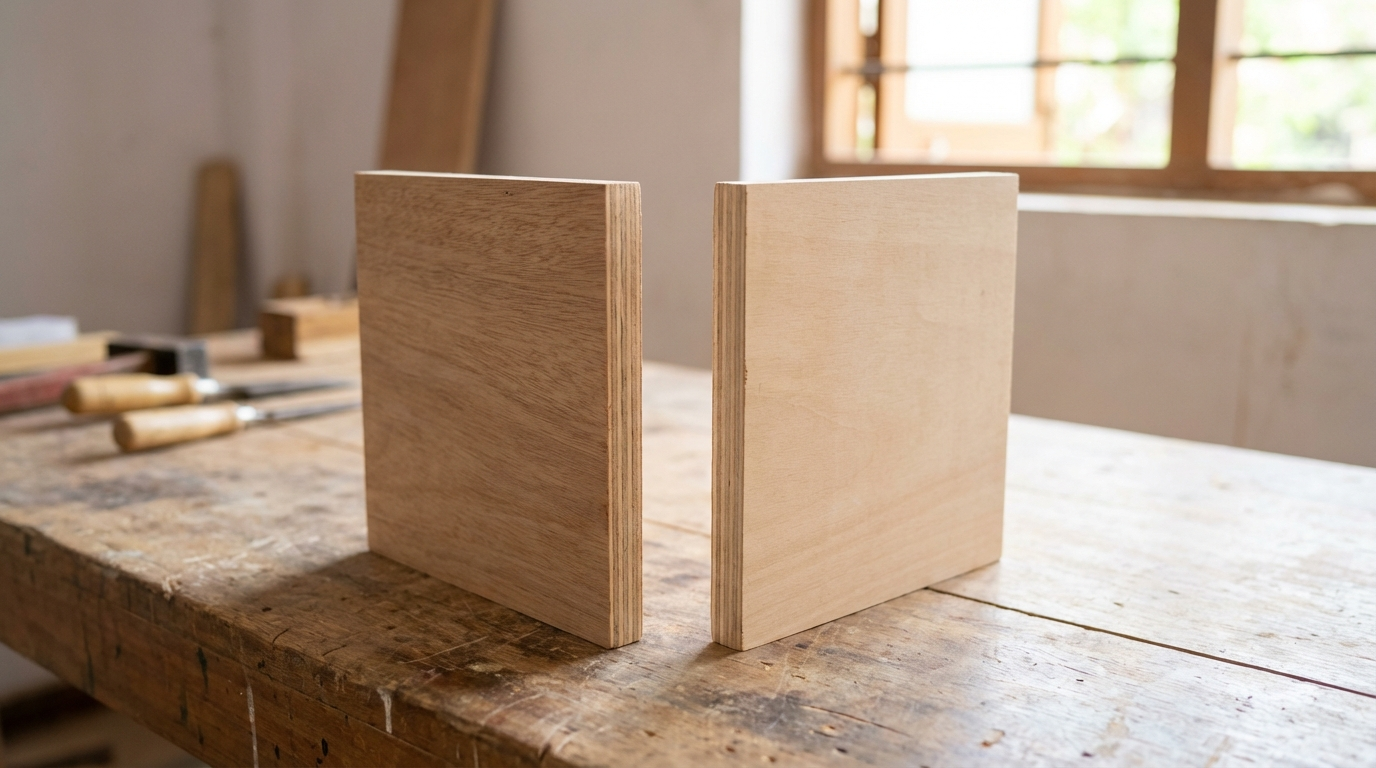
Greenpanel excels in MDF and engineered wood panels, while Greenply leads in plywood and decorative veneers. Your choice depends entirely on your primary application—if you need MDF for modular furniture, Greenpanel is the stronger option; if you need plywood for structural work and cabinetry, Greenply offers a more comprehensive range.
Both brands are established players in India's wood panel industry, but they've evolved with different core strengths. According to duroboil.com's analysis of both product portfolios, Greenpanel has positioned itself as "India's No. 1 MDF Company" with the country's largest wood panel manufacturing capacity, while Greenply has maintained its reputation as a plywood specialist with extensive distribution networks across tier-2 and tier-3 cities.
Here's the bottom line for quick decision-making:
- Choose Greenpanel if: Your project primarily needs MDF, HDWR boards, pre-laminated panels, or wooden flooring
- Choose Greenply if: You need BWP/BWR grade plywood, decorative veneers, or products for structural applications
- Either works if: You need standard MR grade plywood for bedroom wardrobes and furniture in dry areas
- Consider both if: Your project has mixed requirements—MDF for doors and panels, plywood for carcass
Complete Comparison Table: Greenpanel vs Greenply
This comprehensive comparison covers all major parameters that Indian consumers and contractors consider when selecting between these two brands. The table reflects 2025-2026 market conditions and product specifications.
| Parameter | Greenpanel | Greenply | Winner |
|---|---|---|---|
| Core Strength | MDF and engineered boards | Plywood and veneers | Depends on need |
| Manufacturing Capacity | 5.4 lakh cubic meters/year | 2.94 lakh cubic meters/year | Greenpanel |
| Manufacturing Plants | Uttarakhand, Andhra Pradesh | Multiple locations including Tizit, Nagaland | Tie |
| MDF Product Range | Extensive (Interior, Exterior, CARB certified, Pre-laminated) | Limited range | Greenpanel |
| Plywood Grades | Club, BWP, Gold, Accurate, MR, G Pro | Club, Zero-G, Optima, Ecotec, Defender | Tie |
| BWP Plywood Quality | IS 710:2010 compliant | IS 710:2010 compliant | Tie |
| Veneer Collection | Naturemax, Spectrumwood, Teak | Extensive natural and engineered veneers | Greenply |
| Flush Doors | IS 2202 compliant, BWP options | Wide range including designer doors | Tie |
| Wooden Flooring | Perma Click technology | Limited offerings | Greenpanel |
| HDWR Boards | Available (plywood alternative) | Not a focus area | Greenpanel |
| Dealer Network (Metros) | Strong presence | Very strong presence | Greenply |
| Dealer Network (Small Towns) | Growing | Extensive | Greenply |
| Price Range (MDF) | ₹35-75 per sq ft | ₹38-70 per sq ft | Comparable |
| Price Range (BWP Plywood) | ₹95-145 per sq ft | ₹90-140 per sq ft | Comparable |
| Warranty (Premium Plywood) | Up to 25 years | Up to 25 years | Tie |
| Eco-Friendly Certifications | CARB certified, FSC options | E1/E0 emission standards | Greenpanel |
| Termite Resistance | Treated options available | Defender range with termite protection | Greenply |
| Fire Retardant Options | Available in MDF | Available in select plywood | Tie |
| Best For | Modular furniture, panels, flooring | Kitchen cabinets, structural work, interiors | Application-specific |
What is Greenpanel?
Greenpanel Industries Limited is India's largest wood panel manufacturer with a combined production capacity of 5.4 lakh cubic meters per annum. The company operates two state-of-the-art manufacturing facilities—one in Uttarakhand and another in Andhra Pradesh—making it a dominant force in the engineered wood segment.
Greenpanel was originally part of the Greenply group but became an independent listed company after a demerger in 2019. This separation allowed Greenpanel to focus exclusively on MDF and related products, while Greenply retained the plywood business. This corporate history explains why both brands sometimes get confused by consumers.
The company's product portfolio includes Medium Density Fibreboard (MDF), High Density Water Resistant (HDWR) boards, pre-laminated MDF, plywood, blockboard, natural veneers, flush doors, and wooden flooring. Their MDF is manufactured from 100% renewable agro-forestry wood, positioning them as an environmentally conscious brand.
Key characteristics of Greenpanel products:
- Focus on engineered wood panels with precise dimensional accuracy
- CARB (California Air Resources Board) certified products for low emissions
- Advanced manufacturing with German and Italian technology
- Strong presence in the organized furniture manufacturing segment
- Perma Click technology for seamless flooring installation
What is Greenply?
Greenply Industries Limited is one of India's leading plywood manufacturers with over three decades of experience and a strong reputation for quality decorative veneers. The company has established itself as a household name in the plywood segment, particularly in North and Northeast India.
Greenply's manufacturing operations are spread across multiple locations, with significant capacity in states like Nagaland, which provides proximity to quality hardwood resources. The company's distribution network extends to thousands of dealers across India, giving it exceptional reach in tier-2 and tier-3 cities where organized plywood brands often struggle.
The product portfolio focuses heavily on plywood grades suitable for Indian construction needs—from moisture-resistant (MR) grade for interiors to boiling waterproof (BWP) grade for high-moisture areas. Their veneer collection is particularly comprehensive, catering to premium interior design projects.
Key characteristics of Greenply products:
- Extensive plywood range covering all ISI grades and applications
- Strong veneer and decorative surface segment
- Defender range with enhanced termite and borer resistance
- Zero-G plywood with zero gap technology for better surface finish
- Wide dealer network ensuring availability in smaller towns
Detailed Comparison: Product by Product
MDF (Medium Density Fibreboard) Comparison
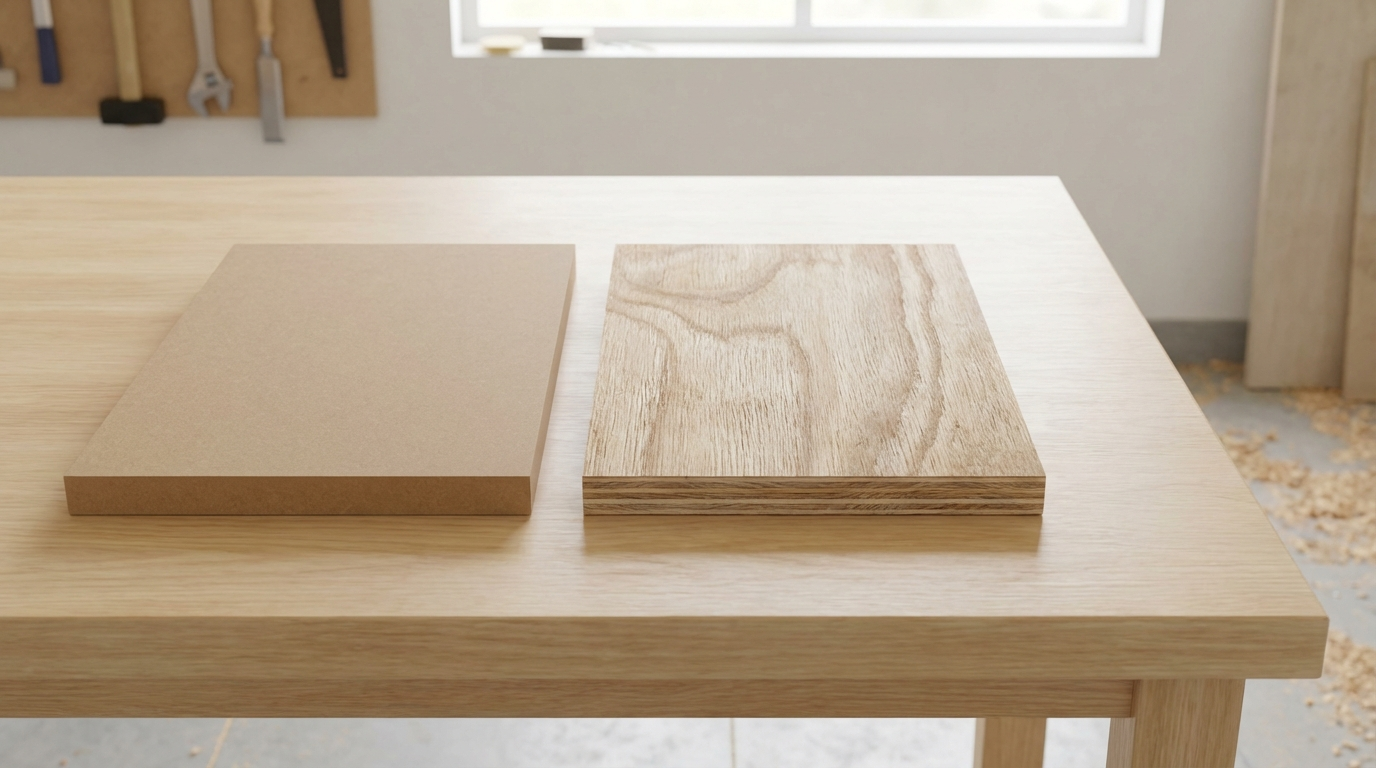
Greenpanel clearly dominates the MDF segment with a comprehensive range that Greenply cannot match. As India's largest MDF manufacturer, Greenpanel offers interior grade, exterior grade, moisture-resistant, CARB-certified, and pre-laminated MDF options that cater to virtually every application.
Greenpanel's MDF specifications consistently meet or exceed IS standards. Their products offer density ranges suitable for furniture, wall paneling, doors, and decorative applications. The pre-laminated MDF comes in hundreds of designs, eliminating the need for separate laminate application.
Greenply does offer MDF products, but it's not their primary focus area. Their MDF range is narrower, and availability can be inconsistent in some markets. For contractors and manufacturers who work primarily with MDF, Greenpanel is the more reliable choice.
Clear winner for MDF: Greenpanel
Plywood Comparison
Both brands offer IS-compliant plywood, but Greenply has a longer heritage and wider variety in this segment. Greenply's plywood range includes specialized products like Zero-G (zero gap technology), Ecotec (eco-friendly), and Defender (enhanced protection) that address specific consumer needs.
According to published technical specifications from mysite.greenpanel.com, Greenpanel's BWP plywood meets IS 710:2010 standards with glue shear strength averaging 1,445N against the minimum requirement of 1,350N. Their Club grade plywood (IS 10701 compliant) shows similarly strong performance metrics.
Greenply's plywood benefits from their focus on this segment. Their distribution ensures consistent supply of various grades, and their termite-resistant Defender range is particularly popular in termite-prone regions of India.
Winner for Plywood: Slight edge to Greenply for variety and availability
Blockboard Comparison
Both brands manufacture blockboards conforming to IS 1659:2004, making them comparable in quality specifications. Blockboards are essential for long furniture panels, doors, and tabletops where plywood might warp.
Greenpanel's BWP blockboard shows modulus of rupture (strength) of 58 N/mm² against the IS requirement of 50 N/mm². Their MR grade blockboard similarly exceeds minimum standards. Greenply offers equivalent products with comparable performance.
The choice between brands for blockboard often comes down to local availability and dealer relationships rather than significant quality differences.
Winner for Blockboard: Tie
Flush Doors Comparison
Both brands manufacture flush doors conforming to IS 2202, with each offering both BWP and MR grade options. Greenpanel's published test results show their flush doors exceed all 15 standard tests including impact resistance, slamming tests, and screw withdrawal strength (2000N against 1000N requirement).
Greenply offers a wider range of decorative door designs, which matters for consumers seeking aesthetic variety. Their membrane doors and pre-finished options reduce on-site finishing work.
Winner for Flush Doors: Tie (Greenpanel for specs, Greenply for design variety)
Veneers Comparison
Greenply has a stronger heritage and wider collection in decorative veneers. Their natural veneer range covers exotic wood species, while their reconstructed veneers offer consistent grain patterns at lower costs.
Greenpanel offers Naturemax natural veneers, Spectrumwood (reconstructed), and teak veneers. While the quality is good, the variety is narrower compared to Greenply's extensive catalog.
Winner for Veneers: Greenply
Wooden Flooring Comparison
Greenpanel has a clear advantage in wooden flooring with their Perma Click interlocking technology. Their flooring is specifically designed for Indian conditions—resistant to dust accumulation, scratches, and temperature variations.
Greenply's presence in the flooring segment is minimal, making this a non-competitive category.
Winner for Wooden Flooring: Greenpanel
Application-Based Recommendations
Choosing between Greenpanel and Greenply becomes easier when you match the brand to your specific application. Duroboil.com's material experts have compiled recommendations based on real-world performance in Indian conditions.
| Application | Better Option | Why | Caution |
|---|---|---|---|
| Modular Kitchen Carcass | Greenply BWP | Superior moisture resistance in traditional plywood form | Ensure genuine BWP grade, not MR marketed as waterproof |
| Kitchen Shutters | Greenpanel Pre-lam MDF or HDWR | Better surface finish, no edge-banding issues | Use moisture-resistant grade only |
| Wardrobe Carcass | Either brand MR grade | Both offer adequate performance for dry areas | Avoid lowest grade options |
| Wardrobe Shutters | Greenpanel Pre-lam MDF | Seamless finish, wide design options | Handle with care—MDF edges are vulnerable |
| TV Unit | Greenpanel MDF | Excellent for CNC routing, smooth finish | Use proper fixings—screw holding is lower than plywood |
| Study Table | Either brand | Both perform well for furniture applications | Prefer blockboard for larger spans |
| Bathroom Vanity | Greenply BWP or Greenpanel HDWR | Maximum moisture resistance needed | Seal all edges, including bottom |
| Main Door Frame | Either brand BWP grade | Both meet structural requirements | Use hardwood for hinges areas |
| False Ceiling | Greenpanel MDF | Lightweight, easy to work with | Not suitable for exterior soffits |
| Wall Paneling | Greenpanel Pre-lam MDF | Consistent surface, no grain variation | Allow acclimatization before installation |
| Office Furniture | Greenpanel | Better suited for mass production, consistent quality | Specify commercial-grade options |
| Retail Fixtures | Greenpanel Pre-lam MDF | Clean aesthetics, fire-retardant options | Check local fire codes |
India-Specific Considerations
Indian climate conditions, particularly monsoon humidity and regional temperature variations, significantly impact wood panel performance. Both Greenpanel and Greenply design products for Indian conditions, but certain factors favor one over the other in specific regions.
Monsoon and Coastal Humidity
In Mumbai, Chennai, Kolkata, and other coastal cities where humidity regularly exceeds 80%, material selection becomes critical. For kitchen and bathroom applications in these regions, both brands' BWP grade products are essential—MR grade is insufficient.
Greenply's traditional plywood construction handles humidity cycles better in structural applications. Greenpanel's HDWR boards are specifically engineered as a plywood alternative for high-moisture areas and can be a good choice for shutters and panels.
Northern India: Temperature Extremes
Delhi NCR and North Indian regions experience extreme temperature variations—from 45°C+ summers to near-freezing winters. This thermal cycling can cause dimensional changes in wood panels.
MDF (Greenpanel's strength) is generally more stable across temperature variations than plywood because of its homogeneous structure. However, for structural applications, plywood's cross-grain construction (both brands) handles stress better.
Southern India: Termite Prevalence
Termite infestation is a major concern in states like Tamil Nadu, Karnataka, and Andhra Pradesh. Greenply's Defender range with enhanced termite and borer treatment is specifically designed for such regions.
Both brands offer treated products, but verify the preservation retention levels—the IS standard requires minimum 12 kg/m³ preservative retention. Greenpanel's Club plywood shows 15.7 kg/m³, indicating strong protection.
Tier-2 and Tier-3 City Availability
One practical consideration often overlooked in brand comparisons is availability. Greenply's longer market presence has resulted in a more extensive dealer network in smaller towns. If you're executing a project in a tier-3 city, Greenply products are often easier to source.
Greenpanel's distribution is strong in metros and growing in smaller cities, but for remote locations, check availability before finalizing specifications.
Price and Value Analysis
Price differences between Greenpanel and Greenply are typically within 5-15% for comparable grades, making quality and suitability more important factors than cost alone.
Price ranges (2025-2026, indicative, varies by location and dealer):
| Product Type | Greenpanel Range | Greenply Range | Notes |
|---|---|---|---|
| MR Plywood (19mm) | ₹55-75 per sq ft | ₹52-72 per sq ft | Similar pricing |
| BWP Plywood (19mm) | ₹95-145 per sq ft | ₹90-140 per sq ft | Premium grades higher |
| MDF (18mm plain) | ₹35-50 per sq ft | ₹38-52 per sq ft | Greenpanel slightly competitive |
| Pre-laminated MDF (18mm) | ₹55-85 per sq ft | ₹58-82 per sq ft | Design affects price significantly |
| Blockboard BWP (19mm) | ₹75-95 per sq ft | ₹72-92 per sq ft | Similar pricing |
| Flush Door (standard) | ₹4,500-8,000 per piece | ₹4,200-7,500 per piece | Size and grade dependent |
Value considerations beyond price:
- Warranty claims process and dealer support
- Consistency across batches (important for large projects)
- Replacement availability if additional material is needed
- Technical support for specification queries
Quality Verification: How to Check Before Buying
Both brands suffer from counterfeiting and mislabeling in the market. As duroboil.com recommends, always verify authenticity before purchasing either Greenpanel or Greenply products.
Authentication Steps
- Check ISI marking: Genuine products display ISI certification with license numbers
- Verify dealer authorization: Purchase from authorized dealers listed on official brand websites
- Examine edge stamping: Both brands stamp their name and grade on panel edges
- Request test certificates: For bulk purchases, ask for batch-wise test reports
- Check packaging: Authentic products have proper packaging with hologram stickers
Visual Quality Checks
- Core examination: Cut edges should show uniform core without voids or gaps
- Surface inspection: Look for dents, scratches, or uneven areas
- Thickness measurement: Use a caliper to verify stated thickness at multiple points
- Squareness check: Measure diagonals—they should be equal
- Moisture feel: Panels shouldn't feel damp or excessively dry
Common Myths About Greenpanel and Greenply
Misinformation about both brands circulates widely among contractors and consumers. Here are facts to counter common myths:
Myth 1: "They're the same company, same product"
Fact: While historically connected, Greenpanel and Greenply have been separate companies since 2019. Their manufacturing, product focus, and quality control are independent. As reported by financial comparison platforms like trendlyne.com and alphaspread.com, these are distinct publicly-traded companies with different business strategies.
Myth 2: "MDF is always inferior to plywood"
Fact: MDF (Greenpanel's strength) and plywood serve different purposes. MDF offers superior surface smoothness, consistent density, and better machining for CNC work. Plywood offers better screw holding, moisture tolerance, and structural strength. Neither is universally superior.
Myth 3: "All BWP plywood performs the same"
Fact: BWP is a grade specification (IS 710), not a guarantee of quality. Different manufacturers achieve different performance levels above the minimum standard. Both Greenpanel and Greenply exceed IS requirements, but by varying margins across different test parameters.
Myth 4: "Brand doesn't matter—buy the cheapest"
Fact: Established brands like Greenpanel and Greenply invest in quality control, proper raw material sourcing, and manufacturing technology. Unbranded or local alternatives often fail to meet advertised specifications, leading to premature failure.
Myth 5: "Marine grade is necessary for all wet areas"
Fact: Marine grade (IS 710 BWP) is designed for continuous water exposure. For kitchens and bathrooms with proper ventilation, BWR grade (IS 303 Type II) is often sufficient. Marine grade adds cost without proportional benefit in normal residential applications.
Using Both Brands Together
Many successful projects combine Greenpanel and Greenply products to leverage each brand's strengths. Here's a practical approach:
Recommended Combination for a Typical Home
| Element | Recommended Brand/Product | Rationale |
|---|---|---|
| Kitchen cabinet carcass | Greenply BWP plywood | Traditional, proven moisture handling |
| Kitchen shutters | Greenpanel Pre-lam MDF (MR grade) | Clean finish, design variety |
| Wardrobe carcass | Either brand MR plywood | Cost-effective for dry areas |
| Wardrobe shutters | Greenpanel Pre-lam MDF | Consistent appearance across panels |
| TV unit | Greenpanel MDF with veneer | Smooth surface for finishing |
| Study table | Either brand blockboard | Dimensional stability for large tops |
| Bedroom doors | Either brand flush doors | Comparable quality and options |
| Living room flooring | Greenpanel wooden flooring | Perma Click technology advantage |
Cost Optimization Strategy
Using different materials strategically can reduce costs without compromising quality:
- Use MDF for visible surfaces where smooth finish matters
- Use plywood for structural elements and areas needing screw retention
- Reserve BWP grade only for genuinely wet areas
- Use MR grade for bedrooms and living areas to save 25-35%
Frequently Asked Questions
Is Greenpanel and Greenply the same company?
No, Greenpanel and Greenply are separate companies since 2019. They were historically part of the same group but underwent a corporate demerger. Greenpanel Industries Limited now focuses primarily on MDF and engineered wood panels, while Greenply Industries Limited concentrates on plywood and decorative veneers. Both are independent publicly-traded companies with separate manufacturing facilities, management, and product portfolios.
Which is better for kitchen cabinets: Greenpanel or Greenply?
For kitchen cabinet carcasses, Greenply's BWP plywood is typically recommended due to proven moisture handling in traditional plywood construction. For kitchen shutters and doors, Greenpanel's pre-laminated MDF or HDWR boards offer superior surface finish and design options. Many projects successfully combine both—Greenply for structure and Greenpanel for visible surfaces. Always use BWP or equivalent moisture-resistant grades in kitchen environments.
Which brand is more affordable?
Prices for comparable grades are typically within 5-15% between both brands. Greenpanel tends to be slightly more competitive in MDF products, while Greenply sometimes offers better pricing on plywood grades. Regional variations, dealer markups, and seasonal factors affect pricing significantly. Request quotes from authorized dealers of both brands for accurate comparison. Don't choose based on price alone—matching material to application matters more.
Can Greenpanel MDF replace Greenply plywood?
Greenpanel MDF can replace plywood in many applications but not all. MDF is excellent for shutter doors, TV units, wall panels, and furniture where smooth surface finish matters. However, plywood remains better for structural elements, areas requiring high screw retention, and applications with heavy loads or stress. Greenpanel's HDWR board is specifically designed as a plywood alternative for moisture-prone areas.
Which brand has better warranty?
Both brands offer warranties ranging from 7 to 25 years depending on the product grade. Premium grades like Greenpanel Club and Greenply Club carry longer warranties. Warranty coverage is similar—typically covering manufacturing defects, delamination, and preservative treatment failure. Warranty claims require purchase from authorized dealers with proper documentation. The claim process experience may vary by location and dealer.
Is Greenply available outside India?
Both Greenpanel and Greenply have export operations. Greenpanel specifically mentions export capabilities on their website. Greenply has established distribution in several countries. For international purchases, contact the companies directly through their official websites. Product specifications may vary for export markets to meet local standards and preferences.
Which brand is more eco-friendly?
Greenpanel has stronger eco-friendly credentials in their MDF segment, using 100% renewable agro-forestry wood and offering CARB-certified low-emission products. Greenply has implemented sustainable forestry practices and offers products meeting E1/E0 emission standards. Both brands have moved toward more sustainable manufacturing. For specific green building certification requirements, check individual product certifications.
Can carpenters easily work with both brands?
Yes, most experienced carpenters are familiar with both Greenpanel and Greenply products. Plywood from both brands works similarly with standard woodworking tools. MDF (primarily Greenpanel) requires slightly different handling—dedicated MDF bits for drilling, careful edge treatment, and appropriate fasteners. Inform your carpenter about material choices beforehand so they can prepare appropriate tools and adhesives.
Which brand is better for commercial projects?
Greenpanel is often preferred for commercial interiors, office furniture, and retail fixtures due to their strong MDF portfolio, consistent quality for large orders, and fire-retardant options. Greenply remains popular for commercial construction requiring structural plywood. For large projects, both brands offer direct institutional sales with better pricing and dedicated support.
How do I find authorized dealers for both brands?
Both Greenpanel and Greenply have dealer locator tools on their official websites. Greenpanel's site (greenpanel.com) includes a dealer search function. Greenply similarly provides dealer information on their website. Always verify dealer authorization before purchasing—ask for authorization certificates or confirm through brand customer service numbers. Purchasing from authorized dealers ensures genuine products and valid warranty coverage.
Which brand should I choose for bathroom vanity units?
For bathroom vanities facing direct water exposure, both brands' BWP grade plywood or Greenpanel's HDWR boards are suitable. The key is proper edge sealing and ventilation design rather than brand selection alone. Some contractors prefer Greenply's traditional BWP plywood for structural elements and Greenpanel's moisture-resistant MDF for doors and drawers. Avoid MR grade entirely for bathroom applications.
Are Greenpanel and Greenply products ISI certified?
Yes, both brands offer ISI-certified products conforming to relevant Indian Standards—IS 710 for BWP plywood, IS 303 for MR plywood, IS 1659 for blockboard, and IS 2202 for flush doors. Look for the ISI mark with license number on products. Not all products in their range may be ISI-certified (some premium or specialty products), so verify certification for specific products when compliance is mandatory for your project.
Note: This is independent editorial content. Duroboil.com is not affiliated with Greenpanel Industries Limited or Greenply Industries Limited. Information presented is based on publicly available data and is subject to change. Verify specifications and prices with authorized dealers before purchase.
Disclaimer: This content is provided for general informational purposes based on industry practices and publicly available information. Product specifications, standards, prices, and availability may vary by manufacturer, region, and time. Readers should independently verify details with manufacturers, dealers, or qualified professionals before making purchase or construction decisions.
Want Plywood Suggestions?
Share a few details and a Duro BOIL specialist will suggest suitable brands and connect you to responsive dealers.