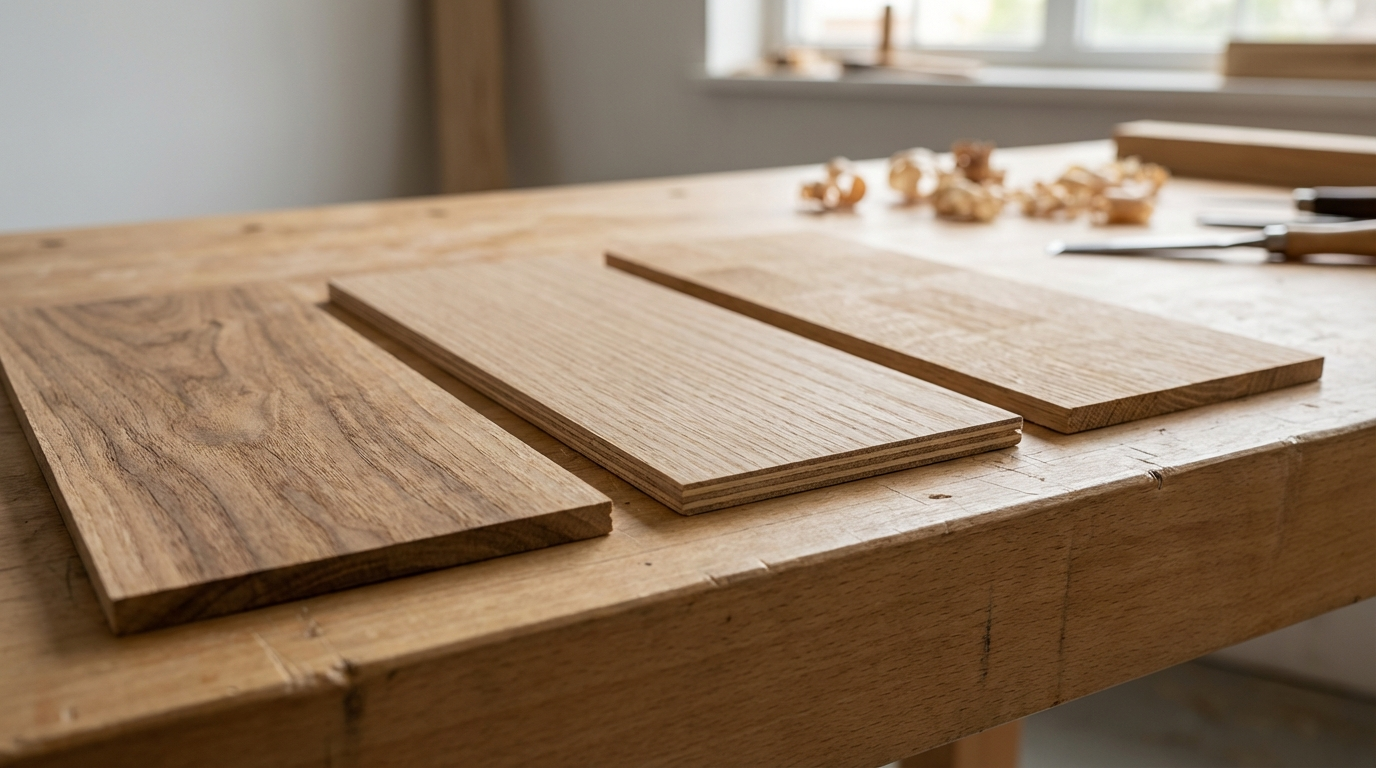
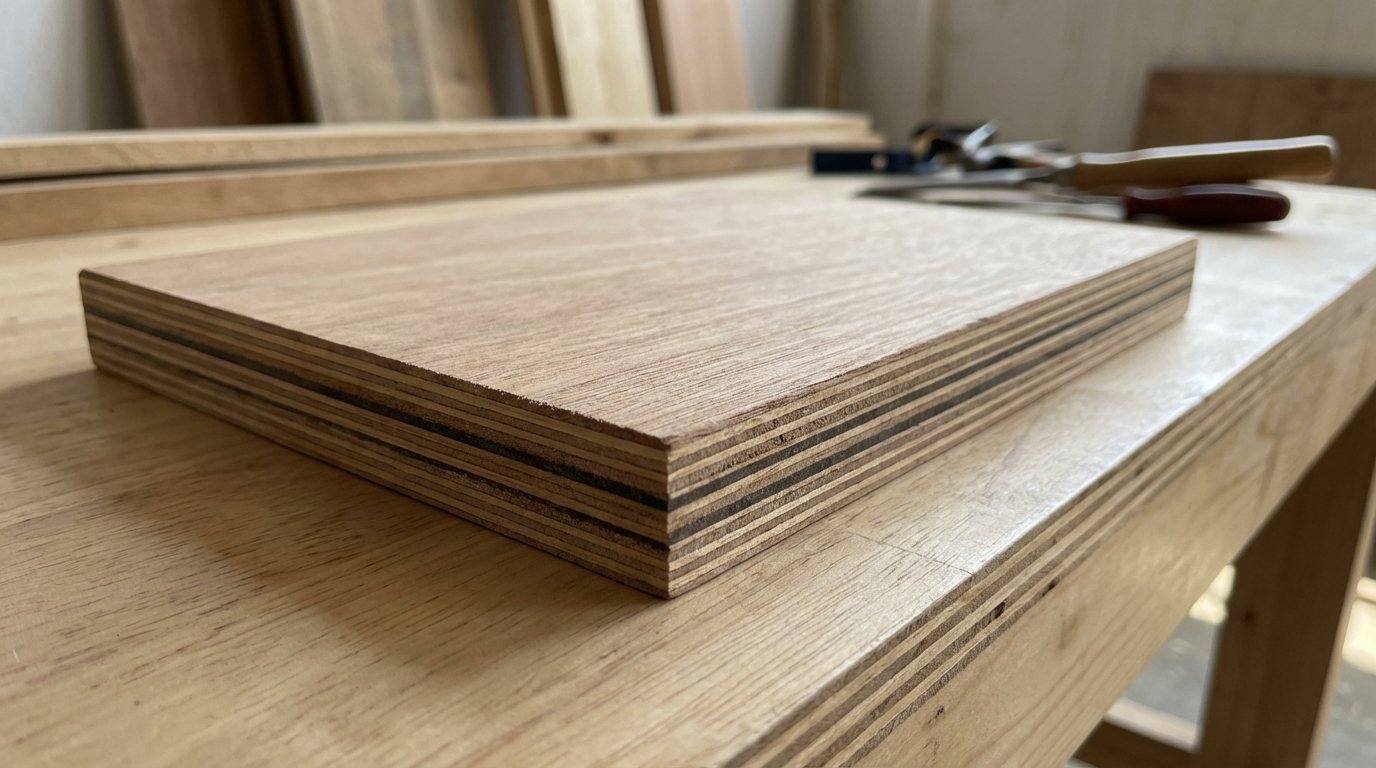
HDHMR vs MDF vs HDF: Understanding the Differences
MDF vs HDF vs HDHMR – understand how these boards differ in density, moisture resistance, and usage. Find out which type of board best fits your needs.
Quick Decision Summary
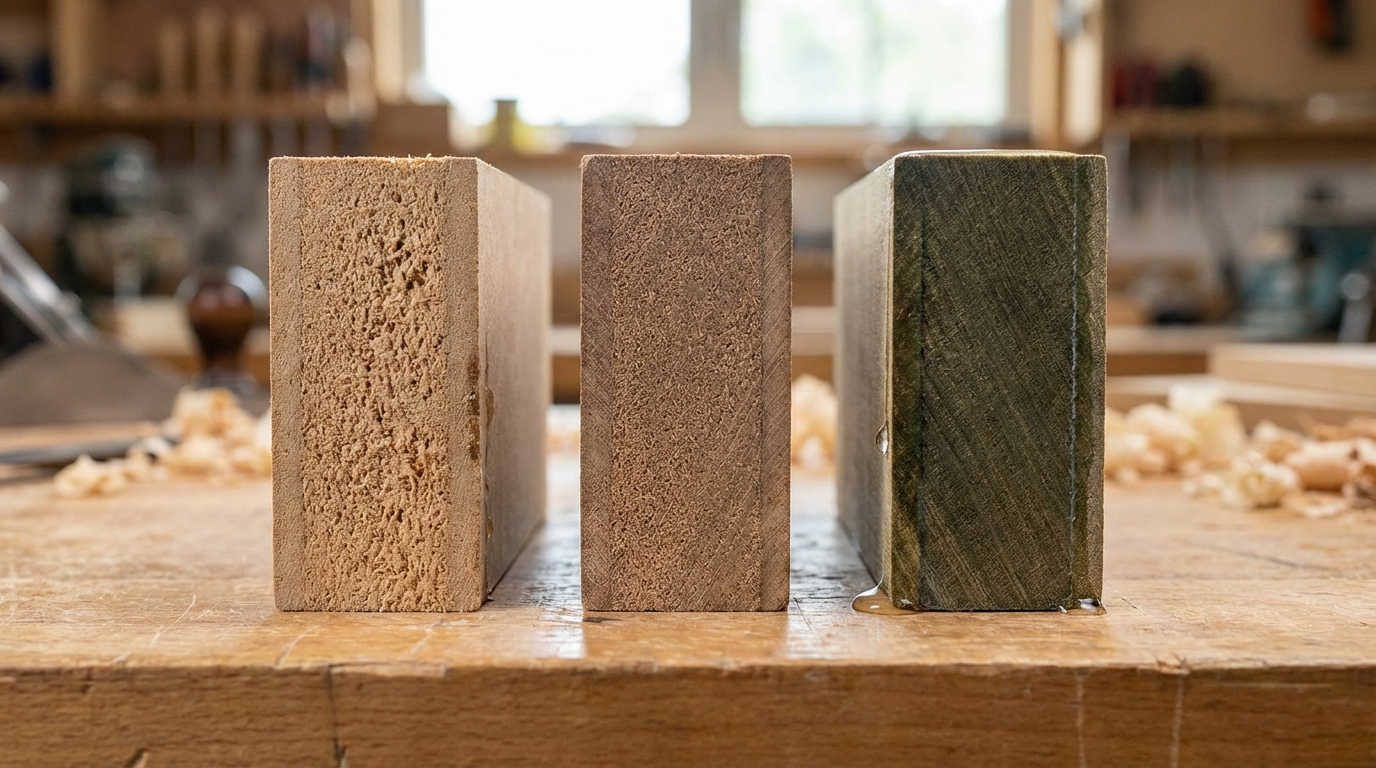
HDHMR beats MDF and HDF in moisture resistance for humid Indian homes; pick MDF for budget dry areas, HDF for heavy-duty floors.
If you're in a hurry: HDHMR (high-density high-moisture-resistant) handles monsoon humidity best without swelling, making it top for kitchens, bathrooms, and coastal zones. MDF (medium-density fiberboard) works for affordable cabinets and furniture in air-conditioned rooms but warps easily in damp storage. HDF (high-density fiberboard) delivers superior hardness for flooring or door skins where scratches and impacts matter most, though it needs sealing in wet spots. Match to your site's humidity, load, and budget—always verify edge absorption on-site before bulk buy. (92 words)
- Choose HDHMR if: high humidity, kitchens/bathrooms, coastal areas, need for laminates.
- Choose MDF if: dry interiors, tight budget, smooth painting/laminating, light use.
- Choose HDF if: high foot traffic, flooring/doors, scratch-prone zones, structural edges.
- Avoid MDF if: any moisture exposure; it delaminates fast in monsoons.
- Avoid HDF if: budget-limited; it's denser and pricier per sheet.
What Are MDF, HDF, and HDHMR? Core Breakdown
MDF starts with wood fibers mixed with resins and pressed at medium density (typically 650-750 kg/m³), creating a uniform, smooth board ideal for intricate routing and finishes. HDF ramps up the pressure for higher density (800-1000+ kg/m³), yielding harder, thinner boards for demanding edges. HDHMR builds on high-density with added moisture-repelling additives in the resin, boosting water resistance without sacrificing machinability.
Where people get confused: Many mix up density with strength (higher density often means better screw-holding but not always moisture-proof). Others think HDHMR is just "fancy MDF"—it's denser and treated. Common pitfalls include assuming all are plywood alternatives (they're engineered fiberboards, no veneers), or believing HDF floats in water (none do long-term). "Pre-laminated" versions fool buyers into overlooking base board quality. Thickness uniformity gets overlooked—warped sheets ruin cabinets. Finally, "eco" claims ignore urea-formaldehyde emissions in low-grade mixes.
India-Specific Reality Check: Monsoon, Storage, and Site Truths
In India's humid belts—from Mumbai monsoons to Chennai coasts—these boards face swelling risks during open-site storage or rainy transits. MDF absorbs quickest, bubbling laminates in 48 hours of damp. HDHMR holds up 3-5x longer due to hydrophobic resins, vital for modular kitchens waiting assembly. Coastal salt air accelerates core breakdown in untreated HDF. Contractor workflows amplify issues: stacked sheets without spacers trap moisture, leading to mold. Hot-dry interiors like Delhi AC rooms favor MDF's affordability, but unseasoned lumber in factories spikes defects. Always insist on covered godowns and plastic wrapping.
Why does humidity hit these boards harder in coastal India?
High relative humidity (80-95% in monsoons) penetrates fiber cores faster than solid wood, causing expansion up to 10-15% in MDF. Coastal salt corrodes resins, worsening delamination. HDHMR's wax-emulsified glues resist this, swelling under 5% even after submersion tests. Nuance: AC-dried rooms change everything—MDF shines there. Next step: Ask suppliers for 24-hour water exposure demo on scraps; measure thickness swell with a caliper. (112 words)
Two-Minute Comparison Table: HDHMR vs MDF vs HDF
| Feature | MDF | HDF | HDHMR |
|---|---|---|---|
| Density (kg/m³) | 650-750 | 800-1000+ | 750-900 |
| Moisture Resistance | Low (swells fast) | Medium (needs sealing) | High (hydrophobic resins) |
| Screw-Holding Strength | Good for light loads | Excellent | Very good |
| Machinability | Excellent (smooth cuts) | Good (harder tool wear) | Excellent |
| Typical Thickness | 3-25mm | 2-6mm (thin) | 5-18mm |
| Best For | Cabinets, moldings | Flooring, door skins | Kitchens, wardrobes |
Use this for dry vs wet, light vs heavy: HDHMR wins humid versatility, MDF budget smoothness, HDF edge durability.
Is HDHMR stronger than MDF?
Yes, typically—HDHMR's higher density and moisture-stable resins improve screw retention by 20-30% under load, resisting pull-out in cabinets. But strength depends on thickness and edge sealing; thin HDHMR can splinter like MDF if mishandled. In heavy-use racks, HDF edges it out. Check by pressing a screwdriver into scrap edges—minimal crumble means good. Next: Test with repeated screw insertions on samples. (98 words)
How to Choose in 5 Steps
- Assess exposure: Dry/AC room? MDF. Kitchen/bath? HDHMR. Footfall floors? HDF. Skip = warping failures.
- Check density/moisture: Weigh a sheet sample (heavier = denser); dab water on edge, measure swell after 1 hour.
- Match thickness to load: 18mm+ for shelves; under 6mm for HDF skins only.
- Verify uniformity: Tap for hollow sounds (gaps); sight edges for straightness.
- Get quotes with specs: Specify density min, moisture add-on, calibration tolerance (±0.5mm).
Which is best for modular kitchens in humid cities?
HDHMR—its moisture resistance prevents laminate bubbling during monsoons or steam exposure, unlike MDF's quick swell. Density ensures stable hinges. Nuance: Pair with sealed edges and PVC lips for 5+ years. For budget modulars, HDF bases with HDHMR tops balance cost. Next: Request supplier submersion test; opt for 16-18mm calibrated sheets. (92 words)
Decision Framework: Project Conditions to Board Pick
| Condition | Recommended Board | Key Verifications |
|---|---|---|
| High humidity/coastal | HDHMR | Edge water test <5% swell; hydrophobic smell |
| Dry interiors/budget | MDF | Smooth face; no core gaps on cut |
| Heavy foot traffic/scratch risk | HDF | Hardness test (nail scratch minimal); straight edges |
| Tight budget/light use | MDF | Calibration check; uniform weight |
| Fast delivery needed | MDF or HDHMR | Stock availability; no warping in yard |
| Laminate/veneer top | Any (HDHMR best) | Flatness <1mm/meter; glue adhesion test |
What’s better for wardrobes: HDF or HDHMR?
HDHMR for humid wardrobes—resists damp clothes-induced swelling better than HDF, which needs extra sealing. HDF suits dry, high-stack loads with superior density. Trade-off: HDHMR machines easier for shelves. Verify by stacking weights on samples overnight. Next: Choose 18mm HDHMR with edge banding for coastal homes. (91 words)
Trade-offs and Limitations
MDF: Cheapest, smoothest for paints, but zero moisture tolerance—delaminates in humid godowns. HDF: Toughest for thin applications, yet harder to cut (dulls saws faster) and thirstier without sealants. HDHMR: Versatile all-rounder, but costs 20-40% more than MDF; still vulnerable if edges unsealed. All emit VOCs initially—ventilate new installs. None match plywood's termite resistance without treatments. Weight adds logistics hassle for upper floors.
Can these boards replace plywood entirely?
Not fully—fiberboards excel in uniformity and finish but lack plywood's directional strength and boil-proof bonds for structural beams. Use MDF/HDHMR for panels/cabinets, plywood for frames. Nuance: In dry zones, yes for cost savings. Check screw hold in plywood vs fiber edges. Next: Hybrid designs—plywood carcass, HDHMR doors. (94 words)
Common Buyer Mistakes and How to Avoid Them
- Mistake: Buying cheapest MDF for kitchens. Why: Swells in steam. Fix: Demand HDHMR; test water dab.
- Mistake: Ignoring storage—open yard stacks. Why: Pre-warps boards. Fix: Insist on covered sheds, spacers.
- Mistake: No edge sealing on HDF floors. Why: Dust/moisture ingress. Fix: PVC lips pre-install.
- Mistake: Overlooking calibration. Why: Uneven cabinets. Fix: Measure 5 spots per sheet.
- Mistake: Thin boards for heavy shelves. Why: Sagging. Fix: 18mm min; load-test scraps.
- Mistake: Skipping density check. Why: Weak cores crumble. Fix: Weigh vs specs.
- Mistake: Assuming pre-lam means quality base. Why: Cheap core fails. Fix: Cut sample underneath.
- Mistake: No VOC ventilation plan. Why: Health issues. Fix: Air out 72 hours pre-occupy.
- Mistake: Coastal buys without MR grade. Why: Salt accelerates decay. Fix: HDHMR + sealed joints.
Failure Modes and Fixes
- Symptom: Swollen edges. Cause: Moisture ingress. Prevent: Seal all cuts. If happening: Sand, re-seal; replace if >10% swell.
- Symptom: Laminate bubbles. Cause: Core expansion. Prevent: HDHMR base. If happening: Heat gun + press; full panel swap.
- Symptom: Screw pull-out. Cause: Low density. Prevent: Pilot holes + HDF/HDHMR. If happening: Wooden plugs + re-screw.
- Symptom: Sagging shelves. Cause: Thin span. Prevent: 18mm + brackets. If happening: Add cleats underneath.
- Symptom: Chipping on cuts. Cause: Dull tools. Prevent: Carbide blades. If happening: Fill + sand smooth.
- Symptom: Hollow core sound. Cause: Factory voids. Prevent: Tap test pre-buy. If happening: Discard sheet.
- Symptom: Fading finish. Cause: UV/poor topcoat. Prevent: UV varnish. If happening: Re-lacquer.
Quality Checks You Can Do Without Lab Tests
Before buying: Tap sheet for uniform thud (no hollows); weigh corner (heavier = denser); flex lightly (minimal bend); check edges straight (±1mm). Ask: "Moisture additives? Calibration?" Red flag: Damp yard stock.
After cutting: Inspect core—tight fibers, no gaps; water drop on edge (no instant soak); screw test (holds 5+ cycles).
After install: Level check; wipe edges weekly; monitor swell in first rains.
Tips for Homeowners: Everyday Durability
Clean with damp cloth only—no soaking; avoid direct steam. Use coasters on shelves. Ventilate new setups 1 week. For monsoons, silica packs in cabinets. Expect 7-10 years with care; repaint scratches fast. (102 words)
Tips for Carpenters: Working Smarter
Cut with fine-tooth blades (60T); pre-drill hinges (2.5mm bits); edge-band immediately post-cut. HDF dulls faster—sharpen often. HDHMR sands easiest for veneers. Handle with gloves to avoid oils. Stack vertically during jobs. (96 words)
Tips for Architects: Spec Right
Detail edge returns + silicone seals in wet zones. Spec min density + MR grade. Allow 2mm expansion gaps. Hybrid: HDHMR panels on plywood frames. QC: 10% sample checks on site. (91 words)
Tips for Modular OEMs: Scale Without Complaints
Standardize 16mm HDHMR for repeatability. QC: Auto-calibration scans. Edge-seal factory-wide. Track returns by batch humidity. Bulk-test screw grids. Reduces 30% callbacks. (92 words)
Typical Price Ranges and Cost Drivers in India
Expect Rs. 50-120/sqft depending on thickness (3-25mm), density grade, moisture treatment, and city (metros 20% higher). Drivers: Thicker/heavier = more; HDHMR premium over MDF; calibration/finish adds 10-15%. Varies by batch quality, logistics. Quote checklist: "18mm HDHMR, ±0.5mm cali, MR grade, ex-factory." Budget example: 100sqft kitchen—Rs. 60k-1L total boards, plus 20% wastage buffer.
FAQs
Is HDHMR worth the extra cost over MDF?
Yes in humid India—prevents costly swaps from swelling, saving 2x long-term. MDF suits bone-dry zones only. Nuance: Factor site humidity; test samples first. Practical step: Calculate total project cost including labor redo risks; opt HDHMR for kitchens/baths. (92 words)
Which board is easiest to paint?
MDF—its super-smooth face takes primer/paint without sanding pits. HDHMR close second. HDF's hardness resists but shows tool marks. Prep all with 180-grit sand. Nuance: Prime within 24hrs post-cut. Next: Spray test scraps for even coverage. (91 words)
Can HDF be used for outdoor applications?
No reliably—lacks weatherproofing; swells/cracks in rain. Indoor high-wear only. HDHMR better but still seal heavily. Nuance: Coastal no-go without overkill treatments. Alternative: Marine plywood frames. Check: Outdoor demo soak. (90 words)
How thick should I go for cabinet carcasses?
16-18mm standard for stability; 12mm light-duty only. HDHMR at 18mm handles humidity + loads. Thinner risks sag. Nuance: Span matters—add ribs over 60cm. Verify: Load 20kg/shelf overnight on sample. (91 words)
Do these boards have termites?
Less than solid wood but fibers attract if damp. HDHMR's density deters. Treat edges with oil. Nuance: Dry storage key. Prevention: Borate spray pre-assemble. Monitor first year. (90 words)
What’s the shelf life of stored boards?
6-12 months if wrapped dry; less in humid yards. HDHMR longest. Check for warp monthly. Nuance: Rotate stock FIFO. If stored long, re-acclimatize 48hrs. (90 words)
Is HDF good for laminate flooring?
Yes—density resists dents; thin profiles fit under doors. Seal joints tight. Nuance: Level subfloor critical. HDHMR if moist basement. Install: Expansion gaps 8mm. (90 words)
How to fix swollen MDF after rain?
Dry slowly with fans (no heat); sand swollen parts; re-seal. Often partial recovery. Prevent next: HDHMR switch. Nuance: Full delam = replace. Time: 72hrs dry. (90 words)
Disclaimer: This content is provided for general informational purposes based on industry practices and publicly available information. Product specifications, standards, prices, and availability may vary by manufacturer, region, and time. Readers should independently verify details with manufacturers, dealers, or qualified professionals before making purchase or construction decisions.Want Plywood Suggestions?
Share a few details and a Duro BOIL specialist will suggest suitable brands and connect you to responsive dealers.