HDWR vs HDHMR: Understanding the Difference Between Wood Boards
Learn the key differences between HDWR and HDHMR boards. Compare moisture resistance, durability, pricing, and best applications for furniture.
Quick Verdict
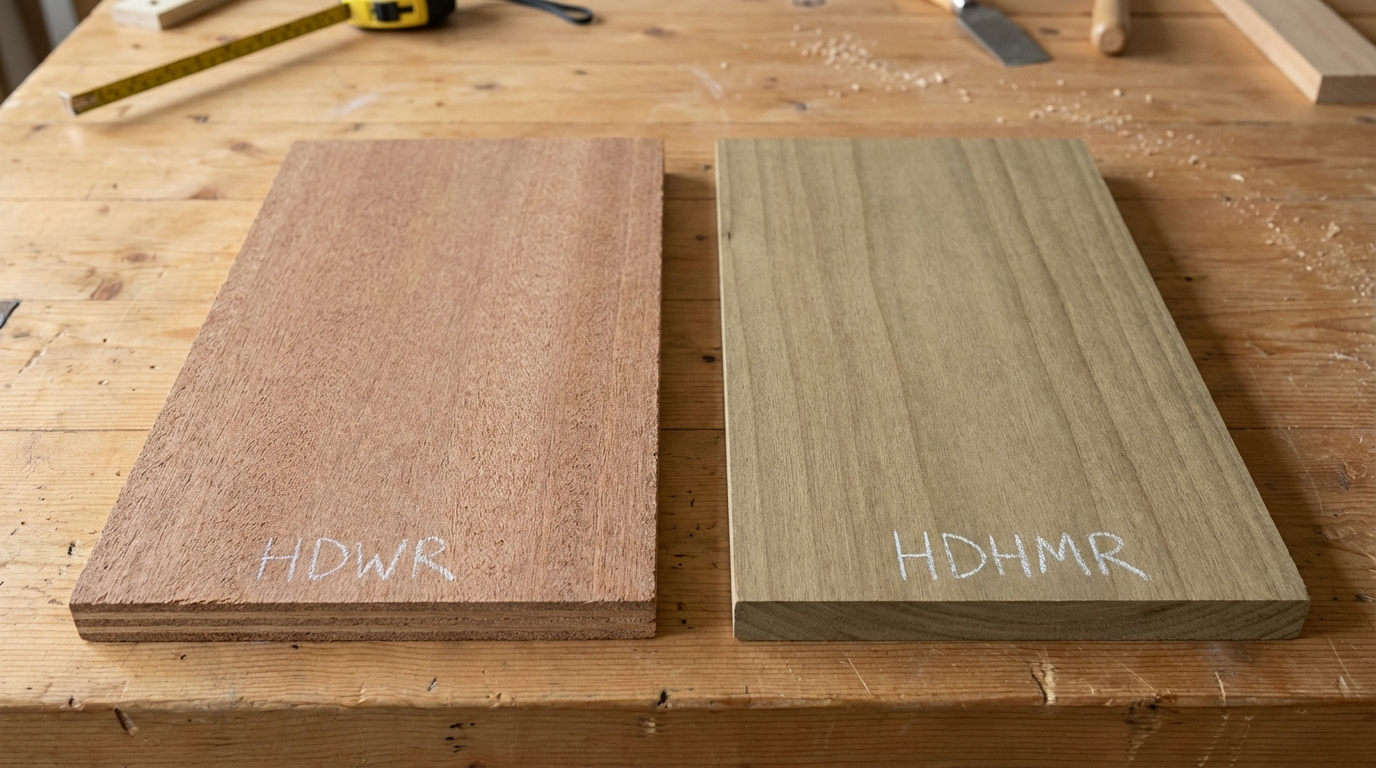
HDWR (High Density Water Resistant) and HDHMR (High Density High Moisture Resistant) are essentially the same engineered wood product marketed under different names by various manufacturers. The core difference lies primarily in branding and minor formulation variations rather than fundamental material properties.
If you're confused between these two board types, here's the bottom line: both boards offer similar high-density construction with moisture-resistant properties suitable for interior furniture applications. The choice between them typically comes down to brand availability, local pricing, and specific warranty terms in your region.
According to duroboil.com's material research, the terminology difference emerged as different manufacturers sought to distinguish their products in the competitive Indian market. Here's what you should know for quick decision-making:
- Choose HDWR if: Greenpanel products are readily available in your area and you prefer their dealer network
- Choose HDHMR if: Action Tesa, Century, or other HDHMR-branded boards are more accessible locally
- Either works if: You need moisture-resistant boards for kitchen cabinets, wardrobes, or bathroom vanities in humidity-controlled interiors
Complete Comparison Table
This comprehensive comparison covers all critical factors that Indian homeowners and carpenters should consider when choosing between HDWR and HDHMR boards. The data reflects typical market conditions across major Indian cities.
| Parameter | HDWR | HDHMR | Clear Winner |
|---|---|---|---|
| Full Form | High Density Water Resistant | High Density High Moisture Resistant | Tie - Same concept |
| Density Range | 800-870 kg/m³ | 850-900 kg/m³ | HDHMR (marginally) |
| Primary Manufacturers | Greenpanel (main brand) | Action Tesa, Century, Merino, others | HDHMR (more options) |
| Moisture Resistance | High - handles humidity well | High - handles humidity well | Tie |
| Boiling Water Test | Passes 2-hour immersion | Passes 2-hour immersion | Tie |
| Price Range (18mm) | ₹85-105 per sq ft | ₹90-110 per sq ft | HDWR (slightly cheaper) |
| Screw Holding Strength | Good - better than MDF | Good - better than MDF | Tie |
| Surface Smoothness | Excellent pre-sanded finish | Excellent pre-sanded finish | Tie |
| Termite Resistance | High - chemically treated | High - chemically treated | Tie |
| Standard Sizes | 8×4 feet sheets | 8×4 feet sheets | Tie |
| Thickness Options | 6mm, 8mm, 12mm, 16mm, 18mm, 25mm | 6mm, 8mm, 12mm, 16mm, 18mm, 25mm | Tie |
| Warranty (typical) | 7-10 years | 10-15 years | HDHMR |
| Pan-India Availability | Good in metros, limited elsewhere | Excellent across India | HDHMR |
| Pre-laminated Options | Available in 100+ designs | Available in 200+ designs | HDHMR |
| Eco-Friendliness | E1/E0 grades available | E1/E0 grades available | Tie |
What is HDWR?
HDWR stands for High Density Water Resistant board, a premium engineered wood product manufactured primarily by Greenpanel Industries. This board is created by compressing wood fibres under high temperature and pressure with moisture-resistant resins, resulting in a dense, stable panel suitable for furniture applications.
The manufacturing process involves breaking down hardwood and softwood into fine fibres, mixing them with synthetic resins and water-repellent additives, then pressing the mixture at temperatures exceeding 200°C. This creates a homogeneous board without the layered structure of plywood.
HDWR boards typically have a density between 800-870 kg/m³, which is significantly higher than standard MDF (680-750 kg/m³). This increased density provides better screw holding, improved surface hardness, and enhanced resistance to impact damage. The boards come with a factory-sanded surface that's ready for lamination, painting, or veneering.
Key characteristics of HDWR boards include:
- Uniform density throughout the panel thickness
- No voids, knots, or grain patterns
- Consistent machining and routing performance
- Smooth edges that don't require extensive finishing
- Lower formaldehyde emissions in E1/E0 grades
What is HDHMR?
HDHMR stands for High Density High Moisture Resistant board, an engineered wood product manufactured by multiple companies including Action Tesa, Century Ply, Merino, and several regional brands. The "High Moisture Resistant" terminology emphasises the board's ability to withstand humid conditions without swelling, warping, or delamination.
The production process mirrors that of HDWR: wood fibres are combined with thermosetting resins containing moisture-inhibiting chemicals, then compressed under extreme heat and pressure. The resulting panel has a density typically ranging from 850-900 kg/m³, placing it at the higher end of the engineered board spectrum.
HDHMR boards gained popularity in India during the 2010s as modular kitchen manufacturers sought alternatives to expensive marine plywood. The boards offered comparable moisture performance at lower costs, with the added benefit of a smoother surface for high-gloss laminate finishes.
Distinctive features of HDHMR boards include:
- Enhanced resin formulation for humidity resistance
- Termite and borer resistant core
- Ability to pass boiling water immersion tests
- Compatible with CNC machining and edge banding
- Available in both plain and pre-laminated variants
Detailed Comparison
Moisture and Water Resistance
Both HDWR and HDHMR boards demonstrate similar moisture resistance performance, capable of withstanding humidity levels above 80% without dimensional changes. This makes both suitable for kitchens, bathrooms, and coastal applications where humidity is a constant concern.
The moisture resistance in both boards comes from phenolic or melamine-urea-formaldehyde resins infused during manufacturing. These resins create a hydrophobic barrier within the wood fibre matrix, preventing water absorption. Standard tests include 2-hour boiling water immersion and 24-hour cold water soaking.
In practical Indian conditions, both boards perform adequately in:
- Monsoon humidity (June-September across most regions)
- Coastal cities like Mumbai, Chennai, and Kochi
- Bathroom vanity cabinets with proper edge sealing
- Kitchen base units near sinks (with sealed edges)
Winner: Tie - Both boards offer equivalent moisture protection when properly finished and installed.
Strength and Durability
HDHMR boards typically exhibit marginally higher density (850-900 kg/m³) compared to HDWR (800-870 kg/m³), translating to slightly better hardness and impact resistance. However, this difference is often imperceptible in real-world furniture applications.
The strength parameters to consider include:
| Strength Parameter | HDWR | HDHMR |
|---|---|---|
| Internal Bond Strength | 0.8-1.0 N/mm² | 0.9-1.1 N/mm² |
| Modulus of Rupture | 32-38 N/mm² | 35-42 N/mm² |
| Surface Hardness | 3.5-4.0 (Janka scale equivalent) | 3.8-4.5 (Janka scale equivalent) |
| Screw Withdrawal (face) | 1100-1300 N | 1200-1400 N |
Both boards significantly outperform standard MDF in screw holding but fall short of quality plywood. For heavy doors or frequently used cabinet panels, additional hinges (three instead of two) are recommended regardless of which board you choose.
Winner: HDHMR (marginally) - The higher density provides slightly better mechanical properties, though the difference rarely matters in typical furniture use.
Surface Quality and Finishing
Both HDWR and HDHMR boards feature factory-calibrated, pre-sanded surfaces that accept laminates, paints, and veneers with excellent adhesion. The homogeneous fibre structure eliminates grain patterns, knots, and surface irregularities common in plywood.
Surface finish quality depends more on the specific manufacturer and grade than on whether the board is labelled HDWR or HDHMR. Premium grades from either category offer:
- Thickness tolerance within ±0.2mm
- Surface roughness below 60 microns
- No visible fibre clumps or resin spots
- Consistent colour across the sheet
For high-gloss acrylic or PU finishes commonly used in modern modular kitchens, both boards provide the smooth base required for a mirror-like final appearance. The key is selecting premium grades and ensuring proper surface preparation.
Winner: Tie - Surface quality varies by manufacturer grade rather than board type.
Working and Machining
HDWR and HDHMR boards machine identically, both offering clean cuts with minimal chipping when using sharp carbide-tipped tools. Their homogeneous structure makes them ideal for CNC routing, edge profiling, and intricate pattern cutting.
Carpenters across India report similar working characteristics for both boards:
- Cutting: Use 80+ tooth TCT blades at 3000+ RPM for chip-free edges
- Routing: Standard router bits work well; avoid excessive feed rates
- Drilling: Pre-drilling recommended for screws near edges
- Edge banding: Both accept PVC and ABS edge bands with hot-melt adhesive
The main machining consideration is the higher density compared to MDF, which means tools may dull faster. Experienced fabricators recommend carbide tooling and appropriate dust extraction, as the fine particles from both boards can be problematic.
Winner: Tie - Identical machining properties and working characteristics.
Cost Comparison
HDWR boards typically cost 5-8% less than HDHMR in most Indian markets, primarily because Greenpanel's manufacturing scale allows competitive pricing. However, regional variations, dealer markups, and promotional offers can reverse this difference.
| Thickness | HDWR Price Range | HDHMR Price Range |
|---|---|---|
| 8mm | ₹45-55 per sq ft | ₹48-60 per sq ft |
| 12mm | ₹65-80 per sq ft | ₹70-85 per sq ft |
| 16mm | ₹78-92 per sq ft | ₹82-98 per sq ft |
| 18mm | ₹85-105 per sq ft | ₹90-110 per sq ft |
| 25mm | ₹120-145 per sq ft | ₹130-155 per sq ft |
Note: Prices as of early 2026, varying by city and dealer. Metro cities typically see 10-15% higher prices than tier-2 towns. Pre-laminated boards add ₹25-50 per sq ft depending on laminate quality.
Winner: HDWR (slightly) - Greenpanel's pricing is generally more competitive, though availability matters more than minor price differences.
Application-Based Recommendations
Selecting between HDWR and HDHMR becomes straightforward when you focus on availability and application requirements rather than technical specifications. Here's a detailed guide based on common Indian interior applications.
| Application | Better Option | Why | Caution |
|---|---|---|---|
| Kitchen Cabinets (Carcass) | Either - choose by availability | Both handle kitchen humidity adequately | Always seal exposed edges near sinks |
| Kitchen Shutters | Either - choose by availability | Equal surface quality for laminate/paint | Use 18mm minimum; add third hinge for tall doors |
| Wardrobe Carcass | HDWR (cost consideration) | Lower price for large panel quantities | Not for external walls in humid climates |
| Bathroom Vanity | HDHMR (slightly higher density) | Better handles direct humidity | Must seal all edges; use marine ply for wet zones |
| TV Unit | Either | Dry application; choose by design options | Pre-laminated boards save finishing costs |
| Study Table | HDWR (economy) | Cost savings on large tops | Apply laminate or PU for scratch resistance |
| Office Partitions | HDHMR (availability) | More brands available for bulk orders | Consider fire-retardant grades for commercial |
| Interior Doors | Neither recommended | Both too heavy; screw holding insufficient | Use flush doors or WPC for door applications |
| Wall Panelling | Either | Weight distributed across wall; appearance matters | Use thinner 8-12mm boards to reduce weight |
| Retail Fixtures | HDHMR (durability) | Slightly better impact resistance | Choose pre-laminated for faster installation |
India-Specific Considerations
The Indian market presents unique challenges that affect the choice between HDWR and HDHMR, including monsoon humidity, termite prevalence, and significant regional variations in availability. Understanding these factors helps make a practical decision.
Monsoon Impact Across Regions
During the June-September monsoon season, indoor humidity in many Indian cities exceeds 80%. Both HDWR and HDHMR boards are designed to handle this, but installation timing matters. Duroboil.com recommends against installing either board type during peak monsoon months because:
- Boards may absorb ambient moisture before installation
- Adhesives and edge bands cure poorly in high humidity
- Acclimatisation period extends unpredictably
For coastal cities (Mumbai, Chennai, Kochi, Visakhapatnam), both boards require additional precautions regardless of brand: sealed edges, proper ventilation behind cabinets, and avoiding ground-level installation in flood-prone areas.
Regional Availability Patterns
Brand availability varies significantly across India:
- North India: Both HDWR (Greenpanel) and HDHMR (Action Tesa, Century) widely available in Delhi-NCR, Punjab, and UP
- South India: HDHMR brands dominate; Greenpanel HDWR less common outside major metros
- West India: Good availability of both in Mumbai and Gujarat; limited in smaller towns
- East India: Century HDHMR strong in Kolkata; other brands have patchy presence
Carpenter and Contractor Preferences
Most Indian carpenters have developed preferences based on their experience with specific brands. Many prefer HDHMR simply because the term is more widely used and understood. When discussing with contractors:
- Don't insist on one terminology if the other is locally available
- Focus on density specification (850+ kg/m³) rather than brand names
- Ask for manufacturer test certificates regardless of board type
- Verify ISI marking where applicable
Common Myths Busted
Several misconceptions persist about HDWR and HDHMR boards, often perpetuated by salespeople pushing specific brands. Here's the truth behind common claims.
Myth 1: HDHMR is significantly more moisture-resistant than HDWR
Reality: Both boards undergo similar moisture-resistance treatments and pass identical standardised tests. The "High Moisture Resistant" in HDHMR is a marketing emphasis, not a fundamental material difference from HDWR's water resistance.
Myth 2: HDWR is just rebranded MDF
Reality: HDWR is manufactured with different resin formulations and higher compression than standard MDF. The density difference (800-870 kg/m³ for HDWR vs 680-750 kg/m³ for MDF) results in measurably different performance.
Myth 3: One board type is suitable for outdoor use
Reality: Neither HDWR nor HDHMR is designed for outdoor or exterior applications. Both will degrade when exposed to direct rain, sunlight, and temperature extremes. For outdoor furniture, marine plywood or WPC boards are appropriate choices.
Myth 4: HDHMR from any brand is the same
Reality: Quality varies significantly between manufacturers. Premium HDHMR from Action Tesa or Century performs differently from budget boards sold under the same generic name. Always verify density specifications and test certificates.
Myth 5: These boards don't need edge sealing
Reality: While the face surfaces resist moisture well, cut edges expose the board's core. Without proper edge banding or sealing, moisture can penetrate from edges, leading to localised swelling. Always seal all edges in humidity-prone applications.
Using Both Together
A practical approach for budget-conscious projects is combining HDWR and HDHMR strategically based on specific requirements within the same project. This hybrid method optimises costs without compromising performance.
Cost Optimisation Strategy
Consider using the more affordable option (typically HDWR) for:
- Cabinet carcasses and internal shelves
- Back panels and concealed components
- Wardrobe interiors and drawer bodies
- Partitions and non-visible structural elements
Reserve the premium option (or whichever has better availability) for:
- Visible door fronts and shutters
- High-moisture areas like sink base cabinets
- Components requiring superior surface finish
- Areas subject to frequent handling or impact
Practical Implementation Tips
When combining board types:
- Ensure thickness matches exactly (16mm HDWR with 16mm HDHMR, not mixed thicknesses)
- Use the same edge banding throughout for visual consistency
- Document which board is used where for future maintenance reference
- Verify both boards come from reputable manufacturers
Frequently Asked Questions
What is the full form of HDWR and HDHMR?
HDWR stands for High Density Water Resistant board, while HDHMR stands for High Density High Moisture Resistant board. Both are engineered wood products made from compressed wood fibres bonded with moisture-resistant resins. The terminology difference reflects branding choices by different manufacturers rather than fundamental material differences.
Which is better for kitchen cabinets - HDWR or HDHMR?
Both HDWR and HDHMR perform equally well in kitchen applications. The choice should be based on local availability, pricing, and brand reputation rather than the board name. Duroboil.com recommends focusing on density (850+ kg/m³), thickness (minimum 16mm for carcass, 18mm for shutters), and proper edge sealing regardless of which type you select.
Is HDHMR waterproof or just moisture-resistant?
HDHMR is moisture-resistant, not waterproof. It handles high humidity and incidental water exposure well but should not be continuously submerged or used in areas with direct water contact. The board passes standard 2-hour boiling water tests but will eventually degrade with prolonged water exposure. Always seal edges and avoid installation in shower cubicles or outdoor locations.
What is the price difference between HDWR and HDHMR boards?
HDWR boards typically cost 5-8% less than HDHMR in most Indian markets. For 18mm thickness, HDWR ranges from ₹85-105 per sq ft while HDHMR ranges from ₹90-110 per sq ft. However, regional variations, dealer relationships, and purchase quantities can affect actual prices significantly. Always obtain quotes from multiple dealers.
Can HDWR or HDHMR be used for bathroom cabinets?
Yes, both can be used for bathroom vanities and storage cabinets, but with important precautions. All edges must be sealed with PVC or ABS edge banding, adequate ventilation should be maintained behind cabinets, and the boards should not be installed in wet zones like inside shower enclosures. For areas with direct water exposure, marine plywood or WPC boards are safer choices.
Which board has better screw holding - HDWR or HDHMR?
Both boards offer similar screw holding capacity, with HDHMR having marginally better performance due to its slightly higher density. Typical screw withdrawal strength is 1100-1400 N for both types, which is adequate for furniture hardware but lower than quality plywood. For heavy doors or frequently opened shutters, use additional hinges and consider pre-drilling to prevent edge splitting.
Are HDWR and HDHMR termite-proof?
Both boards are treated during manufacturing to resist termites and borers. The chemical treatment integrated into the resin matrix provides long-term protection. However, "termite-proof" is relative—in areas with severe termite infestation, additional precautions like treating the surrounding woodwork and maintaining dry conditions are advisable. Both boards perform significantly better than untreated MDF or commercial plywood against pests.
What thickness of HDWR/HDHMR should I use for wardrobes?
For wardrobe carcasses, 16-18mm thickness is standard and adequate for most configurations. Shelves spanning more than 600mm should use 18mm to prevent sagging. Wardrobe shutters should be minimum 18mm, with 25mm recommended for doors taller than 2100mm. Back panels can use thinner 8mm boards. The same thickness recommendations apply whether you choose HDWR or HDHMR.
How do I verify the quality of HDWR or HDHMR boards?
Quality verification involves several checks: examine the board edge for uniform density without voids or layering; verify weight (18mm board should feel noticeably heavier than MDF); check for manufacturer branding and batch codes printed on the sheet; request test certificates showing density, moisture resistance, and emission grades; and purchase only from authorised dealers of established brands.
Can I paint directly on HDWR or HDHMR boards?
Yes, both boards accept paint well due to their smooth, consistent surfaces. The recommended process includes light sanding with 180-220 grit paper, applying wood primer, then 2-3 coats of PU or polyester paint. Water-based paints work but may slightly raise surface fibres, requiring intermediate sanding. For best results with high-gloss finishes, professional spray application is recommended over brush painting.
Which brands manufacture HDWR and which make HDHMR?
Greenpanel Industries is the primary manufacturer using the HDWR terminology. HDHMR is manufactured by multiple companies including Action Tesa, Century Ply, Merino Industries, and several regional manufacturers. Some brands use variations like "HDMR" (without the extra "H"). When purchasing, focus on the manufacturer's reputation and specifications rather than just the terminology used.
Is HDHMR heavier than plywood?
Yes, HDHMR (and HDWR) boards are significantly heavier than equivalent plywood. An 18mm HDHMR board weighs approximately 11-13 kg per sq metre, while 18mm commercial plywood weighs 8-10 kg per sq metre. This weight difference means more robust hinges are needed for doors, and handling during installation requires additional care. The higher weight is a direct result of the higher density that provides strength benefits.
Conclusion: Making Your Final Choice
The choice between HDWR and HDHMR should ultimately be guided by practical factors—local availability, dealer reliability, pricing, and brand reputation—rather than perceived technical differences between the two board types.
Both boards deliver excellent performance for interior furniture applications in Indian conditions. They handle monsoon humidity, resist termites, provide smooth surfaces for finishing, and offer better dimensional stability than standard MDF. The minor differences in density and pricing rarely justify choosing one over the other if it means compromising on availability or dealer support.
As the materials experts at duroboil.com recommend: visit local plywood dealers, compare actual prices for your required quantities, verify manufacturer credentials, and choose the board that offers the best combination of availability, price, and warranty support in your specific location. Whether your purchase order says "HDWR" or "HDHMR," proper installation with sealed edges and appropriate hardware will determine your furniture's longevity far more than the board nomenclature.
For most Indian homeowners undertaking kitchen or wardrobe projects, either board represents a smart, cost-effective choice over basic MDF while avoiding the premium pricing of marine plywood. Focus your attention on selecting a reputable manufacturer, specifying correct thickness for your application, and ensuring quality installation—these factors matter far more than the HDWR versus HDHMR decision.
Disclaimer: This content is provided for general informational purposes based on industry practices and publicly available information. Product specifications, standards, prices, and availability may vary by manufacturer, region, and time. Readers should independently verify details with manufacturers, dealers, or qualified professionals before making purchase or construction decisions.
Want Plywood Suggestions?
Share a few details and a Duro BOIL specialist will suggest suitable brands and connect you to responsive dealers.