IS 303 vs IS 710 Plywood: Understanding ISI Marks Decoded
Understand IS 303 & IS 710 plywood standards. Learn what ISI marks mean, how to verify genuine certification & which standard for your project.
Quick Answer: IS 303 vs IS 710 Explained
IS 303 covers general-purpose plywood (MR and BWR grades) for interior furniture, while IS 710 is the marine-grade standard for 100% waterproof plywood used in kitchens, bathrooms, and high-moisture areas.
In simple terms, both IS 303 and IS 710 are Indian Standard specifications issued by the Bureau of Indian Standards (BIS) to certify plywood quality. IS 303 applies to commercial and boiling water resistant plywood suitable for most interior applications. IS 710 applies exclusively to marine plywood that can withstand continuous water exposure without delamination. The standard number tells you exactly how water-resistant the plywood is—and choosing the wrong one for your application can lead to furniture damage within months.
- IS 303 covers two grades: MR (Moisture Resistant) and BWR (Boiling Water Resistant)
- IS 710 covers only BWP (Boiling Water Proof) marine-grade plywood
- IS 710 plywood must pass 72-hour boiling water immersion test
- IS 303 MR grade uses urea formaldehyde adhesive; IS 710 uses phenol formaldehyde
- Price difference: IS 710 costs 40-60% more than IS 303 MR grade
- Both require ISI certification mark with license number for authenticity
What Exactly Are IS 303 and IS 710 Standards?
IS 303 and IS 710 are product specifications published by the Bureau of Indian Standards that define manufacturing requirements, testing parameters, and quality benchmarks for plywood. According to the BIS Product Manual, these standards ensure plywood meets specific performance criteria before receiving ISI certification.
The ISI mark on plywood isn't just a stamp—it represents that the manufacturer has undergone factory inspection, submitted samples for laboratory testing, and agreed to ongoing quality surveillance by BIS. The standard number following the ISI mark tells you precisely what tests the plywood has passed.
Understanding these standards matters because plywood failure in Indian homes is often traced back to using the wrong grade. A kitchen made with IS 303 MR grade plywood may look identical to one made with IS 710 plywood, but their performance in humid conditions differs dramatically.
What does IS 303 plywood mean?
IS 303: 1989, titled "Plywood for General Purposes," is the Indian Standard covering plywood intended for furniture, interior decoration, and general construction work. According to BIS documentation, IS 303 plywood comes in two grades: MR (Moisture Resistant) suitable for dry interior applications, and BWR (Boiling Water Resistant) suitable for semi-humid environments.
The standard specifies requirements for adhesive quality, veneer thickness, core construction, surface finish, and dimensional tolerances. IS 303 plywood must pass moisture resistance tests appropriate to its grade—MR grade undergoes less stringent testing than BWR grade within the same standard.
What does IS 710 plywood mean?
IS 710: 2010, titled "Marine Plywood — Specification," is the Indian Standard for plywood used in conditions involving continuous water exposure, high humidity, and alternating wet-dry cycles. As noted by BIS specification documents, this standard was originally created for marine and river craft construction but is now widely used for kitchen and bathroom furniture.
IS 710 plywood must use phenol formaldehyde resin, undergo mandatory preservative treatment against termites and fungus, and pass the rigorous 72-hour boiling water test without delamination. This makes it genuinely waterproof rather than merely water-resistant.
Full form and terminology explained
IS stands for Indian Standard—the prefix for all specifications published by the Bureau of Indian Standards. The numbers 303 and 710 are simply specification identifiers assigned when the standards were first published.
ISI stands for Indian Standards Institution, the former name of BIS. The ISI mark remains the conformity mark used on certified products. When you see "ISI 303" or "ISI 710" on plywood, it means the product is certified under that specific Indian Standard.
Common market terminology can be confusing. Carpenters and dealers often say "303 ply" when referring to any commercial-grade plywood and "710 ply" or "marine ply" for waterproof variants. However, genuine ISI certification requires the complete mark with license number—not just verbal claims.
Types of Plywood Under Each Standard
IS 303 encompasses multiple plywood grades and appearance types, making it the broader standard covering most plywood sold in India. IS 710 is narrower in scope, covering only marine-grade plywood with uniform high specifications.
| Parameter | IS 303 (General Purpose) | IS 710 (Marine Grade) |
|---|---|---|
| Grades Covered | MR (Moisture Resistant), BWR (Boiling Water Resistant) | BWP (Boiling Water Proof) only |
| Appearance Types | AA, AB, BB | Single high-quality standard |
| Adhesive Used | MR: Urea Formaldehyde; BWR: Melamine/Melamine-Urea | Phenol Formaldehyde only |
| Core Material | Various hardwoods and softwoods permitted | Hardwood mandatory (typically Gurjan/Eucalyptus) |
| Preservative Treatment | Optional for BWR; Mycological test for MR | Mandatory anti-termite and anti-fungal treatment |
| Water Test Requirement | MR: 3-hour cold water; BWR: 8-hour boiling | 72-hour continuous boiling water immersion |
| Thickness Range | 3mm to 25mm and above | 4mm to 25mm typically |
| Primary Application | Interior furniture, partitions, false ceiling | Kitchens, bathrooms, marine craft, exteriors |
IS 303 MR Grade: Commercial Plywood
MR grade plywood under IS 303 is the most commonly used plywood in Indian homes. It handles normal indoor humidity and occasional moisture exposure but is not designed for wet areas. The urea formaldehyde adhesive used in MR plywood can weaken when exposed to prolonged moisture, causing eventual delamination.
This grade works well for bedroom wardrobes, living room furniture, office cabinets, and any application where direct water contact is unlikely. Duroboil.com recommends MR grade only for completely dry interior environments.
IS 303 BWR Grade: Boiling Water Resistant
BWR grade under IS 303 offers improved moisture resistance using melamine-based adhesives. It can handle humid conditions better than MR grade and withstands the 8-hour boiling water test. However, BWR is "resistant" not "proof"—prolonged water exposure can still cause damage over years.
BWR grade suits applications like wardrobe backs in humid cities, furniture in semi-covered balconies, and kitchen overhead units that don't face direct water splash. It bridges the gap between MR and marine-grade pricing.
IS 710 BWP Grade: Marine Plywood
BWP plywood certified under IS 710 represents the highest water resistance available in standard plywood. The phenol formaldehyde resin creates bonds that remain stable even under continuous water immersion. According to industry standards, this plywood must survive 72 hours in boiling water without any separation between layers.
Marine plywood is essential for kitchen base cabinets, under-sink units, bathroom vanities, washing machine enclosures, and any furniture in coastal areas with salt-air humidity. The mandatory preservative treatment also provides superior termite and fungal resistance.
Technical Specifications Comparison
The technical differences between IS 303 and IS 710 plywood determine their real-world performance. Understanding these specifications helps you verify claims made by dealers and carpenters.
| Specification | IS 303 MR | IS 303 BWR | IS 710 BWP |
|---|---|---|---|
| Glue Shear Strength (Dry) | ≥1.1 N/mm² | ≥1.1 N/mm² | ≥1.25 N/mm² |
| Glue Shear Strength (Wet) | Not tested | ≥0.7 N/mm² | ≥0.9 N/mm² |
| Boiling Water Immersion | Not applicable | 8 hours | 72 hours |
| Delamination Allowed | Minor permitted | Minor permitted | Not permitted |
| Thickness Tolerance | ±5% to ±10% | ±5% to ±10% | ±3% to ±5% |
| Moisture Content | 5-15% | 5-15% | 8-12% |
| Veneer Thickness (min) | 0.5mm | 0.5mm | 0.7mm typically |
| Standard Sizes | 8×4 ft, 7×4 ft, 6×4 ft, 6×3 ft | 8×4 ft, 7×4 ft, 6×4 ft | 8×4 ft primary |
Understanding the boiling water test
The boiling water test is the primary differentiator between plywood grades. In this test, plywood samples are immersed in boiling water for the specified duration, then examined for delamination—separation between veneer layers.
IS 303 MR plywood skips this test entirely, undergoing only cold water immersion. IS 303 BWR plywood must survive 8 hours of boiling. IS 710 marine plywood faces the extreme 72-hour test. This 9x difference in test duration translates directly to real-world durability in wet conditions.
What adhesive specifications mean for you
Adhesive type determines plywood's fundamental moisture behaviour. Urea formaldehyde (used in MR) is cost-effective but breaks down with moisture over time. Melamine-urea formaldehyde (used in BWR) improves water resistance significantly. Phenol formaldehyde (mandatory for IS 710) creates waterproof bonds that don't weaken even with constant water exposure.
The adhesive also affects formaldehyde emissions. Higher-quality phenolic adhesives in marine plywood typically emit less formaldehyde than urea-based adhesives in commercial plywood—an important consideration for enclosed spaces.
Common Misconceptions Cleared
Misinformation about plywood standards leads to poor purchasing decisions across India. Here are the most common myths duroboil.com encounters, with factual corrections.
Myth 1: "BWR and BWP are the same thing"
Correction: BWR (Boiling Water Resistant) and BWP (Boiling Water Proof) are fundamentally different grades. BWR under IS 303 passes 8-hour boiling test; BWP under IS 710 passes 72-hour test. The terminology difference—resistant vs proof—accurately reflects their capabilities.
Myth 2: "Any plywood with ISI mark is waterproof"
Correction: The ISI mark only confirms the plywood meets its claimed specification. IS 303 MR plywood with ISI mark is NOT waterproof—it's moisture-resistant. You must check the standard number (303 or 710) after the ISI mark to know the grade.
Myth 3: "IS 710 is overkill for kitchens"
Correction: Indian kitchens experience daily water splash, high humidity from cooking, and seasonal monsoon moisture. IS 710 marine plywood offers appropriate protection for kitchen base units, under-sink areas, and chimney surroundings where water exposure is regular.
Myth 4: "Thickness determines waterproofing"
Correction: A 19mm IS 303 MR plywood offers zero additional water resistance over 12mm of the same grade. Waterproofing depends entirely on adhesive type and treatment—not thickness. Thickness affects structural strength only.
Myth 5: "Branded plywood doesn't need ISI mark"
Correction: Brand reputation doesn't replace certification. Even premium brands produce multiple grades—their economy range may be uncertified. Always verify ISI mark with standard number regardless of brand name.
Myth 6: "IS 710 plywood never fails"
Correction: Genuine IS 710 plywood resists water damage, but poor lamination, improper edge sealing, and exposure to chemicals can still cause problems. Marine plywood requires proper finishing and installation for optimal performance.
Advantages and Limitations
Both standards serve specific purposes. Understanding their strengths and weaknesses helps match plywood choice to application requirements.
IS 303 Plywood Advantages
- Cost-effective: MR grade costs 40-50% less than marine plywood, making it economical for large projects
- Widely available: Stocked by virtually every plywood dealer across India in multiple thicknesses
- Lighter weight: Easier to work with and transport compared to denser marine plywood
- Adequate for dry areas: Perfectly suitable for bedrooms, living rooms, and air-conditioned spaces
- Multiple appearance grades: AA, AB, BB options allow matching quality to budget
- Easy machining: Softer cores and lighter construction allow faster cutting and drilling
IS 303 Plywood Limitations
- Limited moisture tolerance: MR grade deteriorates with prolonged humidity exposure
- Not suitable for wet areas: Kitchen base cabinets and bathrooms need higher grades
- Variable quality: Wide manufacturer base means inconsistent quality across brands
- Shorter lifespan in humid conditions: May require replacement within 5-7 years in coastal areas
IS 710 Plywood Advantages
- Genuine waterproofing: Withstands continuous water exposure without delamination
- Superior durability: Typically lasts 15-25 years even in demanding conditions
- Mandatory preservative treatment: Built-in termite and fungal resistance
- Higher density: Better screw-holding capacity and structural strength
- Tight tolerances: More consistent thickness across the sheet for precision work
- Lower formaldehyde emission: Phenolic adhesives typically emit less than urea-based alternatives
IS 710 Plywood Limitations
- Higher cost: Premium pricing at 40-60% above commercial grades
- Heavier weight: More difficult to handle and transport
- Limited availability: Not stocked by all dealers, especially in smaller towns
- Overkill for dry applications: Unnecessary expense for bedroom furniture
Best Applications in Indian Homes
Selecting the right plywood standard for each application optimizes both performance and budget. Here's a room-by-room breakdown based on typical Indian home conditions.
Kitchen Applications
| Kitchen Element | Recommended Standard | Reasoning |
|---|---|---|
| Base cabinets | IS 710 BWP | Direct water splash from sink, floor washing moisture |
| Under-sink unit | IS 710 BWP | Highest water exposure area, plumbing leaks common |
| Wall cabinets (upper) | IS 303 BWR minimum | Steam exposure but no direct water; BWP preferred in humid regions |
| Tall units/pantry | IS 303 BWR | Moderate humidity, no direct water |
| Chimney surround | IS 710 BWP | Heat and moisture combination requires best grade |
Bathroom Applications
| Bathroom Element | Recommended Standard | Reasoning |
|---|---|---|
| Vanity cabinet | IS 710 BWP | Daily water splash, humidity from bathing |
| Mirror frame | IS 710 BWP or HDHMR | Constant humidity exposure |
| Storage shelves | IS 710 BWP | Bathroom humidity affects all surfaces |
| False ceiling | IS 303 BWR minimum | Steam rises; consider moisture-resistant alternatives |
Bedroom and Living Areas
| Element | Recommended Standard | Reasoning |
|---|---|---|
| Wardrobe carcass | IS 303 MR/BWR | Dry environment; BWR in humid cities |
| Wardrobe shutters | IS 303 MR | Minimal moisture exposure |
| TV unit | IS 303 MR | Completely dry application |
| Study table | IS 303 MR | Indoor dry use |
| Bed frame | IS 303 BWR | Better structural grade for load-bearing |
Special Considerations for Indian Climate
Coastal cities (Mumbai, Chennai, Kolkata): Upgrade all recommendations by one grade. Use IS 710 even for wardrobe carcass and living room furniture due to year-round high humidity and salt air.
Monsoon-prone areas: Kitchen and bathroom specifications remain critical. Consider IS 303 BWR minimum for all ground-floor furniture where flooding risk exists.
Air-conditioned spaces: Controlled humidity reduces requirements. IS 303 MR acceptable for most applications in continuously air-conditioned rooms.
Quality Verification (Without Lab Tests)
Verifying plywood standards without laboratory equipment requires careful inspection and smart questioning. These methods help identify genuine ISI-certified plywood from imitation products.
Visual Inspection Checks
1. ISI Mark Examination: Genuine ISI marks include the standard number (303 or 710), CM/L license number, and manufacturer details. The mark should be printed clearly—not stamped or stickered later.
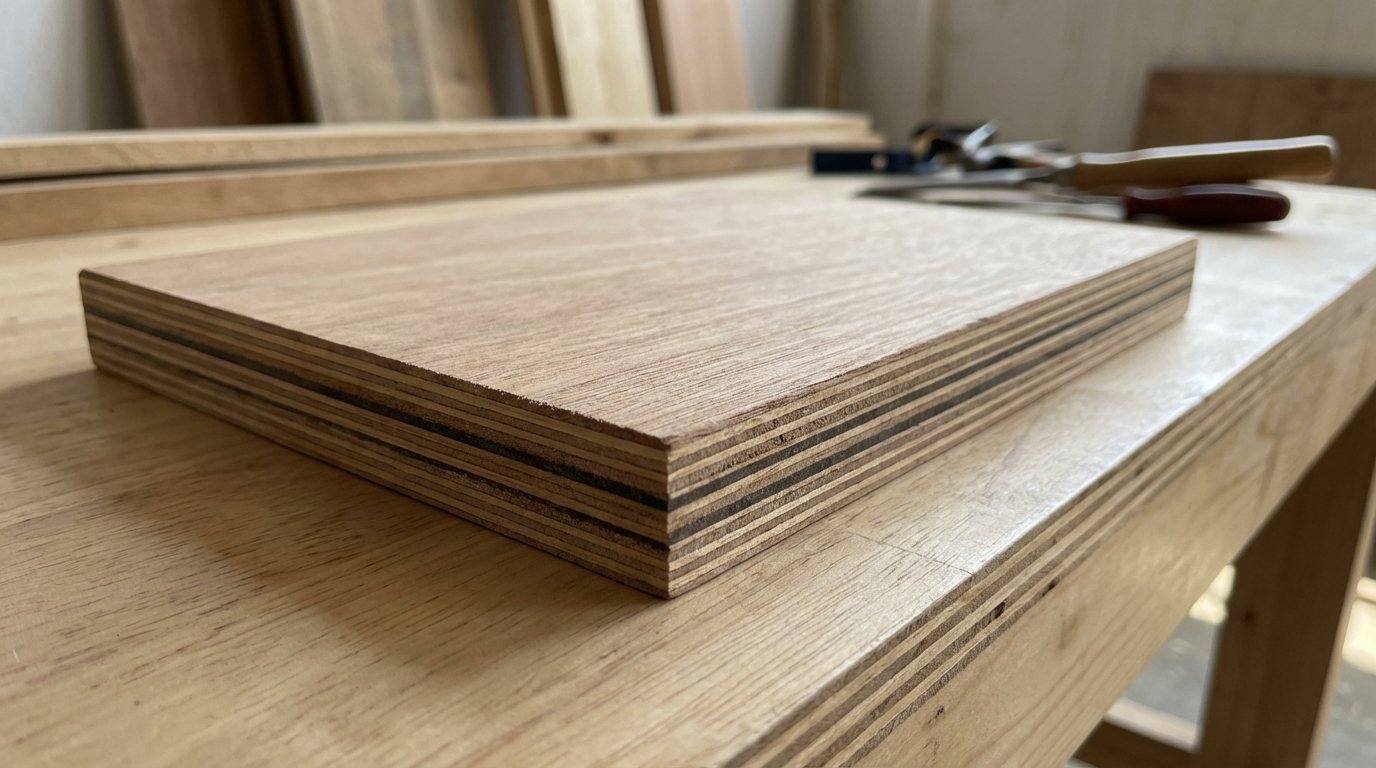
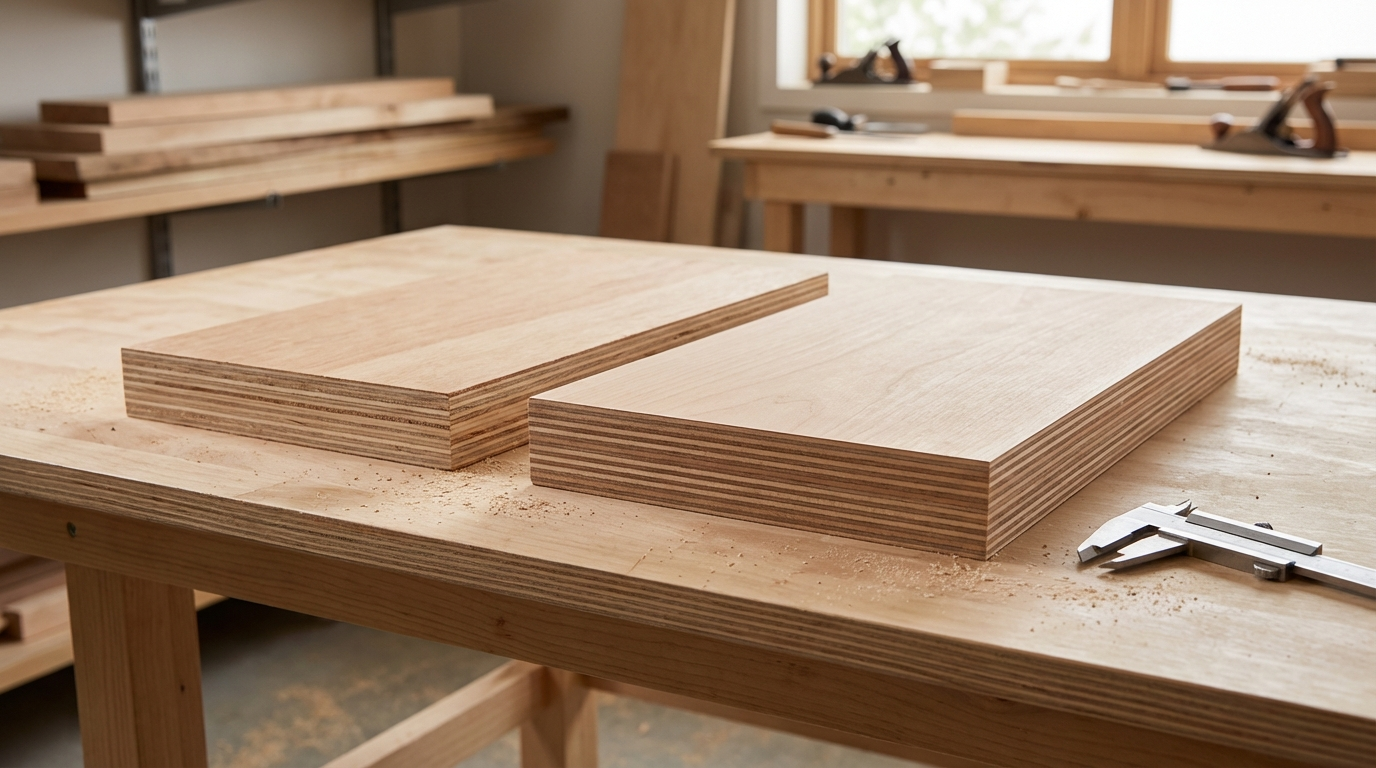
2. Edge Analysis: Look at the plywood edge. IS 710 marine plywood shows dense, void-free cores with minimal gaps between veneers. IS 303 MR may show more core gaps and lighter-coloured, less dense wood.
3. Weight Test: Lift similar-sized sheets of claimed IS 303 and IS 710 plywood. Marine plywood should feel noticeably heavier due to denser hardwood cores and phenolic resin content.
4. Surface Quality: IS 710 plywood typically has smoother, more uniform face veneers with fewer patches. IS 303 BB grade may show visible repairs and colour variations.
5. Smell Test: Fresh IS 710 plywood often has a distinct phenolic resin smell—slightly chemical but not overpowering. MR plywood with urea formaldehyde may have a sharper, more ammonia-like odour.
Questions to Ask Your Dealer
- "Can you show me the BIS license certificate for this manufacturer?"
- "What is the CM/L number on this plywood, and can I verify it online?"
- "Do you have the test certificate from BIS for this batch?"
- "What adhesive type is used—urea, melamine, or phenol formaldehyde?"
- "Is this calibrated or non-calibrated plywood?"
- "What is the core wood species used?"
Red Flags to Avoid
- ISI mark without complete license number
- Dealer unable to name the manufacturing unit
- Unusually low prices for claimed IS 710 plywood
- Inconsistent thickness across the sheet
- Visible voids, gaps, or delamination at edges
- Stickers or stamps applied over plywood surface instead of printed marks
Care and Maintenance
Proper maintenance extends plywood furniture life regardless of grade. However, each standard has specific care requirements based on its moisture tolerance.
IS 303 MR Plywood Care
Daily care: Wipe surfaces with dry cloth only. Avoid wet cleaning. Use coasters and mats under plants, vases, and water containers.
Spill management: Clean any water spills immediately—don't let moisture sit. Dry the area thoroughly with absorbent cloth.
Environment control: Maintain room humidity below 70% where possible. Use dehumidifiers during monsoon in coastal areas.
Edge protection: Ensure all edges are properly laminated or edge-banded. Exposed edges absorb moisture rapidly.
IS 303 BWR Plywood Care
Daily care: Can tolerate damp-cloth cleaning but avoid soaking. Dry after any wet cleaning.
Humidity tolerance: Better suited for naturally humid rooms but still benefits from ventilation.
Joint attention: Check cabinet joints annually for any signs of loosening—early intervention prevents larger damage.
IS 710 BWP Plywood Care
Daily care: Can handle wet cleaning and occasional water splash. However, avoid standing water pooling on surfaces.
Under-sink inspection: Check under-sink cabinets monthly for plumbing leaks. Even marine plywood degrades faster with constant water pooling.
Edge sealing: While marine plywood resists water, proper edge sealing with laminate or PU coating maximizes longevity.
Long-term maintenance: Re-apply surface finish every 5-7 years if using oil or varnish finishes on exposed marine plywood.
Frequently Asked Questions
What is the difference between IS 303 and IS 710 plywood?
IS 303 is the Indian Standard for general-purpose plywood covering MR (moisture-resistant) and BWR (boiling water resistant) grades suitable for interior furniture. IS 710 is the standard for marine plywood—100% waterproof BWP grade that passes 72-hour boiling water test. The key difference lies in water resistance: IS 303 plywood tolerates moisture but degrades with prolonged water exposure, while IS 710 plywood remains stable even under continuous water contact. Choose IS 303 for dry interiors and IS 710 for kitchens, bathrooms, and humid environments.
Is IS 710 plywood really waterproof?
Yes, IS 710 plywood is genuinely waterproof when manufactured correctly with phenol formaldehyde adhesive. It must pass the stringent 72-hour boiling water immersion test without delamination. However, "waterproof" means the adhesive bonds remain stable—the wood itself can still absorb water and swell slightly. Proper finishing with laminate or veneer and edge sealing maximizes waterproof performance. Always verify ISI certification with license number to ensure you're getting genuine IS 710 product.
Can IS 303 BWR plywood be used in kitchens?
IS 303 BWR plywood can be used for kitchen wall cabinets and tall units where direct water splash is minimal. However, for base cabinets, under-sink areas, and spaces near the sink or dishwasher, IS 710 marine plywood is strongly recommended. BWR grade handles humidity and steam but may deteriorate over years with repeated water exposure common in Indian cooking environments. Using BWR for kitchen overhead units while specifying IS 710 for base units offers a practical cost-quality balance.
How do I verify if plywood is genuine IS 710 certified?
Check for the complete ISI mark printed on the plywood sheet, which must include: the ISI logo, "IS 710" specification number, and CM/L license number (format: CM/L-XXXXXXX). You can verify the license number on the BIS website or contact BIS regional offices. Additionally, ask the dealer for the manufacturer's test certificate showing boiling water test results. Genuine IS 710 plywood will also be noticeably heavier than commercial plywood of the same size and show dense, void-free cores when viewed from the edge.
What is the price difference between IS 303 and IS 710 plywood?
IS 710 marine plywood typically costs 40-60% more than IS 303 MR commercial plywood of equivalent thickness and size. For example, if 18mm IS 303 MR plywood costs ₹55-70 per square foot in 2026, equivalent IS 710 plywood costs ₹85-110 per square foot. IS 303 BWR falls between these prices. Regional variations exist—coastal cities often see smaller price gaps due to higher demand for marine plywood. Prices also vary by brand, core wood species, and dealer margins.
Is BWR the same as BWP plywood?
No, BWR and BWP are different grades despite similar-sounding names. BWR (Boiling Water Resistant) falls under IS 303 and uses melamine-based adhesive, passing 8-hour boiling water test. BWP (Boiling Water Proof) falls under IS 710 and uses phenol formaldehyde adhesive, passing 72-hour boiling water test. The key difference: BWR resists water damage for extended periods but can eventually fail, while BWP provides permanent waterproof bonding. For critical wet-area applications, always specify BWP/IS 710, not BWR.
Which plywood standard is best for bathroom vanity?
IS 710 marine plywood is the best standard for bathroom vanities due to constant humidity and direct water splash exposure. Bathrooms experience 90-100% humidity during bathing, water spray on cabinet surfaces, and occasional flooding from overflow. IS 303 grades—even BWR—cannot reliably withstand these conditions over years. While alternatives like HDHMR and WPC boards also work well for bathroom furniture, among plywood options, IS 710 is the only appropriate choice for this application.
Does IS 710 plywood resist termites?
Yes, genuine IS 710 plywood includes mandatory preservative treatment for termite and fungal resistance as per BIS specifications. This treatment is baked into the manufacturing process, not applied superficially. However, the treatment effectiveness can diminish over decades, especially if plywood edges are exposed or damaged. For additional protection in termite-prone areas, consider applying anti-termite spray during installation and ensuring proper edge sealing. IS 303 plywood may or may not include termite treatment depending on manufacturer.
Can I use IS 303 MR plywood if my room is air-conditioned?
Yes, IS 303 MR plywood works well for furniture in continuously air-conditioned rooms where humidity is controlled. Air conditioning typically maintains 40-60% relative humidity—well within MR plywood's tolerance range. This applies to bedrooms, living rooms, and offices with 24/7 climate control. However, if air conditioning runs only part-time, humidity fluctuations during off-hours can affect MR plywood over years. For intermittently air-conditioned spaces in humid cities like Mumbai or Chennai, upgrading to BWR grade is advisable.
Why is IS 710 plywood heavier than IS 303?
IS 710 marine plywood is heavier due to three factors: denser hardwood cores (typically Gurjan or Eucalyptus), higher phenol formaldehyde resin content, and tighter veneer compression during manufacturing. The phenol formaldehyde adhesive adds more mass than urea-based adhesives used in IS 303 MR plywood. Additionally, marine plywood specifications require minimal core voids—meaning more actual wood material per sheet. This weight difference is actually a quality indicator; suspiciously light "IS 710" plywood likely uses inferior core materials or insufficient adhesive.
Where can I buy ISI-certified IS 710 plywood in India?
Genuine ISI-certified IS 710 plywood is available through authorized brand dealers, large timber markets in metro cities, and verified online plywood retailers. Major brands like CenturyPly, Greenply, Kitply, and regional manufacturers produce certified marine plywood. When purchasing, insist on seeing the ISI mark with license number on the actual plywood sheet—not just on invoices or promotional materials. In tier-2 and tier-3 cities, availability may be limited to specific dealers. Duroboil.com recommends confirming stock availability before visiting dealers to avoid settling for lower grades.
How long does IS 710 plywood furniture last?
Properly installed and maintained IS 710 marine plywood furniture typically lasts 15-25 years even in demanding conditions like kitchens and bathrooms. This compares favourably to IS 303 MR plywood which may need replacement within 5-8 years in humid environments. Longevity depends on several factors: quality of lamination, edge sealing, joint construction, hardware quality, and maintenance practices. Marine plywood kitchen cabinets in coastal homes often exceed 20 years, while the same cabinets with MR plywood might deteriorate significantly within a decade.
Making Your Decision: Which Standard to Choose
Selecting between IS 303 and IS 710 isn't about finding the "best" plywood—it's about matching specifications to requirements. Overspending on marine plywood for a bedroom wardrobe wastes money; underspending with MR plywood for kitchen base cabinets risks early furniture failure.
| Your Requirement | Recommended Standard | Why This Choice |
|---|---|---|
| Bedroom wardrobe in dry climate | IS 303 MR | Adequate moisture resistance, cost-effective |
| Wardrobe in humid coastal city | IS 303 BWR minimum | Higher humidity tolerance needed |
| Kitchen base cabinets | IS 710 BWP | Direct water exposure demands waterproof grade |
| Kitchen wall cabinets | IS 303 BWR or IS 710 | Steam exposure; IS 710 in humid regions |
| Bathroom vanity | IS 710 BWP | Constant high humidity environment |
| TV unit/study table | IS 303 MR | Dry application, budget optimization |
| Balcony/semi-outdoor furniture | IS 710 BWP | Rain splash, humidity fluctuation |
| Office furniture (AC environment) | IS 303 MR | Controlled humidity, cost-effective |
The smart approach combines grades strategically. Use IS 710 marine plywood where water exposure is certain—kitchen base units, bathroom furniture, sink surroundings. Use IS 303 BWR for moderate-humidity zones—kitchen wall cabinets, humid-city wardrobes. Reserve IS 303 MR for genuinely dry applications—bedrooms, air-conditioned offices, living room furniture.
This balanced approach, recommended by duroboil.com's materials experts, optimizes your budget while ensuring each furniture piece receives appropriate protection for its specific environment. Verify ISI marks diligently, ask the right questions, and don't let dealer claims override the specification printed on the plywood itself.
Note: This is independent editorial content. Duroboil.com is not affiliated with the Bureau of Indian Standards or any plywood manufacturer. Specifications and recommendations are based on published Indian Standards and industry best practices. Verify current standards and prices with authorized sources before purchasing.
Disclaimer: This content is provided for general informational purposes based on industry practices and publicly available information. Product specifications, standards, prices, and availability may vary by manufacturer, region, and time. Readers should independently verify details with manufacturers, dealers, or qualified professionals before making purchase or construction decisions.
Want Plywood Suggestions?
Share a few details and a Duro BOIL specialist will suggest suitable brands and connect you to responsive dealers.