Is MDF Termite Proof? Understanding MDF's Pest Resistance
Find out if MDF is termite proof. Learn about MDF's natural pest resistance, treatments available, and how to protect MDF furniture from termites.
Quick Answer
MDF is not naturally termite proof, but it offers better resistance than solid wood due to its manufacturing process.
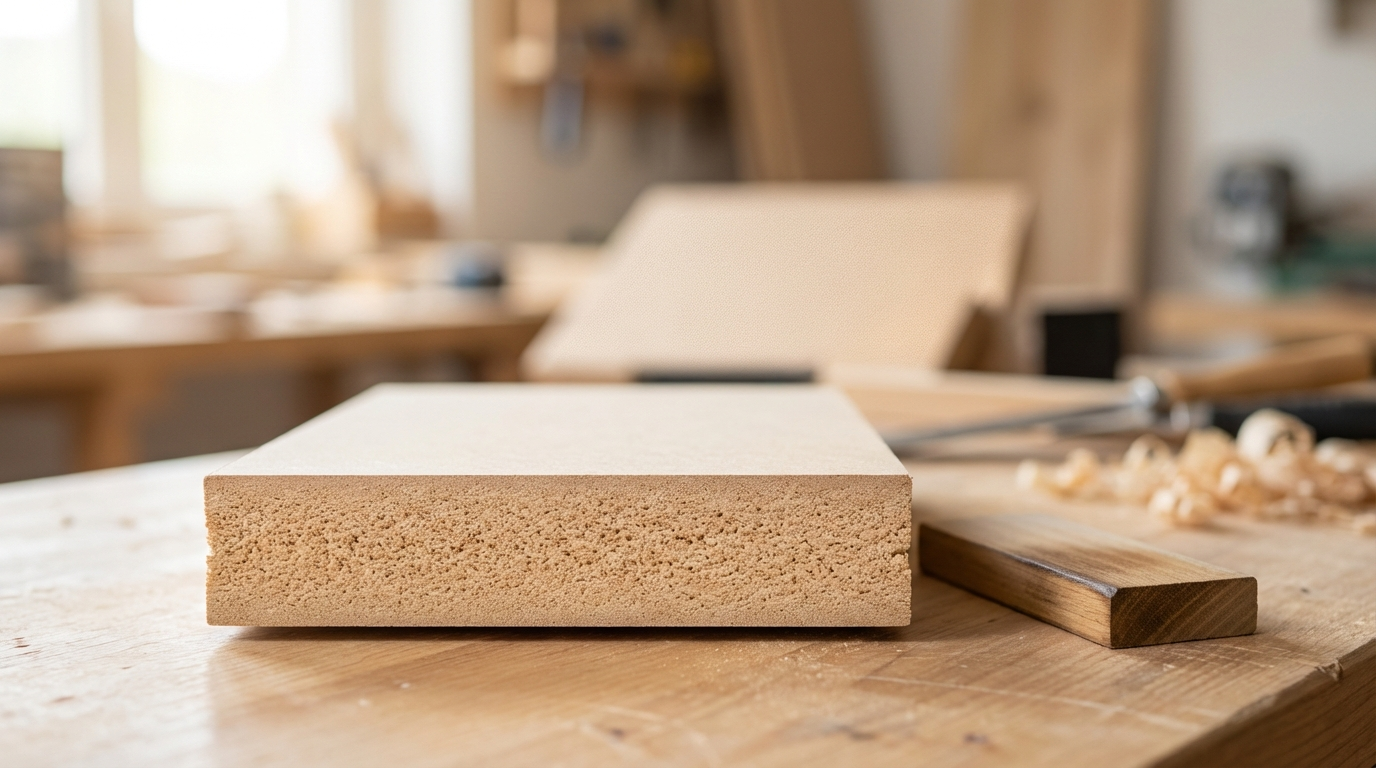
In simple terms, Medium Density Fibreboard (MDF) contains wood fibres bonded with synthetic resins under high heat and pressure. While termites can still attack MDF if given the opportunity, they find it less appealing than natural wood because it lacks the natural sugars and starches that attract them. Think of it like this: termites prefer fresh roti over processed biscuits—they'll eat the biscuit if nothing else is available, but it's not their first choice. For complete protection, you'll need treated MDF or additional preventive measures.
- Not 100% termite proof: MDF can be damaged by termites, though less readily than solid wood
- Resin content helps: The synthetic adhesives used in MDF make it less appetising to termites
- Treated variants available: Special termite-resistant MDF boards exist in the Indian market
- Location matters: Ground-floor and humid areas face higher termite risk
- Proper sealing essential: Laminated or painted MDF offers better protection than raw boards
What Exactly is MDF and Its Termite Relationship?
MDF, or Medium Density Fibreboard, is an engineered wood product created by breaking down hardwood and softwood residuals into fine fibres. These fibres are combined with wax and resin binders, then formed into panels using high temperature and pressure—typically around 240 degrees Celsius.
The manufacturing process fundamentally changes how termites interact with this material. Unlike natural wood, which has a grain structure, natural sugars, and starches that termites feed on, MDF's composition is homogeneous and chemically altered. The resins and adhesives used in binding create a less nutritious food source for termites.
For Indian homeowners, understanding this relationship matters enormously. India's tropical and subtropical climate creates ideal breeding conditions for subterranean termites, which cause damage worth thousands of crores annually. When planning furniture or interiors, knowing whether your chosen material will withstand these silent destroyers can save significant repair costs down the line.
Why do termites attack some MDF and not others?
Termites are opportunistic feeders. They'll attack MDF primarily when:
- The MDF is in direct contact with soil or moisture sources
- Raw, unsealed edges are exposed
- The board quality is poor with lower resin content
- Alternative food sources are unavailable
- The environment is extremely humid, softening the board
Research published in the International Biodeterioration & Biodegradation journal confirms that while MDF specimens can resist termite attack better than some wood species, none achieved complete resistance without chemical treatment. This finding, as noted by woodweb.com, underscores the importance of additional protective measures.
Types of MDF Available in India Based on Pest Resistance
The Indian market offers several MDF variants, each with different levels of pest and moisture resistance. Understanding these options helps you make informed choices for different applications.
Standard MDF
Regular MDF without special treatments. Suitable for dry interior applications where termite risk is minimal. Most economical option but requires additional protective measures in termite-prone areas.
Moisture Resistant MDF (MR MDF)
Contains moisture-repelling additives that also provide some deterrence against termites. The green-coloured core helps identify this variant. Better suited for humid Indian conditions.
High Density MDF (HDF)
Denser composition with tighter fibre bonding. The increased density makes it harder for termites to penetrate. Often used for flooring and high-wear applications.
Termite-Resistant MDF
Specially manufactured with anti-termite chemicals integrated during production. Offers the highest level of protection but comes at a premium price.
| Type | Best For | Termite Resistance | Price Range (per sq ft) |
|---|---|---|---|
| Standard MDF | Dry interiors, decorative panels | Low to Moderate | ₹25-40 |
| MR MDF | Kitchens, bathrooms (with laminate) | Moderate | ₹35-55 |
| HDF | Flooring, high-traffic areas | Moderate to Good | ₹45-70 |
| Termite-Resistant MDF | Ground floors, humid regions | High | ₹55-85 |
Note: Prices vary by region and brand. Confirm current rates with local dealers.
Which type is best for kitchen and bathroom?
For kitchens and bathrooms, MR MDF with proper laminate finishing is your safest bet. The moisture resistance prevents swelling from steam and splashes, while the laminate creates a sealed barrier that termites cannot penetrate. However, ensure all edges are properly sealed—exposed MDF edges in humid environments become entry points for both moisture and pests.
In coastal cities like Mumbai, Chennai, or Kochi, consider stepping up to termite-resistant MDF for base cabinets that sit closer to the floor. The additional investment typically ranges from 15-25% more but provides peace of mind in high-humidity zones.
Which type works for wardrobes and bedrooms?
Bedroom furniture faces lower termite risk compared to ground-floor installations or kitchen units. Standard MDF with quality laminate finishing usually suffices for wardrobes on upper floors. For ground-floor bedrooms, especially in standalone houses or villas, MR MDF or termite-resistant variants are worth considering.
The key is ensuring your carpenter properly seals all edges and the wardrobe doesn't touch walls directly—maintain a small gap to prevent moisture migration and termite pathways.
Key Properties and Specifications Affecting Termite Resistance
Several technical specifications influence how well MDF resists termite attack. Understanding these helps you evaluate product quality.
| Specification | Standard Range | Impact on Termite Resistance |
|---|---|---|
| Density | 600-800 kg/m³ | Higher density = harder for termites to penetrate |
| Thickness | 2.5mm to 25mm | Thicker boards provide more barrier |
| Resin Content | 8-15% by weight | Higher resin = less appetising to termites |
| Formaldehyde Grade | E1, E0 | E0 grade is safer for health; doesn't affect termites |
| Standard Sizes | 8x4 feet, 7x4 feet | Fewer joints = fewer entry points |
The density specification deserves special attention. As highlighted by research referenced on nobroker.in, high-density MDF and premium plywood can resist termite attacks better than lower-density alternatives. When shopping, ask specifically about the density rating—quality boards typically fall in the 700-800 kg/m³ range.
Where People Get Confused About MDF and Termites
Several misconceptions circulate about MDF's pest resistance. Let's address the most common ones:
Misconception 1: "MDF is completely termite proof"
Reality: No wood-based product is 100% termite proof. MDF offers better resistance than solid wood due to its composition, but determined termites can still damage it. The confusion arises from marketing claims that oversimplify the material's properties.
Misconception 2: "Termites won't touch engineered wood"
Reality: Termites can and do attack engineered wood products including MDF, particle board, and even some plywood. As livspace.com notes, while termites aren't attracted to MDF due to its lack of natural sugars, they may tunnel through it to reach other food sources.
Misconception 3: "Laminated MDF doesn't need termite treatment"
Reality: Laminate protects the surface but termites can enter through unfinished edges, bottom panels, or any gap in the laminate covering. Complete edge banding and proper installation remain essential.
Misconception 4: "Higher price means better termite resistance"
Reality: Price reflects multiple factors—brand, finish quality, thickness. A high-priced standard MDF may offer less termite resistance than a reasonably priced termite-treated variant. Always ask specifically about termite resistance features.
Misconception 5: "Old MDF attracts more termites"
Reality: Age doesn't significantly affect termite attraction. However, older installations may have developed moisture damage or laminate failures that create entry points. Regular inspection matters more than age.
Advantages and Limitations of MDF for Pest Resistance
Advantages
- Less attractive to termites: The resin-bound composition lacks natural wood sugars that termites prefer
- Uniform density: No soft spots or grain patterns that termites typically target first
- Easy to seal completely: Smooth surface accepts laminate and paint well, creating protective barriers
- Treatment-friendly: Anti-termite chemicals can be applied during manufacturing or post-production
- No natural pathways: Unlike plywood layers or solid wood grain, MDF lacks internal channels termites can follow
- Cost-effective protection: Treated MDF costs less than naturally termite-resistant hardwoods like teak
- Consistent quality: Factory production ensures uniform protection throughout the board
Limitations
- Not inherently termite proof: Requires additional treatment or sealing for high-risk areas
- Moisture vulnerability: Swollen MDF becomes easier for termites to attack—manage humidity carefully
- Edge exposure risk: Raw edges are vulnerable points that require proper finishing
- Cannot be chemically treated post-installation: Unlike solid wood, you can't inject anti-termite solutions effectively
- Replacement necessary if infested: Damaged MDF cannot be repaired like solid wood—full replacement required
Best Applications in Indian Homes Considering Termite Risk
Living Room
TV units, display shelves, and decorative panels work well with standard or MR MDF when properly laminated. Keep furniture slightly raised from the floor using legs or plinths. Upper floors face minimal termite risk.
Kitchen
Use MR MDF or termite-resistant variants for all cabinetry. Pay special attention to base units—consider HDHMR (High Density High Moisture Resistant) for sink cabinets. Ensure proper waterproofing and edge sealing.
Bedroom
Wardrobes and bed frames can use standard MDF on upper floors. For ground-floor bedrooms, especially in standalone homes, upgrade to treated variants. Avoid direct wall contact.
Bathroom
MDF is generally not recommended for bathroom interiors due to moisture concerns. If used for vanity units, choose high moisture-resistant variants with waterproof laminates and ensure excellent ventilation.
Climate Considerations
Coastal regions (high humidity), monsoon-prone areas, and ground-floor apartments in any location face elevated termite risk. Budget for termite-resistant variants in these scenarios. Northern India's drier climate allows more flexibility with standard MDF options.
How to Check Quality for Termite Resistance (Without Lab Tests)
When shopping for MDF, these practical checks help assess quality:
Visual and Physical Inspection
- Check the core colour: Green-tinted core indicates moisture resistance treatment; some termite-resistant boards use specific colour markers
- Feel the weight: Denser boards feel heavier—compare similar-sized samples from different suppliers
- Examine the edges: Clean, consistent fibres indicate good manufacturing; crumbly edges suggest lower quality
- Smell test: Strong chemical odour may indicate high formaldehyde; mild smell is normal
- Surface smoothness: Run your hand across—quality MDF feels consistently smooth without rough patches
- Flex test: Quality boards resist bending; excessive flexibility suggests lower density
Questions to Ask Your Dealer
- What is the density rating of this board?
- Does this variant have any anti-termite treatment?
- What is the moisture resistance grade?
- Can you provide the manufacturer's specification sheet?
- What warranty or guarantee covers termite damage?
Red Flags to Avoid
- Dealers who cannot provide density or specification information
- Significantly lower prices than market average (often indicates substandard boards)
- Boards stored in damp conditions
- Visible swelling or edge damage on sample pieces
- Reluctance to show manufacturer certification
Care and Maintenance Tips for Termite Prevention
Daily Care Dos and Don'ts
Do:
- Wipe spills immediately—never let moisture sit on MDF surfaces
- Maintain good ventilation in rooms with MDF furniture
- Keep furniture slightly away from walls (2-3 inch gap)
- Use coasters and mats to prevent water rings
Don't:
- Place wet items directly on MDF surfaces
- Block air circulation around MDF furniture
- Ignore small chips or laminate peeling—repair immediately
- Use excess water when cleaning
Cleaning Methods
Use a slightly damp (not wet) microfibre cloth for regular cleaning. For stubborn marks, mild soap solution works well—avoid harsh chemicals that may damage laminate seals. Dry the surface immediately after cleaning.
Preventing Termite Damage
- Schedule annual termite inspections for your home
- Address any plumbing leaks immediately—moisture attracts termites
- Ensure proper drainage around building foundations
- Consider periodic anti-termite treatment for high-risk installations
- Repair any laminate damage promptly to maintain the protective barrier
- Check behind and under furniture periodically for signs of termite activity
Frequently Asked Questions
Is MDF waterproof?
Standard MDF is not waterproof and will swell when exposed to water. Moisture-resistant (MR) MDF handles humidity better but isn't truly waterproof either. For areas with direct water exposure, consider HDHMR boards or marine-grade plywood instead. Always seal MDF completely with laminate or paint, paying special attention to edges. In Indian conditions, MR MDF is generally recommended over standard variants due to monsoon humidity.
Is MDF termite proof?
MDF is not naturally termite proof but offers better resistance than solid wood. The resin and chemical binders make it less attractive to termites, who prefer natural wood sugars. However, termites can still attack MDF, especially in humid conditions or when edges are exposed. For reliable protection, choose termite-treated MDF variants or ensure complete sealing with laminate. Ground-floor applications and humid regions require extra precautions.
How long does MDF furniture last?
Well-made MDF furniture typically lasts 10-15 years with proper care. Longevity depends significantly on quality, installation, and maintenance. Laminated MDF in climate-controlled environments can last even longer. The main enemies are moisture and physical damage. Regular inspection and prompt repair of any laminate damage extends lifespan considerably. Compared to solid wood, MDF may have shorter life but offers better value for money.
Can MDF be used in kitchen?
Yes, MDF is widely used in modern Indian kitchens, but choose the right variant. MR MDF or HDHMR is recommended for kitchen cabinetry due to humidity from cooking. Ensure complete laminate coverage with proper edge banding. For sink base units, consider waterproof alternatives or extra moisture protection. Quality MDF kitchen installations, as noted by dorbypanels.com, can serve well for years with appropriate care.
MDF vs plywood - which is better for termite resistance?
High-quality BWR or BWP plywood generally offers better natural termite resistance than standard MDF due to the cross-laminated veneer structure and better grade adhesives. However, termite-treated MDF can match or exceed standard plywood's resistance. For best protection, duroply.in recommends quality BWP plywood for high-risk areas and MDF for decorative applications. Your choice should consider the specific application, budget, and local termite risk level.
What is the cost of termite-resistant MDF?
Termite-resistant MDF typically costs 15-30% more than standard variants, ranging approximately ₹55-85 per square foot depending on brand, thickness, and region. While the upfront cost is higher, it often proves economical compared to potential termite damage repair costs. Prices vary significantly across India—metro cities may charge premium rates. Always get quotes from multiple suppliers and verify the termite resistance claims with proper documentation.
Where to buy quality MDF in India?
Purchase MDF from authorised dealers of reputed brands rather than local timber markets. Major plywood and board manufacturers have dealer networks across cities. Building material stores in commercial areas typically stock quality options. Online platforms offer convenience but inspect samples before bulk purchase. Ask for manufacturer warranties and ensure you receive proper invoices. Avoid suspiciously cheap offerings—quality MDF has consistent pricing across legitimate dealers.
How to identify good quality termite-resistant MDF?
Quality termite-resistant MDF should have manufacturer certification clearly stating the termite treatment. Check for ISI marks where applicable. The board should feel dense and heavy for its size. Examine edges for consistent, compact fibres without crumbling. Ask dealers for technical specification sheets showing density (700+ kg/m³ preferred) and treatment details. Reputed brands typically provide warranty coverage specifically mentioning termite protection—always obtain this documentation.
Disclaimer: This content is provided for general informational purposes based on industry practices and publicly available information. Product specifications, standards, prices, and availability may vary by manufacturer, region, and time. Readers should independently verify details with manufacturers, dealers, or qualified professionals before making purchase or construction decisions.Want Plywood Suggestions?
Share a few details and a Duro BOIL specialist will suggest suitable brands and connect you to responsive dealers.