IS standards for plywood in India: ISI marks decoded
Learn plywood isi mark in simple terms with examples, verification tips, and a quick checklist so you choose the right board for Indian conditions.
Quick Decision Summary
ISI marks certify plywood meets specific Bureau of Indian Standards (BIS) codes like IS 303 for general interiors or IS 710 for wet areas.
If you're in a hurry: Prioritize plywood stamped with the relevant IS code for your exposure level—IS 303 MR grade suits dry rooms, BWR for bathrooms, and IS 710 BWP for kitchens or outdoors. Verify the mark's clarity, matching grade label, and supplier's CM/L license number on invoice. In India's humid monsoons, skipping this risks delamination; always match the stamp to site conditions via edge inspection and boil test demo if possible. This ensures durability without overpaying for unnecessary waterproofing.
- Choose this if: Dry interiors (bedrooms)—IS 303 MR; occasional moisture (bathrooms)—IS 303 BWR or IS 710.
- Avoid this if: Coastal heavy rain without IS 710 BWP, as lower grades fail faster.
What ISI Marks and IS Standards Actually Mean
ISI marks, issued by the Bureau of Indian Standards (BIS), confirm plywood complies with defined quality tests for glue strength, water resistance, and build consistency. Each mark links to a specific IS code dictating tests like boil resistance or mycological checks. Common codes include IS 303 for everyday MR (moisture resistant) and BWR (boiling water resistant) plywood, and IS 710 for BWP (boiling water proof) marine-grade boards.
Where people get confused:
- All ISI plywood is "waterproof"—no, MR handles humidity only, BWP survives boiling.
- ISI guarantees thickness forever—marks cover factory specs, not site workmanship.
- Higher IS number means better—IS 303 vs 710 differ by use, not rank.
- Stamp alone proves quality—must match grade and have CM/L license number.
- Decorative plywood skips ISI—many general types now require it under quality orders.
What Does the ISI Mark Look Like on Plywood?
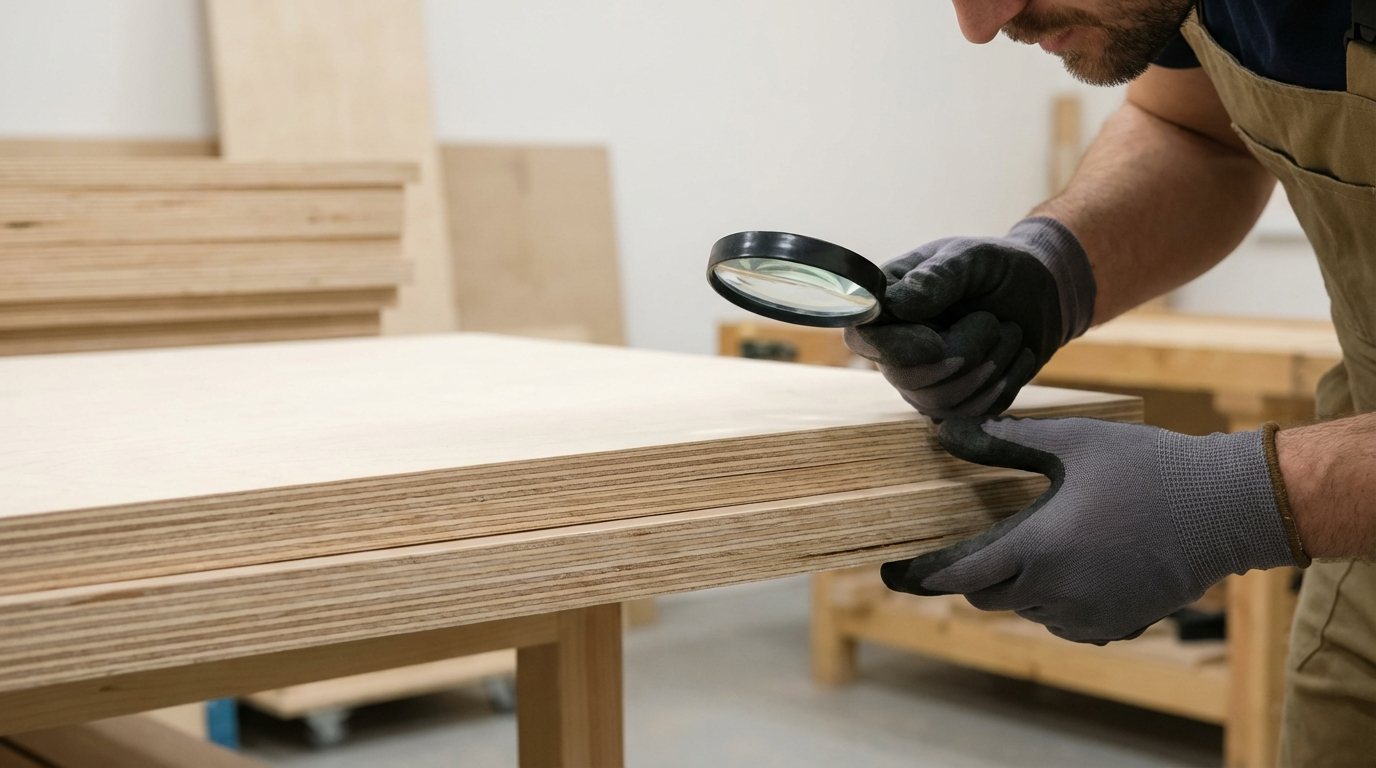
The ISI mark appears as a clear triangle emblem, often embossed or ink-stamped on edges and surfaces, paired with the IS code (e.g., IS:303) and grade (MR/BWR). A CM/L number follows, linking to the manufacturer's BIS license. Genuine marks print sharply without smudges; fakes fade or mismatch labels. In India, check all four edges—monsoon-stored stacks hide counterfeits. Next step: Snap a photo, cross-check with invoice details, and ask supplier for license proof before loading.
Is ISI Mark Mandatory for All Plywood in India?
Yes for most commercial, structural, and general plywood under recent quality control orders, covering IS 303, IS 710, and similar. Exceptions like thin veneers or packing grades vary, but interiors demand it for safety. Nuance: Enforcement ramps up regionally, so coastal dealers stock more certified stock. Practical check: Insist on stamped sheets; unbranded "bazaar" plywood risks fines or failures in humid zones.
India-Specific Reality Check
Monsoon humidity (80-90%) and coastal salt air amplify glue line failures in non-BWP plywood, even ISI-marked. Improper godown storage—stacked flat without covers—warps MR grades pre-install. Contractor workflows often mix grades, causing bathroom cabinets to bubble. Workmanship like unsealed edges doubles swelling risk in Kerala or Mumbai rains.
Why Do ISI Plywood Fail in Indian Homes Despite Certification?
Factory compliance doesn't prevent site errors: Overloaded racks in humid storage delaminate MR plywood; carpenters skip edge sealing on BWR. Coastal termite pressure needs added treatment beyond basic ISI. Trade-off: IS 710 holds but costs more for dry zones. Fix: Inspect stacks on delivery, seal cut edges immediately, and ventilate installation areas during rainy seasons.
Two-Minute Comparison That Actually Helps
| Condition/Use | IS 303 MR | IS 303 BWR | IS 710 BWP |
|---|---|---|---|
| Dry interiors (bedrooms) | Ideal; low cost | Overkill | Expensive excess |
| Bathrooms/humid | Avoid | Good | Best long-term |
| Kitchen/coastal | No | Marginal | Required |
| Glue test survival | Humidity only | 72hr boil | Repeated boils |
How to Choose in 5 Steps
- Assess exposure: Dry? MR. Wet? BWP. List rooms and rain patterns.
- Match IS code to need: Verify stamp vs label (e.g., no MR claiming 710).
- Check mark details: Clear ISI + CM/L + grade on all edges.
- Ask for docs: Invoice with license; decline vague suppliers.
- Test sample: Tap for solid core; avoid hollow echoes signaling gaps.
Skip steps? Expect delam in 1-2 monsoons.
Decision Framework: Plywood Grade by Conditions
| Site Conditions | Recommended IS Grade | Key Verifications |
|---|---|---|
| Monsoon humidity, no direct water | IS 303 BWR | Clear edge stamp, sealed edges post-cut |
| Coastal/high salt, outdoors | IS 710 BWP | CM/L on invoice, no core gaps |
| Heavy use/scratch risk | IS 303 BWR or 710 | Uniform veneer, calibration tolerance |
| Tight budget, dry zone | IS 303 MR | ISI clarity, supplier batch records |
| Fast delivery priority | Any ISI | Stock availability, godown inspection |
Trade-offs and Limitations
ISI ensures factory baseline, but no mark covers poor carpentry or overloads. BWP excels wet but pricier (20-50% more typically, varies by thickness/region); MR saves upfront yet fails humid. All grades vulnerable to termites without extras. Calibration drifts post-humid storage, raising fitting issues.
Common Buyer Mistakes and How to Avoid Them
- Mistake: Trusting label over stamp. Why: Fakes print labels easily. Do: Edge-check ISI code.
- Mistake: Ignoring CM/L number. Why: Proves license. Do: Note it, match invoice.
- Mistake: Buying MR for kitchens. Why: Steams delaminate. Do: BWR minimum.
- Mistake: No storage check. Why: Warped on arrival. Do: Inspect stacks flat/covered.
- Mistake: Skipping edge seal. Why: Water wicks in. Do: Apply sealant Day 1.
- Mistake: Overlooking core gaps. Why: Weakens hold. Do: Tap test pre-buy.
- Mistake: Coastal MR use. Why: Salt accelerates. Do: IS 710 only.
- Mistake: No thickness verify. Why: Thinner fakes. Do: Caliper measure.
Failure Modes and Fixes
- Symptom: Edge swelling. Cause: Unsealed cuts. Prevent: Seal immediately. Fix: Sand, reseal.
- Symptom: Delamination bubbles. Cause: Wrong grade/humidity. Prevent: Match IS to site. Fix: Replace panel.
- Symptom: Core gaps visible. Cause: Poor layup. Prevent: Visual/tap pre-buy. Fix: Discard sheet.
- Symptom: Warping post-install. Cause: Uneven storage. Prevent: Acclimatize 48hrs. Fix: Shim alignments.
- Symptom: Termite trails. Cause: No treatment. Prevent: Ask for proof. Fix: Fumigate area.
- Symptom: Veneer peel. Cause: Weak glue. Prevent: Boil demo. Fix: Reglue/clamp.
Quality Checks You Can Do Without Lab Tests
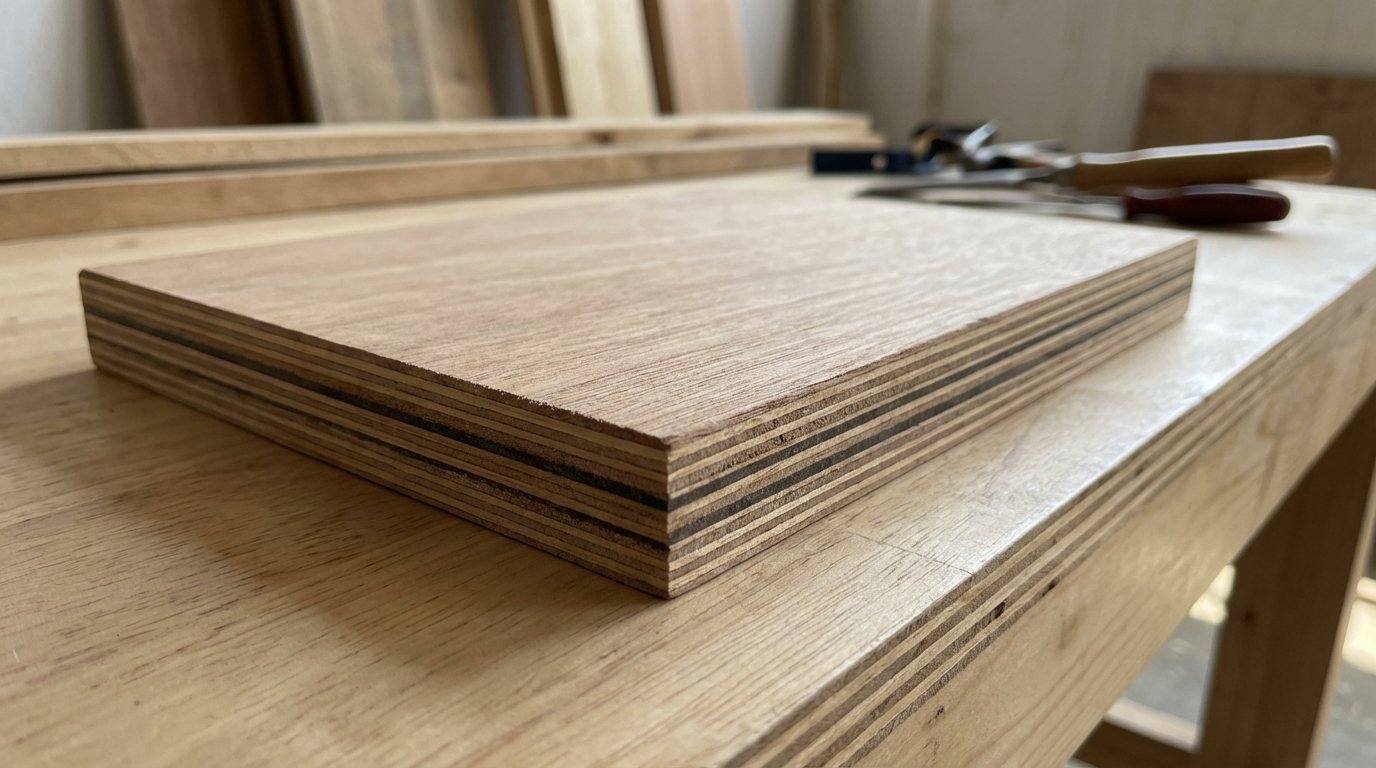
Before buying: Scan edges for sharp ISI/IS code/CM-L; tap for solid thud (no hollow); weigh sample (heavier=better core); sniff—no chemical off-odors. Questions: "Show license docs? Batch test records?" Red flags: Faded stamps, mismatched grades.
After cutting: Check glue lines even, no voids; measure calibration (<0.5mm variance typically).
After install: Test water bead-off on sealed edges; monitor humidity-induced bows.
Can You Do a Boil Test on ISI Plywood Yourself?
Yes, request supplier demo: Cut 10cm strip, boil 72hrs (BWR) or cycles (BWP)—no separation means compliant. Nuance: MR fails quick; don't ruin full sheet. Next: Use as tie-breaker for humid buys, combine with stamp check.
Tips for Homeowners: Durability Do's and Don'ts
- Do: Wipe spills instantly; ventilate bathrooms.
- Don't: Stack heavy wet items; skip annual edge checks.
Tips for Carpenters: Handling and Fitting
- Cut with fine blade; seal edges same day.
- Fasten 25mm from edges; acclimatize boards.
Tips for Architects: Spec Writing
- Detail IS code + thickness + "CM/L verified".
- Specify wet-zone BWP, drawings with seal notes.
How Does Monsoon Affect ISI Plywood Choice?
Boosts need for BWR/BWP as humidity swells MR glue. Coastal adds salt corrosion risk. Step: Map rain exposure, up-grade 1 level, stockpile dry.
FAQs
What is CM/L number on plywood?
The CM/L (Certification Mark License) number ties the ISI stamp to a valid BIS manufacturer license, printed alongside the mark. It varies by factory/batch, enabling traceability. In practice, note it from edges, demand matching invoice proof—mismatches signal fakes common in tier-2 markets. Suppliers should explain its validity; reject if evasive.
IS 303 vs IS 710: Which for Bathrooms?
IS 303 BWR handles intermittent splashes, IS 710 BWP for steam-heavy showers. Bathrooms vary—low-use: BWR; daily high-moisture: BWP to avoid bubbles. Verify: Stamp grade, supplier boil demo. In humid India, lean BWP for longevity.
Does All Plywood Need ISI Mark?
Most general, marine, structural under QCOs do; thin flexi or packing may not. Buy certified for interiors to cut failure risks. Check locally—enforcement tighter in metros.
How to Spot Fake ISI Mark?
Fakes smudge, lack CM/L, or mismatch IS code/grade. Genuine: Sharp emboss, consistent on edges. Test: Rub gently—no fade; tap solid.
IS 10701 Plywood for What Use?
Structural applications like beams/formwork needing high strength. Not typical furniture; verify load specs match.
Termite Resistance in ISI Plywood?
Some grades test mycologically (IS 303 MR), but add treatment for India termites. Check label claims, inspect post-install.
Thickness Tolerance in ISI Standards?
Tight limits (e.g., ±0.3-0.5mm typically); measure with caliper. Poor calibration causes fitting woes.
ISI for Decorative Plywood?
Often under IS 303 if general; confirm stamp. Veneer quality separate.
Cost Difference by IS Grade?
MR cheapest, BWP 30-60% more typically, driven by glue/thickness/region. Quote with specs.
Disclaimer: This content is provided for general informational purposes based on industry practices and publicly available information. Product specifications, standards, prices, and availability may vary by manufacturer, region, and time. Readers should independently verify details with manufacturers, dealers, or qualified professionals before making purchase or construction decisions.Want Plywood Suggestions?
Share a few details and a Duro BOIL specialist will suggest suitable brands and connect you to responsive dealers.