Lamination bubbling and peel: causes & fixes
Lamination bubbling and peel: causes & fixes: a practical India-focused guide with checklists, FAQs and quick tables to help you choose the right board for
Quick Decision Summary
Best fix: Match board moisture resistance to your site's humidity, seal edges fully, and apply laminate under controlled conditions.
If you're in a hurry: Lamination bubbling or peeling stems from moisture invading the bond line or substrate movement. In India, monsoon swings amplify this—opt for BWR or BWP-grade boards in kitchens/bathrooms, store flat and dry pre-application, and use even pressure with heat control during pressing. Test adhesion by pressing a sample; if it lifts easily, swap suppliers. Prevention beats patching: proper edge banding and silicone seals add years of life without rework costs.
- Choose pre-laminated boards if you're a homeowner wanting low-maintenance installs in moderate humidity zones.
- Avoid thin laminates (<0.6mm) if coastal or heavy steam exposure, as they trap moisture faster.
What Lamination Bubbling and Peeling Actually Means
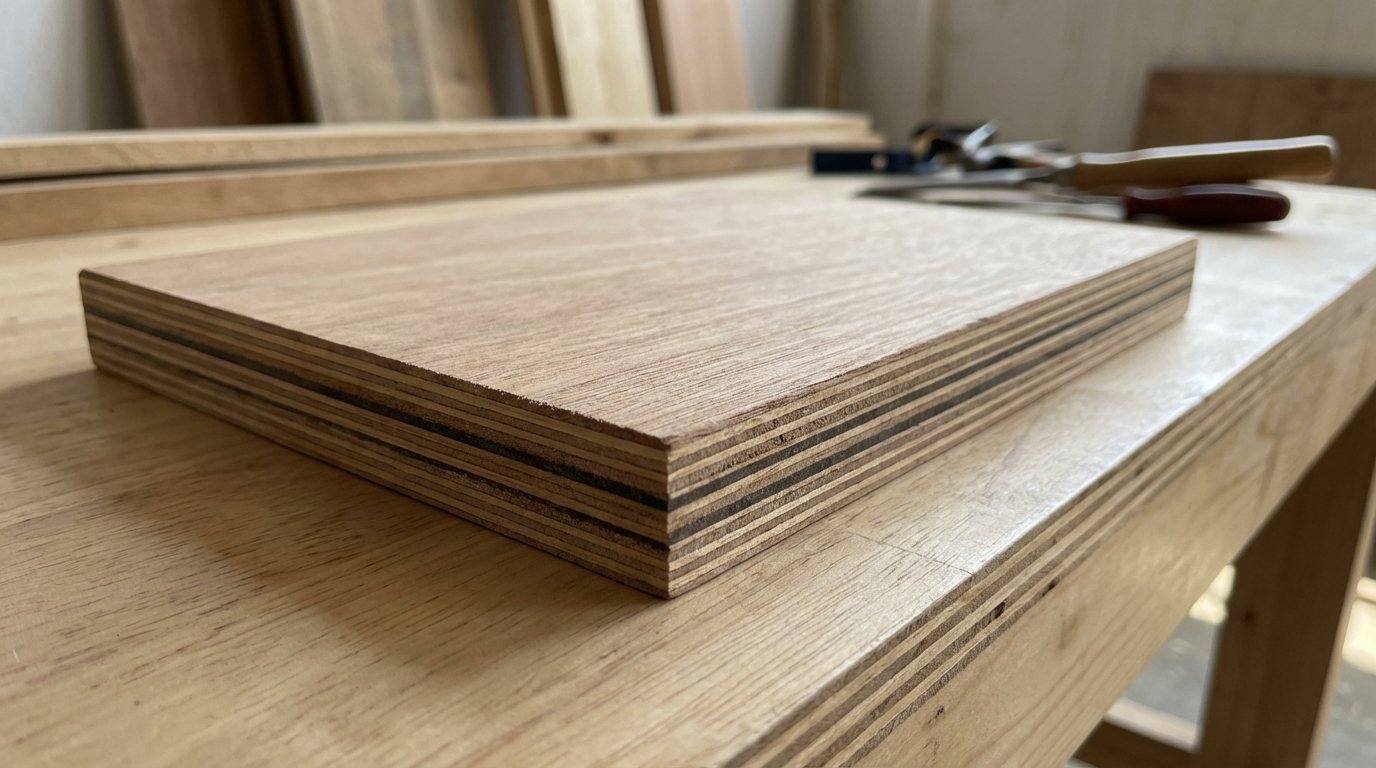
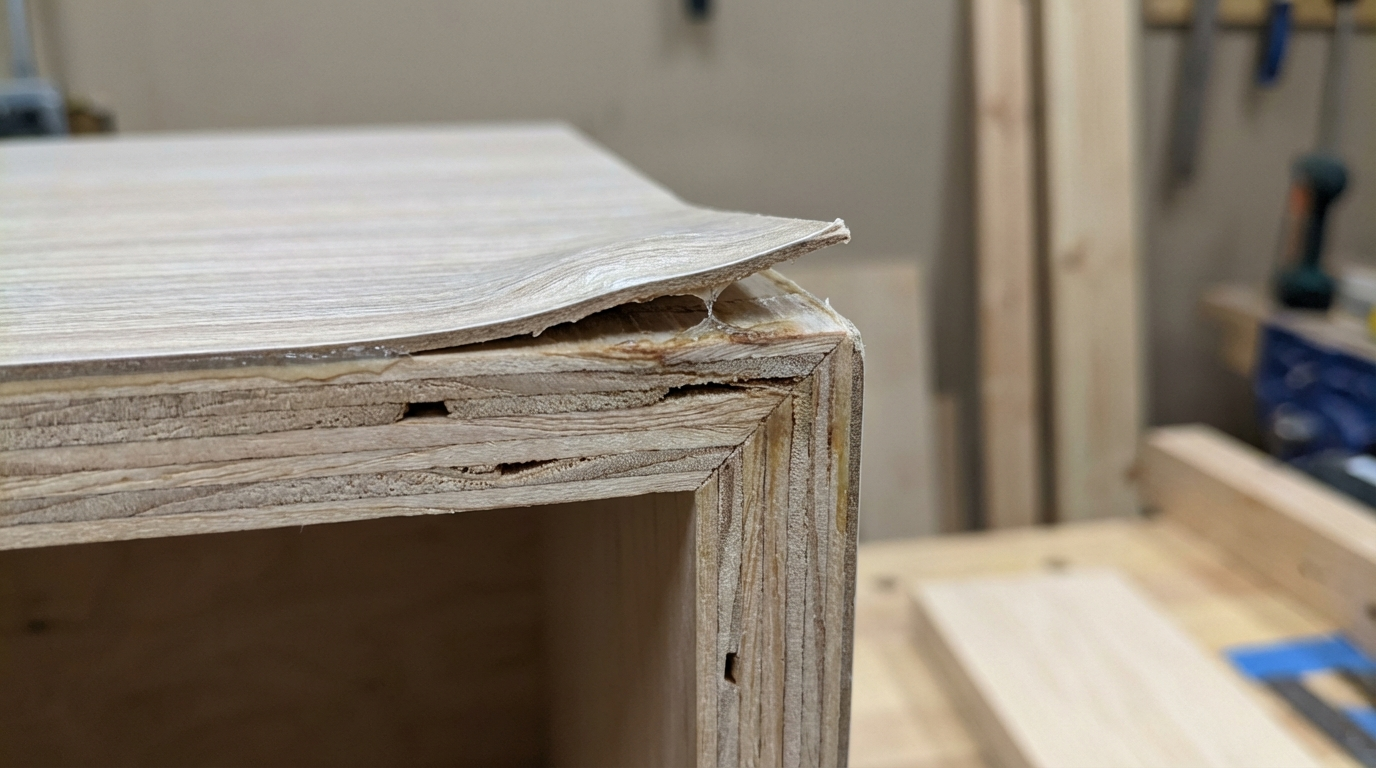
Lamination refers to a thin resin-impregnated paper or foil layer hot-pressed onto a substrate like plywood, MDF, or particleboard for aesthetics and minor protection. Bubbling shows as raised blisters where air or moisture gets trapped under the surface, while peeling means the laminate lifts at edges or corners, exposing the base.
Where people get confused:
- Assuming it's always the laminate's fault—not the substrate warping underneath.
- Thinking thicker laminate = better; quality glue lines matter more.
- Blaming install only, ignoring storage humidity buildup.
- Expecting MR-grade boards to handle kitchen steam like BWP.
- Overlooking that post-install cleaning chemicals weaken bonds over time.
- Confusing bubbling with core delamination (deeper plywood failure).
Why is lamination bubbling more common in Indian homes?
Bubbling often hits after 6-12 months due to seasonal humidity shifts from 40% (winter) to 90%+ (monsoon), causing substrates to swell unevenly and push up the laminate. Coastal areas see it faster from salt-laden air accelerating glue breakdown. Direct answer: substrate-board mismatch to environment. Nuance: even good BWR peels if edges stay unsealed. Next step: inspect your space's peak RH with a cheap hygrometer; if over 75%, upgrade to marine-grade and add PVC edge tapes immediately on new work.
India-Specific Reality Check
India's climate swings—monsoon downpours, coastal salt mist, and erratic AC use—create expansion/contraction cycles that stress laminate bonds. Godowns often stack boards wet, leading to core moisture before lamination. Contractor workflows rush pressing without drying, trapping vapor. Workmanship gaps like uneven roller pressure or dusty surfaces compound this in humid sites like Mumbai kitchens or Kerala bathrooms.
How does monsoon humidity trigger peel-off?
High RH penetrates unsealed edges, softening glue lines and causing curl-up. Direct answer: vapor pressure buildup delaminates layers. Conditions: worse on particleboard vs calibrated plywood. Check: tape a wet cloth to an edge for 48 hours; if it domes, reject the batch. Practical step: enforce 24-hour drying post-storage, use humidity-controlled pressing (under 60% RH), and silicone-seal all cut edges before install.
How to Prevent Bubbling and Peeling in 5 Steps
- Assess site risks: Wet zone (kitchen/bath)? Go BWR/BWP; dry interiors? MR suffices. Skip if carpenter skips this—warping follows.
- Verify board quality: Knock test for hollow core; knife edge for glue strength. Moisture meter under 12% ideal.
- Prep perfectly: Sand substrate flat, wipe solvent-clean, dry 48 hours. Dust kills adhesion.
- Press right: Even heat (100-120°C), pressure (5-7 kg/cm²), 20-30 sec dwell. Overheat blisters.
- Seal post-install: Edge bands + silicone; avoid water pooling. Gaps invite failure.
Two-Minute Comparison: Board Types for Lamination Success
| Use Case | Best Board | Why It Wins | Verify Before Buying |
|---|---|---|---|
| Dry bedroom wardrobe | MR-grade plywood/MDF | Affordable, stable in AC rooms | Flat stacking, no core gaps |
| Kitchen cabinets | BWR plywood/HDHMR | Boils water-resistant glue | Knife test glue line holds |
| Bathroom vanity | BWP/marine or phenolic | Full immersion tolerance | Edge moisture meter <10% |
| Coastal modular furniture | IS 710-grade plywood | High density resists salt/humidity | Calibration tolerance <0.5mm |
Decision Framework: Pick Based on Your Conditions
| Condition | Recommended Choice | What to Verify |
|---|---|---|
| Wet zone/steam | BWP board + 1mm laminate | Glue shear with knife; no bubbling on sample steam test |
| Coastal high RH | Marine plywood + PVC edges | 24hr wet edge test—no lift |
| Heavy use/kids | HDHMR + textured laminate | Scratch test holds; core density knock-solid |
| Tight budget | MR particleboard pre-lam | Press thumb—no dent; flat warp test |
| High scratch risk | 1.0mm thick matte laminate | Sample rub test; edge seal demo |
| Fast delivery | Pre-laminated stock sheets | Visual uniformity; adhesion tap test |
Trade-offs and Limitations
BWP boards prevent bubbling but cost 30-50% more than MR due to phenolic resins and denser cores—worth it only in wet zones. Thick laminates resist peels better but hide substrate flaws less, complicating repairs. Pre-lams save labor but limit custom sizes, risking edge exposure. No board is fully waterproof; all need sealing in humid India.
Can you fix bubbling without replacing the whole panel?
Yes for small bubbles: slit with craft knife, inject adhesive, repress with iron/clamp 24 hours. Direct answer: targeted re-bonding works if substrate intact. Nuance: large areas (>10%) signal core issues—replace to avoid spread. Next: dry fully first (fan 48hr), use PVA glue, sand smooth post-fix. Test on scrap; if recurs, upgrade board grade next project.
Common Buyer Mistakes and How to Avoid Them
- Mistake: Buying cheapest MR for kitchen. Why: Steam swells it. Fix: Spec BWR minimum; ask for boil test demo.
- Mistake: Skipping storage dry. Why: Godown dampness pre-loads moisture. Fix: Acclimatize 72hr flat-covered.
- Mistake: Uneven pressing. Why: Hand tools vary pressure. Fix: Use membrane press; check uniformity.
- Mistake: No edge sealing. Why: Humidity sneaks in. Fix: PVC tape + silicone all around.
- Mistake: Wet cleaning soon after. Why: Softens fresh bonds. Fix: Dry wipe 2 weeks; mild soap after.
- Mistake: Ignoring substrate flatness. Why: Bumps trap air. Fix: Sand to 180 grit; measure variance <0.3mm.
- Mistake: Overheating laminate. Why: Scorches glue. Fix: Thermometer control 110°C max.
- Mistake: Dusty prep surface. Why: Particles block bond. Fix: Tack cloth wipe + vacuum.
- Mistake: No sample test. Why: Batch variations. Fix: Laminate/test one sheet first.
Failure Modes and Fixes
- Symptom: Edge peel after 3 months. Cause: Humidity ingress. Prevent: Seal edges day 1. If happening: Re-seal + clamp; replace if core exposed.
- Symptom: Central bubbles. Cause: Air trapped in press. Prevent: Vacuum bag method. If happening: Slit/inject/press.
- Symptom: Full lift-off. Cause: Substrate warp. Prevent: Calibrated flat boards. If happening: Full replacement.
- Symptom: Yellowing + bubble. Cause: Heat/UV on poor resin. Prevent: UV-stable laminate. If happening: Sand/refinish small areas.
- Symptom: Corner chips peeling. Cause: Knock damage. Prevent: Thicker corners. If happening: Fill/epoxy + relam patch.
- Symptom: Steam blisters in kitchen. Cause: Low-grade board. Prevent: BWP only. If happening: Swap + ventilate better.
- Symptom: Slow creep delam. Cause: Glue line weak. Prevent: Urea-formaldehyde test batch. If happening: Monitor; reinforce early.
Quality Checks You Can Do Without Lab Tests
Before buying:
- Tap sheet—solid thud, no hollow.
- Knife glue line—resists pry.
- Check calibration ruler—flat <1mm variance.
- Ask: "Boil test pass? Edge seal demo?"
After cutting: Sand edges crisp; moisture probe <12%.
After install: Tug corners firm; no water traps; align gaps even.
Red flags: Visible core gaps, oily feel, warps in hand.
What causes lamination to peel at edges first?
Edges expose raw glue, inviting moisture capillary action. Direct answer: unsealed vulnerable zones swell first. Nuance: particleboard worse than plywood due to lower density. Step: Always PVC-band or paint edges; test by soaking scrap edge 24hr—no swelling. For fixes, silicone caulk + clamp; prevents 80% recurrences in humid sites.
Is pre-laminated better than post-laminated for avoiding bubbles?
Pre-lam often edges out due to factory presses, but check supplier QC. Direct: Factory control reduces air traps. Conditions: Good for dry areas; wet needs BWP base. Verify: Tap test uniform; sample humidity cycle. Next: Buy from volume makers for consistency over custom shops.
Tips for Homeowners: Durability Do's and Don'ts
- Do: Wipe spills instantly; use coasters under hot.
- Don't: Abrasive cleaners or soak mops—use microfiber + mild soap.
- Seal edges yourself if carpenter skips.
- Monitor AC humidity; dehumidifier in baths.
Carpenter Tips: Handling and Application
- Cut with fine blade to avoid chip-out.
- Edge prep: Sand bevel, solvent wipe.
- Fasten in glue zones only; pre-drill hinges.
- Press with weights even; 24hr cure.
Architect/Designer Tips: Spec Right
- Detail edge returns/seals in drawings.
- Spec BWR min for zones over 70% RH.
- Layered finishes: Lam over veneer risky—direct only.
- Modular: Stipulate flatness tolerance 0.5mm.
FAQs
How long should laminate last without bubbling in India?
Typically 5-10 years in dry interiors on BWR boards, 3-7 in kitchens if sealed well. Varies by site humidity and care—coastal drops to 2-5 without marine grade. Factors: edge protection halves failure risk. Check progress yearly by tapping for hollows; reseal proactively. Choose thicker laminates and ventilated designs for longevity.
Does heat from cooking cause lamination bubbles?
Yes, steam/condensation softens bonds over time. Direct: vapor penetrates pores. In Indian kitchens, chimney gaps worsen it. Prevent with BWP + full backsplash seals; test by steaming sample. If bubbled, cut out + repatch; ventilate heavily meanwhile. Avoid low-grade MDF here.
Why does laminate peel after painting nearby?
Paint solvents migrate, degrading glue. Common in rushed renos. Answer: Chemical attack on resins. Fix: Mask fully; dry paint 7 days before lam. If peeled, solvent-wipe + readhere. Next time, sequence lam first.
Can you relaminate over old bubbled surface?
Possible after full removal/sanding. Direct: Fresh substrate needed. Nuance: MDF crumbles easy—prime first. Steps: Heat gun strip, sand 220 grit, new lam press. Test adhesion; skip if core damaged.
Is bubbling covered under typical warranties?
Often not, as workmanship/environment cited. Varies by supplier—check moisture/install clauses. Practical: Insist on sample guarantees; document storage. Prevention via QC trumps claims.
How to store boards to prevent pre-lam issues?
Flat stack, elevated, covered in <60% RH godown. India tip: Monsoon-proof with tarps. Rotate stock; check meter monthly. Warped storage = instant bubble risk.
Does laminate thickness matter for peel resistance?
Yes—0.8mm+ flexes better with substrate moves. Thin warps easy in humidity. Verify sample bend test; pair with matching board grade for best hold.
What glue is best for DIY laminate fixes?
Contact cement or urea resin—thin even, press firm. India avail: Local hardware. Test scrap; cure 24hr. Avoid superglue—brittle fails.
Disclaimer: This content is provided for general informational purposes based on industry practices and publicly available information. Product specifications, standards, prices, and availability may vary by manufacturer, region, and time. Readers should independently verify details with manufacturers, dealers, or qualified professionals before making purchase or construction decisions.Want Plywood Suggestions?
Share a few details and a Duro BOIL specialist will suggest suitable brands and connect you to responsive dealers.