Marine plywood vs BWP: what’s the real difference?
Marine plywood vs BWP: what’s the real difference? with a clear decision table on grade, thickness, moisture performance, warranty and price factors. Made for
Quick Decision Summary
Marine plywood provides extreme moisture resistance for harsh wet zones, while BWP grade suits most boiling water exposure needs reliably.
If you're in a hurry: Opt for marine plywood only in coastal or constantly damp areas like bathrooms with poor ventilation or boat-building; it uses specialized phenolic glues for prolonged boiling resistance. For kitchens, wardrobes, or interiors with occasional spills, BWP grade (IS 303 compliant) performs well under monsoon humidity without the premium cost. Check glue lines and core gaps first—poor ones fail both. Expect 20-50% higher cost for marine due to glue and testing rigor. Always verify local stock for calibration to avoid warping.
- Choose marine plywood if: High submersion risk, coastal exposure, structural demands, or regulatory needs.
- Choose BWP if: General interiors, budget constraints, standard moisture like kitchens or humid storage.
- Avoid both if: Dry zones (use MR grade) or extreme termite risk (add treatment).
What Marine Plywood and BWP Actually Mean
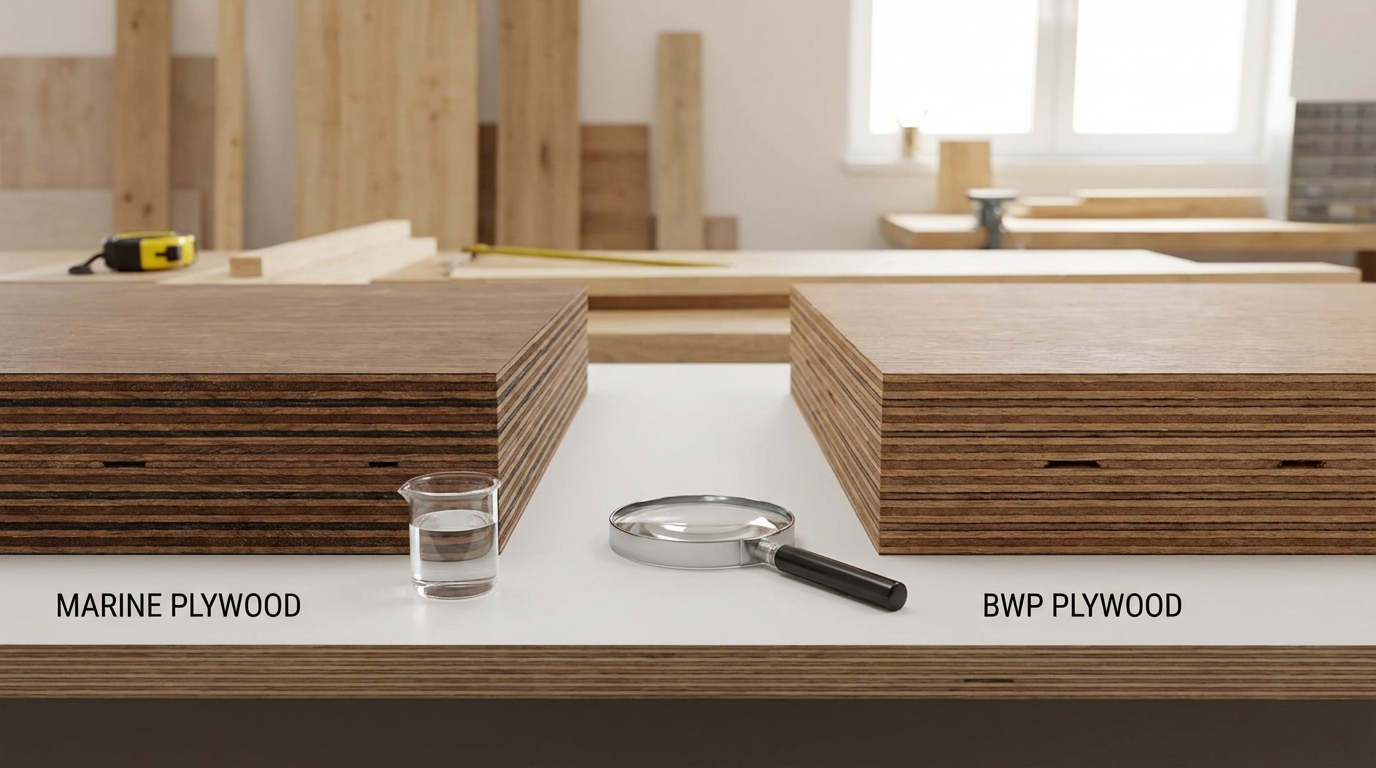
Marine plywood refers to a premium plywood variant designed for severe water exposure, typically using waterproof phenolic or resorcinol glues that withstand boiling for hours. It follows strict standards like IS 710, emphasizing structural strength and zero delamination in marine or high-humidity environments. BWP, or Boiling Water Proof plywood, is a high-grade category under IS 303, with glue lines resistant to boiling water for shorter durations—strong for interiors but not as rigorous as marine.
Where people get confused:
- BWP is often labeled "marine" by sellers, but true marine exceeds BWP specs.
- All waterproof plywood is "100% marine"—no, grades vary by glue shear strength.
- Thicker equals better marine—no, glue and core quality matter more.
- IS 303 covers everything—no, marine needs IS 710 verification.
- Both float forever—buoyancy isn't the point; it's delamination resistance.
Does marine plywood float better than BWP?
Neither is designed primarily for floating; both sealed sheets may float initially due to density under 700 kg/m³. Marine edges out with tighter glue and denser cores for waterlogged survival. In India, test by dropping a sample in water—prolonged submersion without swelling favors marine. For practical use, focus on glue integrity over buoyancy. Next step: Ask suppliers for a small offcut to submerge overnight and inspect edges for separation.
Is BWP plywood the same as waterproof plywood?
BWP qualifies as waterproof for boiling tests but falls short of fully waterproof marine grades. It resists delamination in hot water cycles typical for kitchen counters or laundry areas. Nuance: Performance drops if core gaps exist or storage is humid. In coastal cities, pair with edge sealing. Verify by pressing glue lines with a nail—resistant ones hold. Always confirm IS 303 marking and ask for boil test demo before bulk buy.
India-Specific Reality Check
Monsoon rains and 80-90% coastal humidity amplify delamination risks—BWP handles sporadic spills but marine shines in Kerala backwaters or Mumbai sea-facing flats with poor exhaust. Open godowns cause pre-install swelling; stack horizontally under cover. Contractor workflows favor BWP for speed, but marine reduces callbacks in wet zones. Poor ventilation traps steam, turning kitchens into failure zones—ventilate or upgrade to marine.
Two-Minute Comparison That Actually Helps
| Factor | Marine Plywood | BWP Plywood |
|---|---|---|
| Glue Type | Phenolic/resorcinol (extreme boil) | Urea-melamine formaldehyde (standard boil) |
| Standard | IS 710 (structural) | IS 303 (general) |
| Moisture Performance | Prolonged submersion | Short boils/spills |
| Typical Thickness | 12-25mm | 6-19mm |
| Best For | Bathrooms, boats, coasts | Kitchens, wardrobes |
Choose marine for wet-heavy use; BWP for balanced cost in humid-dry mixes. Verify by supplier boil demo.
Price Range and Cost Drivers (India)
Expect marine plywood at ₹120-250 per sq ft (18mm), BWP at ₹80-160 per sq ft—varies by city (higher in metros), thickness, core (hardwood vs poplar), face veneer quality, and calibration. Logistics add 10-20% from factories. Quote checklist: Specify IS grade, thickness tolerance (±0.3mm), glue shear value, no core gaps. Mini example: 100 sq ft kitchen (18mm BWP) ~₹10,000-16,000, excluding labor/wastage.
Why is marine plywood more expensive than BWP?
Superior glues, rigorous testing, and denser cores drive 20-50% premium. India factories incur extra phenolic resin costs amid import fluctuations. Thickness over 18mm spikes price due to material volume. Nuance: Shop regional mills for deals, but prioritize calibration over bargains. Next: Request quotes comparing 18mm samples—factor delivery and cut waste (10% typical).
How to Choose in 5 Steps
- Assess exposure: Submersion/coastal? Marine. Spills only? BWP.
- Check markings: IS 710 for marine, IS 303 for BWP; ignore unbranded.
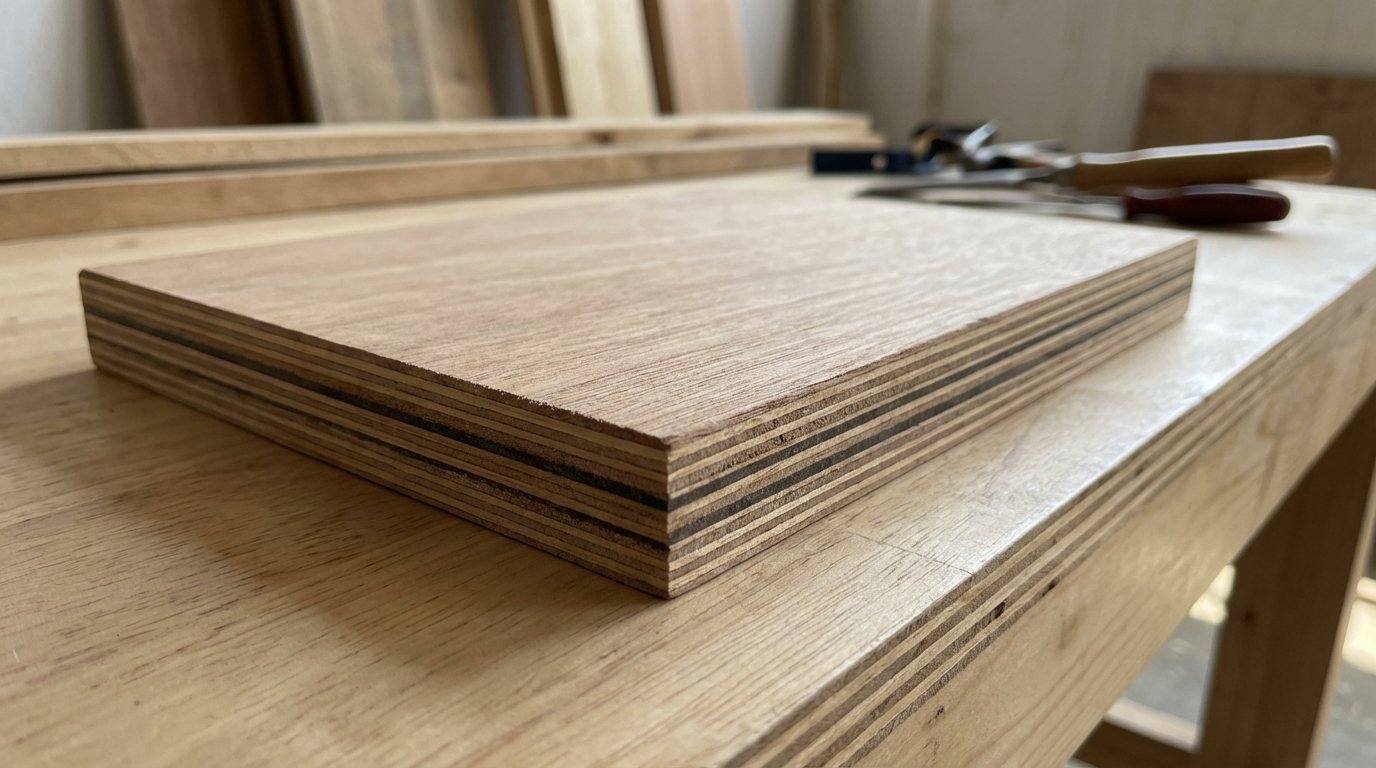
- Inspect physicals: Flat sheet, no gaps, uniform glue sheen.
- Test glue: Nail press or supplier boil demo.
- Confirm budget fit: Add sealing costs; verify thickness tolerance.
Skip steps? Expect warping callbacks costing 2x material.
Trade-offs and Limitations
Marine: Heavier, pricier, harder to source in small quantities—overkill for dry interiors. BWP: Vulnerable to prolonged steam; needs edge sealing in humid storage. Both heavier than MR, raising transport costs; marine's rigidity limits bending for curves.
Advice for Homeowners: Durability Do's and Don'ts
- Do: Seal edges with epoxy, ventilate wet zones.
- Don't: Store sheets vertically in rains; use acidic cleaners.
Advice for Carpenters: Cutting and Handling Tips
- Cut with fine blade; pre-seal edges.
- Fasten 25mm from edges; avoid over-screwing glue lines.
Advice for Architects: Spec Writing Essentials
- Detail IS grade, ±0.3mm tolerance, boil cycles.
- Specify wet-zone backups like marine + HDHMR.
Can I use BWP plywood in bathrooms?
Yes, with caveats—suits ventilated bathrooms but risks delamination from standing water. Marine outperforms here. In humid India homes, add silicone seals and exhaust fans. Check: Post-install, wipe daily; bulge signals poor core. Upgrade if showers lack doors. Practical step: Mock a 1x1 ft sample in steam for 30 mins—intact means viable.
Common Buyer Mistakes and How to Avoid Them
- Mistake 1: Assuming thickness = water resistance. Why: Glue fails first. Fix: Prioritize IS markings.
- Mistake 2: Buying "marine" labels without demo. Why: Mislabeling common. Fix: Demand boil test.
- Mistake 3: Ignoring core gaps. Why: Traps water. Fix: Shine light through edges.
- Mistake 4: Storing upright in monsoon. Why: Swells unevenly. Fix: Horizontal under tarp.
- Mistake 5: Skipping edge sealing. Why: Entry for humidity. Fix: Epoxy all cuts.
- Mistake 6: Overlooking calibration. Why: Uneven flooring. Fix: Stack and measure.
- Mistake 7: Cheaping on inland transport. Why: Moisture during transit. Fix: Insulated loads.
- Mistake 8: No ventilation planning. Why: Steam buildup. Fix: Spec exhausts.
Failure Modes and Fixes
- Symptom: Edge swelling. Cause: Poor sealing. Prevent: Epoxy all edges. Fix: Sand, reseal.
- Symptom: Delamination bubbles. Cause: Weak glue. Prevent: Boil test pre-buy. Fix: Replace sheet.
- Symptom: Core gaps visible. Cause: Low-grade layers. Prevent: Light check. Fix: Fill with putty, monitor.
- Symptom: Warping post-install. Cause: Humidity imbalance. Prevent: Acclimatize 48hrs. Fix: Shim and clamp.
- Symptom: Soft spots. Cause: Water ingress. Prevent: Marine in wet. Fix: Cut out, patch.
- Symptom: Screw pull-out. Cause: Over-spacing. Prevent: 100mm grid. Fix: Reinforce with blocks.
Quality Checks You Can Do Without Lab Tests
Before buying: Flat on floor (no rock), uniform veneer, no glue lumps, IS stamp clear.
Questions for supplier: Boil cycle count? Core wood type? Tolerance?
Red flags: Warped stacks, faded markings, wet storage.
After cutting: Clean glue exposure, no voids.
Post-install: Level edges, wipe spills immediately.
Decision Framework Table
| Condition | Recommended | Verify |
|---|---|---|
| Coastal humidity | Marine | IS 710, boil demo |
| Kitchen spills | BWP | IS 303, core gaps |
| Tight budget | BWP | Calibration ±0.3mm |
| Heavy structural | Marine | Glue shear press |
| Fast delivery | BWP | Local stock check |
| High scratch risk | Either + laminate | Veneer hardness |
Is marine plywood worth the extra cost for wardrobes?
Usually no—BWP handles humid cupboards fine with ventilation. Marine's premium suits only flood-prone storage. Trade-off: Weight adds shelf sag risk. In India racks, seal joints and use silica packs. Check wardrobe humidity first; over 70%? Consider marine. Step: Install hygrometer; if spikes, upgrade fronts only.
FAQs
What's the main difference between marine and BWP plywood?
The core difference lies in glue durability: marine uses phenolic resins for extended boiling (IS 710), ideal for submersion, while BWP employs standard waterproof glues for shorter boils (IS 303). Marine adds structural reinforcements. In practice, marine prevents failures in steamy Indian bathrooms, but BWP covers 80% home needs. Always inspect samples—marine sheets feel denser. Confirm with a water drop test: no absorption after hours signals quality.
Which is better for coastal homes?
Marine plywood edges out for Mumbai or Chennai sea views, resisting salt-laden humidity better. BWP works with extra sealing but risks bubbling. Factor poor godown storage common in ports. Ventilate and seal religiously. Test locally: Submerge edges 24 hours—if intact, viable. Architects spec marine for longevity, saving repaint costs.
Can BWP be used outdoors?
Not recommended without heavy protection—UV and rain degrade it faster than marine. Cover with weatherproofing, but expect 2-3 year lifespan vs marine's 5+. India monsoons accelerate this. Indoor-outdoor thresholds like verandas need marine frames. Prep: Prime all sides; monitor for cracks yearly.
How to identify fake marine plywood?
Look for IS 710 stamp, uniform glue sheen, no core voids under light. Sellers often pass BWP as marine—demand boil test (30 mins no split). Density over 650 kg/m³ hints quality. India markets flood with fakes; buy from verified mills. Post-buy, tap test: hollow sounds signal issues.
Does thickness affect water resistance?
Indirectly—thicker hides core flaws better but glue quality rules. 18mm+ marine resists flex-induced cracks. Thin BWP warps easier in humidity. Match to load: shelves need 18mm min. Calibrate stacks to ensure evenness, avoiding site leveling hassles.
What's the warranty reality for these grades?
Varies by manufacturer and region—typically 5-10 years against delamination, but workmanship voids many claims. India humidity shortens effective life. Focus on prevention over paper: seal and ventilate. Document pre-install photos for disputes.
Can I paint marine plywood?
Yes, after sanding and priming—its smooth face takes enamel well for moisture barriers. BWP similar but check veneer absorption. Avoid oil paints in wet zones; use PU for durability. Test patch first to prevent peeling in humid climates.
Is marine plywood termite resistant?
Not inherently—add chemical treatment regardless of grade. Coastal salts worsen infestations. Choose treated cores; inspect annually. Prevention: Elevate off ground, use barriers.
How long does BWP last in kitchens?
8-15 years with care in ventilated Indian kitchens—spills wiped promptly extend it. Steam-heavy? Downgrade expected. Seal edges, use hot pads. Monitor for soft spots signaling end-of-life.
Disclaimer: This content is provided for general informational purposes based on industry practices and publicly available information. Product specifications, standards, prices, and availability may vary by manufacturer, region, and time. Readers should independently verify details with manufacturers, dealers, or qualified professionals before making purchase or construction decisions.Want Plywood Suggestions?
Share a few details and a Duro BOIL specialist will suggest suitable brands and connect you to responsive dealers.