MDF Board Colors: Complete Guide to Laminated MDF Shades
Explore the range of MDF board colors available. From solid colors to wood grains, find the perfect laminated MDF shade for your furniture and interiors.
Quick Answer
MDF board colors refer to the decorative shades available on pre-laminated MDF surfaces.
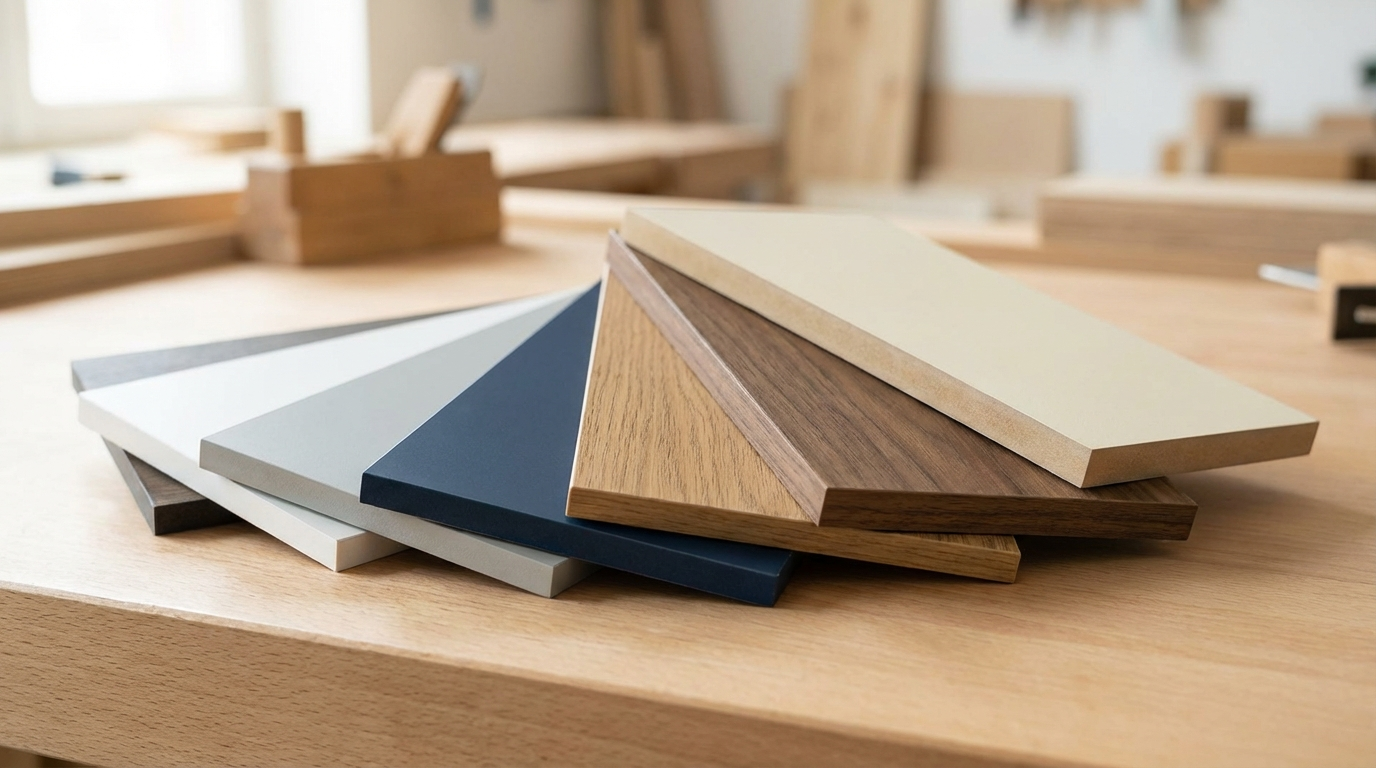
In simple terms, when you visit a plywood shop and see those smooth, colorful boards that look ready to use for furniture—those are laminated MDF boards. Unlike plain MDF that needs painting, these come factory-finished with decorative surfaces in hundreds of shades. From solid whites and greys to wood-grain patterns that mimic teak or walnut, the color options let you match any interior style without the mess and uncertainty of on-site painting or veneering.
- Range available: Most Indian manufacturers offer 150-400+ shades per collection
- Main categories: Solid colors, wood grains, abstract patterns, stone textures, and high-gloss finishes
- Surface types: Matte, glossy, textured, and synchronized (texture matching the printed grain)
- Standard sheet size: 8×4 feet (2440mm × 1220mm) in most showrooms
- Thickness options: Pre-laminated MDF typically available from 8mm to 25mm
What Exactly Are MDF Board Colors?
MDF board colors describe the decorative laminate layer applied to Medium Density Fiberboard during factory production. This lamination process bonds a thin decorative sheet—usually melamine-impregnated paper or high-pressure laminate—onto the MDF core, creating a finished product ready for furniture fabrication.
The manufacturing involves taking plain MDF sheets and passing them through specialized presses with decorative paper. Under controlled heat and pressure, the melamine resin in the paper cures and bonds permanently to the MDF surface. This creates a unified, durable finish that won't peel under normal use.
For Indian homeowners, this matters because it eliminates several traditional furniture-making steps. No primer coats. No waiting for paint to dry. No worrying whether your carpenter applied enough coats. The color consistency you see in the showroom sample is exactly what you get across your entire wardrobe or kitchen cabinet set.
What does pre-laminated MDF mean?
Pre-laminated MDF means the board comes already finished with its decorative surface from the factory. The term "pre" distinguishes it from raw MDF that carpenters laminate on-site using separate laminate sheets and adhesive.
The factory lamination process ensures superior bonding compared to manual site application. According to industry sources, factory-pressed laminates achieve more consistent adhesion because of controlled temperature and pressure parameters that site conditions cannot replicate.
Types of MDF Board Colors Available in India
The Indian market offers laminated MDF in several distinct color categories, each suited to different design needs and applications.
Solid Colors
These are single-tone finishes without patterns. Popular choices include whites (from pure white to off-white), greys (from light silver to charcoal), blacks, and accent colors like navy blue, burgundy, or sage green. Solid colors work well for modern, minimalist interiors and are easier to match with existing furniture.
Wood Grain Finishes
These replicate natural wood appearances—teak, walnut, oak, maple, cherry, and rosewood patterns. Quality varies significantly; better products feature "synchronized" textures where the surface feel matches the printed grain direction, creating a more realistic wood impression.
Abstract and Geometric Patterns
Contemporary designs including linen textures, concrete effects, metallic finishes, and geometric patterns. These cater to commercial spaces and modern residential projects.
Stone and Marble Effects
Italian marble, granite, and natural stone replications. Popular for countertop edges, feature walls, and decorative panels where actual stone would be impractical or expensive.
| Color Category | Best For | Surface Options | Price Range (Approx.) |
|---|---|---|---|
| Solid Colors (Matte) | Wardrobes, cabinets, office furniture | Matte, soft-touch | ₹45-70 per sq ft |
| Solid Colors (Gloss) | Kitchen shutters, TV units | High-gloss, super-gloss | ₹65-110 per sq ft |
| Wood Grains (Standard) | Bedrooms, living rooms | Textured, matte | ₹50-80 per sq ft |
| Wood Grains (Synchronized) | Premium furniture, visible surfaces | Embossed-in-register | ₹80-130 per sq ft |
| Stone/Marble Effects | Feature walls, countertop edges | Glossy, matte | ₹70-120 per sq ft |
Note: Prices vary by region, brand, and dealer. Confirm current rates locally.
Which color type is best for kitchen cabinets?
For kitchen applications, solid colors in matte or satin finishes prove most practical. White, off-white, and light grey shades remain popular because they brighten cooking spaces and show dirt easily—prompting regular cleaning that maintains hygiene.
Avoid dark glossy finishes in kitchens; they show fingerprints, oil splatters, and water spots prominently. If you prefer wood-grain aesthetics, choose lighter oak or maple tones over dark walnut. For areas near the sink or stove, ensure you're using moisture-resistant MDF grade, regardless of the color chosen.
Which colors work for wardrobes and bedrooms?
Bedroom furniture allows more creative freedom since moisture exposure is minimal. Wood-grain finishes in teak, walnut, or oak patterns create warm, traditional aesthetics that suit most Indian homes. For contemporary bedrooms, two-tone combinations—light exteriors with contrasting interiors—add visual interest.
Consider the room's natural lighting: north-facing rooms benefit from lighter shades that maximize available light, while south-facing rooms can handle deeper colors without feeling cramped.
Key Properties and Specifications
Understanding specifications helps you order correctly and evaluate quality.
| Specification | Standard Options | What It Means for You |
|---|---|---|
| Sheet Size | 8×4 feet (2440×1220mm) | Standard furniture planning dimension |
| Thickness | 8mm, 12mm, 17mm/18mm, 25mm | Thicker = stronger but heavier and costlier |
| Core Density | 650-850 kg/m³ | Higher density = better screw holding |
| Laminate Type | Melamine, HPL, PVC film | Melamine most common; HPL most durable |
| Surface Finish | Matte, gloss, textured | Matte hides scratches; gloss looks premium |
| Moisture Resistance | Standard, MR grade, Boiling Water grade | MR minimum for humid areas |
For wardrobes and general furniture, 17mm or 18mm thickness works well. Kitchen cabinet carcasses often use 18mm for durability. Shutters and decorative panels may use thinner 12mm boards. The 8mm thickness suits back panels where strength requirements are lower.
Where People Get Confused
Several misconceptions surround laminated MDF colors. Let's clarify the most common ones.
Misconception 1: "All white MDF boards are the same."
Reality: White comes in dozens of shades—pure white, warm white, ivory, cream, off-white. Under showroom lighting, differences may seem minor, but in your home's lighting, they become obvious. Always check samples in natural light before ordering.
Misconception 2: "Wood-grain laminated MDF is as good as real wood veneer."
Reality: While quality has improved dramatically, trained eyes can distinguish printed laminates from natural veneer. Laminated MDF offers consistency and lower cost; veneer provides authentic grain variation and can be refinished. They serve different purposes.
Misconception 3: "High-gloss finish means better quality."
Reality: Gloss level indicates aesthetic choice, not quality. A matte-finish board from a reputable brand will outperform a glossy board from a questionable source. Gloss finishes actually show imperfections, scratches, and fingerprints more readily.
Misconception 4: "The color won't fade."
Reality: Prolonged direct sunlight causes fading in any material. Furniture near windows receives UV exposure that gradually lightens colors over years. This affects laminates, solid wood, and painted surfaces alike.
Misconception 5: "Pre-laminated MDF doesn't need edge banding."
Reality: The laminate covers only the flat surfaces. Cut edges expose the raw MDF core, which absorbs moisture and looks unfinished. Proper edge banding remains essential for durability and aesthetics.
Advantages and Limitations
Advantages
- Consistent color matching: Order multiple sheets with confidence that colors will match exactly—impossible with natural materials or site painting.
- Faster furniture production: Eliminates painting, priming, and drying time, reducing project duration significantly.
- Smooth, defect-free surface: Factory conditions ensure uniform finish without brush marks, drips, or dust contamination.
- Extensive design options: Access to hundreds of shades and patterns that would require expensive veneers or custom paint mixing otherwise.
- Easy maintenance: Laminated surfaces wipe clean easily and resist staining better than painted MDF.
- Cost predictability: Fixed material cost without variables of paint quantity, labor skill, or rework requirements.
- Scratch resistance: Quality melamine laminates resist surface scratches better than most paints.
Limitations
- Cannot be repainted: If you tire of the color, replacing the furniture becomes necessary. Painting over laminate requires extensive preparation and rarely produces satisfactory results.
- Edge exposure: Cut edges reveal the brown MDF core, requiring edge banding that adds cost and complexity.
- Limited repair options: Deep scratches or chips cannot be touched up the way painted surfaces can. Damage typically requires panel replacement.
- Batch variation risk: Ordering additional material later may result in slight shade differences between production batches. Order adequate quantity initially.
- Premium for specialty finishes: Synchronized textures, super-gloss, and anti-fingerprint finishes command significant price premiums over standard options.
Best Applications in Indian Homes
Living Room: TV units, display shelves, and storage cabinets work excellently in laminated MDF. Wood-grain finishes blend with traditional decor; solid colors suit contemporary spaces. Avoid placing furniture in direct sunlight paths.
Bedroom: Wardrobes, bed headboards, and dressing tables are ideal applications. The controlled humidity of bedrooms suits standard MDF grades. Consider synchronized wood textures for a premium appearance on visible surfaces.
Kitchen: Suitable for cabinet carcasses and shutters when using moisture-resistant grades. High-gloss finishes add modernity but require diligent fingerprint cleaning. Ensure adequate ventilation near cooking areas.
Bathroom: Only waterproof or boiling-water-proof grades should be used, and even then, avoid direct water splash zones. Better suited for vanity units with adequate splash guards rather than wall panels.
Home Office: Desks, bookshelves, and storage units perform well. Matte finishes reduce screen glare and create professional aesthetics.
Climate Considerations: Coastal cities like Mumbai and Chennai experience high humidity year-round. Moisture-resistant grades become essential even for bedroom furniture in such regions. Northern India's extreme temperature variations cause expansion and contraction—ensure proper installation gaps.
How to Check Quality (Without Lab Tests)
Evaluating laminated MDF quality at the dealer requires careful observation.
Surface smoothness: Run your palm across the laminated face. Quality boards feel uniformly smooth. Any roughness, bumps, or depressions indicate poor lamination pressure.
Laminate adhesion: Check edges and corners for lifting. Try gently pressing a fingernail at the laminate edge—it shouldn't separate from the MDF core.
Core density: Lift the board. Denser boards feel heavier for their size. Light boards suggest low-density MDF that holds screws poorly.
Color consistency: Compare multiple sheets of the same shade. Variations between sheets from the same batch indicate quality control issues.
Edge quality: Examine the cut edge. The MDF core should appear uniform without voids, foreign particles, or visible layers.
Questions to ask your dealer:
- What is the MDF grade—standard, MR, or BWR?
- Which brand manufactures this board?
- What laminate type is used—melamine paper or HPL?
- Can you provide a physical sample to check at home?
- What warranty does the manufacturer offer?
Red flags to avoid:
- Dealers unwilling to name the manufacturer
- Prices significantly below market average
- Laminate peeling visible on stocked sheets
- Strong chemical odor from fresh stock
Care and Maintenance Tips
Daily care: Wipe surfaces with a soft, dry cloth to remove dust. For kitchen cabinets, clean daily after cooking to prevent oil buildup.
Wet cleaning: Use a damp cloth with mild soap solution. Wipe dry immediately—never leave moisture sitting on the surface. Avoid soaking the cloth; excess water can seep into edges.
What to avoid: Abrasive scrubbers damage laminate surfaces permanently. Strong chemical cleaners, acetone, and alcohol-based cleaners can dull the finish or cause discoloration. Never place hot vessels directly on laminated surfaces.
Preventing damage: Use coasters under glasses. Apply felt pads under decorative items. Keep furniture away from windows to minimize UV exposure. Maintain room humidity between 40-60% using ventilation or dehumidifiers in monsoon-prone areas.
Edge protection: Edges are vulnerable points. Avoid dragging objects across surfaces that might catch and lift edge banding. Immediately address any edge lifting with adhesive before moisture penetrates.
Frequently Asked Questions
Is laminated MDF waterproof?
Standard laminated MDF is not waterproof. The laminate surface resists water splashes, but the MDF core absorbs moisture if water reaches it through edges or joints. Moisture-resistant (MR) grades tolerate humidity better, while boiling-water-resistant grades handle occasional water exposure. However, no MDF product should be submerged or exposed to continuous water. For wet areas, use with proper waterproofing precautions and ensure all edges are sealed.
Is laminated MDF termite proof?
MDF is made from wood fibers and remains vulnerable to termite attack like any wood product. Some manufacturers add termite-resistant chemicals during production, offering improved protection. However, calling any wood-based product completely termite-proof would be inaccurate. In termite-prone areas, consider additional precautions like anti-termite treatment during construction and periodic inspections. The laminate surface provides some barrier, but termites can access MDF through edges or from behind.
How long does laminated MDF furniture last?
With proper care, laminated MDF furniture typically lasts 8-15 years in Indian conditions. Factors affecting longevity include MDF grade quality, installation workmanship, humidity exposure, and usage intensity. Kitchen cabinets face harsher conditions than bedroom wardrobes, affecting their lifespan. Quality edge banding, proper ventilation, and avoiding water damage significantly extend furniture life. Budget products may show degradation within 3-5 years.
Can laminated MDF be used in modular kitchens?
Yes, laminated MDF is widely used in modular kitchens for cabinet carcasses and shutters. Ensure you specify moisture-resistant or high-density water-resistant grades suitable for kitchen humidity. Areas near sinks and stoves require extra attention—proper ventilation, splash guards, and quality edge sealing become critical. Many successful kitchen installations use laminated MDF; failures typically result from using inappropriate grades or poor installation practices rather than inherent material limitations.
Laminated MDF vs plywood – which is better for furniture?
Both serve different needs effectively. Laminated MDF offers superior surface smoothness, consistent color, and lower cost for painted or laminated finishes. Plywood provides better moisture resistance, higher screw-holding strength, and greater impact resistance. For wardrobe shutters and decorative surfaces, laminated MDF excels. For structural components, kitchen carcasses in humid regions, or furniture requiring exceptional durability, plywood may prove more suitable. Many carpenters combine both—plywood carcasses with MDF shutter panels.
What is the approximate cost of laminated MDF?
Pre-laminated MDF prices in India typically range from ₹45-130 per square foot depending on brand, thickness, and finish type. Standard 18mm matte-finish boards from established brands cost approximately ₹55-75 per square foot. High-gloss, synchronized textures, and specialty finishes command premiums of 40-80% over basic options. Regional variations exist—metropolitan dealers often price higher than smaller cities. Always compare quotes from multiple sources and verify you're comparing identical specifications.
Where can I buy quality laminated MDF?
Purchase from authorized dealers of established brands rather than generic building material shops. Major manufacturers like Greenpanel, Greenply, Action TESA, and Century maintain dealer networks across India. Authorized dealers provide genuine products, accurate specifications, and recourse if quality issues arise. Online platforms increasingly offer MDF products, though verifying quality before bulk purchase remains challenging. Request physical samples before committing to large orders.
How to identify good quality laminated MDF?
Quality indicators include uniform surface without bumps or depressions, firmly adhered laminate without edge lifting, dense and heavy feel relative to size, consistent color across multiple sheets, and clean-cut edges without voids in the core. Reputable brands provide product specifications, certifications, and warranty documentation. Extremely low prices typically indicate compromised quality. When possible, visit manufacturer experience centers to understand quality benchmarks before purchasing from local dealers.
Note: This is independent educational content, not affiliated with any manufacturer. Specifications and prices mentioned are indicative—verify current details with local dealers before making purchase decisions.
Disclaimer: This content is provided for general informational purposes based on industry practices and publicly available information. Product specifications, standards, prices, and availability may vary by manufacturer, region, and time. Readers should independently verify details with manufacturers, dealers, or qualified professionals before making purchase or construction decisions.Want Plywood Suggestions?
Share a few details and a Duro BOIL specialist will suggest suitable brands and connect you to responsive dealers.