MDF Furniture Durability: How Long Does MDF Last?
Discover how durable MDF furniture is and how long it lasts. Learn factors affecting MDF durability in Indian climate and maintenance tips.
Quick Answer
MDF furniture typically lasts 10-15 years with proper care in normal indoor conditions.
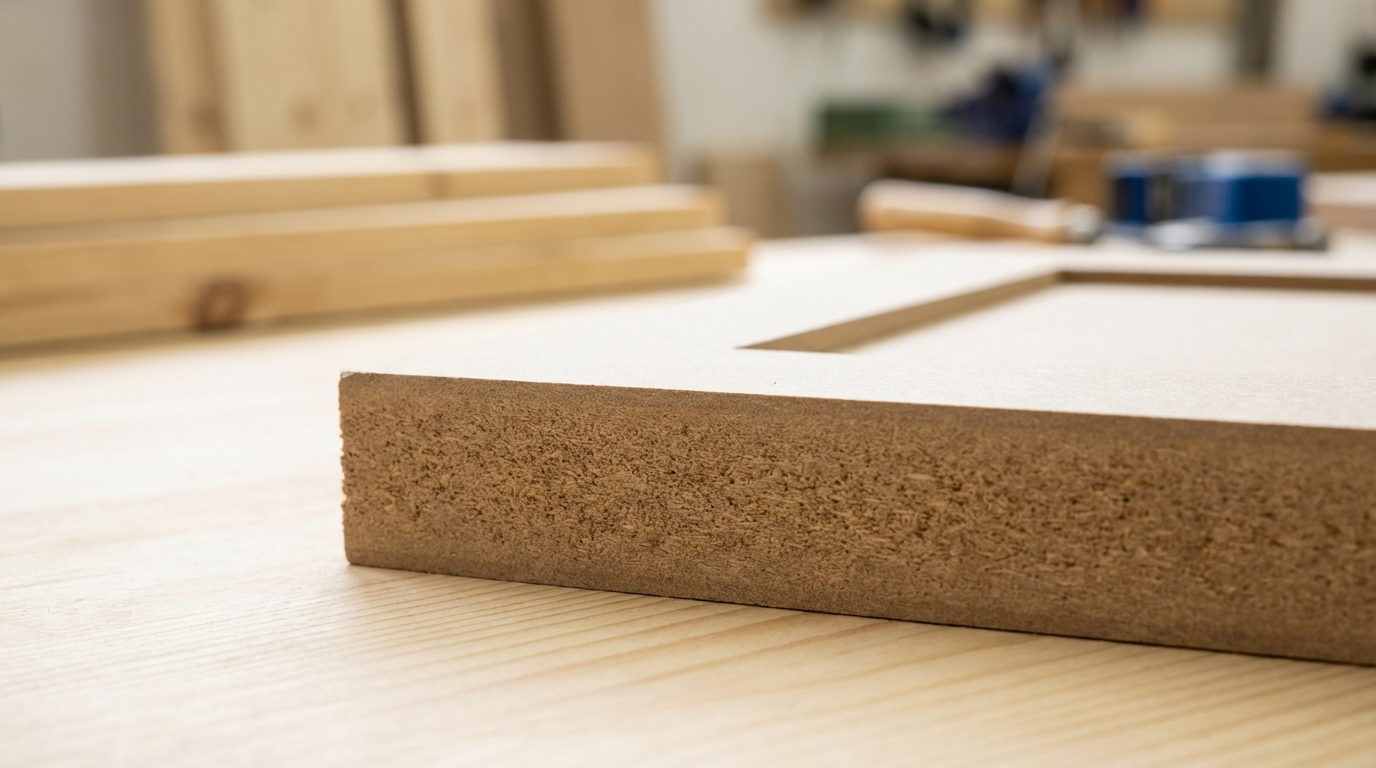
In simple terms, MDF (Medium Density Fibreboard) is an engineered wood panel made by breaking down wood into fine fibres, mixing them with resin, and pressing them into dense, uniform boards. Think of it like making a thick roti from finely ground flour—the result is smooth and consistent throughout. While solid wood furniture might last generations, MDF offers excellent value for 10-15 years of service life, especially when you choose the right grade for your application and maintain it properly. In humid Indian conditions, the durability can vary significantly based on the type of MDF you select.
- Standard MDF lasts 8-12 years in dry, air-conditioned environments
- Moisture-resistant MDF extends to 12-18 years in normal humidity conditions
- Exterior-grade MDF can serve 15-20 years with proper sealing and maintenance
- Edge protection and surface finishing significantly impact longevity
- Indian climate factors like monsoon humidity can reduce lifespan if wrong grade is used
What Exactly is MDF Furniture?
MDF furniture refers to any furniture piece—wardrobes, TV units, shoe racks, or cabinets—constructed using Medium Density Fibreboard as the primary structural material. Unlike solid wood furniture crafted from timber planks or plywood furniture made from layered veneers, MDF furniture uses these engineered panels that offer exceptional smoothness and consistency.
According to research published by the Indian Academy of Wood Science, MDF boards produced in India are evaluated against IS 12406 standards, which classify them into Grade 1 and Grade 2 based on physical and mechanical properties like internal bond strength and moisture resistance (springer.com).
The manufacturing process involves collecting wood chips and residues from sawmills, refining them into fine fibres, mixing them with thermosetting resins under controlled conditions, and pressing them at high temperature and pressure. This creates a board with uniform density throughout—no knots, grain variations, or natural defects that can weaken furniture over time.
For Indian homeowners, MDF furniture matters because it provides the smooth, paintable surfaces needed for modern modular designs at a fraction of solid wood costs. It's particularly popular in urban apartments where ready-made furniture and modular kitchens dominate the market.
What does MDF stand for? Full form explained
MDF stands for Medium Density Fibreboard. The "medium density" refers to the board's density range of 600-800 kg/m³, which falls between low-density fibreboard (LDF) and high-density fibreboard (HDF). The term originated in the 1960s when American manufacturers developed this process as an alternative to particle board, offering better strength and machinability.
In India, you might hear carpenters call it "MDF board" or sometimes confuse it with "particle board"—they're different products, though both fall under the engineered wood category.
Types of MDF Available in India
The Indian market offers several MDF variants, each engineered for specific applications. Understanding these types is crucial because using the wrong grade is the primary reason MDF furniture fails prematurely in Indian homes.
Standard Interior MDF: The basic grade suitable for dry environments. Used extensively in bedroom furniture, office partitions, and living room units in air-conditioned spaces.
Moisture Resistant MDF (MR MDF): Treated with special resins to resist humidity swelling. As noted by VIR MDF, these boards are "bonded under high pressure using thermosetting resins that make it extremely durable and suitable for high-humidity environments" (vir-mdf.com).
High Density MDF (HDHMR/HDF): Denser variants with improved screw-holding capacity and load-bearing strength. Ideal for heavy-duty applications like kitchen cabinets and flooring substrates.
Pre-laminated MDF: Factory-finished with decorative laminates or melamine papers, eliminating the need for on-site finishing. Offers consistent quality and faster installation.
Exterior Grade MDF: The most durable variant, designed to withstand significant moisture exposure. Suitable for bathrooms and areas near water sources.
| Type | Best For | Moisture Resistance | Price Range (per sq ft) |
|---|---|---|---|
| Standard Interior MDF | Bedrooms, living rooms (AC) | Low | ₹35-50 |
| Moisture Resistant MDF | Humid areas, coastal cities | Medium | ₹55-75 |
| HDHMR/HDF | Kitchens, heavy-load furniture | Medium-High | ₹70-95 |
| Pre-laminated MDF | Quick installations, rental homes | Medium | ₹80-120 |
| Exterior Grade MDF | Bathrooms, balcony storage | High | ₹90-130 |
Which type is best for kitchen and bathroom?
For kitchens, HDHMR (High Density High Moisture Resistant) boards are the recommended choice. They offer the moisture resistance needed around sinks while providing enough strength to support the weight of utensils and heavy cookware. The higher density ensures screws remain tight even after repeated door opening and closing.
For bathrooms, exterior-grade MDF or specialized BWR (Boiling Water Resistant) variants work best—but even these require proper edge banding and sealing. Many interior designers now recommend marine plywood over MDF for bathroom vanities due to direct water splash concerns. If you must use MDF in bathrooms, ensure all edges are sealed with PU paint or laminate, and maintain proper ventilation.
Which type works for wardrobes and bedrooms?
Standard interior MDF or moisture-resistant MDF works excellently for bedroom wardrobes in most Indian cities. However, if you live in coastal areas like Mumbai, Chennai, or Kochi, moisture-resistant variants are essential even for bedroom applications. The high humidity during monsoons can cause standard MDF to swell over time.
For the wardrobe's interior shelves that don't face humidity, standard MDF is perfectly adequate. Use moisture-resistant grades for the outer panels and areas near windows or walls that might receive indirect moisture.
Key Properties and Specifications
Understanding MDF specifications helps you make informed decisions. Here's what the numbers mean in practical terms:
| Specification | Standard Values | What It Means for You |
|---|---|---|
| Thickness options | 3mm, 6mm, 9mm, 12mm, 18mm, 25mm | 18mm for carcass, 12mm for backs, 25mm for table tops |
| Standard sheet size | 8×4 feet, 7×4 feet, 6×4 feet | Plan furniture dimensions to minimize wastage |
| Density | 600-800 kg/m³ | Higher density = better screw holding, heavier furniture |
| Internal bond strength | 0.55-0.65 N/mm² (Grade 1) | Indicates resistance to layer separation |
| Swelling in thickness | <12% (24-hour water test) | Lower is better for humid areas |
| Modulus of rupture | 28-32 N/mm² | Bending strength—affects shelf sag over time |
For furniture applications, 18mm thickness is standard for side panels and shelves. Use 25mm for table tops or surfaces bearing significant weight. The 12mm variant works for back panels, while thinner options (3-6mm) are suitable for decorative applications or drawer bottoms.
Where People Get Confused
Several misconceptions about MDF furniture durability persist in the Indian market. Let's address them directly:
Misconception 1: "MDF is basically plywood, just cheaper."
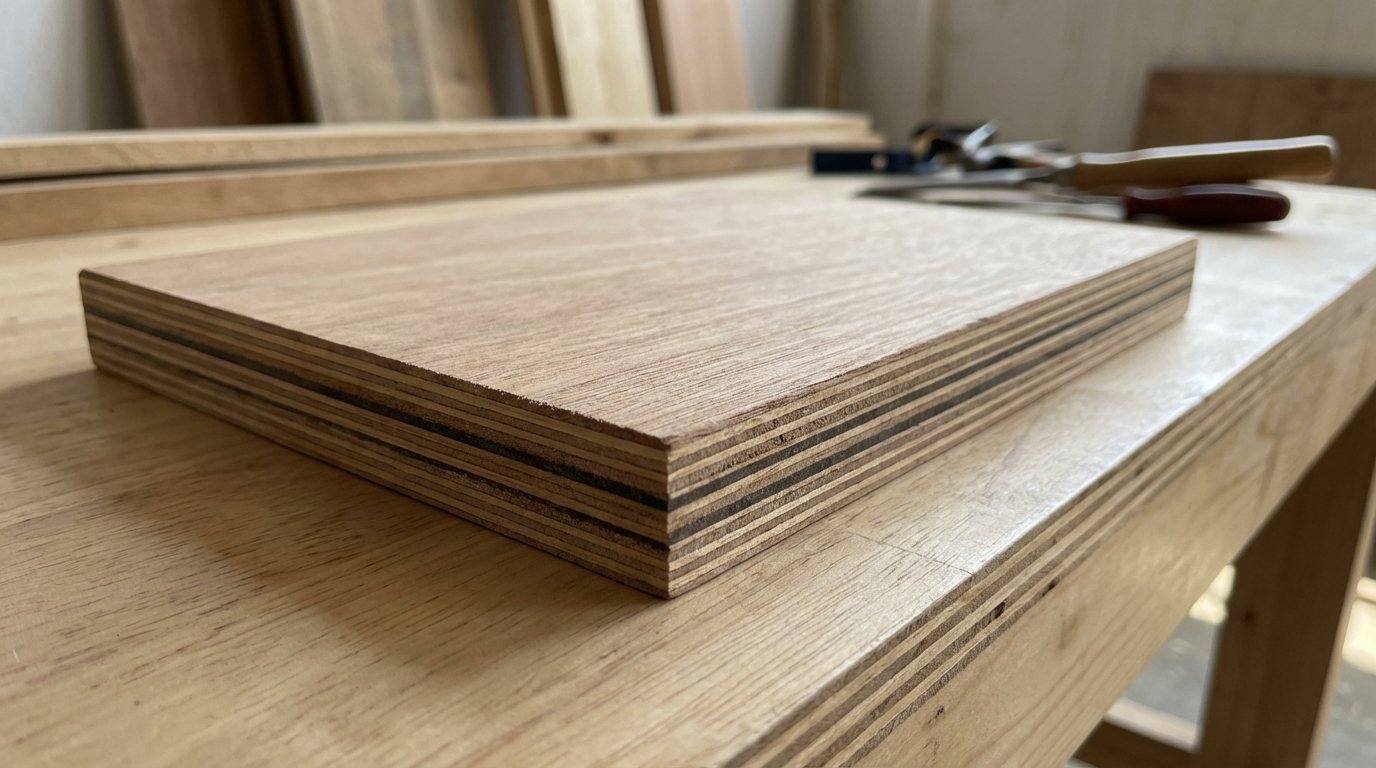
Reality: They're fundamentally different products. Plywood is made from thin wood veneers glued together with alternating grain directions, giving it superior strength and moisture resistance. MDF is reconstituted wood fibres pressed into a uniform board. Each has distinct advantages for different applications.
Misconception 2: "MDF furniture falls apart in 2-3 years."
Reality: This happens when the wrong grade is used or edges are left unsealed. Properly specified MDF furniture with sealed edges and appropriate grade selection lasts 10-15 years routinely.
Misconception 3: "MDF can be used anywhere plywood is used."
Reality: MDF has poor screw-holding capacity at edges and swells when exposed to moisture. As noted by industry experts, "MDF doesn't hold screws very well" compared to plywood's cross-grain structure (dorbypanels.com).
Misconception 4: "Pre-laminated MDF is waterproof."
Reality: The laminate surface resists water, but exposed edges remain vulnerable. Edge banding is essential for longevity.
Misconception 5: "Higher price always means better quality."
Reality: Price varies by brand, thickness, and grade. A well-specified standard MDF might outperform a poorly manufactured "premium" board.
Misconception 6: "MDF releases harmful chemicals forever."
Reality: Modern MDF boards, especially CARB P2 and E1/E0 certified variants, have very low formaldehyde emissions. Initial off-gassing reduces significantly within weeks of installation.
Advantages and Limitations
Advantages of MDF Furniture:
- Smooth, paintable surface: No grain patterns mean perfect finishes for contemporary designs without extensive preparation
- Consistent quality: No knots or weak spots that can appear in natural wood, ensuring uniform strength throughout
- Cost-effective: Typically 30-40% cheaper than equivalent plywood furniture for similar applications
- Excellent for routing and carving: Clean edges without splintering make it ideal for decorative profiles and detailed work
- Environmentally resourceful: Uses wood waste and fast-growing plantation timber, reducing pressure on natural forests
- Dimensional stability in controlled environments: Doesn't warp or twist like solid wood in air-conditioned spaces
- Termite and borer resistant: The manufacturing process and resin content make it inhospitable to wood-boring insects
- Wide variety of finishes available: Pre-laminated options offer hundreds of colours and textures without additional finishing costs
Limitations (with workarounds):
- Poor moisture resistance: Workaround—use moisture-resistant grades and seal all edges with laminate or PU paint
- Weak screw holding at edges: Workaround—use cam locks, dowels, or pre-drill holes with wood glue
- Heavy weight: Workaround—use 12mm instead of 18mm where strength isn't critical, plan installation access accordingly
- Cannot be repaired easily: Workaround—damaged sections often need complete panel replacement rather than patching
- Edge chipping during cutting: Workaround—use sharp blades, cut slowly, and always apply edge banding
- Not suitable for outdoor use: Workaround—exterior-grade variants exist but still require proper finishing and covered locations
Best Applications in Indian Homes
Understanding where MDF excels and where alternatives work better helps maximize your furniture investment:
Living Room: TV units, display shelves, and entertainment centres work excellently in MDF. These typically stay in climate-controlled environments with minimal moisture exposure. The smooth surface is perfect for high-gloss or matte lacquer finishes popular in modern Indian living rooms.
Bedroom: Wardrobes, side tables, and dressing tables are suitable MDF applications. Use moisture-resistant grades if your bedroom lacks air conditioning during monsoons. Avoid MDF for bed frames—the stress points require plywood's superior screw-holding capacity.
Kitchen: HDHMR works for cabinet carcasses and shutters, but requires proper edge sealing. Consider marine plywood for the sink cabinet due to direct water exposure. Pre-laminated MDF shutters offer easy maintenance and cleaning.
Bathroom: Limited application recommended. If used for vanity cabinets, ensure exterior-grade MDF with complete waterproof sealing. Keep furniture away from direct splash zones.
Home Office: Desks, bookshelves, and storage units work perfectly. The smooth surface handles books and electronics without scratching.
Pooja Room: MDF's carving capability makes it excellent for intricate mandap designs and shelving with traditional motifs.
How to Check Quality (Without Lab Tests)
When purchasing MDF furniture or boards, these practical checks help identify quality:
Visual inspection points:
- Surface smoothness: Run your palm across the surface—quality MDF feels uniformly smooth without rough patches or undulations
- Edge examination: Look at the cut edge; the fibres should appear dense and uniform, not loose or layered
- Colour consistency: The board should have uniform colour throughout—variations indicate inconsistent manufacturing
- Smell test: Strong, persistent chemical odour suggests high formaldehyde content; modern boards have minimal smell
- Weight check: Compare similar-sized boards; significantly lighter boards may have lower density and reduced durability
- Flex test: A slight flex when held at one end is normal; excessive bending indicates poor fibre bonding
Questions to ask your dealer:
- What is the density rating of this board?
- Is this board IS 12406 certified? Which grade?
- What's the recommended application for this variant?
- What warranty does the manufacturer provide?
Red flags to avoid:
- Boards stored in open areas exposed to rain or humidity
- Visible swelling or delamination at edges
- Dealers unable to provide manufacturer name or specifications
- Prices significantly below market rates (often indicate B-grade or reject material)
Care and Maintenance Tips
Proper maintenance significantly extends MDF furniture life. Here's your practical guide:
Daily care dos:
- Wipe spills immediately with a dry or slightly damp cloth
- Use coasters under glasses and hot containers
- Maintain consistent humidity through air conditioning or dehumidifiers during monsoons
- Keep furniture away from windows where rain splash can occur
Daily care don'ts:
- Never use wet mops or excessive water for cleaning
- Avoid placing MDF furniture in direct sunlight for extended periods
- Don't drag heavy objects across surfaces
- Never use abrasive cleaners or scrubbing pads
Cleaning methods:
- Regular dusting with soft, dry cloth or microfiber duster
- For stubborn marks, use a cloth lightly dampened with mild soap solution, then immediately dry
- Polish laminated surfaces quarterly with furniture polish for lasting shine
- Vacuum crevices and hinges monthly to prevent dust buildup
What damages MDF (and prevention):
- Standing water: Even 10 minutes of water pooling can start swelling—wipe immediately and ensure no water traps in corners
- High humidity: Use exhaust fans in kitchens, ensure bathroom ventilation, consider dehumidifiers in coastal homes
- Loose hinges: Tighten immediately; loose hardware causes repeated stress on screw holes leading to failure
- Heavy loads on unsupported spans: Add mid-shelf supports for shelves wider than 60cm
Frequently Asked Questions
Is MDF waterproof?
Standard MDF is not waterproof—it absorbs moisture and swells when exposed to water. Moisture-resistant (MR) and exterior-grade variants offer improved resistance but are still not fully waterproof. Even these premium grades require proper edge sealing with laminate, veneer, or PU paint to prevent moisture entry. For areas with direct water contact, consider marine plywood or WPC boards instead. In typical indoor applications with proper finishing, moisture-resistant MDF performs adequately for years.
Is MDF termite proof?
Yes, MDF is generally resistant to termite and borer attacks. The manufacturing process uses high temperature and pressure along with thermosetting resins that make the resulting board inhospitable to wood-boring insects. The fibrous structure lacks the natural nutrients termites seek in solid wood. However, this doesn't extend to adjacent materials—if your home has termite infestation, they may damage other wooden elements while bypassing MDF. Regular pest control for your property remains advisable.
How long does MDF furniture last?
With appropriate grade selection and proper care, MDF furniture typically lasts 10-15 years in Indian conditions. Standard MDF in air-conditioned environments can reach 12 years, while moisture-resistant grades in properly ventilated spaces extend to 15-18 years. Key factors affecting longevity include edge sealing quality, humidity exposure, hardware quality, and maintenance practices. Furniture in coastal cities or non-AC homes typically shows shorter lifespans due to humidity fluctuations.
Can MDF be used in kitchen cabinets?
Yes, but with caveats. HDHMR (High Density High Moisture Resistant) boards work well for kitchen cabinet carcasses and shutters when properly edge-banded. Avoid standard MDF in kitchens due to steam and moisture exposure. For areas directly around sinks, consider marine plywood instead. Pre-laminated HDHMR offers easy cleaning and maintenance. Ensure good kitchen ventilation with exhaust fans to reduce humidity buildup. Many modern modular kitchens successfully use HDHMR with proper precautions.
MDF vs plywood - which is better for furniture?
Neither is universally "better"—each excels in different applications. Plywood offers superior strength, screw-holding capacity, and moisture resistance, making it ideal for structural components, kitchen carcasses, and load-bearing shelves. MDF provides smoother surfaces, easier machining, and better paint finishes, making it preferred for decorative shutters, TV units, and detailed carved work. Cost-wise, MDF is typically 30-40% cheaper. For most wardrobes and living room furniture, quality MDF with proper finishing performs comparably to plywood at lower cost.
What is the cost of MDF boards in India?
MDF prices in India vary by type, thickness, and brand. Standard 18mm interior MDF ranges from ₹35-50 per square foot. Moisture-resistant variants cost ₹55-75 per square foot. HDHMR boards range from ₹70-95 per square foot, while pre-laminated options cost ₹80-120 per square foot depending on laminate quality. Prices vary by region, with metro cities typically 10-15% higher. Always confirm current rates with local dealers as prices fluctuate with raw material costs. Note: prices mentioned are indicative and vary by location and market conditions.
Where to buy good quality MDF?
Purchase MDF from authorized dealers of established manufacturers for quality assurance. Large plywood shops in timber markets typically stock multiple brands. Building material chains in metro cities offer branded options with consistency. Avoid purchasing from roadside vendors or small shops with limited storage facilities—improper storage degrades MDF quality before use. Ask for manufacturer warranty cards and ensure boards carry IS 12406 certification marks. Online B2B platforms now offer delivery, but inspect quality before accepting delivery.
How to identify good quality MDF?
Quality MDF exhibits several identifiable characteristics. Check for uniform density by comparing weight of similar-sized boards—significantly lighter boards indicate poor quality. Examine edges for tight, dense fibre packing rather than loose, visible fibres. Surface should be perfectly smooth without undulations or rough patches. Quality boards have minimal chemical odour. Look for certification marks indicating IS 12406 compliance. Reputable brands provide density and strength specifications—ask dealers for these details. Avoid boards with visible swelling or stored in humid conditions.
Can MDF furniture be repaired if damaged?
MDF repair possibilities depend on damage extent. Surface scratches on laminated MDF can sometimes be addressed with matching touch-up markers. Minor edge chips can be filled with wood filler and repainted. However, swelling damage from moisture exposure is essentially irreversible—the swollen area remains permanently expanded even after drying. Delaminated or severely damaged panels typically require complete replacement rather than repair. For this reason, preventing damage through proper finishing and maintenance is far more practical than attempting repairs.
Is MDF safe for health and environment?
Modern MDF boards with E1, E0, or CARB P2 certification have very low formaldehyde emissions, making them safe for residential use. Initial off-gassing occurs in the first few weeks after installation but reduces rapidly. Ensure adequate ventilation during and immediately after furniture installation. Environmentally, MDF utilizes wood waste and plantation timber, reducing pressure on natural forests. Look for boards from manufacturers using renewable energy and sustainable forestry practices for the most environmentally responsible option.
Disclaimer: This content is provided for general informational purposes based on industry practices and publicly available information. Product specifications, standards, prices, and availability may vary by manufacturer, region, and time. Readers should independently verify details with manufacturers, dealers, or qualified professionals before making purchase or construction decisions.Want Plywood Suggestions?
Share a few details and a Duro BOIL specialist will suggest suitable brands and connect you to responsive dealers.