MDF Material Explained: Properties, Uses, and Benefits
Understand MDF material composition, properties, and applications. Learn why MDF is preferred for furniture, cabinets, and interior design projects.
Quick Answer
MDF (Medium Density Fibreboard) is an engineered wood panel made by compressing wood fibres with resin under heat and pressure.
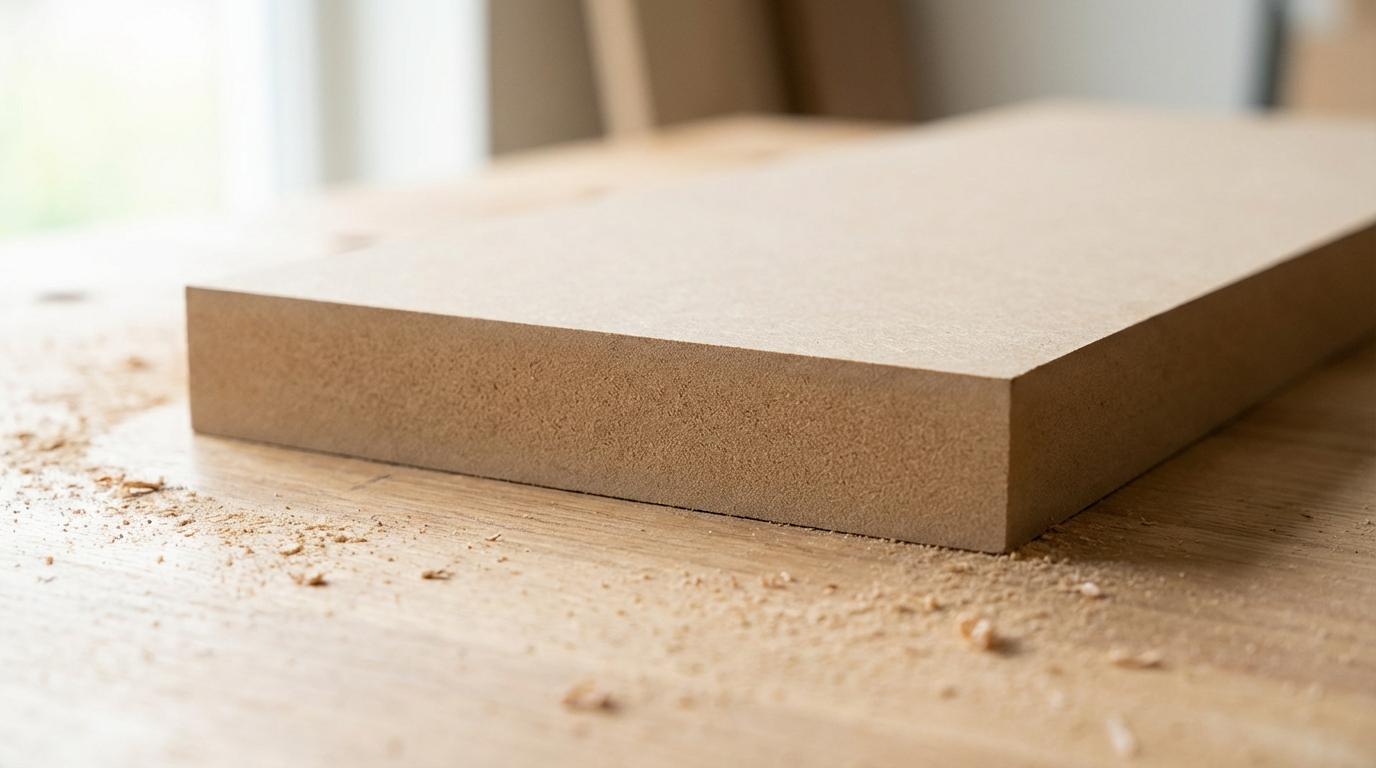
In simple terms, think of MDF as wood that's been broken down into tiny fibres and then reassembled into a smooth, uniform board. Unlike natural wood or plywood that has visible grain patterns and layers, MDF has a consistent texture throughout—like a dense, smooth sheet of compressed sawdust. This uniformity makes it excellent for painting, routing intricate designs, and creating smooth furniture surfaces. It's the go-to material when you want a perfectly flat finish without wood grain showing through.
- Composition: Wood fibres (typically from hardwood or softwood residuals) bonded with synthetic resin
- Density range: 600-800 kg/m³, hence "medium density"
- Surface quality: Extremely smooth on both faces, ideal for painting and lamination
- Common thickness in India: 2.5mm to 25mm, with 18mm being most popular for furniture
- Primary use: Furniture, kitchen shutters, wall panelling, and decorative elements
What Exactly is MDF Material?
MDF is an engineered wood product that has become a staple in Indian furniture manufacturing over the past two decades. It's manufactured by breaking down wood into fine fibres—much finer than the particles used in particle board—then combining these fibres with wax and resin binders before pressing them under high temperature and pressure.
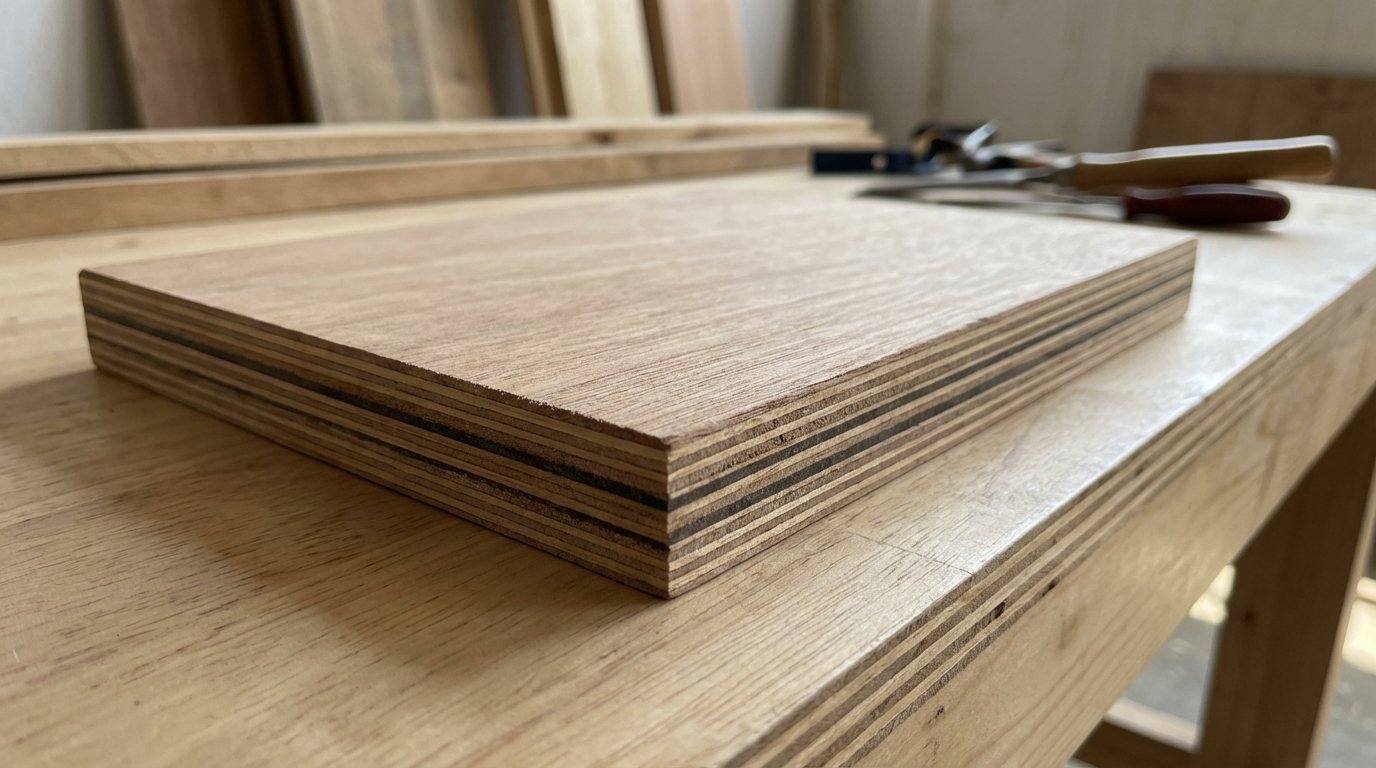
The result is a dense, uniform panel that behaves predictably during cutting, routing, and finishing. Unlike plywood where you're working with layers of real wood veneer, MDF presents a homogeneous cross-section throughout its thickness.
How is MDF manufactured?
The manufacturing process involves several stages. First, wood logs or residuals from sawmills are debarked and chipped. These chips are then refined into fibres using steam and mechanical processes. The fibres are mixed with resin (typically urea-formaldehyde or melamine-urea-formaldehyde) and wax, then spread into a mat.
This mat passes through hot presses where temperatures around 150-200°C and pressures of 150-300 psi transform the loose fibres into a solid board. The entire process takes just minutes, making MDF cost-effective to produce at scale.
What does MDF stand for? Full form explained
MDF stands for Medium Density Fibreboard. The "medium density" refers to its position between low-density fibreboard (LDF) and high-density fibreboard (HDF) on the density spectrum. In India, you'll also encounter the term HDHMR (High Density High Moisture Resistant), which is essentially a premium variant of MDF with enhanced properties.
The terminology originated in the 1960s when American manufacturers needed to categorize different fibreboard products by their density characteristics. The name stuck globally, including in the Indian market.
Types of MDF Available in India
The Indian market offers several MDF variants, each engineered for specific applications and environments. Understanding these types helps you select the right product for your project.
Standard MDF: The most common and economical option, suitable for dry interior applications. It's perfect for bedroom furniture, living room TV units, and decorative wall panels where moisture exposure is minimal.
Moisture Resistant MDF (MR MDF): Treated with moisture-resistant resins during manufacturing, this type handles humidity better than standard MDF. Often identified by a green core, it's suitable for areas with occasional humidity but not direct water contact.
Boiling Water Resistant MDF (BWR MDF): Also called exterior grade MDF, this variant uses phenolic resins for superior moisture resistance. It can handle high humidity environments better than MR grade.
Fire Retardant MDF: Manufactured with fire-retardant chemicals added during the production process. Used in commercial spaces, public buildings, and areas where fire safety codes apply.
HDHMR (High Density High Moisture Resistant): A premium product combining higher density (typically 850+ kg/m³) with enhanced moisture resistance. Popular for kitchen cabinets and bathroom vanities in Indian homes.
Pre-laminated MDF: Factory-finished with decorative laminates or melamine paper, eliminating the need for additional surface finishing on site.
| Type | Best For | Moisture Resistance | Price Range (per sq ft) |
|---|---|---|---|
| Standard MDF | Bedroom furniture, TV units | Poor | ₹25-45 |
| MR MDF | Living areas, wardrobes | Moderate | ₹35-55 |
| BWR MDF | High humidity areas | Good | ₹50-75 |
| HDHMR | Kitchen cabinets, bathroom vanities | Very Good | ₹65-100 |
| Fire Retardant MDF | Commercial spaces, public buildings | Varies | ₹80-120 |
| Pre-laminated MDF | Quick furniture production | Depends on base | ₹55-90 |
Which type is best for kitchen and bathroom?
For kitchen cabinets, HDHMR is the recommended choice in most Indian conditions. The higher density provides better screw-holding capacity (important for heavy utensils), while the moisture resistance handles steam from cooking and occasional water splashes.
For bathroom vanities, HDHMR with proper edge sealing works well, but ensure all exposed edges are completely sealed with edge banding or paint. In coastal cities like Mumbai, Chennai, or Kochi where humidity levels remain consistently high, some designers prefer BWP plywood for bathroom carcasses while using HDHMR only for shutters.
Which type works for wardrobes and bedrooms?
Standard MDF or MR MDF works perfectly for bedroom wardrobes and furniture. Since bedrooms typically maintain dry conditions, the premium spent on moisture-resistant variants isn't necessary. However, if your home lacks air conditioning and you live in a humid region, MR MDF provides a reasonable safety margin against seasonal humidity spikes during monsoons.
Key Properties and Specifications
Understanding MDF specifications helps you verify quality and select appropriate products for your application.
| Specification | Standard Values | What It Means for You |
|---|---|---|
| Density | 600-800 kg/m³ | Higher density = stronger board, better screw holding |
| Available thickness | 2.5mm, 3mm, 6mm, 9mm, 12mm, 18mm, 25mm | 18mm is standard for furniture; 6mm for back panels |
| Standard sheet size | 8×4 feet (2440×1220mm) | Plan furniture dimensions to minimize wastage |
| Internal bond strength | 0.55-0.80 N/mm² | Determines resistance to layer separation |
| Surface soundness | 1.0-1.5 N/mm² | Important for lamination and painting quality |
| Moisture content | 5-10% | Lower is better for dimensional stability |
| Swelling (thickness) | 8-12% (standard), 5-8% (MR grade) | Lower swelling percentage indicates better moisture resistance |
For furniture applications, 18mm thickness is the industry standard for structural components like cabinet sides, tops, and shelves. Thinner 12mm boards work for internal partitions where load-bearing isn't critical. The 6mm variant is primarily used for back panels and drawer bottoms.
Where People Get Confused
MDF carries several misconceptions in the Indian market. Let's address the common ones:
Misconception 1: "MDF is waterproof"
Reality: No MDF variant is truly waterproof. Even HDHMR and BWR grades resist moisture better than standard MDF but will eventually swell and deteriorate with prolonged water exposure. The confusion arises because manufacturers market moisture-resistant variants as "waterproof" for commercial appeal.
Misconception 2: "MDF is stronger than plywood"
Reality: MDF has good compressive strength but poor tensile strength compared to plywood. Plywood's cross-laminated structure gives it superior overall strength, especially in bending. MDF excels in uniformity and machinability, not raw strength.
Misconception 3: "All MDF releases harmful formaldehyde"
Reality: While older MDF products had high formaldehyde emissions, modern manufacturing uses E1 or E0 grade resins with significantly lower emissions. Quality brands in India now offer low-emission products that meet international safety standards.
Misconception 4: "MDF and particle board are the same thing"
Reality: They're fundamentally different. MDF uses fine wood fibres creating a smooth, dense surface. Particle board uses coarse wood particles resulting in a rougher, less dense product. MDF is significantly stronger and more suitable for visible furniture surfaces.
Misconception 5: "Painting MDF is just like painting wood"
Reality: MDF edges absorb paint like a sponge due to their exposed fibre structure. Without proper sealing and priming (especially on edges), you'll never achieve a smooth painted finish. The faces paint beautifully, but edge treatment requires additional preparation.
Advantages and Limitations
Advantages
- Perfectly smooth surface: Both faces are sanded smooth during manufacturing, eliminating grain patterns and knots. Ideal when you want painted finishes without wood texture showing through.
- Consistent throughout: No voids, knots, or internal defects. Every part of the sheet machines identically, making production predictable.
- Excellent for CNC and routing: MDF's uniform density allows intricate CNC designs, detailed router work, and clean edges that would splinter in plywood or solid wood.
- Cost-effective: Typically 20-40% cheaper than equivalent plywood grades for the same thickness, making it budget-friendly for large furniture projects.
- Accepts finishes well: Takes laminates, veneers, and paint evenly across its surface. Pre-laminated options eliminate finishing work entirely.
- Environmentally resourceful: Made from wood residuals and by-products that would otherwise go to waste, reducing demand on fresh timber.
- No termite attraction: The resins used in manufacturing make MDF naturally resistant to termite attacks, unlike natural wood.
- Dimensional accuracy: Factory-made sheets maintain precise thickness and squareness, simplifying furniture construction.
Limitations
- Poor moisture tolerance: MDF absorbs water rapidly and swells irreversibly. Always seal edges and avoid use in wet areas. Workaround: Use HDHMR for semi-wet areas and ensure complete edge banding.
- Heavy weight: At 700+ kg/m³, MDF is heavier than most plywood types. Large furniture pieces require sturdy wall mounting and base support.
- Weak screw holding on edges: Screws driven into MDF edges tend to strip easily. Workaround: Use specialized MDF screws, pre-drill holes, or incorporate wooden battens for critical fastening points.
- Cannot be stained: The uniform colour and lack of grain means staining produces blotchy, unnatural results. If you want wood appearance, opt for veneer application instead.
- Prone to sagging: Unsupported spans will sag over time under load. Shelves longer than 60cm need centre support or thicker boards.
- Dust hazard during cutting: MDF produces fine dust containing resin particles. Always use proper dust extraction and respiratory protection when cutting or routing.
Best Applications in Indian Homes
Living Room: MDF excels for TV units, display cabinets, and wall panelling. The smooth surface accepts high-gloss laminates beautifully, creating modern aesthetics. Avoid using MDF for heavy bookshelves without adequate intermediate supports.
Bedroom: Wardrobe shutters, headboards, and dressing tables are ideal MDF applications. Standard MDF works fine here given the dry environment. For sliding wardrobe systems, ensure proper hardware to handle MDF's weight.
Kitchen: HDHMR is suitable for cabinet carcasses and shutters in most Indian kitchens. However, avoid MDF for areas directly below sinks or near heavy water sources. Consider plywood for the sink cabinet base while using HDHMR elsewhere.
Children's Room: MDF's ability to be routed into creative shapes makes it perfect for themed furniture and decorative elements. The smooth painted finish is also easier to clean than textured surfaces.
Home Office: Desk tops, storage units, and cable management panels work well in MDF. Ensure desk surfaces use 18mm or thicker boards with proper support to prevent sagging under monitor weight.
Climate Considerations: In humid coastal regions (Mumbai, Chennai, Kolkata, Kochi), upgrade to HDHMR even for bedroom furniture. During monsoons, humidity levels can spike significantly, causing standard MDF to absorb moisture and swell at edges. Air-conditioned homes face fewer issues regardless of location.
How to Check Quality (Without Lab Tests)
You don't need laboratory equipment to assess MDF quality. Here's what to check at the dealer:
Visual inspection of the edge: Look at the cross-section of the board. Quality MDF shows uniform colour and density throughout. Visible layers, voids, or colour variations indicate poor manufacturing.
Surface smoothness test: Run your palm across the face. Premium MDF feels uniformly smooth without rough patches, undulations, or sanding marks.
Weight assessment: Lift one corner of the sheet. Good quality 18mm MDF feels noticeably heavy. Surprisingly light boards may have lower density and weaker performance.
Edge firmness: Press your fingernail into the edge. Quality MDF resists indentation. Soft, crumbly edges indicate poor fibre bonding.
Smell test: Strong chemical odour suggests high formaldehyde content or recent manufacture. Quality MDF should have minimal smell, especially boards manufactured weeks earlier.
Thickness consistency: Check multiple points with a measuring tape. Thickness should remain uniform across the sheet with tolerance within ±0.3mm.
Questions to ask your dealer:
- What is the density specification of this MDF?
- Is this E1 or E0 rated for formaldehyde emission?
- What is the moisture content percentage?
- Does the manufacturer provide test certificates?
Red flags to avoid: Unusually cheap pricing, unknown brand names, missing specification labels, rough or damaged edges on new stock, and dealers unwilling to share manufacturer information.
Care and Maintenance Tips
Daily care: Wipe surfaces with a soft, dry or slightly damp cloth. Avoid wet cleaning—if using a damp cloth, dry immediately with a separate dry cloth. Never let water sit on MDF surfaces.
Cleaning spills: Address spills immediately. Blot (don't wipe) liquid spills with absorbent cloth, then dry the area completely. For sticky residues, use a cloth dampened with mild soap solution, followed by immediate drying.
Avoid these:
- Abrasive cleaners or scrubbing pads that damage the surface finish
- Excess water during cleaning
- Placing hot vessels directly on MDF surfaces
- Dragging heavy objects across the surface
- Harsh chemicals including acetone, thinner, or alcohol-based cleaners on laminated MDF
Preventive measures: Use coasters under glasses, placemats under hot dishes, and felt pads under decorative items. In kitchens, ensure exhaust fans function properly to remove steam. Check edges periodically for any laminate peeling and address immediately.
What damages MDF: Water is the primary enemy—it causes irreversible swelling. Impact damage creates visible dents since MDF doesn't flex like plywood. Excessive humidity over extended periods causes gradual deterioration even without direct water contact.
Frequently Asked Questions
Is MDF waterproof?
No, MDF is not waterproof. Standard MDF absorbs water rapidly and swells irreversibly. Even moisture-resistant variants (MR MDF, HDHMR) only resist humidity and occasional splashes—they're not suitable for continuous water exposure. For genuinely wet areas, marine plywood or WPC boards are better alternatives. When using MDF in semi-wet areas like kitchens, ensure all edges are completely sealed with edge banding and the surface is protected with quality laminates or paint.
Is MDF termite proof?
Yes, MDF is naturally resistant to termites. The synthetic resins used during manufacturing make the material unappealing to termites unlike natural wood. However, if MDF furniture is placed adjacent to termite-infested wooden structures, the insects might damage any exposed raw edges. This termite resistance is one reason MDF has gained popularity in Indian homes where termite problems are common, especially in older buildings and ground-floor apartments.
How long does MDF furniture last?
Well-maintained MDF furniture in dry environments typically lasts 7-10 years. Longevity depends heavily on usage conditions and maintenance. Kitchen cabinets made from quality HDHMR can last 8-12 years with proper care. The primary factors affecting lifespan are moisture exposure, edge quality, and hardware condition. Furniture in air-conditioned rooms lasts longer than in naturally ventilated spaces due to controlled humidity levels.
Can MDF be used in kitchen cabinets?
Yes, MDF (specifically HDHMR grade) is widely used for kitchen cabinets in India. It's suitable for cabinet carcasses and shutters when properly finished. However, avoid standard MDF in kitchens—the steam and humidity will cause deterioration. For the sink cabinet base, many designers recommend marine plywood instead of MDF due to higher water splash risk. Ensure proper ventilation and functional exhaust systems to minimize moisture buildup.
MDF vs plywood - which is better?
Neither is universally "better"—they serve different purposes. MDF offers smoother surfaces ideal for painted finishes and CNC work, costs less, and resists termites. Plywood provides superior strength, better moisture handling, and holds screws more securely. For wardrobe shutters and decorative panels, MDF often wins. For structural components, heavy-load shelving, and moisture-prone areas, plywood is typically the better choice. Many furniture projects use both materials strategically.
What is the cost of MDF in India?
MDF prices vary by type and region. Standard MDF typically costs ₹25-45 per square foot for 18mm thickness. Moisture-resistant MDF ranges from ₹35-55 per square foot. HDHMR, preferred for kitchens, costs ₹65-100 per square foot. Pre-laminated options add ₹15-30 per square foot. Prices fluctuate based on brand, location, and market conditions. Metro cities generally have competitive pricing due to more suppliers, while transportation costs increase prices in smaller towns.
Where to buy quality MDF?
Purchase MDF from authorized dealers of established brands rather than small unbranded suppliers. Large plywood and hardware stores in commercial market areas typically stock quality products. Ask for manufacturer certificates and warranties. Online platforms also offer MDF delivery, but inspect quality upon arrival before accepting. For large projects, buying directly from brand distributors often provides better pricing and assured quality compared to retail outlets.
How to identify good quality MDF?
Quality MDF shows uniform density throughout its cross-section without visible layers or colour variations. The surface feels consistently smooth without rough patches. Edges appear solid and resist fingernail indentation. Good boards feel appropriately heavy for their size. Minimal chemical odour indicates proper curing and lower formaldehyde emissions. Reputable manufacturers provide specification labels showing density, formaldehyde class, and moisture resistance rating. Always verify these details before purchase.
Can MDF be repaired if damaged?
Minor surface scratches on laminated MDF can be masked with matching touch-up markers. Small chips can be filled with wood filler, sanded, and repainted. However, water-swollen MDF cannot be repaired—the damage is permanent and the affected section needs replacement. Edge damage from impact can sometimes be filled and refinished, but results vary. For structural damage or delamination, replacement is usually the only practical solution.
Is MDF safe for home use?
Modern MDF manufactured by reputable brands uses E1 or E0 grade resins with low formaldehyde emissions meeting international safety standards. These products are safe for home use once properly finished with laminates or paint, which further seals any potential emissions. Ensure adequate ventilation during cutting and installation. Avoid purchasing unbranded MDF with unknown emission ratings. Quality certifications from recognized testing bodies provide additional assurance of safety compliance.
Disclaimer: This content is provided for general informational purposes based on industry practices and publicly available information. Product specifications, standards, prices, and availability may vary by manufacturer, region, and time. Readers should independently verify details with manufacturers, dealers, or qualified professionals before making purchase or construction decisions.Want Plywood Suggestions?
Share a few details and a Duro BOIL specialist will suggest suitable brands and connect you to responsive dealers.