MDF swelling: root causes and how to prevent it
MDF swelling: root causes and how to prevent it: a practical India-focused guide with checklists, FAQs and quick tables to help you choose the right board for
Quick Decision Summary
MDF swells mainly from moisture absorption due to its porous structure; prevent it by edge-sealing all cuts, choosing HDHMR grades, and storing flat in dry conditions.
If you're in a hurry: In India's humid climate, standard MDF works for dry interiors but fails near kitchens or bathrooms without full sealing. Opt for High Density Moisture Resistant (HDHMR) boards for better resilience—they absorb less water and hold shape longer. Always seal edges with putty or laminate immediately after cutting, avoid floor contact during storage, and use proper ventilation. This cuts swelling risk by over 80% in monsoons. Verify board density by feel (heavier is denser) and test a sample edge with water drops before bulk buy.
- Choose standard MDF if: dry bedrooms, low budget, painted/laminated finishes planned.
- Avoid standard MDF if: kitchens, bathrooms, coastal areas, or poor storage sites.
What MDF Swelling Actually Means
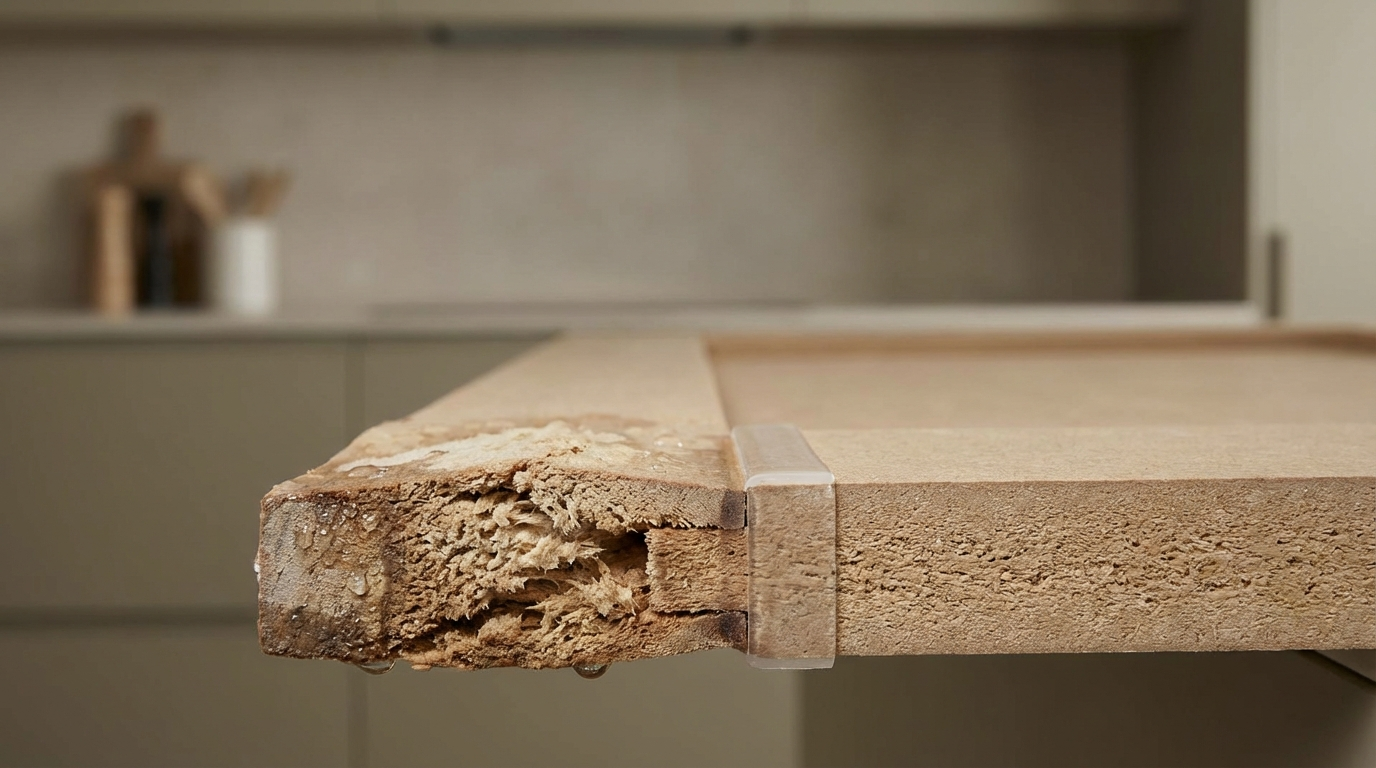
MDF, or Medium Density Fiberboard, is an engineered wood panel made by compressing wood fibers with synthetic resins under heat and pressure. It's smooth, uniform, and affordable for cabinets, wardrobes, and furniture. Swelling happens when it absorbs moisture, causing fibers to expand unevenly—often 10-20% thickness increase in edges first.
Where people get confused:
- Thinking MDF is "waterproof" because it's sealed—raw edges stay porous.
- Believing painting alone protects it—paint cracks under humidity cycles.
- Assuming all MDF grades are equal—density and resin type vary widely.
- Expecting it to behave like plywood—it's more hygroscopic (moisture-sensitive).
- Overlooking that swelling is reversible only if minor; chronic exposure warps it permanently.
Why Does MDF Swell More Than Plywood?
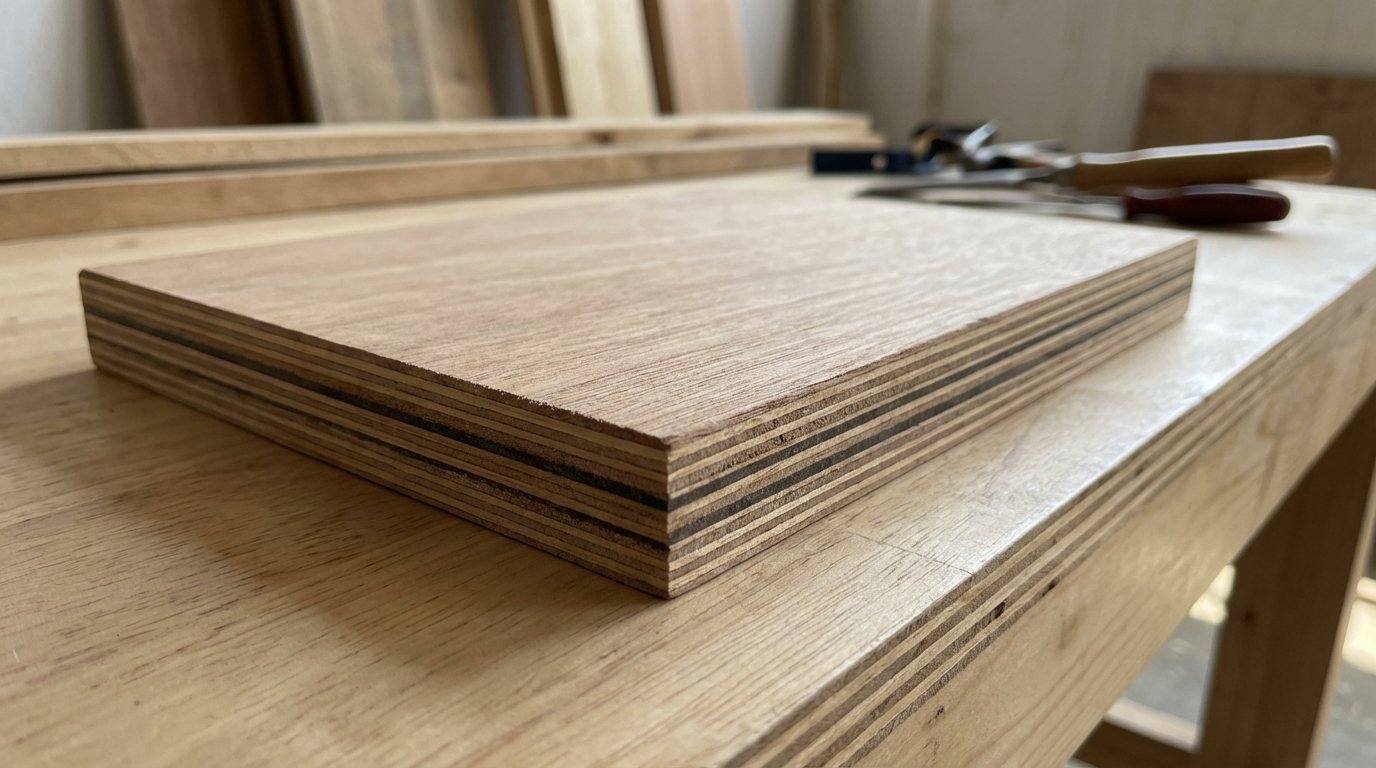
MDF lacks plywood's cross-layered veneers, so its uniform fiber structure traps water easily, leading to faster dimensional changes. In dry conditions, both perform similarly, but under 70%+ humidity, MDF edges balloon while plywood holds better due to glue lines. For India homes, this means MDF suits wardrobes but not kitchen shelves without upgrades. Next step: Test supplier samples by soaking edge scraps overnight—minimal warp signals quality.
Is MDF Swelling Always Permanent?
Not always—mild swelling from brief exposure can shrink with drying, but repeated cycles weaken resins, causing delamination. Coastal or monsoon exposure makes it near-permanent. Check by drying a swollen sample; if it doesn't recover fully, replace. Practical fix: Dry in shaded AC room for 48 hours before deciding.
India-Specific Reality Check
India's 80-95% monsoon humidity, coastal salt air, and godown dust accelerate MDF swelling. Poor site storage—stacked on damp floors or uncovered—leads to 30% failure rates in first year. Contractor delays in sealing exacerbate this; carpenters often cut without immediate edge treatment. In cities like Mumbai or Chennai, opt for sealed transport and on-site acclimation (48 hours in room conditions).
How Does Monsoon Humidity Trigger MDF Swelling?
Monsoons push relative humidity above 85%, where MDF fibers swell irreversibly without barriers. Vapor penetrates unsealed edges, mimicking submersion. Nuance: Interior AC rooms buffer this, but kitchens with steam amplify it. Verify by monitoring site humidity with a cheap meter—above 70%, prioritize HDHMR.
Root Causes of MDF Swelling
Primary cause: Porosity from manufacturing—open fiber structure sucks moisture like a sponge. Secondary: Low-resin formulas in budget grades fail under cycles. Others include improper storage (vertical stacks trap condensation), delayed sealing post-cut, and direct spills without wiping.
How to Prevent MDF Swelling in 5 Steps
- Choose upgraded grades: HDHMR over standard MDF for 2x moisture resistance.
- Acclimate on-site: Stack flat, covered, for 48-72 hours.
- Seal all edges: Putty, primer, or laminate within hours of cutting.
- Finish fully: Laminate or 2-coat PU paint; avoid partial exposure.
- Install smart: Leave 2-3mm gaps for expansion, use vapor barriers in wet zones.
Skipping any doubles risk—e.g., unsealed edges swell first, cracking laminates.
Does Laminating MDF Prevent Swelling Completely?
Laminates protect faces but not edges unless factory-edged. In humid India, add edge banding for full coverage—extends life 3-5 years. Condition: Works for light-use furniture; heavy steam needs HDHMR base. Test: Wet laminate edge; no bubbling after 24 hours means good seal.
Two-Minute Comparison: MDF vs Alternatives
| Board Type | Swelling Risk (Humidity) | Best For | Verify This |
|---|---|---|---|
| Standard MDF | High | Dry wardrobes | Heavy feel, no core gaps |
| HDHMR | Medium | Kitchens, moisture zones | Water drop test on edge |
| Blockboard | Low | Framing, heavy loads | Solid core knock |
| BWP Plywood | Very Low | Bathrooms, outdoors | Glue line uniformity |
Decision Framework: Match Your Conditions
| Site Conditions | Recommended Board + Prevention | Quick Verify |
|---|---|---|
| Coastal/high humidity | HDHMR + full laminate + edge putty | Soak scrap edge 1 hour—no warp |
| Kitchen/steam exposure | BWP plywood or HDHMR + vapor barrier | Density >750kg/m³ feel |
| Dry interiors/budget tight | Standard MDF + 2-coat seal | Smooth faces, uniform thickness |
| Heavy use/scratches | HDHMR + PU finish | Screw hold test |
| Fast project timeline | Pre-laminated HDHMR | Factory edge seal intact |
| Poor storage site | Wrapped marine ply | Acclimation tolerance |
Trade-offs and Limitations
MDF offers smooth machining but weakest screw hold (pre-drill always). HDHMR resists better but costs 20-40% more, varying by thickness and city. Not for load-bearing without framing. In India, logistics add swelling risk if delayed.
Common Buyer Mistakes and How to Avoid Them
- Mistake: Buying cheapest MDF without density check. Why: Low-resin batches swell fast. Fix: Pick heavier boards; ask for MR grade cert visually.
- Mistake: Storing vertically/outdoors. Why: Condensation warps. Fix: Flat stack under cover.
- Mistake: Cutting without immediate sealing. Why: Exposed fibers absorb ambient moisture. Fix: Seal in 2 hours.
- Mistake: Installing in wet zones unsealed. Why: Steam penetrates. Fix: Use backer boards.
- Mistake: Skipping acclimation. Why: Site vs factory humidity mismatch. Fix: 48-hour wait.
- Mistake: Relying on face paint only. Why: Edges ignored. Fix: Full perimeter treatment.
- Mistake: Overloading shelves. Why: Swells under sag. Fix: Frame supports.
- Mistake: Ignoring ventilation. Why: Trapped vapor. Fix: Gaps and fans.
- Mistake: Wet cleaning habits. Why: Spills soak in. Fix: Damp cloth only.
Failure Modes and Fixes
- Symptom: Edge bulging. Cause: Unsealed cuts. Prevent: Putty seal. If happening: Sand + reseal.
- Symptom: Face bubbling. Cause: Laminate trapped moisture. Prevent: Dry boards. If happening: Replace panel.
- Symptom: Screw loosening. Cause: Swell-weakened fibers. Prevent: HDHMR. If happening: Refill holes with filler.
- Symptom: Warping bow. Cause: Uneven humidity. Prevent: Acclimate. If happening: Clamp dry.
- Symptom: Core crumbling. Cause: Chronic wet. Prevent: Barriers. If happening: Full replacement.
- Symptom: Paint cracking. Cause: Expansion mismatch. Prevent: Flexible primer. If happening: Strip repaint.
- Symptom: Delamination. Cause: Resin failure. Prevent: Quality grade. If happening: Discard.
Quality Checks You Can Do Without Lab Tests
Before buying: Weigh samples (denser resists better), drop water on edge (no darkening in 30 min), knock for solid tone (no hollow).
After cutting: Seal test—wipe wet, dry fast; check screw pull-out after 24 hours.
After install: Expansion gaps even, no floor touch, clean with dry microfiber.
Tips for Homeowners
Use damp—not wet—cloths for cleaning; avoid spills by coasters. Place furniture away from AC drips/windows. In monsoons, run dehumidifier near cabinets. Check edges yearly for softening.
Tips for Carpenters
Cut with fine blade to minimize fiber tear; seal edges same day with epoxy putty. Pre-drill screws 1.5x diameter. Handle flat to avoid bends.
Tips for Architects
Spec HDHMR min 18mm for wet zones; detail 3mm gaps + silicone seals. Layer vapor retarders behind kitchen panels.
Tips for Contractors
Insist on wrapped delivery; site QC: humidity meter under 65%. Reject warped stock.
Can MDF Be Made Waterproof for Bathrooms?
Not fully—HDHMR + full tiling/waterproofing buys time, but plywood wins long-term. Nuance: Good for vanities if sealed/vented. Step: Prototype small vanity, expose to shower steam weekly.
FAQs
How Long Does MDF Take to Swell?
Edges show in hours from spills, days from high humidity. Full panels take weeks of exposure. In India monsoons, unsealed wardrobes swell in 1-2 months without AC. Dry fast if minor; prevention trumps cure via sealing.
Will HDHMR Eliminate Swelling Risk?
HDHMR reduces it significantly (50-70% less absorption) but doesn't eliminate—still seal edges. Ideal for humid India; verify by supplier sample tests. Use over standard for kitchens.
How to Fix Already Swollen MDF?
Dry in low-humidity (under 50%) for 72 hours, sand swollen areas, reseal with filler/PU. If warped over 5mm or crumbly, replace to avoid spread. Clamp flat during drying.
Does Thickness Affect MDF Swelling?
Thicker (18-25mm) resists better due to mass, but edges remain vulnerable. All thicknesses need sealing; thin 6-12mm for partitions only in driest spots.
Is MDF Safe for Kitchen Cabinets in India?
HDHMR yes, with lamination/seals; standard no near sinks. Steam cycles demand ventilation + silicone backs. Test local humidity first.
What Finish Best Prevents Swelling?
Pre-laminate + edge banding tops; PU paint secondary if flexible primer used. Avoid oil-based alone—traps moisture. Full coverage essential.
Does Storage Position Matter for MDF?
Yes—flat horizontal prevents warping; vertical invites condensation. Cover stacks in godowns; elevate off floors by 15cm.
Can You Use MDF Outdoors?
No—even sealed, UV/humidity destroys it fast. Switch to marine BWP plywood. Indoor dry only.
How to Spot Low-Quality MDF Prone to Swelling?
Lightweight, rough faces, strong chemical smell, visible fibers. Test: Water beads vs absorbs on edge. Reject if uneven thickness.
Disclaimer: This content is provided for general informational purposes based on industry practices and publicly available information. Product specifications, standards, prices, and availability may vary by manufacturer, region, and time. Readers should independently verify details with manufacturers, dealers, or qualified professionals before making purchase or construction decisions.Want Plywood Suggestions?
Share a few details and a Duro BOIL specialist will suggest suitable brands and connect you to responsive dealers.