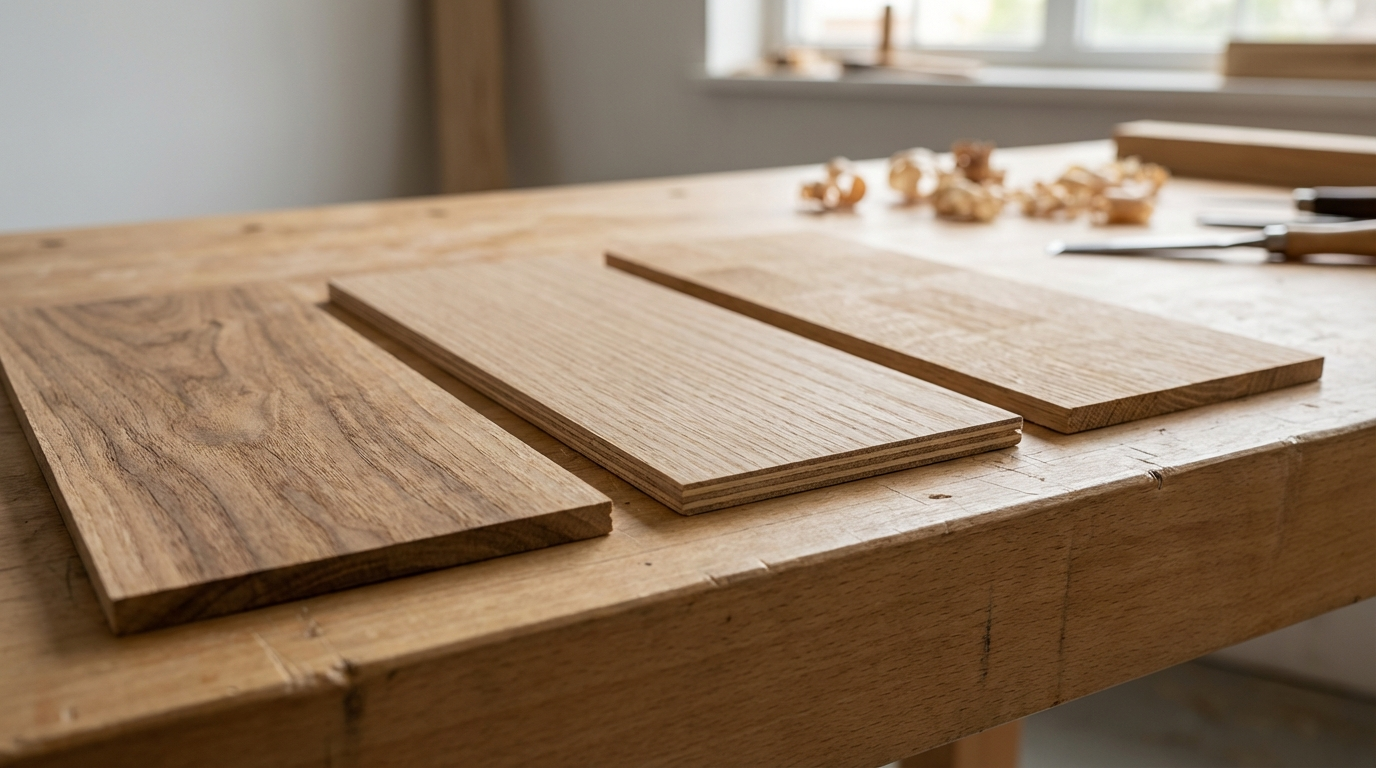
MDF thickness guide: 6mm, 12mm, 18mm and when to use
Learn mdf thickness guide in simple terms with examples, verification tips, and a quick checklist so you choose the right board for Indian conditions.
Quick Decision Summary
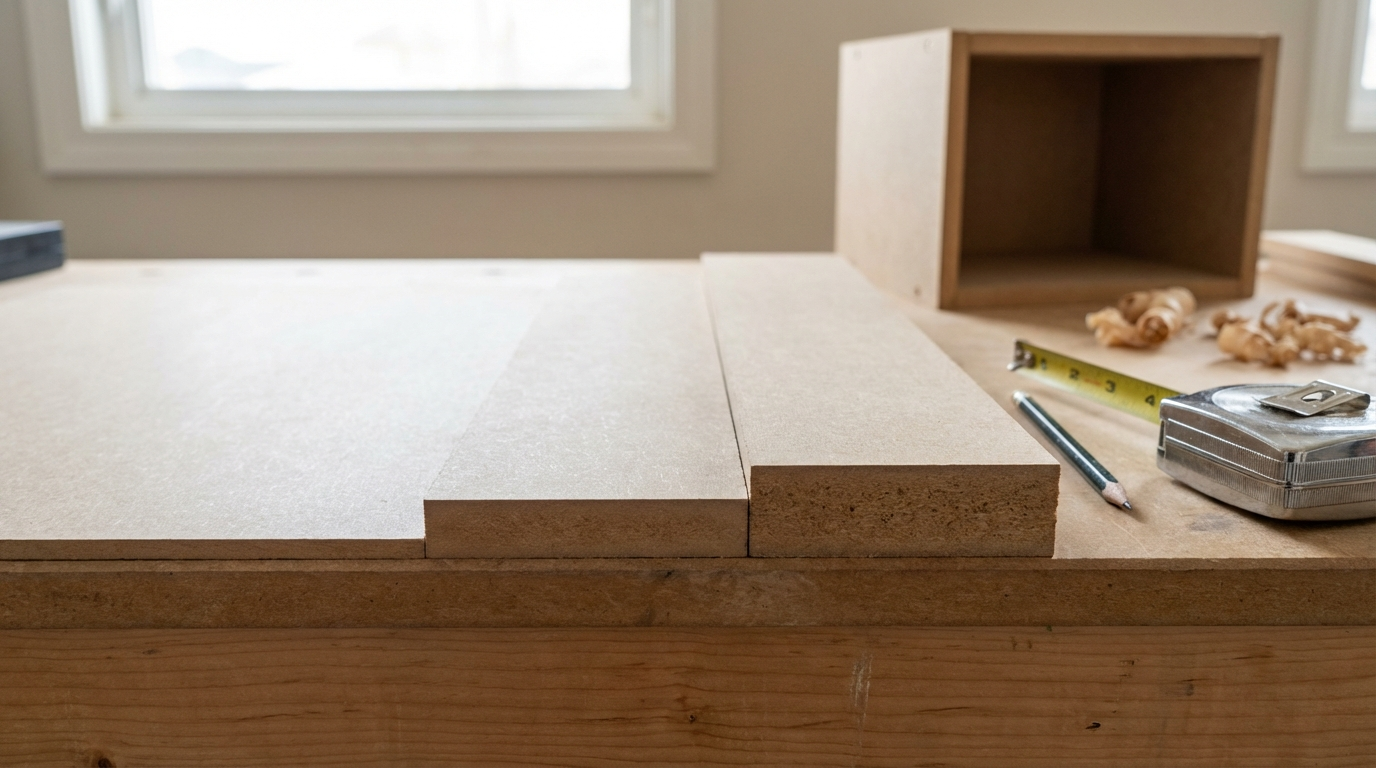
6mm for thin panels and backing; 12mm for most cabinets/shelves; 18mm for heavy loads and spans.
If you're in a hurry: Pick based on load and humidity. 6mm suits lightweight dividers or wardrobe backs where weight savings matter. 12mm handles everyday furniture like kitchen cabinets or beds in moderate humidity if edges are sealed. Go 18mm for tabletops, heavy shelves, or coastal areas to resist sagging and swelling. Always verify flatness and screw hold before buying—thinner boards warp faster in Indian monsoons.
- Choose 6mm if: budget-tight, low-load applications like false ceilings or lightweight shutters.
- Choose 12mm if: standard furniture with spans under 60cm, balanced strength-to-cost.
- Choose 18mm if: heavy use, long spans, or high-humidity zones.
- Avoid 6mm if: exposed to moisture without sealing or needs structural support.
- Avoid 18mm if: weight-sensitive installs or small-scale projects.
What MDF Thickness Actually Means
MDF, or Medium Density Fiberboard, comes in standard thicknesses like 3mm, 6mm, 9mm, 12mm, 16mm, 18mm, and thicker. These refer to the board's uniform depth, made from compressed wood fibers—unlike plywood's layered veneers. 6mm is slim for overlays, 12mm mid-range for furniture carcasses, 18mm robust for demanding builds. Thickness directly impacts strength, weight, and machinability.
Where people get confused:
- Thinking thicker always means "better"—it adds cost and weight without need for light duties.
- Assuming all MDF resists water equally—plain MDF swells in humidity unless sealed or using moisture-resistant grades.
- Mixing with plywood: MDF cuts smoother but lacks plywood's directional strength.
- Overlooking density variations: Heavier MDF (750-850 kg/m³ typically) holds screws better across thicknesses.
- Believing thin MDF can't be laminated—it works well but edges chip easier without care.
India-Specific Reality Check
In India, monsoons and coastal humidity (70-90% RH) make MDF swelling a top risk—thinner boards like 6mm expand up to 10-15% more than 18mm if unsealed. Storage in open godowns leads to warping; insist on covered stacking. Contractor workflows often rush edge sealing, causing delam on cabinets. Hot-dry interiors (AC rooms) fare better, but kitchens/bathrooms demand MR-grade MDF. Coastal Kerala/Tamil Nadu favors thicker boards; Delhi interiors can use thinner with PVC edges.
Price Range and Cost Drivers (India)
Expect Rs 40-80 per sqft for 6mm, Rs 60-110 for 12mm, Rs 90-160 for 18mm—varies by city (Mumbai 20% higher than Tier-2), density, and finish. Plain vs pre-laminated adds 20-40%.
Key drivers:
- Thickness: Each mm jump raises material use 8-12%.
- Grade: MR adds 10-20% over plain.
- Calibration: Machine-pressed flatness costs more.
- Location/logistics: North India cheaper sourcing; South premiums for coastal delivery.
- Batch/quantity: Bulk drops 15-25%.
How to ask for a quote: "12mm MR MDF, calibrated, 8x4 sheets, delivery to [site], sealed edges extra?" Mini example: 10x6ft wardrobe frame (20sqm 12mm) typically Rs 1,500-2,500 material cost, excluding labor/wastage.
Which MDF thickness is best for wardrobes?
12mm strikes the ideal balance for wardrobes—strong enough for shelves spanning 50-70cm without sagging, yet light for hanging. Use 6mm only for backs/partitions; 18mm for base if heavy storage. In humid Mumbai flats, pair 12mm with PVC edging to curb swelling. Check screw hold by testing 4-5 screws per hinge area. Next step: Measure max span/load, then verify supplier samples for flatness over 1m.
Can 6mm MDF be used for shelves?
Yes, for light-duty shelves under 20kg load and short spans (<40cm), like display units. Avoid for books/heavy items—it sags over time. In dry bedrooms, seal edges with melamine; kitchens need 12mm minimum. Test by loading sample with 10kg across 50cm—if deflects >2mm, upgrade. Practical fix: Add battens underneath for support in budget builds.
Two-Minute Comparison That Actually Helps
| Aspect | 6mm | 12mm | 18mm |
|---|---|---|---|
| Best For | Partitions, backs, overlays | Cabinets, shelves, doors | Tabletops, heavy frames |
| Load Capacity (per sqm) | Low (up to 15kg) | Medium (25-40kg) | High (50kg+) |
| Weight (per 8x4 sheet) | Light (15-20kg) | Medium (30-40kg) | Heavy (50-65kg) |
| Humidity Risk | High (seal mandatory) | Medium (edge seal) | Lower (still seal) |
| Cut/Machine Ease | Very easy | Easy | Good, but heavier |
Choose by conditions: Wet zones or heavy use? 18mm. Fast install/light budget? 6-12mm. Always match to span/load.
How to Choose in 5 Steps
- Map load/span: Shelves >60cm or >20kg? Minimum 12mm; heavy 18mm.
- Assess humidity: Coastal/monsoon? MR-grade + thick; dry AC? Thinner ok.
- Budget check: Thinner saves 30-40% but risks rework.
- Test samples: Screw hold, flatness, edge chip.
- Seal plan: PVC/melamine mandatory; skip and face swelling.
Skipping load calc leads to sagging shelves post-monsoon.
Is 12mm MDF enough for kitchen cabinets?
Typically yes for carcasses/shelves up to 60cm span in ventilated kitchens—holds utensils well if edges sealed. Upgrade to 18mm for base/lower cabinets with appliances. In humid Chennai, use MR 12mm; test deflection under 30kg load. Next: Confirm carpenter seals all cuts same day, avoiding moisture ingress during install.
What thickness MDF for table tops?
18mm minimum for stability under dining loads (4-6 people), preventing wobble. Laminate over for scratch resistance. 12mm works for side tables with central support. In hot-humid zones, bevel edges before sealing. Verify by pressing center—if flexes, too thin. Pair with sturdy legs for longevity.
Trade-offs and Limitations
Thinner (6mm): Cheaper/lighter but poor screw hold (needs plugs), high sag risk, chips easily. 12mm: Versatile but swells if unsealed. 18mm: Strong but heavy (install challenges), costlier, harder to cut precisely. All MDF machines well but hates direct water—seal edges/laminate. No natural grain like veneer.
Common Buyer Mistakes and How to Avoid Them
- Mistake 1: Picking thinnest for cost—shelves sag. Instead: Calc load x span.
- Mistake 2: Ignoring humidity—swells in storage. Instead: Buy MR, store vertical.
- Mistake 3: No edge sealing—delams fast. Instead: Seal cuts within hours.
- Mistake 4: Poor screw test—loose hinges. Instead: Pilot holes + test 5 screws.
- Mistake 5: Uneven calibration—gaps in joints. Instead: Check flatness with straightedge.
- Mistake 6: Overlooking weight—carpenter strain. Instead: Factor handling.
- Mistake 7: Bulk without samples—bad batch. Instead: Test 1 sheet first.
- Mistake 8: Skipping lamination on exposed—stains. Instead: Plan finish upfront.
Failure Modes and Fixes
- Sagging shelves: Thin board/long span. Prevent: Match thickness to load. Fix: Add supports.
- Edge swelling: Moisture ingress. Prevent: Seal all cuts. Fix: Sand + reseal.
- Loose screws: Poor density. Prevent: Test hold. Fix: Wood plugs + rescrew.
- Chipping on cuts: Dull blade. Prevent: Carbide blade. Fix: Filler + sand.
- Warping in storage: Flat stack wet. Prevent: Vertical, dry. Fix: Clamp flat overnight.
- Delam on laminate: Poor glue. Prevent: Factory-lam. Fix: Re-laminate edges.
Quality Checks You Can Do Without Lab Tests
Before buying: Weigh sheet (heavier= denser), tap for uniform thud, check edges straight/no gaps. Ask: "MR grade? Calibrated?" Red flag: Visible fibers, warpage.
After cutting: Screw test (holds 10kg pull?), sand edges smooth, no crumble.
After install: Level check, seal gaps, clean spills immediately.
Does MDF thickness affect weight?
Directly—6mm sheets weigh 15-20kg (8x4ft), 12mm 30-40kg, 18mm 50-65kg typically. Lighter aids handling but signals less density sometimes. In multi-floor sites, thinner eases lifts. Verify by hefting samples; heavy=better screw hold usually. For lofts, prioritize light 12mm MR.
Which is stronger: 12mm or 18mm MDF?
18mm wins for bending/sag resistance (2x stiffer), ideal heavy spans. 12mm suffices light-moderate. Test: Load center equally—less deflection wins. Humidity weakens both; seal to equalize. Choose 18mm for tabletops, 12mm cabinets.
Decision Framework Table
| Condition | Recommended Thickness | What to Verify |
|---|---|---|
| Wet zone (kitchen/bath) | 12-18mm MR | Edge seal, screw hold |
| Coastal/high humidity | 18mm MR | Flatness post-storage |
| Heavy use (>30kg load) | 18mm | Deflection test |
| Tight budget/light duty | 6-12mm | Density by weight |
| High scratch risk | 12-18mm laminated | Surface uniformity |
| Fast delivery/small project | 6-12mm stock | Batch availability |
Homeowner Tips: Durability Do’s and Don’ts
Do: Wipe spills instantly, use coasters, ventilate. Don’t: Drag heavy pots, expose to steam. Seal edges yourself if carpenter skips. Reclean with microfiber—harsh chemicals etch laminate. Budget extra 10% for sealing kit.
Carpenter Tips: Working with MDF Thicknesses
Cut with fine blade (80 teeth), pilot holes for screws. 6mm sands fast but chips—clamp. 18mm needs sturdy saw. Edge-band same day; hinge on 12mm+ zones. Handle vertical to avoid bows. Markup fastening zones pre-cut.
Architect/Designer Tips: Spec’ing Right
Detail min thickness per span in drawings (e.g., shelves: 12mm/60cm). Specify MR for zones >70% RH, lamination type. Note edge returns for clean joints. Avoid exposed cuts in elevations. QC: Flatness tolerance <1mm/m.
FAQs
What is the most common MDF thickness?
12mm leads for furniture versatility—balances strength, cost, and ease in wardrobes/cabinets. 18mm follows for structurals, 6mm for fillers. Stock availability favors these; custom thinner costs more. In India, 12mm suits 80% projects if spans/load matched. Always confirm sheet size (8x4ft standard) fits your design.
Is 18mm MDF too thick for cabinets?
Not for lowers/heavy-duty uppers, but overkill for light wardrobes—increases weight/cost 40%. Use where spans exceed 70cm or loads high. Test stability post-assemble; heavy feels solid but strains hinges. Opt 12mm with battens for savings.
How does humidity affect MDF thickness choice?
High RH causes faster swelling in thinner boards—6mm delams quickest. Thicker resists better due to mass. Mandate MR + double-seal in monsoons. Store site-dry; install post-plaster. Coastal picks often upsize to 18mm.
Can I paint 6mm MDF directly?
Yes, sands/primes easily for crafts/panels—thin profile hides well. Prime twice to block moisture. Avoid structural; chips under handling. For India heat, use acrylic over enamel for flex. Test adhesion on scrap first.
What’s the max span for 12mm MDF shelves?
Typically 60-80cm unsupported for 20kg loads—beyond, add cleats. Deflection rule: <1/200 span. Humid areas shorten to 50cm. Verify by loading sample overnight. Pair with lip edges for safety.
Is laminated MDF better than plain by thickness?
Lam adds protection across all—prevents swelling/scratches on 6-18mm. Plain cheaper for painting. Factory-lam uniform; site-lam risks bubbles. Cost 20-30% up, worth for exposed. Check adhesion pull test.
How to store MDF sheets before use?
Vertical racks, covered, 150mm off ground—avoids warp/moisture. Acclimatize site 48hrs pre-cut. Monsoon: Plastic wrap ends. Thinner stacks flatter. Discard bowed sheets.
Which thickness for false ceilings?
6mm ideal—light, cuts easy for patterns. Fix with screws every 30cm. Avoid 18mm (too heavy). Seal joints against dust/humidity. Test hang sample for evenness.
Disclaimer: This content is provided for general informational purposes based on industry practices and publicly available information. Product specifications, standards, prices, and availability may vary by manufacturer, region, and time. Readers should independently verify details with manufacturers, dealers, or qualified professionals before making purchase or construction decisions.Want Plywood Suggestions?
Share a few details and a Duro BOIL specialist will suggest suitable brands and connect you to responsive dealers.