Modern Door Designs by Room: 65 Ideas for Every Space (2026)
Discover 65 modern door designs organized by room. Main entrance, bedroom, bathroom, pooja & kitchen door ideas with materials & price guide.
Quick Answer: Modern Door Design Essentials for Indian Homes
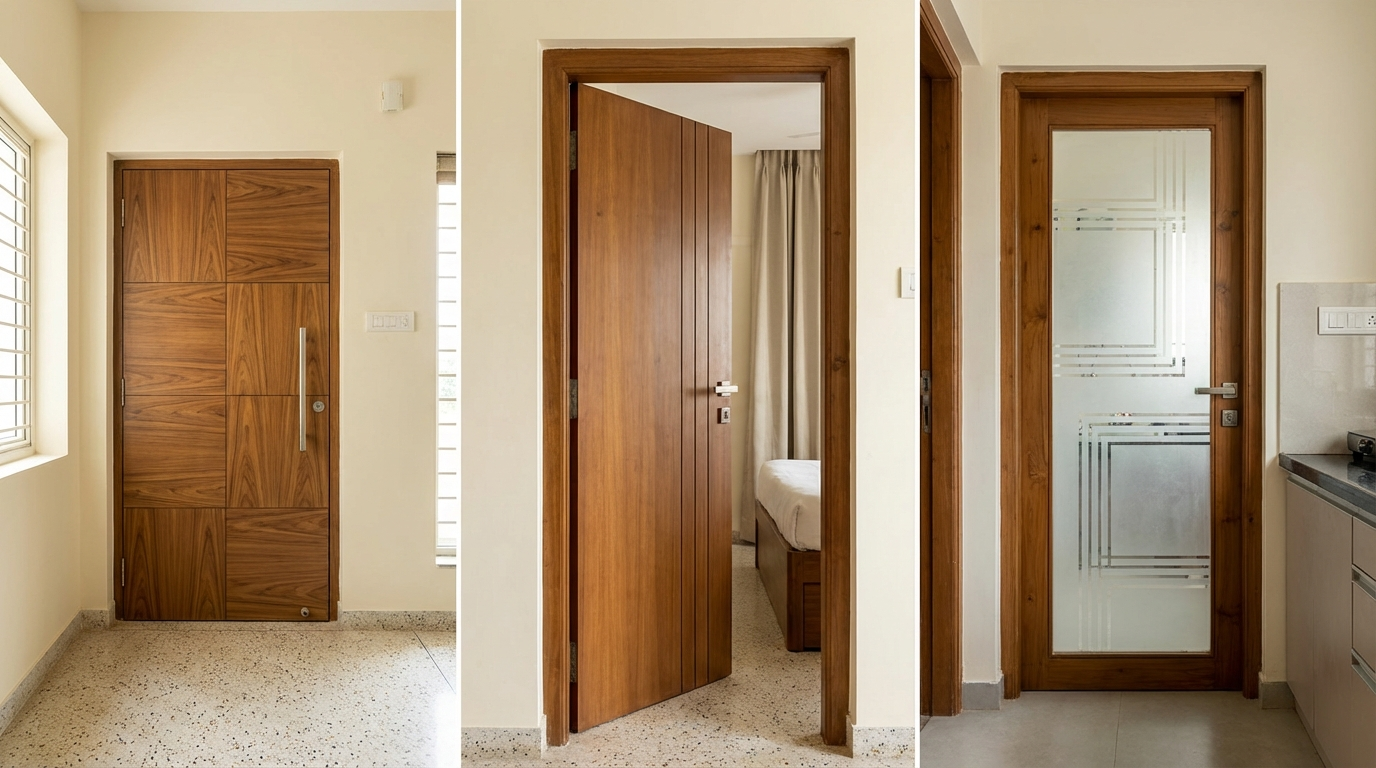
Modern door designs in 2026 prioritize clean lines, sustainable materials, and room-specific functionality, with Indian homeowners increasingly choosing flush doors, membrane doors, and glass-wood hybrids over traditional carved options. The right door selection depends entirely on the room's purpose, moisture exposure, privacy requirements, and your home's architectural style.
In simple terms, modern door design has moved away from heavy ornamentation toward sleek profiles that complement contemporary interiors. Indian homes in 2026 are embracing minimalist aesthetics with doors featuring subtle textures, muted tones, and smart material combinations. Whether you're designing a compact apartment or a spacious villa, the door you choose sets the visual tone for each room while serving essential functional needs like sound insulation, moisture resistance, and security.
- Main entrance doors focus on security, durability, and first impressions—typically 32-36mm thickness
- Bedroom doors prioritize sound insulation and aesthetic continuity with interior design
- Bathroom doors require moisture-resistant materials like WPC, UPVC, or marine plywood core
- Kitchen doors need heat resistance and easy-clean surfaces
- Pooja room doors often blend traditional motifs with modern construction techniques
- Glass doors and sliding options are gaining popularity for space optimization in urban apartments
Understanding Modern Door Design Principles
Modern door design follows three fundamental principles: form follows function, material integrity, and contextual harmony. According to duroboil.com's material experts, the most successful door selections balance aesthetic preferences with practical performance requirements specific to Indian climate conditions.
The shift toward modern designs doesn't mean sacrificing cultural identity. Contemporary Indian homes successfully merge minimalist door profiles with traditional elements—think sleek flush doors with brass hardware, or simple panel doors with subtle jaali patterns. This evolution reflects changing lifestyles where maintenance ease and durability matter as much as visual appeal.
What defines a "modern" door design in 2026?
A modern door design is characterized by clean geometric lines, absence of excessive ornamentation, innovative material combinations, and thoughtful integration with surrounding architecture. In the Indian context, modern also means climate-appropriate material selection and space-efficient configurations like sliding or pivot mechanisms.
Key characteristics include flat or subtly textured surfaces, neutral or bold single-tone colors, concealed or minimal hardware, and proportions that suit contemporary ceiling heights (typically 7-9 feet in urban Indian homes).
Types of Modern Doors Available in India
The Indian market offers diverse door types catering to different budgets, applications, and aesthetic preferences. Understanding each type's strengths helps you make informed decisions for specific rooms in your home.
| Door Type | Best For | Moisture Resistance | Price Range (₹) | Availability |
|---|---|---|---|---|
| Flush Doors | Bedrooms, living areas | Moderate to High (grade dependent) | 2,500-12,000 per door | Widely available |
| Membrane Doors | Bedrooms, wardrobes | Moderate | 4,000-15,000 per door | Urban markets |
| Panel Doors | Main entrance, formal areas | Low to Moderate | 8,000-45,000 per door | Widely available |
| WPC Doors | Bathrooms, kitchens | Excellent | 6,000-18,000 per door | Growing availability |
| UPVC Doors | Bathrooms, balconies | Excellent | 8,000-25,000 per door | Urban markets |
| Glass Doors | Living rooms, offices | Excellent | 12,000-60,000 per door | Metro cities |
| Sliding Doors | Wardrobes, balconies | Varies by material | 15,000-80,000 per unit | Urban markets |
| Pivot Doors | Main entrance, luxury homes | Varies by material | 35,000-2,00,000 per door | Limited, custom orders |
Which door type for wet areas like bathrooms?
For bathrooms and other moisture-prone areas, WPC (Wood Plastic Composite) doors and UPVC doors offer the best performance. These materials resist water absorption, prevent warping during monsoons, and don't support fungal growth. Marine plywood flush doors with proper lamination serve as a cost-effective alternative.
Which door type for bedrooms and living spaces?
Bedrooms benefit from flush doors or membrane doors that offer good sound insulation and smooth surfaces ideal for modern finishes. Panel doors work well in formal living areas where you want to make a design statement. The choice depends on your interior theme—minimalist spaces suit flush doors while transitional designs accommodate subtle panel patterns.
Main Entrance Door Designs: 15 Ideas for 2026
The main entrance door remains the most important design decision, as it creates the first impression of your home and must deliver on security, durability, and aesthetic impact. Modern main door designs in 2026 balance bold statements with practical functionality.
According to current trends, minimalist designs with clean borders, glass-wood hybrid constructions, and dual-tone finishes dominate urban Indian homes. Pivot doors are emerging as a premium choice for larger entrances, while traditional swing doors remain popular with contemporary styling updates.
Design 1: Clean Border Double Doors
Straight borders and smooth shutters create an organized, calm appearance perfect for modern facades. This design uses solid core flush door construction with veneer or laminate finish in neutral tones like matte black, grey, or natural wood shades. Ideal for homes with minimalist exteriors.
Design 2: Glass-Panel Double Doors
Frosted or tinted glass panels set within wooden frames allow natural light while maintaining privacy. This design works exceptionally well for shaded porches or homes where the entrance hall needs better illumination. Choose tempered glass for safety and durability.
Design 3: Solid Panel Double Doors
Defined wooden grains with clean rectangles or layered panels create a strong, composed presence. This design suits homes looking for understated elegance without ornate carvings. Works well with both traditional and contemporary architectural styles.
Design 4: Dual-Tone Wooden Doors
Two coordinated shades add visual depth and modern appeal. Popular combinations include warm brown with stone grey, natural wood with beige, or walnut with cream. This approach adds character without overwhelming the entrance.
Design 5: Pivot Main Door
Large pivot doors rotate on a central axis, creating dramatic entrances for spacious porches. These doors can reach heights of 10-12 feet and widths of 4-5 feet, making bold architectural statements. Best suited for villas and independent houses with generous entrance areas.
Design 6: Arched Top Double Doors
Rounded tops soften the entrance outline, working well in both modern and transitional homes. This design adds classical elegance while maintaining contemporary construction quality. Particularly effective for homes with high ceilings and traditional Indian architectural elements.
Design 7: Vertical Slatted Doors
Slim, repeated vertical slats create rhythm and allow gentle airflow while maintaining security. This design suits coastal homes and properties in humid regions where ventilation matters. Modern interpretations use powder-coated metal or treated wood slats.
Design 8: Horizontal Groove Doors
Subtle horizontal grooves across the door surface add texture without ornate detailing. This design works particularly well with contemporary flat facades and pairs beautifully with concealed hinges and minimal hardware.
Design 9: Metal-Clad Wooden Doors
Brass, copper, or steel cladding on wooden core doors combines traditional Indian aesthetics with modern durability. This design offers enhanced security while creating distinctive visual appeal. Popular for main entrances in premium urban homes.
Design 10: Minimalist Single Door with Sidelight
A sleek single door accompanied by a fixed glass sidelight panel maximizes natural light and creates visual width. This design suits narrower entrance openings common in urban row houses and apartments.
Design 11: Statement Color Doors
Bold colors like navy blue, deep green, or maroon create focal points against neutral exteriors. This trend allows homeowners to express personality while keeping surrounding elements simple. Works best with solid flush door construction.
Design 12: Carved Minimal Doors
Gentle, shallow carvings add subtle depth without overwhelming the entryway. Modern interpretations feature geometric patterns rather than traditional floral motifs, bridging Indian heritage with contemporary design sensibilities.
Design 13: Full Glass with Metal Frame
Floor-to-ceiling glass panels set in slim aluminum or steel frames create transparent, modern entrances. This design suits contemporary villas where interior-exterior connection matters. Requires quality tempered or laminated safety glass.
Design 14: Wooden Door with Brass Inlay
Thin brass strips or geometric inlay patterns add luxury without bulk. This design references traditional Indian craftsmanship while maintaining clean modern profiles. Works well for homes blending contemporary and ethnic interior styles.
Design 15: Concrete-Wood Combination
Doors featuring exposed concrete texture panels with wooden frames represent cutting-edge modern design. This industrial-contemporary approach suits urban homes with exposed material aesthetics.
| Main Entrance Design | Recommended Material | Best Home Style | Price Range (₹) |
|---|---|---|---|
| Clean Border Double | Teak/Engineered wood | Modern minimalist | 45,000-90,000 |
| Glass-Panel Double | Hardwood + tempered glass | Contemporary | 55,000-1,20,000 |
| Pivot Door | Solid wood/Metal clad | Luxury villa | 80,000-2,50,000 |
| Statement Color | Flush door + premium paint | Urban apartment | 25,000-50,000 |
| Brass Inlay | Teak + brass work | Indo-contemporary | 70,000-1,50,000 |
Bedroom Door Designs: 12 Modern Ideas
Bedroom doors must balance aesthetics with practical needs like sound insulation and privacy. Modern bedroom door designs in 2026 favor smooth surfaces, neutral tones, and hardware that complements contemporary interiors. The average Indian bedroom door measures 7 feet by 3 feet, though premium homes often opt for 8-foot heights.
Design 16: Flush Door with Laminate Finish
The most popular choice for modern bedrooms, flush doors with high-pressure laminate (HPL) or pre-laminated finishes offer clean aesthetics and easy maintenance. Available in wood textures, solid colors, and abstract patterns. Budget-friendly yet visually effective.
Design 17: Membrane Door with 3D Pattern
Membrane doors feature PVC film pressed onto MDF core, creating seamless surfaces with subtle 3D patterns. Modern geometric designs replace traditional raised panels, offering contemporary appeal at moderate costs.
Design 18: Painted Solid Core Door
Solid core flush doors with premium paint finishes allow complete color customization. Matte finishes in grey, white, or muted tones dominate modern bedrooms. Offers excellent sound insulation compared to hollow core alternatives.
Design 19: Veneer Door with Horizontal Grain
Natural wood veneer applied with horizontal grain orientation creates distinctly modern aesthetics. This design brings warmth without the heaviness of solid wood doors. Works beautifully in bedrooms with wooden flooring or furniture.
Design 20: Glass Strip Door
Narrow vertical or horizontal glass strips set into otherwise solid doors add visual interest and allow borrowed light. Frosted glass maintains privacy while creating design continuity with modern interiors.
Design 21: Pocket Sliding Door
Doors that slide into wall cavities save floor space in compact bedrooms. This mechanism works well for attached bathrooms or walk-in wardrobes where swing doors would obstruct movement.
Design 22: Barn-Style Sliding Door
Exposed track sliding doors with industrial hardware create rustic-modern statements. This design suits bedrooms with high ceilings and contemporary-industrial interior themes.
Design 23: Double Swing Doors
For master bedrooms with generous entrances, double swing doors create hotel-like luxury. Proportions matter—each shutter should be minimum 18 inches wide for practical use.
Design 24: Flush Door with Concealed Hinges
Invisible hinges create seamless wall-to-door transitions, emphasizing minimalist aesthetics. This detail elevates simple flush doors to premium appearance levels.
Design 25: Leather-Padded Door
Faux leather or fabric padding on door surfaces adds texture and improves sound insulation. This design suits luxury bedrooms and home theaters where acoustic privacy matters.
Design 26: Mirror Panel Door
Full-length mirror panels on bedroom doors serve dual purposes—functional mirrors and space-enhancing reflections. Best suited for compact bedrooms in urban apartments.
Design 27: Two-Tone Split Design
Doors with contrasting colors or materials on upper and lower halves create visual interest. This design breaks monotony while maintaining modern simplicity.
Bathroom Door Designs: 10 Moisture-Resistant Ideas
Bathroom doors face the harshest conditions in any home—constant moisture exposure, temperature fluctuations, and frequent use. Duroboil.com recommends prioritizing material performance over aesthetics for bathroom applications, as even the most beautiful door fails if it warps or develops fungal growth within months.
Modern bathroom doors in Indian homes must withstand monsoon humidity levels exceeding 80% while maintaining appearance standards. Material selection directly determines longevity—the right choice lasts 15-20 years while wrong materials may need replacement within 3-5 years.
Design 28: WPC Flush Door
Wood Plastic Composite doors offer the best moisture resistance for bathroom applications. These doors won't warp, swell, or support termite infestation. Available in various colors and wood-grain finishes to match interior themes.
Design 29: UPVC Panel Door
UPVC doors require zero maintenance and provide excellent moisture resistance. Modern designs mimic wood textures convincingly while offering superior durability. Ideal for bathrooms in coastal cities and high-humidity regions.
Design 30: Marine Plywood Flush Door
BWP (Boiling Water Proof) grade plywood with proper lamination offers a cost-effective moisture-resistant solution. Ensure all edges are sealed properly to prevent water ingress. This option suits moderate humidity conditions.
Design 31: Aluminum Frame Glass Door
Aluminum-framed doors with frosted glass panels suit modern bathrooms, especially in premium homes. The metal frame eliminates warping concerns while glass allows light transmission. Requires quality seals to prevent water leakage.
Design 32: PVC Hollow Door
Budget-friendly PVC doors work well for utility bathrooms and servant quarters. Lightweight construction and complete moisture immunity make these practical choices where aesthetics take secondary priority.
Design 33: Fiberglass Reinforced Door
FRP doors combine durability with design flexibility. These doors can mimic wood grain textures while offering superior moisture and impact resistance. Increasingly available in Indian markets for premium applications.
Design 34: Sliding Bathroom Door
Space-saving sliding doors work excellently for compact bathrooms. Use moisture-resistant materials like WPC or aluminum for the door panel, with stainless steel or powder-coated tracks.
Design 35: Louvered Ventilation Door
Doors with built-in louvers at bottom sections allow natural ventilation, reducing moisture buildup inside bathrooms. Modern versions use WPC or aluminum louvers that resist humidity damage.
Design 36: Frosted Glass Full Door
Tempered frosted glass doors suit attached bathrooms in master bedrooms where light flow matters. These doors create spa-like atmospheres while ensuring privacy. Requires quality seals and proper installation.
Design 37: Two-Tone WPC Door
Combining different colored WPC panels creates visual interest without compromising moisture resistance. This approach brings design versatility to bathroom doors typically limited by material constraints.
| Bathroom Door Material | Moisture Resistance | Maintenance | Lifespan | Price Range (₹) |
|---|---|---|---|---|
| WPC | Excellent | Very Low | 15-20 years | 6,000-15,000 |
| UPVC | Excellent | Very Low | 20+ years | 8,000-20,000 |
| Marine Plywood | Good | Moderate | 10-15 years | 4,000-10,000 |
| Aluminum-Glass | Excellent | Low | 20+ years | 12,000-30,000 |
| PVC | Excellent | Very Low | 10-15 years | 3,000-8,000 |
Kitchen Door Designs: 8 Practical Ideas
Kitchen doors must handle heat, moisture, grease, and frequent cleaning while complementing modular kitchen aesthetics. Modern kitchen designs increasingly feature open or semi-open layouts, but doors remain essential for smoke containment and visual separation in Indian cooking contexts.
Design 38: Frosted Glass Swing Door
Glass doors allow visual connection while containing cooking odors. Frosted variants hide kitchen clutter while permitting light flow. Aluminum frames suit modern modular kitchen aesthetics better than wooden frames.
Design 39: Sliding Glass Door
Sliding mechanisms save space in compact kitchen layouts. Large glass panels create openness while functioning as practical barriers. Choose tempered glass for safety and durability.
Design 40: Bi-Fold Door
Folding doors open completely to merge kitchen with dining areas during entertaining, then close for daily cooking privacy. This flexibility suits modern Indian homes where kitchen visibility preferences vary.
Design 41: Café-Style Half Door
Waist-height doors allow conversation and supervision while containing pets and toddlers. This casual design suits open-plan homes with breakfast counter arrangements.
Design 42: Pocket Door with Soft Close
Doors disappearing into wall cavities maximize kitchen floor space. Soft-close mechanisms prevent slamming—important given frequent kitchen door usage. Requires wall modification during construction.
Design 43: Laminated Flush Door
Pre-laminated flush doors matching modular kitchen cabinet finishes create visual continuity. High-pressure laminates resist heat and moisture better than standard options. Easy cleaning suits kitchen environments.
Design 44: Aluminum Frame with Acrylic Panel
Lightweight acrylic panels in aluminum frames offer glass-like aesthetics with better impact resistance. This combination suits homes with children where glass safety concerns exist.
Design 45: Wire Mesh Panel Door
Decorative wire mesh panels allow ventilation while providing visual screening. Modern geometric mesh patterns update traditional jaali concepts for contemporary kitchens.
Pooja Room Door Designs: 8 Sacred-Modern Ideas
Pooja room doors hold special significance in Indian homes, needing to balance spiritual aesthetics with modern design sensibilities. Contemporary pooja door designs successfully incorporate traditional motifs like bells, Om symbols, and lotus patterns into sleek modern profiles.
Design 46: Carved Wooden Double Door
Traditional temple-style carvings on scaled-down double doors create sanctified entrances. Modern versions feature shallower carving depth for easier maintenance while retaining spiritual aesthetics.
Design 47: Brass-Clad Single Door
Brass sheet cladding on wooden doors references traditional temple entrances. Embossed patterns or etched designs add sacred symbolism. Regular polishing maintains brightness.
Design 48: Jaali Pattern Door
Intricate jaali (lattice) patterns in wood or MDF allow lamp light and incense fragrance to flow while maintaining visual privacy. CNC-cut modern interpretations offer precision impossible in hand-carved versions.
Design 49: Glass Door with Etched Motifs
Frosted glass with etched spiritual symbols like Om, Swastik, or deity silhouettes creates ethereal pooja room entrances. LED backlighting enhances the spiritual atmosphere.
Design 50: Sliding Pooja Door
Space-saving sliding mechanisms work well for pooja rooms in compact apartments. Carved or decorated panels slide to reveal altar spaces only during worship times.
Design 51: Bell-Decorated Door Frame
Small brass bells attached to door frames announce entry to sacred space—a traditional element easily incorporated into modern door designs. The gentle chiming creates meditative transitions.
Design 52: Minimalist Wooden Door with Brass Hardware
Simple flush doors elevated with ornate brass handles, hinges, and protective plates. This approach suits modern homes where elaborate carving feels out of place but spiritual markers remain important.
Design 53: Arch-Top Pooja Door
Rounded or pointed arch tops reference temple architecture while modern construction ensures durability. This design creates visual distinction marking sacred space within contemporary interiors.
Living Room and Internal Door Designs: 12 Ideas
Internal doors connecting living spaces, study rooms, and home offices require different considerations than entrance or bathroom doors. Focus shifts toward aesthetic continuity, light management, and space optimization rather than weather or moisture resistance.
Design 54: Full-Height Glass Partition Door
Floor-to-ceiling glass doors maximize light flow between living areas and balconies or sit-outs. These doors visually expand compact spaces while providing weather protection.
Design 55: French Doors
Classic French door styling with glass panels in wooden frames suits formal living rooms opening to gardens or terraces. Modern versions feature slimmer frames for increased glass area.
Design 56: Pivot Glass Door
Large glass panels on pivot mechanisms create dramatic living room statements. These doors suit homes with minimalist aesthetics and premium budgets.
Design 57: Hidden Door in Wall Paneling
Doors disguised within wall paneling create seamless surfaces—ideal for concealing utility spaces, store rooms, or private areas from main living spaces.
Design 58: Study Room Sliding Door
Sliding doors for home offices allow flexible space management. Close during focused work, open to connect with family areas during breaks. Sound-dampening materials enhance functionality.
Design 59: Children's Room Door with Chalkboard Surface
Flush doors finished with chalkboard paint create interactive surfaces for children's creativity. Practical for play areas and kids' bedrooms, these doors transform necessary elements into features.
Design 60: Home Theater Acoustic Door
Specialized doors with sound insulation materials suit dedicated home theater rooms. Heavy solid core construction with acoustic seals prevents sound leakage to adjacent spaces.
Design 61: Balcony Sliding Door
Large-panel sliding doors connect indoor living areas with outdoor balconies. Aluminum or UPVC frames suit Indian weather conditions better than timber for this application.
Design 62: Dining Room Archway with Doors
Optional doors within archways allow dining areas to function as closed formal spaces when needed. Modern bifold or pocket door solutions maintain arch aesthetics.
Design 63: Terrace Access Door
Weather-resistant doors for terrace access must handle direct sun exposure and rain. Powder-coated aluminum or UPVC frames with double-glazed glass perform best.
Design 64: Wardrobe Sliding Doors
Though technically furniture, wardrobe doors significantly impact bedroom aesthetics. Modern options include mirror panels, back-painted glass, and laminate-finished MDF in coordinated interior tones.
Design 65: Utility Room Door
Simple flush doors with louvers for ventilation suit utility areas housing washing machines and water heaters. Moisture-resistant materials extend lifespan in these humid spaces.
Technical Specifications for Modern Doors
Understanding door specifications ensures you communicate effectively with carpenters, contractors, and suppliers. Standard Indian door sizes follow established norms, though custom dimensions are increasingly common in premium projects.
| Specification | Main Entrance | Internal Doors | Bathroom Doors |
|---|---|---|---|
| Standard Height | 7 ft - 8 ft | 6.5 ft - 7 ft | 6.5 ft - 7 ft |
| Standard Width (Single) | 3 ft - 3.5 ft | 2.5 ft - 3 ft | 2 ft - 2.5 ft |
| Recommended Thickness | 32mm - 40mm | 30mm - 35mm | 25mm - 30mm |
| Frame Thickness | 4 inch - 5 inch | 3 inch - 4 inch | 3 inch - 4 inch |
What each specification means for homeowners
Door thickness directly impacts sound insulation, durability, and perceived quality. Thicker doors feel more substantial and perform better acoustically. Main entrance doors benefit most from increased thickness for security and durability reasons.
Frame dimensions affect both aesthetics and structural integrity. Wider frames accommodate heavier doors and provide better anchoring for security hardware. Modern minimalist aesthetics sometimes favor slimmer frames, but structural adequacy shouldn't be compromised.
Common Misconceptions About Modern Doors Cleared
Several myths persist around modern door materials and designs, leading homeowners toward suboptimal choices. Understanding reality versus perception helps make better decisions.
Myth 1: Flush doors are low quality. Reality: Flush doors range from budget hollow-core options to premium solid-core versions rivaling traditional panel doors in durability and aesthetics. Quality depends on core material and finish, not the flush design itself.
Myth 2: Glass doors lack privacy. Reality: Modern glass treatments including frosting, tinting, smart glass, and decorative films offer complete privacy while maintaining light transmission. Glass doors don't mean transparent doors.
Myth 3: WPC doors look artificial. Reality: Current WPC technology produces remarkably realistic wood grain textures. Many homeowners cannot distinguish quality WPC from natural wood upon visual inspection.
Myth 4: Sliding doors are less secure. Reality: Modern sliding door systems include multi-point locking mechanisms matching or exceeding swing door security. Quality hardware and proper installation ensure security.
Myth 5: Modern designs don't suit Indian homes. Reality: Contemporary door designs successfully integrate with every Indian architectural style from traditional Kerala homes to modern Mumbai apartments. The key lies in appropriate material and detail choices.
Myth 6: Solid wood is always better. Reality: Engineered wood cores often outperform solid wood in dimensional stability, especially in Indian humidity conditions. Solid wood doors may warp seasonally while engineered alternatives remain stable.
Advantages and Limitations of Modern Door Designs
Understanding both benefits and drawbacks helps set realistic expectations and make informed selections. Modern doors offer significant advantages but come with considerations traditional options don't always present.
Advantages
- Lower maintenance requirements: Smooth surfaces clean easily; laminated finishes resist staining
- Better dimensional stability: Engineered materials resist warping and seasonal movement
- Design versatility: Same construction accommodates multiple finish options and styles
- Consistent quality: Factory manufacturing ensures uniform specifications
- Space efficiency: Sliding and pocket options suit compact urban homes
- Cost-effective options: Modern materials offer premium looks at various price points
- Easier customization: Modular construction allows size and finish adjustments
- Better hardware integration: Designed for modern concealed hinges and locks
Limitations
- Limited repair options: Damaged laminates or membranes often require full replacement
- Perceived warmth: Some find engineered surfaces less "warm" than natural wood
- Resale considerations: Traditional carved doors may appeal more in certain markets
- Skill requirements: Some modern mechanisms need specialized installation expertise
- Longevity questions: Newer materials lack the decades-long track record of traditional options
- Finish limitations: Not all modern doors suit refinishing or color changes
Quality Verification for Modern Doors
Verifying door quality before purchase prevents costly mistakes and future problems. These checks work without laboratory equipment, using observation and simple tests available to any buyer.
Visual inspection checklist
- Check surface uniformity—no bubbles, peeling, or uneven textures in laminates
- Examine edges for proper sealing—exposed cores indicate poor finishing
- Look for consistent color and pattern matching in veneered or laminated doors
- Verify frame-to-shutter gap consistency—uneven gaps suggest warping
- Inspect hardware mounting points for solid backing material
Physical tests you can perform
- Knock test: Solid cores produce dull thuds; hollow cores sound noticeably different
- Weight assessment: Heavier doors typically indicate better core quality
- Edge pressure: Quality edges resist moderate pressure without denting
- Door swing: Properly hung doors should stay at any position without drifting
Questions for your dealer
- What is the core material and grade?
- What laminate thickness and brand is used?
- Does the product carry ISI marking where applicable?
- What warranty covers manufacturing defects?
- Is the door suitable for my specific application (wet/dry area)?
Care and Maintenance by Door Type
Proper maintenance extends door lifespan and preserves appearance. Different materials require different care approaches—using wrong methods can damage surfaces.
Laminated flush doors
Wipe with damp cloth and mild soap solution. Avoid abrasive cleaners that scratch laminate surfaces. Address water spillage immediately to prevent edge swelling. Annual hardware lubrication keeps operation smooth.
Veneer doors
Dust regularly with soft cloth. Clean with slightly damp cloth, wiping in grain direction. Apply furniture polish quarterly to maintain luster. Avoid direct sunlight exposure that fades natural wood tones.
WPC and UPVC doors
These require minimal maintenance. Clean with any household cleaner without worry about moisture damage. Inspect hardware and seals annually. These materials don't need polishing or special treatments.
Glass doors
Clean glass with standard glass cleaner and lint-free cloth. Check frame seals annually for wear. Lubricate sliding tracks quarterly for smooth operation. Address any chips or cracks immediately for safety.
Budget Planning and Price Estimation
Door costs vary significantly based on material, size, finish, and hardware choices. Planning budget accurately requires understanding component costs and regional price variations.
| Door Category | Budget Range (₹) | Mid-Range (₹) | Premium Range (₹) |
|---|---|---|---|
| Main entrance (double) | 25,000-45,000 | 45,000-90,000 | 90,000-2,50,000+ |
| Internal door (single) | 3,000-8,000 | 8,000-18,000 | 18,000-40,000 |
| Bathroom door | 3,500-8,000 | 8,000-15,000 | 15,000-30,000 |
| Kitchen door (sliding) | 12,000-25,000 | 25,000-50,000 | 50,000-1,00,000 |
| Pooja room door | 8,000-20,000 | 20,000-50,000 | 50,000-1,50,000 |
Cost factors explained
Material choice represents the largest cost variable. Solid teak costs multiples of engineered alternatives offering similar visual results. WPC and UPVC offer excellent value for moisture-prone applications.
Hardware quality significantly impacts total cost. Premium European hardware may cost ₹5,000-15,000 per door, while standard options cost ₹500-2,000. Hardware affects long-term operation quality.
Finish complexity adds cost progressively. Simple laminate finishes cost less than veneers, which cost less than custom paint finishes requiring multiple coats and skilled application.
Installation charges typically range from ₹1,500-5,000 per door depending on complexity. Sliding systems and pocket doors cost more to install than standard swing doors.
India-Specific Considerations for Door Selection
Indian climate conditions, construction practices, and lifestyle factors require specific attention during door selection. Ignoring these considerations leads to premature failures and maintenance issues.
Monsoon and humidity management
Humidity levels exceeding 80% during monsoons cause swelling in moisture-sensitive materials. Coastal areas face additional salt air corrosion challenges. Choose BWP grade materials for exposed applications and ensure proper sealing on all edges.
Regional climate variations
North India experiences extreme temperature swings causing expansion-contraction stress on doors. South India's consistent high humidity favors moisture-resistant materials year-round. Coastal areas like Mumbai, Chennai, and Kerala demand maximum moisture protection.
Storage and acclimatization
Doors should acclimatize to local conditions for 2-3 days before installation. Store flat on level surfaces away from direct moisture or sunlight. This prevents post-installation warping as materials adjust to local humidity.
Carpenter compatibility
Discuss material choices with your carpenter before purchasing. Some traditional carpenters lack experience with WPC, UPVC, or modern hardware systems. Ensure skills match material requirements or arrange manufacturer installation.
Frequently Asked Questions
What is the best material for modern door designs in India?
The best material depends on application. For main entrances, solid wood or engineered wood with premium finish offers durability and aesthetics. For bathrooms, WPC or UPVC provides superior moisture resistance. Internal doors work well with quality flush door construction using MDF or particle board cores with laminate or veneer finish. There's no single "best" material—each application has optimal choices based on moisture exposure, security needs, and budget constraints.
How much do modern doors cost in India?
Modern door costs range widely from ₹3,000 for basic internal flush doors to ₹2,50,000+ for premium main entrance pivot doors. Budget internal doors cost ₹3,000-8,000, mid-range options ₹8,000-18,000, and premium versions ₹18,000-40,000. Main entrance doors typically cost ₹25,000-90,000 for standard designs, with custom or premium options exceeding ₹1,00,000. Hardware, installation, and finishing add 20-40% to base door costs.
Are flush doors suitable for main entrances?
Quality flush doors with solid cores are increasingly used for main entrances in modern homes. The key factors are core material quality (solid core, not hollow), adequate thickness (minimum 32mm), premium finish quality, and robust hardware. Many contemporary homes successfully use flush doors with premium laminates, veneers, or custom finishes for main entrances, especially when design aesthetic favors minimalism over traditional carved doors.
Which door is best for Indian bathrooms?
WPC (Wood Plastic Composite) doors offer the best performance for Indian bathroom conditions. They resist moisture completely, don't warp during monsoons, and require minimal maintenance. UPVC doors provide similar benefits with longer lifespan. Marine plywood flush doors with proper edge sealing work as budget alternatives in moderate humidity areas. Avoid standard MDF, particle board, or commercial plywood cores in bathroom applications.
How long do modern doors last in Indian conditions?
Lifespan varies by material and maintenance. Quality WPC and UPVC doors last 15-20+ years with minimal maintenance. Engineered wood flush doors typically last 12-18 years with proper care. Solid wood doors can last 25-40+ years but require more maintenance. Premium laminated doors maintain appearance for 10-15 years before potential refinishing needs. Material quality, installation correctness, and maintenance consistency significantly impact actual lifespan.
Can modern doors be customized for size?
Most modern doors accommodate size customization within limits. Flush doors are most flexible, easily made in custom dimensions. Factory-made WPC and UPVC doors have standard size ranges but many manufacturers offer custom sizing. Sliding door systems adapt to various opening widths. Always confirm customization availability and cost impact before finalizing designs. Custom sizes typically cost 15-30% more than standard options.
What door design suits small apartments?
Space-saving designs like sliding doors, pocket doors, and barn-style sliding doors work best for compact apartments. These mechanisms eliminate swing clearance requirements that consume floor space. For internal doors, sliding or pivot options maximize usable area. Mirrored door panels visually expand small bedrooms. Light-colored doors and glass panels create openness in constrained spaces common in urban Indian apartments.
Are glass doors safe for homes with children?
Glass doors are safe when proper materials and installation practices are followed. Tempered safety glass (mandatory for door applications) breaks into small, relatively harmless pieces rather than dangerous shards. Laminated glass offers additional safety as broken pieces stay attached to interlayer film. Acrylic panels provide glass-like aesthetics with better impact resistance. Visible markers or decorative elements prevent accidental collisions.
How do I match door designs with my interior style?
Start by identifying your interior's dominant character—minimalist, contemporary, traditional, or transitional. Minimalist interiors suit flush doors with clean lines and concealed hardware. Contemporary spaces work with glass, metal, and mixed material doors. Traditional themes accommodate panel doors with subtle detailing. Transitional styles blend elements from multiple approaches. Door finish colors should complement or thoughtfully contrast wall colors and flooring.
What maintenance do modern doors require?
Modern doors generally require less maintenance than traditional solid wood options. Regular dusting and occasional cleaning with damp cloth suffices for most laminated and WPC doors. Hardware requires annual lubrication for smooth operation. Veneer doors benefit from quarterly furniture polish application. Check edge seals on bathroom doors annually and address any damage promptly. Avoid harsh chemicals, abrasive cleaners, and excessive water on most door surfaces.
Where can I buy quality modern doors in India?
Quality modern doors are available through authorized brand dealers, multi-brand distributors, local timber markets (plywood mandis), and online platforms. Authorized dealers offer brand warranties but limited variety. Multi-brand distributors provide comparison shopping convenience. Local markets offer competitive pricing but require buyer knowledge to assess quality. Online purchasing suits standard sizes with reliable return policies. Duroboil.com recommends visiting physical dealers for first-time purchases to inspect quality personally before committing to bulk orders.
Note: This is independent editorial content. Duroboil.com is not affiliated with any door manufacturers or brands mentioned in this guide. Prices and specifications are indicative and vary based on location, dealer, and market conditions. Always verify current prices and availability with local suppliers.
Disclaimer: This content is provided for general informational purposes based on industry practices and publicly available information. Product specifications, standards, prices, and availability may vary by manufacturer, region, and time. Readers should independently verify details with manufacturers, dealers, or qualified professionals before making purchase or construction decisions.
Want Plywood Suggestions?
Share a few details and a Duro BOIL specialist will suggest suitable brands and connect you to responsive dealers.