Plywood Furniture Pros & Cons: Complete Analysis for Home Use
Detailed analysis of plywood furniture advantages & disadvantages. Learn durability, cost, maintenance & comparison with solid wood & MDF.
Quick Answer
Plywood furniture is an engineered wood product made from thin layers of wood veneers bonded together, offering an excellent balance of strength, affordability, and versatility for Indian homes. Plywood has become a cornerstone in Indian furniture making, gracing homes from bustling urban apartments to serene rural villas. It balances affordability, versatility, and durability, making it a go-to material for everything from sleek modular kitchens to sturdy wardrobes.
In simple terms, plywood furniture gives you approximately 80% of solid wood's performance at 40-50% of the cost, making it the practical choice for most Indian households. The lifespan of plywood depends on its type, usage, and care. With proper installation, protection from moisture, and regular maintenance, it can remain strong and functional for 15–25 years or more.
Here's what you need to know at a glance:
- Durability: High-quality plywood can last anywhere from 15 to over 50 years, depending on the material, bonding method, and environmental conditions.
- Cost: The plywood rate per sq ft in India can start as low as ₹40 and go beyond ₹150 depending on quality. For most household furniture and interior work, plywood in the range of ₹60–₹100 per sq ft is commonly used.
- Moisture resistance: BWR and BWP grade plywood resists humidity—perfect for Indian kitchens, bathrooms, and balconies.
- Finish flexibility: Laminates, veneers, PU, acrylic, or even upholstery can be applied on plywood surfaces seamlessly.
- Best for: Modular kitchens, wardrobes, beds, TV units, and all standard home furniture
What Exactly is Plywood Furniture?
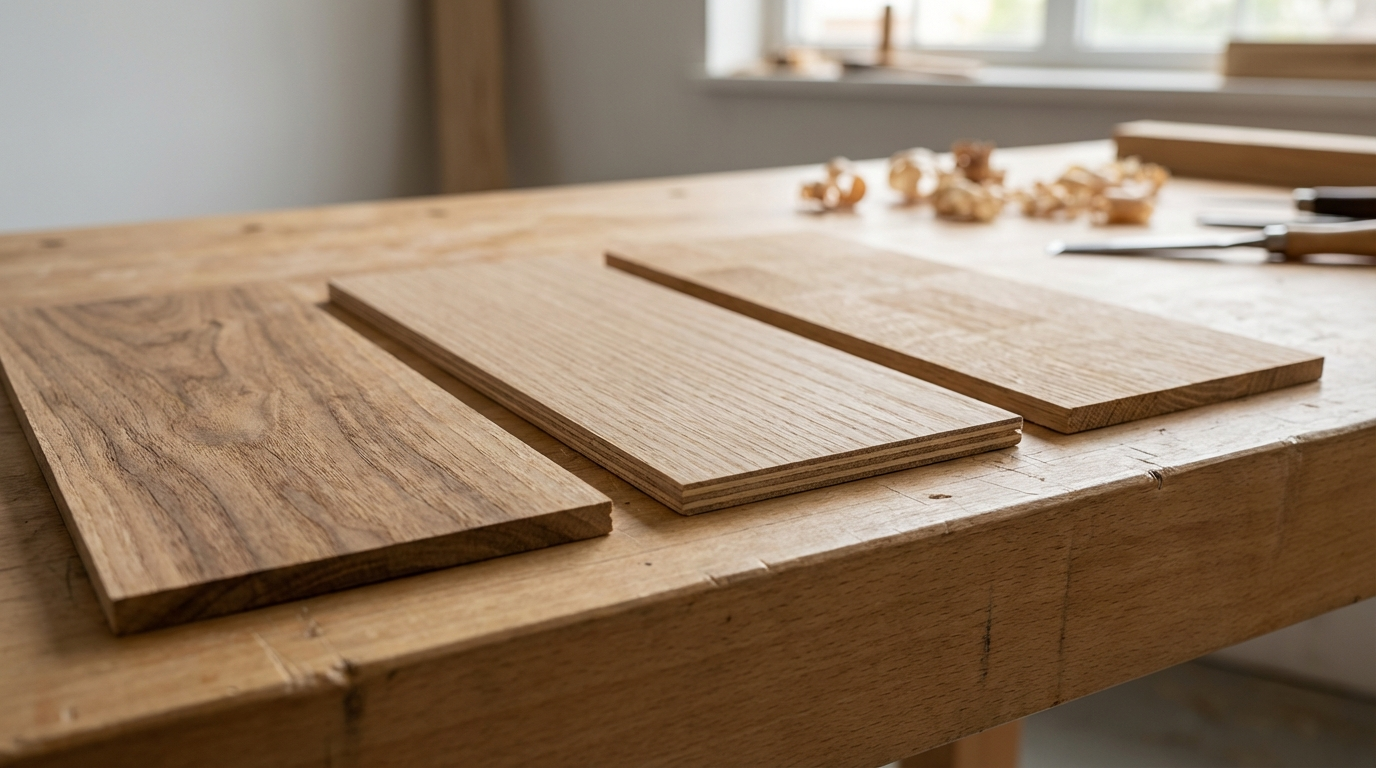
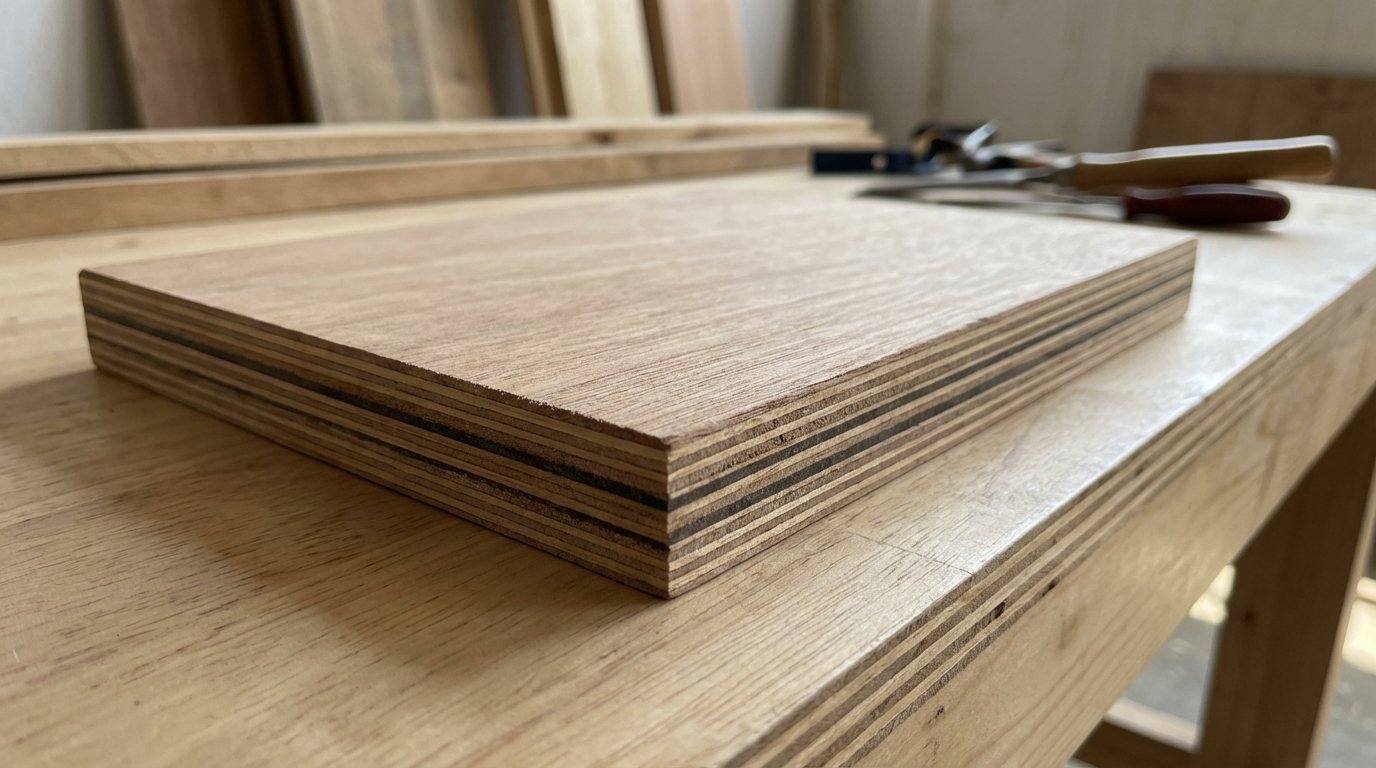
Plywood is made by stacking thin sheets of wood veneer, with each layer's grain oriented perpendicular to the one below it. This cross-grain construction enhances strength and stability, reducing the risk of warping or splitting. This fundamental construction principle is what makes plywood a preferred material for furniture over alternatives like particle board or even solid wood in many applications.
Plywood has been a staple in Indian furniture for decades due to its strength, versatility, and affordability. Made by bonding thin layers of wood veneers with adhesive, plywood offers a stable, durable surface that resists warping, cracking, and shrinking, even in India's varying climate conditions. Its ability to hold screws, nails, and laminates makes it ideal for a wide range of furniture.
When carpenters and interior designers in India refer to "ply furniture," they're discussing furniture where the structural components—side panels, shelves, back panels, and sometimes tops—are made from plywood sheets rather than solid timber planks.
Why does plywood matter for Indian homes?
India's diverse climate poses unique challenges for furniture materials. From the extreme humidity of coastal cities like Mumbai and Chennai to the dry heat of Rajasthan, furniture needs to withstand significant environmental stress. Plywood's layered construction makes it inherently more stable than solid wood across these varying conditions.
According to duroboil.com's material experts, plywood furniture represents the sweet spot between premium solid wood and budget-friendly particle board—offering durability that justifies its cost while remaining accessible to middle-class Indian households.
Types of Plywood Available for Furniture in India
Plywood comes in various grades, thicknesses, and types, such as commercial, marine, or BWP (Boiling Water Proof), tailored to different uses in Indian furniture. Understanding these grades is essential for making the right purchase decision.
| Plywood Type | Best For | Moisture Resistance | Price Range (per sq ft) | ISI Standard |
|---|---|---|---|---|
| MR Grade (Commercial) | Bedrooms, living rooms | Moderate | ₹40–₹70 | IS 303 |
| BWR Grade | Kitchens, humid areas | Good | ₹60–₹100 | IS 303 |
| BWP/Marine Grade | Bathrooms, outdoors | Excellent | ₹90–₹170 | IS 710 |
| Hardwood Plywood | Heavy-duty furniture | Good | ₹80–₹120 | IS 303/710 |
| Flexible Plywood | Curved designs | Moderate | ₹70–₹90 | Varies |
Which type should you use for kitchens and bathrooms?
BWR plywood is a step up from MR plywood, offering better water resistance. It is made using phenolic resins, making it ideal for furniture that might be exposed to moisture, such as kitchen cabinets and bathroom vanities. BWR plywood is considered one of the best plywood for furniture in India where water resistance is crucial.
BWP plywood is right behind marine ply when it comes to strength and resistance. It's made to withstand boiling water, making it a go-to for kitchen and bathroom furniture. It handles heat and humidity well, making it perfect for Indian-style cooking setups where steam and spills are pretty common.
Which type works best for wardrobes and bedrooms?
MR plywood, also known as commercial plywood, is one of the most commonly used types for indoor furniture. It is designed to resist moisture to some extent, making it suitable for use in areas with moderate humidity. This plywood is ideal for making beds, wardrobes, and other furniture pieces that don't require exposure to water or high humidity.
Duroboil.com recommends using 18mm MR grade plywood for wardrobe carcasses and 12mm for back panels to balance cost and durability effectively.
Technical Specifications
Understanding technical specifications helps you make informed decisions when purchasing plywood for furniture. Here are the standard specifications available in the Indian market:
| Specification | Standard Values | What It Means |
|---|---|---|
| Standard Sheet Size | 8×4 feet (2440×1220 mm) | Most common size, fits standard furniture designs |
| Other Sizes | 7×4 ft, 8×3 ft, 6×4 ft | Available for specific requirements |
| Thickness Range | 4mm to 25mm | Varies based on application |
| Common Thicknesses | 6mm, 12mm, 18mm, 19mm | Most used for furniture |
| Density (Hardwood) | 550–750 kg/m³ | Higher density = more strength |
| Number of Plies | 3, 5, 7, 9, or more | More plies = better stability |
Plywood is available in varied grades (A, B, C and D) and prices, and the standard dimensions of the plywood sheet is 8 x 4 feet. Other popular sizes are: 8×3 feet, 7×3 feet, and 7×4 feet and the range of thickness of plywood is 4 to 32 mm.
Thickness recommendations by application:
- 4-6mm: Back panels, drawer bottoms
- 12mm: Shelves, partitions, light-duty furniture
- 18-19mm: 18mm plywood stands out for its strength and durability. It is ideal for cabinetry, furniture, and structural work.
- 25mm: Table tops, heavy-duty commercial furniture
Advantages of Plywood Furniture
Plywood's layered construction makes it dimensionally stable, strong, and less prone to warping—ideal for load-bearing furniture. Let's explore the specific advantages that make plywood the preferred choice for Indian homes.
1. Excellent strength-to-weight ratio
Thicker plywoods are more durable than some solid woods and, depending on the application, can be the better option for furniture building, especially for dresser drawers or heavy-duty furniture frames. The cross-grain construction distributes stress evenly, preventing the furniture from developing weak points.
2. Superior dimensional stability
This cross-grain structure is what makes plywood an ideal choice for furniture in India. Plywood is more stable than solid wood and resists cracking, splitting, and shrinking, making it perfect for the Indian climate, where humidity levels can vary.
3. Cost-effectiveness
Cost is a major reason why plywood is popular in Indian furniture. Solid hardwoods like teak or rosewood can be prohibitively expensive, especially for large pieces like wardrobes or dining tables. Plywood offers a budget-friendly alternative without sacrificing strength.
4. Design versatility
Plywood's ability to accept various finishes, like laminates, veneers, or paints, is another reason why plywood is popular in Indian furniture. It can mimic the look of premium woods at a fraction of the cost. Homeowners can achieve a high-end look, like rosewood or oak, without the hefty price tag.
5. Availability in large sizes
Compared to solid wood panels, plywood 4×8 ft sheets are available in greater sizes, making it simpler to construct big, continuous items like tabletops or cabinet sides.
6. Workability for carpenters
Edge retention and machinability make plywood ideal for CNC work, edge banding, and hardware fittings. Indian carpenters find plywood easier to work with than solid wood, allowing for faster project completion.
7. Termite treatment options
To keep termites, borers, and other wood-eating creatures away, the best plywood is treated with particular chemicals at the factory. If you want your furniture to last for decades, you need to do this.
8. Environmental considerations
As plywood comes from a renewable resource, it is more environmentally friendly than solid wood. Eco-friendly plywood is made with wood sourced from sustainable forests. Consequently, it is one of the most eco-friendly decorative products on the market.
Limitations of Plywood Furniture
While plywood offers numerous advantages, understanding its limitations helps you make informed decisions and take appropriate precautions.
1. Visible edges require finishing
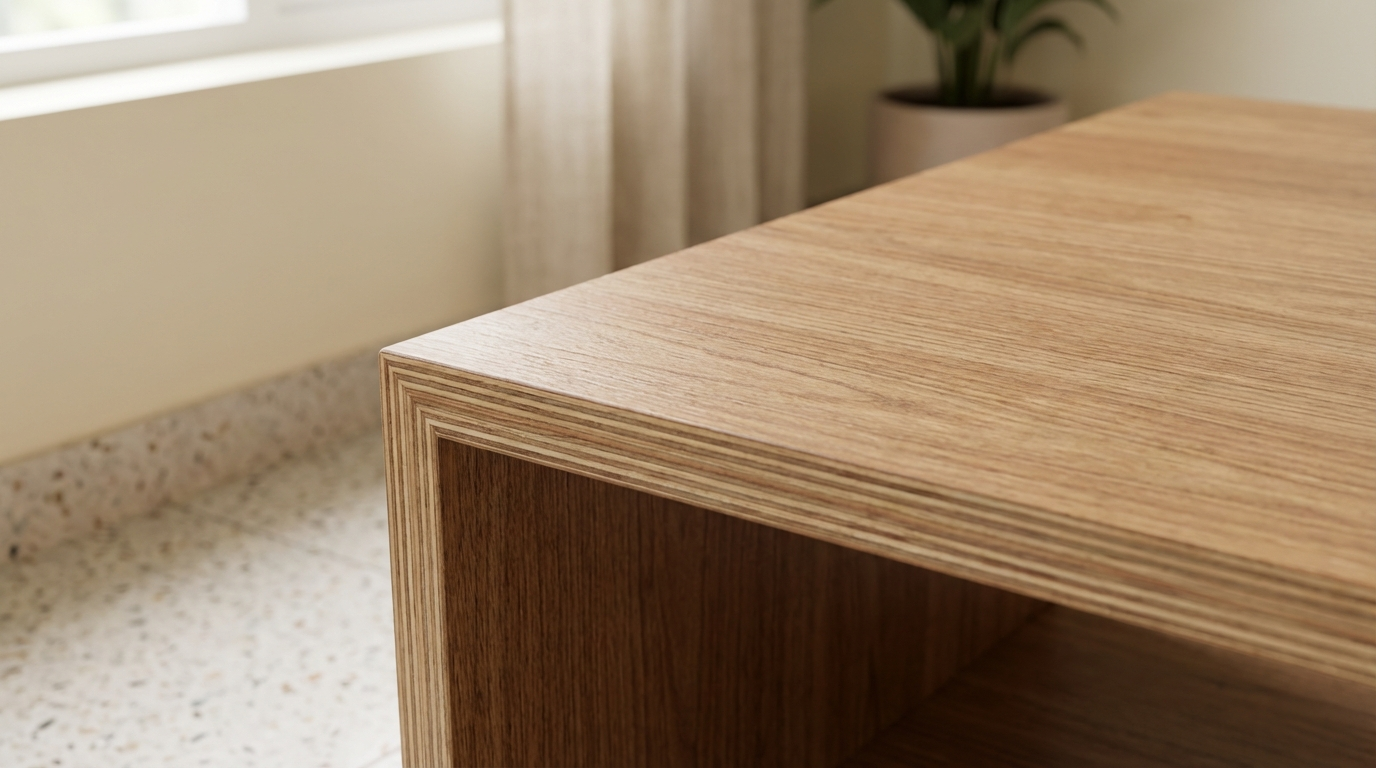
Plywood is comparatively more expensive than MDF. The multiple layers of veneer show at the edges, so the sides need to be finished with veneer or laminate. This adds to the overall cost and requires skilled workmanship.
2. Cannot replicate authentic solid wood aesthetics
Plywood, even with high-quality veneers, can't fully replicate the natural beauty of solid wood. Plywood's layered construction may show edges or seams, especially in low-grade versions, lacking the rich grain of solid teak or rosewood.
3. Limited refinishing options
Since plywood is made of veneer layers, it cannot be sanded and polished more than once or twice unlike solid wood which can be done again and again. This limits long-term restoration possibilities.
4. Susceptibility to moisture (in lower grades)
Plywood is susceptible to moisture, which can lead to warping or delamination. Position furniture away from damp areas or use dehumidifiers in spaces with high humidity levels.
5. Quality inconsistency in the market
The Indian plywood market has significant variation in quality. Many local manufacturers produce substandard plywood that doesn't meet ISI specifications. As duroboil.com's research indicates, always verify ISI markings and purchase from authorized dealers to avoid quality issues.
6. Weight considerations
High-grade hardwood plywood can be quite heavy, making it challenging to move furniture and potentially requiring stronger wall-mounting hardware for wall-hung cabinets.
Plywood vs Solid Wood: Detailed Comparison
Choosing between plywood and solid wood depends on your specific needs, budget, and aesthetic goals. Plywood offers cost-effectiveness, moisture resistance, and versatility, making it suitable for a variety of uses. Solid wood, while pricier, provides unmatched beauty, durability, and the potential to last a lifetime.
| Factor | Plywood | Solid Wood | Winner |
|---|---|---|---|
| Initial Cost | ₹40–₹170/sq ft | ₹200–₹800/sq ft | Plywood |
| Moisture Resistance | Good to Excellent (BWR/BWP) | Variable (species dependent) | Plywood |
| Dimensional Stability | Excellent | Moderate (expands/contracts) | Plywood |
| Aesthetic Appeal | Good (with veneer) | Excellent (natural grain) | Solid Wood |
| Refinishing Ability | Limited (1-2 times) | Unlimited | Solid Wood |
| Lifespan | 15–35 years | 50+ years | Solid Wood |
| Availability (India) | Widely available | Limited, expensive | Plywood |
| Workability | Easy | Requires expertise | Plywood |
| Resale Value | Low | High | Solid Wood |
Solid wood is generally stronger due to its natural, dense fibers, while plywood offers stability through its layered construction. Yes, plywood is typically more affordable than solid wood, making it a cost-effective option for many projects.
Plywood vs MDF: Which Should You Choose?
Plywood is generally stronger than MDF. Its layered construction gives it more resistance to bending and cracking, making it ideal for furniture that needs to support weight—like bookshelves, bed frames, or dining tables.
| Factor | Plywood | MDF | Recommendation |
|---|---|---|---|
| Strength | High | Moderate | Plywood for structural |
| Moisture Resistance | Good to Excellent | Poor | Plywood for wet areas |
| Surface Smoothness | Textured | Very smooth | MDF for painted finish |
| Screw Holding | Excellent | Moderate (edge issues) | Plywood for hardware |
| CNC Detailing | Limited | Excellent | MDF for decorative work |
| Cost | Higher | Lower | MDF for budget |
| Weight | Moderate | Heavy | Plywood for doors |
Choose Plywood if the space is high-moisture (kitchens, bathrooms), or the furniture is weight-bearing (wardrobes, beds). Choose MDF for cost-effective decorative elements, panelling, CNC detailing, and furniture that won't carry heavy loads.
Plywood is usually the better pick for kitchens. It holds up well in humid conditions, doesn't sag over time, and is strong enough to support regular use. MDF can be used for cabinet shutters or inside panels, but for overall durability, plywood is more reliable in Indian kitchens.
Best Applications in Indian Homes
Understanding where plywood furniture excels helps you make the right material choices for different areas of your home.
Modular Kitchens
Plywood is the right pick for Indian kitchens where haldi, water, and steam are regular guests. Especially, the Marine plywood can handle monsoons and leak-prone areas really well, without swelling-off.
Recommendation: Use BWR (18mm) for base cabinets, BWR (18mm) for wall cabinets, and MDF or pre-laminated board for decorative shutters.
Wardrobes and Closets
Plywood is ideally perfect for a joint-family home where the furniture is used and sometimes even abused every day. It is the stronger feel and durability of plywood that beds, dining tables, and sofas made of plywood takes it all without a creak.
Recommendation: Commercial grade (18mm) works well for wardrobe carcasses. Use 12mm for internal shelves and 6mm for back panels.
Beds and Bed Frames
Plywood bed bases offer excellent support and durability. The uniform surface prevents mattress sagging and handles regular load without creaking or developing weak spots.
Recommendation: 18-19mm BWR plywood for bed frames and 12mm for storage compartments.
TV Units and Entertainment Centers
The ability to accept various finishes makes plywood ideal for living room furniture that needs to complement modern decor while supporting heavy electronics.
Recommendation: 18mm commercial grade with high-quality laminate finish.
Study Tables and Office Furniture
Plywood's uniform strength makes it suitable for study tables that need to support books, computers, and daily use without wobbling.
Recommendation: 18mm commercial grade for tabletops, 12mm for drawer structures.
Price Guide and Budget Planning
As of 2025, plywood prices in India vary based on factors such as grade, thickness, brand, and region. Here's a general price range: MR Grade Plywood (Moisture Resistant): ₹60 – ₹150 per sq.
| Plywood Type | 6mm | 12mm | 18mm | 19mm |
|---|---|---|---|---|
| Commercial (MR) | ₹30–50 | ₹45–75 | ₹60–100 | ₹70–110 |
| BWR Grade | ₹40–60 | ₹55–85 | ₹75–110 | ₹85–120 |
| BWP/Marine | ₹50–80 | ₹75–110 | ₹100–160 | ₹110–170 |
| Hardwood Premium | ₹55–85 | ₹80–120 | ₹110–170 | ₹120–180 |
Note: Prices are per square foot and vary by brand, region, and dealer. Metro cities typically see 10-15% higher prices.
Estimated project costs (material only):
- Standard wardrobe (6×8 ft): ₹15,000–₹35,000
- Modular kitchen (10×10 ft): ₹40,000–₹80,000
- Double bed with storage: ₹12,000–₹25,000
- TV unit (7 ft wide): ₹8,000–₹18,000
Why do prices vary between dealers?
Raw Wood Costs: Timber species like Gurjan, Eucalyptus, and Neem influence core pricing. Logistics & Fuel Charges: With PAN-India distribution, local delivery costs can alter landed pricing. Sheet Calibration & Finishing: Factory-calibrated plywood costs more, but saves labour during fit-out. Certifications: ISI, termite treatment, and boiling waterproof testing add value — and cost.
Quality Verification (Without Lab Tests)
Before purchasing plywood for furniture, use these practical tests and checks that duroboil.com recommends:
Visual inspection checklist:
- Check the core: Look at the cross-section for consistent veneer layers without gaps or voids
- Surface uniformity: Run your hand across—quality plywood feels smooth without bumps
- Edge inspection: Layers should be tightly bonded with no visible gaps or delamination
- Tap test: Knock on the surface—solid sound indicates dense core; hollow sound suggests voids
- Bend test: Good plywood shows slight flex without cracking sounds
- ISI marking: Look for IS 303 (MR/BWR) or IS 710 (BWP/Marine) certification stamps
Questions to ask your dealer:
- What is the core wood species? (Gurjan, Eucalyptus are premium; mixed softwood is budget)
- Is this ISI certified? Can I see the certification?
- What warranty does the manufacturer provide?
- Is this calibrated plywood? (Important for uniform thickness)
- What is the glue type used? (Phenolic for BWP, MUF for BWR)
Red flags to watch for:
- Unusually low prices compared to market rates
- Missing or unclear ISI stamps
- Visible gaps between veneer layers
- Strong chemical odor (indicates poor-quality adhesive)
- Uneven thickness across the sheet
- Dealer refuses to cut a sample piece for inspection
Care and Maintenance
Plywood furniture offers durability and aesthetic appeal, but its longevity heavily relies on proper care and maintenance. Implementing a few simple tricks and tips can significantly enhance the lifespan of your plywood furniture, keeping it looking fantastic for years to come.
Daily care:
- Dust your furniture regularly to prevent buildup, using a soft cloth or vacuum with a brush attachment. For cleaning, a mild solution of water and a gentle cleanser works well. Avoid harsh chemicals that can damage the plywood's finish.
- Wipe spills immediately, especially on laminated surfaces
- Use coasters and mats to prevent water rings and heat damage
Periodic maintenance:
- Apply a protective coating to shield the plywood from scratches, spills, and stains.
- Check and tighten loose hardware every 6 months
- Inspect edges for any signs of delamination annually
- Polish veneer-finished surfaces with appropriate wood polish
Damage prevention:
- Keep plywood furniture away from direct sunlight to prevent fading
- Plywood is susceptible to moisture, which can lead to warping or delamination. Position furniture away from damp areas or use dehumidifiers in spaces with high humidity levels.
- Avoid placing hot items directly on surfaces
- Use felt pads under heavy objects to prevent dents
Common Misconceptions Cleared
Myth 1: "Plywood is not as strong as solid wood"
Reality: Plywood can be as strong as solid wood in certain applications due to its engineered construction. For many furniture applications, quality plywood actually outperforms solid wood due to its resistance to warping and splitting.
Myth 2: "All plywood will swell in monsoon"
Reality: Only low-grade commercial plywood is significantly affected by humidity. BWR and BWP grades are specifically engineered to resist moisture, making them suitable for Indian conditions including monsoon months.
Myth 3: "Expensive brands are always better"
Reality: Brand premium doesn't always translate to better quality. Look for ISI certification and actual material specifications rather than brand marketing. Some regional manufacturers produce excellent quality at competitive prices.
Myth 4: "Plywood furniture looks cheap"
Reality: Homeowners can achieve a high-end look, like rosewood or oak, without the hefty price tag. A plywood TV unit with a teak veneer looks luxurious in a modern Indian living room.
Myth 5: "Marine plywood is only for boats"
Reality: When in doubt, marine plywood is the one most professionals lean on. It's not just about water resistance—it's about overall build quality. This stuff is put together with high-grade hardwood veneers and bonded with waterproof adhesive. That's why you'll see it used in boats, kitchens, and bathrooms.
Myth 6: "Plywood is not eco-friendly"
Reality: Solid wood is often considered more environmentally friendly due to its natural origin. However, it requires more trees to produce. Plywood, being an engineered product, can utilize more of the log, reducing waste.
Frequently Asked Questions
Is plywood furniture waterproof?
Standard commercial (MR grade) plywood is moisture-resistant, not waterproof. For areas with regular water exposure like kitchens and bathrooms, BWR grade plywood offers good water resistance, while BWP (Marine) grade provides excellent waterproofing. A notch below BWP, BWR plywood is water-resistant, not waterproof. It's still strong, just not as moisture-proof. So, while you don't want it soaking in water, it can hold up against occasional dampness or humidity. It's popular because it's cheaper than marine or BWP but still delivers decent strength.
How long does plywood furniture last?
The average lifespan of the furniture-grade plywood is up to 35 years. As this plywood is manufactured from natural plantation wood, it lasts longer. So, plywood furniture like tables, chairs, and beds will be usable without any defects for at least 15 years. With proper maintenance, quality plywood furniture can last 20-30 years in typical Indian home conditions.
Is plywood furniture termite resistant?
Quality plywood is typically treated with anti-termite chemicals during manufacturing. Some of the newer variants in 2025 also come with added treatments for termites and moisture, so that's a bonus. Always verify termite treatment with your dealer and look for boron-treated or termite-resistant specifications on the certification.
Can plywood be used for kitchen cabinets?
Yes, plywood is the recommended material for kitchen cabinets in India. Plywood is usually the better pick for kitchens. It holds up well in humid conditions, doesn't sag over time, and is strong enough to support regular use. Use BWR grade (minimum 18mm) for base cabinets and 12mm for wall units.
Plywood vs solid wood – which is better for furniture?
Neither is universally "better"—it depends on your priorities. Choosing between solid wood and plywood depends on your specific needs and preferences. Solid wood offers unmatched beauty and durability, while plywood provides versatility and cost-effectiveness. Consider the application, budget, and desired aesthetics when making your decision. For most Indian households, plywood offers the best value proposition with adequate durability.
What is the price of plywood furniture in India?
Plywood furniture pricing depends on the grade, thickness, and finish used. For most household furniture and interior work, plywood in the range of ₹60–₹100 per sq ft is commonly used. Budget options (commercial plywood price) → ₹40–₹60. Mid-range options (waterproof plywood price) → ₹60–₹90. Premium options (marine plywood price) → ₹90–₹150. Labor and finishing costs typically add 40-60% to material costs.
Where can I buy quality plywood for furniture in India?
Quality plywood is available through authorized brand dealers, large hardware stores, and specialized timber markets. Duroboil.com recommends purchasing from authorized dealers who can provide genuine ISI-certified products with proper warranty documentation. Avoid unbranded plywood from local sawmills unless you can verify quality.
How to identify quality plywood?
Quality plywood shows these characteristics: consistent thickness across the sheet, tightly bonded layers with no visible gaps, smooth surface without bumps, clear ISI marking (IS 303 or IS 710), and the manufacturer's details on the sheet. The core of plywood is what gives it strength and lets it hold screws. Plywood created from just hardwood trees, like Eucalyptus or Gurjan, lasts longer and is more stable than plywood made from a mix of softwood and hardwood woods.
Can plywood furniture be painted or laminated?
Yes, plywood accepts various finishes excellently. Plywood's ability to accept various finishes, like laminates, veneers, or paints, is another reason why plywood is popular in Indian furniture. It can mimic the look of premium woods at a fraction of the cost. For best results, use appropriate primers before painting and ensure the laminate adhesive is suitable for the plywood grade being used.
Is plywood furniture eco-friendly?
It is frequently seen as a more sustainable and resource-efficient material since it can be produced from thin layers of economical or quickly-growing wood. Modern plywood manufacturing uses plantation wood, and many brands now offer FSC-certified products. Engineered wood, especially plywood furniture has to follow the standards for Formaldehyde emission. In particular, this type of wood with the advantage of using limited glue in the production process can meet E0 and Carb P2 standards, absolutely safe for human health.
Note: This is independent editorial content. Duroboil.com is not affiliated with any plywood brand mentioned in this article. Always verify product specifications with authorized dealers before purchase.
Disclaimer: This content is provided for general informational purposes based on industry practices and publicly available information. Product specifications, standards, prices, and availability may vary by manufacturer, region, and time. Readers should independently verify details with manufacturers, dealers, or qualified professionals before making purchase or construction decisions.
Want Plywood Suggestions?
Share a few details and a Duro BOIL specialist will suggest suitable brands and connect you to responsive dealers.