Plywood Grades Explained: IS 303 vs IS 710 Complete Guide India (2026)
Complete guide to plywood grades in India - MR, BWR, BWP, Marine explained with IS standards. Learn which grade for kitchen, bathroom & furniture.
Quick Answer
IS 303 plywood covers general-purpose grades including MR (Moisture Resistant) and BWR (Boiling Water Resistant), while IS 710 plywood certifies marine-grade BWP (Boiling Water Proof) plywood designed for extreme water exposure. For most Indian homes, BWR grade under IS 303 is sufficient for kitchens and bathrooms, while IS 710 marine plywood is essential only for boat building, exterior applications, and areas with constant water immersion.
In simple terms, think of IS 303 as the standard covering everyday plywood needs—from bedroom furniture to kitchen cabinets. IS 710 is the premium certification reserved for the toughest waterproofing requirements. The 2024 BIS amendment now includes BWP grade under IS 303 for interior use, adding another layer to understand when selecting plywood in India.
- IS 303 covers MR grade (humidity resistant) and BWR grade (water resistant)
- IS 710 exclusively certifies marine-grade BWP plywood
- BWR plywood withstands approximately 8 hours of boiling water exposure
- BWP/Marine plywood survives 72+ hours of boiling water without delamination
- Price difference between grades can range from 30-50% higher for marine grade
- Most kitchen and bathroom applications in India work well with BWR grade
What Exactly Are Plywood Grades and IS Standards?
Plywood grades in India are classifications that indicate the water resistance, bonding strength, and intended application of plywood sheets. The Bureau of Indian Standards (BIS) has established specific standards—IS 303 and IS 710—to regulate plywood quality and ensure consumers get products that perform as expected in different environments.
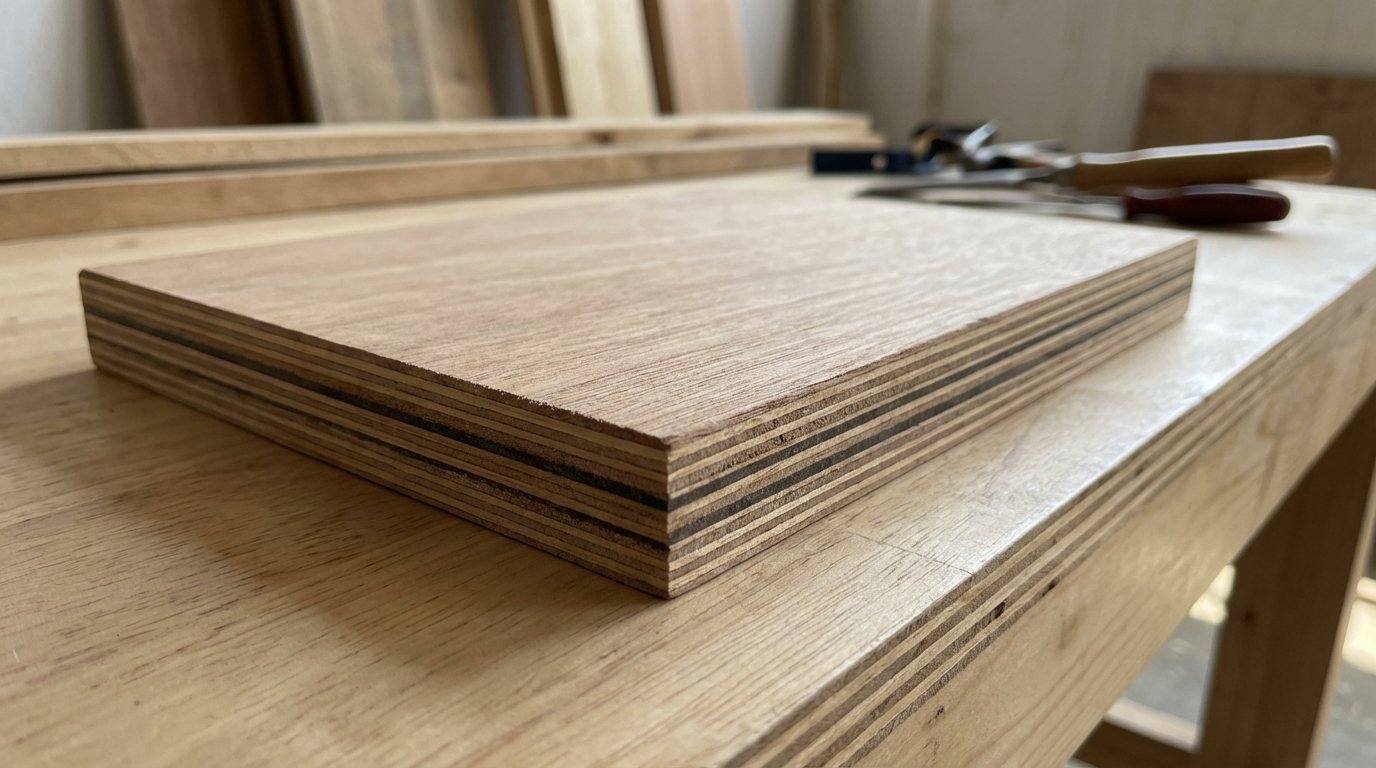
The manufacturing process involves cross-laminating thin wood veneers and bonding them with specialized resins under heat and pressure. This cross-grain construction provides superior strength, stability, and screw-holding capacity compared to MDF or particle board. The type of resin used—Urea Formaldehyde, Melamine Urea Formaldehyde, or Phenol Formaldehyde—determines the water resistance grade.
Understanding these grades matters because India's diverse climate, from coastal humidity to monsoon rains, demands different levels of moisture protection. Choosing the wrong grade leads to warping, delamination, and premature furniture failure—costly mistakes that proper knowledge prevents.
Full Form: What Do IS 303 and IS 710 Stand For?
IS 303 stands for Indian Standard 303, titled "Plywood for General Purposes." This standard was established by the Bureau of Indian Standards to govern commercial plywood used in furniture, interiors, and general construction applications across India.
IS 710 stands for Indian Standard 710, titled "Marine Plywood." This certification specifically covers plywood designed for marine and river craft construction, as well as applications requiring the highest level of waterproofing.
The numbers 303 and 710 are simply reference codes assigned by BIS to categorize different product standards. When you see "ISI:303" or "ISI:710" stamped on plywood, it indicates the sheet has been tested and certified to meet that specific standard's requirements. According to duroboil.com's research, genuine ISI-marked plywood undergoes rigorous quality testing at BIS-approved laboratories.
Types of Plywood Grades Available in India
Indian plywood is primarily classified by water resistance capability, with each grade designed for specific moisture exposure levels. Understanding these distinctions helps you select the right material for your application without overspending on unnecessary features or compromising on essential protection.
| Grade | Full Form | IS Standard | Best For | Moisture Resistance | Price Range (₹/sq ft) | Availability |
|---|---|---|---|---|---|---|
| MR Grade | Moisture Resistant | IS 303 | Bedrooms, study rooms, dry interiors | Humidity only, not water contact | 35-55 | Widely available |
| BWR Grade | Boiling Water Resistant | IS 303 | Kitchens, bathrooms, humid areas | Moderate water exposure (8 hrs boiling) | 55-85 | Widely available |
| BWP Grade | Boiling Water Proof | IS 303/IS 710 | Wet zones, under-sink, exterior | Extended water exposure (72+ hrs) | 85-130 | Metro cities, authorized dealers |
| Marine Grade | Marine Plywood | IS 710 | Boats, water tanks, constant immersion | Permanent water contact | 120-180 | Specialized dealers |
| FR Grade | Fire Retardant | IS 5509 | Commercial spaces, public buildings | Varies (can be MR/BWR base) | 90-150 | On order basis |
MR Grade Plywood (Moisture Resistant) – IS 303
MR grade plywood, commonly called commercial plywood, is designed to resist ambient humidity but not direct water contact. It uses Urea Formaldehyde (UF) resin for bonding, which provides adequate strength for dry interior applications. This grade is the most affordable option and works perfectly for bedroom furniture, wall paneling, false ceilings, and study tables.
The limitation of MR grade becomes apparent in humid environments or when exposed to water splashes. The UF resin breaks down with moisture exposure over time, causing the plywood to swell, warp, or delaminate. In Indian monsoon conditions, even MR grade plywood in dry rooms should have sealed edges for added protection.
BWR Grade Plywood (Boiling Water Resistant) – IS 303
BWR grade represents the sweet spot for most Indian home interiors. Bonded with Melamine Urea Formaldehyde (MUF) resin, this grade withstands approximately 8 hours of boiling water exposure without delamination. It's the recommended choice for modular kitchens, bathroom vanities, dining room furniture, and any space with occasional moisture contact.
Most reputable brands offer BWR plywood with additional termite and borer resistance treatments. When edges are properly sealed with edge banding or paint, BWR plywood performs exceptionally well in typical Indian kitchen and bathroom conditions. It strikes an optimal balance between cost and performance for residential applications.
BWP Grade Plywood (Boiling Water Proof) – IS 710
BWP grade, often marketed as marine-grade plywood, uses Phenol Formaldehyde (PF) resin that creates the strongest waterproof bond available. This grade survives 72+ hours of boiling water testing without showing signs of delamination, making it suitable for areas with constant or prolonged water exposure.
The 2024 BIS amendment brought BWP grade under IS 303 for interior applications, creating some market confusion. As noted by plyreporter.com, this change allows manufacturers to produce BWP plywood certified under IS 303 for interior use, while IS 710 remains the standard for marine and exterior applications.
Which Grade for Kitchens and Bathrooms?
For standard Indian kitchens with normal cooking and cleaning activities, BWR grade (IS 303) provides sufficient protection when edges are properly sealed. The key is ensuring no raw edges remain exposed to water splashes, especially around sinks and cooking areas. Use minimum 18mm thickness for base cabinets and 12mm for wall units.
Bathroom applications require more careful consideration. For vanity cabinets away from direct water spray, BWR grade works well. However, for areas directly adjacent to showers, bathtubs, or any zone with frequent water contact, BWP/marine grade offers better long-term performance. Always use waterproof edge banding and sealants regardless of grade.
Which Grade for Wardrobes and Bedrooms?
Bedroom and wardrobe applications rarely require water-resistant grades. MR grade plywood (IS 303) is perfectly adequate for wardrobes, beds, study tables, and other bedroom furniture. The humidity resistance handles normal Indian climate conditions, and the cost savings compared to BWR grade can be substantial—often 20-35% lower.
The exception is coastal areas or homes without air conditioning where humidity levels consistently exceed 70-80%. In such environments, upgrading to BWR grade even for dry-area furniture provides an extra safety margin against moisture-related damage.
Technical Specifications
Understanding plywood specifications helps you verify quality and select the right product for structural requirements. The following specifications apply to plywood sheets commonly available in the Indian market.
| Specification | MR Grade | BWR Grade | BWP/Marine Grade |
|---|---|---|---|
| Standard Sizes | 8x4 ft, 7x4 ft, 6x4 ft | 8x4 ft, 7x4 ft, 6x4 ft | 8x4 ft, 7x4 ft |
| Available Thickness | 4, 6, 9, 12, 16, 18, 19 mm | 6, 9, 12, 16, 18, 19 mm | 6, 9, 12, 16, 18, 19, 25 mm |
| Number of Plies | 3, 5, 7, 9, 11+ | 3, 5, 7, 9, 11+ | 5, 7, 9, 11+ |
| Density Range | 500-650 kg/m³ | 550-700 kg/m³ | 600-750 kg/m³ |
| Resin Type | Urea Formaldehyde (UF) | Melamine Urea Formaldehyde (MUF) | Phenol Formaldehyde (PF) |
| Boiling Water Test | Not applicable | 8 hours minimum | 72 hours minimum |
| Moisture Content | 5-15% | 5-15% | 5-15% |
Thickness selection guide: Use 6mm for backs and bottoms of cabinets, 12mm for shelves and internal partitions, 18-19mm for cabinet carcasses and load-bearing applications, and 25mm for heavy-duty commercial furniture or specialized requirements.
Surface types under IS 303: The standard classifies plywood by surface quality—Type AA has both faces of A quality (minimal defects), Type AB has A quality face with B quality back, and Type BB has both surfaces of B quality. For visible furniture surfaces, specify Type AA or AB.
Common Misconceptions Cleared
The Indian plywood market suffers from significant misinformation, often perpetuated by dealers or through misunderstanding of technical terms. Duroboil.com experts have identified these common myths that lead to poor purchasing decisions.
Myth 1: "710 plywood" and "IS 710 certified plywood" are the same.
Reality: Many dealers sell "710 BWP" plywood that isn't actually IS 710 certified. The number 710 is often used as a marketing term. Genuine IS 710 plywood must carry the ISI mark with the 710 standard number. As explained by plyneer.com, any BWP plywood must have ISI:710 certification to be considered genuine marine grade.
Myth 2: BWP/Marine plywood is necessary for all kitchen applications.
Reality: Most kitchen cabinets experience occasional water splashes, not immersion. BWR grade with proper edge sealing handles these conditions adequately. Marine grade is overkill—and overpriced—for standard kitchen use.
Myth 3: Higher-priced plywood is automatically better quality.
Reality: Price depends on many factors including brand premium, dealer margins, and location. A well-made BWR plywood from a lesser-known brand may outperform a poorly manufactured "premium" product. Always verify ISI marking and conduct basic quality checks.
Myth 4: BWR and BWP plywood don't need edge sealing.
Reality: All plywood grades benefit from edge sealing. Even BWP plywood absorbs moisture through unsealed edges faster than through face veneers. Proper edge banding extends the life of any plywood furniture.
Myth 5: Marine plywood is suitable for outdoor furniture exposed to rain.
Reality: Even IS 710 marine plywood isn't designed for unprotected outdoor exposure. It handles marine conditions (boats, docks) but requires protective finishing when used in rain-exposed applications.
Myth 6: All plywood with ISI mark is equally good.
Reality: ISI certification confirms minimum standard compliance, not premium quality. Manufacturing consistency, veneer quality, and finishing vary between manufacturers even with the same certification.
Advantages and Limitations
IS 303 Plywood (MR and BWR Grades)
| Advantages | Limitations |
|---|---|
| Most economical option for general furniture | MR grade unsuitable for any water exposure |
| Widely available across India | BWR grade has limits in prolonged wet conditions |
| Multiple thickness and size options | Quality varies significantly between manufacturers |
| BWR grade handles most residential needs | Requires edge sealing for moisture protection |
| Easy to work with standard carpentry tools | MR grade may warp in very humid climates |
| Good screw-holding strength | Not suitable for exterior applications |
| Takes laminates and veneers well | Surface quality depends on type (AA/AB/BB) |
| Lighter weight than marine grade | Shorter lifespan in demanding conditions |
IS 710 Plywood (Marine/BWP Grade)
| Advantages | Limitations |
|---|---|
| Highest waterproofing available | Significantly more expensive (30-50% premium) |
| 72+ hour boiling water resistance | Limited availability outside metros |
| Superior bonding strength | Heavier than standard grades |
| Excellent for under-sink and wet zones | Overkill for most dry interior applications |
| Longer lifespan in demanding conditions | Still requires protective finishing outdoors |
| Better fungal resistance | Higher formaldehyde emissions (PF resin) |
Best Applications in Indian Homes
Selecting the right plywood grade for each application ensures optimal performance and cost efficiency. Indian homes face unique challenges—monsoon humidity, coastal salt air, termite prevalence, and extreme temperature variations—that influence material selection.
Living Room and Bedrooms
MR grade plywood (IS 303) is perfectly adequate for TV units, wardrobes, beds, study tables, book shelves, and display cabinets. These applications rarely face moisture exposure, and the cost savings versus BWR grade can be invested in better laminates or hardware. Use 18mm thickness for structural elements and 12mm for internal components.
Kitchen Applications
BWR grade (IS 303) is the standard recommendation for modular kitchen cabinets including base units, wall cabinets, tall units, and breakfast counters. For areas directly under sinks or adjacent to dishwashers, upgrading to BWP grade provides extra protection. Always specify waterproof edge banding and ensure cutouts for sinks and appliances are properly sealed.
Bathroom Furniture
Bathroom vanity cabinets work well with BWR grade when positioned away from direct water spray. For cabinets adjacent to showers or bathtubs, BWP/marine grade is the safer choice. In coastal areas with high salt humidity, marine grade for all bathroom furniture prevents premature deterioration.
Utility Areas and Wash Zones
Utility room cabinets housing washing machines, sink areas in balconies, and pooja room cabinets near wet prasad preparation areas benefit from BWR or BWP grade depending on specific moisture exposure. Assess the actual water contact risk rather than defaulting to the most expensive option.
Commercial Interiors
Office furniture, retail fixtures, and hospitality applications typically use BWR grade for durability. Areas with food preparation or heavy cleaning require BWP grade. Fire-retardant (FR) plywood meeting IS 5509 is mandatory for many commercial applications per local building codes.
Quality Verification (Without Lab Tests)
While laboratory testing provides definitive quality assessment, these practical checks help identify genuine ISI-marked plywood and spot potential quality issues before purchase.
1. Verify ISI Marking: Genuine ISI-marked plywood displays the ISI logo, license number, standard number (IS 303 or IS 710), manufacturer details, and grade (MR/BWR/BWP). The marking should be clear, not smudged, and present on every sheet. Cross-verify license numbers on the BIS website if in doubt.
2. Check Core Construction: Request to see the plywood edge. Quality plywood shows uniform veneer thickness, consistent glue lines without gaps, and properly aligned core layers. Voids, overlapping veneers, or irregular gaps indicate poor manufacturing.
3. Weight Assessment: Lift the sheet and compare with others of the same grade. Unusually light plywood often indicates lower-density wood or thinner veneers than specified. Heavier isn't always better, but consistent weight within a grade suggests quality control.
4. Surface Inspection: Look for patches, repairs, knots, and surface roughness. Type AA should be nearly defect-free. Run your hand across the surface—quality plywood feels smooth without undulations or rough patches.
5. Flatness Test: Place the sheet on a flat surface. Warped or twisted sheets indicate moisture damage during storage or manufacturing defects. Minor bowing may settle, but significant warping suggests core problems.
6. Simple Water Test: For BWR/BWP verification, request permission to place a few water drops on an edge cut. Quality water-resistant plywood shows minimal absorption after 10-15 minutes. Rapid absorption suggests inadequate resin bonding.
Care and Maintenance
Proper care extends plywood furniture life significantly, regardless of grade. These maintenance practices apply to all plywood applications in Indian conditions.
Daily Care
Wipe spills immediately—even BWP plywood absorbs moisture over extended exposure. Use dry or slightly damp cloth for cleaning; avoid wet mopping plywood surfaces. Keep furniture away from direct water contact where possible, and ensure adequate ventilation around cabinets to prevent moisture buildup.
Cleaning Methods
Clean laminated plywood surfaces with mild soap solution and soft cloth. Avoid abrasive cleaners, steel wool, or harsh chemicals that can damage laminates or sealants. For stubborn stains, use manufacturer-recommended cleaners. Periodic waxing of polished surfaces maintains finish and adds moisture protection.
Damage Prevention
Address water leaks or plumbing issues immediately—prolonged moisture exposure damages even marine-grade plywood. Use coasters and mats under wet items. In monsoon months, check for condensation around windows and address humidity issues with dehumidifiers in highly affected areas.
Inspect edge banding annually and repair any peeling or damage. Reapply sealant around sink cutouts and other vulnerable areas every 2-3 years or when wear is visible. These simple preventive measures significantly extend furniture lifespan.
Frequently Asked Questions
Is IS 303 plywood waterproof?
IS 303 covers both MR (Moisture Resistant) and BWR (Boiling Water Resistant) grades, neither of which is fully waterproof. MR grade only handles humidity, not direct water contact. BWR grade resists water exposure and can withstand boiling water for approximately 8 hours but isn't designed for permanent water immersion. For waterproof applications, you need IS 710 certified BWP/marine grade plywood. For most kitchen and bathroom applications in Indian homes, BWR grade with proper edge sealing provides adequate protection.
What is the difference between IS 303 and IS 710 plywood?
IS 303 is the standard for general-purpose plywood covering MR and BWR grades used in furniture and interiors. IS 710 specifically certifies marine-grade BWP plywood designed for boat building and applications requiring maximum waterproofing. The key difference is water resistance duration—IS 303 BWR handles 8 hours of boiling water, while IS 710 marine grade withstands 72+ hours. Price difference typically ranges 30-50% higher for IS 710 certified plywood. Choose IS 303 BWR for residential interiors and IS 710 only for extreme water exposure applications.
Which plywood grade is best for kitchen cabinets in India?
BWR grade plywood certified under IS 303 is the optimal choice for most Indian kitchen cabinets. It provides sufficient water resistance for cooking area splashes and high humidity, while being more economical than marine grade. Use minimum 18mm thickness for base cabinet carcasses, 12mm for wall units, and ensure all edges are sealed with waterproof edge banding. Upgrade to BWP/marine grade only for under-sink cabinets or if your kitchen faces unusually high moisture exposure like proximity to a washing area.
How can I identify genuine ISI-marked plywood?
Genuine ISI-marked plywood displays the ISI certification mark, license number (CM/L-XXXXXXX format), IS standard number (303 or 710), manufacturer's name and address, grade (MR/BWR/BWP), and type (AA/AB/BB). This marking appears stamped on every sheet, not just on packaging. Verify license numbers on the BIS public database at bis.gov.in. Beware of sheets with unclear markings, missing information, or "710" without proper ISI certification—these may be counterfeit products.
Is BWR plywood safe for bathroom vanities?
BWR plywood works well for bathroom vanities positioned away from direct water spray areas. The key is proper installation—ensure 3-4 inch clearance from floor to prevent splash damage, seal all edges thoroughly, and apply waterproof coating on exposed surfaces. For vanities directly adjacent to showers or bathtubs, or in bathrooms without proper ventilation, upgrading to BWP grade provides better long-term protection. In coastal areas with consistently high humidity, marine grade for all bathroom furniture is the safer choice.
What does the BWP grade mean on plywood?
BWP stands for Boiling Water Proof, the highest water resistance grade available in commercial plywood. BWP plywood uses Phenol Formaldehyde (PF) resin that creates bonds surviving 72+ hours of boiling water immersion without delamination. This grade is certified under IS 710 for marine applications and now also available under the amended IS 303 for interior use. BWP/marine plywood is essential for boat building, water tanks, and areas with constant water exposure, but is generally unnecessary for typical residential furniture where BWR grade suffices.
What is the price difference between MR, BWR, and marine plywood?
In the Indian market, MR grade plywood typically costs ₹35-55 per square foot, BWR grade ranges from ₹55-85 per square foot, and BWP/marine grade costs ₹85-130 per square foot for standard 18mm thickness. Price varies significantly based on brand, core wood species (gurjan is costlier than poplar), face veneer quality, and location (metros are generally 10-15% more expensive than tier-2 cities). For a standard 3BHK apartment requiring approximately 1,200-1,500 square feet of plywood, choosing BWR over marine grade for kitchen cabinets saves ₹30,000-50,000 without compromising performance.
Can I use MR plywood in air-conditioned rooms?
Yes, MR grade plywood is perfectly suitable for air-conditioned rooms in Indian homes. Air conditioning actually reduces humidity, creating favorable conditions for MR grade performance. Wardrobes, TV units, study tables, and beds in AC bedrooms function well with MR plywood for 10-15 years or more. However, avoid MR grade for rooms that aren't consistently air-conditioned during monsoon months, as humidity fluctuations can cause warping over time. In such cases, BWR grade provides a safety margin for slightly higher cost.
Which plywood type is termite resistant?
No plywood grade is inherently termite-proof based solely on IS 303 or IS 710 certification—termite resistance requires additional chemical treatment. Most quality brands offer termite and borer treated plywood as an add-on feature, often marketed as "Termite Proof" or "Borer Resistant." Look for plywood with specific termite treatment certification from the manufacturer. IS 4873 governs termite-resistant treatments for wood. Duroboil.com recommends always requesting termite-treated plywood regardless of grade, especially in areas with known termite activity.
How do I store plywood sheets before use?
Store plywood flat on a level surface, not leaning against walls, which causes warping. Keep sheets elevated off the ground using wooden battens to prevent moisture absorption from concrete floors. Cover with plastic sheeting to protect from dust and humidity, but allow air circulation to prevent condensation. Store in a dry, shaded area—direct sunlight causes uneven drying and potential warping. Allow newly purchased plywood to acclimatize to site conditions for 48-72 hours before cutting and installation, especially during monsoon months when humidity levels differ between warehouse and installation site.
Is fire-retardant plywood available under IS 303 or IS 710?
Fire-retardant (FR) plywood is governed by a separate standard—IS 5509—not IS 303 or IS 710. FR plywood can have an MR, BWR, or BWP base with additional fire-retardant treatment. This treatment reduces flame spread rate and smoke generation but doesn't make plywood fireproof. FR plywood is mandatory for commercial spaces like offices, hotels, hospitals, and auditoriums per local fire safety codes. For residential use, standard plywood grades suffice unless you're finishing a commercial-adjacent space or have specific fire safety concerns.
What is calibrated plywood and should I use it?
Calibrated plywood has uniform thickness across the entire sheet, achieved through precision sanding during manufacturing. Standard plywood may have thickness variations of 0.5-1mm, while calibrated plywood maintains ±0.2mm tolerance. This matters for lamination and veneer application—uneven surfaces cause laminate bubbling and poor adhesion. For pre-laminated plywood furniture or projects requiring post-lamination, always specify calibrated sheets. The cost premium of 10-15% is worthwhile for visible furniture but unnecessary for concealed structural applications like cabinet backs.
Note: This is independent editorial content. Duroboil.com is not affiliated with any plywood manufacturer or brand mentioned. Information is for educational purposes—verify specifications with authorized dealers and confirm current prices based on your location before purchase.
Disclaimer: This content is provided for general informational purposes based on industry practices and publicly available information. Product specifications, standards, prices, and availability may vary by manufacturer, region, and time. Readers should independently verify details with manufacturers, dealers, or qualified professionals before making purchase or construction decisions.Want Plywood Suggestions?
Share a few details and a Duro BOIL specialist will suggest suitable brands and connect you to responsive dealers.