Plywood thickness guide: 6mm to 25mm (use-cases)
Learn plywood thickness guide in simple terms with examples, verification tips, and a quick checklist so you choose the right board for Indian conditions.
Quick Decision Summary
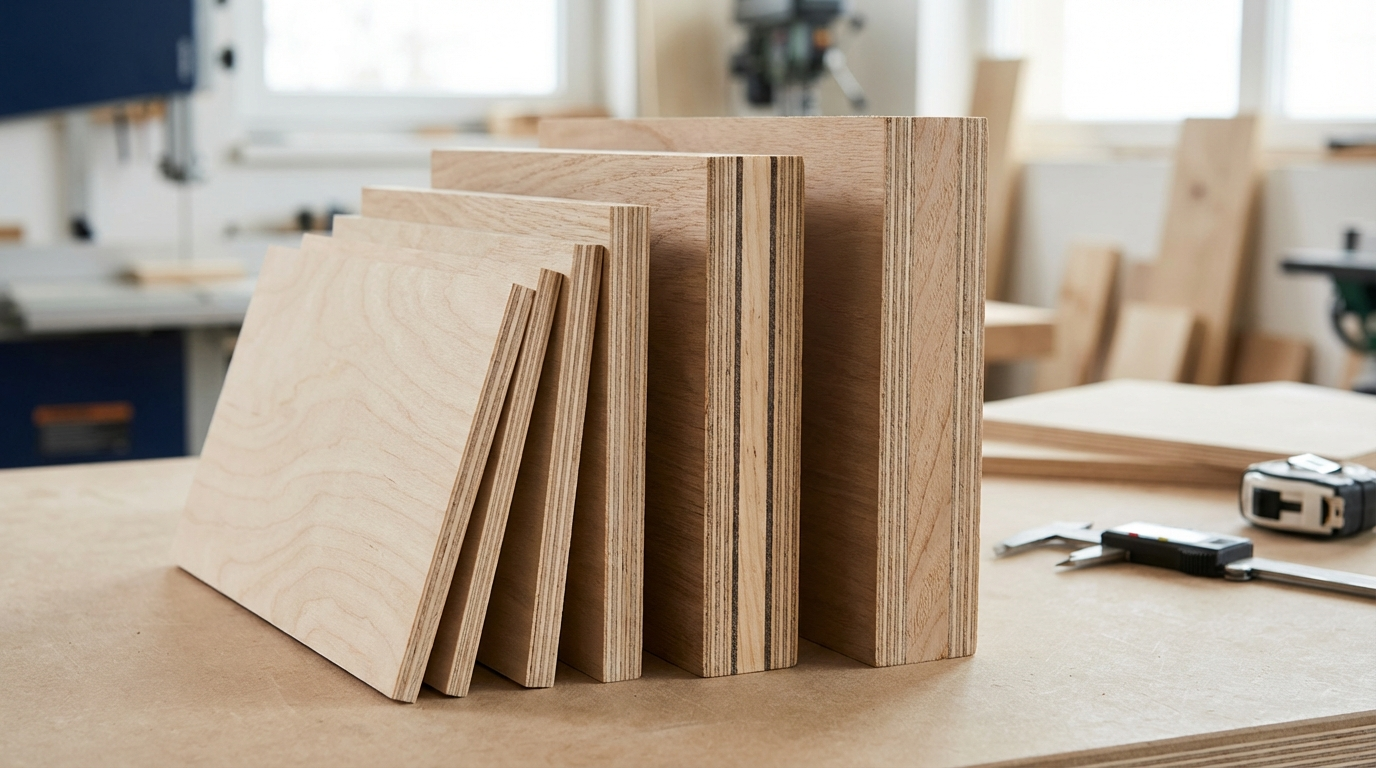
Match plywood thickness to expected load, span between supports, and moisture exposure: 6-9mm for light panels, 12mm for cabinets, 15-18mm for shelves and flooring, 19-25mm for structural beams.
If you're in a hurry, start by measuring your span (distance between supports) and load (books, clothes, or heavy items). For dry interiors like wardrobes, 12mm often works; bump to 18mm for monsoon-prone kitchens or coastal balconies to resist sagging. Always verify straightness on-site and pair with matching grade (MR dry, BWR semi-wet, BWP wet). This prevents 80% of common failures like warping under humidity. Use the checklist below for your project.
- Choose 6-12mm if light duty, tight budget, easy handling for modular kitchens or partitions.
- Avoid under 12mm if spans exceed 60cm or heavy loads like kitchen counters to prevent deflection.
- Choose 18-25mm if structural needs, high humidity, or heavy traffic areas like main doors.
- Avoid over 25mm unless engineer-specified for beams, as it adds unnecessary weight and cost.
How to Choose Plywood Thickness in 5 Steps
- Assess load and span: Light clothes? 40-60cm span? Go 9-12mm. Heavy appliances? 80cm+ span? Minimum 15mm.
- Check exposure: Dry bedroom? MR grade fine. Kitchen/bathroom? BWR or BWP, add 3mm thickness buffer.
- Verify straightness: Hold edges together; gaps over 2mm signal core issues, reject regardless of thickness.
- Test weight and calibration: Uniform heft, no delams on knock test; thicker isn't better if poorly calibrated.
- Confirm with carpenter: Share span/load details; get quote specifying thickness + grade for your city.
Skipping steps leads to sagging shelves or swollen edges in monsoons.
What is the standard plywood thickness for wardrobes in India?
Standard for wardrobes is 12mm for sides and doors, 9mm for backs and partitions in dry interiors. This balances strength for hanging clothes (up to 50kg per shelf) without excessive weight during installation. In humid coastal areas, upgrade to 15mm BWR to counter swelling from poor ventilation. Homeowners often pick thinner to save costs, but verify by pressing center—no deflection over 2mm under hand pressure. Next, measure your wardrobe height; taller units (over 2m) need 15mm for stability. Always seal edges post-cut to block moisture ingress.
Can 6mm plywood be used for shelves?
Yes, 6mm suits very light shelves like decorative displays or books under 5kg, spans under 40cm. It's ideal for false ceilings or wardrobe backs where rigidity isn't critical. However, avoid for kitchen utensils or coastal homes—monsoon humidity causes buckling. Check by flexing a sample; minimal bend ok for light use. For better durability, pair with 9mm fronts. Practical step: prototype one shelf, load-test for a week before full install. Thicker alternatives like 9mm add cost but reduce replacement risks in Indian workflows.
Plywood Thickness Chart: Common Use-Cases (6mm to 25mm)
| Thickness | Typical Uses | Span/Load Suitability | Grade Recommendation |
|---|---|---|---|
| 6mm | Wardrobe backs, false ceilings, light partitions | <40cm span, <5kg load | MR (dry interiors) |
| 9mm | Light shelves, cabinet doors, drawer bottoms | 40-60cm span, 5-15kg load | MR/BWR |
| 12mm | Wardrobe sides, kitchen cabinets, tabletops | 60-80cm span, 15-30kg load | BWR |
| 15mm | Heavy shelves, flooring underlay, counters | 80-100cm span, 30-50kg load | BWR/BWP |
| 18mm | Worktops, heavy furniture, balcony flooring | 100cm+ span, 50kg+ load | BWP |
| 19-25mm | Structural beams, main doors, stair treads | Heavy duty, engineer spec | BWP/IS 710 equiv. |
India-Specific Reality Check
In monsoon-heavy regions like Mumbai or Kerala, thinner plywood (under 12mm) absorbs humidity faster, leading to core gaps during off-season storage. Coastal salt air accelerates delamination unless BWP grade. Contractor workflows often stack sheets outdoors—cover with tarps, elevate off ground. Hot-dry Rajasthan needs calibrated boards to avoid twisting from uneven drying. Always acclimatize sheets 48 hours in install room.
Does plywood thickness matter in humid Indian climates?
Absolutely—thicker boards (15mm+) have more glue lines, offering better resistance if BWP grade, but poor calibration amplifies warping. In humid zones, 12mm MR sags 20-30% faster than 18mm BWP under same load. Nuance: thickness alone insufficient; verify glue line count (odd plies preferred). Check by tapping edges—solid thud means good bonds. Next step: for kitchens, insist on boiled-water test demo from supplier (visual only). This cuts failure rates in rainy seasons.
Price Range and Cost Drivers (India)
Thinner 6-9mm typically Rs 45-75 per sq ft; 12-15mm Rs 65-110; 18-25mm Rs 95-160+. Varies by city (10-20% higher in metros), grade (BWP adds 30-50%), core quality (hardwood vs softwood), and calibration. Logistics from factory adds Rs 5-15/sq ft distant areas. Budget example: 100 sq ft kitchen cabinets at 12mm BWR ~ Rs 8,000-12,000 total, excluding labor.
How to ask for quote: Specify "12mm BWR calibrated, straight edges, monsoon-ready for [city]" + quantity + delivery.
Plywood Thickness Decision Framework
| Condition | Recommended Thickness + Verify |
|---|---|
| Wet kitchen/bath (monsoon) | 15-18mm BWP; check no edge swelling after 24hr water touch |
| Coastal balcony heavy use | 18-21mm BWP; uniform calibration, no core voids on knock |
| Bedroom wardrobe light | 9-12mm MR; straight edges, light flex test ok |
| Heavy shelf (80cm span) | 15mm+ BWR; deflection <2mm under 20kg load |
| Tight budget modular | 9-12mm MR; sealed edges, local supplier batch |
| High scratch/traffic | 18mm HDHMR alt; laminated face, reinforced core |
| Fast delivery project | Stock 12mm BWR; pre-cut options, verify straightness |
Trade-offs and Limitations
- Thicker = stronger but heavier (harder carpenter handling), costlier (20-40% more), more wastage on cuts.
- Thinner = affordable, lightweight but prone to sag (deflects under load), less soundproofing.
- All thicknesses vulnerable if uncalibrated—warps in humidity regardless.
- Over-thick for light use wastes budget; under-thick risks collapse in 1-2 years.
Is thicker plywood always stronger?
Not always—strength depends on plies quality and glue, not just mm. A 12mm with 9 solid plies outperforms 15mm gappy core. In India, thicker often means more softwood core, adding weight without proportional strength. Test: stack two sheets—thicker should feel denser uniformly. For spans over 1m, consult engineer. Trade-off: 18mm resists deflection but complicates screw holding in thin edges. Choose based on load tests during site verification.
Common Buyer Mistakes and How to Avoid Them
- Mistake 1: Picking cheapest thin sheet for shelves. Why: Sags under books. Do: Load-test sample.
- Mistake 2: Ignoring span in kitchens. Why: Counters droop. Do: Measure support distance first.
- Mistake 3: Dry grade in wet zones. Why: Swells in monsoon. Do: Match BWR/BWP.
- Mistake 4: No acclimatization. Why: Twists post-install. Do: 48hr room storage.
- Mistake 5: Over-relying on supplier word. Why: Batch variations. Do: Visual checks yourself.
- Mistake 6: Skipping edge sealing. Why: Moisture wicks in. Do: Apply putty immediately.
- Mistake 7: Wrong thickness for doors. Why: Misalignment. Do: 18mm+ for frames.
- Mistake 8: Bulk buy without QC. Why: Mixed quality. Do: Inspect each sheet.
Failure Modes and Fixes
- Sagging shelves: Thin for span/load. Prevent: Match chart. Fix: Reinforce with battens.
- Edge swelling: Humidity on unsealed cuts. Prevent: Instant sealing. Fix: Sand, re-laminate.
- Core delam: Poor glue in humid storage. Prevent: BWP + tarp cover. Fix: Discard affected.
- Deflection under weight: Under-thick. Prevent: Load calc. Fix: Add supports.
- Twisting post-install: Uncalibrated. Prevent: Straightness check. Fix: Shim alignment.
- Cracking at screws: Thin edges. Prevent: Pre-drill. Fix: Plug and re-screw.
Quality Checks You Can Do Without Lab Tests
Before buying: Align edges—no gaps >1mm; knock center—hollow sound = voids; flex gently—no snap.
After cutting: Check glue squeeze-out (shiny line good); even thickness with caliper if available.
After install: Load-test gradually; monitor edges monthly in monsoon—wipe dry daily.
What thickness plywood for kitchen platform?
15-18mm BWR/BWP for platforms, supporting 50-100kg appliances over 80cm spans. Thinner risks cracking under grinding stone weight. In humid India kitchens, prioritize calibrated BWP to handle steam. Verify: press center—no give; edges square. Next: carpenter to reinforce undersides. Alternatives like HDHMR for budget, but plywood edges need extra sealing against spills.
Tips for Homeowners
- Do: Clean spills immediately, use coasters on shelves.
- Don't: Overload beyond 70% capacity, store wet items.
- Inspect yearly for edge lifts.
Tips for Carpenters
- Cut with fine blade to minimize splinter; pre-drill hinges 3mm from edge.
- Edge-band same day; use PVA glue for laminates.
- Handle vertically to avoid bow.
Tips for Architects
- Spec "18mm BWP calibrated, 9+ plies" for wet zones.
- Detail edge returns, ventilation gaps.
- QC clause: reject >2mm twist.
Which plywood thickness for false ceiling?
6-9mm MR for standard gypsum-alternative ceilings, spans 40-60cm with light fittings. Avoid heavier loads—use metal frame. In seismic zones, lighter thinner reduces inertia. Check: uniform flex, no delam on bend. Install with 10cm overlaps. Monsoon tip: prime both sides. This ensures crack-free longevity versus thicker sagging alternatives.
FAQs
Is 18mm plywood good for flooring?
Yes, 18mm BWP suits subflooring or direct overlay in high-traffic homes, handling foot loads over 1m spans. Pair with sealant for moisture barriers in bathrooms. Thinner risks denting from dropped items. Verify flatness on glass sheet test. Architects specify for coastal villas. Post-install, avoid water stagnation. Costlier but lasts 10+ years versus 12mm failures.
What is calibrated plywood and why thickness matters?
Calibrated means sanded to uniform thickness (+/-0.5mm), preventing uneven laminate adhesion. Critical for all mm—un-calibrated warps faster in humidity. Check variance across sheet. For 12mm cabinets, non-calib causes door gaps. Demand it in quotes for modular projects. Saves rework in carpenter shops.
Can I use 9mm for bed base?
Only for slatted light bases under 60cm spans, <80kg total. Upgrade to 12mm for solid platforms. Humidity causes bowing. Test with body weight—no bounce. Seal underside. Common in budget bedrooms but reinforce for kids' rooms.
Does thickness affect weight bearing capacity?
Directly—doubles roughly every 3mm increment for same grade. 12mm holds 20kg/60cm; 18mm 50kg/100cm. Factor plies: odd numbers stronger. Load-test always. India tip: derate 20% for monsoon softening.
What plywood thickness for main door frame?
19-25mm BWP for frames, resisting twist from heavy use. Sides 18mm min. Check screw hold—thick edges better. Align with tower bolts. Prevents monsoon misalignment.
Is 25mm plywood overkill for home use?
Often yes for furniture—use for beams/stairs only. Heavy, costly, hard to cut. Reserve for structural per engineer. Alternatives: laminate 18mm.
How to measure plywood thickness accurately?
Use vernier caliper at 4 corners + center; avg <1mm variance good. Visual: no taper. Suppliers mark, but verify. Critical for stacking laminates evenly.
Which is better: 12mm or 15mm for partitions?
12mm MR for dry internal walls; 15mm BWR for semi-wet. Depends on soundproofing needs—thicker muffles better. Check straightness for plumb install.
Disclaimer: This content is provided for general informational purposes based on industry practices and publicly available information. Product specifications, standards, prices, and availability may vary by manufacturer, region, and time. Readers should independently verify details with manufacturers, dealers, or qualified professionals before making purchase or construction decisions.Want Plywood Suggestions?
Share a few details and a Duro BOIL specialist will suggest suitable brands and connect you to responsive dealers.