Plywood Types in India: Complete Classification Guide (2026)
Learn all types of plywood available in India. MR, BWR, BWP, marine, fire retardant & decorative plywood explained with uses & price comparison.
Quick Answer: Understanding Plywood Types in India
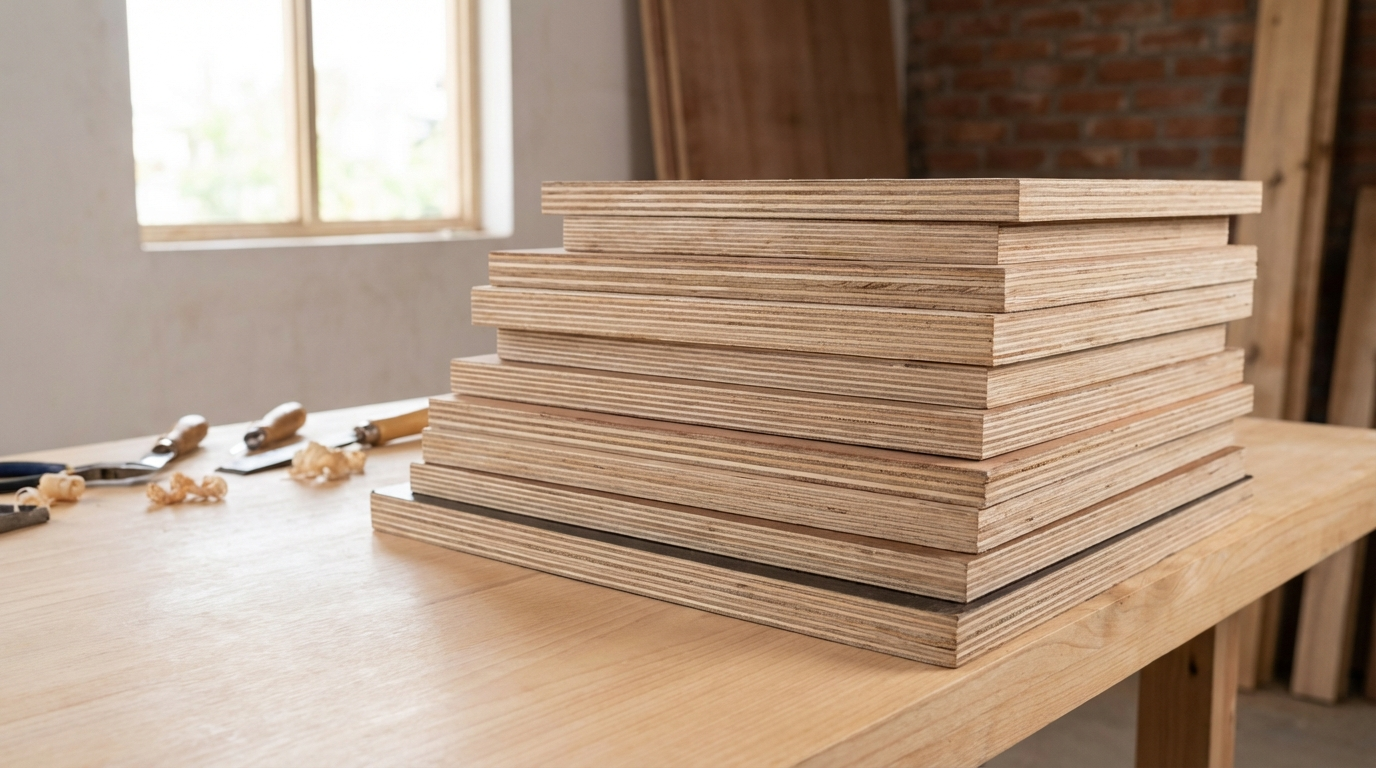
Plywood in India is classified into six main types based on water resistance: MR (Moisture Resistant), BWR (Boiling Water Resistant), BWP/Marine (Boiling Water Proof), Fire Retardant, Shuttering, and Decorative plywood. Each type serves specific applications ranging from dry interior furniture to marine and construction uses.
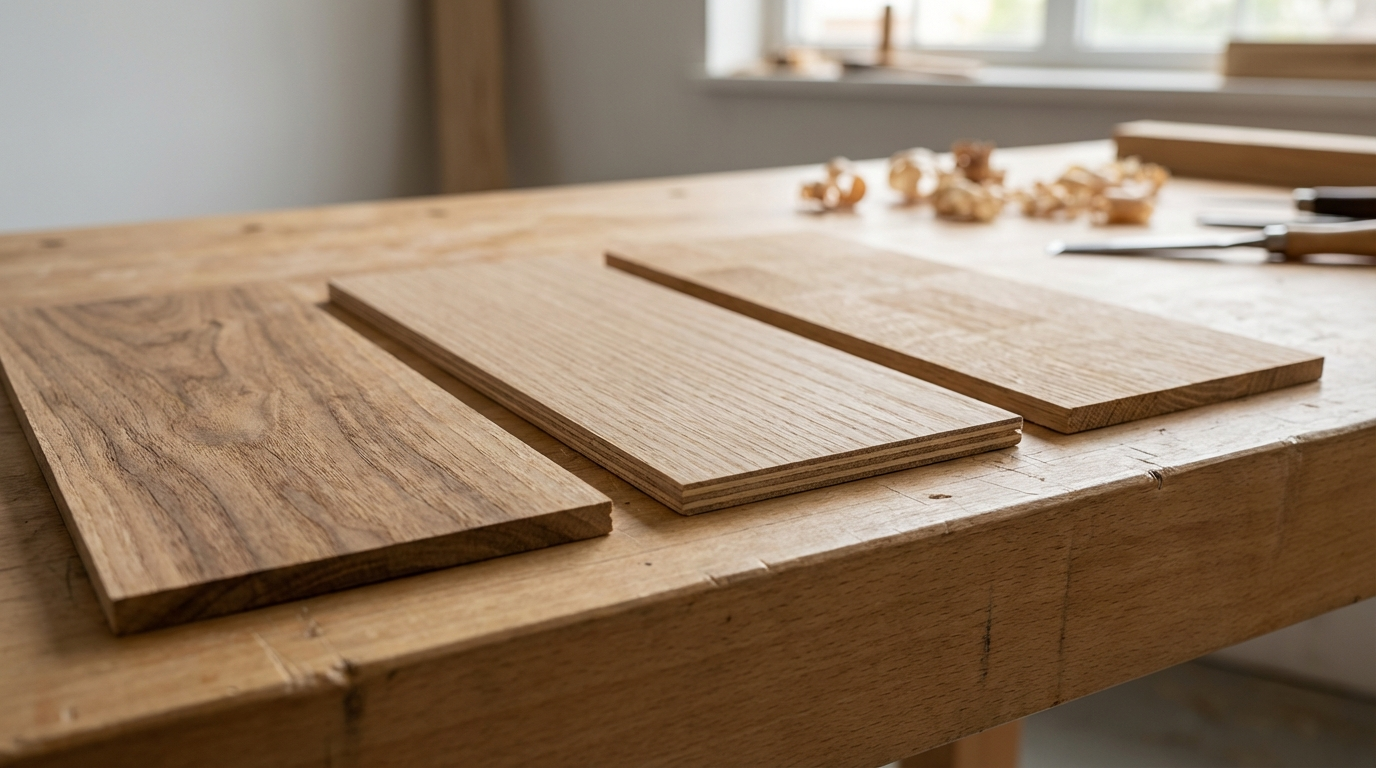
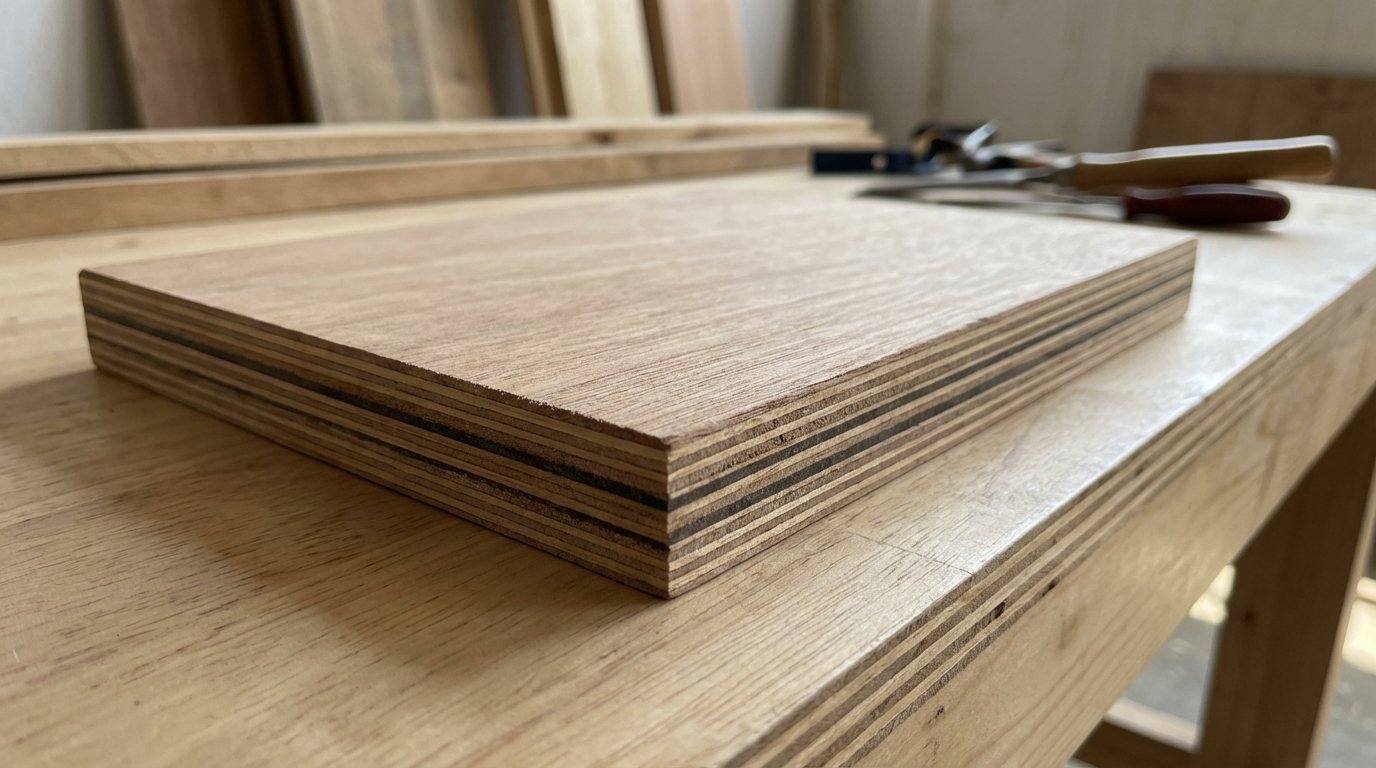
In simple terms, plywood is an engineered wood panel made by gluing together thin layers of wood veneer with their grains alternating at 90 degrees. This cross-grain construction gives plywood exceptional strength, stability, and resistance to warping compared to solid wood or other engineered boards like MDF or particle board. The type of adhesive used to bond these layers determines the plywood's water resistance grade and ultimately its suitable applications.
- MR Grade Plywood – Best for dry interiors like bedrooms and living rooms, costs ₹45-70 per sq ft
- BWR Grade Plywood – Suitable for kitchens and bathrooms, costs ₹65-100 per sq ft
- BWP/Marine Grade Plywood – Required for high moisture areas and exterior use, costs ₹90-150 per sq ft
- Fire Retardant Plywood – Mandatory for commercial buildings and public spaces, costs ₹120-200 per sq ft
- Shuttering Plywood – Used exclusively for concrete formwork in construction, costs ₹55-85 per sq ft
- Decorative Plywood – Pre-finished surface eliminating need for laminates, costs ₹100-180 per sq ft
What Exactly is Plywood and How is it Made?
Plywood is a manufactured wood panel consisting of three or more thin layers of wood veneer bonded together using adhesive under heat and pressure. The term "ply" refers to each individual layer, and commercial plywood typically contains 3, 5, 7, or 9 plies depending on the desired thickness. This layered construction makes plywood significantly stronger than solid wood of equivalent thickness.
The manufacturing process begins with debarking logs and soaking them in water to soften the wood fibers. A rotary lathe then peels continuous sheets of veneer from the rotating log, similar to unrolling paper from a roll. These veneer sheets are dried, graded for quality, and arranged with alternating grain directions before being coated with adhesive and pressed together.
According to duroboil.com's material experts, the cross-laminated grain structure is what gives plywood its superior dimensional stability. When wood absorbs or loses moisture, it expands or contracts primarily across the grain. By alternating grain directions, each layer restrains the movement of adjacent layers, resulting in a panel that remains flat and stable even under varying humidity conditions common in Indian homes.
What Does Plywood Grade Mean?
Plywood grade in India refers to two distinct classification systems that work together. The first system classifies plywood by water resistance based on the adhesive used – this gives us MR, BWR, and BWP grades governed by IS 303 and IS 710 standards. The second system classifies plywood by surface quality using letter grades A, B, C, and D, where A represents the highest quality face veneer with minimal defects.
When you see a plywood designation like "BWR AB," it means the plywood is Boiling Water Resistant grade with an A-quality face veneer and B-quality back veneer. Understanding both classification systems is essential for selecting plywood that meets both your durability and aesthetic requirements.
Types of Plywood Available in India by Water Resistance Grade
The most practical way to classify plywood in India is by water resistance grade, as this directly determines where you can safely use each type. Indian Standards specify testing methods involving boiling water immersion to verify these grades, making this classification reliable for making purchasing decisions.
| Plywood Type | IS Standard | Adhesive Used | Best Applications | Moisture Resistance | Price Range (₹/sq ft) | Availability |
|---|---|---|---|---|---|---|
| MR (Moisture Resistant) | IS 303 | Urea Formaldehyde | Bedrooms, living rooms, study | Humidity resistant only | ₹45-70 | Widely available |
| BWR (Boiling Water Resistant) | IS 303 | Phenol/Melamine Fortified | Kitchens, dining, utility rooms | Occasional water contact | ₹65-100 | Widely available |
| BWP/Marine | IS 710 | Phenol Formaldehyde | Bathrooms, exterior, under-sink | Prolonged water exposure | ₹90-150 | Available in metros |
| Fire Retardant | IS 5509 | FR treated + PF resin | Commercial, auditoriums, kitchens | Varies by base grade | ₹120-200 | Limited, order-based |
| Shuttering | IS 4990 | Phenol Formaldehyde | Concrete formwork only | High (temporary use) | ₹55-85 | Construction suppliers |
| Decorative/Veneered | IS 1328 | Varies | Premium furniture, wall panels | Varies by base grade | ₹100-180 | Specialty dealers |
MR Grade Plywood (Moisture Resistant) – IS 303
MR grade plywood, commonly called commercial plywood in Indian markets, is the most widely used and affordable option for interior furniture. It uses urea formaldehyde (UF) adhesive that provides adequate resistance to indoor humidity but fails when exposed to direct water contact or prolonged dampness. The plywood will delaminate if the bond line gets wet repeatedly.
This grade is ideal for bedroom wardrobes, TV units, study tables, bookshelves, living room cabinets, and false ceiling frameworks. In regions with normal humidity levels like North India (except monsoon months), MR grade performs reliably for 15-20 years when maintained properly. However, for coastal cities like Mumbai, Chennai, or Kolkata where humidity regularly exceeds 70%, even MR grade furniture benefits from proper finishing and ventilation.
The key limitation of MR grade is its unsuitability for kitchens and bathrooms. Even in the dry zone of a bathroom, the steam and occasional splashes can weaken the adhesive bond over time. Many homeowners learn this lesson expensively when their MR grade kitchen cabinets start swelling and delaminating within 3-5 years.
BWR Grade Plywood (Boiling Water Resistant) – IS 303
BWR grade plywood represents the practical middle ground for most Indian homes. It uses phenol formaldehyde or melamine-fortified urea formaldehyde adhesive that withstands occasional water contact and high humidity without delaminating. The standard test involves boiling samples in water for 8 hours followed by drying, then repeating – BWR plywood must maintain 90% of its original bond strength.
Duroboil.com recommends BWR grade as the default choice for modular kitchens, bathroom vanities (not shower areas), dining room furniture, utility room cabinets, and any furniture near windows that might receive rain splash. The price premium over MR grade (typically 30-40% higher) is justified by the significantly longer service life in Indian conditions.
For kitchens, always use minimum 18mm BWR grade for cabinet carcasses and 12mm for shutters. The under-sink cabinet should ideally be BWP grade, but if budget constraints require BWR, ensure all edges are properly sealed with edge banding and the sink cutout is treated with waterproof sealant.
BWP Grade / Marine Plywood – IS 710
BWP (Boiling Water Proof) grade, often marketed as marine plywood, offers the highest water resistance available in commercial plywood. It uses pure phenol formaldehyde resin and must pass rigorous testing including 72 hours of continuous boiling. True IS 710 marine plywood also requires specific core species (typically gurjan or equivalent hardwood) and tighter veneer quality standards.
The confusion between BWP and marine grade exists because many dealers use the terms interchangeably. Technically, all marine plywood is BWP grade, but not all BWP plywood qualifies as marine grade – marine plywood has additional specifications for core quality and void-free construction essential for actual marine (boat-building) applications.
For home use, BWP grade is recommended for bathroom cabinets in wet zones, under-sink units, outdoor furniture under shade, balcony storage, and premium kitchen installations. In coastal areas with high humidity and salt air, BWP grade may be worthwhile even for bedroom furniture to ensure maximum longevity.
Fire Retardant Plywood – IS 5509
Fire retardant (FR) plywood is treated with chemicals that slow flame spread and reduce smoke generation during a fire. It does not make the plywood fireproof – wood will eventually burn – but it provides crucial extra minutes for evacuation and fire response. FR plywood is mandatory for many commercial applications including hotels, hospitals, schools, auditoriums, and commercial kitchens.
The fire retardant treatment can be applied to any base grade (MR, BWR, or BWP), so you must verify both the fire rating and the water resistance grade. For commercial kitchens, specify FR treatment on BWR or BWP base grade. The treatment adds approximately ₹30-50 per square foot to the base plywood cost.
IS 5509 specifies different classes of fire retardancy, with Class 1 offering the highest protection. Always ask for the FR certificate and verify the class rating meets your building code requirements. Some manufacturers offer only basic FR treatment that may not comply with stringent commercial building standards.
Shuttering Plywood – IS 4990
Shuttering plywood is specifically designed for concrete formwork in construction – the temporary molds into which concrete is poured. It features high-density face veneers, strong phenolic bonding, and often a film coating on the surface for easy release from cured concrete. This plywood is engineered for reusability across multiple pours.
While shuttering plywood is technically water-resistant due to its phenolic bonding, it is not recommended for furniture applications. The surface quality is rougher, thickness tolerance is less precise, and the focus is on strength rather than appearance. Some contractors attempt to use shuttering plywood for budget furniture, but the results are invariably disappointing.
Decorative and Veneered Plywood – IS 1328
Decorative plywood comes with a pre-finished face veneer of attractive wood species like teak, oak, walnut, or rosewood. This eliminates the need for external laminates and provides a natural wood aesthetic that many homeowners prefer for premium furniture. The face veneer is typically 0.5-1mm thick, backed by standard plywood construction.
The advantage of veneered plywood is the authentic wood grain appearance that laminates cannot replicate. The limitation is that the thin veneer is susceptible to scratches and water damage, requiring more careful handling and proper finishing with melamine or polyurethane coating. Veneered plywood costs significantly more than plain plywood plus laminate but offers superior aesthetics for those willing to invest.
Types of Plywood by Core Species
The wood species used for the core veneers significantly affects plywood strength, weight, screw-holding capacity, and cost. Indian manufacturers use several species depending on regional availability, price points, and performance requirements.
| Core Species | Density | Strength | Screw Holding | Weight (18mm sheet) | Price Level | Best For |
|---|---|---|---|---|---|---|
| Gurjan (Keruing) | High | Excellent | Excellent | 35-40 kg | Premium | Marine, heavy-duty furniture |
| Eucalyptus | Medium-High | Very Good | Very Good | 30-35 kg | Mid-Premium | Quality furniture, kitchens |
| Poplar | Low-Medium | Good | Good | 22-28 kg | Budget | Light furniture, paneling |
| Silver Oak | Medium | Good | Good | 28-32 kg | Mid-range | General furniture |
| Mixed Hardwood | Varies | Moderate | Moderate | 25-35 kg | Economy | Budget furniture, backs |
Gurjan Core Plywood
Gurjan (also called Keruing) is a tropical hardwood from Southeast Asia that produces the highest quality plywood cores available in India. Its high density provides exceptional strength, superior screw-holding capacity, and excellent resistance to dents and impacts. Most premium marine plywood and high-end furniture-grade plywood uses gurjan cores.
The limitation of gurjan plywood is its higher cost (typically 40-60% more than poplar core) and heavier weight, which increases transportation costs and makes handling more difficult. For heavy-duty applications like kitchen cabinets supporting stone countertops, gurjan core is worth the investment.
Eucalyptus Core Plywood
Eucalyptus has emerged as an excellent alternative to gurjan, offering similar performance at a lower price point. Fast-growing eucalyptus plantations in India provide sustainable supply, making this an increasingly popular choice for quality furniture plywood. The wood has good density, straight grain, and consistent quality.
Many reputable manufacturers now offer eucalyptus core BWR and BWP plywood that performs comparably to gurjan core at 20-30% lower cost. For most residential applications, eucalyptus core represents the best value proposition.
Poplar Core Plywood
Poplar is a fast-growing softwood that produces lightweight, affordable plywood suitable for less demanding applications. Its lower density results in reduced strength and screw-holding capacity compared to hardwood cores, but the lighter weight makes handling and installation easier.
Poplar core plywood is appropriate for wall paneling, light furniture, wardrobe backs and partitions, false ceiling frameworks, and temporary installations. It should be avoided for heavy-duty applications like kitchen carcasses or furniture that will bear significant weight.
Types of Plywood by Surface Quality Grade
Indian Standard IS 303 classifies plywood surfaces into grades A and B based on permissible defects on the face veneer. This grading system works alongside the water resistance classification to fully specify plywood quality.
Grade A Surface: Allows only minor defects including small knots (under 10mm), slight discoloration, and minor repairs. The face should be smooth, well-sanded, and suitable for clear finishing or high-quality laminate application.
Grade B Surface: Permits larger defects including knots up to 25mm, more pronounced color variations, patches, and visible repairs. This grade is suitable when the surface will be painted or covered with opaque finishes.
Plywood sheets are designated by both faces: AA (both sides A grade), AB (A grade face, B grade back), and BB (both sides B grade). For furniture where only one side is visible, AB grade offers the best value – you get a quality visible face while saving cost on the hidden back.
Types of Plywood by Thickness and Application
Plywood thickness in India follows standard sizes measured in millimeters. Selecting the correct thickness is crucial for structural integrity and cost optimization – using thicker plywood than necessary wastes money, while using thinner plywood risks furniture failure.
| Thickness | Number of Plies | Primary Applications | Load Bearing Capacity |
|---|---|---|---|
| 4mm | 3 ply | Wardrobe backs, drawer bottoms | Very Low |
| 6mm | 3-5 ply | Cabinet backs, paneling, profiles | Low |
| 8-9mm | 5 ply | Wall paneling, light shelves | Low-Medium |
| 12mm | 5-7 ply | Wardrobe shutters, cabinet doors | Medium |
| 16mm | 7 ply | Cabinet carcasses, shelving | Medium-High |
| 18-19mm | 7-9 ply | Kitchen cabinets, heavy shelves, tables | High |
| 25mm | 9+ ply | Heavy-duty tables, counters, partitions | Very High |
Which thickness for kitchens?
For modular kitchen cabinets, use 18mm plywood for all carcass components (sides, top, bottom, fixed shelves) and 12mm for shutter doors. The 18mm thickness provides adequate rigidity to support countertop weight and prevent sagging over time. Using 16mm for carcasses is acceptable for budget projects but may show minor sagging with heavy granite countertops over 5-7 years.
Which thickness for wardrobes?
Wardrobe construction typically uses 18mm for carcass, 12mm for shutters and internal partitions, and 4-6mm for back panels. If the wardrobe is floor-to-ceiling (8+ feet), consider using 18mm for the full-height vertical partitions to prevent bowing under the weight of stored items.
Specialty Plywood Types Available in India
Beyond the standard grades, several specialty plywood products address specific requirements. These are typically available through larger dealers or on special order.
Calibrated Plywood
Calibrated plywood is machine-sanded to precise thickness tolerance (typically ±0.2mm compared to ±0.5mm for standard plywood). This precision is essential for CNC-routed furniture, modular systems with tight joints, and applications requiring flush surfaces without manual adjustment. Most premium laminate and veneer manufacturers recommend calibrated plywood as the substrate.
Flexible Plywood
Flexible or bendy plywood is manufactured with all veneers oriented in the same grain direction, allowing the panel to curve in one direction. It's used for curved furniture elements, rounded cabinet ends, cylindrical columns, and architectural features. Available in 3mm, 5mm, and 8mm thicknesses, with both cross-grain and long-grain bend options.
Film-Faced Plywood
Film-faced plywood has a phenolic film coating on one or both surfaces, providing a smooth, water-resistant, and easy-release surface. While primarily designed for shuttering applications, it's also used for workshop surfaces, garage shelving, and industrial furniture where durability matters more than aesthetics.
Pre-Laminated Plywood
Pre-laminated plywood comes with factory-applied decorative laminate, eliminating the need for separate lamination at the carpenter's workshop. This ensures consistent quality, reduces installation time, and minimizes laminate wastage. Available in limited designs and colors, typically for modular furniture applications.
Common Misconceptions About Plywood Types Cleared
The plywood market in India is plagued by confusing terminology and misleading claims. Understanding these common misconceptions helps you make better purchasing decisions.
Myth 1: "Waterproof plywood" exists
Reality: No plywood is truly waterproof. Even BWP/Marine grade plywood will eventually degrade under continuous water exposure. The correct term is "water-resistant" – meaning the plywood tolerates water exposure better and longer, but still requires protection from prolonged soaking.
Myth 2: All ISI-marked plywood is genuine
Reality: While ISI certification indicates compliance with standards, fake ISI marks are unfortunately common. Always verify the CM/L number on the ISI mark with the BIS website, and purchase only from authorized dealers of reputable brands.
Myth 3: BWR grade is sufficient for all kitchen applications
Reality: BWR grade handles the kitchen environment well for most cabinets, but the under-sink area with its plumbing connections and potential for leaks benefits from BWP grade. The cost difference for that one cabinet is minimal compared to replacement costs if BWR fails.
Myth 4: Thicker plywood is always stronger
Reality: Plywood strength depends on core density, veneer quality, and number of plies – not just thickness. A high-quality 16mm gurjan-core plywood can outperform a poor-quality 19mm poplar-core plywood. Always consider grade and core species alongside thickness.
Myth 5: "Marine plywood" from any brand is the same
Reality: True IS 710 marine plywood has strict specifications that many products marketed as "marine" don't meet. If the label shows IS 303 (even with BWP grade), it's not technically marine plywood regardless of marketing claims.
Advantages and Limitations of Plywood
Understanding plywood's strengths and weaknesses helps you determine where it's the right choice and where alternatives might be better.
| Advantages | Limitations |
|---|---|
| Superior strength-to-weight ratio compared to solid wood | Higher cost than MDF or particle board |
| Excellent dimensional stability – resists warping and twisting | Edge appearance requires treatment (banding/lipping) |
| Strong screw-holding capacity, even at edges | Visible layers on edges not aesthetically pleasing |
| Available in large sheet sizes (8x4 feet standard) | Quality varies significantly between manufacturers |
| Can be bent (flexible plywood) for curved designs | Surface veneer can chip if improperly cut |
| Water-resistant grades available for wet areas | No plywood is truly waterproof – all have limits |
| Natural wood aesthetic with veneered varieties | Prone to termite attack if not treated |
| Easy to cut, drill, and work with standard tools | Formaldehyde emissions in some grades (UF adhesive) |
When Plywood is the Best Choice
Plywood excels for kitchen cabinets (BWR/BWP grade), wardrobes and closets, furniture requiring high load-bearing capacity, applications needing screw-in-edge strength, curved elements (flexible plywood), and humid environments (appropriate grade). For these applications, plywood's higher cost over MDF or particle board is justified by superior performance.
When to Consider Alternatives
MDF may be preferable for furniture with intricate routing, painted finishes without visible grain, and extremely flat surfaces. Particle board suffices for low-budget furniture with light use. Blockboard works well for flush doors and large table tops. Understanding these trade-offs helps optimize your material budget.
Best Applications of Plywood Types in Indian Homes
The right plywood type varies by room and specific application. This section provides detailed recommendations based on the moisture exposure and structural requirements of each area.
Modular Kitchen Applications
Kitchens present the most demanding environment for plywood in Indian homes. Cooking generates heat and steam, water splashes occur frequently, and the under-sink area faces constant moisture exposure. For base units, use 18mm BWR grade minimum with BWP grade for under-sink cabinets. Wall units can use 16mm BWR grade. All edges must be sealed with PVC edge banding to prevent moisture entry.
Bedroom Wardrobe Applications
Bedrooms typically have low moisture exposure, making MR grade plywood adequate in most Indian cities. Use 18mm for carcass, 12mm for shutters and partitions. In coastal cities or ground-floor rooms prone to dampness, upgrade to BWR grade. Ensure proper ventilation in the wardrobe design to prevent musty odors from trapped humidity.
Bathroom Vanity Applications
Bathroom vanities require BWP/Marine grade plywood due to constant humidity and water splash exposure. The area directly under the washbasin faces the highest risk – use minimum 18mm BWP grade with waterproof edge sealing. Even with premium plywood, ensure adequate ventilation and wipe down water puddles promptly to maximize service life.
Living Room Furniture Applications
TV units, display cabinets, and sofa side tables in living rooms face minimal moisture exposure. MR grade plywood is suitable with 18mm for main structures and 12mm for visible panels. If the furniture will be placed against an exterior wall that might show dampness during monsoon, consider BWR grade as a precaution.
Quality Verification Methods (Without Laboratory Testing)
You cannot verify plywood grade through laboratory testing during purchase, but several practical checks help identify quality products and avoid substandard material.
Visual Inspection: Examine the edge cross-section carefully. Quality plywood shows uniform, tight layers without gaps, overlaps, or visible voids. The core veneers should be continuous without patches or fillers. Look for consistent color throughout the core – significant color variation suggests mixed wood species.
Weight Check: Lift the sheet and assess its weight relative to similar products. Unusually light plywood often indicates low-density core species or excessive voids. Heavier plywood generally (not always) indicates denser, stronger construction.
Flexibility Test: Gently flex the sheet by lifting one edge while keeping the opposite edge on the ground. Quality plywood should flex slightly without crackling sounds. Excessive stiffness may indicate excessive adhesive or fillers, while easy flexing with sounds suggests poor layer bonding.
Surface Check: Run your hand over the face surface. It should feel smooth and consistent without ripples, bumps, or depressions. Minor imperfections in Grade B are acceptable, but Grade A surfaces should be nearly flawless.
ISI Mark Verification: Note the CM/L number printed below the ISI mark and verify it on the BIS website (bis.gov.in). This confirms the plywood is from a licensed manufacturer. However, this doesn't guarantee each sheet meets standards – only that the manufacturer is certified.
Brand Consistency: Purchase from established brands through authorized dealers who can provide invoices. This creates a paper trail if quality issues arise later and enables warranty claims where applicable.
Care and Maintenance of Plywood Furniture
Proper maintenance significantly extends plywood furniture life, regardless of grade. These practices apply to all plywood types.
Daily Care Practices
Wipe up water spills immediately – even BWP grade plywood benefits from not standing water. Use dry or slightly damp cloth for cleaning, never soaking wet. Ensure adequate ventilation in closed cabinets to prevent moisture accumulation and musty odors.
Cleaning Methods
For regular cleaning, use a soft cloth with mild soap solution, then wipe with clean damp cloth, and dry immediately. Avoid abrasive cleaners, steel wool, or harsh chemicals that can damage laminate surfaces or veneer finishes. For stubborn stains on laminated surfaces, use specialized laminate cleaners available at hardware stores.
Damage Prevention
Avoid placing hot vessels directly on plywood surfaces – use trivets or heat mats. Prevent water from pooling around sink cutouts and stove areas. In humid seasons, use moisture absorbers inside wardrobes and keep AC or dehumidifiers running periodically. Inspect plumbing connections under sinks monthly to catch leaks before they damage surrounding plywood.
Termite Prevention
Most quality plywood comes with anti-termite treatment, but this protection diminishes over years. Keep furniture away from damp walls, ensure good ventilation underneath furniture, and conduct annual inspections for termite activity. If you notice small holes or sawdust-like powder, contact a pest control professional immediately.
Frequently Asked Questions
What is the difference between MR and BWR grade plywood?
MR (Moisture Resistant) plywood uses urea formaldehyde adhesive that handles indoor humidity but fails with water contact. BWR (Boiling Water Resistant) plywood uses phenol or melamine-fortified adhesive that withstands occasional water exposure and high humidity. BWR costs 30-40% more than MR but lasts significantly longer in kitchens and humid environments. For dry rooms like bedrooms, MR is adequate; for kitchens and bathrooms, always use BWR or BWP grade.
Is BWR plywood waterproof?
BWR plywood is water-resistant, not waterproof. It tolerates occasional water contact and high humidity without delaminating, making it suitable for kitchens and bathroom dry zones. However, continuous water exposure will eventually damage even BWR plywood. For maximum water resistance, use BWP/Marine grade, but remember that no plywood is truly waterproof – all require protection from prolonged water contact.
Which plywood is best for modular kitchen in India?
BWR grade plywood with minimum 18mm thickness is the standard recommendation for modular kitchen cabinets in India. Use BWP/Marine grade for under-sink cabinets where plumbing leaks are possible. Choose eucalyptus or gurjan core for better strength and screw-holding. Always seal all edges with PVC edge banding and apply waterproof sealant around sink cutouts. As detailed in duroboil.com's research, proper edge sealing is as important as choosing the right grade.
What is the price difference between plywood grades?
In 2026 Indian markets, MR grade plywood typically costs ₹45-70 per square foot, BWR grade costs ₹65-100 per square foot, and BWP/Marine grade costs ₹90-150 per square foot. These ranges vary based on core species (gurjan costs more than poplar), brand reputation, surface grade (AA costs more than BB), and regional market conditions. Metro city prices are generally 10-15% higher than smaller towns.
How to identify original ISI marked plywood?
Genuine ISI marked plywood displays the ISI logo with the IS specification number (IS 303 or IS 710) above and a CM/L number (manufacturer's license number) below. Verify this CM/L number on the Bureau of Indian Standards website (bis.gov.in) to confirm the manufacturer's certification is valid. Additionally, buy from authorized brand dealers who provide proper tax invoices – this creates accountability and enables quality complaints if needed.
Can MR grade plywood be used in bathrooms?
MR grade plywood should not be used in bathrooms under any circumstances. Bathroom humidity levels and inevitable water splashes will cause MR grade plywood to swell and delaminate within 2-4 years. Use BWP/Marine grade (IS 710) for bathroom vanities and storage. If budget is extremely tight, BWR grade with meticulous edge sealing might work for bathroom storage away from direct water exposure, but this is not recommended.
What is calibrated plywood and when is it needed?
Calibrated plywood is precision-sanded to uniform thickness with tolerance of ±0.2mm compared to ±0.5mm for standard plywood. This precision is essential for CNC-cut modular furniture requiring tight joints, high-end laminate and veneer application requiring perfectly flat surfaces, and factory-produced furniture systems. For regular carpenter-made furniture, standard plywood usually suffices as skilled carpenters adjust for minor thickness variations.
Which is better – plywood or blockboard for furniture?
Plywood is better for most furniture applications due to superior screw-holding capacity (especially at edges), consistent strength throughout the panel, and better performance in high-humidity environments. Blockboard excels for specific applications like flush doors, large table tops, and partitions where lightweight construction is needed and edge screwing is minimal. For kitchens, wardrobes, and load-bearing furniture, plywood is the clear choice.
How long does plywood furniture last in Indian conditions?
With proper grade selection and maintenance, plywood furniture lasts 15-25 years in Indian conditions. MR grade in dry rooms typically lasts 15-20 years. BWR grade in kitchens lasts 12-18 years with proper care. BWP/Marine grade in humid areas lasts 15-20 years. The primary failure modes are termite damage, water damage from leaks or spills, and physical abuse. Regular maintenance and prompt repair of any water damage significantly extends service life.
Is marine plywood necessary for kitchen cabinets?
True marine plywood (IS 710) is not necessary for most kitchen cabinets – BWR grade (IS 303) with proper edge sealing handles typical kitchen moisture adequately. However, marine/BWP grade is recommended for the under-sink cabinet due to higher leak risk from plumbing connections. Using marine grade throughout the kitchen provides extra protection in coastal humid climates but significantly increases cost. The practical approach is BWR for general cabinets and BWP for high-risk locations only.
Note: This is independent editorial content. Duroboil.com is not affiliated with any plywood brand mentioned in this article. Prices and specifications mentioned are indicative and vary by location and dealer. Always verify current prices and product specifications with authorized dealers before purchase.
Disclaimer: This content is provided for general informational purposes based on industry practices and publicly available information. Product specifications, standards, prices, and availability may vary by manufacturer, region, and time. Readers should independently verify details with manufacturers, dealers, or qualified professionals before making purchase or construction decisions.
Want Plywood Suggestions?
Share a few details and a Duro BOIL specialist will suggest suitable brands and connect you to responsive dealers.