PVC board vs plywood for kitchens: what lasts longer?
PVC board vs plywood for kitchens: what lasts longer? with a clear decision table on grade, thickness, moisture performance, warranty and price factors. Made
Quick Decision Summary
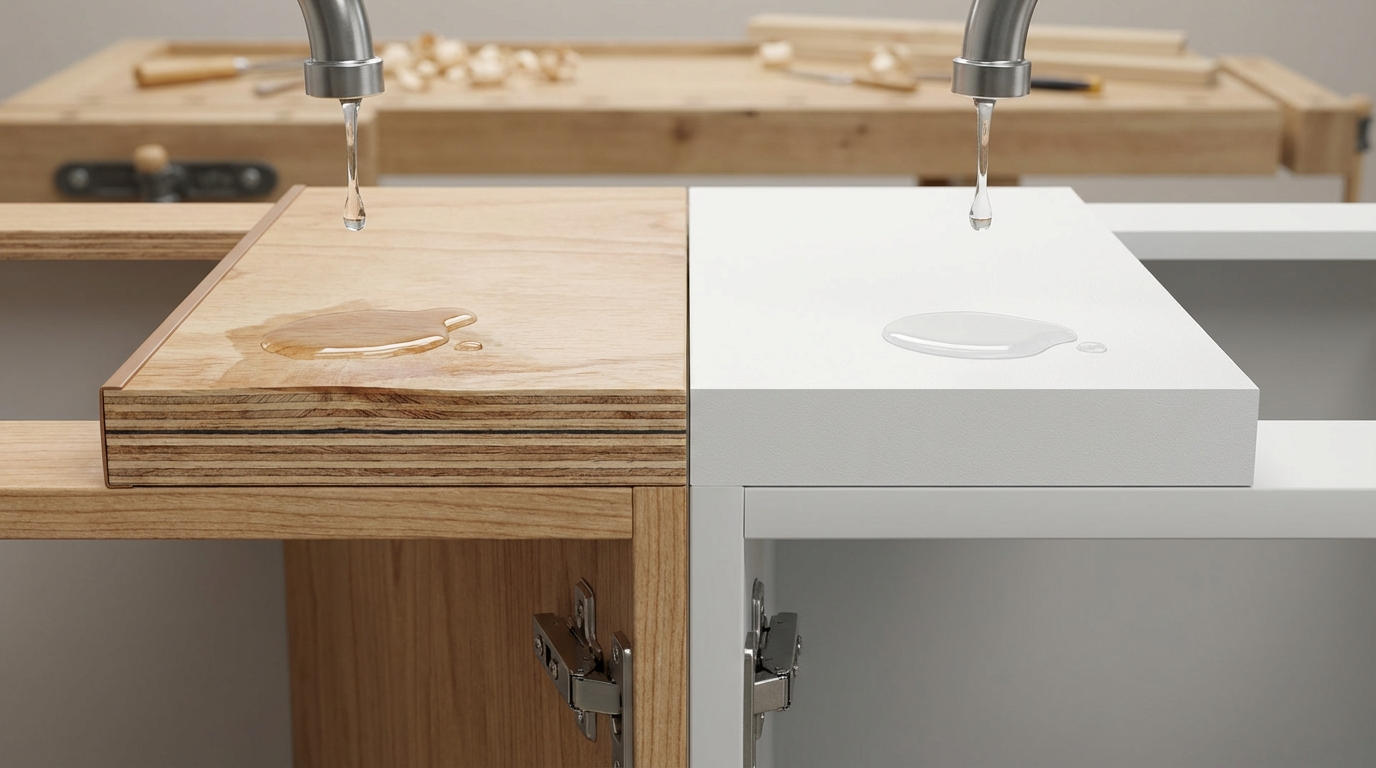
Plywood (BWR or BWP grade) typically lasts longer overall in Indian kitchens for cabinets and shelves, while PVC boards excel in direct splash zones.
If you're in a hurry, opt for BWP-grade plywood at 18mm thickness for main kitchen cabinets—it handles heavy utensils, humidity, and monsoon steam better long-term when edges are sealed properly. PVC boards suit modular uppers or sink surrounds where water splashes constantly, as they won't swell. Plywood wins on strength and screw-holding for loaded shelves; PVC on zero-maintenance waterproofing. Always verify core quality and calibration before buying, as poor batches fail faster in coastal or high-humidity homes.
- Choose plywood if: heavy loads, structural cabinets, budget allows sealing/finishing, moderate moisture.
- Choose PVC if: extreme wet zones, lightweight modular setup, termite-prone area, quick installation.
- Avoid plywood if: unsealed edges in splash areas or poor workmanship.
- Avoid PVC if: expecting heavy weights without frame support.
What These Materials Actually Mean
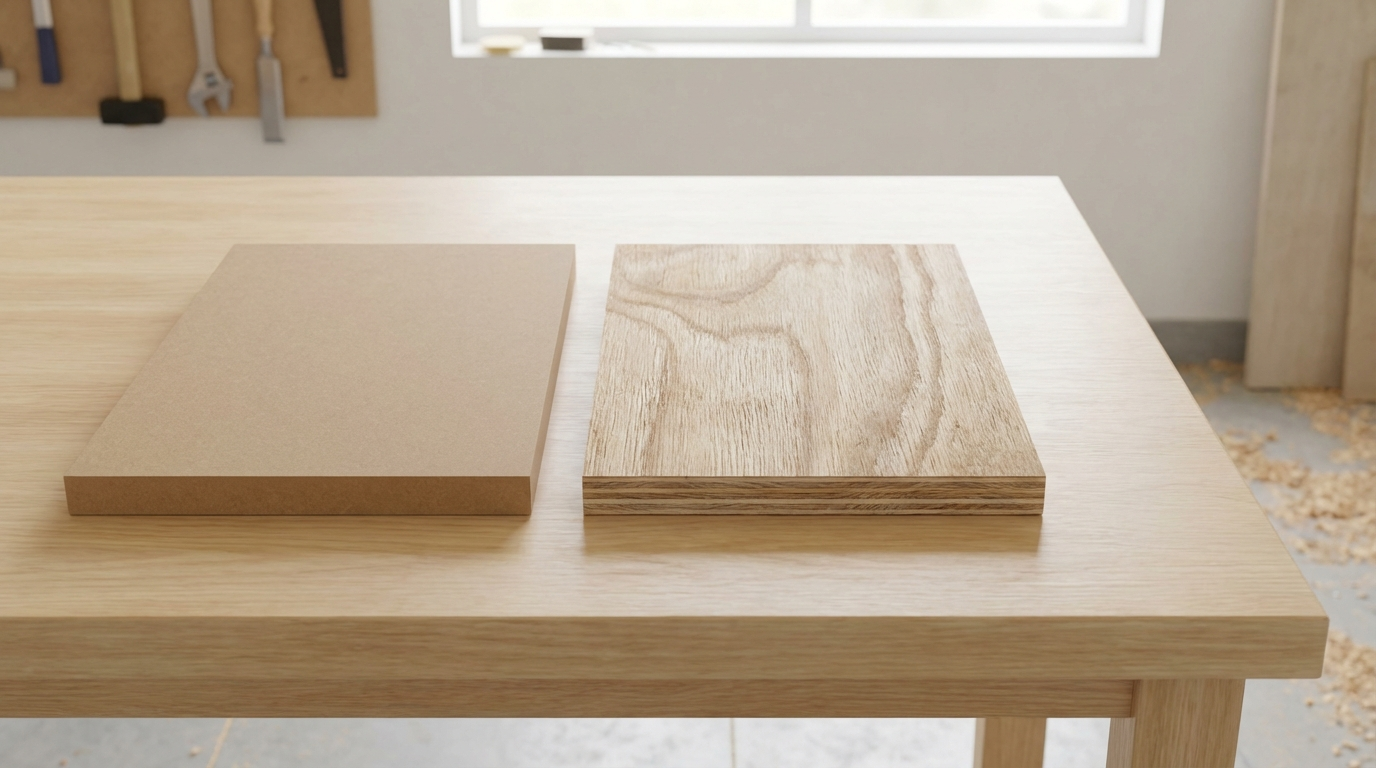
PVC boards are rigid extruded sheets made from polyvinyl chloride, fully waterproof and seamless. They're popular for kitchen modular cabinets because they resist moisture completely, weigh less, and cut like wood without dust. Thicknesses range from 6mm to 20mm, often with glossy or matte finishes.
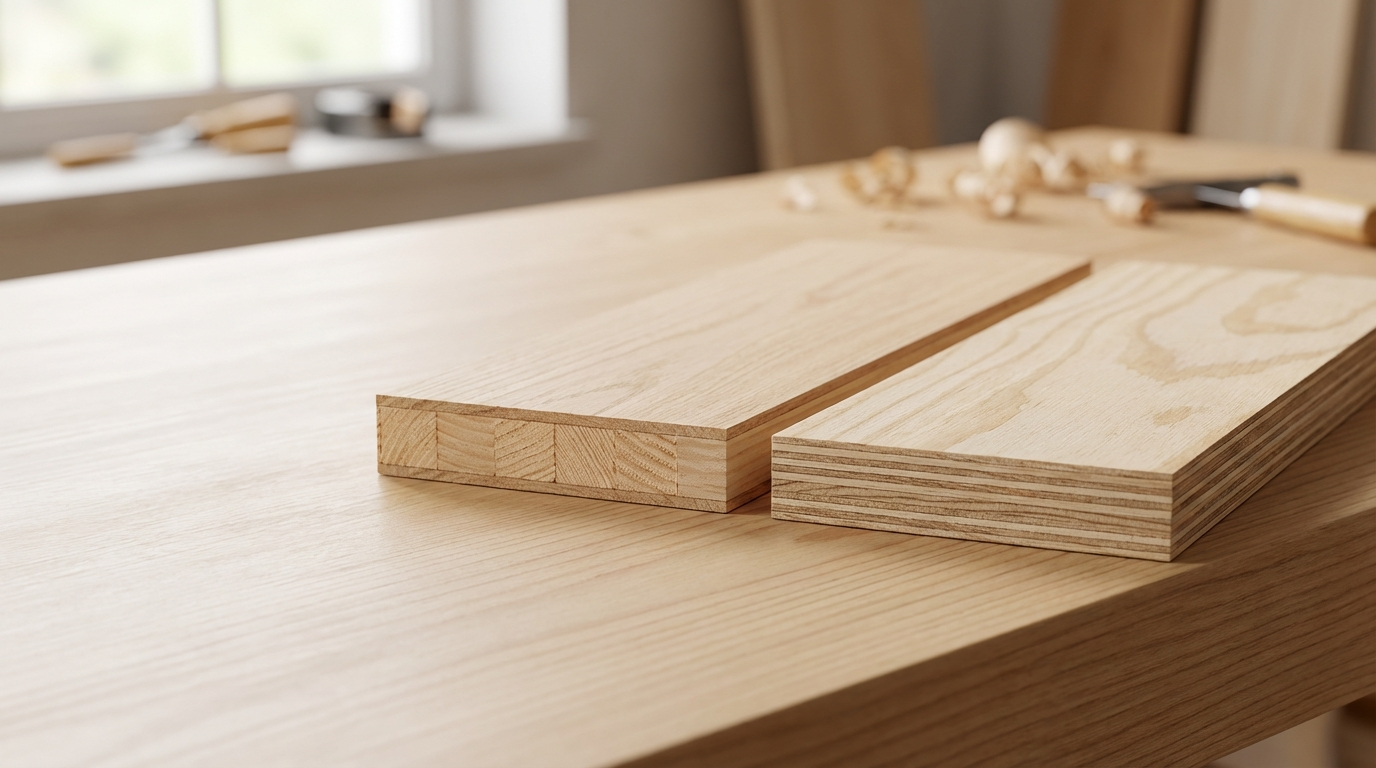
Plywood is layered thin wood veneers glued under pressure, graded by moisture resistance: MR for dry interiors, BWR for humid areas, BWP (boiling water resistant) for kitchens with steam and spills. Kitchen use demands 16-19mm thickness with calibrated cores for flatness.
Where People Get Confused
- Thinking all plywood is "waterproof"—only BWP grades handle boiling water tests; MR fails in kitchens.
- Assuming PVC is indestructible—thin sheets sag under heavy pots without metal frames.
- Believing PVC needs no finishing—it scratches from utensils unless top-coated.
- Mixing "PVC board" with PVC pipes—boards are flat panels for furniture.
- Overlooking plywood's glue lines—poor glue causes delamination in humid storage.
- Expecting plywood to be termite-proof—needs treatment; PVC naturally resists.
India-Specific Reality Check
Indian kitchens face monsoon humidity (80-100%), coastal salt air, oil splashes, and steam from pressure cookers. Plywood edges absorb moisture if unsealed, leading to swelling in Mumbai or Chennai homes. PVC shines here—no swelling, easy wipe-down for masala stains. But poor storage at dealers (stacked outdoors) warps both; check for site delivery wrapping. Workmen often skip edge sealing on plywood, causing 2-3 year failures in high-use homes. Coastal areas demand BWP plywood or PVC to avoid fungal growth.
Does humidity affect PVC boards more than plywood in Indian kitchens?
No, PVC boards handle 100% humidity without warping, unlike plywood which needs BWP grade and sealing. In Kerala or Goa kitchens, plywood cores can separate from steam if glue is subpar, shortening life to 5-7 years. PVC lasts 15+ years here but scratches accumulate from daily scrubbing. Next step: test supplier samples—pour water on edges for 30 minutes and check swelling. For plywood, insist on calibrated 18mm sheets with uniform glue lines.
Two-Minute Comparison That Actually Helps
| Factor | PVC Board | Plywood (BWR/BWP) |
|---|---|---|
| Moisture Resistance | Excellent (fully waterproof, no swelling) | Good if BWP + sealed; poor if MR |
| Strength/Load-Bearing | Moderate (needs frames for heavy loads) | Superior (better for shelves, cabinets) |
| Weight | Light (easy handling) | Heavier (stable but labor-intensive) |
| Termite Resistance | High (non-wood) | Medium (needs treatment) |
| Scratch/Heat Resistance | Moderate (utensil marks show) | Better with laminate finish |
| Installation Speed | Faster (seamless joints) | Slower (edge banding needed) |
Use this for wet vs. dry zones: PVC for sink backs, plywood for base cabinets.
Price Range and Cost Drivers (India)
Expect PVC boards at Rs 350-850 per sq ft (6-16mm), plywood Rs 900-2,200 per sq ft (16-19mm BWR/BWP). Varies by city (higher in metros), thickness, finish quality, and dealer margins. Cost drivers: core material (poplar vs hardwood), calibration flatness, surface lamination, transport from mill. Add 15-25% for edge banding/sealing on plywood.
- How to ask for a quote: Specify thickness, grade (BWP), sq ft total, delivery site, F-grade face veneer.
Mini budget for 10x8 ft kitchen cabinets: PVC modular ~Rs 1.2-2 lakh; plywood framed ~Rs 1.5-3 lakh, excluding labor.
Which is cheaper long-term: PVC board or plywood for kitchens?
Plywood often costs less long-term despite higher upfront price, as it avoids frequent modular replacements in heavy-use kitchens. PVC saves on install but may need scratch repairs sooner. In Delhi NCR, factor 20% logistics variance. Check: calculate total sq ft, add finishing costs, project 10-year use. Get 3 quotes specifying "18mm BWP calibrated plywood with PVC edge tape" vs "12mm PVC gloss white". Confirm no hidden cutting charges.
How to Choose in 5 Steps
- Assess kitchen zones: Splash areas (PVC), load zones (plywood).
- Pick thickness/grade: 16-19mm BWP plywood or 10-16mm PVC.
- Verify supplier stock: Check flatness, no gaps, uniform color.
- Plan finishing: Laminate on plywood, polish on PVC.
- Test post-install: Load shelves, splash water, monitor 1 month.
Skipping step 3 leads to warped cabinets in 6 months.
Decision Framework: Pick by Your Kitchen Conditions
| Kitchen Condition | Recommended Choice | What to Verify |
|---|---|---|
| High humidity/coastal | PVC or BWP plywood | Edge sealing done; no core gaps |
| Heavy utensil loads | Plywood 18mm | Screw holding test; calibrated |
| Tight budget/fast install | PVC 12mm | Uniform thickness; no sagging |
| Oil/scratch heavy | Laminated plywood | High-pressure laminate grade |
| Termite risk | PVC | Non-porous surface |
| Modular prefab | PVC | Factory joints seamless |
Trade-offs and Limitations
Plywood offers unmatched strength but demands skilled sealing to match PVC's moisture immunity—unsealed, it fails in steam-heavy Indian cooking. PVC is lightweight and hygienic but flexes under weight, risking sagging shelves, and shows fingerprints/scratches more. Plywood cuts dustier; PVC machines cleaner but needs precise joints. Neither is fireproof—both soften at high heat without add-ons.
Can PVC boards handle heavy kitchen shelves like plywood?
Not standalone—PVC 12mm sags under 20kg without metal frames, while plywood 18mm holds 50kg easily. In Punjab homes with steel thalis, reinforce PVC with aluminum channels. Trade-off: PVC lighter for uppers. Verify by loading sample with weights at supplier. If sags >2mm, upsize or switch to plywood. Long-term, framed PVC matches but adds 20% cost.
Common Buyer Mistakes and How to Avoid Them
- Mistake: Buying MR plywood for kitchens. Why: Swells from steam. Fix: Demand BWR/BWP certificate.
- Mistake: Skipping edge sealing on plywood. Why: Moisture entry. Fix: Use PVC tape pre-install.
- Mistake: Thin PVC for base cabinets. Why: Sags under sinks. Fix: 16mm min + frame.
- Mistake: Ignoring calibration. Why: Uneven cabinets. Fix: Measure variance <0.5mm.
- Mistake: No finish spec. Why: Stains show. Fix: 1mm laminate on plywood.
- Mistake: Storing outdoors. Why: Warps both. Fix: Site-covered delivery.
- Mistake: Cheap glue/labor. Why: Delaminate. Fix: Supervise carpenter.
- Mistake: Overlooking termites. Why: Eats plywood cores. Fix: PVC or treated ply.
Failure Modes and Fixes
- Symptom: Cabinet swelling. Cause: Unsealed plywood edges. Prevent: PVC tape all cuts. If happening: Dry out, reseal.
- Symptom: Sagging shelves. Cause: Thin PVC overload. Prevent: Add battens. If happening: Reinforce underneath.
- Symptom: Delamination. Cause: Poor glue in humid storage. Prevent: Fresh batch. If happening: Replace section.
- Symptom: Scratches everywhere. Cause: No polish on PVC. Prevent: Matte finish. If happening: Buff lightly.
- Symptom: Joint gaps. Cause: Expansion mismatch. Prevent: Acrylic sealant. If happening: Fill and paint.
- Symptom: Termite trails. Cause: Untreated plywood. Prevent: Boric treatment. If happening: Fumigate + replace.
Quality Checks You Can Do Without Lab Tests
- Before buying: Drop test sheet flatness (no bounce), tap for hollows, check veneer uniformity.
- Questions to ask: "BWP grade? Calibration report? Storage conditions?"
- Red flags: Damp corners, color variance, rough edges.
- After cutting: Even glue squeeze-out, no core voids.
- Post-install: Level check, water pour on joints (no seep).
Tips for Homeowners
Clean with mild soap only—avoid abrasives on PVC to prevent haze. For plywood, wipe spills immediately. Stock shelves evenly to avoid sag. In monsoons, ventilate kitchen.
Tips for Carpenters
Cut PVC with fine blade to avoid melting. Plywood: score edges first. Pre-drill screws 5mm from edge. Use PU glue for joints.
Tips for Architects
Spec "18mm BWP calibrated plywood with 1mm HPL, PVC edges sealed." Detail frame supports for PVC uppers. Plan 2mm expansion gaps.
Tips for Modular Makers
QC: measure 10% panels for thickness. Use cam locks for PVC repeatability. Track returns for moisture complaints.
Is plywood or PVC better for Indian modular kitchens?
BWP plywood suits framed modulars for strength in masala-heavy use; PVC for fully prefab seamless looks. In Bangalore humidity, plywood reduces callbacks if sealed. Next: sketch zones—PVC for hood/sink, plywood elsewhere. Verify carpenter experience with both. Expect plywood to last 20+ years structurally.
FAQs
Which lasts longer in a humid Indian kitchen?
Properly sealed BWP plywood often outlasts PVC by 5-10 years for structural elements, as PVC scratches and flexes over time. However, in direct steam zones like above stoves, PVC prevents swelling better. Factors: workmanship and load. Homeowners report plywood cabinets holding up 15-25 years post-monsoon sealing. Always edge-seal plywood cuts and use frames under PVC shelves for balance.
Can PVC boards replace plywood completely in kitchens?
Not ideally—PVC works for uppers and walls but lacks plywood's rigidity for heavy base units. In Tamil Nadu coastal setups, combine: PVC panels on frames of plywood. This hybrid maximizes longevity while minimizing weight. Check supplier hybrids for pre-fab options, ensuring 16mm min thickness to avoid future sags.
How to prevent plywood from swelling in kitchens?
Choose BWP grade, seal all edges with PVC tape or melamine before lamination, and apply oil/wax on exposed cuts. In monsoon-prone areas, store vertically. Post-install, silicone sealant on joints. This routine extends life beyond PVC in moderate wet zones. Inspect yearly for early moisture signs.
Does PVC scratch easily in daily kitchen use?
Yes, glossy PVC shows utensil drags after 1-2 years, unlike matte or laminated plywood. Prevent by using cutting boards and soft cloths. In high-traffic homes, opt for textured PVC or add glass tops. Buffing restores shine temporarily, but deep marks need panel swaps.
What thickness for kitchen cabinets?
18mm for plywood bases (load-bearing), 12-16mm for PVC or plywood uppers. Thinner risks failure in Indian homes with stacked spices. Verify with supplier gauge—variance over 1mm means rejects. Factor labor: thicker adds stability but weight.
Are PVC boards termite-proof?
Fully, as they're synthetic—no wood for termites to eat. Ideal for ground-floor kitchens. Plywood needs pre-treatment, which varies by batch. In termite-hotspots like Hyderabad, PVC cuts maintenance. Still, seal joints to block entry paths.
How much weight can PVC shelves hold?
10-15kg per running foot at 12mm without sag, doubling with frames. Plywood manages 25-40kg. Test at site: load gradually. For dalda tins, reinforce PVC universally.
Which is easier to clean?
PVC wipes instantly—no pores for stains. Plywood laminates match if sealed well. Avoid bleach on both to prevent fading. Daily habit: microfiber + water keeps both pristine 10+ years.
Can I mix PVC and plywood in one kitchen?
Yes—PVC for moisture walls, plywood for cabinets. Ensures strength where needed. Match finishes for seamless look. Carpenters handle transitions with edge bands. Cost-effective hybrid for varied zones.
Disclaimer: This content is provided for general informational purposes based on industry practices and publicly available information. Product specifications, standards, prices, and availability may vary by manufacturer, region, and time. Readers should independently verify details with manufacturers, dealers, or qualified professionals before making purchase or construction decisions.Want Plywood Suggestions?
Share a few details and a Duro BOIL specialist will suggest suitable brands and connect you to responsive dealers.